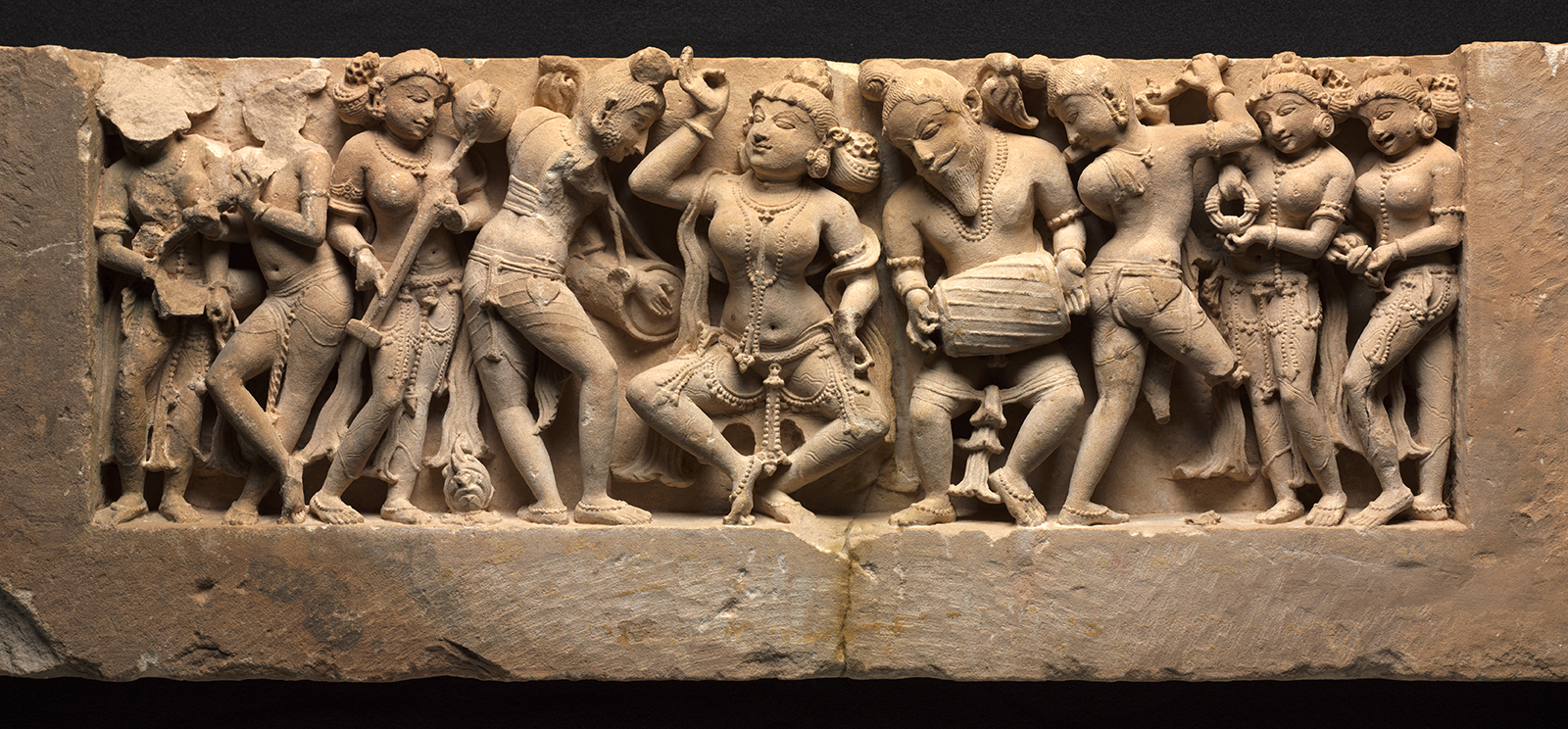
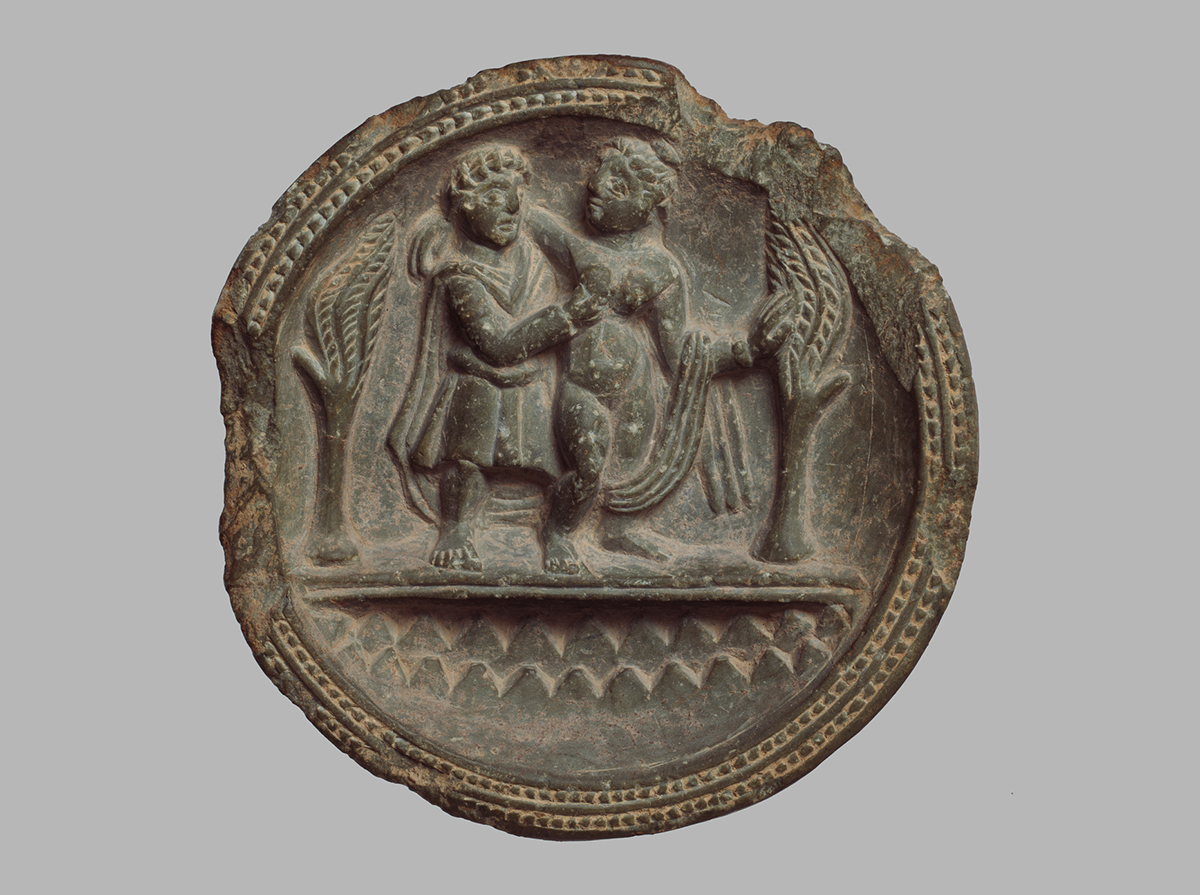
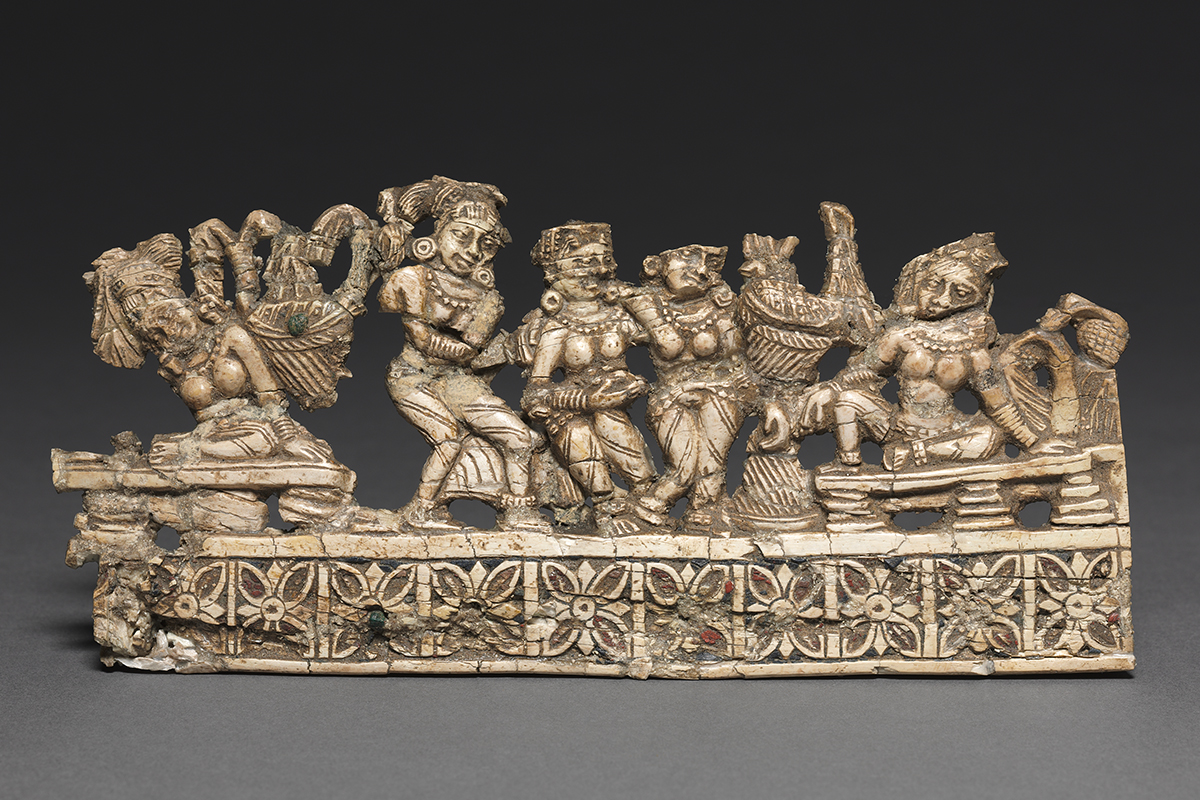
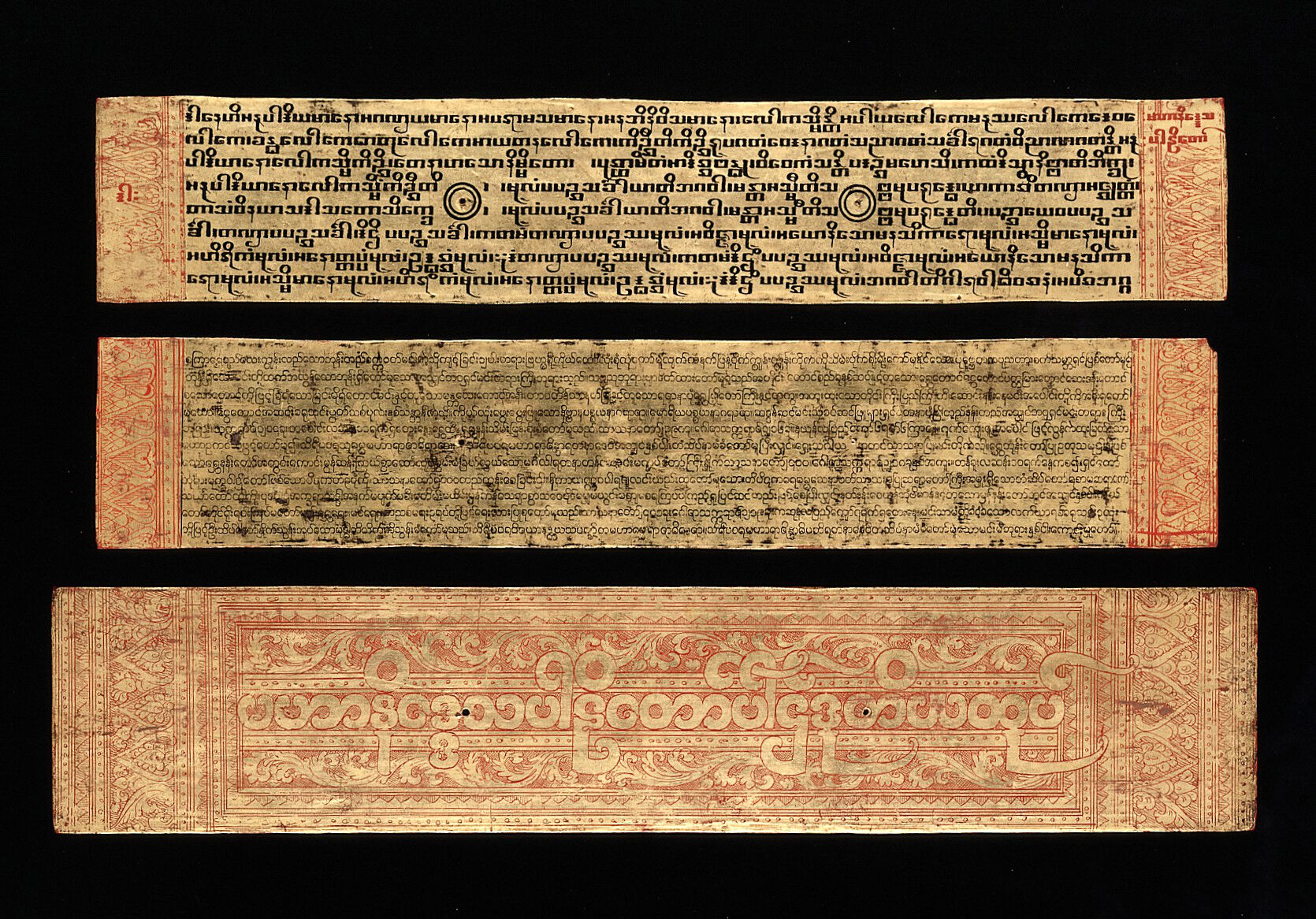
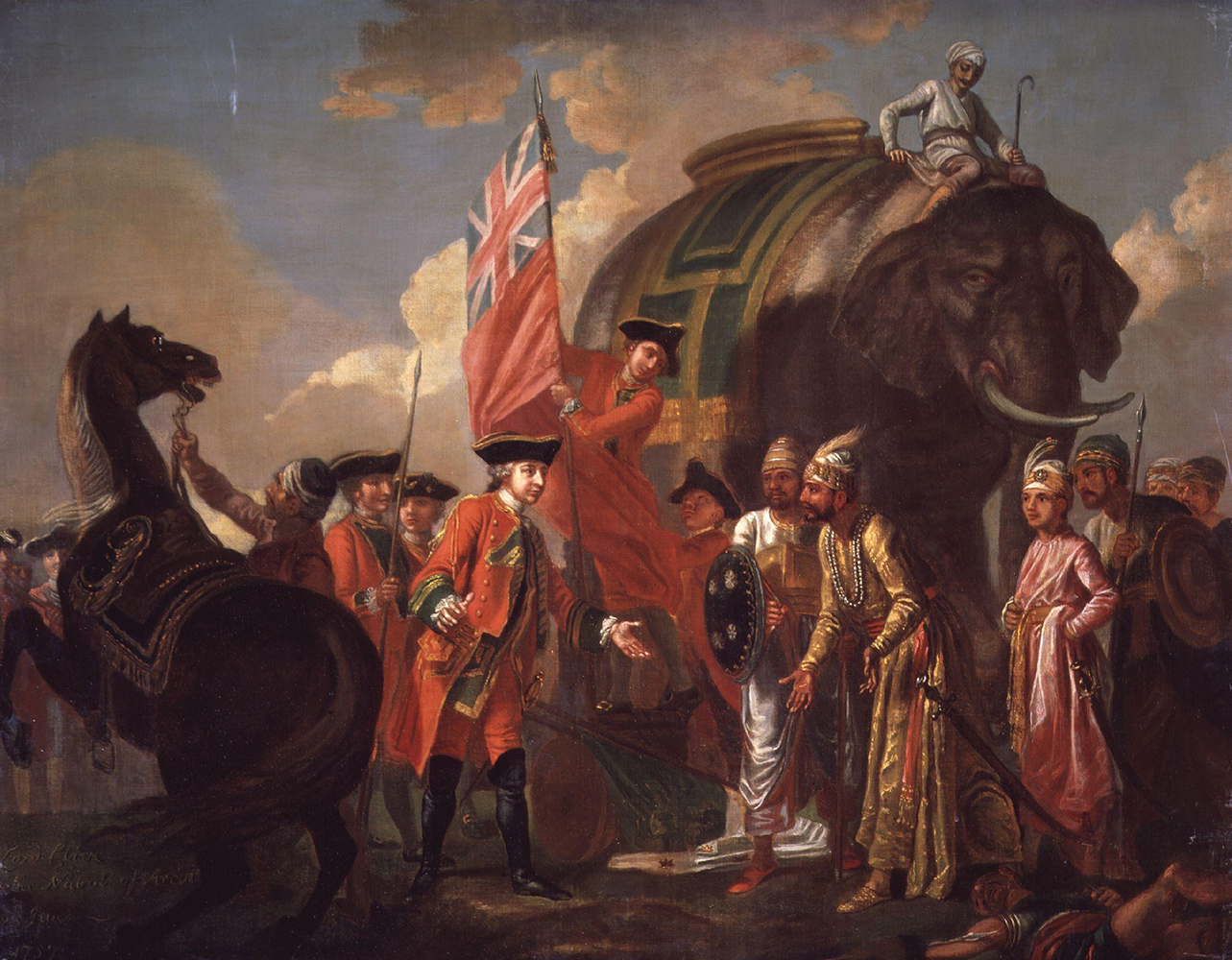
The production of rock art and petroglyphs in the prehistoric period links to ritual and social contexts. The emergence of permanent settlements occurs over the northern part of the subcontinent, with a growth in agriculture and trade networks.
A Story of Art, Culture, and Exchange in the Indian Subcontinent, from the Prehistoric to the Colonial Period
For millennia, the history of the Indian subcontinent has been one of movement. Humans have inhabited the region for millions of years, leaving behind traces of their lives.
Evidence of habitation in South Asia — in the form of remains of stone tools — dates between c. 2 million years ago to c. 10,000 years ago. These fragments are found in diverse areas: from Siwaliks range in the north to Sri Lanka in the south, and from Sindh and Afghanistan in the northwest to the easternmost districts of present-day Bangladesh. At some sites, tools from different archaeological strata indicate multiple periods of habitation. Archaeological evidence shows objects prescribed with ritual and social meaning, including the production of art. These are the earliest known artistic expressions of a region in which material culture and art will go on to be shaped by waves of migrations, trade, religion and the rise and fall of empires.
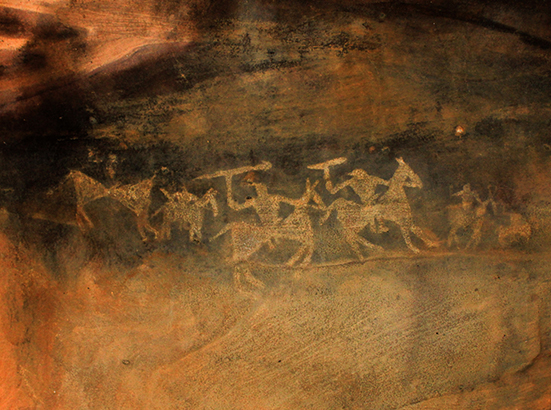
The production of rock art and petroglyphs in the prehistoric period links to ritual and social contexts. The emergence of permanent settlements occurs over the northern part of the subcontinent, with a growth in agriculture and trade networks.
Rituals involving mark-making and figurative imagery, as well as the making and use of stone tools, are practised in parts of South Asia, from the beginning of the Stone Age. Evidence of these survives in the form of petroglyphs or rock carvings, stone artefacts and the fossilised remains of hominids (humans and their ancestors), in present-day India, Pakistan, Bangladesh, Afghanistan and Sri Lanka.
Today, hominid remains between 500,000 and 200,000 years old have been found in the Narmada River valley in central India, including a skull cap fragment from the early part of that period, believed to be of either Homo erectus or an archaic form of Homo sapiens. The fossilised skull of a human infant, dated c. 164,050 BCE, has been discovered in a deposit in Tamil Nadu in southern India. These form the earliest dated hominid remains in South Asia, which also include those found in Darra-i Kur in north-eastern Afghanistan, and in the Fa Hien, Batadomba, Beli and Alu caves in Sri Lanka, broadly dated between 35000 BCE and 8550 BCE.
Stone tools from various stages of the Paleolithic Period — c. 2 million years ago to c. 10,000 years ago — as well as the Mesolithic and Neolithic Periods that followed, have been discovered across the Indian subcontinent — from the Siwaliks range in the north to Sri Lanka in the south, and from Sindh and Afghanistan in the northwest to the easternmost districts of present-day Bangladesh. Some sites have revealed tools from different time-spans within the Paleolithic Period, suggesting multiple levels of occupation. These include the Potwar plateau in present-day Pakistan, as well as Didwana in Rajasthan, Patne in Maharashtra, Atirampakkam in Tamil Nadu, Bhimbetka in Madhya Pradesh and the Belan Valley in Uttar Pradesh, in India. Paleolithic factory sites — places where a large number of tools were made — have been found at Hunsgi, Karnataka and near Nevasa, Maharashtra. Stone Age tools made of bone and fossilised wood have been found at the Kurnool Caves in Andhra Pradesh and the eastern districts of Bangladesh, respectively.
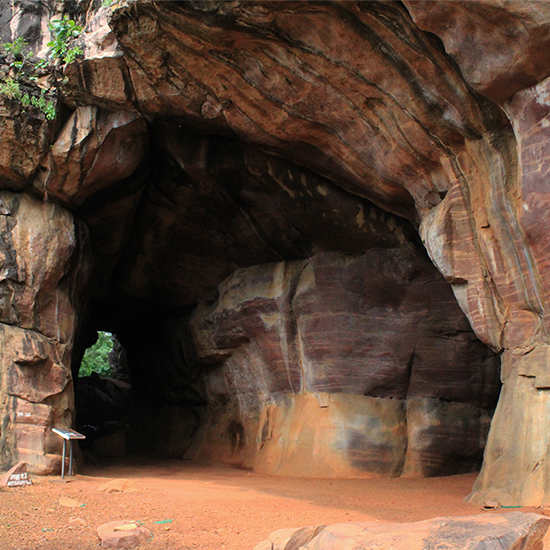
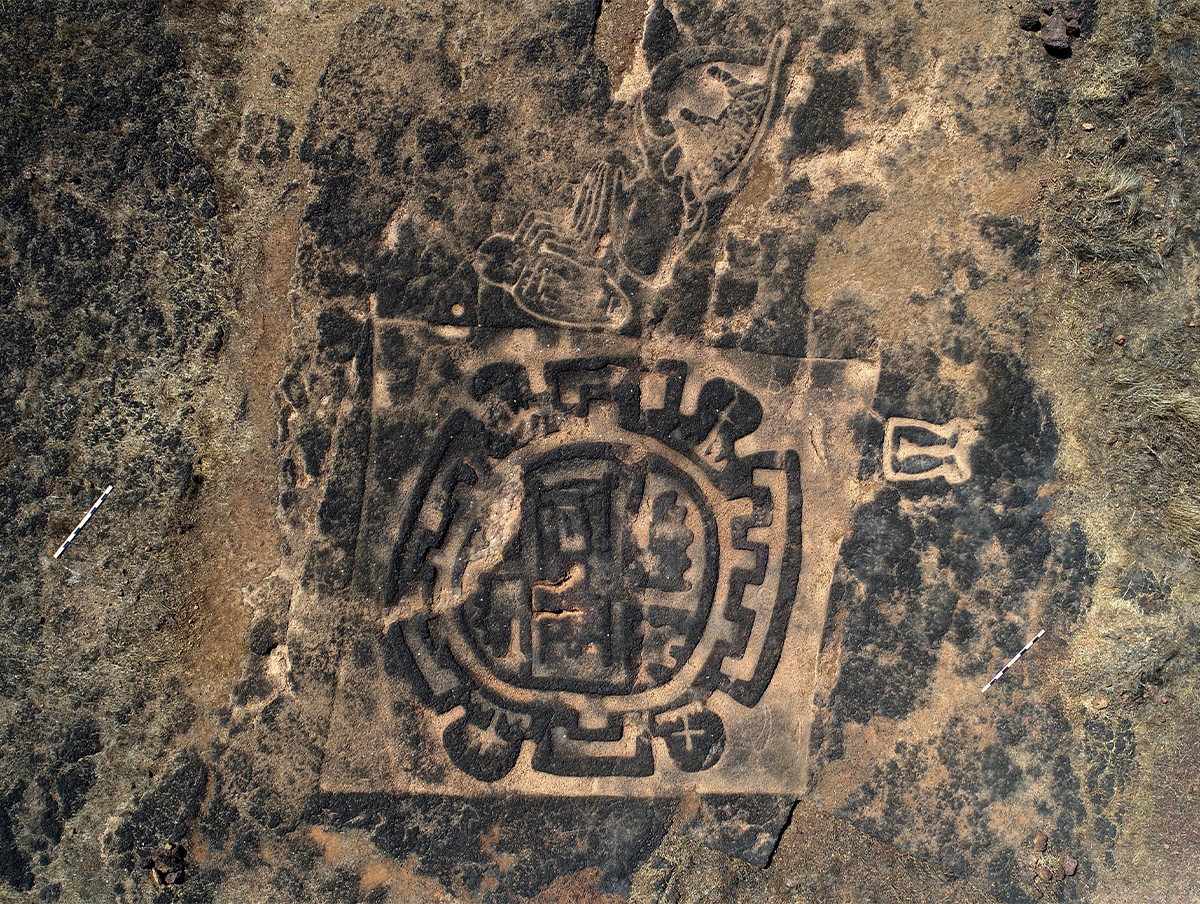
Rock art from the period has been found in central India, speculated to have been made in ritual contexts. This includes petroglyphs in the form of cupules, or small cup-like indentations, at the Auditorium Cave in Bhimbetka, which are broadly dated to between 2 million and 40,000 years ago. Patne in Maharashtra has yielded evidence of an engraved ostrich egg shell. In Baghor, Madhya Pradesh, a triangular piece of stone with naturally occurring bands of laminations was discovered in the middle of a rubble platform, dated c. 9000 – 8000 BCE and attributed to Upper Paleolithic hunter-gatherers. The similarity of the Baghor stone with contemporary cult objects — worshipped as manifestations of Shakti, the divine feminine energy in Hinduism — and its presence in the middle of an artificially constructed platform suggest a possible ritual context.
Neolithic art in the form of petroglyphs (rock carvings) is made in the coastal Konkan region of present-day Maharashtra, southwestern India, broadly between 10,000 BCE and 3000 BCE. Concentrated mostly in the present-day districts of Ratnagiri and Rajapur, these depict geometric patterns and basic human and animal forms, including large depictions of elephants, hippopotamuses and rhinoceroses. From roughly 3000 BCE to 1000 BCE petroglyphs are made further inland, in sites such as Kupgal, Maski and Piklihal in present-day northern Karnataka. These are, most frequently, images of the zebu or humped cattle (Bos taurus indicus); in Kupgal, the petroglyphs also depict anthropomorphic figures in sexual intercourse.
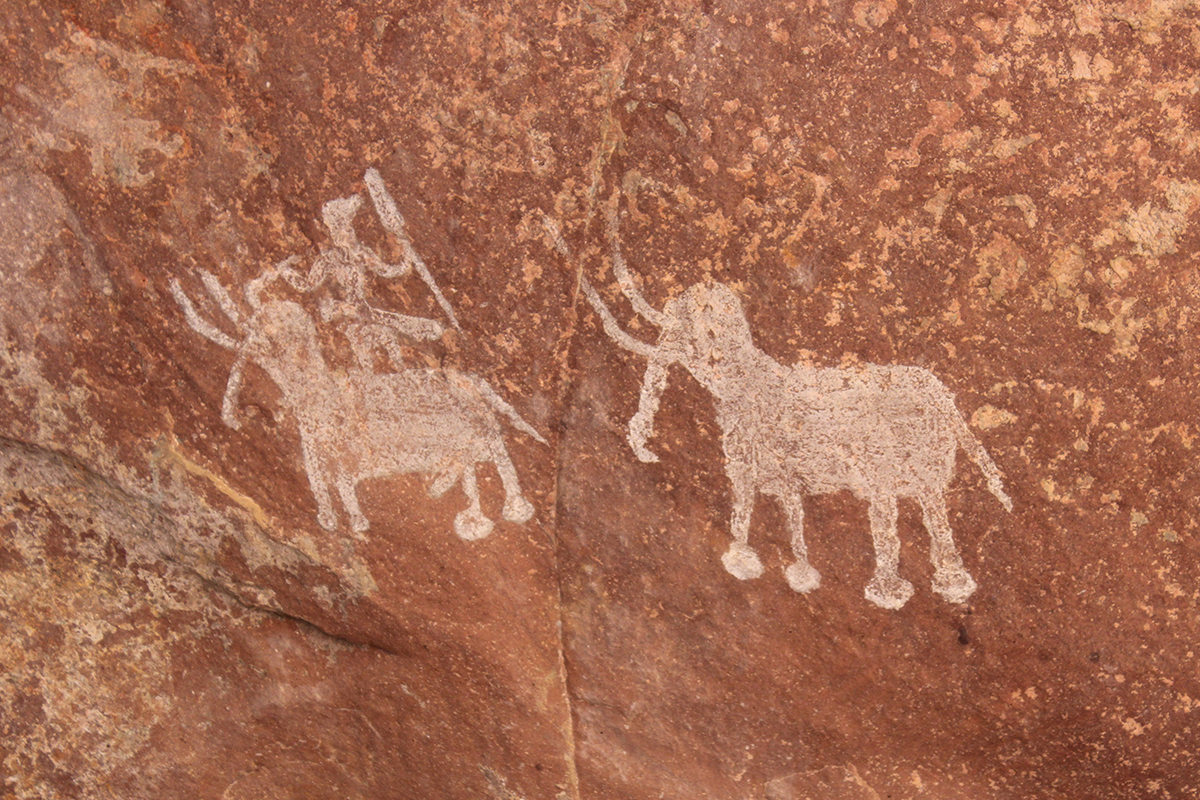
Through the Upper Palaeolithic and Mesolithic periods, hunter-gatherer communities in central India created cave paintings. Some of these, preserved in the Bhimbetka caves in present-day Madhya Pradesh, are considered among the oldest rock paintings in the world. They include depictions of animals, anthropomorphic figures dancing and on horseback, and hunting scenes. The paintings are made from natural colours derived from vegetables, in shades of red, green, black, brown and white.
Other examples found in the Pachmarhi caves in present-day Hoshangabad district, Madhya Pradesh, feature similar subjects made primarily in red, with shades of white, black, yellow and brown pigments derived from minerals. Unlike the Bhimbetka paintings, these works show little to no evidence of overpainting or later additions.
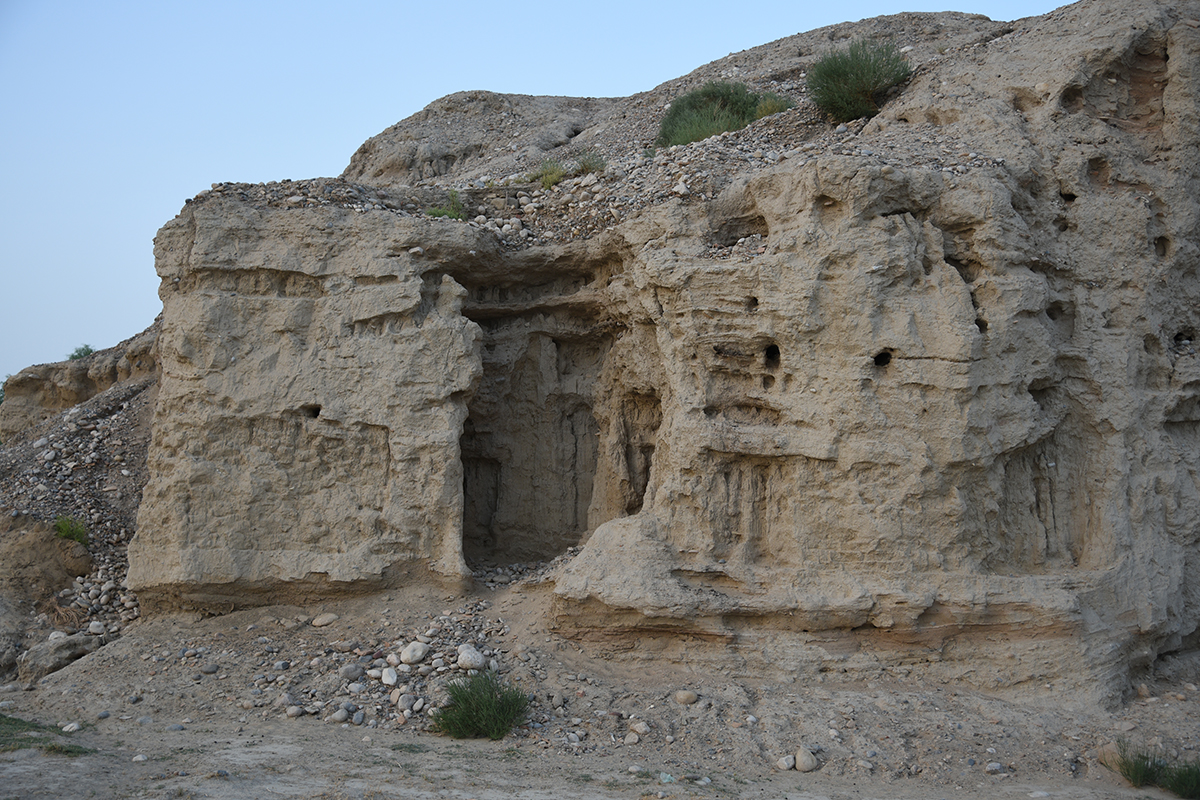
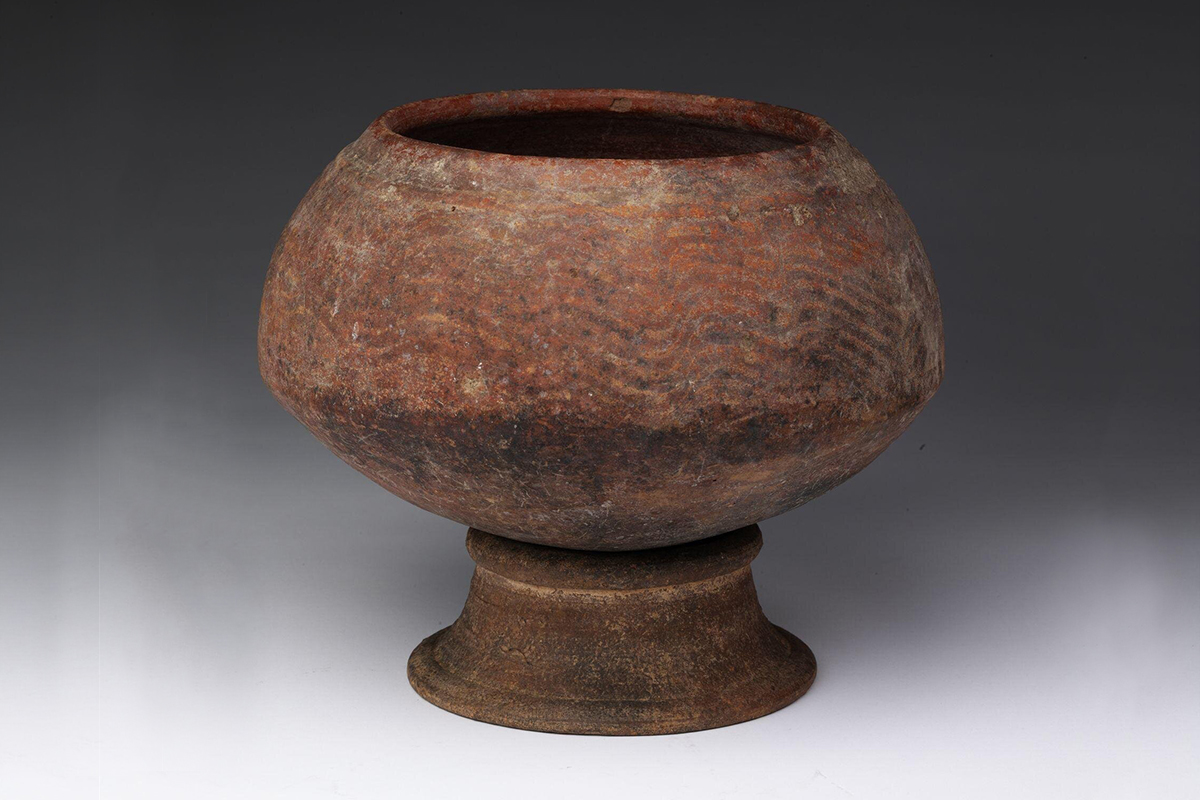
Permanent settlements emerge in the archaeological record, such as Bhirrana (7570–6200 BCE) in present-day Fatehabad district, Haryana, which is the site of the oldest known pottery culture in the subcontinent; and Mehrgarh (7000–2500 BCE) in present-day Balochistan, Pakistan. These societies produce clay pottery and ornaments made from lapis lazuli, steatite, bone, limestone and sandstone. Similar settlements are also founded along the Vindhya ranges and Mahagara near present-day Prayagraj, Uttar Pradesh. The latter is the site of black, white and red patterned pottery production with nets and cords. The turn towards agriculture at these sites coincides with some of the earliest forms of urbanisation and settlements in the Indus Valley, between 4500–3000 BCE.
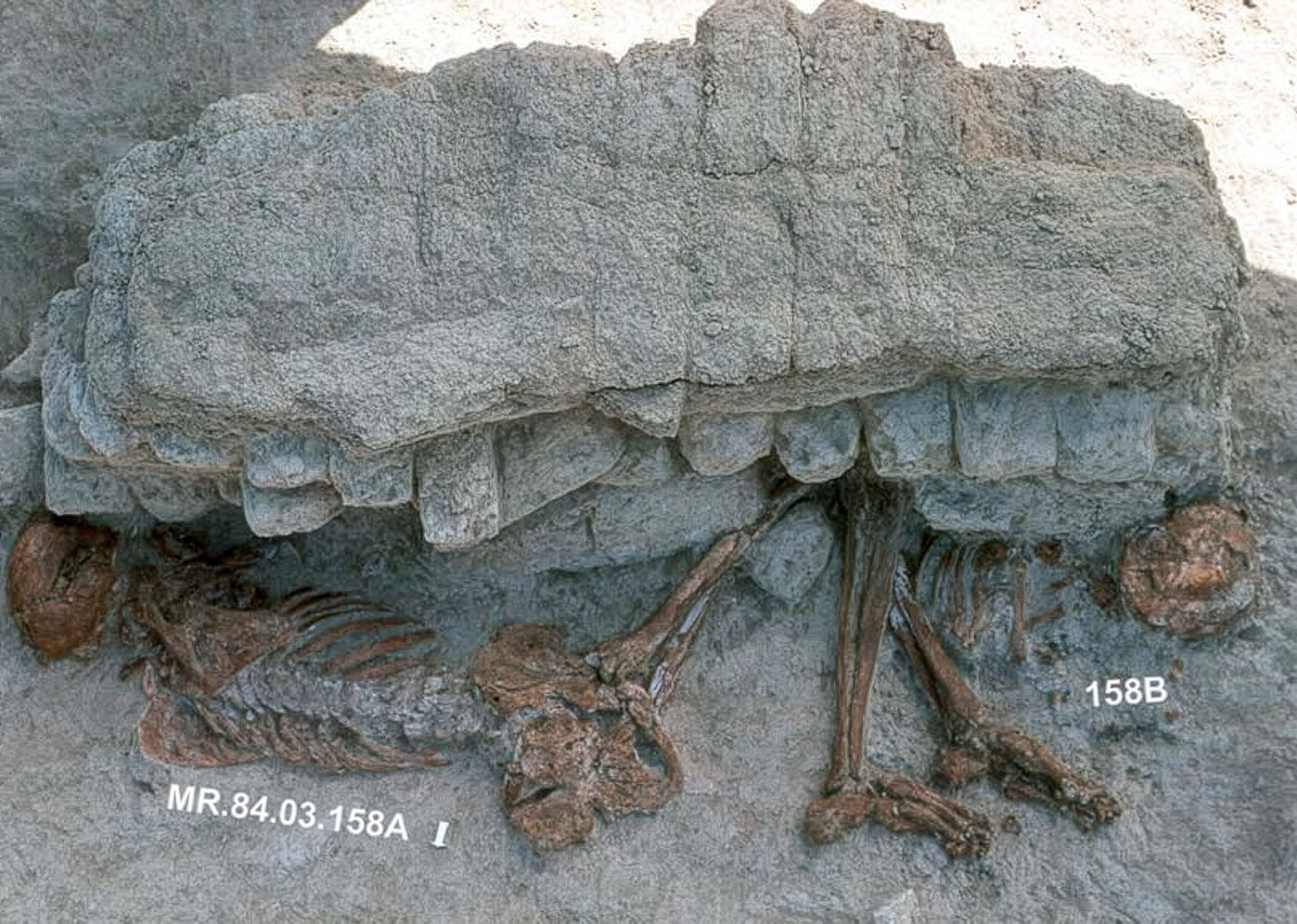
Cotton textiles, while possibly produced from an earlier period, appear in the South Asian archaeological record for the first time. A bracelet of copper beads, dated to this time frame, is found during a 1970s excavation of the burial chamber of an adult and infant at Mehrgarh (in present-day Balochistan, Pakistan), and contains a length of cotton twine. The ornament, made with considerable difficulty at the time, is a sign of the deceased’s wealth and status.
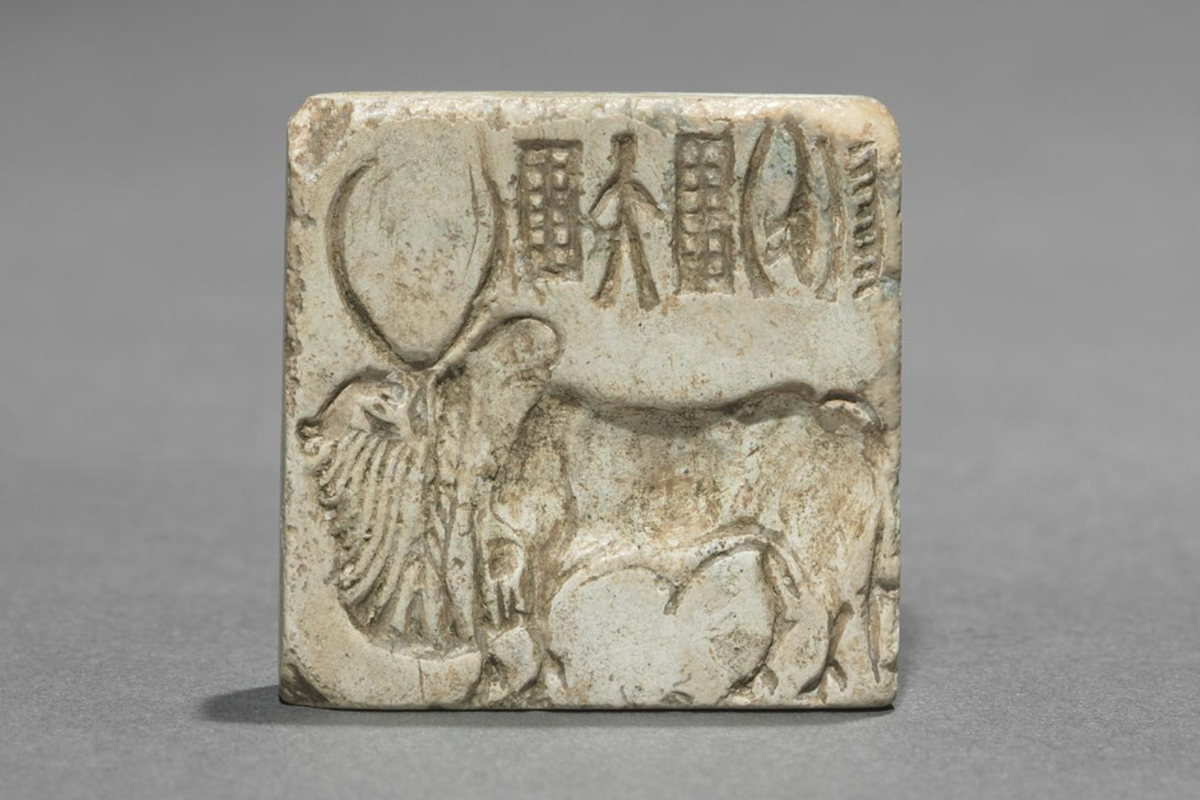
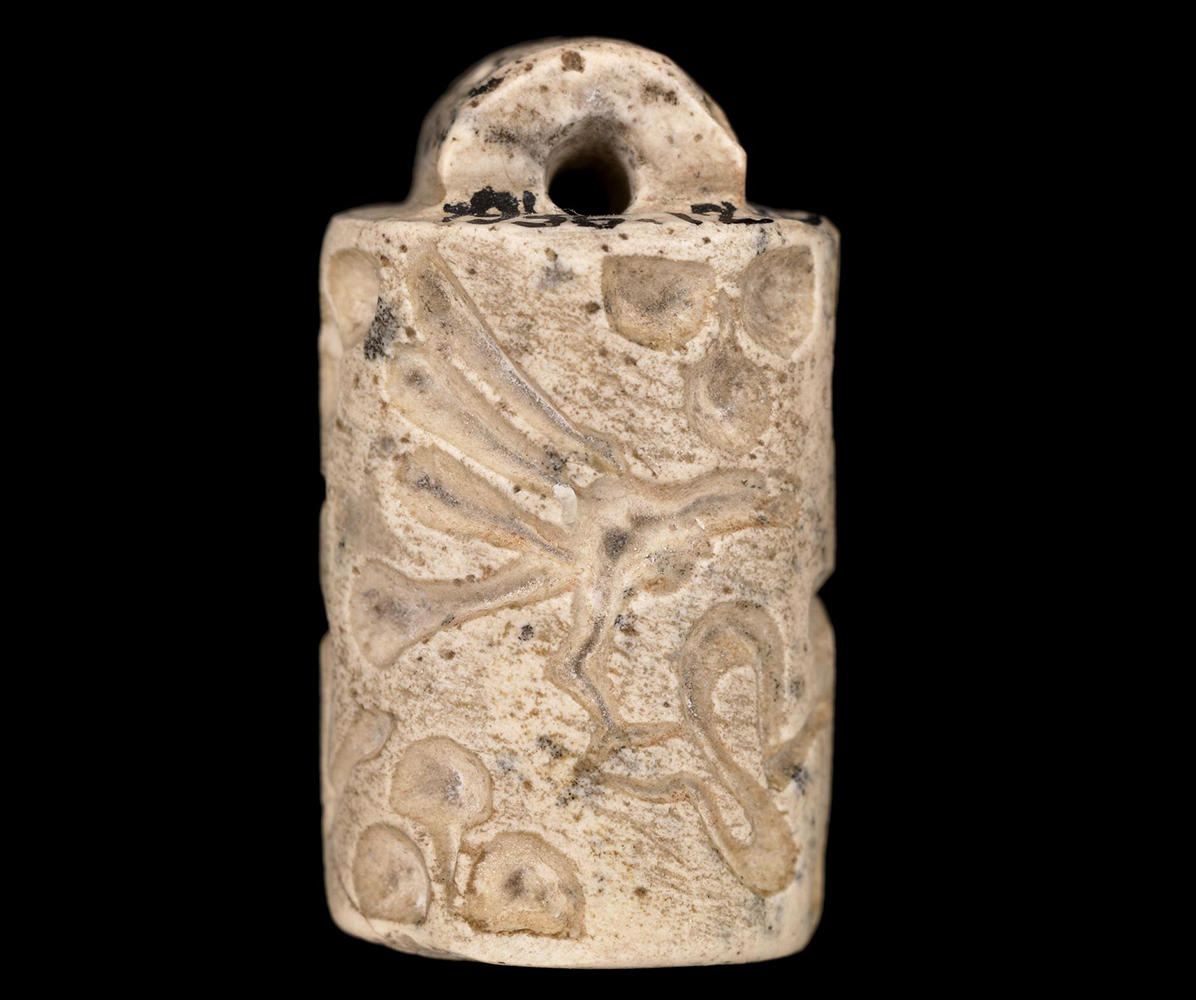
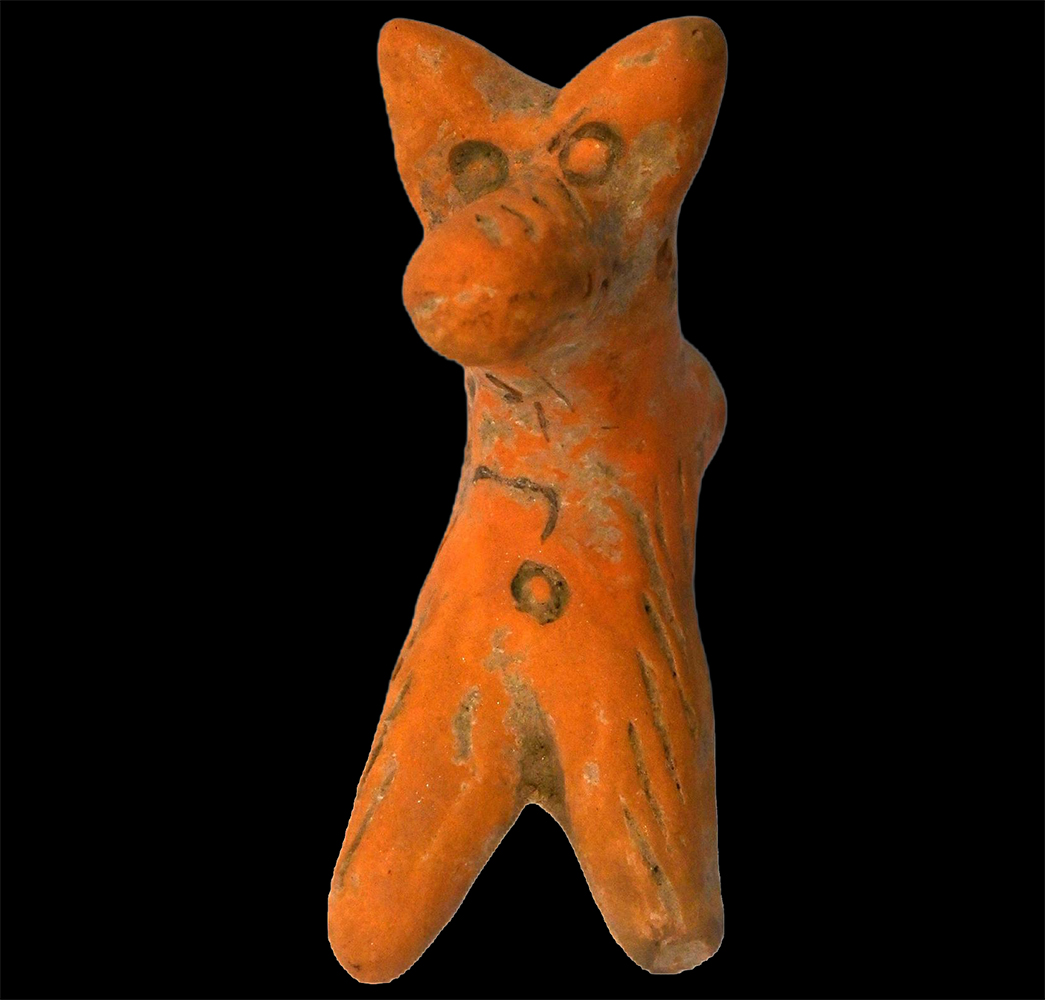
Similar to other early riverine urban civilisations such as those of Egypt, Mesopotamia and the Yellow River, early walled settlements emerge along the Indus River with the movement of peoples from the mountains towards the plains, coupled with the proliferation of agricultural food production, settlements, and growing political and cultural complexity. This period is characterised by the presence of Hakra Ware pottery, which shows raised floral and geometrical motifs, often made by applying pieces of clay to the vessel’s surface; microliths; grinding stones; and terracotta seals featuring images of cattle, mythological creatures, and to a lesser extent, other animals such as dogs and elephants. Craftspeople also produce beads made from lapis lazuli and bangles made from shell, terracotta and pieces of copper. These raw materials are drawn from an extensive region, suggesting the growth of trade networks.
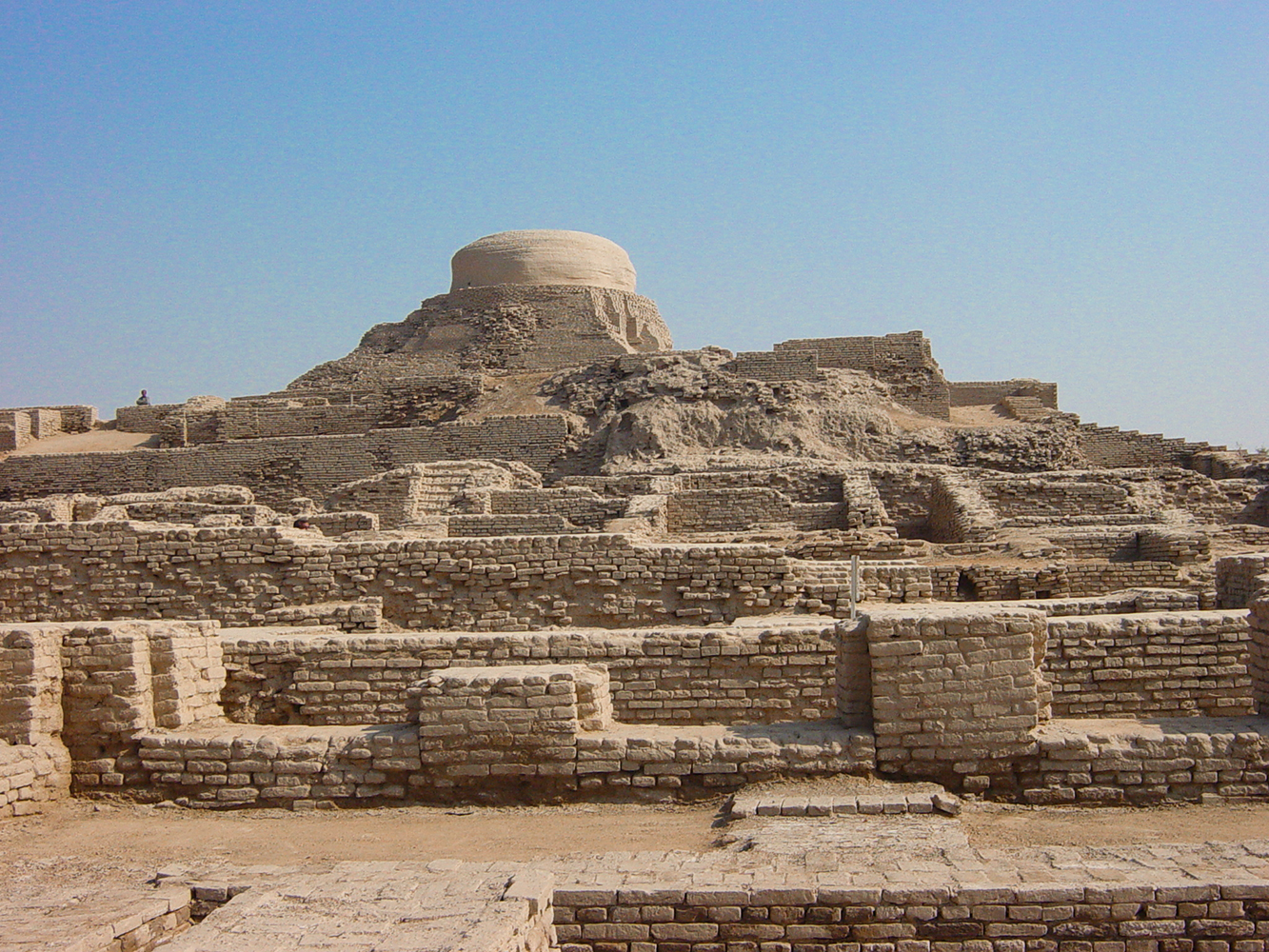
Fragments of cloth dyed and patterned with madder red appear in the archaeological record, at Mohenjo-daro in present-day Sindh, Pakistan, then a rapidly-expanding Harappan settlement. Found during the 1921 excavation here, these fragments date to two millennia after the cotton threads found in an ornament in a 1970s excavation at Mehrgarh (in present-day Balochistan, Pakistan), suggesting the continued production of cotton fabrics in the region.
Even as the Indus Valley Civilisation declines, its influence on pottery and craft will linger on in the material culture of smaller regional settlements. In addition to the migration of Indo-Aryan groups from Central Asia, the foundational texts of Hinduism are composed in this period.
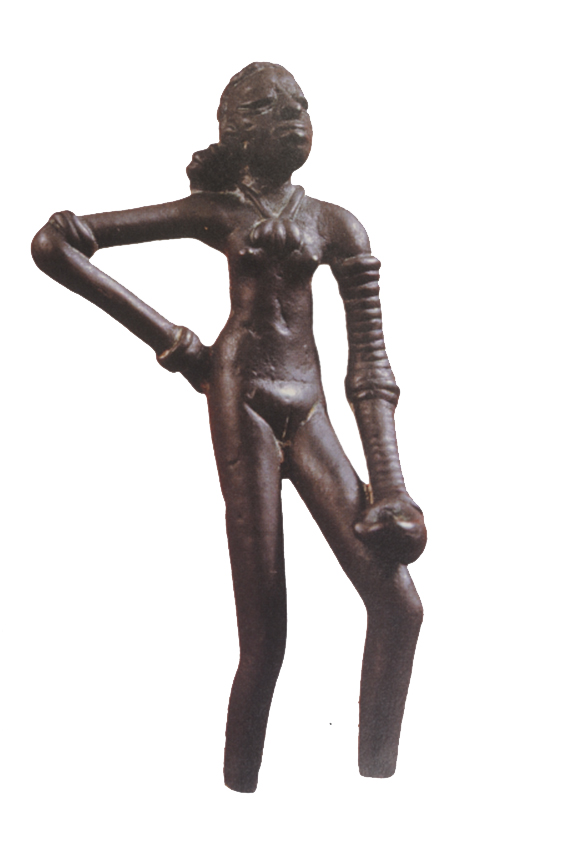
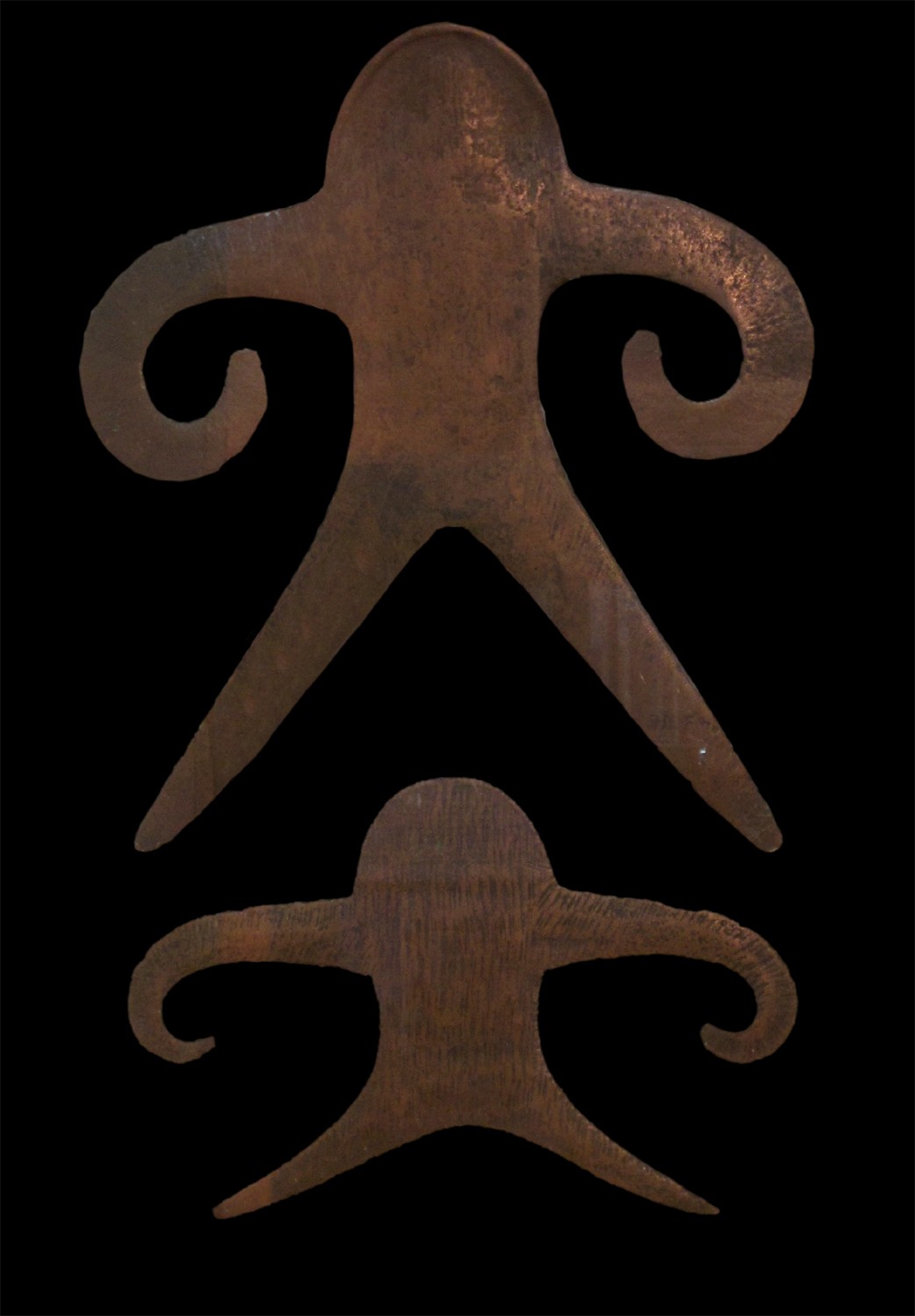
A set of copper amulets found in Mehrgarh (in present-day Balochistan, Pakistan), dated to 3000 BCE, are believed to be the earliest evidence of lost-wax metal casting in South Asia, and possibly the world. Bronze statuettes, most notably the Dancing Girl from Mohenjo-daro (in present-day Sindh, Pakistan) dated to 2500–1750 BCE, constitute the earliest known bronze sculptures made using this method.
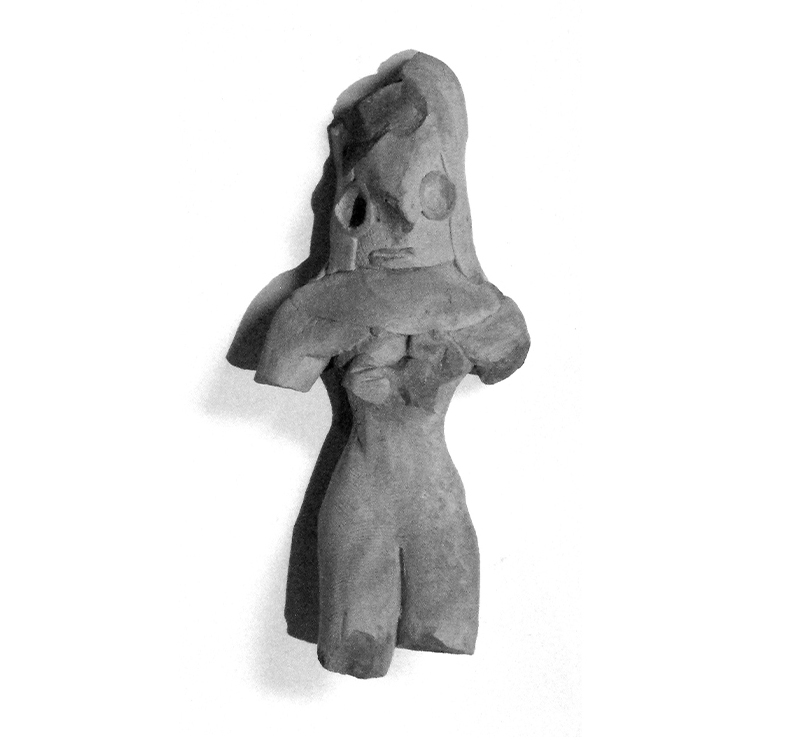
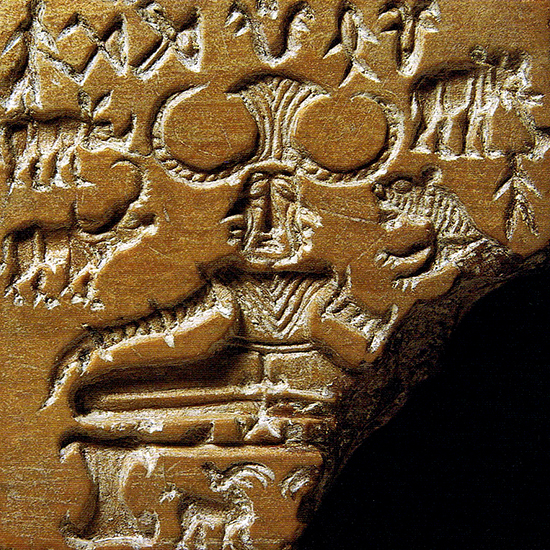
The Indus Valley Civilisation expands in terms of global trade routes and dense economic activity, employs a standard system of weights and measures, and has complex works of urban planning and civil engineering. By this time, the cities of the Indus Valley are home to as much as forty percent of the global population. Both maritime and overland trade is conducted with cultures in the Arabian Peninsula, Mesopotamia, and possibly Anatolia and the Levant. Large volumes of steatite seals, with impressions of a two-horned bull, a unicorn-like creature, an elephant, and other animals are produced, though their purpose is unclear. Human figurines, terracotta artefacts, ornaments, bronze utensils, and innovative decorated pottery using imported materials such as faience are produced. These include some of the most important examples of Harappan art, dated to between the third millennium BCE and the late-second millennium BCE — the steatite Priest King, the bronze Dancing Girl statue and the Red Jasper Male Torso.
Tectonic movements shift the silt in areas around Mohenjo-daro (in present-day Sindh, Pakistan), and this is accompanied by the rise of the Arabian Sea along the coast of the lower Indus Valley. These result in repeated floodings of the Indus River, a rise in soil salinity, and a consequently poor agricultural output. Scholars speculate that changes in the direction of flow of rivers such as the Sutlej, coupled with the seasonal drying up of the Ghaggar-Hakra River and a cooling of the atmosphere, cause a significant decline in the monsoon in this time frame. This parallels a series of crises in the periphery of the Mediterranean Sea, which leads to the destruction of cities throughout Anatolia and the Levant. The polities of Egypt and Mesopotamia face extreme political pressure and a decline in global trade causes a scarcity of craft materials as well as reduced diplomatic exchanges. The combination of all these contributes to a gradual de-urbanisation of Harappan sites. South Asian population centres move eastward, and regional cultures grow.
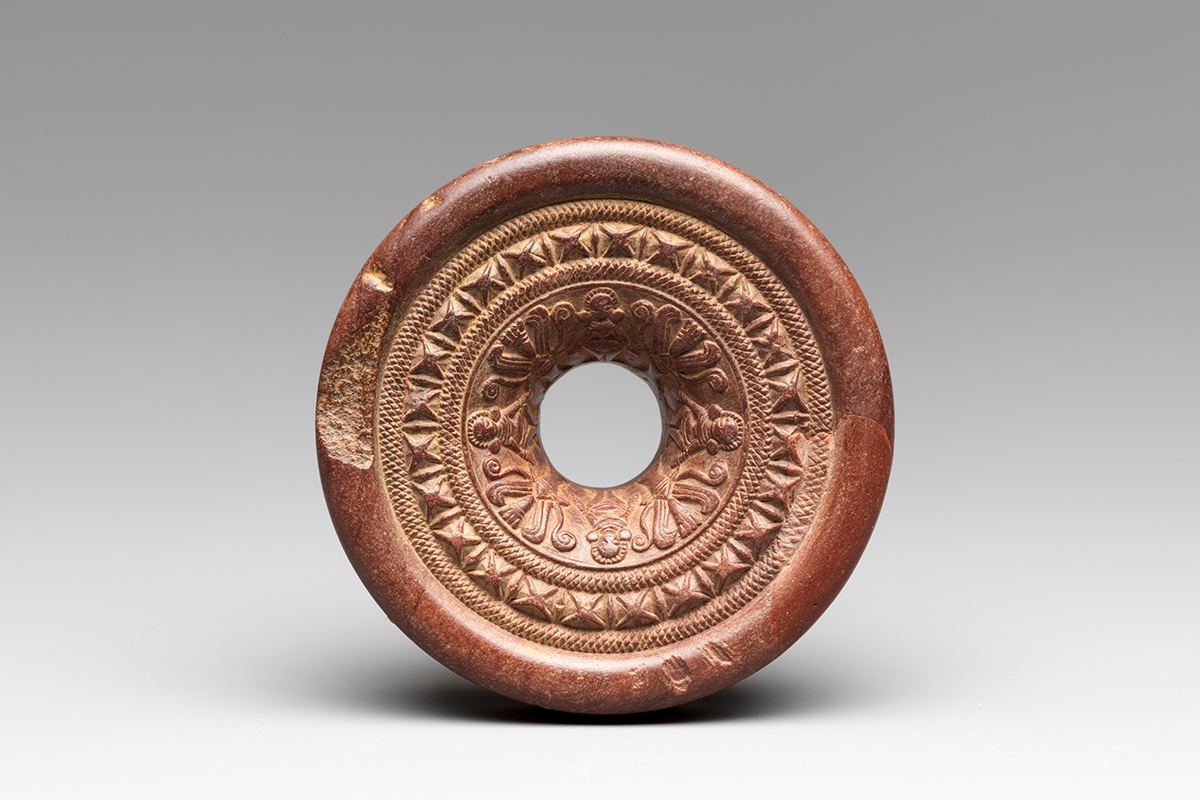
Regional settlements and networks become the norm, exemplified by Late Harappan settlements such as the Cemetery H culture in present-day Punjab, Haryana and Western Uttar Pradesh in India; the Jhukar culture in Sindh (present-day Pakistan); and the Rangpur culture in present-day Gujarat, India. Pottery shapes related to the Mature Harappan phase continue to be produced, including the s-shaped, pear-shaped and perforated jars, goblets and utensils. Circular seals made of steatite are also made. There is a continuity in decorating pottery designs using faience, featuring human figures and animals such as bulls and peacocks, as well as solid disc-wheel carts, which are found in the Sinauli site along the Ganga-Yamuna doab (the flat fertile land between two rivers) in present-day western Uttar Pradesh. Interactions with and migrations from Central Asia influence departures from Harappan cultural norms, such as at Sinauli, where chariots are used for war and dead elites are buried.
Indo-Aryan groups, who formed the Bactria-Margiana culture from 2000–1600 BCE, begin to migrate towards the Indian subcontinent over the next few centuries. This and other related migrations to present-day Iran from Central Asia have been confirmed by linguistic, genetic and archaeological evidence. A theory that the Indus Valley Civilisation was extinguished by an Aryan invasion (rather than the periodic migration of nomadic groups) was briefly accepted by colonial-era scholars in the early-twentieth century, but it is now believed that the descendants of these groups likely merged with the local populations and succeeded them, following the collapse of the Indus Valley Civilisation.
The earliest surviving works of Sanskrit literature, the Vedas (literally ‘knowledge’ in Sanskrit) are composed in present-day northern India and Pakistan. They comprise the Rigveda, Yajurveda, Samaveda and Atharvaveda, each of which is subdivided into Samhitas, Upanishads, Aranyakas, Brahmanas and Upasanas. As the foundational texts of what will come to be known as Hinduism, they are also the oldest known sacred texts in the world. The composition of the Vedas — starting with the Rigveda in c. 1500 BCE — marks the beginning of the Vedic period, when much of the social structure and mainstream cultural hegemony of the subcontinent is established. The short-lived but influential Kuru kingdom is the main site of this new political order and religious tradition.
The Vedas are not ascribed to any one author (perhaps intentionally), and are seen as a synthesis of religious, practical and cultural knowledge meant to form the basis of a functional society. Scholars believe they are composed by rishis, or sages, from migrant Indo-Aryan groups who settled in present-day Punjab and Haryana in India after the decline of the Indus Valley Civilisation. The texts describe several key deities and myths in the Hindu pantheon; establish the concept of varna in the caste system; lay out guidelines for rituals and sacrifices; list medical ailments, cures and ideal habits (a body of knowledge that would later be known as Ayurveda); provide the framework for astronomical and astrological charts; outline the structure for a lunisolar calendar, and so forth. The roots of Vedic thought and Sanskrit grammar are echoed (albeit faintly) in regions where other branches of Aryan tribes migrated, as seen in the ritual traditions and languages of contemporaneous Persian and Central Asian societies.
Up to the present day, the Vedas are rigorously memorised and precisely recited as part of the oral tradition of shruti. Scholars have noted that, contrary to popular perception, important texts such as the Vedas have likely undergone relatively little change in their orally transmitted form due to the exacting system of memorisation, in which the texts’ rhythm and cadence are also preserved, not only as a mnemonic aid, but also for their spiritual significance as echoes of the first sounds in the world.
As urban settlements are established in the Gangetic plains, Iron Age settlements in southern India join the global trade network. To the north-west, a prolonged cultural exchange between Central and West Asia, the Mediterranean world and the Gangetic plains begins. Buddhism and Jainism also emerge, influencing the politics, trade and culture of the subcontinent
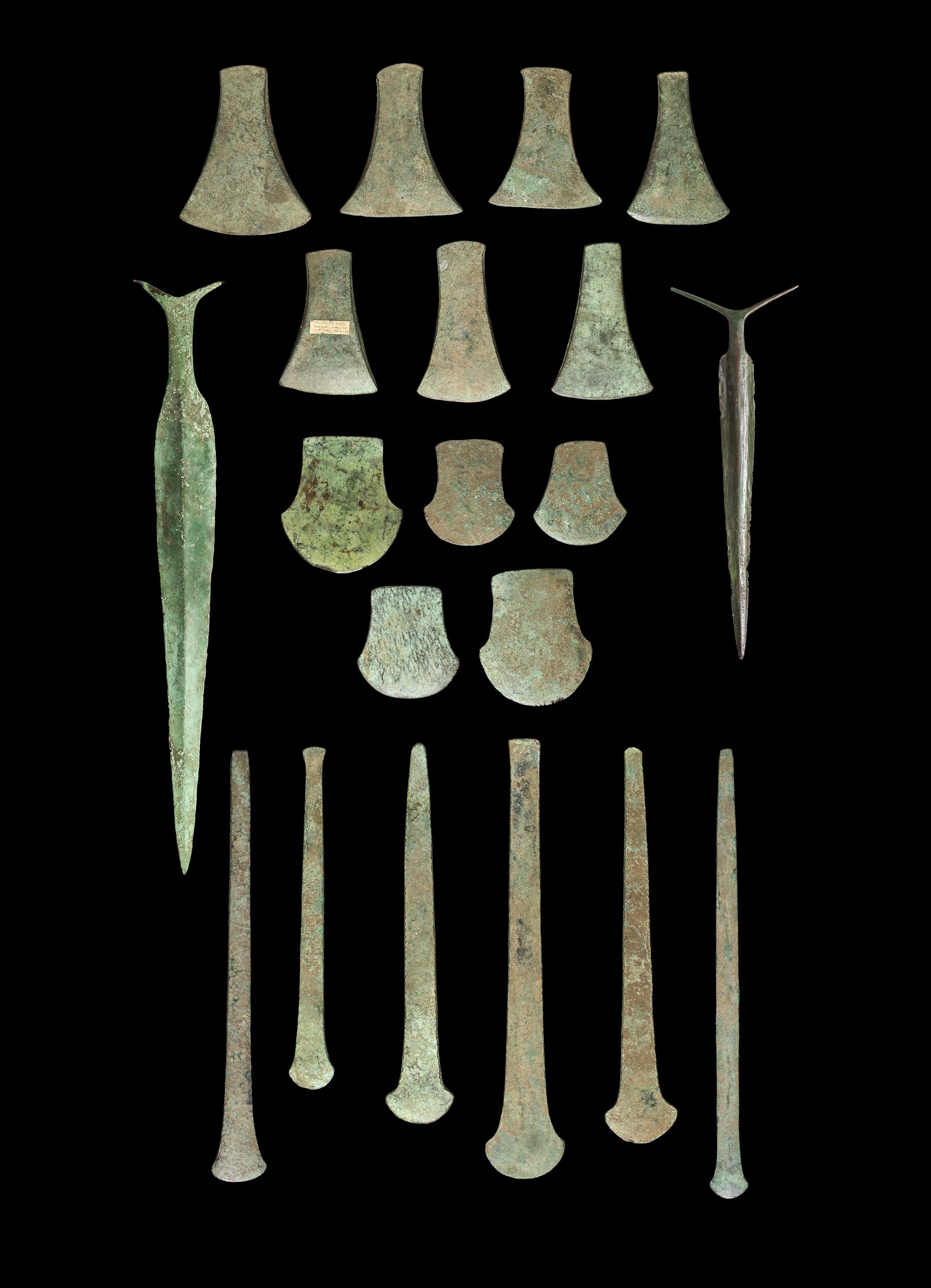
Late Harappan settlements along the Yamuna and Sutlej Rivers carry markers of rural economies and infrastructure. These settlements see a shift towards Chalcolithic cultures as characterised by the presence of copper hoards found in northern India, and wheel pottery made in red, orange, black and white. These overlap with the late phase of Ochre Coloured Pottery and the emergence of early Iron Age cultures such as Painted Grey Ware.
A change in pottery styles marks the advent of the Iron Age in the northern part of the subcontinent. The Painted Grey Ware culture begins its expansion from the upper Gangetic regions and the Ghaggar-Hakra River valley, including present-day sites in India such as Ahichchhatra, Hastinapur and Mathura in Uttar Pradesh; and Panipat, Jogankhera and Kosambi in Haryana. Pottery from this culture reaches a standardised representation and is made from terracotta, stone and glass with decorative faience, often representing human and animal figurines. There is evidence of walled settlements with a hierarchy: sites such as Jakhera in present-day Uttar Pradesh contain semi-urban constructions, structures to accommodate surplus agricultural yield, paved roads and riverine connections, and markers of trade in mineral ores and iron tools. Fired bricks, possibly associated with ritual altars, suggest the emergence of social organisation and ritual concepts.
Agricultural clans and tribes led by rajans (military chiefs) spread across the Gangetic Plains. They lay the basis for proto-kingdoms and civil governance through the development of concepts of tribal land, inheritance, enslavement, complex ideas of metaphysics, and new rituals and sacrifices. Although little to no art historical evidence will survive from these early kingdoms, literary evidence will suggest the consolidation of political power in Hastinapur, Kaushambi and Shravasti in present-day Uttar Pradesh, and Champa in present-day Chhattisgarh in India. These polities had trade routes, markets and agricultural centres.
The religious teachers Siddhartha Gautama, Mahavira and Makkhali Gosala emerge to prominence during a period of intellectual churn. While initially challenged by other groups and schools, they consolidate Buddhism, Jainism and the Ajivika sect, respectively. Their followers will go on to dominate religious art, literary activity and political philosophy for centuries. The growth of these schools proceeds alongside the consolidation of political power in the Gangetic Plains, with major powers such as Magadha and the Licchavi confederation going to war, and elites seeking to ally with powerful religious sects.
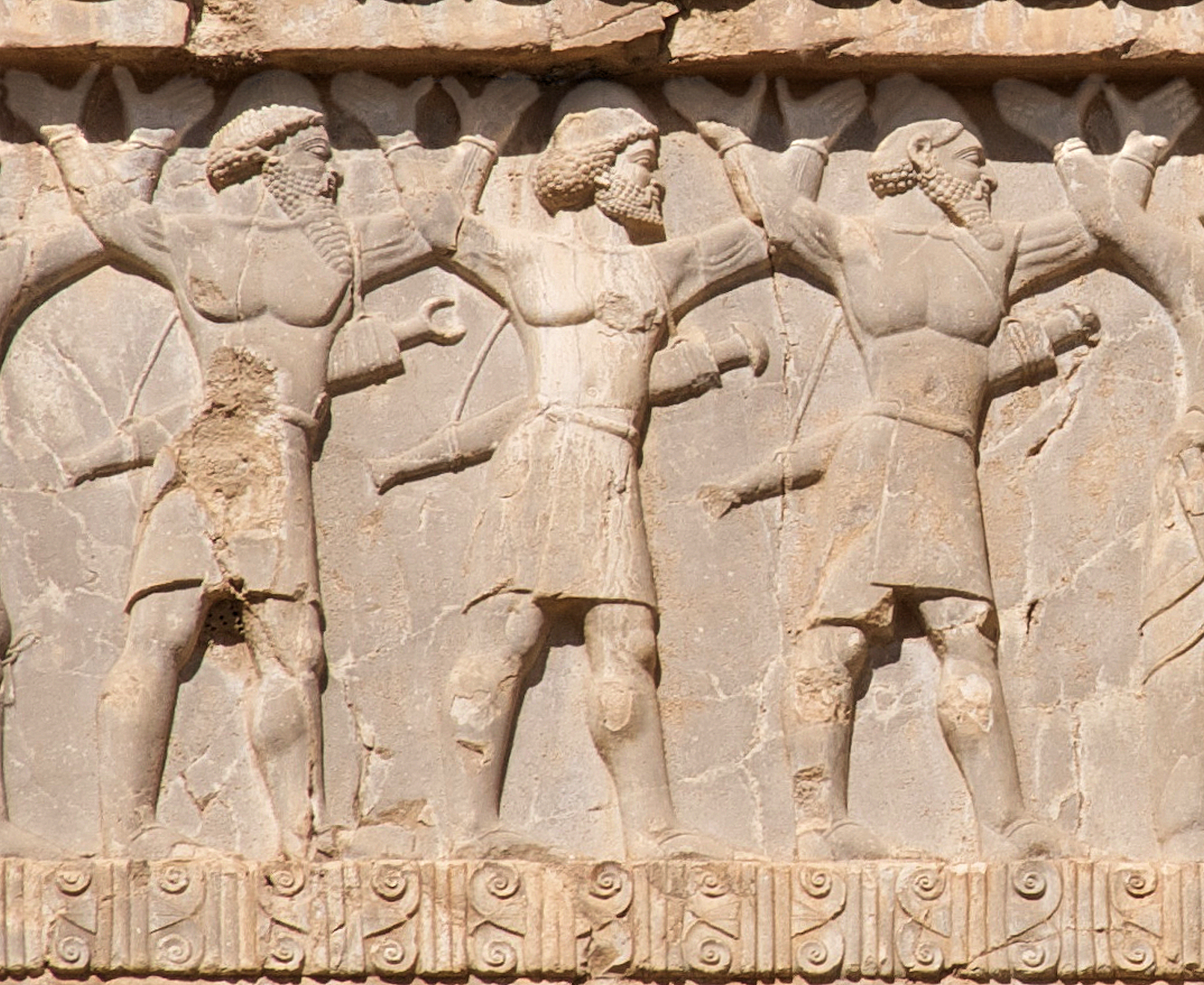
The Persian Achaemenid king Darius takes control of the Indus Valley and establishes satrapies — autonomously governed sub-divisions of the empire. This governing system will continue to be used in the region for centuries under various empires, including territories briefly ruled by Alexander III of Macedon (also known as Alexander the Great), with satraps often revolting and establishing independent kingdoms. The ensuing centuries, from the Persian conquest in the sixth century BCE to the decline of Kushan rule in the fifth century CE, will see a great degree of intermingling and exchange in this region, especially between cultures from the Mediterranean coast, the West and Central Asian hinterland, and the Gangetic Plains.
The Nanda dynasty, based in the city of Pataliputra in Magadha (present-day Patna in Bihar, India), successfully conquers most of the Gangetic Plains, creating the first pan-Gangetic imperial formation. The fertility of the soil, regular rains and year-round access to freshwater make the plains ideal for settlement under a stable government. This, combined with the Nandas’ centralised system of taxation and administration, allows the empire to emerge as a wealthy and powerful force in South Asia, even pushing back against attempted Greek invasions.
The campaigns of Alexander III of Macedon establish new Hellenistic polities through West Asia, including present-day Iran and Afghanistan. Based in territories formerly ruled by Persia and proximate to Central Asia, these polities — especially the Greco-Bactrian and subsequent Indo-Greek kingdoms — are distinguished by a high degree of cosmopolitanism in their ruling classes, and their art.
The Nanda dynasty is overthrown by the Mauryas, who proceed to expand the Gangetic region’s influence through campaigns into present-day Afghanistan, and Punjab and Gujarat in India. South of the Narmada River in India, however, their authority is transient, with independent polities existing in present-day Odisha.
Iron Age settlements in the Deccan begin to enter global trade. Further south, the earliest Sangam texts begin to take shape in Tamil. These lay the foundation for many centuries of Tamil literature and aesthetics; and a number of groups participate in their making — from wandering bards to Buddhist and Jain monks, lay practitioners, and minor chiefdoms and small urban kingdoms.
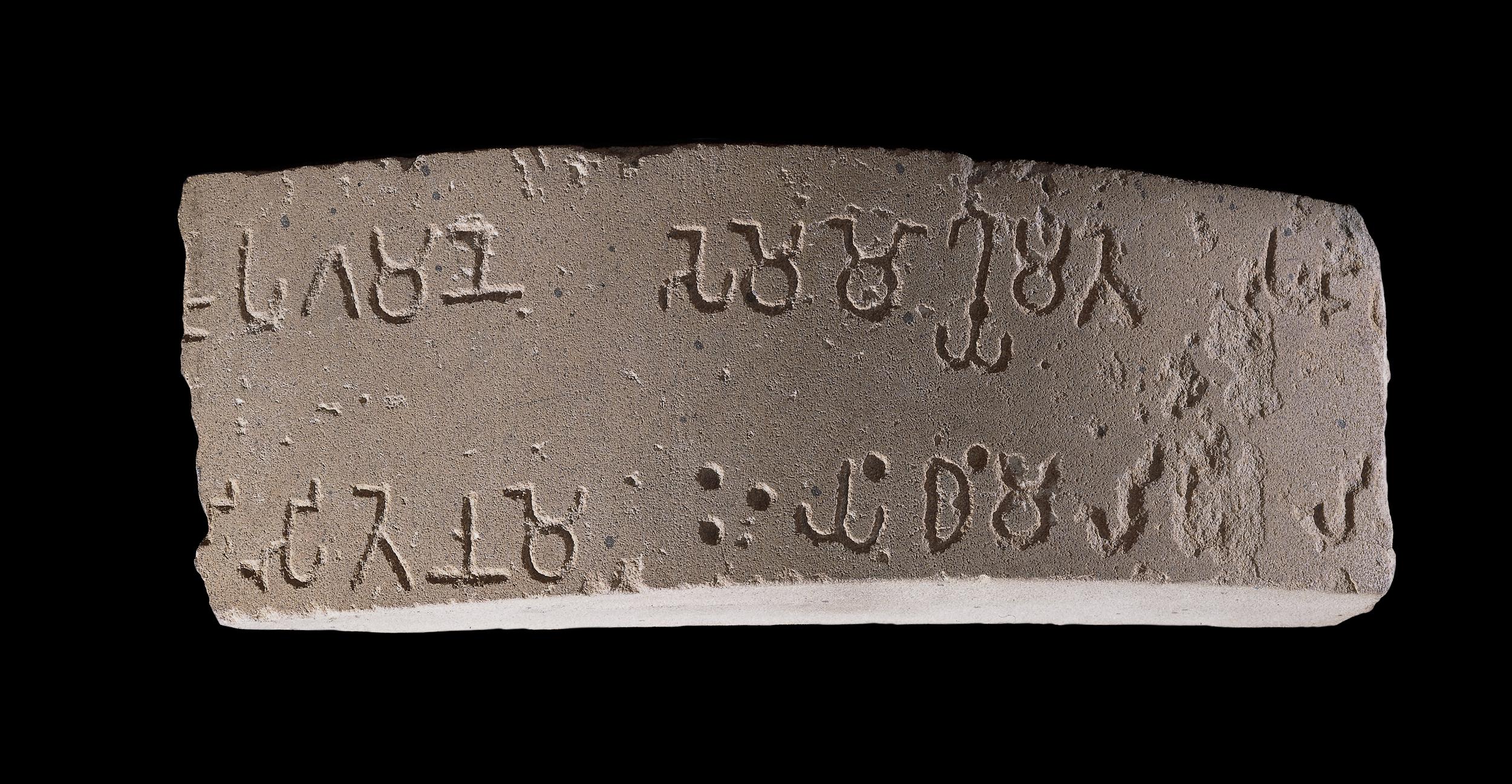
The Mauryan ruler Ashoka commissions a series of edicts across his territories, which are often carved in rock. In the metropolitan core of the empire, stone pillars bearing his edicts are erected. These will constitute some of the earliest and most sophisticated examples of early historic South Asian art, being distinguished by a high degree of naturalism and a distinctive surface treatment now known as Mauryan polish’. Imitations of Ashokan edicts are commissioned across the subcontinent, especially in the Deccan, by local elites. Trade and religious networks — especially Buddhist — begin to expand alongside this. A series of monumental stone and earth stupas, including the Sanchi Stupa, are commissioned, suggesting an already established tradition of architecture and sculpture in wood.
As urbanisation grows in India, trade between the Mediterranean world and South Asia also sees a rise. The northwestern part of the region — a geographical, political and cultural crossroads — gives rise to the first anthropomorphic form of the Buddha. Key Buddhist texts and Indian epics are written, even as newer religious ideas arrive in the region.
A Sanskrit text on dramaturgy, poetics and aesthetics, the Natyashastra is the earliest known treatise on performative arts in South Asia. Composed in verse sometime between the second century BCE and fourth century CE by the aesthetician and sage Bharata, the Natyashastra describes key elements and structures of performance, which are later extended to apply to literature, music and the visual arts. Crucially, the Natyashastra includes theories of bhava and rasa, roughly translating to ‘emotion’ and its aesthetic presentation, respectively. The subject matter of the text will be expanded and altered multiple times, and the text will continue to be a cornerstone of traditional Indian art and performance to the present day.
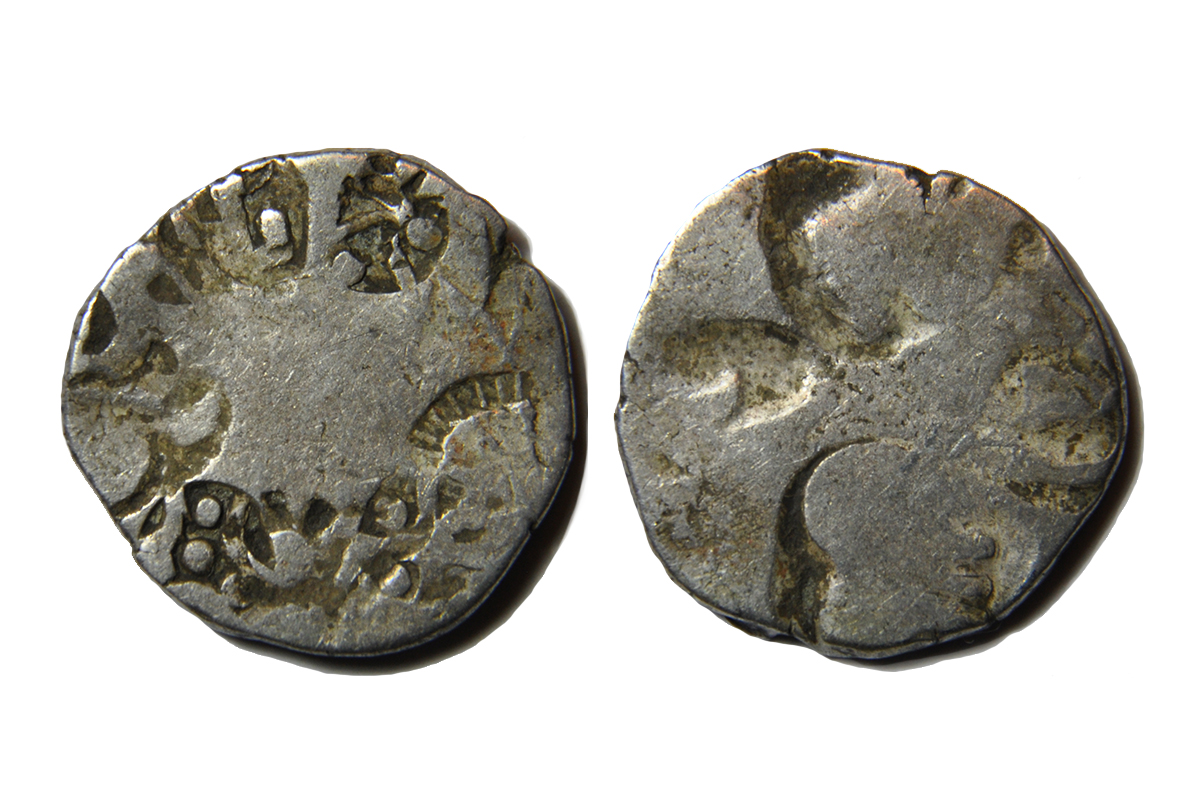
The Mauryan polity begins to decline, to be replaced by smaller kingdoms in the Gangetic Plains. The Indo-Greek kingdom expands to Punjab, and Central Asian peoples such as the Sakas (Indo-Scythians) and Pahlavas (Indo-Parthians) begin to migrate towards the subcontinent. Their coinage reveals considerable Hellenistic as well as West Asian influences. Various Yaksha and Yakshi cults proliferate through the Gangetic Plains, and other major stupas — such as Bharhut in present-day Madhya Pradesh, India — are commissioned, often by diverse groups of actors, including merchants.
The consolidation of stable, cosmopolitan polities through Eurasia encourages the growth of trade through both land and sea routes. Often called the Silk Road and the Maritime Silk Route — though cotton and spices were traded in larger quantities — these trade networks facilitate travel and the exchange of goods at unprecedented scales. The maritime routes connect existing independent trading centres on the Mediterranean Sea, the South China Sea and the Indian Ocean; particularly important to this is the harnessing of the monsoon winds for annual trade between Egypt and the western coast of India. By the first century CE, an extensive sea trade route emerges, linking ports in Roman Egypt and Arabia with South Asia, through ports in present-day Gujarat, Tamil Nadu and Sri Lanka. Overland connections such as the Persian Royal Road, and the expansion of Hellenistic polities and the Han dynasty into Central Asia, link China to the Mediterranean through the Parthian and Bactrian empires.
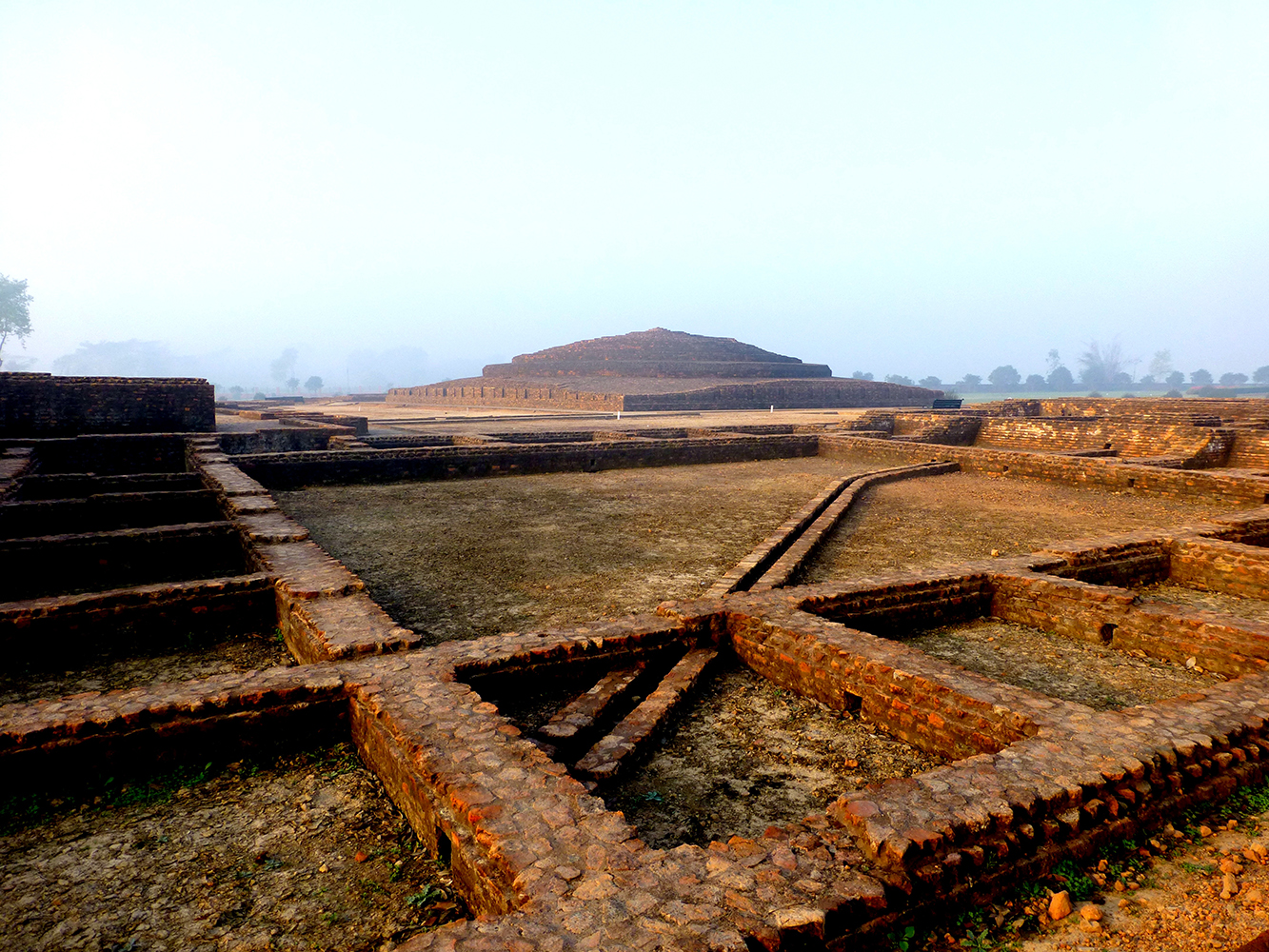
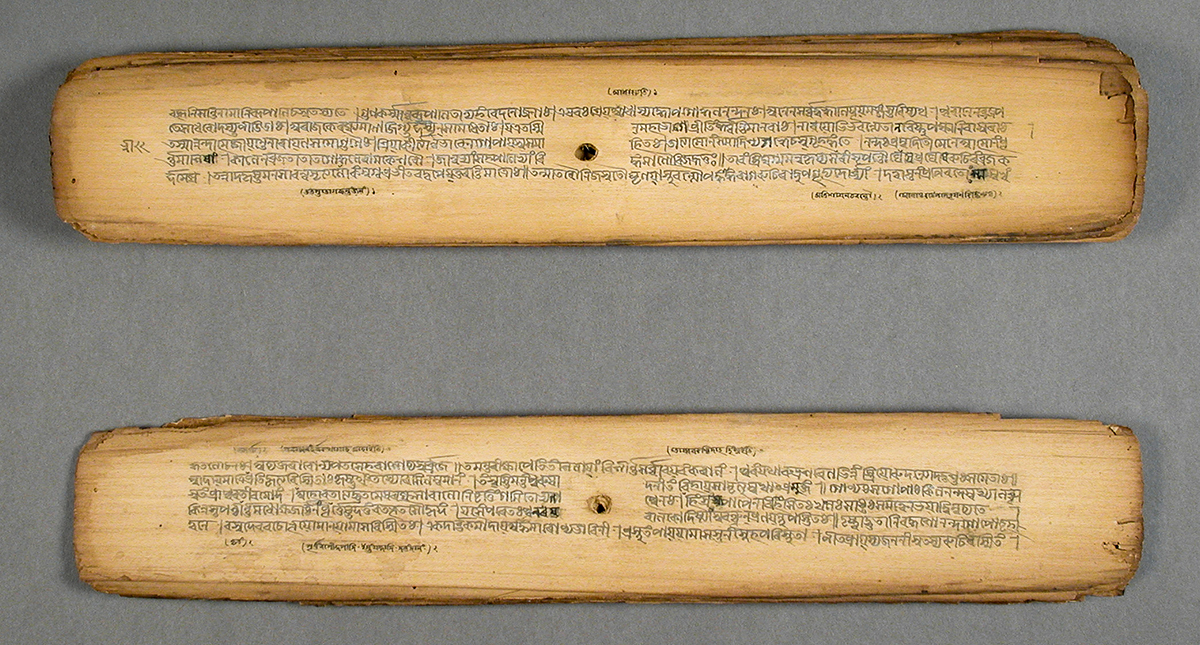
The Calcutta-Bairat Edict (Minor Rock Edict 3), commissioned by the Mauryan emperor Ashoka, urged both the priesthood and the common man to study the Buddha’s teachings, with a listing of scriptures. Orally preserved versions of these, believed to have been transmitted to present-day Sri Lanka during his reign, are written down on palm leaf, possibly during the fourth Buddhist Council in the country. This gives rise to a new written tradition that coexists with the extant practice of oral memorisation and recitation.
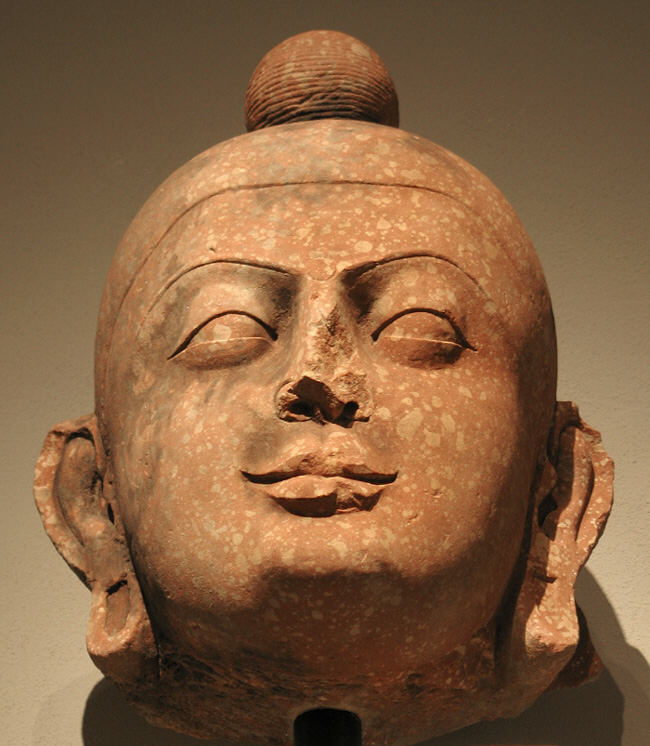
The Pali canon is considered the standard scripture of the Theravada school of Buddhism. Divided into three Pitakas or categories, the texts outline scripture related to the rules of the Sangha, or collective; sermons by the Buddha; and treatises on early Buddhist doctrines. This date is contested, as it is derived from the alleged oral transmission of the canon during the reign of Ashoka and from historical traditions from the Mahavamsa, or the history of Sri Lanka. The earliest complete commentary that covers the entire canon was first compiled by Buddhaghosa in the fourth and fifth centuries CE.
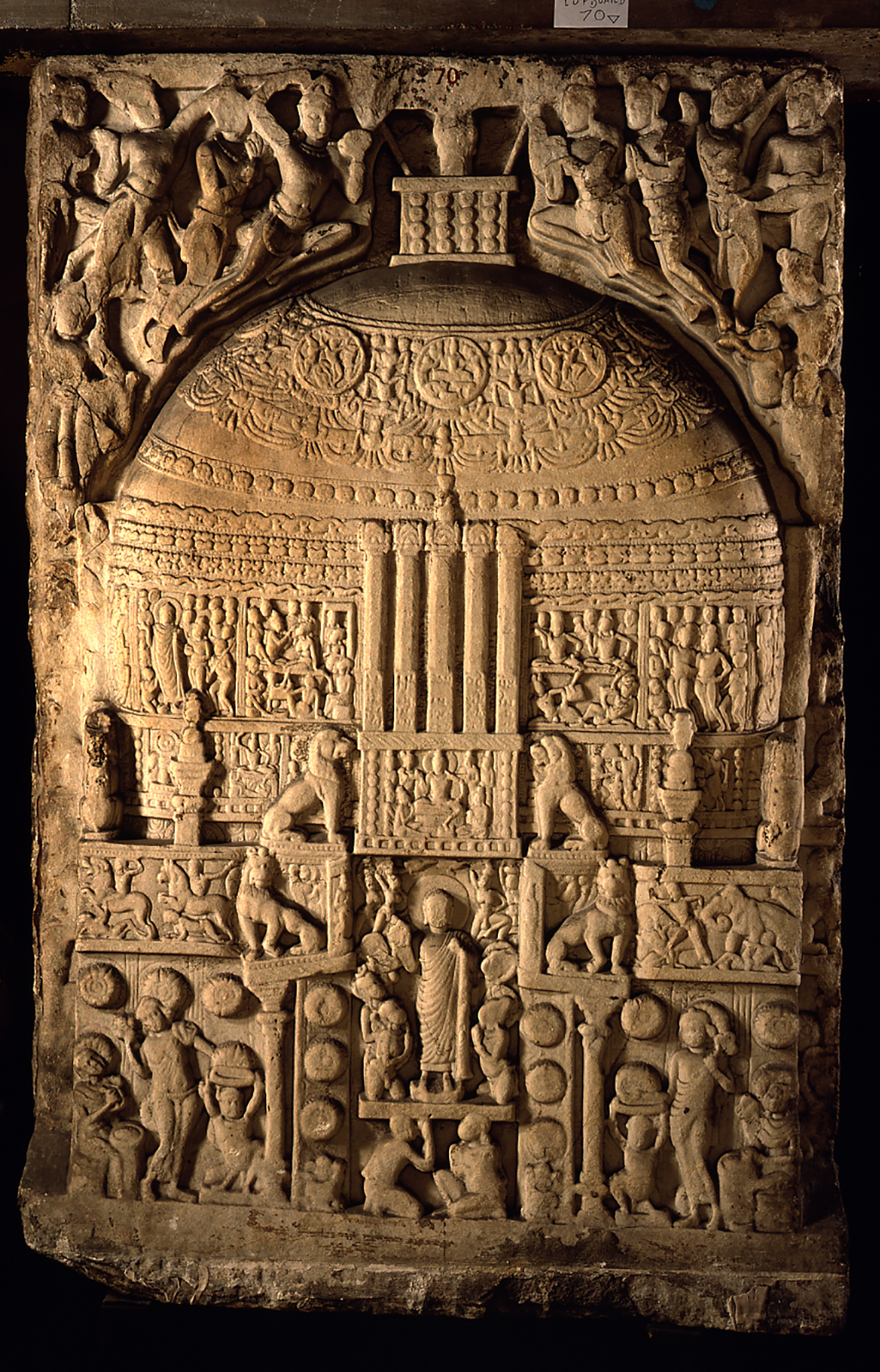
Hitherto marked by relatively small settlements that used iron implements and had megalithic burial practices, the Deccan begins to urbanise. Major coastal centres emerge, and new kingdoms are established, such as those of the Satavahanas. The earliest examples of royal cave shrines and Buddhist monasteries in the Deccan are commissioned, already displaying the influence of older wood-construction techniques from northern India. Some of the earliest known Deccan coins are issued, revealing a considerable Hellenistic influence that appears to have arrived by way of Roman trade or through interactions with the Saka satrapy in present-day Gujarat. In northern India, Mathura begins to emerge as a major urban and artistic centre under the patronage of the Northern Sakas. While they are gradually driven from the region by the invading Kushans, the Sakas remain a significant force in Gujarat and parts of the Deccan.
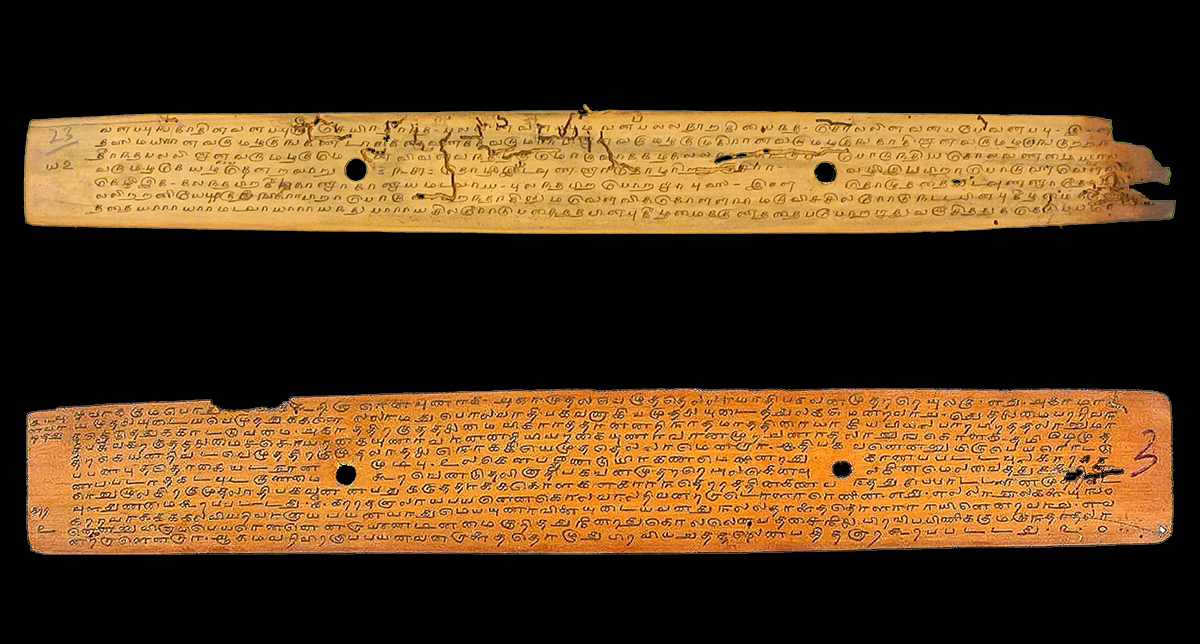
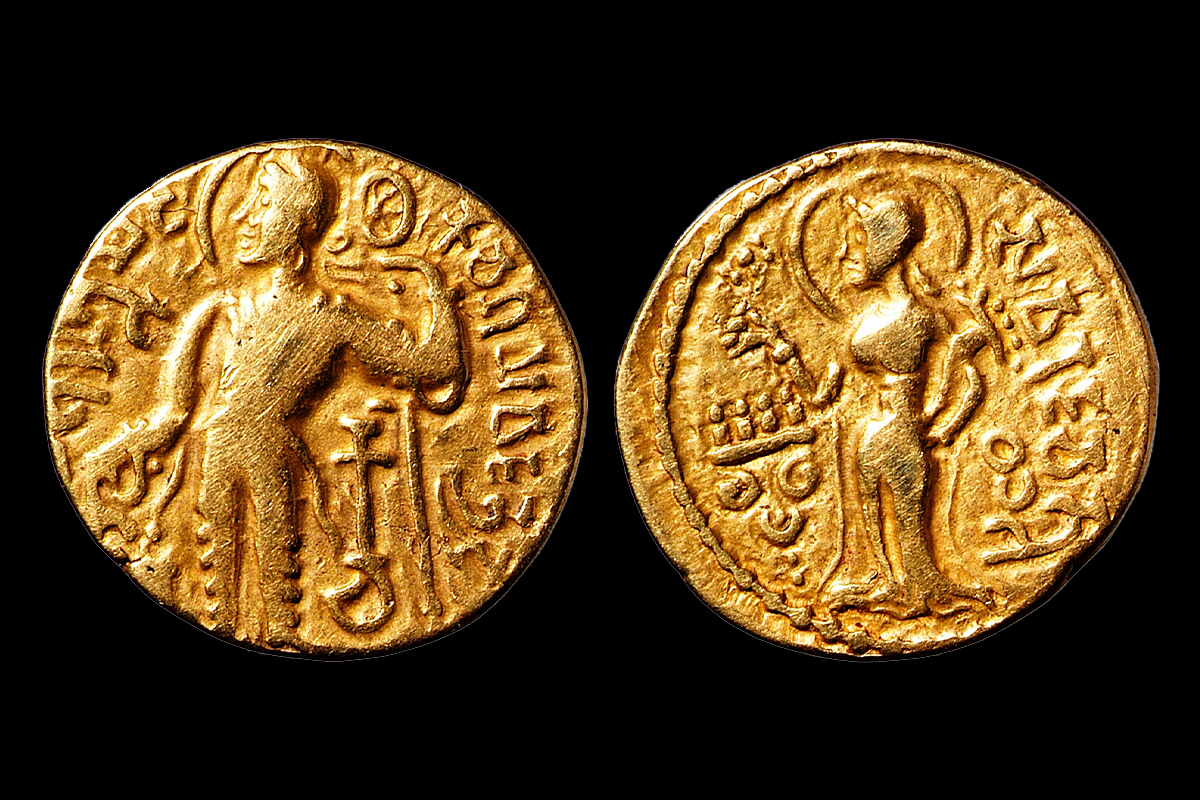
The expansion of trade routes from the subcontinent at this time facilitates the movement of missionaries and the establishment of religious sects across important centres. Buddhism is a major beneficiary of this dynamic, and is likely the dominant religion of South Asia by this time. However, the subcontinent’s western coast also becomes home to diverse communities, including merchants and preachers from West Asia.
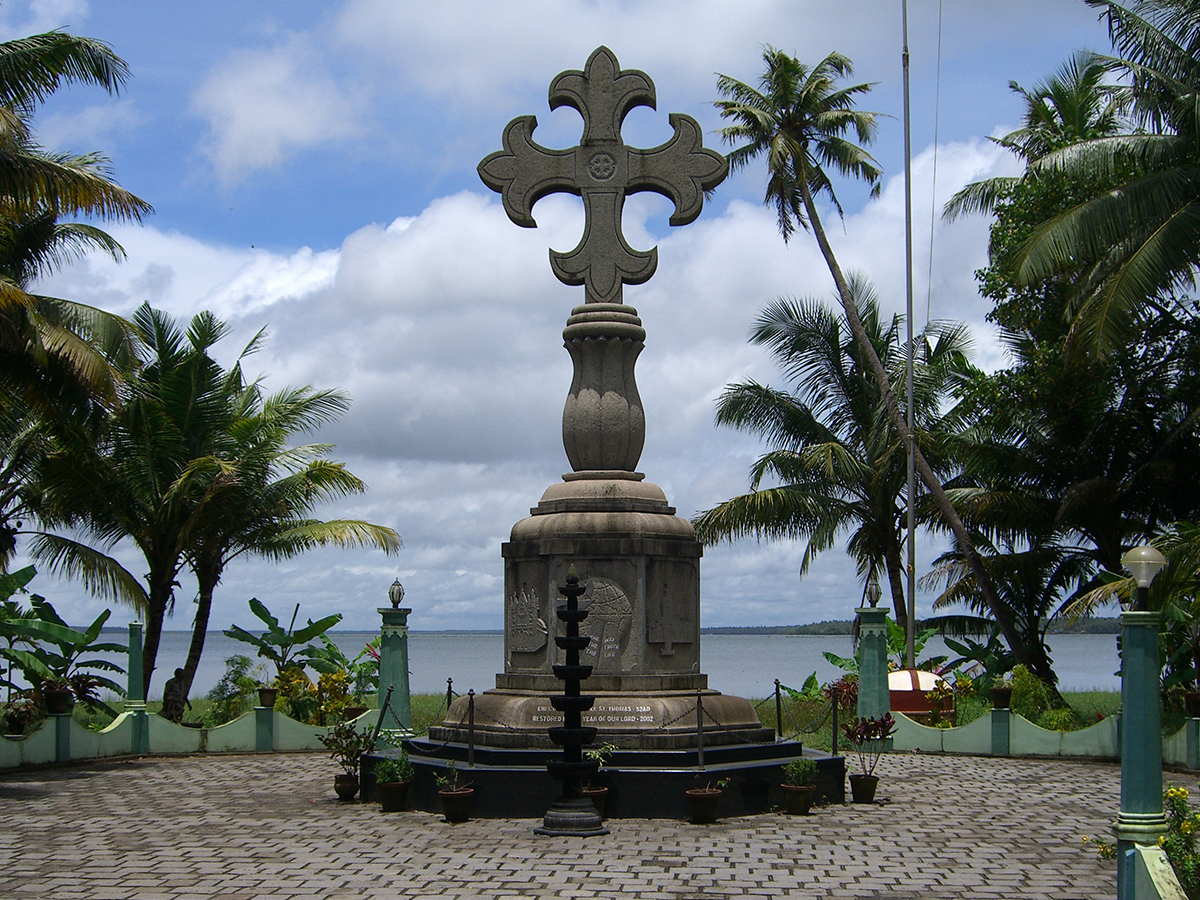
One sign of this globalism, based on traditional beliefs held by various Christian communities in present-day Kerala, is the journey of Saint Thomas the Apostle to India, within two decades of the crucifixion of Jesus Christ, leading to the establishment of the East Syrian Rite along the Malabar coast.
The legend of Saint Thomas’ journey to India is today supported primarily by the Syrian Christian community in India, also commonly known as Thomas Christians. According to the more prevalent theory, he arrives by sea at the Malabar coast, presumably in Muziris in present-day Kerala in 52 CE, where he conducts his missionary work until 69 CE. However, according to other sources the saint takes a land route to India, first arriving in present-day Punjab, then part of the Indo-Parthian kingdom, and later travelling to the south of the subcontinent. In 69 CE, Thomas takes his missionary work to Mylapore (in present-day Tamil Nadu), where he dies in 73 CE. According to the most popular of the narratives around his death, he is killed with a trishul (or trident) by a group of Brahmins when he refuses to worship the Hindu goddess Kali during a sacred procession. A majority of the saint’s missionary work in India, specifically the stories of his martyrdom, will later be detailed in the third-century literary work Acts of Thomas, possibly composed in Edessa in present-day Turkey.
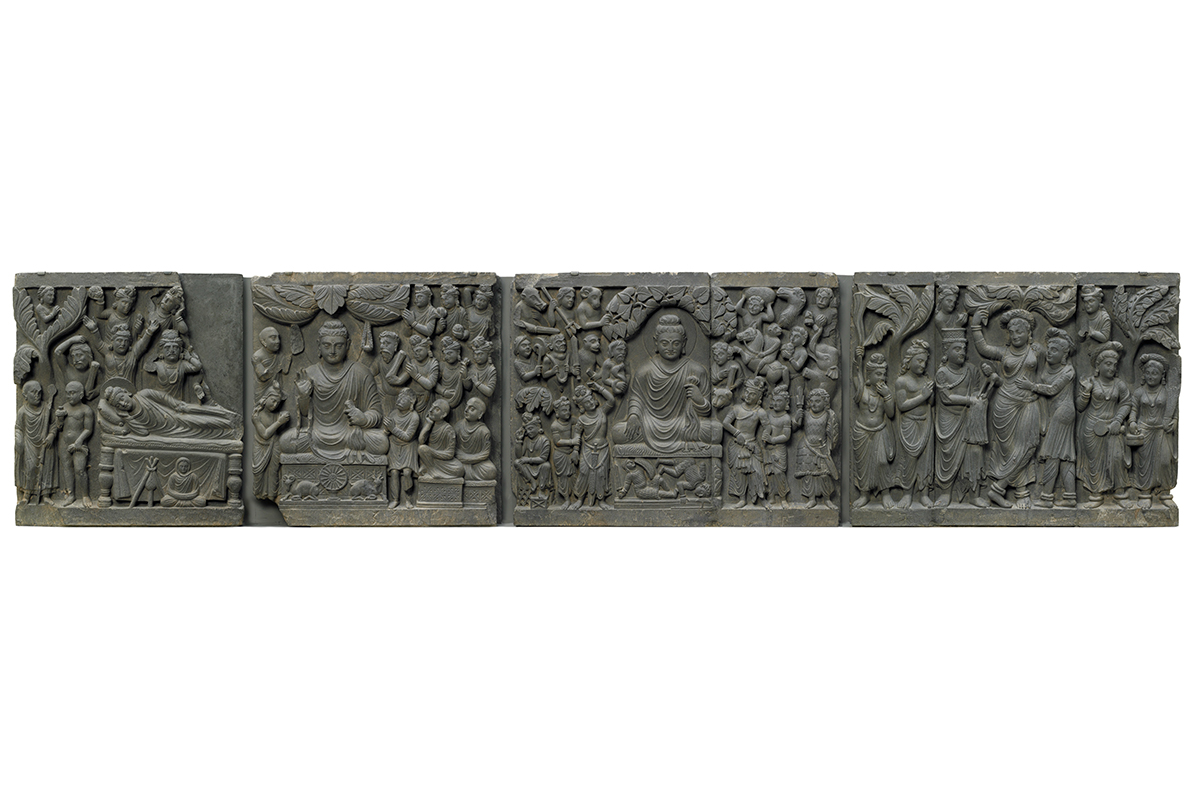
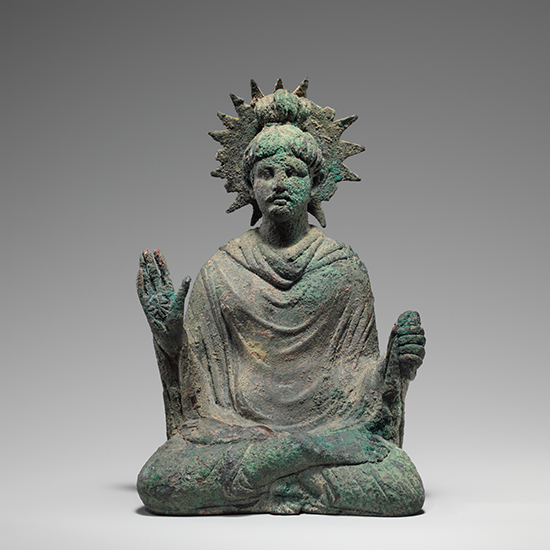
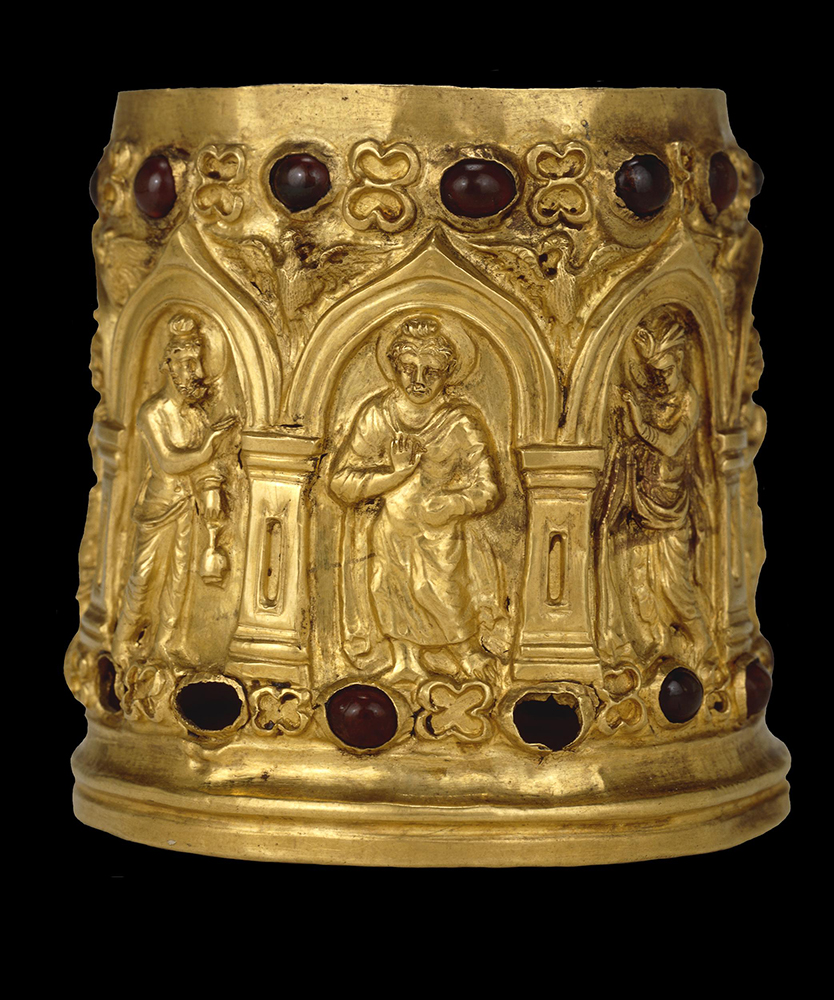
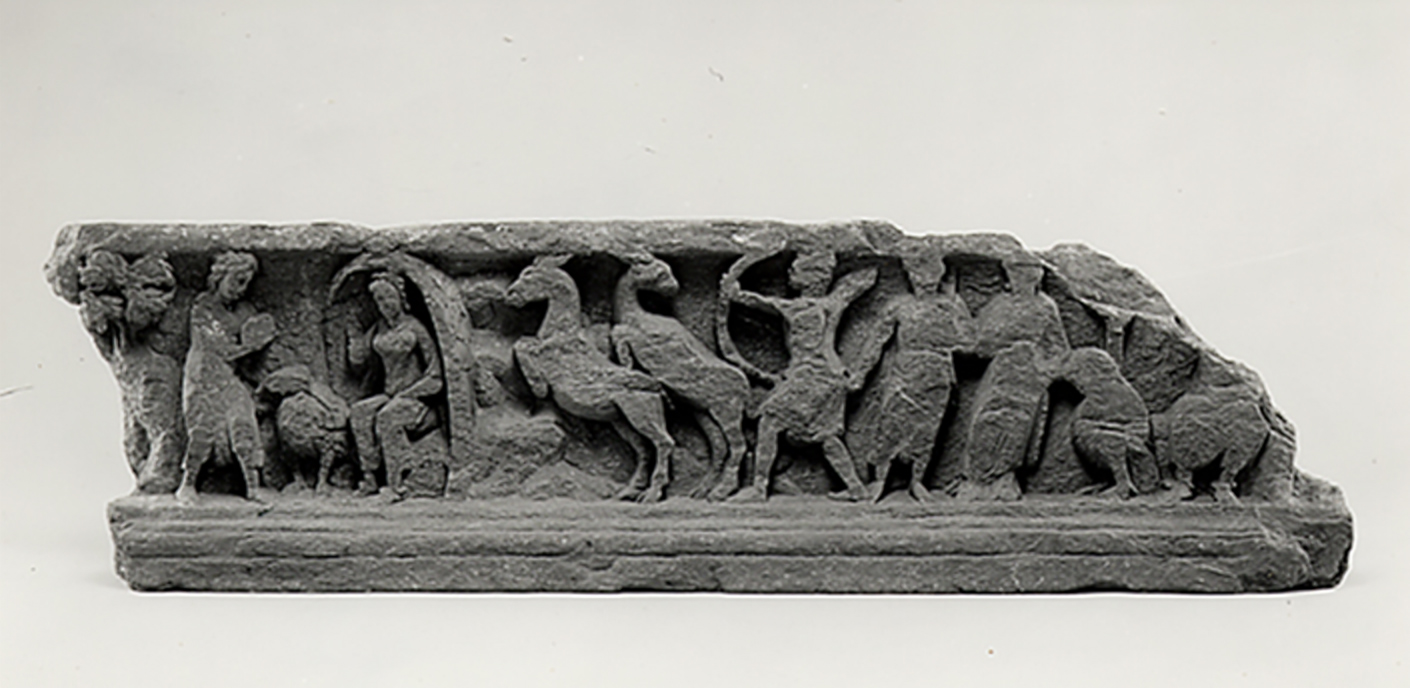
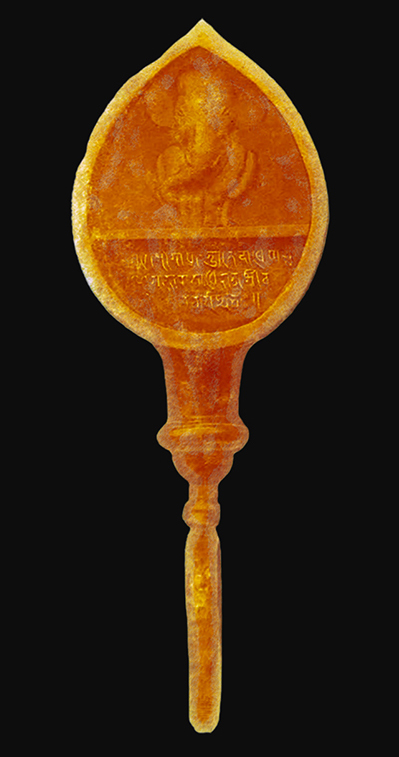
The first anthropomorphic representations of the Buddha are created in Gandhara (in present-day Afghanistan and Pakistan), with the earliest surviving example being the Bimaran reliquary. Like many images and symbols that become ubiquitous in the subcontinent due to their sociopolitical importance, the Gandhara Buddha is a mix of indigenous and external influences: the Apollonian halo; the muscular build and long, heavy robes characteristic of Greco-Roman art; and the soft facial features, the padmasana (cross-legged) position and his various mudras (gestures) derived from Buddhist scripture and styles. These features are the result of the region’s status as a geopolitical crossroads as well as renewed connections with the Mediterranean world dominated by the Roman empire. The Gandhara Buddha will become the foundation for all future representations of the Buddha across Asia.
Deriving from oral traditions possibly dating back to the fifth and fourth centuries BCE, the Hindu epics Ramayana and Mahabharata are shaped around this period into their most influential forms surviving into the present day. They will be expanded over the centuries to include geographical, aesthetic, religious and cultural details, retaining their relevance into the twenty-first century. The popularity of the Ramayana in particular will be suggested by the numerous variations of the epic, such as a Buddhist retelling from the Pali canon, Dasaratha Jataka; a Jain retelling in Prakrit named Paumachariu; a Tamil version by Kamban named Ramavataram, from the twelfth century; and an Awadhi composition, the Ramcharitmanas by Tulsidas, from the sixteenth century.
As empires rise and fall across the region, ideas about kingship, divine authority, and the projection of a ruler as a deity are reinterpreted and adopted. Vedic gods gain new identities through religious literature, and the northeastern Brahmaputra valley becomes a significant political and cultural region.
The Kushan empire expands through much of present-day Afghanistan, Punjab and the Gangetic Plains. In Mathura, a major Kushan city, new and highly influential sculptural modes emerge, often depicting the Buddha. Sanskrit literature begins to be used in court-commissioned mahakavyas (great or epic poems) such as Ashvaghosha’s Buddhacharita. This is among the earliest known courtly use of the language, a trend that will accelerate and expand in subsequent centuries.
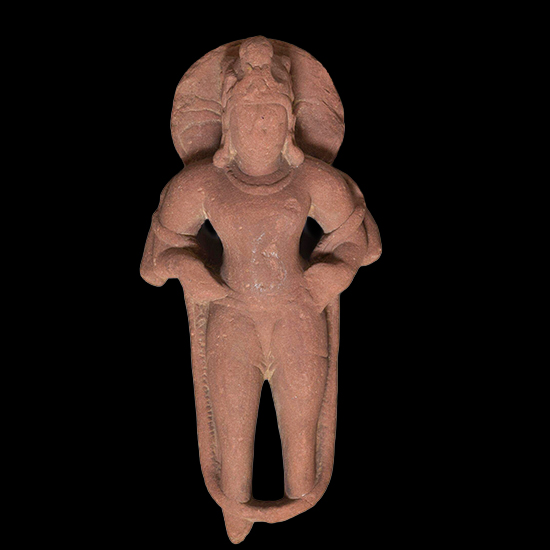
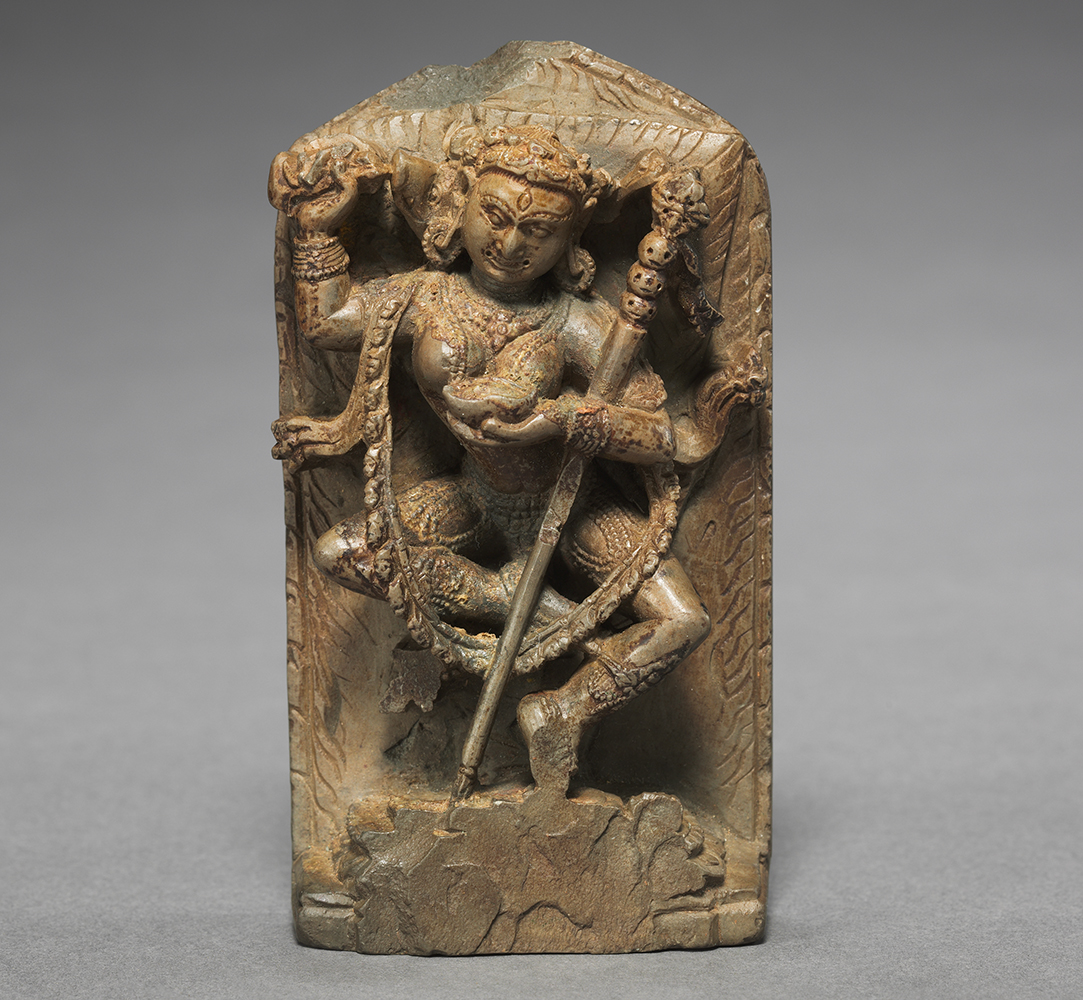
The religious use of the language also grows, with various schools and cults beginning to compose mythological, iconographic and ritual compendia known as the Puranas; these allow for the reinterpretation of older Vedic pantheons to give primacy to supreme deities such as Vishnu and Shiva, both of whom become the premier royal gods of the early medieval period. Influential iconographic forms of deities such as Skanda and Durga also take shape, influenced by Kushan deities such as Mahasena and Nana.
Faced with geopolitical challenges from Persia and Central Asia, the Kushan empire begins to disintegrate. New North Indian aristocratic houses begin to emerge to challenge them. South of the Narmada River, a series of major Buddhist monuments and monasteries are constructed, including the final phases of the Great Stupa at Amaravati and the structures and standing Buddhas of Nagarjunakonda. Much of present-day coastal Andhra Pradesh and inland Telangana, as well as parts of Karnataka, produce volumes of Buddhist art.
The Sangam period comes to a close in southern India. A gradual shift in the political economy of the southern tip of the peninsula begins to take place, with the spread of agriculture and irrigation, the migration of Brahmin groups, and increasing elite support for Vedic and Puranic worship. Royal culture, hitherto centred on individual heroic lines, is increasingly codified in Puranic terms, through the control of fertile territory and the patronage of religious elites.
The Gupta dynasty seizes control of the ancient region of Magadha and begins to aggressively conquer the Gangetic Plains. Building on earlier innovations in courtly Sanskrit and adapting the naturalistic style of Kushan art and some elements of their coinage, the region’s cultural and political idiom lays the basis for developments through the early medieval period, rapidly spreading into the Brahmaputra River valley, the east coast of present-day India, and through trade, into present-day Myanmar and other locations in Southeast Asia.
Located in the Brahmaputra valley, Kamarupa becomes a politically significant region, beginning with its consolidation by the Varman dynasty, tributaries of the Gupta empire. A fourth-century inscription added by Samudragupta to the Allahabad Pillar (originally commissioned under Ashoka in the third century BCE) mentions Kamarupa. The kingdom is a crucial border state at this time, given its proximity to the Tuyuhun kingdom (in present-day Tibet) and China, under the Jin dynasty.
The Guptas conquer the last remaining Saka kingdom (in present-day Gujarat) and commission the Udayagiri Caves (in present-day Madhya Pradesh), establishing the precedent for the identification of kings with gods, especially Vishnu and his avatars. Sanskrit increasingly becomes adopted as a language of power, and is used in political as well as literary contexts.
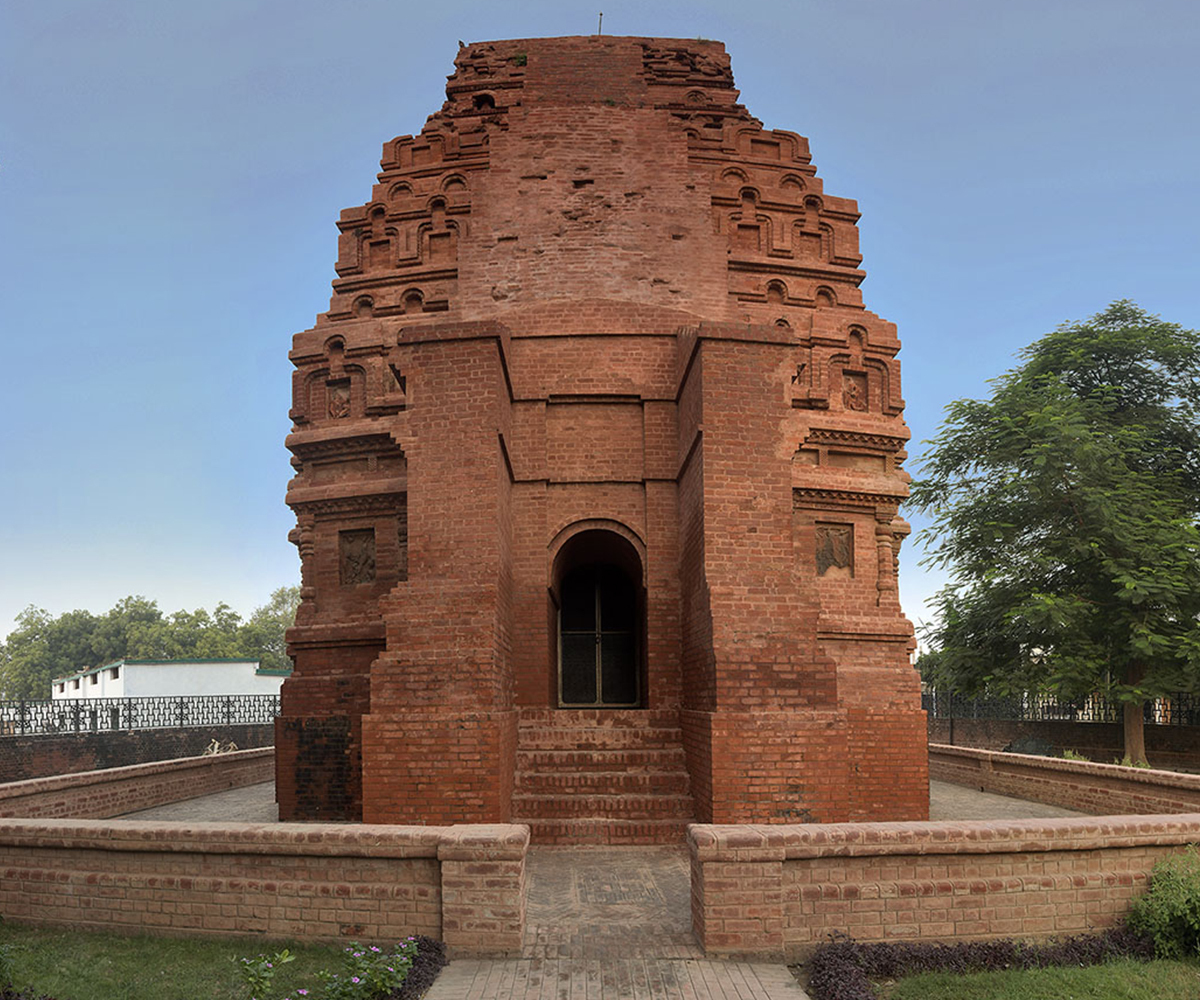
Gupta hegemony in northern India is marked by the construction of a large number of brick temples to Hindu deities, the best surviving examples of which are the Bhitargaon Temple and the Deogarh Dashavatara Temple in present-day Uttar Pradesh. These are among the earliest known examples of a proto-Nagara architectural mode, financed by Gupta officials and feudatories. The core features of these temples are a shikhara (a tall, pyramidal superstructure) above the garbhagriha (main sanctum or shrine), sharing a jagati (common plinth) with one or more mandapas (prayer and ceremony halls), and no boundary walls.
Possibly the most culturally significant Pali text in Sri Lankan history, the Mahavamsa is written down, probably by a Buddhist monk at the Anuradhapura Mahavihara named Mahanama. Speculated to have existed in oral form for a few centuries already, it serves as a chronology of the Sinhalese kings of Sri Lanka, their achievements and their actions in the service of Buddhism. It begins with the island’s conquest by king Vijaya — believed to be a relative of the Buddha — in 543 BCE, and covers landmark events such as the introduction of Buddhism to the island by Mauryan emperor Ashoka’s children Mahinda and Sanghamitta in the third century BCE, and king Dutugemunu’s unification of the country after a period of strife under the rule of the Early Cholas in the second century BCE. The Mahavamsa’s narrative ends in the fourth century CE, before the time of its own writing and before the arrival of the Relic of the Buddha’s Tooth. A second part, the Culavamsa, will be composed and added to between the thirteenth and nineteenth centuries, picking up where the Mahavamsa leaves off.
While many of the Mahavamsa’s chronicles have been corroborated by inscriptions, archaeological evidence and independent sources, the veracity of some is still a matter of debate among scholars, especially those passages that find no mention elsewhere. These include the identity of the author and compiler Mahanama himself, the date of Vijaya’s arrival, the alleged compilation of the Pali Canon in the first century BCE and the destruction of the Anuradhapura Mahavihara in the fourth century.
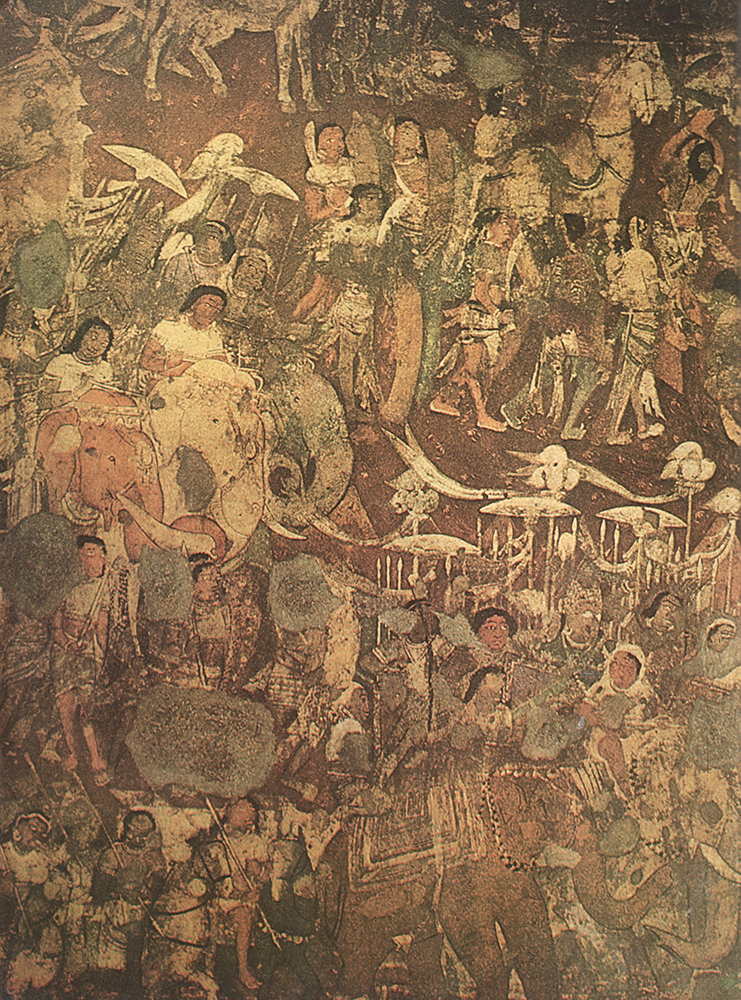
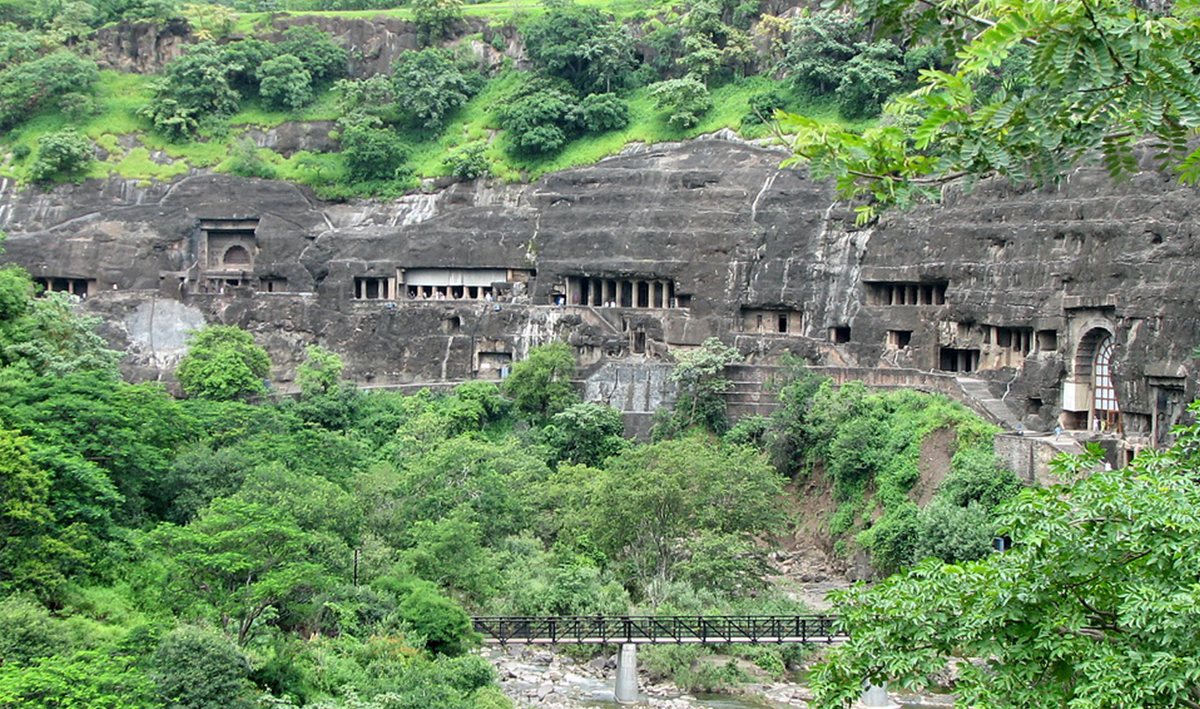
Under the pressure of internal political crises, and migrating Central Asian peoples such as the Sveta Huna, the Gupta polity begins to disintegrate. In the Deccan, the Vakataka dynasty, previously linked to the Guptas by marriage, patronises North Indian emigre artists as well as local Deccan cave architects through a series of cave excavations at Ajanta (in present-day Maharashtra). These show a highly sophisticated visual aesthetic characterised by naturalism, dynamism and vibrant colour, and a discriminating use of perspective and shading.
The recently developed Gangetic model of kingship — using Sanskrit as a language of power, emphasising the king’s divine connections, constructing and patronising religious institutions linked to Puranic and Dakshinachara (Right-Hand Tantrism) traditions, and the subjugation of other states through war — begins to spread rapidly through the subcontinent.
As regional polities consolidate their authority, their patronage supports the rise of new temple architecture styles and monument complexes. Poetry becomes a medium for devotion, and sects dedicated to particular deities emerge.
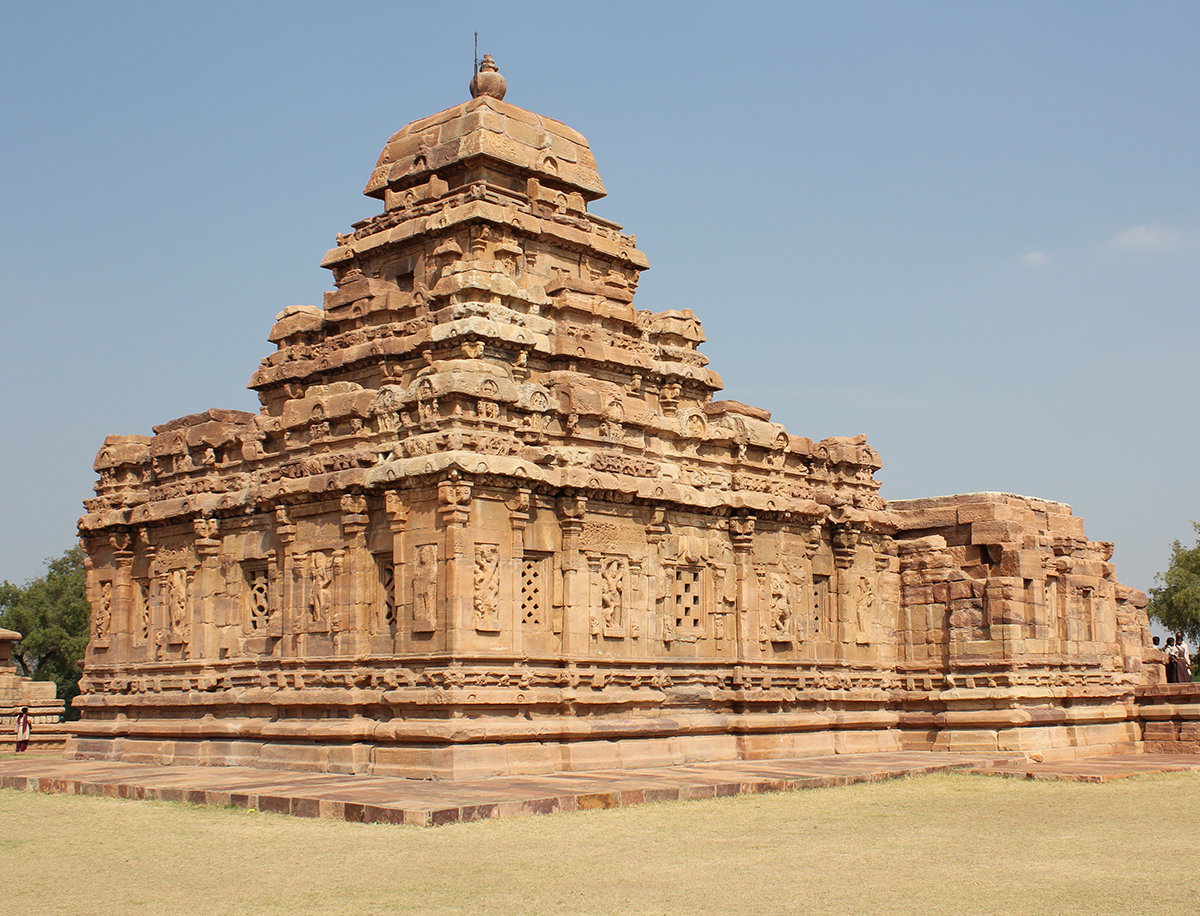
The Chalukya dynasty takes control of Badami in present-day northern Karnataka and proceeds to establish a large empire over much of the Deccan region over the next century. The dynasty’s multiple parts and vassal states become the first empire in the region after a string of small but influential kingdoms and their architectural patronage set a stylistic precedent for Dravidian temples in the northern Deccan, with clear influences visible for several centuries at sites such as Pattadakal and Hampi. This Deccan architectural mode, known as the Vesara or Karnata Dravida style, is distinguished by its use of architectural modules to decorate structures.
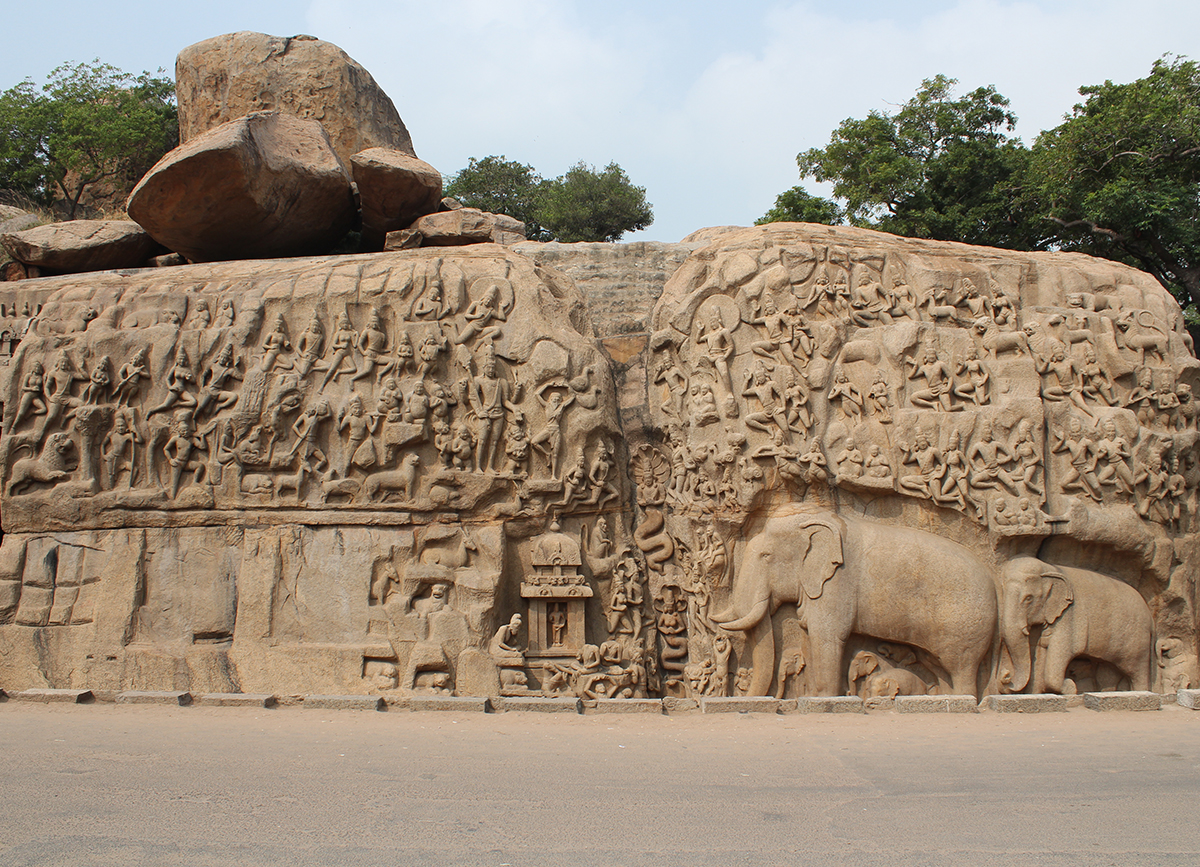
In present-day Tamil Nadu and Andhra Pradesh, India, the Pallava dynasty under Mahendravarman I begins a period of extensive patronage for the arts. For the next three centuries, the Pallava court will commission Tamil and Sanskrit literature, as well as major works of architecture, sculpture, poetry, theatre and music. The traditions and styles that develop from this patronage will persist well beyond their reign.
While some early caves at Mamallapuram containing multiple shrines reflect a notable desire to bridge divisions across Vaishnava and Shaiva sects, successive waves of conquests and conflicts with Vaishnava monarchies result in a rejection of Vaishnavism over time. This leads to acts of effacement such as the ‘Shaiva curse’ inscriptions on Vishnu temples, which are soon converted to Shaivism, attesting to a subsequent culture of sectarian dominance and religious intolerance.
Mahendravarman I was an exponent of music, as noted by rock inscriptions in Kudumiyanmalai. During this era of early Pallava patronage, musical instruments such as the yazh, mridangam and murasu are introduced into performance arenas. The dynasty is also a great patron of religious and secular learning, establishing a number of Brahmin seminaries or ghatikas and mathas, which flourish alongside Buddhist and Jain centres of learning. The most prominent of these is the ghatika in Kanchipuram, well known across the subcontinent as a seat of learning.
Complementing this upsurge in scholarly advancement are a revival of literary traditions and innovations in poetry and verse. Outstanding examples from the period are the Sanskrit works Dasakumaracharitra and Kiratarjuniya by the court poet Dandin and the scholar Bharavi, respectively. The Pallava monarchs sometimes directly involve themselves in the arts and literature, particularly Mahendravarman. His contribution to Sanskrit drama includes the satires Bhagavatajjuka and Mattavilasa-Prahasanam, and his work as a painter can be seen in the early murals at Arivarkoil caves of Sittanavasal.
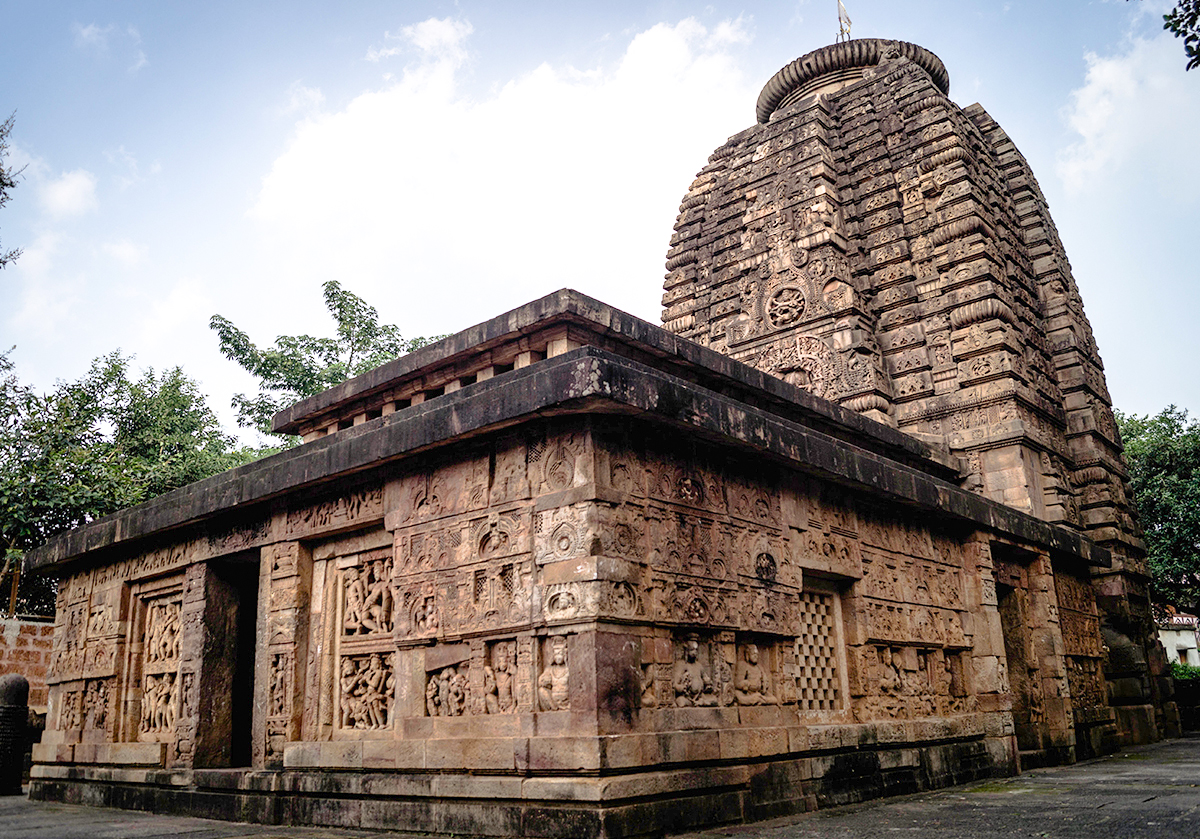
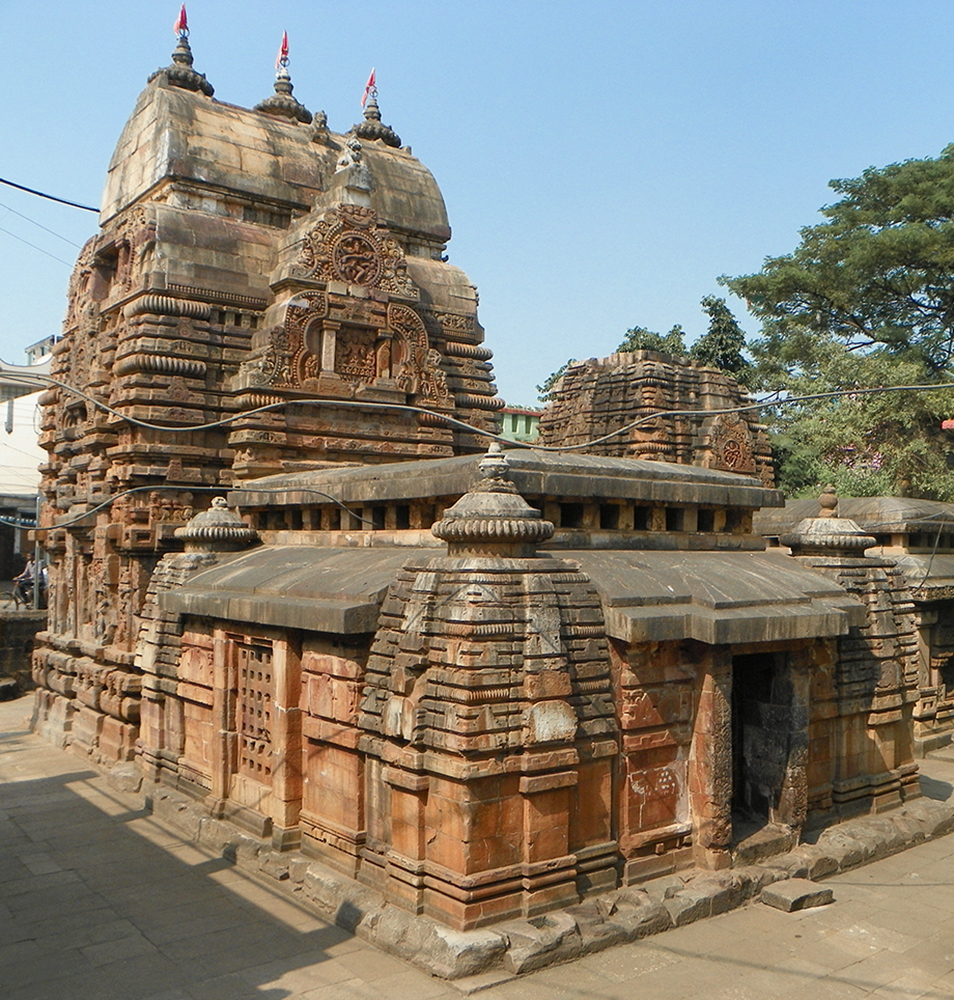
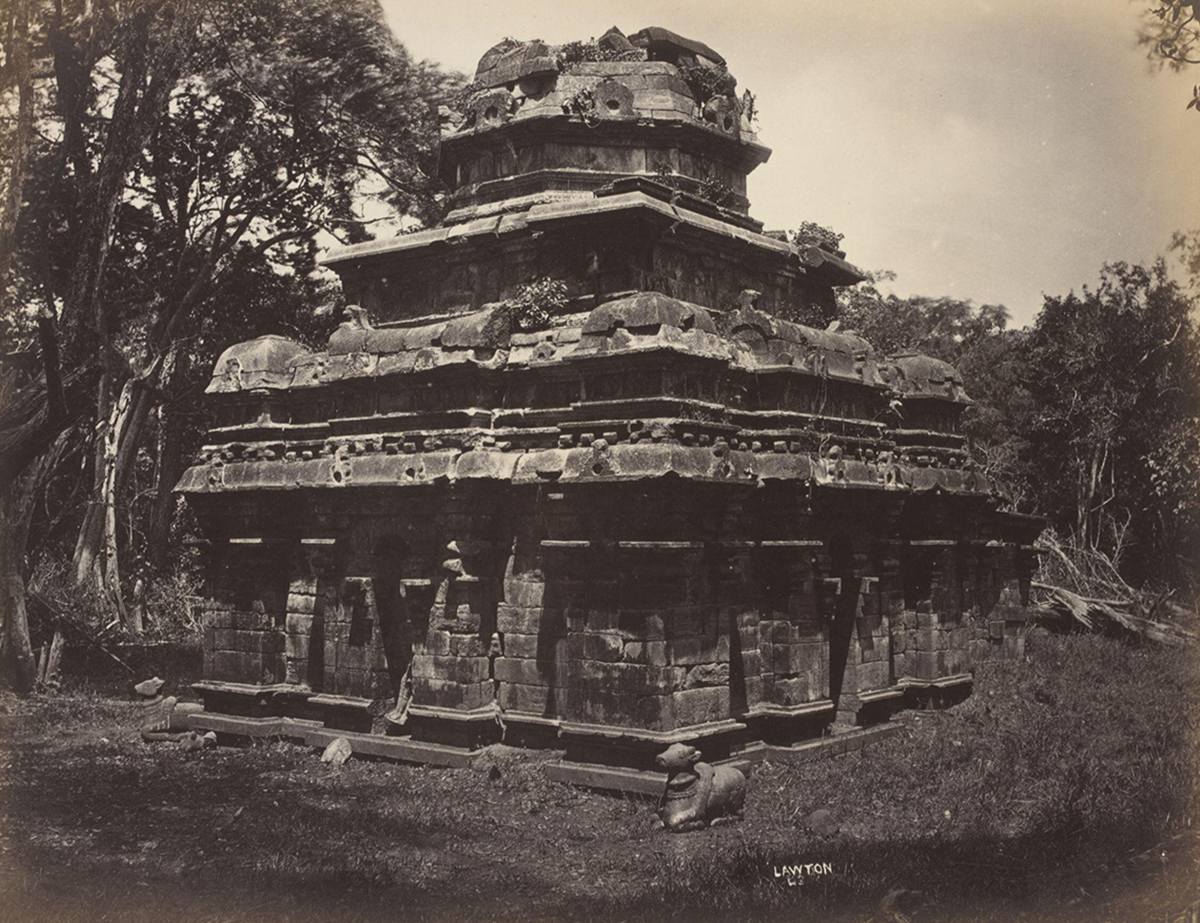
Constructed in present-day Bhubaneswar, Odisha with the patronage of the Shailodbhava dynasty the Parashurameshvara temple forms the earliest known extant temple made in the Kalinga style of architecture. Although still in its infancy, the style in this basic structure is already pronounced, as seen in the tiered curvilinear vimana (tower) and the intricately decorated outer surfaces of the jagamohana (worshippers’ hall). These and other features will go on to become definitive of the Kalinga style in the region in later centuries.
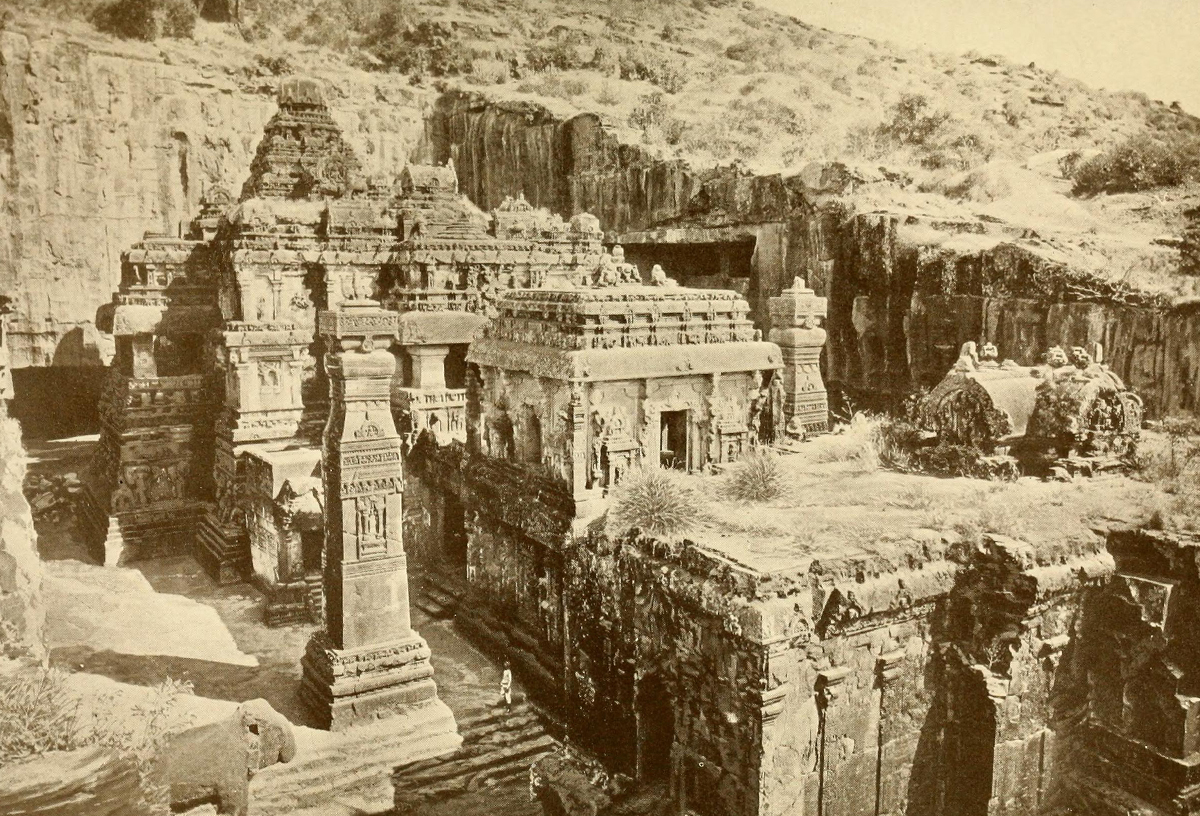
A number of cave temples are excavated at Ellora (in present-day Maharashtra, India), a major religious site situated close to trade routes from northern to southern India. Some of the earliest were possibly patronised by the Kalachuri dynasty, between the sixth and eighth centuries, with later caves built under the rule of the Rashtrakutas from the eighth to the tenth centuries. Notable rock cut caves from the area, including the Dashavatara Cave (Cave 15) and the Kailasanatha Temple (Cave 16), reflect the dominance of Shaivism in royal art and architecture, as well as the growing scale of cave temple structures in the Deccan. However, the presence of caves dedicated to Buddhism, with chaityas (prayer halls), viharas (monastic structures) and sculptures with iconography corresponding to both the Mahayana and Vajrayana schools of Buddhism; as well as caves with Jain iconography with murals and sculptures dedicated to the Jinas featuring heavily in parts of the cave, suggest that religious structures made without royal patronage were equally prevalent between the eighth and tenth centuries in the region. Stylistic similarities show that iconographies are relatively fluid across sects at this time, likely because artisans frequently moved between sites in the region.
The expansion of the Tang dynasty into central Asia and increasing trade with the Byzantine empire from the seventh century CE onwards paves the way for the reinvigoration of overland trade. The invasion of Persia by the Rashidun caliphate leads to the end of the Sassanid empire and a migration of Parsi people to the western coast of India, most notably present-day Gujarat. Muslim expansion also unifies Egypt, the Levant and Mesopotamia into a single commercial unit. Simultaneously, Muslim Arab merchants are active on the Malabar Coast during the lifetime of the Prophet Muhammad. This further strengthens the region’s diasporic ties to West Asia and allows for an increase in exchanges.
Along with the spread of Puranic religion and the proliferation of Sanskrit, sects and sacred sites dedicated to the worship of the gods Vishnu and Shiva emerge. This leads to the emergence of the bhakti movement in the Tamil-speaking regions, emphasising the sacredness of temples; ritual texts such as the Agamas; and personal devotion expressed in poetry by religious leaders such as the Shaiva Nayanars and the Vaishnava Alvars. Travelling between villages, they help further solidify the alliances formed in previous centuries between Brahmins, temples and landholders.
Situated along geographical and trade crossroads, the Kashmir and Kumaon valleys and the Tibetan plateaus absorb religious and political ideas from the mainland, and create their own distinct socio-religious cultures. Buddhist monasteries like Nalanda in eastern India are centres of manuscript illustration, and religious texts, monks and merchants travel further into South and Southeast Asia.
Largely untouched by political conflicts elsewhere in the subcontinent, various kingdoms begin to emerge across the Himalayas and the Tibetan plateau, often adopting elements of royal culture from the mainland. The Kumaon kingdom, across the western and central Himalayas, comes under the control of the Katyuri dynasty. By the ninth century, the independent Garhwal kingdom emerges in the eponymous region, legitimising itself through an adherence to Puranic narratives and the patronage of newly converted shrines at Badrinath and Kedarnath, around which temples are built in the Nagara style and dedicated to Hindu deities. Simultaneously, elites adopt Buddhism in the neighbouring Tibetan region, primarily by way of present-day Nepal and Bengal, between the seventh and ninth centuries.
The Kashmir Valley becomes a flourishing cultural and geopolitical centre, gradually expanding into northwestern India and parts of present-day Punjab, establishing trade links to the Gangetic Plains. Kashmir’s position also grants it the status of a Himalayan crossroads, with its kings raiding parts of present-day Xinjiang and Tibet. The period sees the emergence of Kashmiri Shaivism, based on principles of Shaiva-Shakta Tantra. It is also an important centre for Mahayana and Tantric Buddhism, and Pancharatra Vaishnavism, with elites building a number of stupas and temples in the Kashmiri architectural style, which draws from the cosmopolitan architecture of ancient Gandhara (in present-day Afghanistan and Pakistan). The courtly costume and cultural norms of Kashmir are adapted by other polities in the neighbourhood, including those of present-day Ladakh. Surviving bronze votive sculptures from the eighth and ninth centuries depict iconography that suggests the dominance of both Buddhism and Shaivism in the Kashmir Valley.
A manuscript of the Skanda Purana is produced, becoming the earliest known manuscript of the Puranas in the present day after it is rediscovered in Kathmandu (in present-day Nepal) in 1898. Composed and orally transmitted from the third century CE onwards, the Puranas are written down only much later. They are a major source of mythological and iconographic ideas in Indian art for several centuries both before and after the production of this early manuscript. Like other Smriti texts, which are treated not as religious texts but as guides, such historical Purana manuscripts will differ greatly from their modern counterparts, demonstrating the constant re-invention of such works.
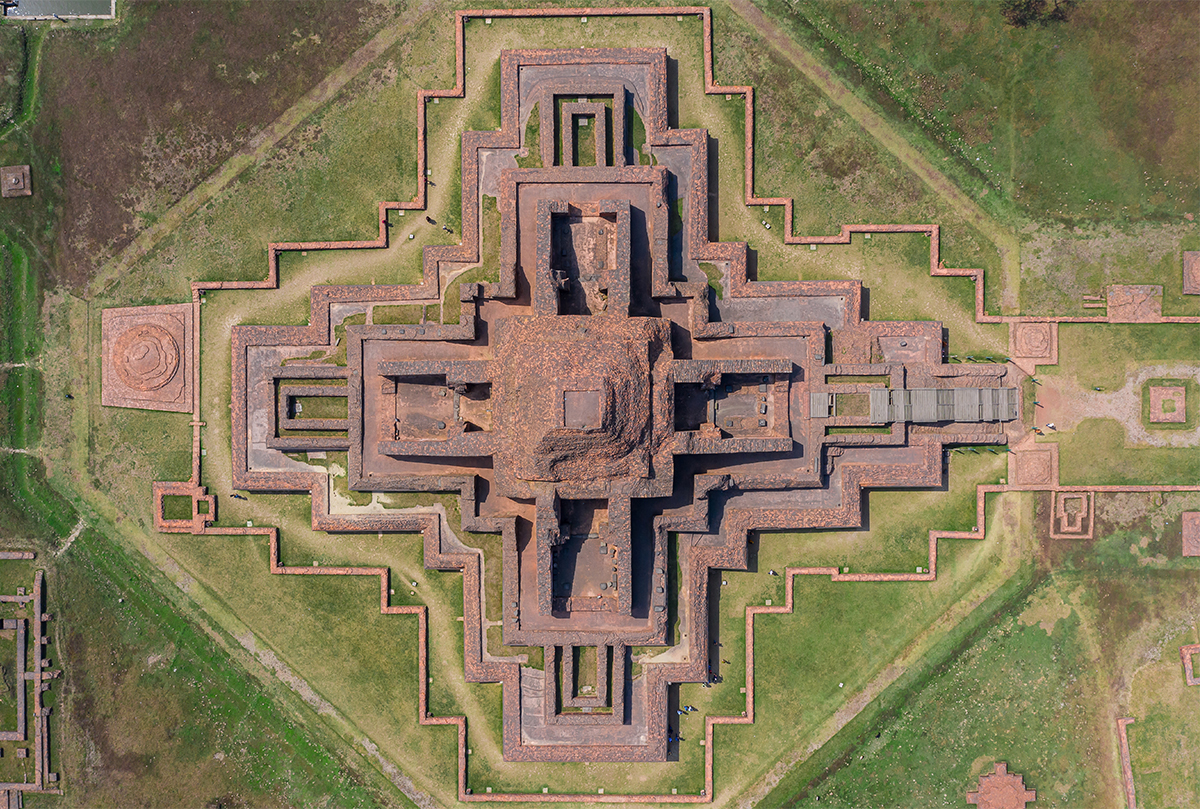
In northern India, the Pala dynasty consolidates their hold over the eastern side of the Gangetic Plains. Originating possibly from lower-caste backgrounds, they legitimise themselves through land grants to Brahmins and Buddhist monasteries. The Pala patronage of institutions such as the Nalanda, Odantapuri and Vikramashila mahaviharas (great monasteries) in present-day Bihar and West Bengal connects them to growing networks of Buddhist exchange in the eastern Indian Ocean, including present-day Odisha, Sumatra and Java; this also translates to increased trade between the regions. A distinctive style of sculpture emerges under their patronage, emphasising softer, rounder figures with elaborate ornamentation, evolving from the Gupta style.
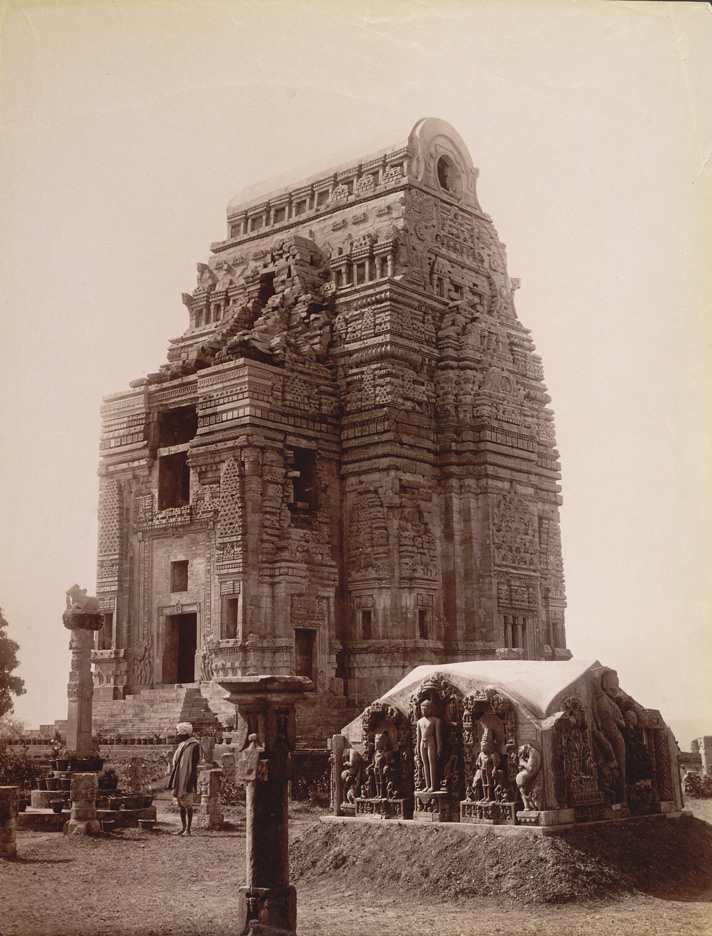
In the Malwa Plateau, particularly the Chambal and Betwa River systems, the Gurjara-Pratihara dynasty expands into present-day Gujarat and parts of present-day Rajasthan. Their patronage leads to the development of the Gurjara-Pratihara style of architecture, consisting of an open pavilion attached to a tall vimana (tower), often in the Latina or Bhumija mode. Notable structures include the Teli ka Mandir, Gwalior and the Bateshwar temple complex in present-day northern Madhya Pradesh.
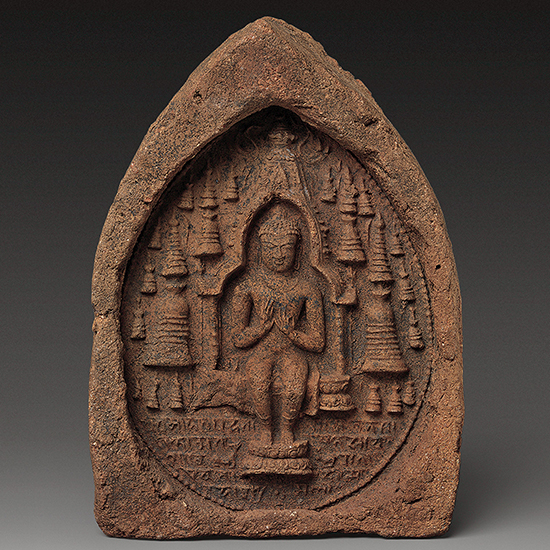
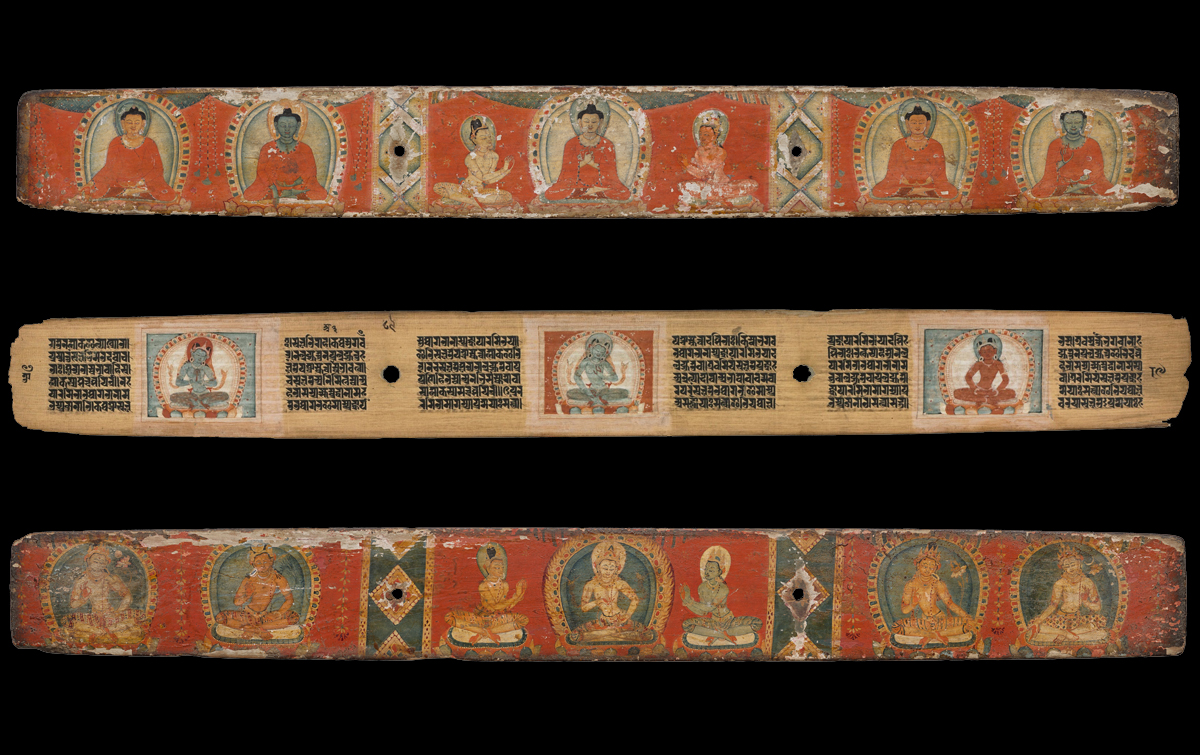
Some of the earliest modes of religious and literary transmission in early medieval India, illustrated, bound palm-leaf manuscripts are painted in present-day Bengal and Bihar between the ninth and thirteenth centuries. Beginning during the reign of the Pala dynasty, they illustrate various forms of Buddhist iconography. From episodes of the Jataka Tales to manuscripts such as Ashtasahasrika Prajnaparamita, the presence of Buddhist manuscript painting suggests the proliferation of Buddhism from sites such as Nalanda and Kurkihar (in present-day Bihar) into courtly, aristocratic and diplomatic settings. The iconography conforms to the plasticity and style found in Pala-era bronzes. Painted manuscripts rendered in the Pala style are also disseminated to other centres of Buddhism, including present-day Burma, Nepal, Tibet and Thailand, possibly through the movement of missionaries and trade through the established links between the Pala empire and Southeast Asia, particularly the Srivijaya confederacy.
Strong, consolidated imperial formations, closely allied to permanent religious institutions, expand through major river systems and seek to project zones of influence well outside of their core areas.
Alongside the Palas and Gurjara-Pratiharas in northern India, the Rashtrakuta dynasty of the central Deccan, based in the upper Godavari River valley, reigns over much of present-day Maharashtra and Karnataka. Having overthrown the Early Western Chalukyas, they adopt their imperial culture, particularly the patronage of Shaivism, as expressed through imposing monuments such as the Kailasanatha Temple (Cave 16) at Ellora. The Rashtrakutas, Palas and Gurjara-Pratiharas develop a system of sovereignty in which they use the looming threat of war to generate tributes from neighbouring polities, which are granted the status of feudatories. These transregional powers coexist with smaller regional powers such as those of the Utkal Plains and the Coromandel Coast.
By the ninth century, the Rashtrakutas are western and central India’s dominant power, intervening in the Pala-Pratihara struggles in northern India and dynastic struggles along the eastern coast, and receiving tribute from as far away as present-day Sri Lanka. Under their patronage, the Karnata Dravida mode continues to evolve, and early ideas of pilgrimage networks such as the jyotirlingas (the twelve most sacred Shaiva temples) begin to crystallise. A major shift towards patronising courtly registers of vernacular languages such as Kannada also takes place, which manifests through court-commissioned translations and reworkings of the Mahabharata. Literary and archaeological evidence suggest a thriving trade with the Arabian Peninsula and beyond, especially in textiles and jewellery.
The Bhaumakara dynasty in present-day northern Odisha extends its control over the region between the eighth and tenth centuries. Partially due to the political instability caused by Rashtrakuta raids of the region, a number of women rulers are able to successfully take control of and rule the Bhaumakara kingdom, which is a rare phenomenon at the time. They are patrons of Buddhism, Shaivism and Vaishnavism. Like in many other polities, Shaivism is predominant in this period, as seen in the iconography, temples and monastic structures in present-day Bhubaneswar, Khiching and Paikapada (in present-day Odisha). Similar to the Palas, the Bhaumakaras participate in Buddhist religious exchanges as well as trade with Southeast Asia.
Kamarupa, a region roughly spanning areas of present-day Northeast India, Bihar, West Bengal, Bhutan, northern Bangladesh and Sylhet, comes under the control of a Hindu branch of the Pala dynasty. By this point, the area has become a crossroads of trade routes between Tibet, China and the Gangetic Plains, and has seen the rule of three dynasties, including the Varmans (fourth century CE) and the Mlechchhas (seventh century CE).
The rulers of Kamarupa assume it to be the mythical kingdom of Pragjyotisha, and claim lineage accordingly from Narakasura, who is believed to have established the Bhauma dynasty that ruled Pragjyotisha before the fourth century. There is, however, no evidence of the existence of such a kingdom or its ruling house.
The rise and fall of new regional polities spurs new developments in temple architecture and the production of ritual art and sculpture. Buddhism and Jainism flourish in different regions, with Buddhism also receiving patronage from Southeast Asia. Turko-Persian dynasties make forays into the subcontinent.
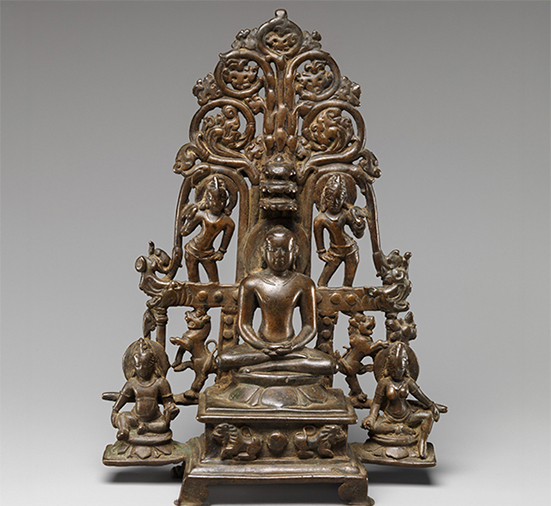
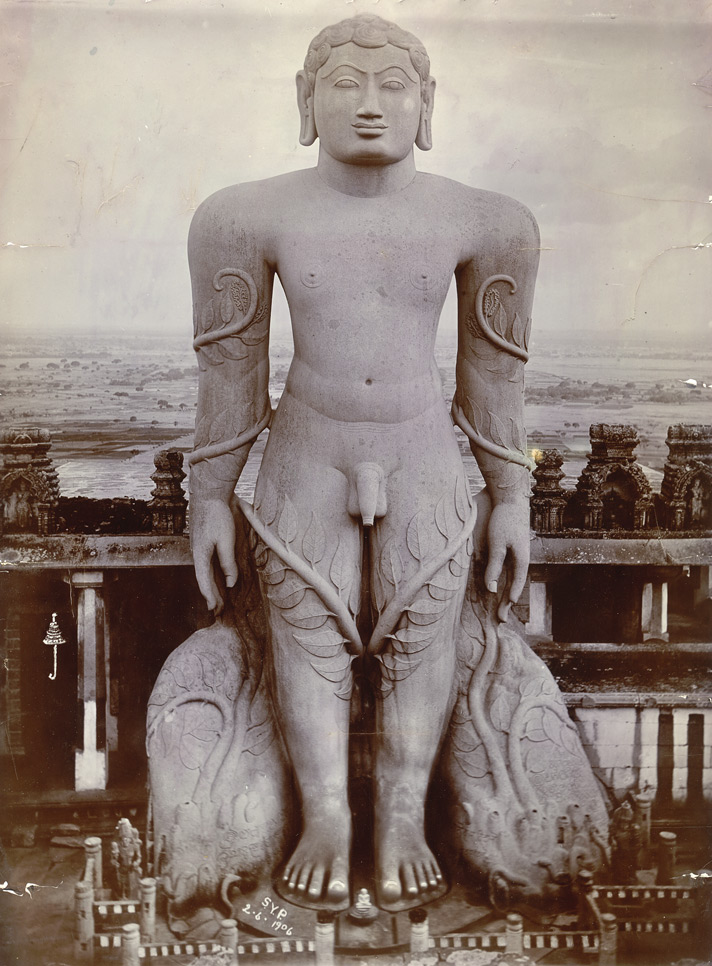
Propelled by theological innovations such as comparing conquering warriors to Jinas who conquered the senses, Jainism emerges as one of the Deccan’s dominant religions, alongside Shaivism. An important royal religion, it shares many ritual practices with Shaivism, including temple worship, processions and the worship of subsidiary deities such as Jvalamalini. Large numbers of monasteries and temples are built, as well as monumental sculptures such as the Gomateshvara Bahubali at Shravanabelagola (in present-day Karnataka). Important works such as the Adipurana and Yashastilaka are commissioned by the Rashtrakuta court and its vassals. Jainism also emerges as a major force in western India, especially present-day Gujarat and Rajasthan, where it will remain widespread to the present day. Its predominance in the Deccan will last till at least the thirteenth century, when it will gradually declines, in part due to the hostility of movements such as that of the Virashaivas.
By the tenth and eleventh centuries, Tantric Buddhism, also known as Esoteric Buddhism, becomes established in the eastern part of the subcontinent, corresponding to the present-day areas of Bangladesh, West Bengal and Odisha. The earliest texts of Tantric Buddhism date to the eighth century, but its practice is likely to have evolved earlier, incorporating the philosophies of Mahayana Buddhism but utilising concepts of Tantric texts as a means of achieving liberation.
By the eleventh century, the monastic establishments of Vikramashila, Jagaddala and Somapuri become key centres of Tantric Buddhism in the subcontinent, with Tantric masters holding important ranks in the establishments. The period also sees a substantial rise of Vajrayana devotional deities; their worship spreads to Southeast Asia and develops further with the flow of ideas between both regions.
The translation of texts into Tibetan and the movement of monks from the region, including Atisha, will help Vajrayana Buddhism crystallise into a significant religious practice in the trans-Himalayan regions by the thirteenth century, achieving considerable popularity outside courts, with the establishment of monastic institutions across the plateau.
The Chola king Rajaraja I launches an attack on the kingdoms of Anuradhapura and Ruhuna in present-day Sri Lanka in 993 CE. While earlier South Indian kingdoms raided Sri Lanka, the Cholas are the first to retain control of it and attempt to integrate it into their polity on the mainland. This leads to the construction of Tamil-style Shiva temples in Polonnaruwa, as well as the production of bronze statues, though these have considerable stylistic influences from earlier Sri Lankan traditions. Though the Cholas are driven from the island by 1070 CE, they will have a profound impact on its politics. In particular, the Buddhist Sangha, which is negatively impacted by their conquests, will attempt serious reforms and consolidate its grip on political power.
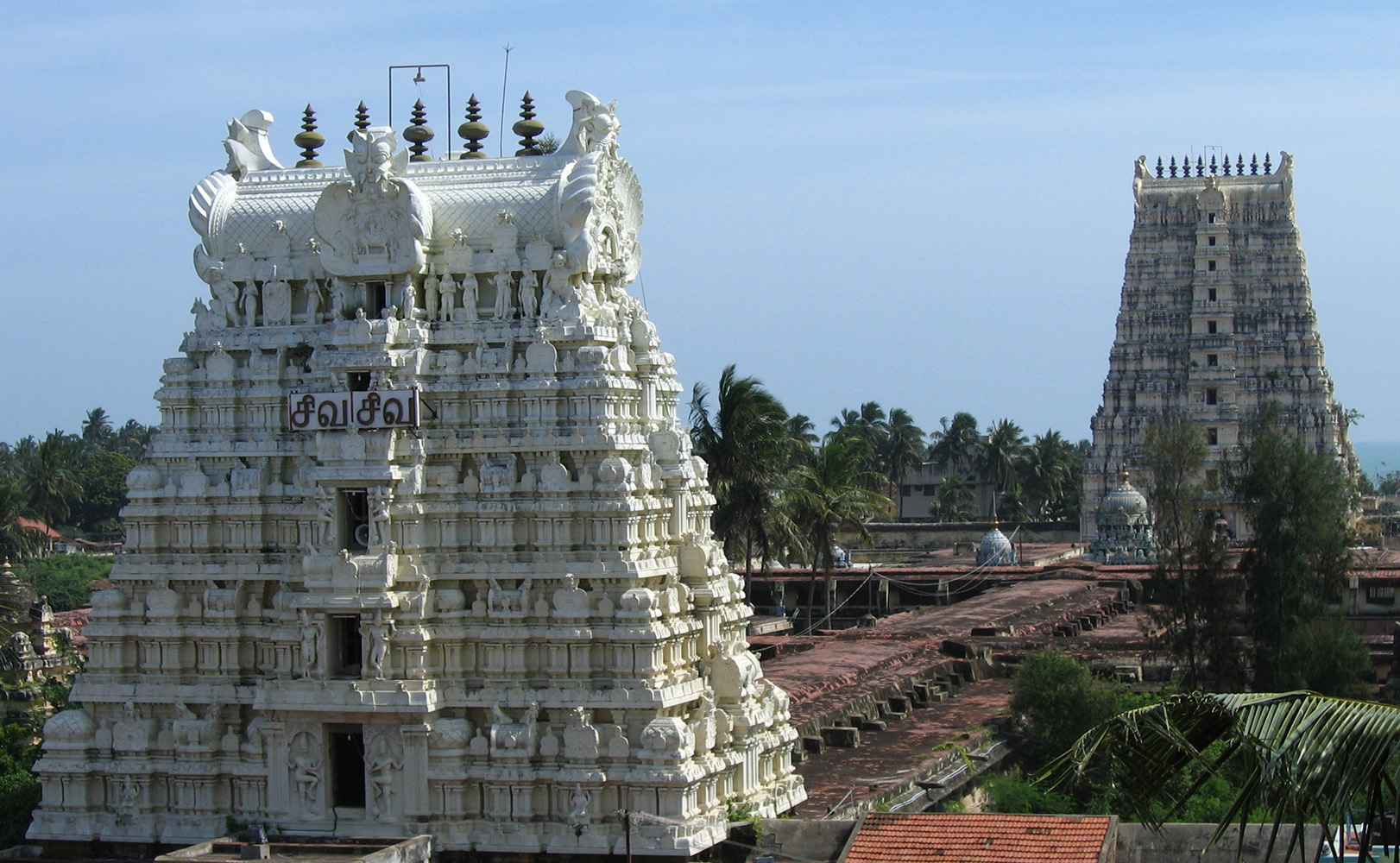
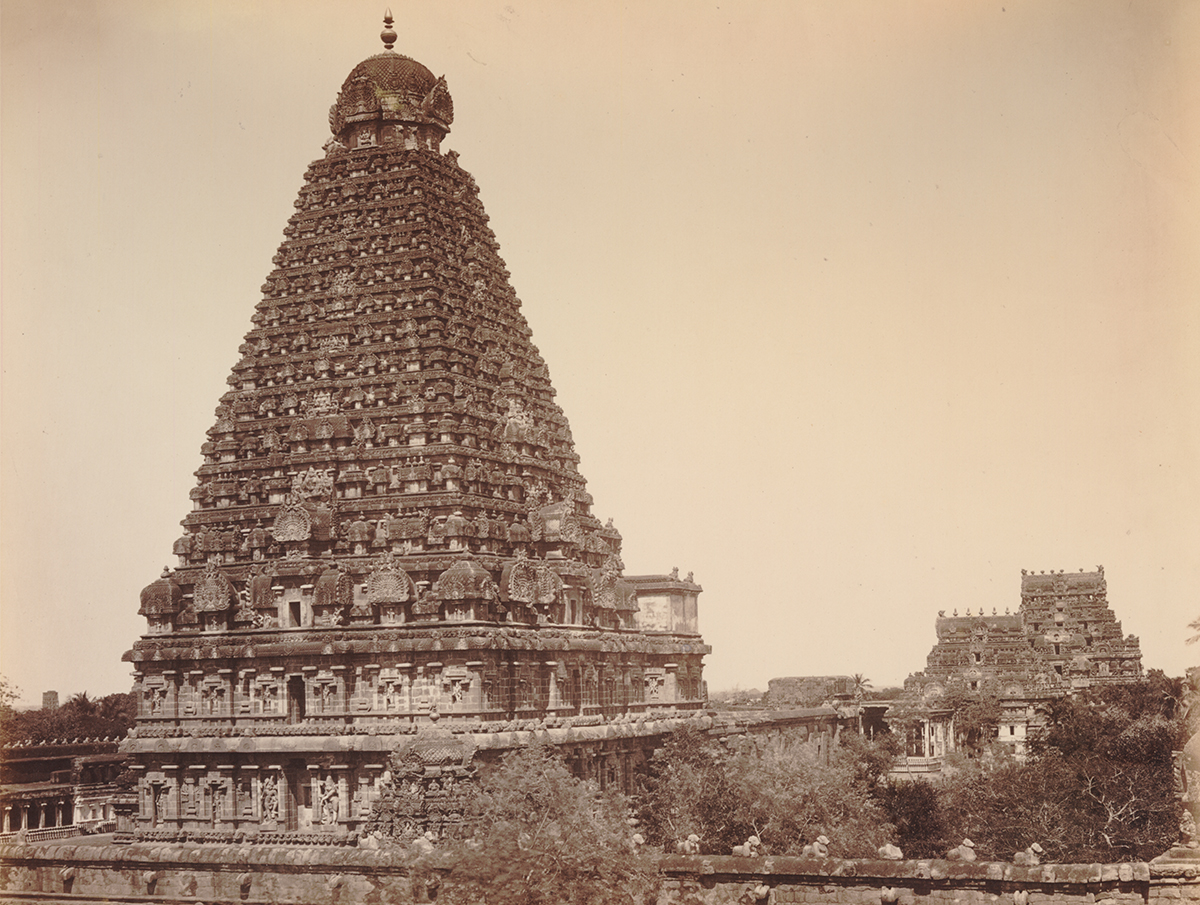
Chola resources and patronage lead to the emergence of influential new religious and architectural modes, exemplified in massive temple projects such as the Brihadishvara and Rajarajeshwara Temples in Thanjavur and the Gangaikondacholeshwara Temple in Gangaikondacholapuram, both in present-day Tamil Nadu. The latter also features sculptures from Kalinga and Chalukya temples, taken by the Cholas as spoils of war during conflicts with the Western Ganga and Western Chalukya dynasties in the early eleventh century.
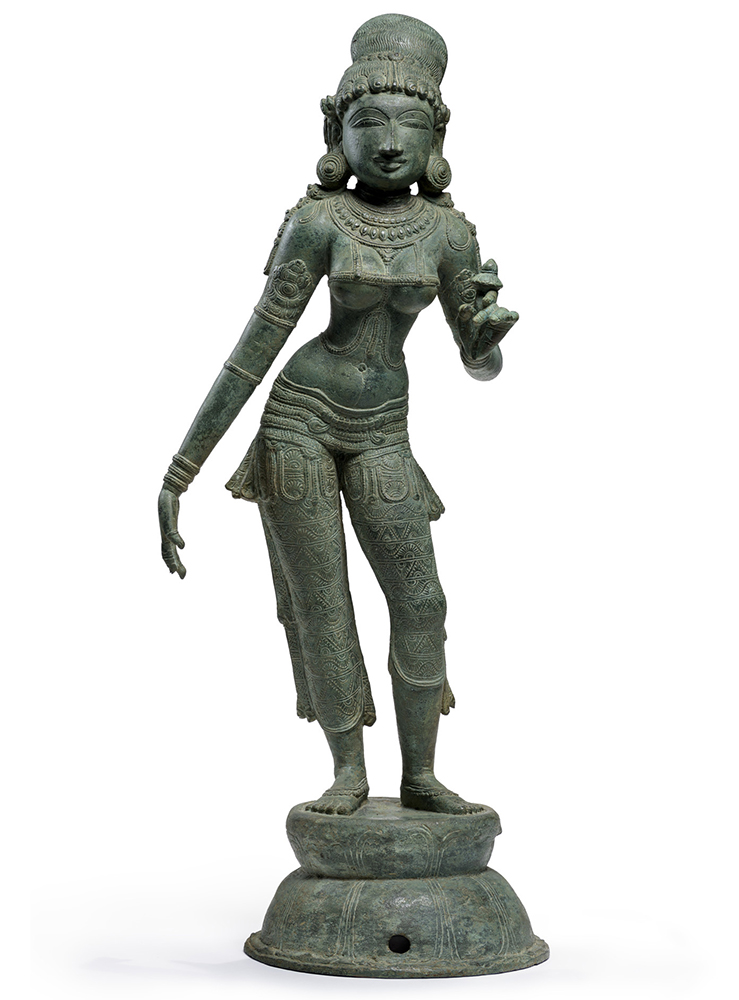
Chola emperors seek to establish themselves as descendants of the Early Cholas, a dynasty from the Sangam period, drawing on the prestige of an imagined ‘classical’ period in Tamil literature. The Chola dynasty also commissions large numbers of bronze sculptures for temple rituals and processions. These rituals involve the canonisation of the bhakti saints of earlier centuries, as well as an expanded role for Agamic temple worship. Stylistically, Chola bronzes follow regional traditions, with a highly refined sense of movement and elegant, stylised figures.
The earliest known bhasya (commentary) on the Natyashastra is composed by the aesthetician Abhinavagupta, in the Kashmir valley. The Abhinavabharati expounds on rasa theory, which describes the nature of aesthetic experience and provides a summary of previous debates around rasa, thus contributing significantly to modern interpretive frameworks of the Natyashastra.
Abhinavagupta’s aesthetics are examples of a much wider world of aesthetic enquiry in the medieval period, with others such as the Paramara king Bhoja of Dhara writing important treatises. Abhinavagupta’s work is, however, among the most influential.
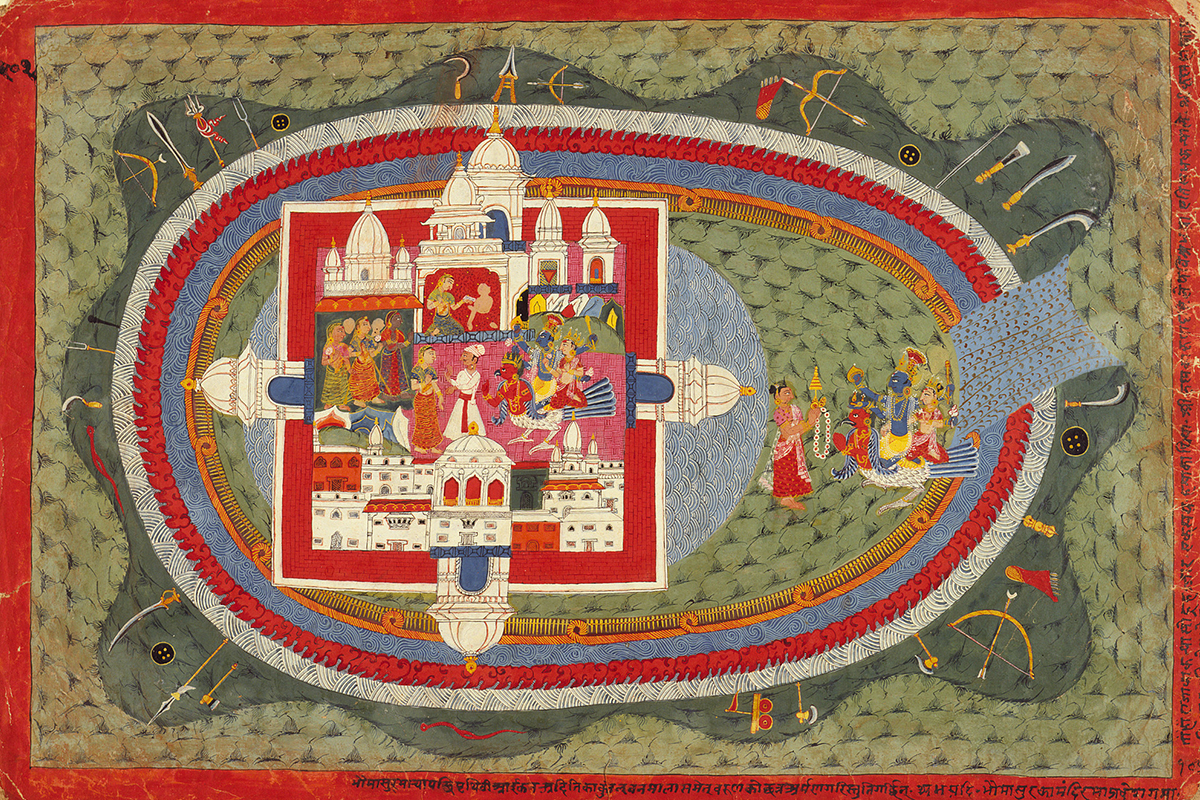
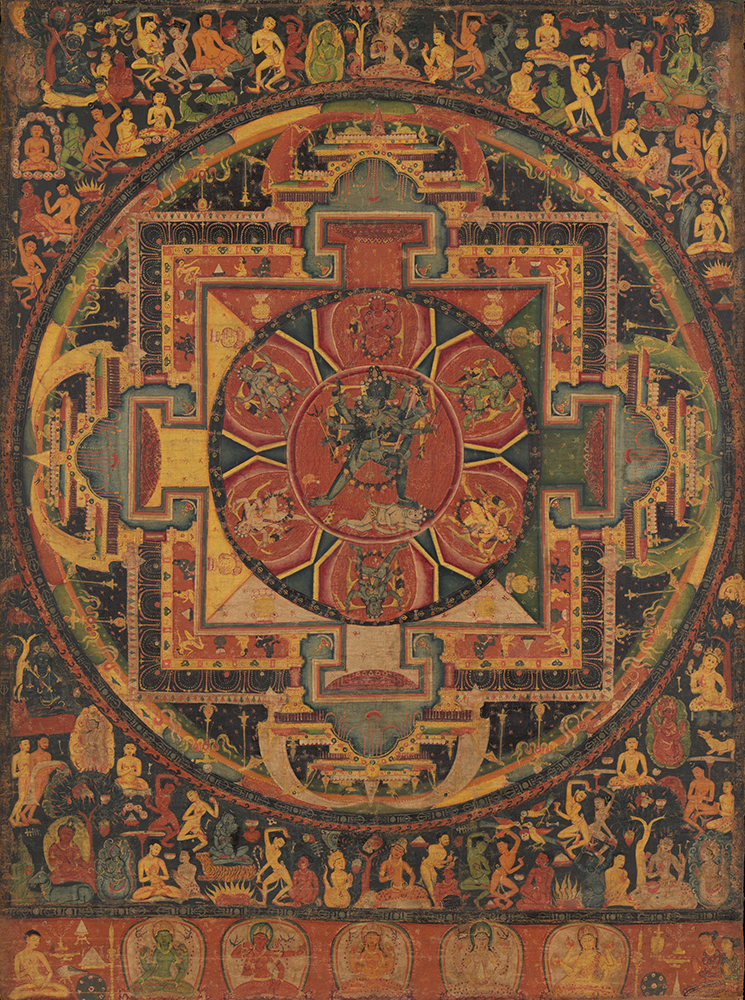
Mandalas — symmetrical cosmological drawings that depict a deity or Buddha in an open structure surrounded by relevant figures, symbols and motifs — attain a high level of complexity and become an integral visual component of meditative practices in Vajrayana Buddhism, mainly in Tibet and Bhutan.
Over the preceding centuries, Tantric ideas heavily influenced the esoteric Buddhist sects that eventually assimilated into Vajrayana Buddhism, bringing Tantric iconography with them. The further development of a cosmology that consists of ‘families’ and other groupings of bodhisattvas, Buddhas, symbols and mythical realms then forms the basis of complex, diagrammatic mandalas. Made under the patronage of the Palas and other dynasties, these are accompanied by a rigorous focus on meditation and mentalistic practices believed to concentrate and guide the devotee’s mind. Despite the decline of Buddhism in India during this period, mandalas and other imagery from Vajrayana Buddhism begin to form the foundation of Buddhist iconography, rapidly spreading through existing trade, diplomatic and religious networks into Southeast Asia, Tibet and beyond.
Persianised groups of Turkic origin, such as the Ghaznavids and Seljuks, begin to move through West Asia and into South Asia. With armies composed of hitherto pastoralist and nomadic peoples, the Turks rapidly defeat and then assimilate existing urban courtly cultures such as those of the Abbasid and Persian worlds, as well as those of South Asia. These dynamics will characterise interactions between South and Central Asia in subsequent centuries, with a classic example being the raider Mahmud of Ghazni, active in the areas of present-day Afghanistan and northwestern India, who will use Sanskrit and South Asian imperial symbols such as the elephant and the bull in his coinage.
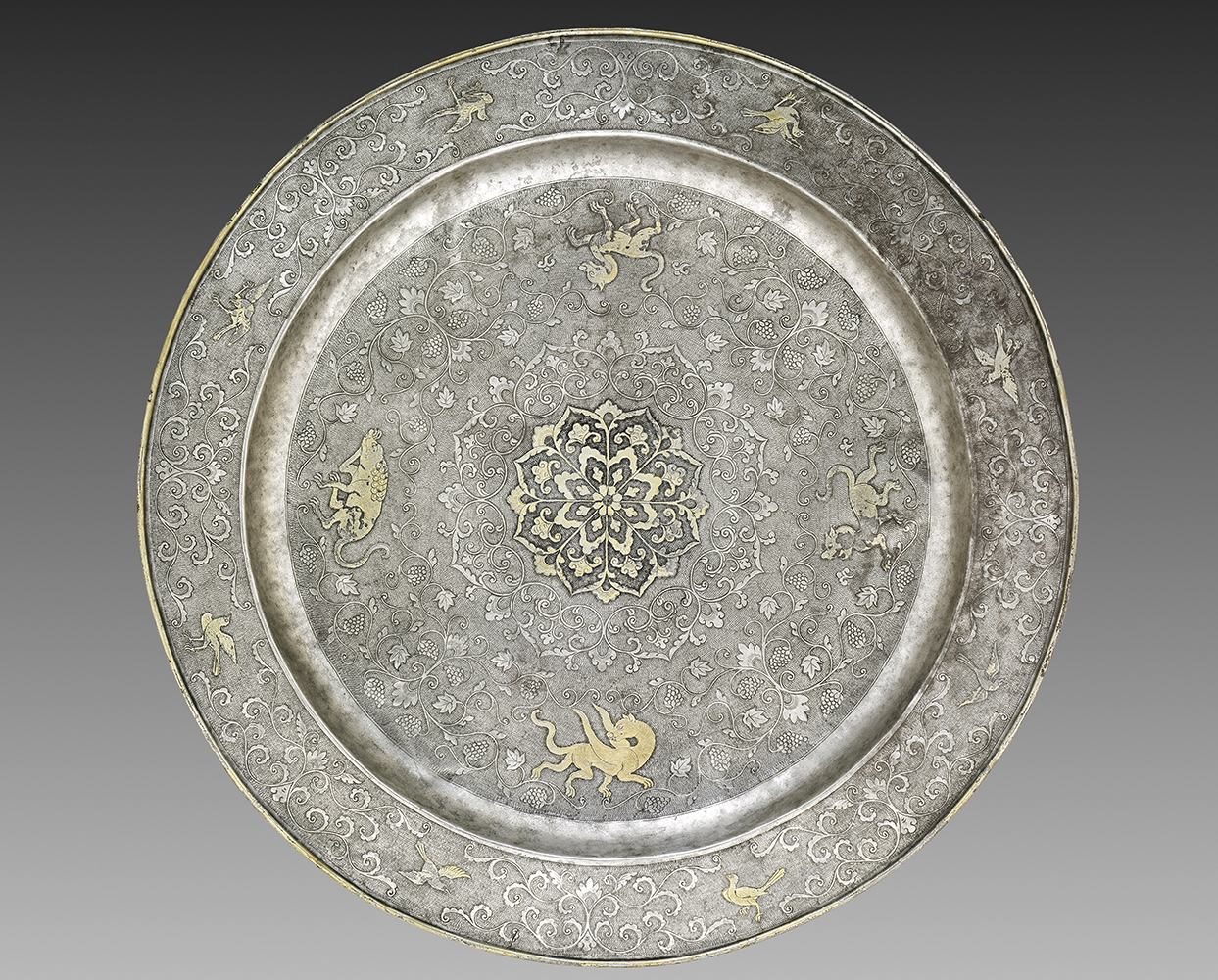
By the eleventh century, maritime trade routes between South and Southeast Asia on the Indian Ocean increase, resulting in the movement of large numbers of manuscripts as well as monks, merchants and artisans. China also emerges as an important market, facilitating the demand for porcelain, spices, silk, cotton textiles and other goods. Notable examples of a rising competition between Indian Ocean powers include the Chola raids of the Srivijaya confederacy in Malaya and Sumatra in 1025 CE.
Diplomatic relations also flourish in the region, encouraging artistic and cultural exchange; this often involves ‘religious diplomacy’, particularly with Southeast Asian kings making endowments to trade and monastic centres such as Nalanda (in present-day Bihar, India) and the Chudamani Vihara in Nagapattinam (in present-day Tamil Nadu, India). Indian cotton textiles and technology spread through much of Indonesia. Shaivite and Buddhist iconography and knowledge circulates between these regions; Buddhist monks from India often study abroad in centres in present-day Sumatra and Java.
The Persian scholar Al-Biruni visits the Indian subcontinent during the raids of Mahmud of Ghazni in 1026 CE. Today recognised as one of the earliest scholars of Indology, Al-Biruni writes a treatise titled Kitab Al-Hind, with observations on the cultural and social life in the subcontinent as its central focus. His account gives a glimpse into a period of transition that is seeing a growth in contact with Central Asia, as well as the consolidation of regional powers. He notes the suspicion that the locals have toward foreigners; makes comparative studies of Hinduism and Islam; and writes an incisive commentary on cultural life, noting the discriminatory practices of withholding information and the lack of proper recorded histories in the subcontinent.
Chola expansion faces serious opposition from the Deccan, primarily from the Later Western Chalukya dynasty. The death of the Chola king Rajadhiraja I in battle against the Chalukyas allows the latter to consolidate power, leading to the proliferation of temples commissioned by upper caste military nobility and realised through the presence of well-established sculptor guilds in the region.
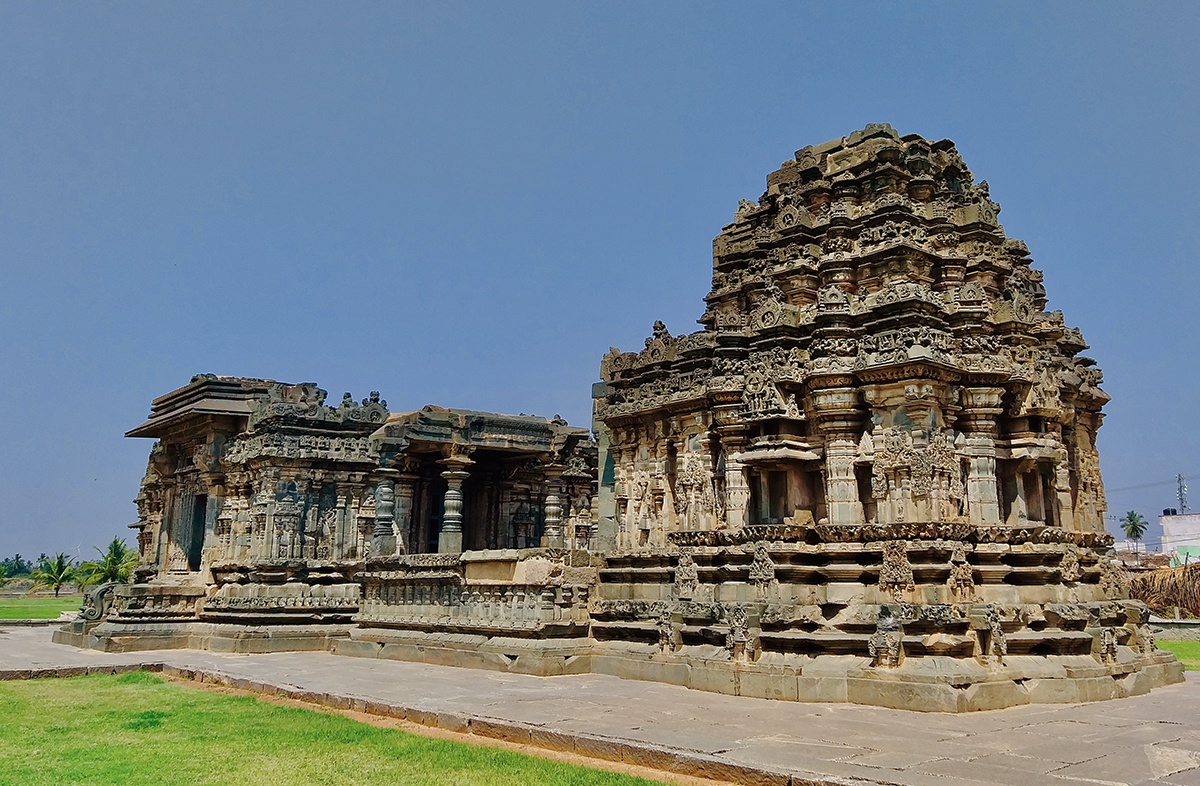
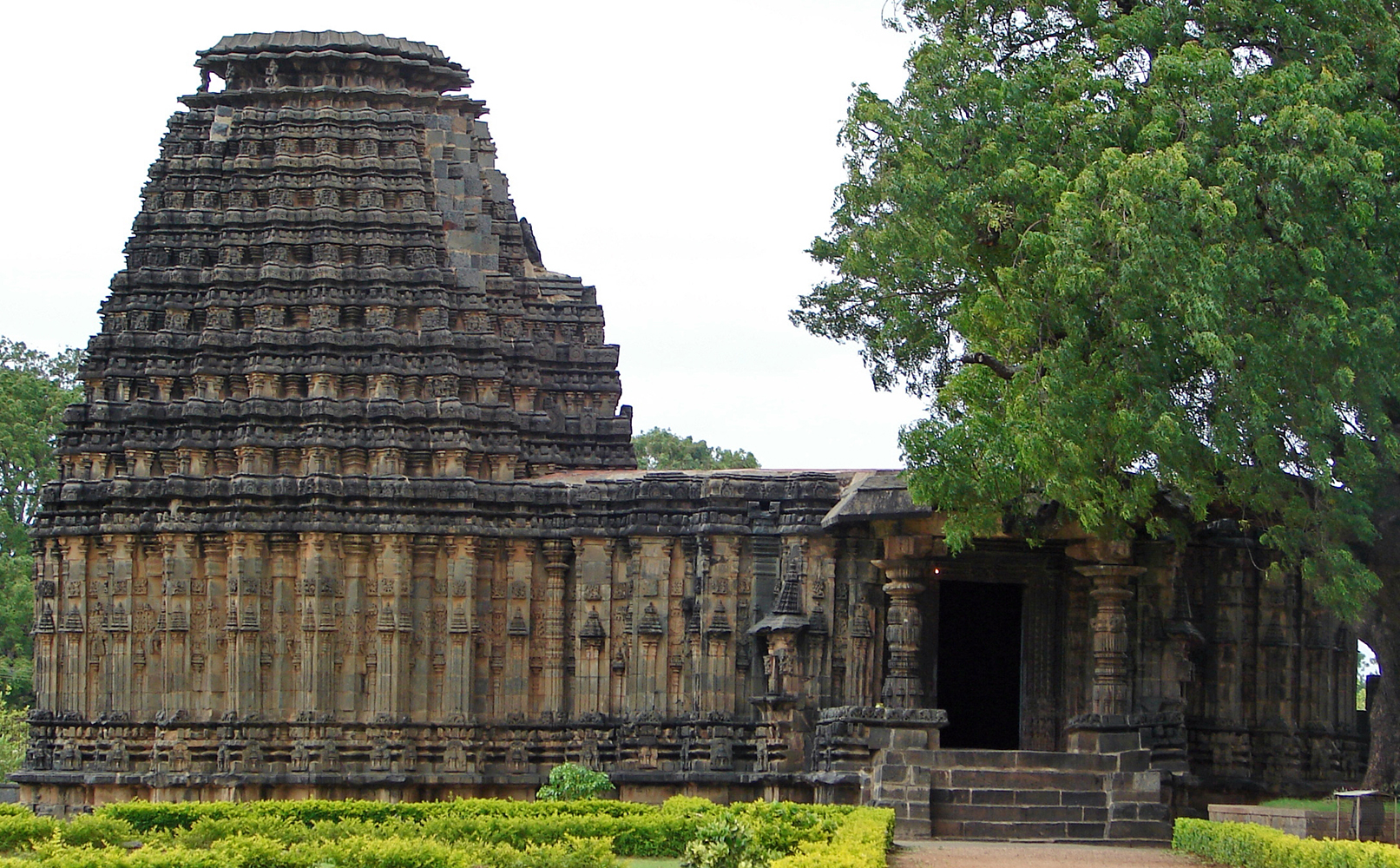
Contact with Malwa (in present-day Madhya Pradesh, India), which had become an important centre for temple-building under the Paramaras, leads to the incorporation of ideas from the Bhumija architectural mode, which fuses with existing Karnata Dravida traditions. The resulting style often consists of a low vimana (tower), broad, polished circular pillars, and a high, star-shaped plinth. Karnata Dravida complexes also feature stepwells lined with niches for deities, a symmetrical layout for the temple structure, and rosetted ceilings. Elaborate carvings cover virtually the entire exterior walls with sculptures, representations of architecture, or geometrical and arabesque designs. These detailed carvings are facilitated by the use of potstone and soapstone steatite, which allow for greater experimentation in sculptural and architectural forms in subsequent styles of architecture, such as those pioneered in the Hoysala court. The advent of the Chalukyas sees a further reinvigoration of literature composed in Sanskrit, as well as compositions in Kannada.
The socio-economic and cultural patterns of the subcontinent undergo a churn. Even as Tantric Buddhism declines, the bhakti movement and its works begin to shape painting, music and performance in northern and eastern India. The Jagannath Temple and the Qutb Minar mark two different kinds of political victories.
While Buddhism in general has been on the wane in other parts of the subcontinent, Tantric Buddhism continues to flourish in present-day eastern India and Bengal until the late medieval period. The Pala dynasty patronises the production of ornate and intricate bronze sculptures of Buddhist and Hindu deities and bodhisattvas. As with illustrated manuscripts in the ninth century, these bronzes also have an influence on Southeast Asian art, through the Pala empire’s trade network in the region, particularly present-day Thailand and Java in Indonesia.
However, schisms within the Buddhist religious structure, the decline of royal and lay patronage, the eventual weakening of the Pala dynasty, and attacks on centres of learning during Turkic raids of eastern India in the twelfth and thirteenth centuries lead to the near disappearance of Tantric Buddhism in India.
Smaller power centres such as landlords, temples and aristocratic houses assert their influence across southern India. In the Tamil-speaking regions in particular, these magnates commission a wave of artistic production, particularly bronzes, and take over the endowments of institutions formerly aligned with royalty. Being associated with the administration of local temples becomes a marker of status. Women play important roles in this process, with wealthy individuals obtaining the rank of tevaratiyal or devadasi — literally ‘female servants of god’. They display their status by dancing for the deity on public occasions. However, this phenomenon is not uniform; in the Deccan, it is often lower caste women who are given the status of devadasi, and they are generally considered the property of the temple, with little autonomy or resources of their own.
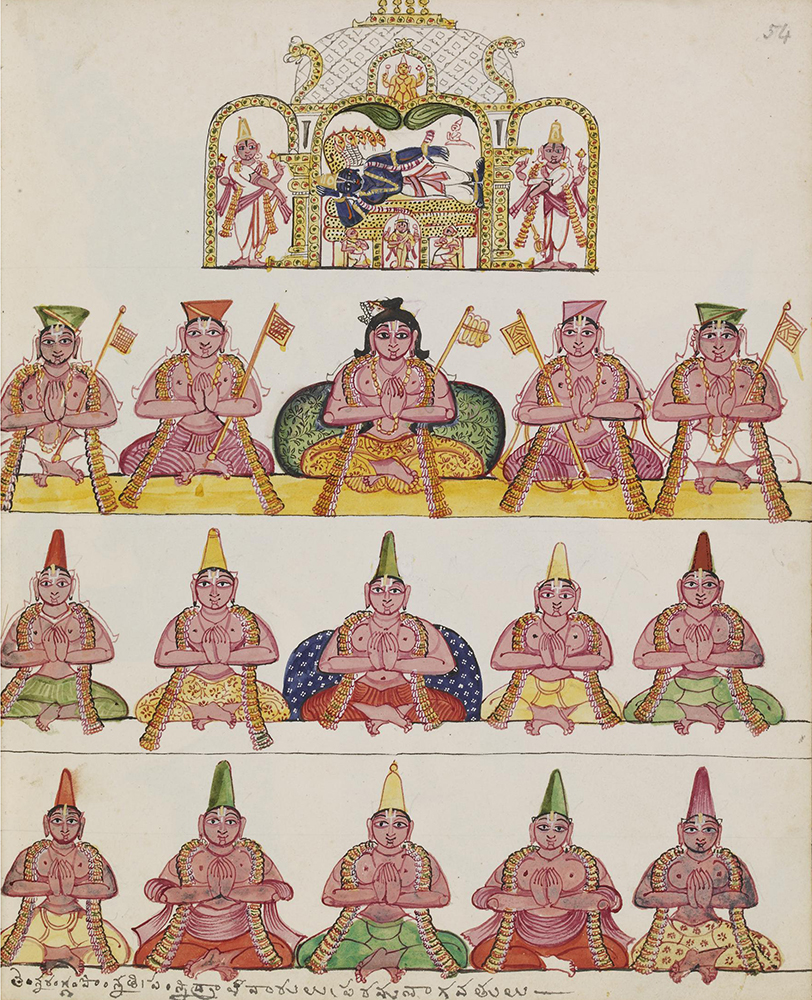
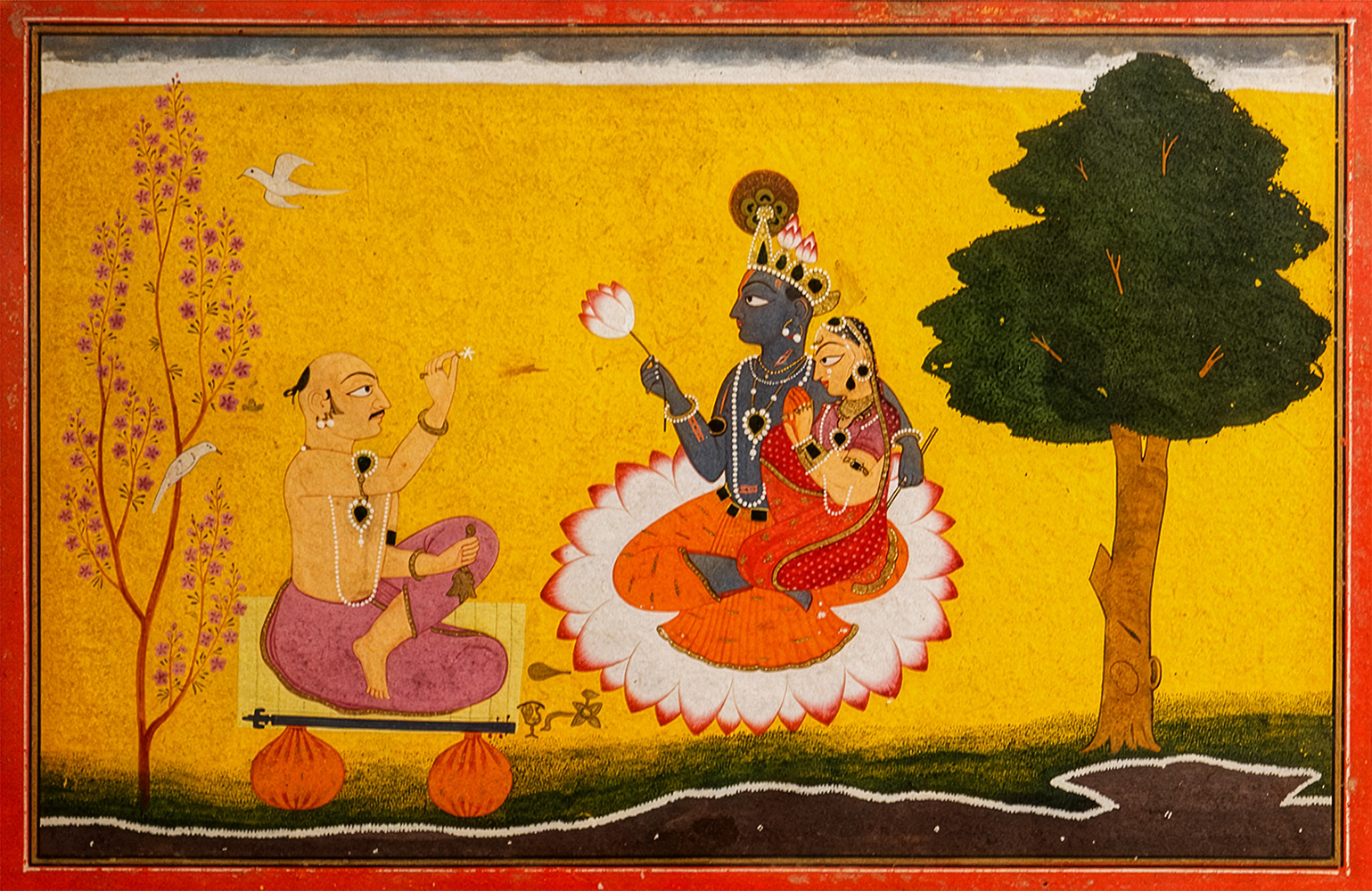
Drifting away from control of the priestly class in worship, bhakti laid an emphasis on personal devotion to god. As a result, most groups of bhakti saints and proponents were committed to the worship of specific deities — for example, the Alvars and Pushtimarg Sampradaya were Vaishnavas; Nayanars and Lingayats were Shaivas; and the Vadakalai and Tenkalai conflated Vaishnavism with the worship of the goddess Sri into Srivaishnavism.
In the territories ruled by the Pallavas and Cholas, the bhakti movement becomes part of the institutional firmament through extensive temple building as well as bhakti hymns dedicated to consecrated deities. On the other hand, Lingayats, predominant in present-day Karnataka, are opposed to temple worship, and advocate the wearing of the shivalinga (the aniconic representation of Shiva) by devotees.
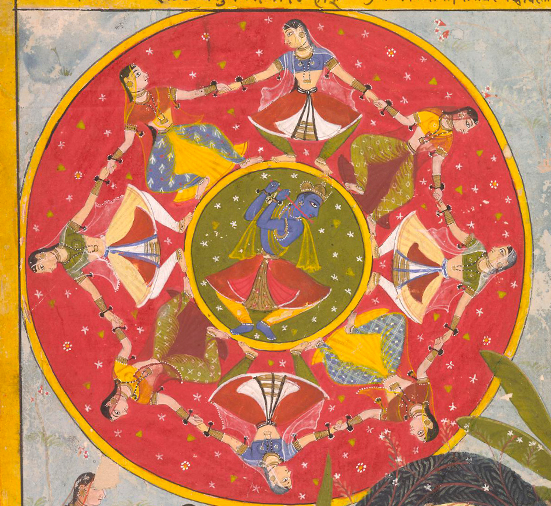
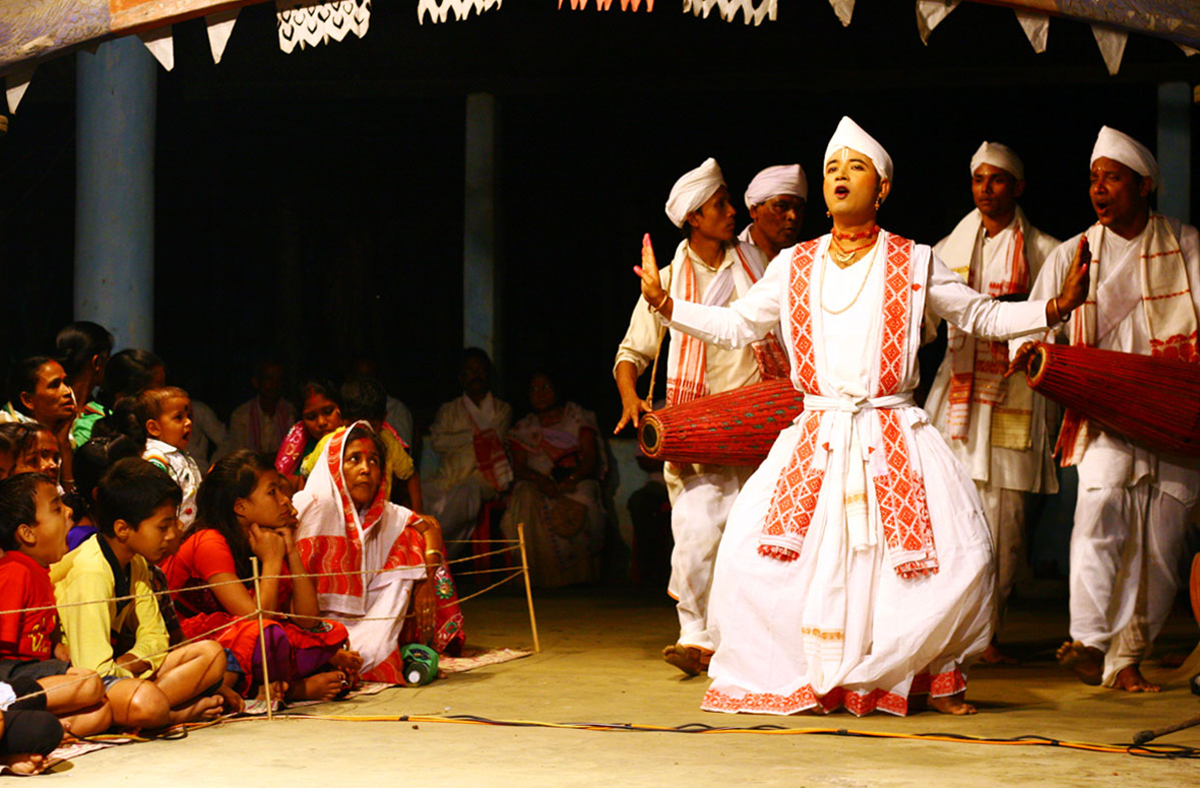
The bhakti movement fuses religious worship with literary activity, leaving behind a vast corpus of literature that expands literary poetics in regional languages as opposed to classical Sanskrit, in texts such as Gita Govinda by Jayadeva, Borgeets by Shankardev, and Kabir Bijak by Kabir. While texts like the Gita Govinda become central to aesthetic developments in music, painting and performance, the cult of Pushtimarg in present-day Rajasthan leads to the foundation of Nathdwara painting. Shankardev transforms the cultural life of Assam through the creation of a new literary language, Brajavali. The tenth and eleventh centuries also see the growth of Sufi silsilas (orders) in the subcontinent, from the northwestern frontier to regions around Delhi. Sufi silsilas are centred around the pir (master-teacher), who serves as a theological and spiritual guide to his murids (devotee-students), moving beyond the prescriptive religious texts and law.
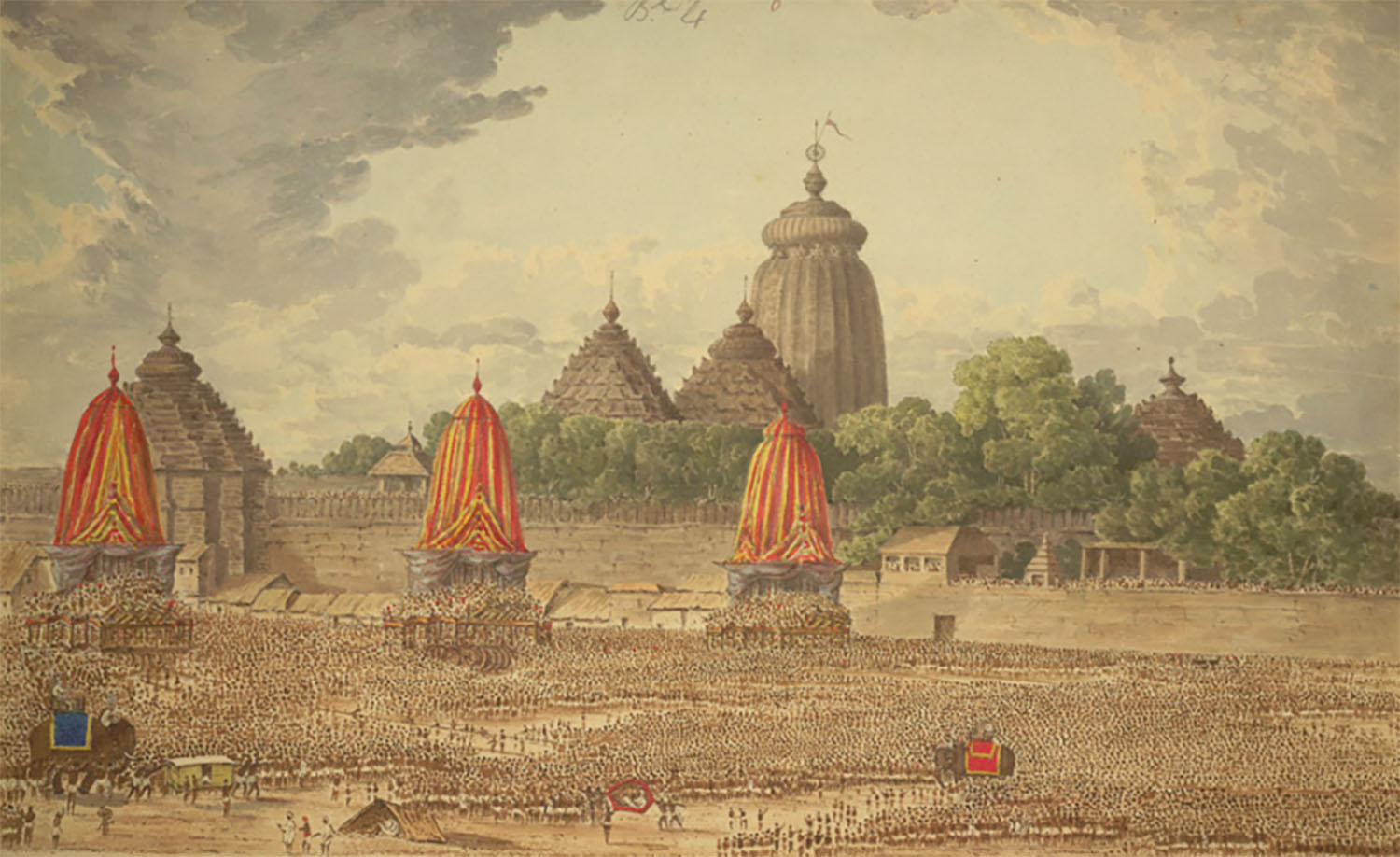
The Jagannath Temple is built in Puri (in present-day Odisha) in the twelfth century by the Ganga dynasty ruler Anantavarman Chodaganga. Originally in a predominantly Shaivite region, the temple is built to consecrate and inaugurate the imperial cult of Purushottama, later known as Jagannatha. It is also intended as a sign of the Chodagangas’ successful conquest and consolidation of the region, which has been home to a large Adivasi or Indigenous population, whose religious practices and icons are believed by some scholars to have been appropriated into the cult of Jagannath.
The Jagannath temple will eventually become one of the most prominent sites of Hindu pilgrimage and the centre of the annual Jagannath Rath Yatra ceremony. Widely attended, mythologised and illustrated, the Jagannath Rath Yatra will be a major preoccupation of the colonial British administration, eliciting both wonder and aversion in the British press and accounts.
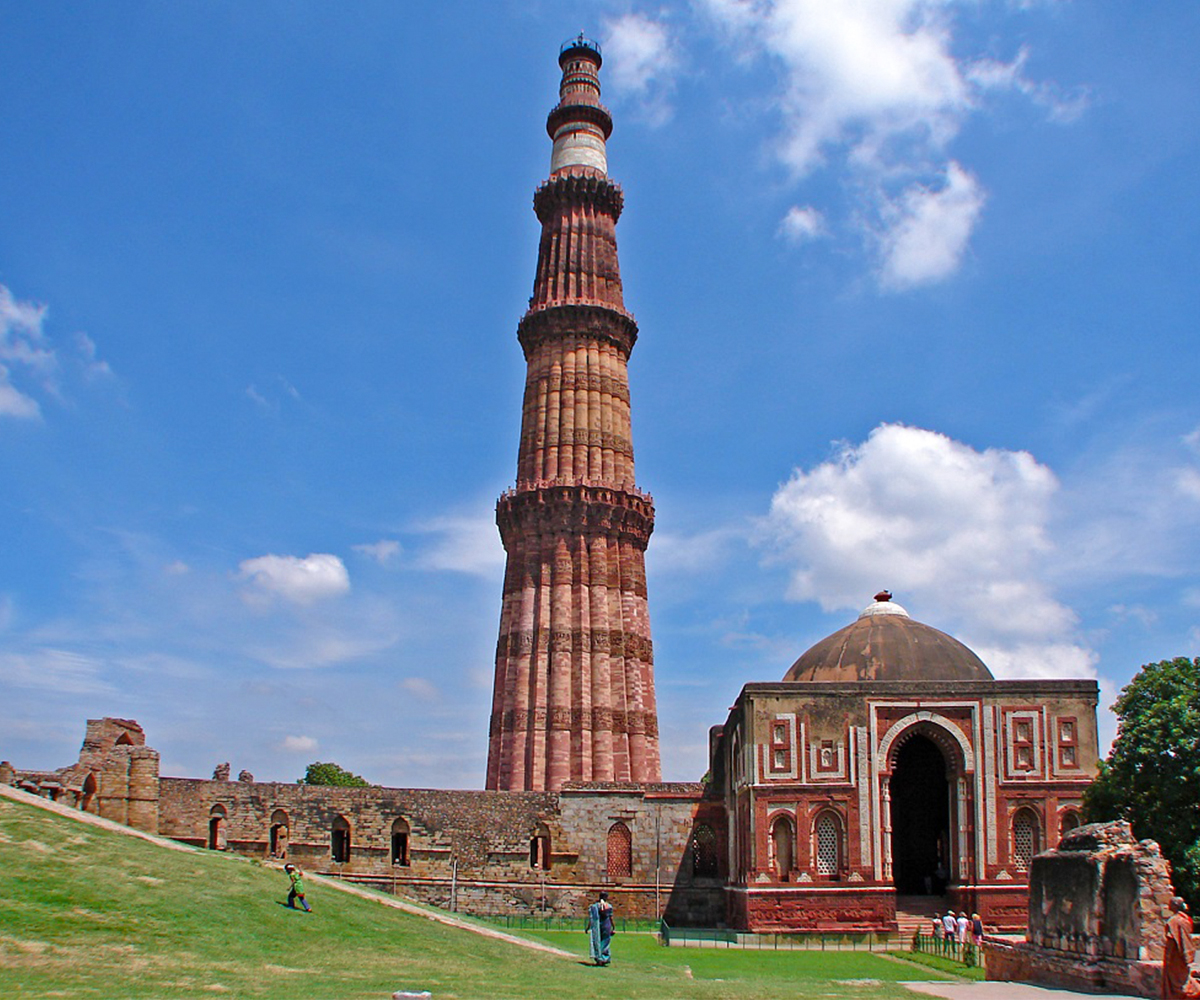
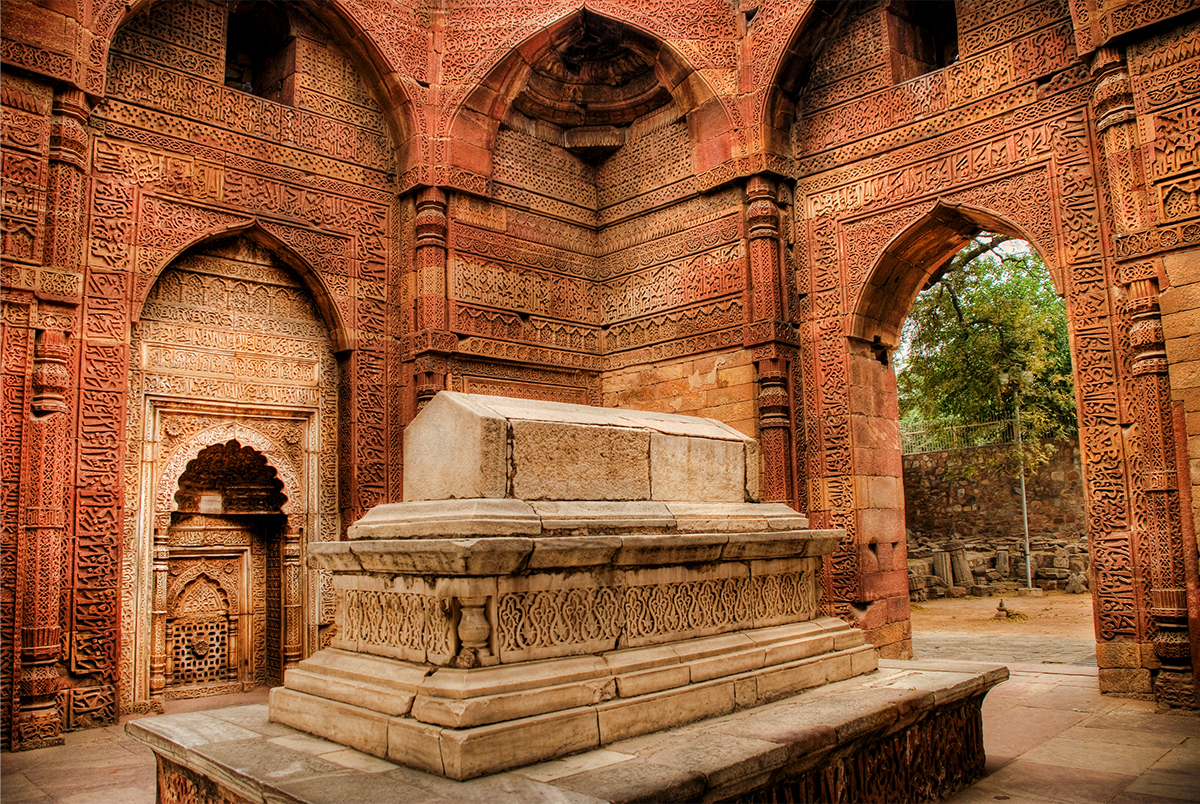
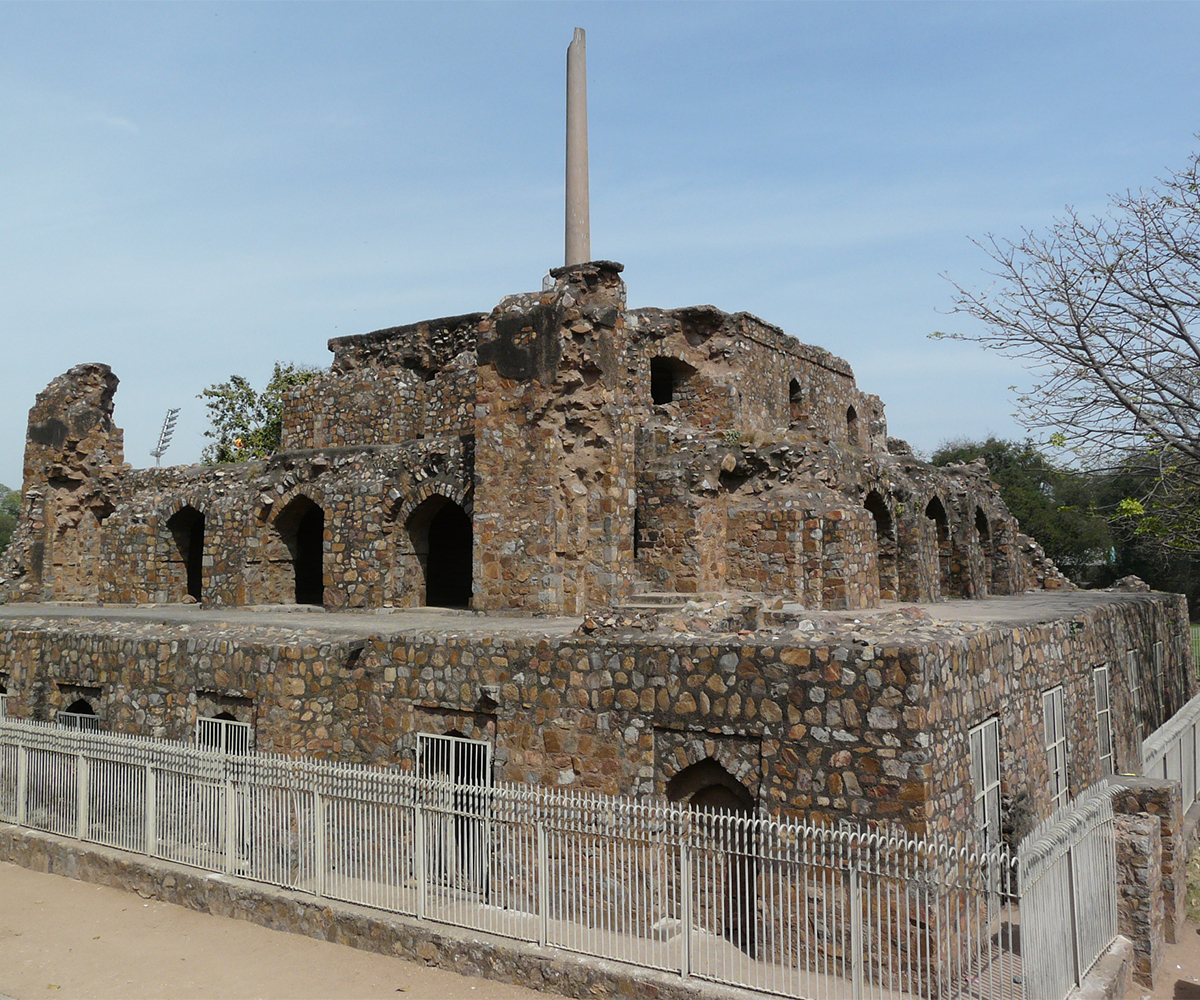
Qutb ud-Din Aibak, a general under Muhammad Ghori, commissions the Qutb Minar to commemorate their victory against the Chauhan rulers of the region. The Minar, along with its adjoining Quwwat-ul-Islam Mosque and the Alai Darwaza, will take nearly 150 years to be completed, through the patronage of the subsequent Delhi Sultanate rulers Iltutmish, Alauddin Khilji and Firoz Shah Tughlaq. Consequently, the materials, architectural styles and proportions of each storey vary.
The Minar and its complex is built on the plinth of a demolished temple, and the column shafts, bases, capitals and reliefs are taken out of twenty-seven Hindu and Jain temples plundered by the Ghurids under whom Aibak served. Most of the temple spolia dates to between the eighth and tenth centuries. The Iron Pillar at the site, speculated to date back to 400 CE (and possibly commissioned under Gupta rule), is brought most likely from Udayagiri (in present-day Madhya Pradesh). While one present-day theory claims that the pillar was moved by Iltutmish, another suggests that it was moved by Anangpal Tomar, a Tomar Rajput king who ruled Delhi in the mid-eleventh century. This, and the other reused temple components at the site, can be compared to the appropriation and reinstallation of sacred objects by other South Asian kings, such as sculptures in the Gangaikondacholapuram temple (in present-day Tamil Nadu) which were taken from Kalinga temples (in present-day Odisha) in the early eleventh century.
Local languages in southern and western India are patronised by new regional kingdoms, even as they trade extensively with West Asia. Mongol conquests and kingdoms across Asia impact the subcontinent, too, driving migration and the formation of new kingdoms in the north and east.
The Kakatiya, Hoysala and Seuna Yadava dynasties consolidate power across the Deccan region, filling the political vacuum left by the final decline of the Chola and Chalukya dynasties. The Pandyas establish themselves as the predominant power of the Coromandel coast. As regional imperial formations, the Kakatiyas establish their base at Warangal (in present-day Telangana); the Hoysalas at Dwarasamudra (present-day Halebidu, Karnataka); the Seuna Yadavas at Devagiri (present-day Daulatabad, Maharashtra); and the Pandyas at Madurai (in present-day Tamil Nadu). Each political entity patronises its own style of architecture, with the Hoysalas and the Kakatiyas adapting the Karnata Dravida (or Vesara) architectural mode with their own variations.
The Hoysala mode is particularly notable for its extremely ornate sculpture and frequent use of star-shaped floor plans in their vimanas (towers). Unlike most medieval temples, Hoysala temples are inscribed with the names of their master craftsmen, including architects, sculptors, jewellers and carpenters, who come from all over peninsular India, suggesting that the sculptural arts are highly sought after by the court and considered a field for elite competition.
As the Pandyas, Kakatiyas, Hoysalas and Seuna Yadavas settle into power across the Deccan, they encourage the use of courtly registers of local languages such as Telugu, Kannada and Marathi, usually alongside Sanskrit. The period sees important political, military and economic developments: the Kakatiyas expand to the Andhra coastal region, introducing various groups of peasant warriors into the political field and rewarding them with land grants and authority. This becomes the precursor for the Nayaka system of the Vijayanagara empire and also marks the rise of the significance of local chieftains, particularly from the Andhra region, in the politics of the Deccan. The Deccan and southern Indian regions also see the growth of trade in horses with West Asia, particularly the Ilkhanid empire, with cavalry warfare becoming key to militaries and states.
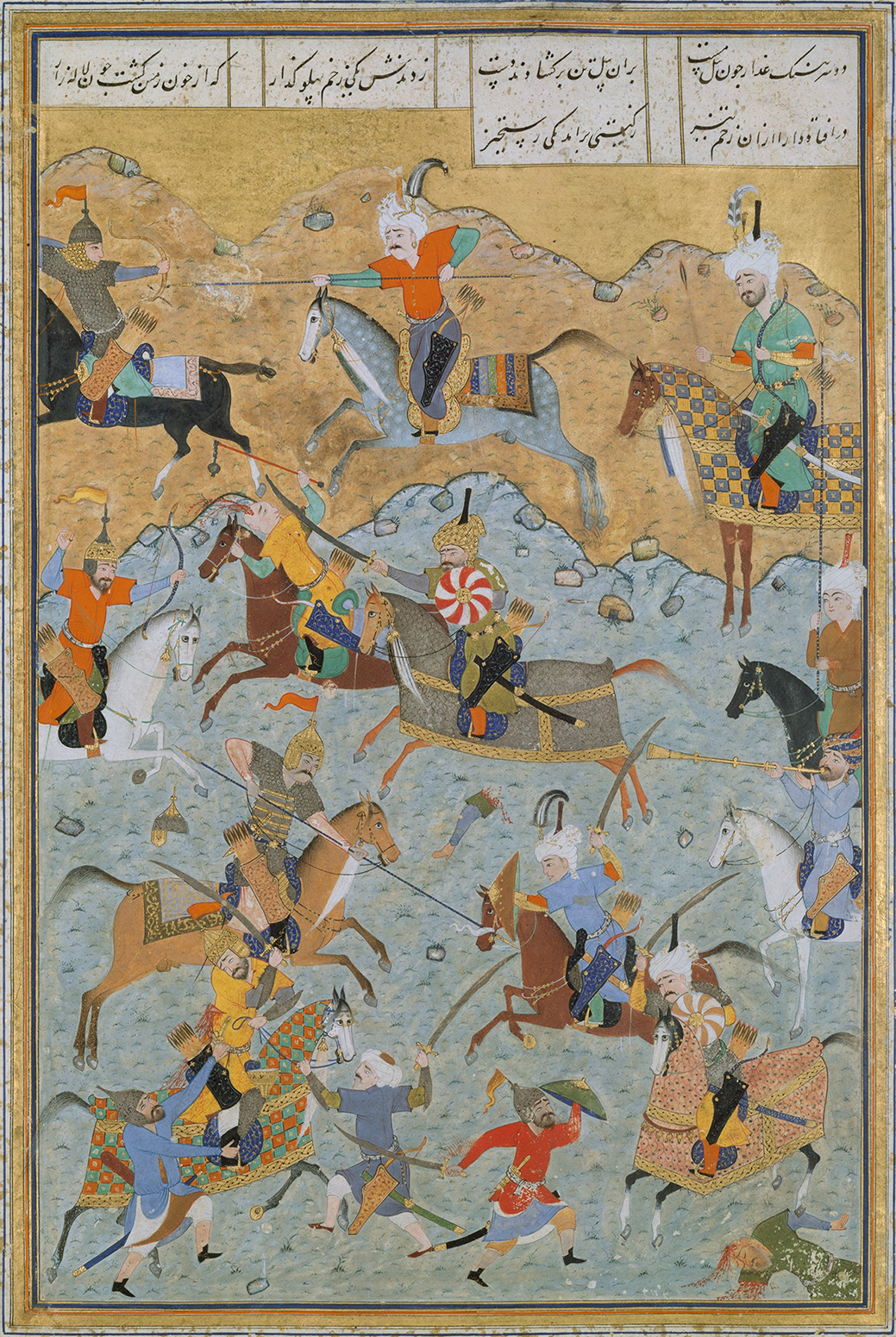
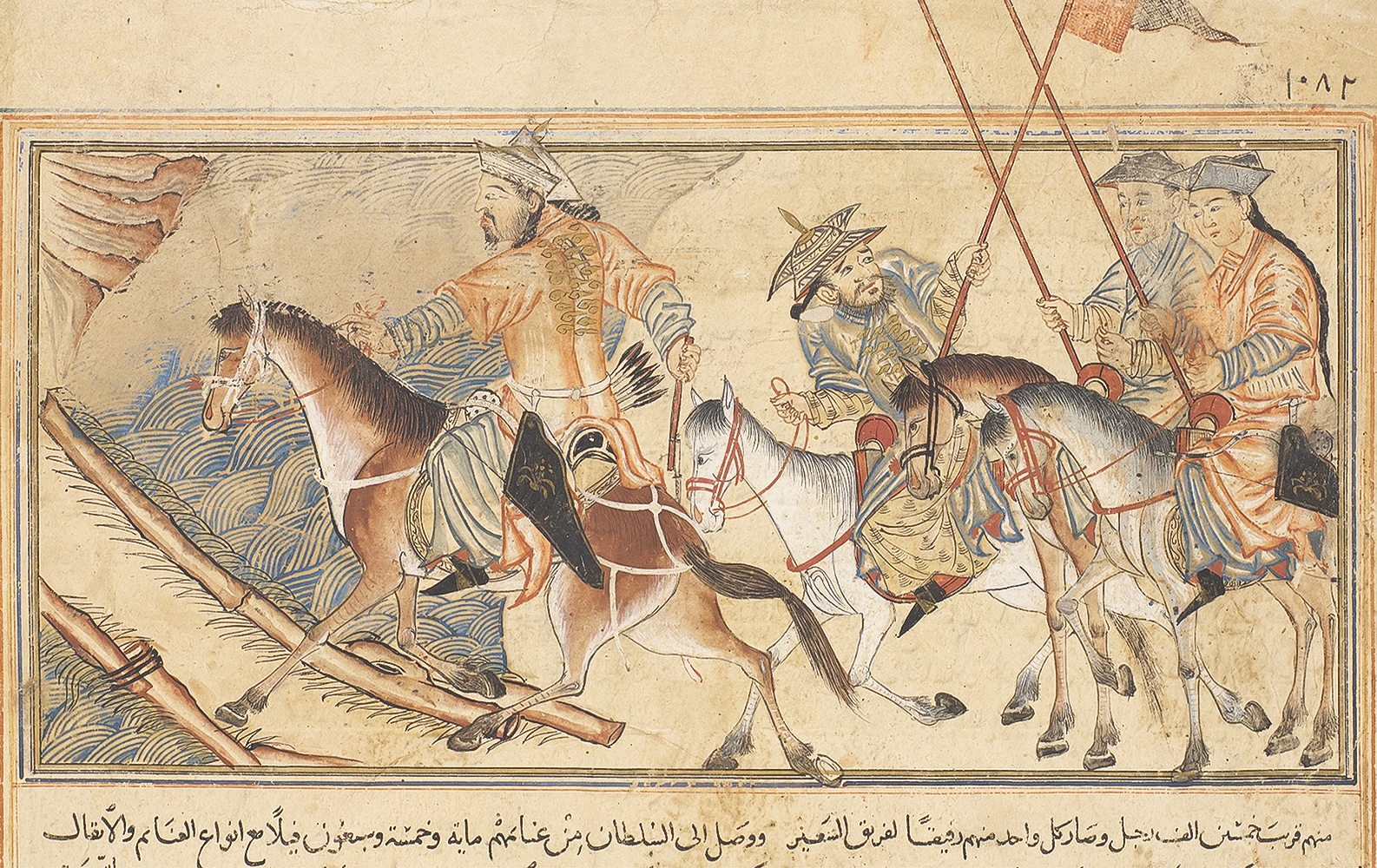
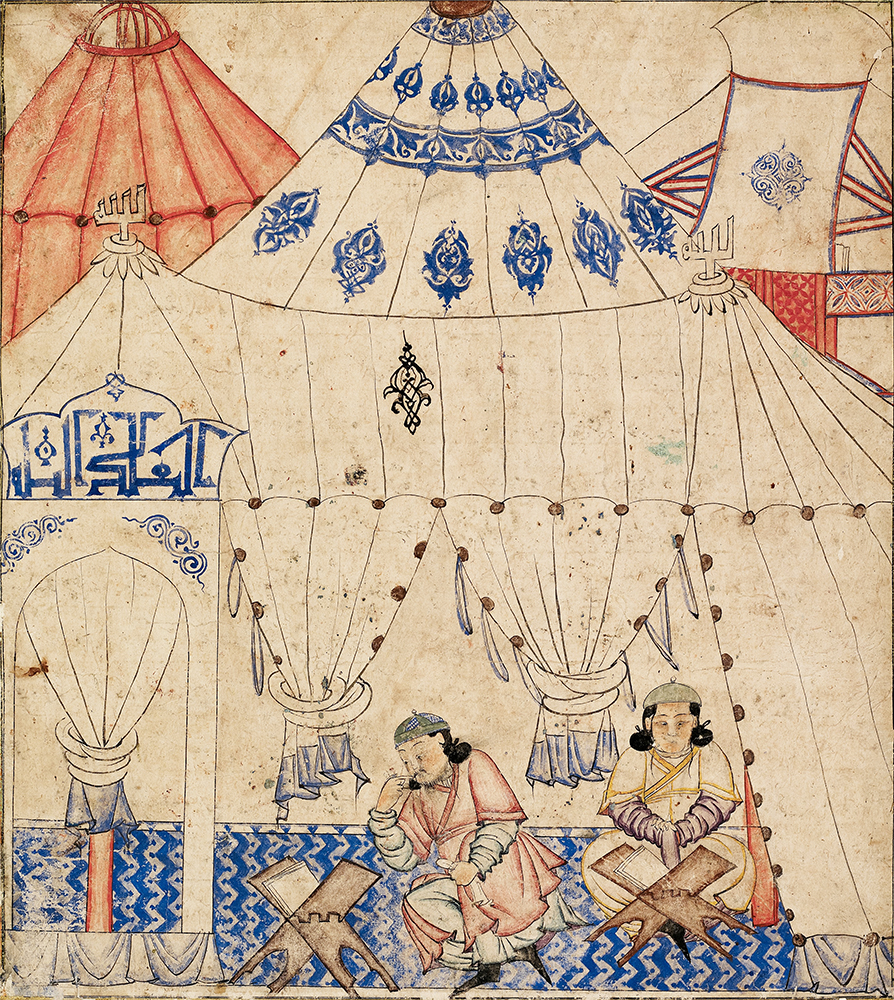
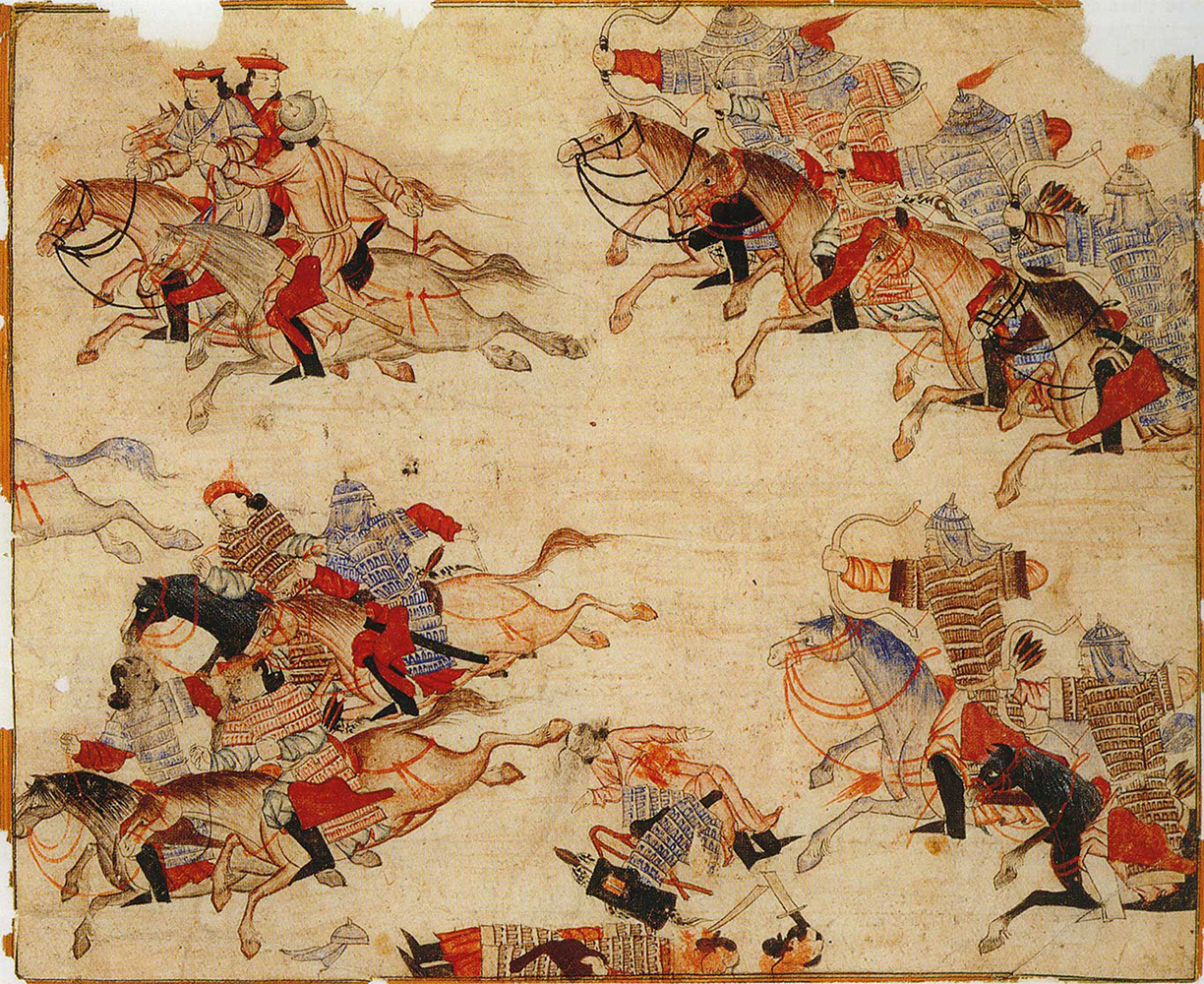
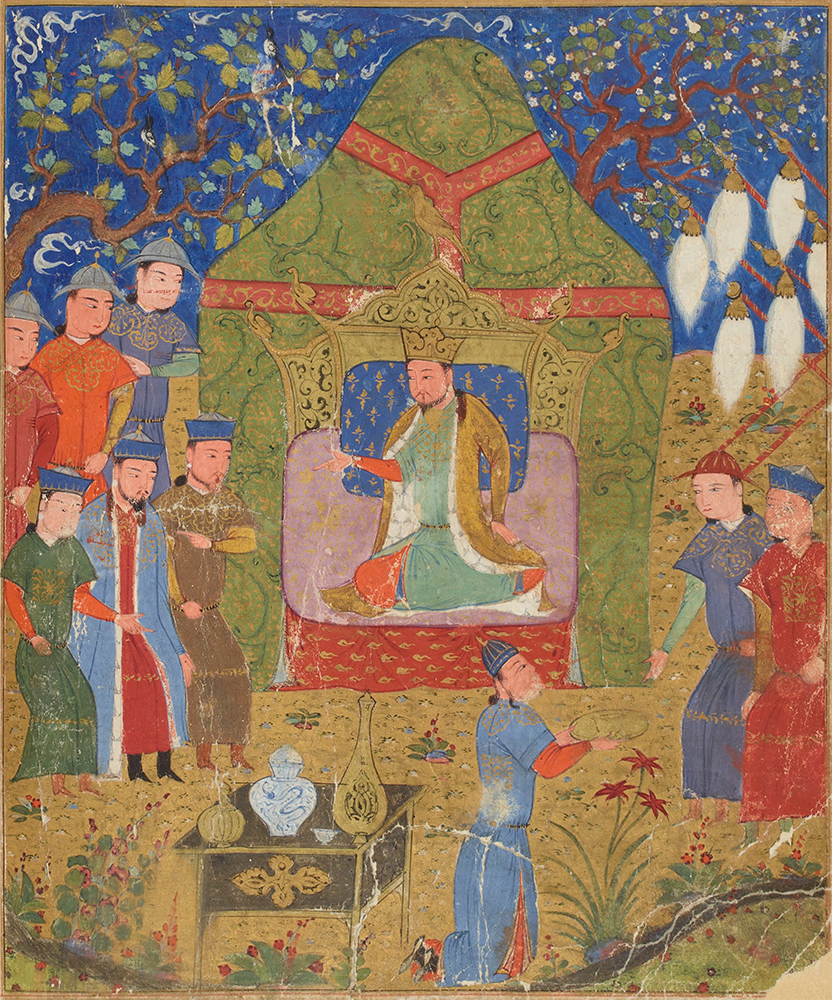
A confederation of Central Asian tribes, grouped under the name ‘Mongol’, expands its territories across Eurasia. Branches of the Mongol political structure, like the Ilkhanids in Iran, establish new trade and political routes across the continent, especially with South Asia and China. After initially destroying some major urban centres, the Mongol Khanate and its successors lavishly patronise the arts and trade, merging with the existing Turko-Persian cultures of the region.
The art of book production develops significantly in Ilkhanid courts, with notable improvements in the quality of paper, calligraphy and illumination. The legacies of this art are carried over into the Timurid and Safavid periods in the region, eventually also influencing Islamic art in South Asia in terms of style, theme and material.
Preceding and later driven by or parallel to Mongol expansion, major migrations of ethnic groups from Central Asia, Persia (present-day Iran) and Southeast Asia take place into South Asia, leading to the formation of the Delhi Sultanate in 1206 and the Ahom Kingdom in 1228.
The Sultanate commissions the earliest examples of Indo-Islamic architecture, which evolves into one of South Asia’s most influential architectural modes. It also fosters an active cultural exchange between the Indian subcontinent and Eurasia, through corridors opened up by the expanding Mongol empire. Driven by Mongol pressure, the Sultanate consolidates control over the resources of the Gangetic Plains and begins to raid southern India. On the eastern side of the subcontinent, the Ahom kings attract migrant communities from Southeast Asia and southern China; and introduce and patronise much of the art and literature unique to present-day Northeast India, notably various silk textile crafts.
Sultanate states in north and south India absorb ideas of architecture and courtly fashion from the greater Persianate world. Indian textiles cater to East African markets, even as enslaved Africans are enlisted in the Deccan’s many armies. Vernacular literatures flourish, reflecting influences of Vaishnavite bhakti poetry.
Two Ashokan pillars, from near present-day Ambala and Meerut, are transplanted to Delhi by the sultan Firoz Shah Tughlaq. Historians describe this move as one of historical appropriation, linking Tughlaq’s rule with what were then considered mythic monuments. Similarly, in the early eleventh century, sculptures from Kalinga temples built by the Western Ganga dynasty were taken by Rajendra Chola I as a symbol of his conquest of the Ganga.
A present-day theory also suggests that a few decades later, Anangpal Tomar relocated a Gupta-era iron pillar to Delhi, which was then repurposed by Iltutmish in the thirteenth century. Firoz Shah’s act of appropriation is in line with how rulers of Central Asian descent engaged with South Asian histories. His reign sees not just the incorporation of Indic history in architecture, but is also defined by a constant reference to earlier Delhi architecture, in the form of restorations of earlier sultanate monuments and tombs, which already incorporate subtle temple influences as a result of employing Indian artisans.
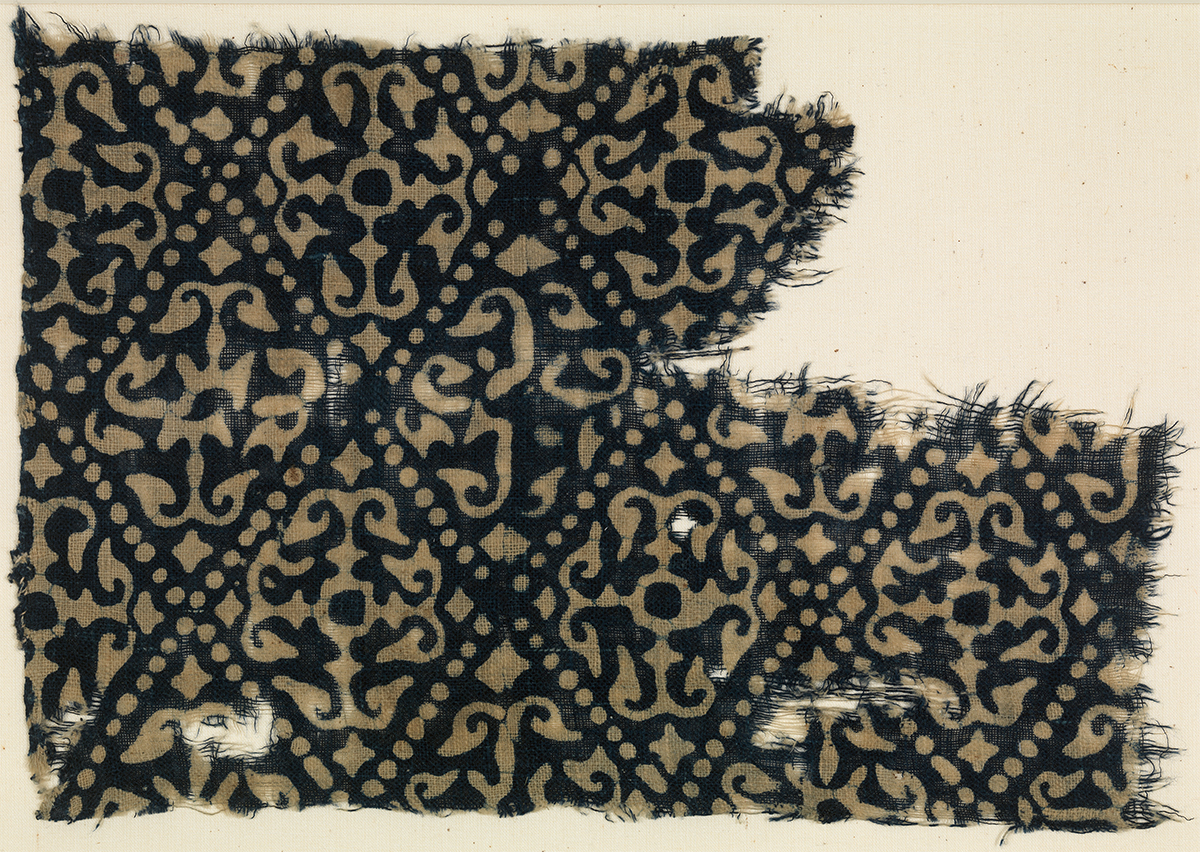
Fragments of cotton fabric dating c. 1250–1400 and possibly originating in South Asia will be discovered in historic finds at Al Fustat, a town in Egypt, in the 1920s. The red and blue block-printed patterns on these pieces of cloth are similar to Ajrakh, a textile printing tradition practised in Gujarat, Rajasthan and Sindh, and will corroborate other written accounts of finished Indian textile goods being regularly traded across the Indian Ocean.
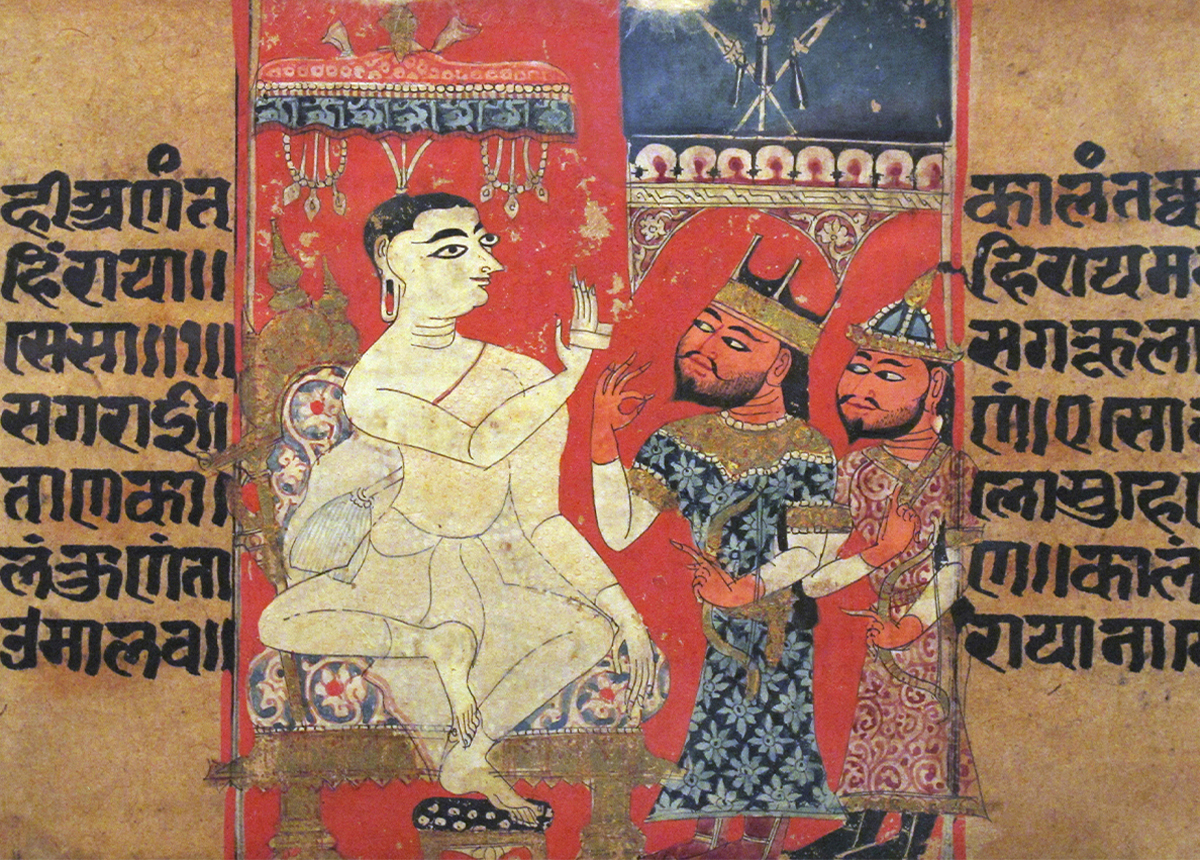
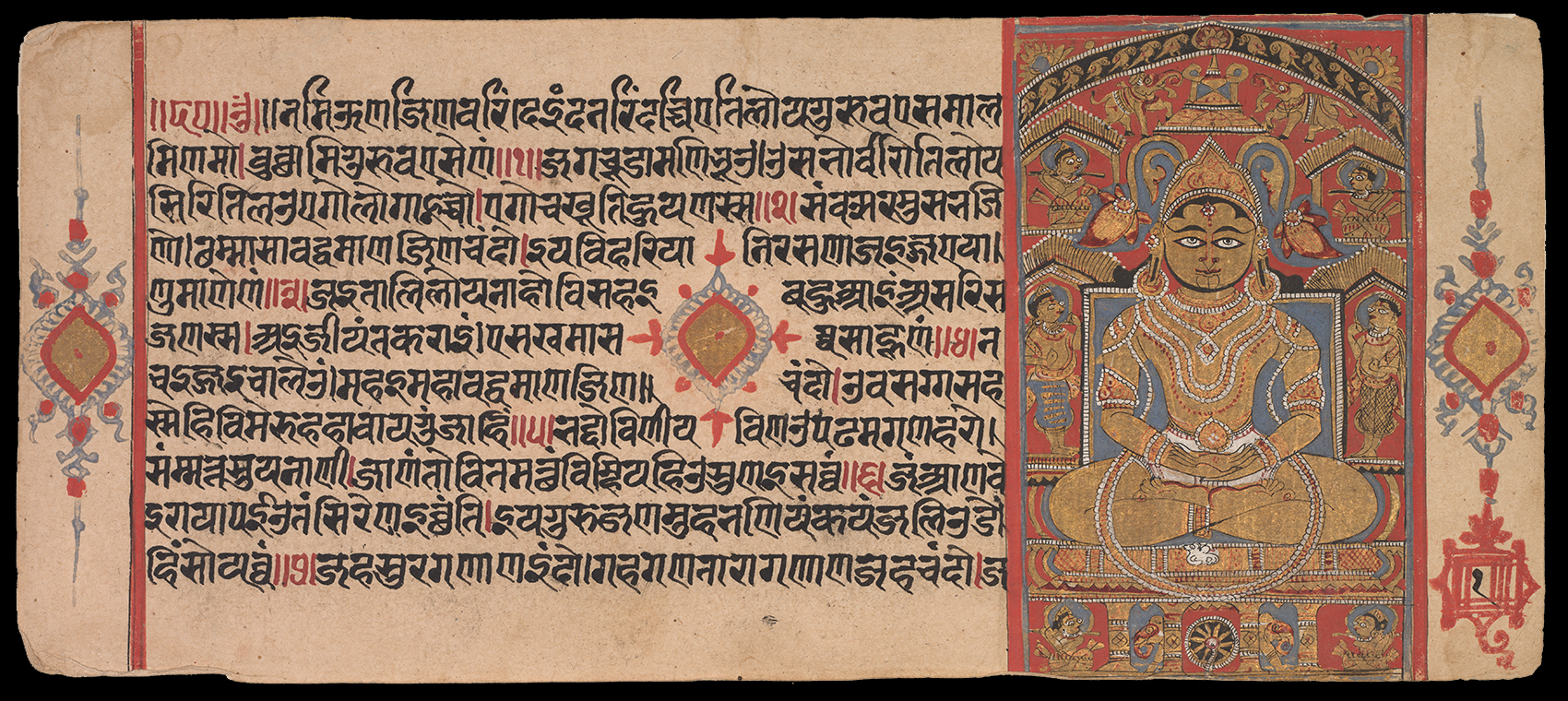
A copy of the Kalakacharya Katha — today the oldest dated illustrated South Asian manuscript on paper — is produced in Yoginipur (present-day Delhi). By this time, Jainism has a centuries-old tradition of commissioning manuscripts of religious texts as an act of piety, carried out by both royal patrons such as the Solanki kings of present-day Gujarat, as well as lay patrons, chiefly merchants and bankers active in international trade networks of the time. The earlier palm-leaf manuscripts are stored in bhandaras or temple libraries, with the regions of present-day Gujarat and Rajasthan being the prime centres of patronage and production.
With the establishment of the Delhi Sultanate, Jain merchant communities also set up their presence in the region due to the city’s new trade networks; the Delhi region soon emerges as an important centre of Jain painting, alongside Gujarat and Rajasthan. Although the use of paper is not unknown at the time, this copy of the Kalakacharya Katha represents a widespread transition towards paper for Jain and Hindu manuscripts. Gradually, the format of the manuscripts, the visual style and the tools and materials evolve to reflect the influences of Islamic book production on existing Indian traditions.
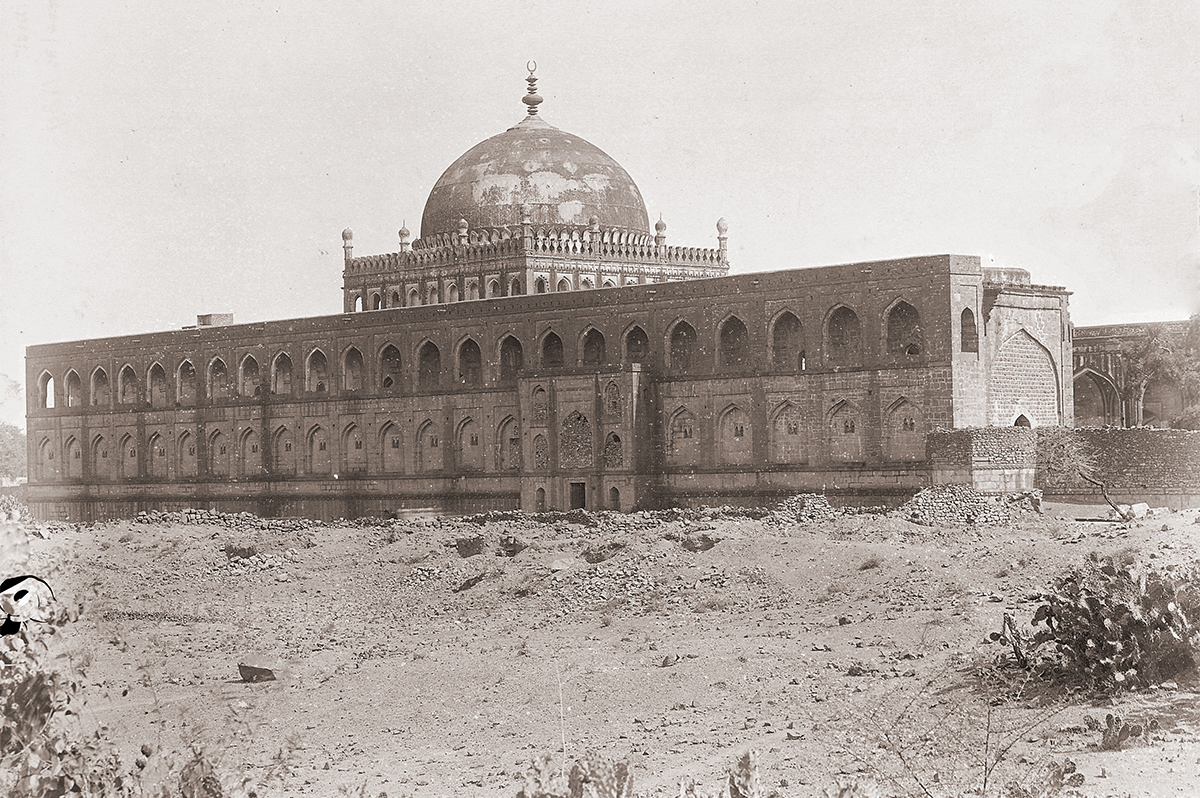
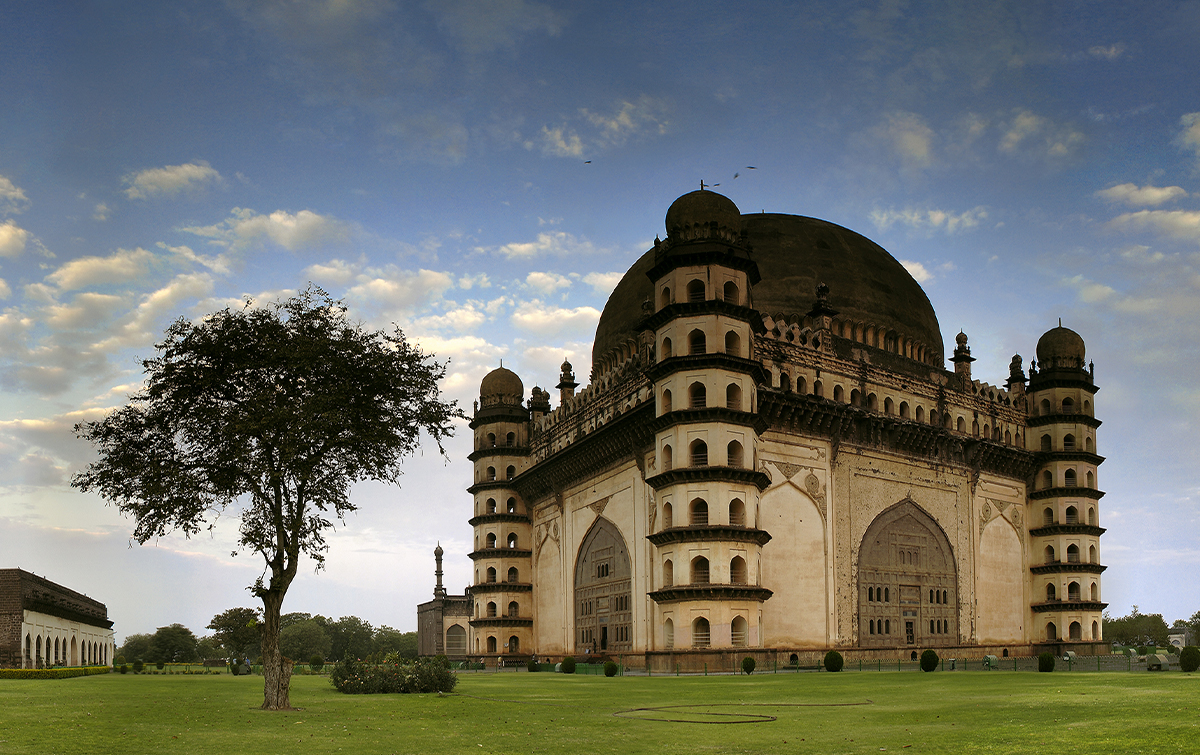
The gradual weakening and splintering of the Bahmani Sultanate, driven in part by conflict between immigrant and local aristocratic factions, leads to the establishment of a number of smaller regional sultanates: Bijapur and Bidar in present-day North Karnataka; Golconda in present-day Telangana; Ahmadnagar in present-day Maharashtra; and Berar in present-day Chhattisgarh. These sultanates are ruled by nobilities of Persian, Central Asian and South Asian descent, and often tend to patronise regional languages and rely on Indian military and administrative officers rather than immigrants.
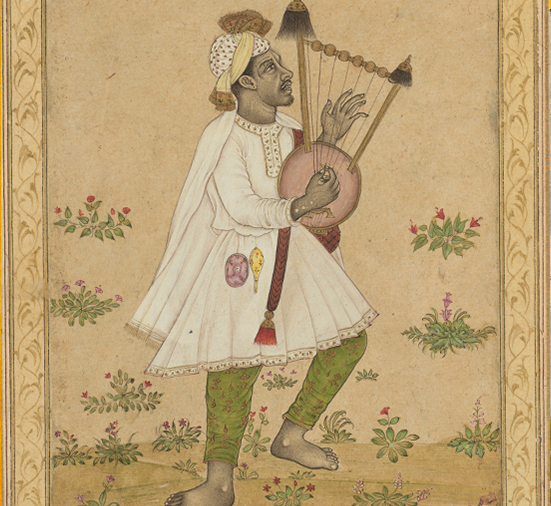
Exceptions to this trend are the many enslaved African people — often called habshi, now considered a derogatory exonym for Ethiopians and people of African origin generally — who are brought to the Deccan. Their presence in the military in this period is largely due to their neutral position among the various rival ethnic and cultural groups that tried to exert control over the Deccan kingdoms. Among the royalty and nobility, they are often trusted over their masters’ own heirs, allowing them to also rise through military and political ranks.
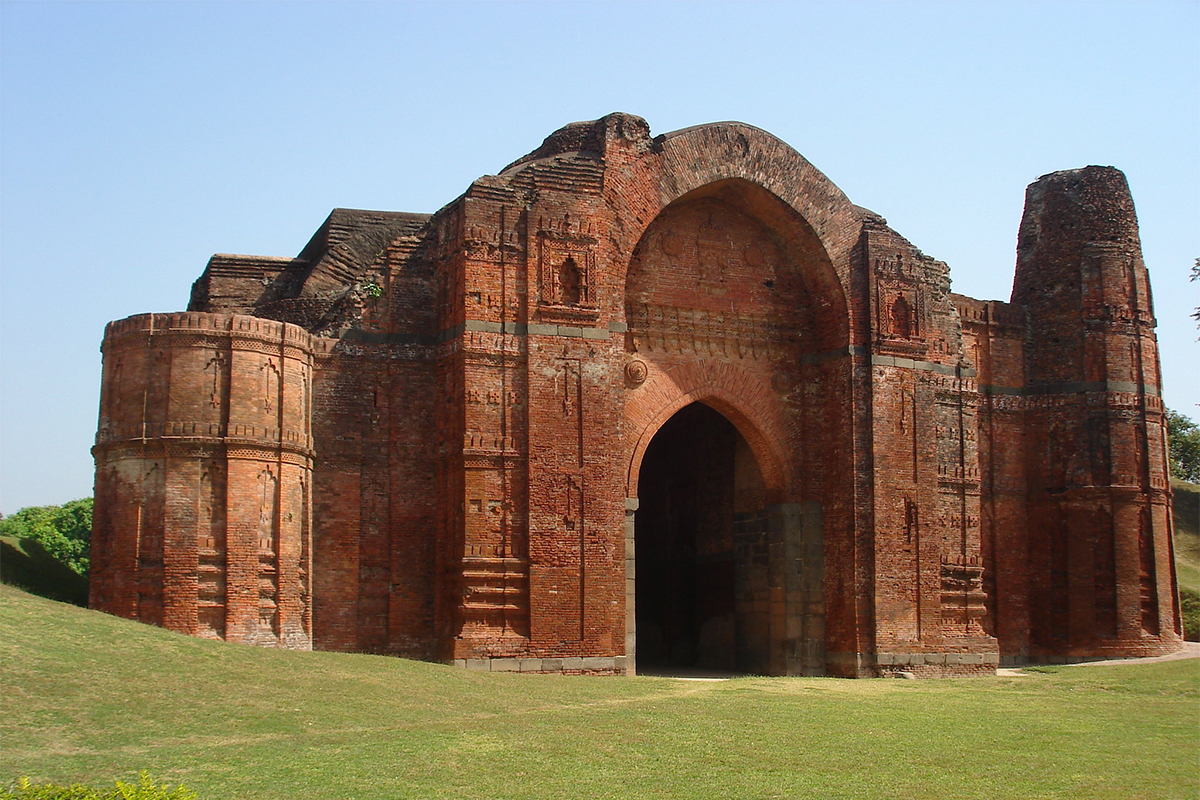
The weakening of the Delhi Sultanate sets the stage for the splintering of its territory into newer sovereign kingdoms in the early years of the fifteenth century. The Bengal Sultanate is established in the 1330s after repeated failed attempts by the Delhi Sultanate to keep the territory in its fold. Other regional sultanates, ruled by erstwhile Tughlaq governors, declare independence after Timur’s raid on Delhi in 1398–99. Jaunpur, Gujarat and Malwa emerge as important sovereign sultanates, leading to the flourishing of distinct art and architectural traditions in each region.
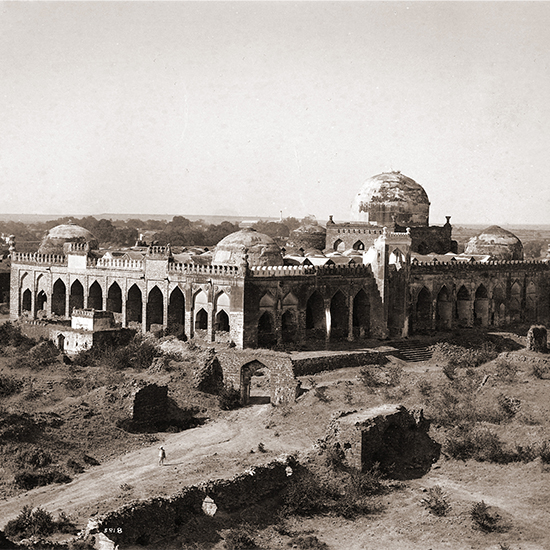
In terms of architecture, the Bengal Sultanate comes to be known for its gradual incorporation of local building materials, motifs inspired by the earlier Pala-Sena eras and local architecture, and terracotta ornamentation. In kingdoms in present-day Gujarat and Malwa, the reuse of elements of earlier temples is a key characteristic of early sultanate architecture, while in Jaunpur (in present-day Uttar Pradesh), a style known as Sharqi architecture is characterised by the adaptation of Tughlaq military architecture for mosque design and the use of the arched pylon in the facade, unique to Jaunpur among the sultanates. Architectural motifs in Jaunpur are inspired by Central Asian designs and Western Indian textiles.
The Vijayanagara Kingdom and the Bahmani Sultanate establish diplomatic ties with the Timurid court. Their constant conflicts and the resulting demand for human capital attracts Persian immigrants from traders and administrators to soldiers and artists, who arrive in the Deccan alongside Sufi orders from northern India.
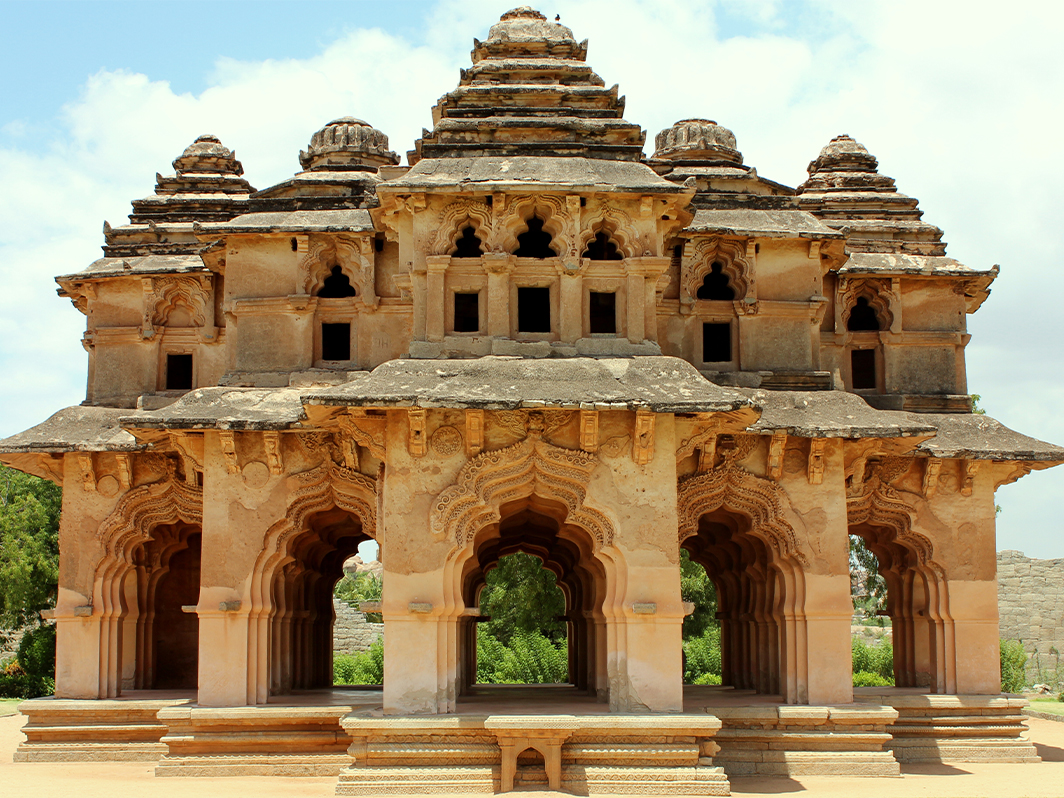
The West Asian ports of Aden and Hormuz become important entrepôts for horse-trading in the region. Islamicate influences in the cultural sphere are evident at sites like Gulbarga and Vijayanagara in present-day Karnataka. In the case of the latter, the influence of Islamic architecture is seen in the royal enclave buildings, especially in the use of multi-foil archways. Islamicate influences also seep into courtly fashion, as seen in the kabaya, a long tunic, and the kullayi, a type of headgear, both inspired by the Arabic qaba and the kullah, respectively.
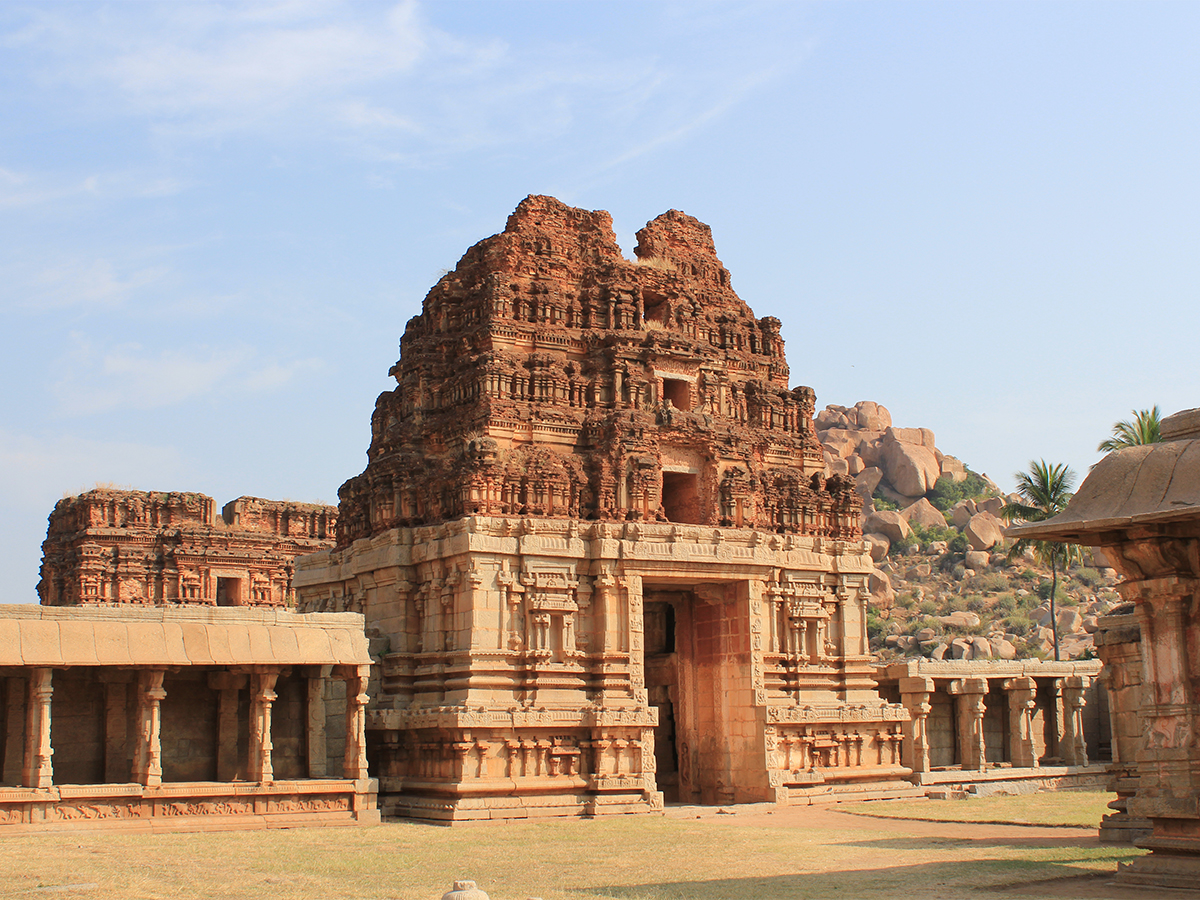
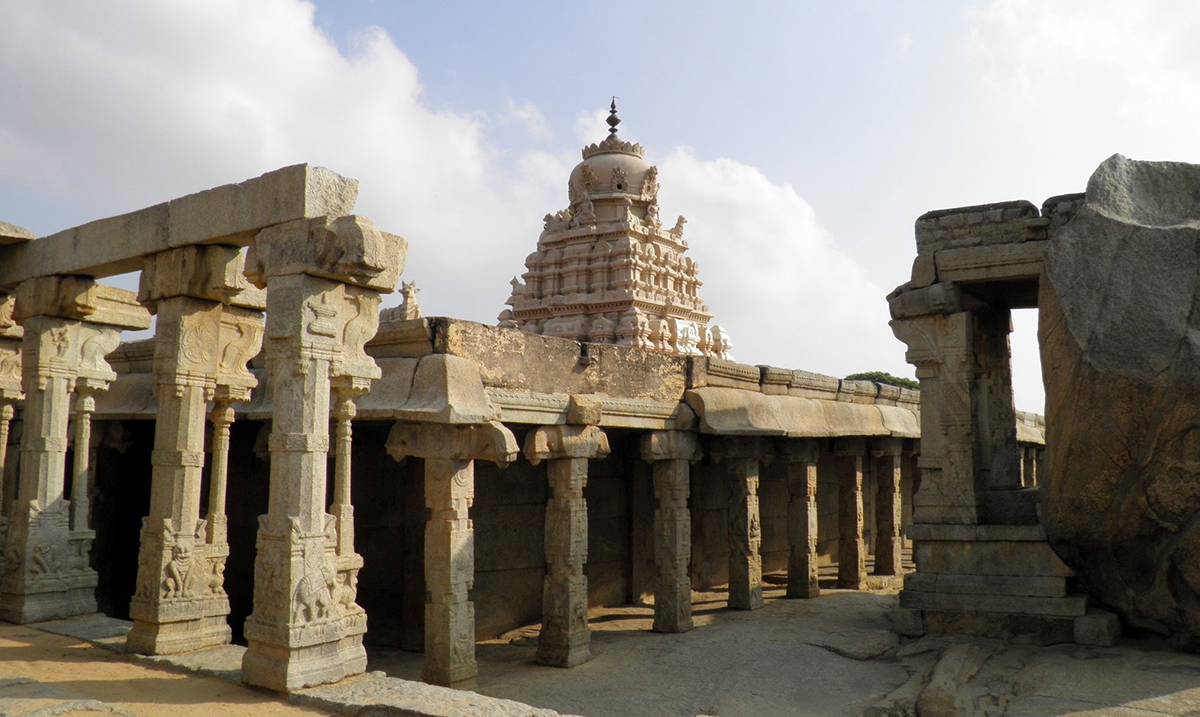
Concurrent with the use of Persianate elements in court architecture, Vijayanagara (in present-day Karnataka) under the Sangama dynasty also adopts elements of temple architecture of the Tamil imperial style associated with the Cholas and Pandyas, leading to a decline and fading away of the early medieval Karnata Dravida tradition. Some characteristics borrowed from the Tamil temples are the use of granite pilastered walls with alternating projections and recesses, brick and plaster towers with kutas (rounded, sloped roofs), stambhas (decorative columns), gopurams (monumental gateways) and shalas (barrel roofs).
Under subsequent reigning dynasties such as the Tuluvas, the patronage of rulers and the nobility broadens the scale of the temple patronage and a standardisation of building techniques and designs is introduced. The Vitthala and Tiruvengalanatha temples in particular exemplify the scale of patronage and the Tuluva-period emphasis on mandapas (prayer or ceremony halls), gopurams and corridors linking different parts of the complex. The patronage of the Vijayanagara rulers extends to important pilgrimage sites in present-day Tamil Nadu and Andhra Pradesh, especially Tirupati. After the decline of the Vijayanagara state in 1565, the rulers of successor states, particularly the Nayakas of Madurai and Thanjavur, embark on temple extensions on a lavish scale.
By the 1460s, the Bahmani Sultanate forts of Bidar, Kalyana and Raichur have gun ports incorporated into their architecture, with fortifications inspired by the military engineering styles prevalent in Western Asia at the time. Cannon technology and artillery likely arrived in the region through contact with Mamluk Egypt and the Ottoman empire, and from European military developments. The splintering of the Bahmanis and the emergence of smaller Sultanates drives further innovations in gunpowder technology, bringing the Deccan on par with Europe; nevertheless, the Vijayanagara empire remains dominant in the region through its use of conventional cavalry and infantry warfare.
Through the sixteenth century, the sultanates absorb developments in military technologies from the Ottomans and the Portuguese, and invest in developing new gunpowder warfare technology, from artillery of different calibres to cannons that can be made mobile to cover more ground during an attack. The ammunitions development is matched by architectural changes to fortifications, such as the use of cavaliers that enhance the defences of forts. Vijayanagara’s adoption of these technologies is relatively hesitant and does not factor in corresponding changes to defensive architecture. The military gulf between the Bahmani Sultanate and the Vijayanagara empire gradually widens.
The migration of individuals from different tribes of what is now Afghanistan to the plains of northern India provides for a significant Afghan presence in the armies of the Lodi and Sur dynasties.
The movement of traders and soldiers will continue until the eighteenth century. In late medieval India, terms like Afghan and Rajput are used not just to signify ethnic identity, but also the military affiliation of a new class of peasant-warriors in the northern and central parts of the country. Members of these hitherto agrarian groups are recruited by contractors for warlords who provide military services to different regional states that emerge in the aftermath of a weakened Delhi Sultanate and Timur’s raid on Delhi. The development of a distinct military affiliation also sets the stage for the crystallisation of ethnic identities, where genealogies are linked to mythical dynasties and new territories are founded in present-day Gujarat, central India and Rajasthan.
The emergence of regional states spurs a trend of democratisation of language, with vernacular languages emerging to the fore alongside Sanskrit, Arabic and Persian. The changes to language and literature affect all spheres of life — political, religious, cultural and social — each influencing the movement of people in a time of political turmoil. Bards and scribes gain importance in regional courts as they also play a role in crafting genealogies that place patrons — often from peasant backgrounds — in larger social and historical contexts.
Sultanates in present-day Bangladesh, West Bengal and Gujarat assert their regional political characters through patronage for translations of religious texts to local languages and bilingual inscriptions alongside Sanskrit on public structures. In terms of religion, the verses of Guru Nanak, Kabir, Mirabai and Surdas are dated to this period, along with Sufi romances like Da’ud’s Chandayana and religious texts in Dakkani commissioned by Sufi saints in the Deccan region, while Jain patrons sponsor manuscripts in Prakrit. Major works of Telugu poetry are commissioned by the Vijayanagara court, making it the dominant language of poetry and court culture in southern India; this tradition is continued by the Deccan sultanates, especially Golconda in present-day Telangana.
Vaishnava movements such as Pushtimarg Vaishnavism, Gaudiya Vaishnavism and Ekasarana Dharma — led by the teachers Vallabhacharya, Chaitanya and Sankaradeva, respectively — take root across northern and eastern India, influencing religious practice and forms of worship with their emphasis on Krishna as the central godhead.
Texts like the Bhagavata Purana and Jayadeva’s Gita Govinda are significant in influencing the philosophies of these movements, with their emphasis on the lilas (divine acts) of Krishna and the romantic love between the deity and the gopis (female cowherds) of Vrindavan, particularly Radha. The mystic eroticism and the depiction of shringara rasa featuring Krishna with the gopis or with Radha become a significant theme in artistic traditions, particularly Indian miniature painting traditions, where the representations of Krishna and Radha are also carried into non-religious poetic texts like Rasamanjari and Rasikapriya. The spread of Vaishnava movements also influences performance traditions in several parts of India.
The art of the book in the Persianate world influences manuscript production and illustration across the subcontinent. The Portuguese establish a base in Goa, and the Vijayanagara kingdom declines. In the north, the Mughal imperial architectural and miniature painting styles are established.
Among parallel neo-Vaishnavite movements at this time, the Ekasarana Dharma, founded in present-day Assam by the religious leader Srimanta Sankaradeva (b. 1449–d. 1568), gains popularity. Based on collective worship through chanting and singing, it differs from the dominant religious rituals of the era. With the exception of the sect founded by Damodaradeva, it is initially non-discriminatory in terms of the caste system. The mass movement also gains the support of the Ahom rulers, officials and nobility who, by this time, have adopted Hindu traditions into their courtly life.
The Vaishnava movement is symbolised by the establishment of monastic institutions — sattras, which become the centre of a parallel cultural movement influenced by neo-Vaishnavism. Sattras spur the development of new genres of devotional and community-centric performance styles such as Bhaona and Bengali Jatra in Assam and its surrounding regions.
Influenced by the art of the book in the wider Persianate world, emerging sultanates in northern India commission manuscript illustrations, such as the Sharafnama of the Bengal Sultanate (1531–32), and the Nimatnama and the Miftah ul-Fuzala of the Malwa Sultanate (c. 1500). These schools of painting produce a relatively small but historically significant number of surviving manuscripts. Alongside this, the increasing use of materials like lapis lazuli in Jain manuscripts of this period marks the influence of Persian painting in the subcontinent.
The Sharafnama in particular reflects an emphatically Persian style, indicated by the paintings’ high horizon line, costumes, and rendering of rock formations and clouds. Based on this, present-day historians speculate that the manuscript painting tradition in the Bengal region may be at least a century older than the Sharafnama, although no such books or folios survive. The Miftah ul-Fuzala, which can loosely be seen as an illustrated encyclopedia of Malwa’s material culture, is a valuable resource on everyday life in the kingdom. Like the traditions of other sultanates at the time, the Miftah ul-Fuzala also shows a strong Persian influence, specifically the Turkmen style prevalent in the late fifteenth century.
A documentation of the lavish lifestyle enjoyed by Ghiyath Shahi, the sultan of Malwa, the Nimatnama-i-Nasiruddin-Shahi compiles recipes for culinary dishes, perfumes, medicines and aphrodisiacs. The recipes listed mention mostly vegetarian dishes with Persian, Turkic and local names.
Meat and rice dishes, snacks and confectionery like the sambusa (samosa), biryani (from the Turkish biryan), halwa and harisya (a dish similar to haleem) become popular from the time of the sultanate, permeating courtly and common spaces. The samosa recipes of the Nimatnama do not call for potatoes in their stuffing, as potatoes, chillies and tomatoes are yet to find their way to India.
Chronicles of the Delhi Sultanate period also point to the cultivation of fruits around Delhi that cater to Central Asian and Persian tastes, such as grapes, pomegranates and melons, even as a brisk trade in dried fruit, plums, almonds and pistachios continues with West Asia and the Arabic world.
The Jain monk Acharya Parshvachandrasuri translates a number of Jain scriptures into Gujarati in his Tabba, or ‘Paraphrasings’. These scriptures, written in Prakrit and Sanskrit, are derived indirectly from a portion of the fourteen Purvas believed to be a record of Mahavira’s exact words as written by Mahavira’s ganadharas (chief disciples). As the Purvas are believed to have been lost by the third century CE, the Tabba draws on various commentaries by Jain monks over the centuries. The Prakrit and Sanskrit texts were rewritten every few centuries to keep up with changes in language and maintain the texts’ intelligibility, but the translation into Gujarati ends this cycle, although some older scriptures have survived.
Part of present-day Goa becomes the capital of the Estado da India, an overseas territory of the Portuguese empire. Its importance to the Portuguese crown as a major port in the East is evident from the fact that it has nearly the same charter of privileges as Lisbon.
In the late fifteenth and early sixteenth centuries, with Portuguese influence on trade in the Indian Ocean dominant, Goa becomes a major port for trade in spices, herbs, diamonds, textiles, musk and enslaved people, brought to the region via changing Indian Ocean trade routes. Although Portuguese dominance over the historical trade networks is yet to be complete, it sets the template for other European enterprises centred around maritime commerce to emerge in Asia.
Located in Lepakshi in present-day Andhra Pradesh, India, the Virabhadra Temple dedicated to the warrior form of the Hindu deity Shiva is completed. Apart from its extensive sculptural ornamentation and large statues of Nandi and a seven-headed serpent, it is particularly significant for its ceiling murals.
Remaining well-preserved to the present-day, the murals will be uniquely valuable as they not only feature mythological narratives, but also document the social and religious life of the period. The characters’ costumes, jewellery and headgear, particularly the patterned fabric and drapery styles of saris will provide useful information on Vijayanagara material culture. The murals also reveal associations with the Islamic world and suggest that Vijayanagara fashion drew from a pool of syncretic sources. This will be corroborated by written testimonies from Persian, Chinese, Portuguese and Italian travellers about the costumes of the Vijayanagara elite. Stylistically, the Virabhadra murals will be the basis for Kalamkari designs, rendered on painted fabric originally used as temple tapestries, and in subsequent centuries, a major export primarily to Southeast Asia.
The expanding market for military labour in the subcontinent is served by the import of textiles and enslaved people from Africa, particularly present-day Ethiopia. However, in contrast to enslaved African people in the Americas, slave-soldiers in South Asia often rise to positions of influence and power.
These are not the only points of exchange in the historic Indian Ocean trade with Africa. Since the tenth century there are reports of African exports of ambergris, resin, tortoise shell and ivory to India and China. Where Africa exports gold and silver into South Asia, the latter is a key source for beads, which are socially and economically significant in Africa. Another key node of exchange in the Indian Ocean region is food and foodgrains — subsistence crops such as Asian rice and millets, and other crops such as sugarcane, bananas and taro — along with the movement of cattle species like the Zebu.
A popular form of folk theatre called tamasha emerges in northern India as a form of entertainment for Mughal soldiers, incorporating song, dance, skits, mimicry, poetry and farce with a focus on erotic themes and double entendres. It is then transmitted to the Deccan by troupes that accompany Mughal armies campaigning against the Deccan Sultanates. By the seventeenth century, Tamasha becomes a distinct cultural form in Maharashtra and parts of Karnataka, where it will be performed up to the present day in different variations according to the class, caste and gender makeup of regional audiences.
The Deccan sultanates of Ahmadnagar, Bijapur, Golconda and Bidar defeat the Vijayanagara army in the Battle of Talikota, resulting in a number of the empire’s vassal states becoming independent kingdoms. The battle is seen as a result of Rama Raya’s repeated clashes with Ahmadnagar and, in 1563, the looting of several districts under the control of Golconda and Rama Raya’s erstwhile ally Bijapur. For the sultanate states, particularly Bijapur and Golconda, this victory is followed by a period of cultural activity, visible in manuscript painting, architecture and the decorative arts.
Over the sixteenth century, the Deccan kings and nobility make temporary and fragile alliances using a combination of diplomacy, instigated coups and brief wars in order to weaken each other’s political positions in the region. This is particularly true of Rama Raya, the regent and informal ruler of the Vijayanagar empire since 1542, who frequently involves himself in tensions between the various sultanates that emerged after the disintegration of the Bahmani empire, even working for the Golconda sultan’s army in the early part of the century.
The newly independent Nayaka kingdoms in Tamil Nadu and southern Karnataka continue to patronise art and architecture that augments the imperial Vijayanagara style with local traditions. Significant among these kingdoms are the Wadiyars of Mysore and the Nayakas of Madurai and Thanjavur. Local living traditions see a significant increase in patronage, such as the Bhagavata Mela in Thanjavur.
Apart from palace and fort building, much of the architectural work undertaken in these kingdoms involves rebuilding or expanding existing temples, most notably the Meenakshi Temple in Madurai and the Rajagopalaswamy Temple in Mannargudi. In particular, rajagopurams (monumental gateway towers) — already introduced as grand structures under the Chola and Pandya kings centuries ago — are added to various major temples by local kings. Existing gopurams are increased in height.
By this time, the popularity of bhakti philosophy, the existence of influential Puranas and local legends, and the compilation of lists of sacred sites has made pilgrimage an important aspect of religious practice. Temples at Chidambaram, Madurai and other cities have already become important pilgrimage destinations but are architecturally modest. After the fall of Vijayanagara in 1565, governors of these regions become sovereign kings, with a vested interest in ensuring that the sacred sites under their purview look as grand as possible; sculptural portraits of these Nayakas, often in elements of Persianate costume, are included in the temples to signal their devotion and patronage to visiting pilgrims.
In the years following the collapse of the Vijayanagara empire and the Bijapur Sultanate, parts of their erstwhile Konkan territories (primarily in present-day Goa) are absorbed into Portuguese rule as the ‘New Conquests’. A group of seven new territories, they are composite spaces of culture, evident in structures like the Mangueshi Temple in its rebuilt form, which assimilates European and Islamic influences into elements such as the shape and layout of traditional Hindu temple spaces, the form of shikharas (tall, pyramidal superstructures) and Portuguese mansion interiors.
Architecture, most visible in the religious and domestic structures of Goa such as that of the Basilica of Bom Jesus, is not the only area in which Portuguese influence is spread. The emphasis on evangelism results in works like the Kristapurana, which retells the Biblical narrative in Marathi and Konkani in a Puranic style and is influenced by the linguistic style of the Marathi poet-saints. Religious rituals like the zagor (a Goan performance done for the local deity) become enshrined in both Hindu and Christian practices.
Missionary establishments become centres for the development of new styles of embroidery in the region. The hybridity in arts and crafts is also seen in wood and ivory carvings of religious icons made in Goa for the European market.
A fourteenth-century literary work called the Tutinama is illustrated with patronage from Mughal emperor Akbar. The first version of this manuscript, completed in 1560 and consisting of 250 paintings, is believed to be the earliest example of Mughal miniature painting, commissioned at a time when the style was still taking shape.
The impetus given to manuscript illustration during Akbar’s reign increases with commissions of texts based on Islamic, Indian and European religious, historical and non-historical themes. The patronage attracts artists and artisans from different parts of the subcontinent, who adapt their distinct styles to the Mughal visual style, which in turn is influenced by Persian art. Jehangir and Shah Jahan also support manuscripts and paintings, with each reign marking a distinct style and approach. The Mughal Court’s diplomatic ties with the Rajput states of central and northern India also encourage the formation of court-supported workshops in these territories, with each atelier developing a visual style of its own.
The fall of the Vijayanagara empire marks the start of a cultural efflorescence in the Deccani sultanates. Ahmadnagar, Bijapur and Golconda each become important centres of manuscript illustration and painting. Of these, Ahmadnagar’s legacy, seen in manuscripts like the Tarif-i-Husain Shahi, is the shortest, as it falls under Mughal control by 1600. In Bijapur, the early years of court-patronised painting are dominated by a heavily romantic and mystical visual language, reaching an apogee in the reign of Ibrahim Adil Shah II, when distinct styles of anonymous artists are also discernible.
Sustained forays of the Mughal empire into the Deccan in the early 1600s and again in the 1680s end cultural activity in some regions, whilst leading to a much more pronounced Mughal style (in the case of painting) in others. Close affiliations between the Persian and Turkish courts, both politically and via the trade across the Persian Gulf, have a greater influence on Deccan painting than the Mughal style, at least until Aurangzeb’s invasion. This not only affects the appearance of Deccan manuscript paintings, but also the subject matter, which includes composite creatures and astrological charts.
The most extensive architectural project undertaken by the Mughal emperor Akbar — the mosques, tombs and other buildings at Fatehpur Sikri — represents a range of imperial Mughal architecture. While later rulers (particularly Shah Jahan) will oversee further experiments, it is during Akbar’s reign that most of the distinctive features of the Mughal style, generally regarded as the peak of Islamic architecture in South Asia, are standardised.
The tall arched entranceways, large halls and vaulted ceilings are direct Persian and Central Asian influences, while the octagonal plan of a main structure and its adjacent charbagh (or four-part garden with water features) echo the earlier Delhi Sultanate architecture, which in turn often took cues from Persian designs. Other features, namely the bulbous dome and the use of red sandstone, judiciously applied pietra dura, and a very selective use of white marble are distinctly Mughal. The style’s influence on South Asian architecture will be seen in subsequent mosques, tombs and temples in the form of scalloped arches, chhatris (pavilions with open archways and domed roofs), slender columns and white marble tombs.
European firms enter the Indian Ocean trade, impacting the fortunes of rulers like the Nayakas, who patronise their distinct artistic styles. The building of the Taj Mahal, Fort St George, and Gol Gumbaz mark different architectural styles, and their political patronage.
The British, Dutch, Danish and French East India Companies are founded at different times over the course of the seventeenth century.
Before setting their sights on developing a military and political presence in India (as the Portuguese had already done a century earlier), these firms operate as middlemen in the Indian Ocean trade and open ‘factories’ (pre-industrial workshops) in various towns along coastal South Asia. Their primary interests are textiles, spices and slaves, and they compete fiercely with one another, often engaging in maritime battles that affect the diplomatic relations between European powers and local rulers in Asia and Africa.
This century sees the emergence of a variety of performance traditions, particularly those practised by nomadic communities. This includes dance and theatre forms like Kathakali and Cham, puppetry traditions like Kalasutri Bahulya and Gulabo-Sitabo, and illustrated storytelling traditions like Cheriyal scroll painting. Art forms that may have existed earlier, most notably Kathputli and Tholpavakoothu, in present-day Rajasthan and Kerala respectively, standardise their narratives and archetypes during this period.
Following different sources of local and royal patronage, artisan communities migrate to the newly established Maratha empire, or within the expanding Mughal empire. Entertainers are welcomed by soldiers and civilian audiences alike, while devotional performers — rarely nomadic — receive steady patronage from local temples and feudal lords.
The movement and spread of influences lead to the development of new traditions in different regions in the same period, which is especially visible in puppetry. In some cases, such as Charma Bahuli Natya, nomadic performers also work as imperial spies, particularly for the Marathas, during the reign of Shivaji.
The Nayakas, the successors of Vijayanagara, continue to sustain patronage of art and poetry in the region. This is thanks in part to the wealth of international trade: a number of European trading companies establish bases along the Coromandel Coast, including the Danish at Tranquebar (present-day Tharangambadi) and the Dutch at Tuticorin (present-day Thoothukudi).
Nayaka poetry, most often in a highly ornate register of Telugu, is distinguished by the large volume of work composed by courtesans, who often play an important role in the court. Their art, as seen in Kalamkari textiles and temple murals, continues the traditions of Lepakshi, albeit with an increased emphasis on ornamentation and saturated colour.
The states continue to war with each other, with the Setupatis of Ramnad breaking free of the Madurai Nayakas, and the Thanjavur Nayakas being conquered and then ruled by a branch of the Bhonsle Marathas. Their territories eventually shrink to insignificance or are absorbed into Mughal viceroyalties such as the Nawabate of Arcot.
The Mughal governor of Bengal Islam Khan, establishes the present-day city of Dhaka, Bangladesh as the region’s provincial capital, renaming it Jahangirpura or Jahangirnagar — although neither name will remain in use for long. Although the site has been settled since Pala rule in the eighth century and has a few medieval fortifications and mosques as well as a Portuguese trading outpost, it gains political significance for the first time as the provincial capital, seen as more easily defensible against river pirates and rebel forces than the former capital Akbarnagar (present-day Rajmahal).
Although Dhaka sees relatively little new construction or patronage from the Mughal rulers during its time as capital, the Mughal consolidation of Bengal following the end of regional rebellions eventually leads to the construction of notable monuments such as the Bara Katra serai, the Dhanmondi eidgah and the Lalbagh fort. However, Akbarnagar continues to be of strategic significance, and is made the capital again by Shah Jahan in 1639.
The Ahom kingdom in present-day Assam spends the better part of the century in wars and skirmishes with the Mughal army, and the Kangleipak kingdom of Manipur repels military attacks from China. Chinese merchants and Muslim soldiers settle in Manipur following a combination of wars and alliances with neighbouring kingdoms under the reign of king Khagemba of Kangleipak, affecting the cosmopolitanism of the region through their adoption of the language and the introduction of various goods and crafts ranging from hookahs to fireworks and gunpowder. Assamese becomes the official language of the Ahom court, as a further effect of the Ekasarana movement.
Mughal emperor Shah Jahan’s mausoleum for his wife Arjumand Banu Begum, popularly known as Mumtaz Mahal, the Taj Mahal is completed after four years of work. Located on the southern bank of the Yamuna river in Agra, India and designed by the emperor himself, it will go on to become one of the world’s most recognisable monuments, known for its white marble exterior, pietra dura inlay and the charbagh garden in the tomb complex.
The layout of the Taj Mahal is likely based on concepts taken from Islamic cosmology and Timurid building conventions. Its garden and waterways are meant to evoke the Quranic Garden of Paradise, while the main tomb structure at the northern end is derived from the Sufi interpretation of arsh (the Throne of God) placed at the head of the garden. This layout is particularly unusual for Islamic tomb complexes, in which the main mausoleum is usually in the centre of the garden.
Unlike most monuments in the subcontinent, the identities of a few artisans involved in the construction of the Taj Mahal are known today. Apart from Shah Jahan himself, scholars have identified two other potential architects — Ustad Ahmad Lahori, who would later design the Red Fort and other structures in Shahjahanabad, and Mir Abd-ul Karim, who was particularly favoured by Shah Jahan’s father Jahangir.
The Taj Mahal will come to occupy a place of pride in the Indian freedom struggle as an example of the architectural grandeur of pre-colonial South Asia, and with this, become the subject of associated writing and art, such as Abanindranath Tagore’s painting The Passing of Shah Jahan (1902).
Its fame will become inextricable from myths and wild speculation, such as the apocryphal claim that after the structure was built, Shah Jahan ordered the hands of the labourers to be cut off so that they would be unable to repeat the feat. Another myth, based largely on conjecture, is about Shah Jahan’s plans to build another Taj Mahal in black stone across the Yamuna as a tomb for himself. A 1989 theory particularly popular among Hindu nationalists states that the Taj Mahal is built on the remains of a Shiva temple called Tejo Mahalaya, but this has also been dismissed by scholars.
The Tibetan lama Ngawang Namgyal, who arrived in Bhutan in 1616, formulates a set of rules for the social and cultural life of the region’s landowning and clerical classes — the Driglam Namzha. These guidelines cover interpersonal etiquette, clothing, performances and even the construction of temples and dzongs (Bhutanese monastic forts), providing a framework for the material aspects of Bhutanese identity. Guidelines for clothing and behaviour are the most detailed, prescribing protocols for interactions between people of differing social status, postures for sitting and eating, types of gho and kira — traditional attire for men and women respectively — to be worn for various occasions, situations where certain accessories are appropriate or required, and so forth.
Namgyal, a monk from the Drukpa Kagyu sect of Tibetan Buddhism, has gathered a large base of local followers since 1616, allowing for the political unification of Bhutan, previously controlled by numerous Drukpa lamas and Bhutanese feudal rulers. To preserve this unity and his own control over the new state, he has been commissioning dzongs since the late 1620s. They differ from their Tibetan counterparts by being monastic, administrative and defensive structures all in one, and the guidelines for their design are included in the Driglam Namzha.
Although the Driglam Namzha is based on a loose, pre-existing set of Bhutanese cultural rules, its codification is a crucial moment in Bhutanese history, helping shape the region’s social and religious order. Coupled with Namgyal’s political consolidation of the region, it marks the foundation of Bhutan as a political, social and cultural unit in South Asia. In the twentieth century the Driglam Namzha will become even more significant in Bhutanese public life, and many aspects of it will become law in the modern kingdom.
Francis Day, an entrepreneur and administrator of the British East India Company (EIC) receives a firman — official permission — to build a fort as a seat of trade on a small strip of coastal Tamil Nadu, from the local chieftain Venkatadri Nayak. Named Fort St George and completed in 1644, this is the first British fort in India, and will lead to the settlement of Madras, India’s first colonial city and site of multiple experiments in colonial state-building. The fort's position on India’s southeastern coast allows for a profitable trade in kalamkari cloth with South and Southeast Asian ports. For the EIC, this offsets a major fault of the location, which is the turbulent surf on the approach to the shore, making the site a poor harbour. By this time, rival imperial powers have already settled or rented more suitable locations along the coast, such as Tranquebar, Sadras and Pulicat, settled by the Dutch, and San Thome, settled by the Portuguese (but which will later be absorbed into Madras). Moreover, with the Golconda Sultanate’s disruptions to the existing EIC factory’s work, at Masulipatnam, the better fortifications at Fort St. George make it preferable for sustained commercial activity. However, the fort will not be entirely immune to risk, as it is sieged multiple times by French and Dutch troops and their allies over the seventeenth and eighteenth centuries, sometimes as an extension of conflicts between colonial powers back in Europe.
An entrepôt for the textile trade, the fort will host a small community of local weavers and dyers. The dynamics of this early interaction between the colonial state and its subjects is apparent in the way the city is segregated and financed. The bulk of the workers lived in what is called the Black or Gentu Town, in reference to the majority Telugu weavers. Later in the seventeenth century, rich Indian merchants would take up residence there as well.
While evidence today suggests that there may have been some ancient settlements in the area, Madras is generally accepted to be a British-built town. While other cities would go on to become more valuable to the British empire and independent India, Madras’s position as the first colonial city (and not just an entrepot or trading site), the provincial capital of the Madras Presidency, its various Indo-Saracenic structures and its role in fostering multiple art movements in the latter half of the twentieth century make it a unique case study of empire- and nation-building in India.
The trend of large religious and funerary monuments in the Deccan that began after 1565 is continued by the Gol Gumbaz, which stands testament to the cultural power of the Bijapur court in the aftermath of the decline of the Vijayanagara empire. Serving as the tomb of Mohammad Adil Shah (r. 1627–56) is one of the grandest structures in the Bijapur Sultanate, built soon after the Ibrahim Rouza. Among the Deccan sultanates, the Adil Shahi dynasty is a particularly significant patron of the arts, mainly manuscript painting and architecture, including the construction of numerous dargahs for local Sufi saints.
At the time of completion, the Gol Gumbaz dome is one of the largest in the world, and remains the largest in India today. The dome is also popular for its whispering gallery on the sixth storey, accessed via one of the small openings through its drum, and known for its acoustic properties that magnify sound over ten to twelve times in its echo.
The British East India Company’s trade policies begin to have a much deeper impact on Indian trade than before, even as the new land, people, and architecture become subjects for extensive visual documentation. Two conflicts drive Indian art, crafts and patronage in different directions.
With the British East India Company expanding its presence in the Indian subcontinent, its officers and civilians begin commissioning Indian artists to record images of people, places, plants and animals that they encounter in India. In the late-eighteenth century, the commissions reflect the practice of collecting natural history specimens by private individuals. The period also marks the foundation of the Company’s botanical gardens and menagerie in Bengal, and paintings become a way not just of documenting the collections but are also useful in transmitting knowledge, given that they are portable and less fragile than natural history specimens.
The genre of scientific documentation in Company painting is also relevant from the perspective of the museum in India, which has its foundations in this period, with natural history being a key subject of collection and documentation. Company paintings in the eighteenth century also reflect the cultural atmosphere of Europe, particularly that of the Enlightenment movement, which revolutionises scientific disciplines.
The Second Calico Act is enforced in England by the British Parliament, two decades after the first one. Stricter than the first act, it prohibits not only the import of Indian dyed and printed cottons (with exceptions) but also their usage as furnishing items and garment fabrics. A ban on Indian painted and printed cloth has already been in place in France since 1689, and will remain in effect until 1759.
The bans are aimed at protecting the textile businesses in England, particularly that of wool, which is threatened by the durable Indian cotton goods with bright, wash-resistant colours that have been flooding the market. However, they are not always effective — loopholes are exploited by contraband networks that fulfil the continued demand for chintz. In England, the Second Calico Act will be repealed in 1774 as technological advances in textile manufacturing and printing in the country make the need for imported cloth redundant.
The Persian ruler Nader Shah’s siege of Delhi, and the resultant chaos and looting of the Mughal treasury forces many manuscript painters in the Mughal atelier to seek patronage elsewhere. Among the artefacts taken is the Peacock Throne, which was made in 1635 for Shah Jahan.
Mughal dominance in the subcontinent has been waning for a few decades by this point, and smaller kingdoms become more politically active and economically prosperous, allowing them to poach artists from the Mughal court to develop their own styles. Significant patrons who rise to prominence in the eighteenth century include the Pahari kingdoms in present-day Himachal Pradesh and Punjab, the courts of Marwar and Kishangarh in present-day Rajasthan, and Awadh in present-day Uttar Pradesh.
The victory of the East India Company army, led by Robert Clive, against the Nawab of Bengal, Siraj ud-Daulah, sets the foundation for nearly two centuries of British rule in India.
The years of colonial rule shape Indian arts, crafts and architecture in profound ways. The formalisation of academic institutions and patterns of instruction based on Western curricula are seen in the establishment and structure of arts and crafts schools founded by the British government, in association with local philanthropists in Bombay, Madras, Calcutta (now Mumbai, Chennai and Kolkata respectively) and Lahore. The emphasis of these institutions in terms of crafts training is the production of objects with a view towards events such as expositions, where they are displayed within the framework of colonial propaganda. However, the traditional arts and crafts industries are hampered by machine-made imports, affecting the quality and commercial value of indigenous crafts items.
To view and download an extended bibliography, please use the following link: Migrations, Monuments, Manuscripts_Bibliography