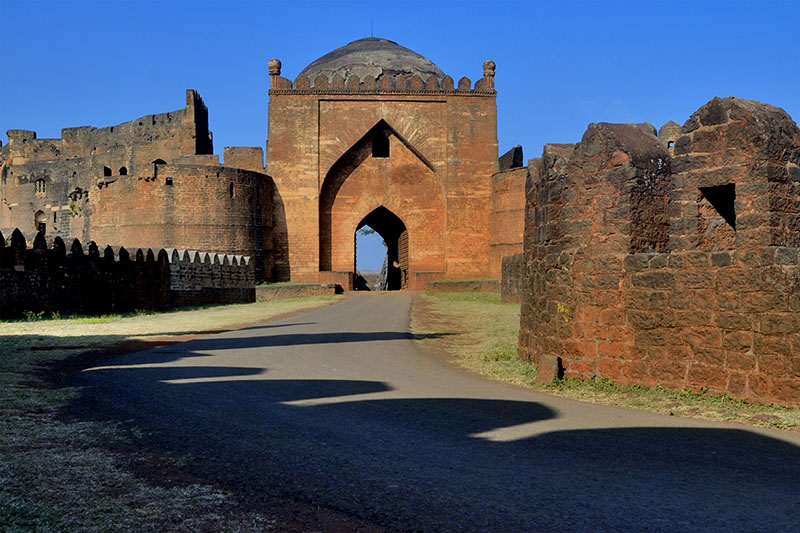
Muslim kingdom of the northern Deccan in India, founded in 1347 by Zafar Shah, a soldier in the service of Muhammad bin Tughlaq of the Delhi Sultanate, who seized Daulatabad (near present-day Aurangabad) in rebellion and ascended the throne as Ala-ud-Din Hasan Bahman Shah. At its height the kingdom spanned south-central India, across areas of present-day Maharashtra, northern Karnataka, Telangana, and northern Andhra Pradesh, with its capital at Ahsanabad (present-day Gulbarga) and later Muhammadabad (present-day Bidar), both in present-day Karnataka. It vied for control of the Deccan with the Vijayanagara kingdom and the Gajapatis of Odisha. The sultanate declined in the late fifteenth century, splintering into the successor states of Bijapur (ruled by the Adil Shahis), Ahmadnagar (ruled by the Nizam Shahis), Golconda (ruled by the Qutb Shahis), Berar (ruled by the Imad Shahis) and Bidar (ruled by the Barid Shahis).
More Definitions
Vakataka Dynasty
A dynasty that originated in the central Deccan region of India during the mid-third century CE and ruled from Malwa…
Safavid
A dynasty that ruled over Iran between 1501 and 1736 CE. It consolidated the empire, established a system of state…
Tughluq dynasty
Indo-Turkic dynasty (r. 1320–1413 CE), third of the Delhi Sultanate, preceded by the Khaljis and followed by the Sayyids. Its…
India House, London
The premises of the High Commission of India in London, UK. The proposal for the building was put forward by…
Peshwa
The head of the advisory council of the Maratha kingdom. While it was originally an appointed role, the office of…
Tributary State
A form of pre-modern state which had a subordinate relationship to a superior state and maintained its sovereignty by making…
Taliban
Fundamentalist Islamic militant group that emerged in Afghanistan in the early 1990s, following the end of the Soviet-Afghan War. Taleban…
Bidar Sultanate
Small Muslim kingdom of the Deccan in India, founded in 1531 by Qasim Barid I, whose family had been serving…