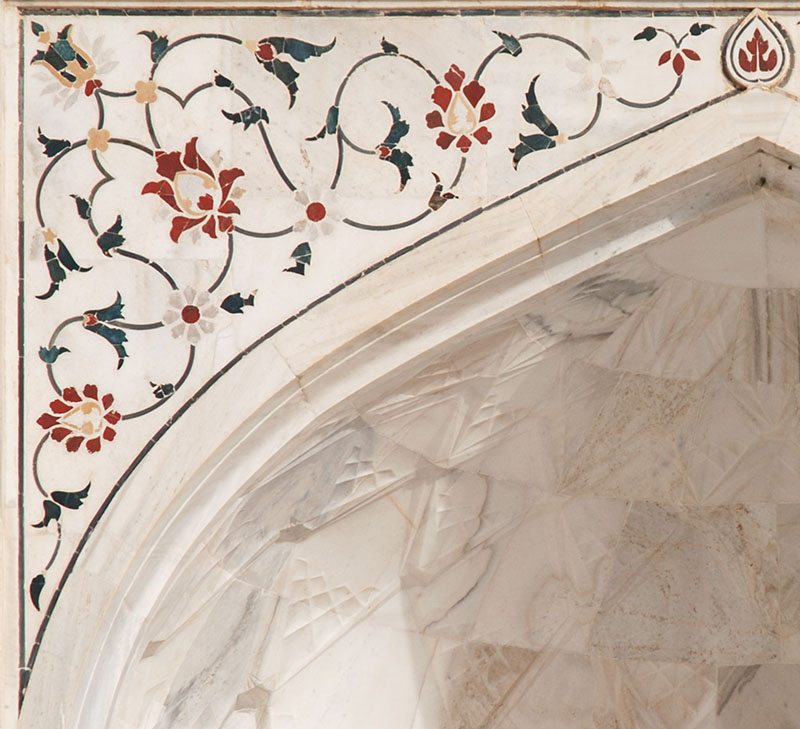
A form of mosaic work wherein hard semi-precious stones are inlaid onto stone to form images. The decorative technique flourished during the sixteenth and seventeenth centuries in Florence, Italy. A variation of the technique, known as parchin kari (mosaic work), was adapted by artisans in the sixteenth century, seen most prominently in the Taj Mahal, Agra. From the Italian pietre dure, meaning “hard stone.”
More Definitions
Piping
A type of embellishment or trim in which a folded strip of cloth is sewn around an edge to accentuate…
Hand Stencil
The technique of imprinting human hands on rock surfaces, found in Prehistoric cave paintings. The process involves placing one hand,…
Slit Weave
Also known as slit tapestry, it is a weaving technique which uses multiple weft yarns through sections of the warp,…
Double Running Stitch
A form of running stitch that is even on both sides of the fabric, used in counted thread embroideries such…
Madras terrace
A technique of brick-and-lime flat roof construction, named after the erstwhile Madras Presidency of colonial South India where it emerged.…
Kasavu
The gold zari used in the border of a traditional white Kerala textile, such as a sari or a mundu…
Lohori Running Stitch
A form of kantha embroidery that is characterised by running stitches that resemble waves. From the Persian word lehr, meaning…
Badla
A thin, flattened metallic wire that is used as yarn for sewing or embroidering decorative fabrics. The term also refers…