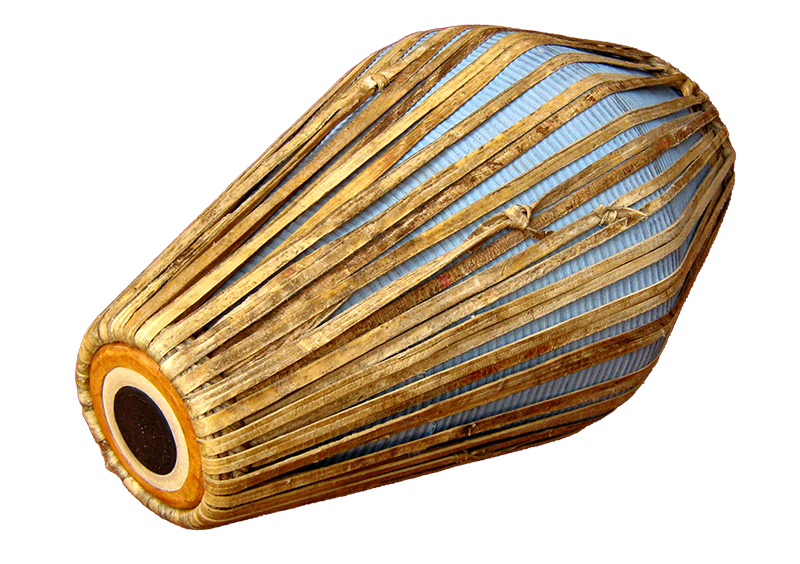
An Indian percussion instrument, the mridangam is a two-headed drum with an angular, barrel-shaped body made of wood, with an outline like an elongated hexagon. It is most commonly played on the player’s lap and is an important instrument in Carnatic music.
More Definitions
Taala
Meaning “clap" in Sanskrit, it is a measure of rhythm or metre in South Asian musical traditions. It works in…
Dhruva
A classification of songs from chapter thirty-two of the Natyashastra, which pertains to songs sung on stage during a performance.…
Harmonium
An Indian stringed instrument shaped like a portable wooden box with keys and bellows, measuring approximately 2 feet by 1…
Thumri
A vocal style or genre within Hindustani classical music inspired by the romantic, devotional literature of the medieval-era Bhakti movement.…
Dadariya
A form of popular folk or field song from Chhattisgarh that is typically sung by people while harvesting paddy fields.
Dafli
A percussion instrument, it is a smaller version of a Persian instrument known as daf. It consists of a circular…
Chalan
A series of notes in a Hindustani raga that summarise its development by illustrating its musical treatment and melodic context.
Nagara (instrument)
A percussion hand drum used across India, consisting of a half-spherical metal body and goat skin-covered membrane on the top.