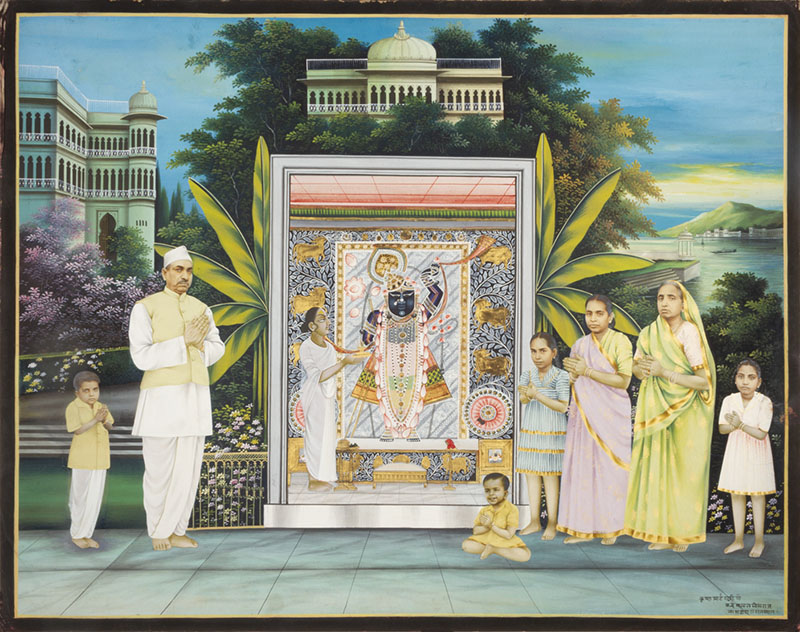
In the Pushtimarg sect of Vaishnavism, manorath paintings were made as temple records or pilgrimage souvenirs, typically depicting individual devotees alongside the image of Krishna as the child-god Shrinathji. Since the late 19th and early 20th century, these paintings have been made in the town of Nathdwara in Rajasthan, home to the Shrinathji Temple. The term manorath connotes heartfelt desire or wish, referring to spiritual devotion and its culmination in darshan, the reciprocal act of beholding and being blessed by the deity at the shrine. Modelled on the style of pichhwai temple paintings, each image shows specific pilgrims or patrons, often with their families, realistically rendered paying obeisance to the image of Shrinathji. Such paintings initially served as visual accounts of significant events surrounding the temple, such as large donations, commissions, or a royal visit. They later became popular among ordinary pilgrims wishing to memorialise their visit to the temple, and also began to incorporate photography.
manorath paintings
Link copied!