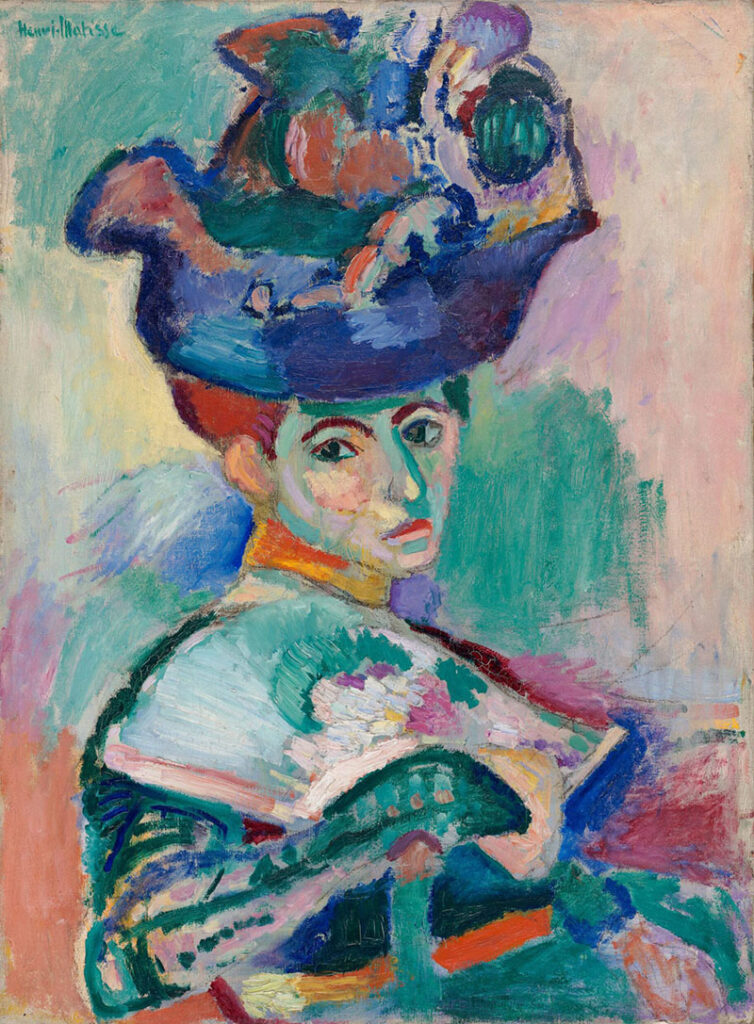
A style of painting popular in France in the early years of the twentieth century, led primarily by the artists Henri Matisse and Andre Derain. It is characterised by the bold use of colour (often applied directly from the tube), a simplified depiction of forms and strong brushwork. Influences on fauvism include Post-Impressionism, Neo-Impressionism and scientific colour theories prevalent in the late nineteenth century. The style derives its name from the French term les fauves (the beasts), used in 1905 by the French art critic Louis Vauxcelles to describe the expressive works of Matisse and Derain in this style. Other artists related to the style include Georges Braque, Raoul Dufy, Georges Rouault and Maurice de Vlaminck.
More Definitions
Happenings
A precursor of performance art, they are events or situations where the artwork is created by the conditions produced by…
En Plein Air
Meaning “in open air” in French, it is the style of creating a finished landscape painting outdoors. Before the practice…
Architectural Views
A genre of painting that focused predominantly on buildings and their interiors rather than treating them as background. Architectural painting…
Bauhaus
A school of art and design founded by German architect Walter Gropius in 1919, which emphasised an interdisciplinary approach to…
Chinoiserie
The European interpretation of Chinese and East Asian decorative arts, design, literature and culture, characterised by extreme decoration, stylised objects…
German Expressionism
An art movement that emerged in early twentieth-century Germany, characterised by irregular brushstrokes and gestural marks which eschewed realist depictions…
Romantic Naturalism
A philosophical strand in literature and art that draws on Romanticism’s emphasis on human emotion and sensuality as well as…
Cubism
A modern art movement developed in the twentieth century by artists such as Pablo Picasso and Georges Braque which rejected…