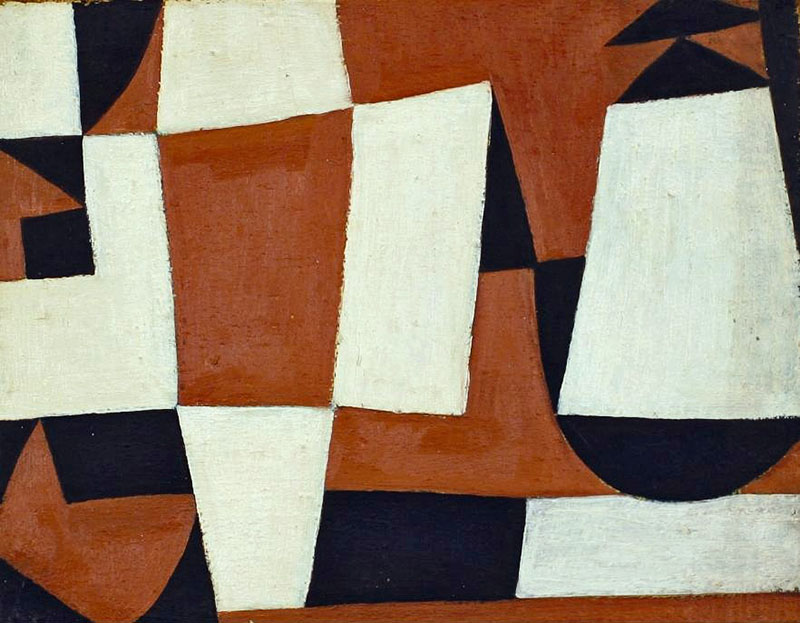
A form of abstract art that uses geometric forms, usually in a non-illusionistic space, to create non-representational or non-objective compositions. It was popular with avant-garde artists of the twentieth century, such as Josef Albers, Agnes Martin and Carmen Herrera.
More Definitions
Surrealism
An art movement that emerged in twentieth-century France and aimed to express the creativity of the unconscious mind through the…
Neo-Impressionism
A late nineteenth-century movement in French painting that opposed the empirical realism of Impressionism. It used the scientific principles of…
iconic representation
Representation of a deity or divine figure in a personified form or generally figurative mode, as opposed to aniconic representation…
Constructivism
An early twentieth century artistic and architectural movement that was started in Russia by painter and architect Vladimir Tatlin and…
Post Painterly Abstraction
An artistic movement that derived from Abstract Expressionism and synthesised styles such as action painting, colour field painting and colourism…
Fauvism
A style of painting popular in France in the early years of the twentieth century, led primarily by the artists…
manorath paintings
In the Pushtimarg sect of Vaishnavism, manorath paintings were made as temple records or pilgrimage souvenirs, typically depicting individual devotees…
Mahendra Style
The style of cave temple architecture developed under the patronage of the Pallava king Mahendravarman I, characterised by simplicity of…