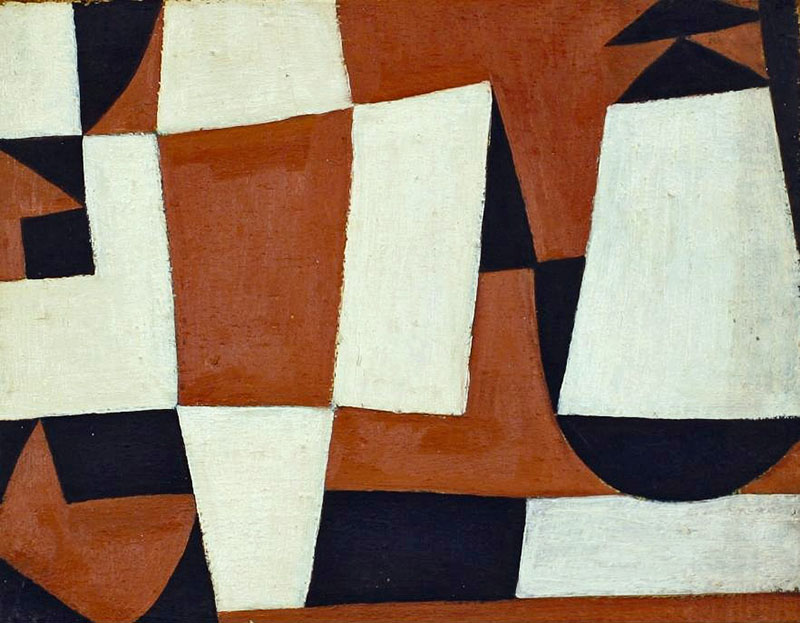
A form of abstract art that uses geometric forms, usually in a non-illusionistic space, to create non-representational or non-objective compositions. It was popular with avant-garde artists of the twentieth century, such as Josef Albers, Agnes Martin and Carmen Herrera.
More Definitions
Neoclassicism
An eighteenth century cultural movement that drew inspiration from the arts and culture of classical antiquity. It embraced classical themes…
Indian Modernist architecture
The adaptation of Western Modernist principles — functionalism, minimal ornamentation, and the use of industrial materials like reinforced concrete —…
Cubism
A modern art movement developed in the twentieth century by artists such as Pablo Picasso and Georges Braque which rejected…
Rococo
A design style that emerged in the early decades of the eighteenth century in France, influencing painting, sculpture, architecture and…
Neo-Impressionism
A late nineteenth-century movement in French painting that opposed the empirical realism of Impressionism. It used the scientific principles of…
Modern Regionalism
Architectural approach that adapts Modernist principles to the unique cultural, climatic, and material conditions of the specific region. Modern Regionalism…
Literalism
A term often used synonymously with minimalism, it refers to a style of art and literature characterised by the portrayal…
Indo-Greek Sculpture
Sculptural art characterised by the merging of Indian and Hellenistic traditions, it overlaps with the reign of the Indo-Greeks in…