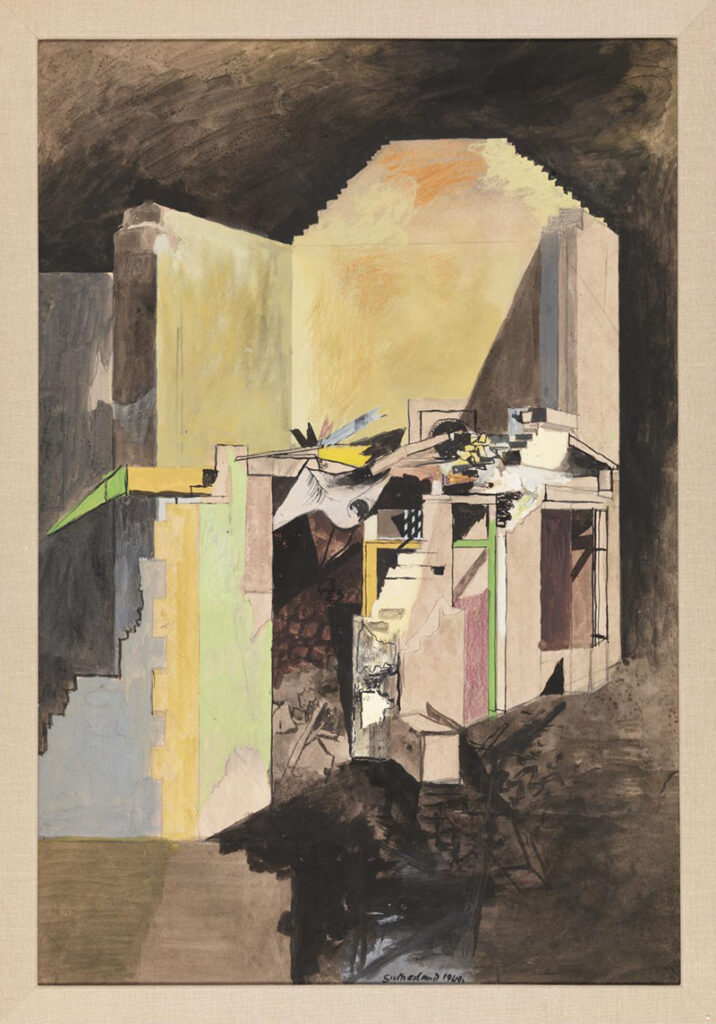
A cultural movement in Britain during the 1930s and ’40s which was influenced by eighteenth-century Romanticism and emphasised individualism and the depiction of intense emotions over social subjects. It developed in response to the impending threats of and the social conditions during World War II. Prominent artists associated with the movement include Graham Sutherland, John Minton and Paul Nash.
More Definitions
Suprematism
A twentieth century avant-garde art movement in Russia founded by artist Kazimir Malevich that emphasised the principles of geometry and…
Academic Realism
A style of painting that was influenced by European academies of art from the sixteenth century onwards. It was characterised…
Rococo
A design style that emerged in the early decades of the eighteenth century in France, influencing painting, sculpture, architecture and…
Art Nouveau
A cultural movement in art, architecture and applied and decorative arts that sought to modernise design and free it from…
Earthwork
Art that is made by shaping or making forms on land or by using natural materials such as grass, rocks…
Pastiche
A style associated with postmodern trends in visual art, music and literature, pastiche indicates works of art that imitate or…
Post Painterly Abstraction
An artistic movement that derived from Abstract Expressionism and synthesised styles such as action painting, colour field painting and colourism…
Critical Regionalism
Architectural philosophy emphasising site-specific design that draws on local topography and climate, social and cultural influences, and traditional building knowledge…