-
ChicagoSarkar, Sohel. "How Europe Appropriated the Kashmiri Shawl." Impart Perspectives, October 6, 2026. https://imp-art.org/perspectives/features/woven-by-fatalists-how-europe-appropriated-the-kashmiri-shawl/
-
MLASarkar, Sohel. "How Europe Appropriated the Kashmiri Shawl." Impart Perspectives, Oct. 6, 2026, https://imp-art.org/perspectives/features/woven-by-fatalists-how-europe-appropriated-the-kashmiri-shawl/. Accessed 15 Oct 2026.
-
HarvardSarkar, S. (2026) How Europe Appropriated the Kashmiri Shawl, Impart Perspectives. Available at: https://imp-art.org/perspectives/features/woven-by-fatalists-how-europe-appropriated-the-kashmiri-shawl/ (Accessed: 15 October 2026).
How Europe Appropriated the Kashmiri Shawl
Colonial narratives positioned Kashmiri shawl weavers as the 'traditional' Other, incapable of change and innovation. Historical record, however, tells a different story.
By Sohel Sarkar
Link copied!
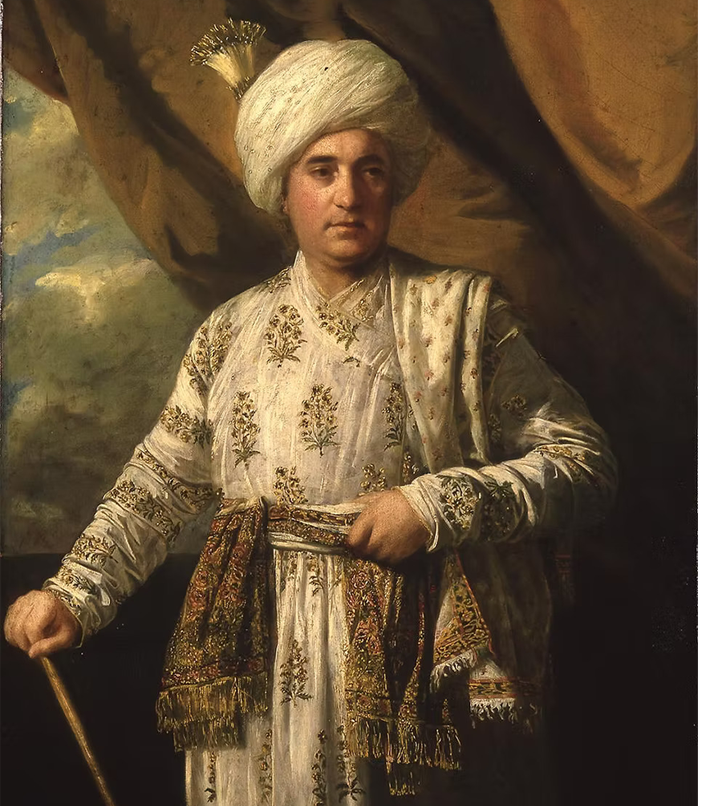
Portrait of Captain John Foote in his Mughal Robes; Joshua Reynolds; 1723–1792; oil on canvas. Courtesy York Museums Trust
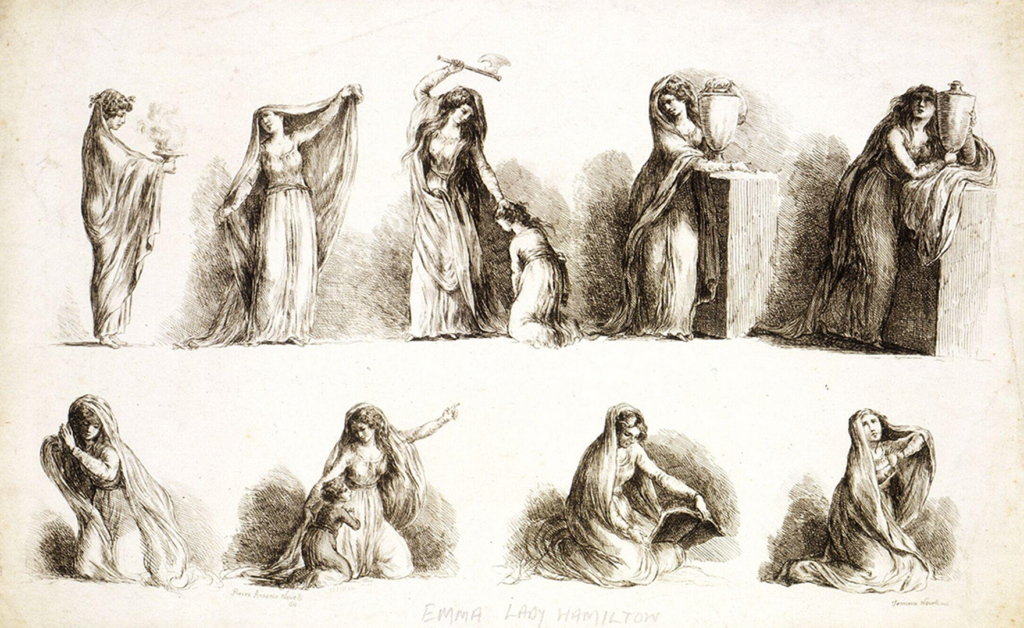
In Joshua Reynolds’ 1765 portrait of John Foote, the British East India Company officer stands in a pose reminiscent of Indian nawabs, with a Kashmiri shawl prominently tied around his waist, like a patka. Foote had recently returned to Britain after making his fortune in India, and the portrait, historians suggest, was meant to position him as a man of authority in elite British society. In the late 1780s, London celebrity Emma Hart (who later became Lady Hamilton) draped Kashmiri shawls — of which she had a large collection — around herself to imitate classical sculptures during a series of theatrical pieces called ‘Attitudes’ she performed for private audiences. These performances were covered by the press and later reproduced in prints.
If these visual records are anything to go by, the Kashmiri shawl, by the 18th century, had become a recognisable marker of aesthetic refinement and oriental mystique in European countries. The fine, handwoven and embroidered textile was sought after not just for its beauty and softness but also for the immediate power and prestige it conferred on a wearer. Once patronised by Mughal emperors, genuine Kashmiri shawls were prohibitively expensive — a single shawl could cost up to £200. But it was not long before cheaper alternatives emerged in Europe. Factories in Britain and France began producing imitation ‘cashmere’ (anglicised trade spelling of ‘Kashmir’) on the Jacquard loom, with replicas going for as little as £3 apiece. By the 19th century, middle- and working-class women were buying these shawls at a furious pace.
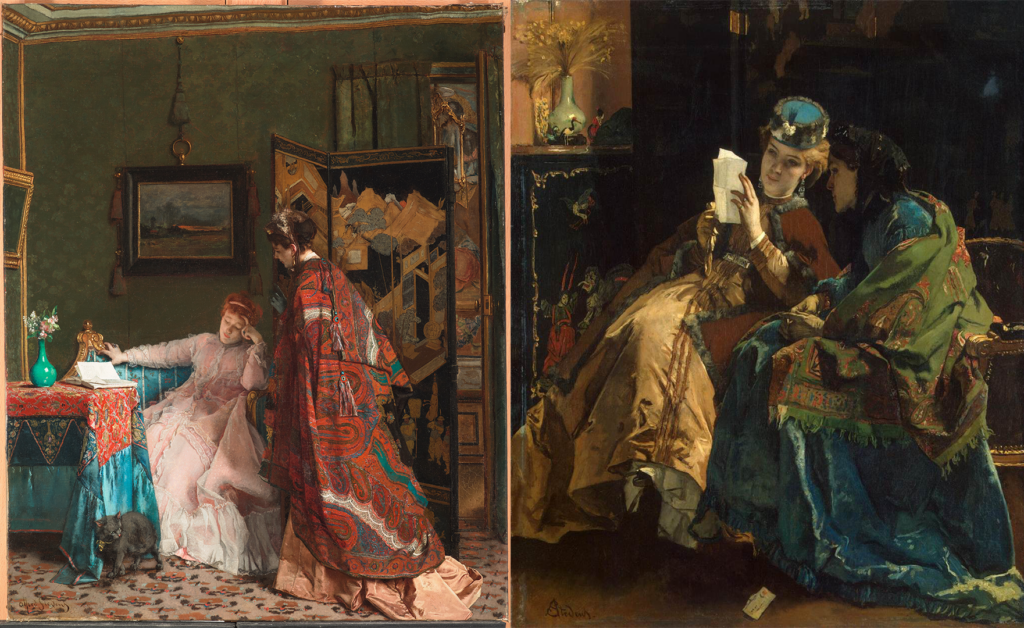
To understand how thoroughly the Kashmiri shawl captured public imagination at the time, one only has to look at its ubiquity across British and European paintings, literature and popular culture of the time. In France, the cultural critic Walter Benjamin observed that “cashmere fever” had spread rapidly from the late 18th century, reaching “Sphinx-like dimensions” by 1848. Belgian painter Alfred Stevens included the shawl in painting after painting of upper-class Parisian women in their salons. In British fiction, the shawl appeared as a reliable shorthand for aspiration and desire: in Jane Austen’s Mansfield Park, Lady Bertram urges her India-bound nephew — “William must not forget my shawl if he goes to the East Indies“; in William Makepeace Thackeray’s Vanity Fair, the cashmere shawls Joseph Sedley brings back from India are coveted by the social-climbing Becky Sharp. In Elizabeth Gaskell’s North and South, the protagonist Margaret Hale carries shawls down from an attic, “snuffing up their spicy Eastern smell” — relics of a military career in India, now destined for a wedding trousseau.
In her 1852 essay ‘Shawls’ — for the popular magazine Household Words edited by Charles Dickens — English social theorist Harriet Martineau acknowledges, grudgingly, that Kashmiri weavers (“Orientals”) held an “unaccountable and unrivalled superiority” over what British factories produced, highlighting how the “rich and great” coveted the genuine article. However, she also notes that those with less means gladly opted for replicas churned out by the manufacturers of Norwich in England, Paisley in Scotland, and Lyons in France. In the contradictory logic of the period’s prevailing orientalist discourse, Martineau shows a marked lack of respect for the very craftspeople whose knowledge was being extracted to benefit British industry. Characterising them as primitive, she calls the shawls they made a reflection of “the unchanging East; copied from patterns which are the heirloom of a caste, and woven by fatalists […] who resent the idea of the smallest change.”
She was not alone in her way of thinking, as colonial enterprise often depended on emulating craft and design traditions from the subcontinent. William Moorcroft, an employee of the British East India Company who studied the techniques of Kashmiri shawl production extensively, believed that such inherited knowledge should not be left in the hands of Kashmiri weavers. Instead, he advocated for their weaving techniques to be organised as a reproducible system in scientific literature that could then be absorbed by British industry. Factory-based shawl production was seen as a way to modernise an Indian craft. In reality though, British and European factory production broke the back of a centuries-old industry that had run on highly-specialised and skilled labour. Artisans who had attained heights of mastery were plunged into precarity. And even though they were repeatedly characterised in European texts as ‘resistant to change’ and capable only of replicating inherited patterns, nothing could be further from the truth.
How the Shawl Reached Britain
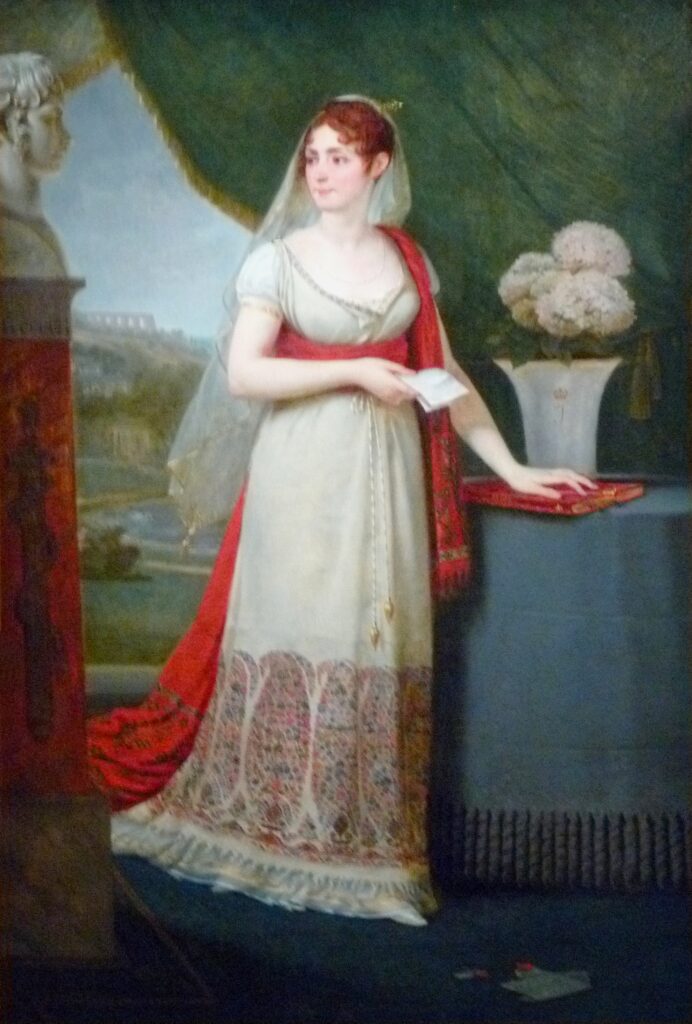
The earliest Kashmiri shawls that made their way to Britain came packed in the luggage of returning East India Company officials, like Foote, in the mid-18th century. Later, British women also began carrying shawls back with them, selling some of them to London stores for a tidy profit. In France, the fashion took hold after Napoleon’s invasion of Egypt in 1798, when his officers brought back Kashmiri shawls for their families. Napoleon himself presented some to his wife Empress Josephine, whose patronage made the Kashmiri shawl fashionable across Europe, Janet Rizvi and Monisha Ahmed write in Pashmina: The Kashmir Shawl and Beyond.
The British East India Company’s involvement in the formal shawl trade was limited, as high tariffs made export unprofitable. But Britain’s deeper interest was not in trading the shawl, but in understanding how it was made. As historian Chitralekha Zutshi notes, Moorcroft’s travels to Kashmir in 1822-23 were largely aimed at gathering knowledge about raw materials and production processes. There were proposals to transfer Ladakh’s Changra goats (also called Changthangi goats) — whose fine undercoat yields pashmina wool — to Europe, and schemes to relocate Kashmiri artisans, but all these plans came to naught.
When Kashmir passed into British hands in 1846, its newly appointed ruler Maharaja Gulab Singh signed the Treaty of Amritsar, which promised an annual tribute of twelve “shawl-goats” (Changra goats) and three pairs of Kashmiri shawls to the British government. The goats sent, however, didn’t survive the relocation to England, according to Rizvi and Ahmed. After that, from 1848, only the tribute shawls were presented to Queen Victoria, a practice that continued well into the 20th century.
Imitation and Extraction
Back in the metropole, Queen Victoria distributed most of her tribute shawls as wedding presents to ladies-in-waiting and European relations, preferring to wear the factory-made British shawls herself to encourage home industry. She even offered her Kashmiri shawls as examples to British manufacturers out of what Martineau called a “patriotic desire for the improvement of our shawl patterns”. Important events saw the Queen donning locally-made shawls to downplay the cachet of Kashmiri ones. In 1842, she purchased 17 imitation shawls, after which it was announced that she would wear one of the “chosen shawls” at the royal christening of her son Albert Edward, the infant Prince of Wales. This repeated and prominent positioning of locally-made shawls in diplomatic and official settings can also be seen in paintings of the time. In John Thomas’ watercolour, Windsor Castle: Design for the Queen’s Audience Room (1861), a locally-made cashmere shawl is foregrounded, draped on a chair while the scene shows the queen meeting her ministers. Similarly, a watercolour by French painter Franz Xaver Winterhalter, shows King Louis-Philippe and the French Royal family bidding goodbye to Queen Victoria and Prince Albert on board the yacht Victoria and Albert at the conclusion of their visit to Château d’Eu in September 1843. Here too, the British queen is seen wearing an imitation shawl.
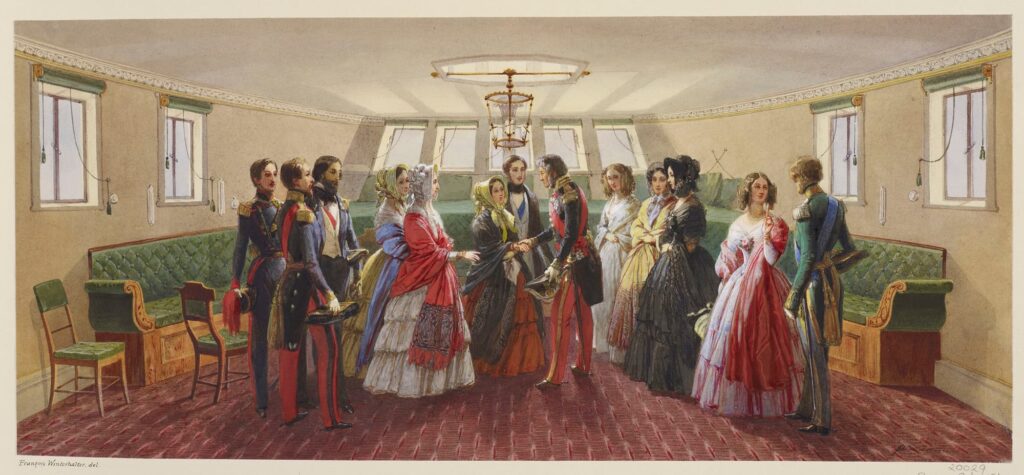
At the same time, prominent design expositions would showcase British shawls alongside handwoven Kashmiri shawls, lauding how close they had come to mimicking the aesthetics of the originals. This was done by copying patterns, either as printed designs or by designing devolved, simpler versions that mechanised looms could handle on scale. At the Great Exhibition of 1851, the Norwich shawls were officially commended for their likeness to the Indian shawls. Similarly, at the 1862 Industrial Exhibition, Paisley shawls from Scotland were given “special approval”.
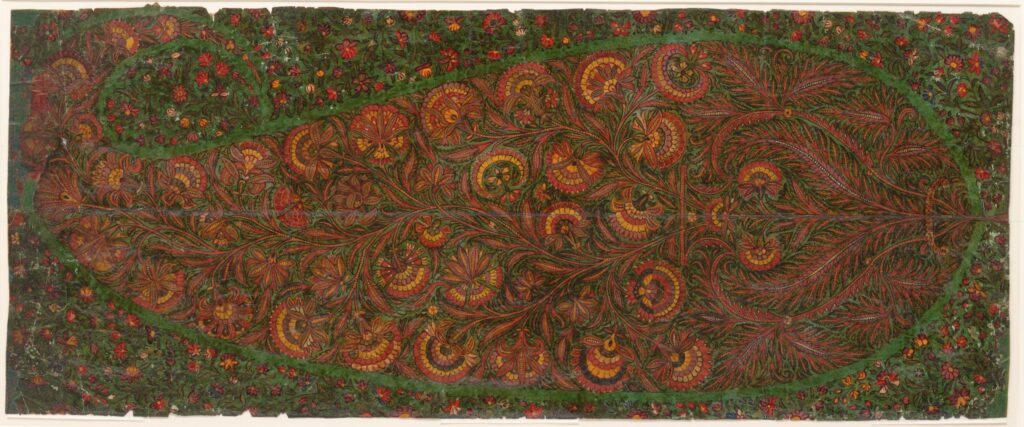
The work to create factory alternatives had begun as early as the 1780s in Edinburgh and Norwich, and spread to Paris, Lyons, Vienna, Russia, and by the late 1840s, the United States, according to Rizvi and Ahmed. By 1804, the French industrialist William-Louis Ternaux had patented a method of manufacturing shawls “imitating cashmere.” But it was Paisley, a small town next to Glasgow, that became synonymous with the enterprise. Entering the trade sometime between 1805 and 1812, it eventually lent its name not just to the factory-made shawl, but to the buta motif (also known as boteh) — a pattern developed over centuries by Kashmiri weavers.

Produced at a fraction of the cost of Kashmiri shawls, the imitations were not only more accessible to the British middle class but also took over Kashmir’s thriving Asian markets, according to Rizvi and Ahmed. Printed shawls from Manchester — exact copies of Kashmir designs whose originals cost five to six pounds a yard — were selling in Tabriz, Iran for the equivalent of one shilling and sixpence. Imitation shawls also made their way into Ottoman cities. To be sure, there was some pushback in Britain against this rush for factory production. The luxury goods store Liberty of London, founded in 1875, positioned itself as a corrective to “cheap, tasteless industrial goods,” and exhibited Kashmiri loom-woven shawls to educate the British public on the craft. Yet Liberty’s expensive pashminas were eventually replaced with shawls and other fabric made of wool imported from India but woven in the mills of Yorkshire and Lancashire.
The Truth About the “Unchanging East”
Both Martineau and Moorcroft acknowledged, in their own ways, the remarkable skill of Kashmiri weavers. Yet both framed the shawl as a product of a static, unchanging civilisation: weavers toiling over primitive looms, reproducing patterns handed down through generations, unwilling and incapable of adapting to modern methods. As Zutshi argues in her book, Kashmir was cast as Britain’s “traditional Other,” simultaneously celebrated for its craft and dismissed for its supposed inability to modernise. The historical record, however, tells a different story.
By the time the British encountered the Kashmiri shawl industry, it was at least two centuries old. It was also a highly-developed, court-patronised, state-controlled enterprise. It likely originated in 15th-century Kashmir under Sultan Zain-al Abidin, and gathered momentum under Mughal emperor Akbar after his conquest of the Kashmir valley in 1586. Shawls held a central place in the khilat tradition, the formal gifting of “robes of honour” at the Mughal court. As scholars Sherry Rehman and Nafeed Jafri note, “for hundreds of years this custom of awarding the robe of honour, or khilat, became one of the biggest motors to power the manufacture of expensive Kashmiri shawls.” By 1823, the annual turnover of the industry was estimated at Rs 30 lakh. According to Rizvi and Ahmed, this figure equated to roughly Rs 120 crore in sales (2009 estimate) in modern times.
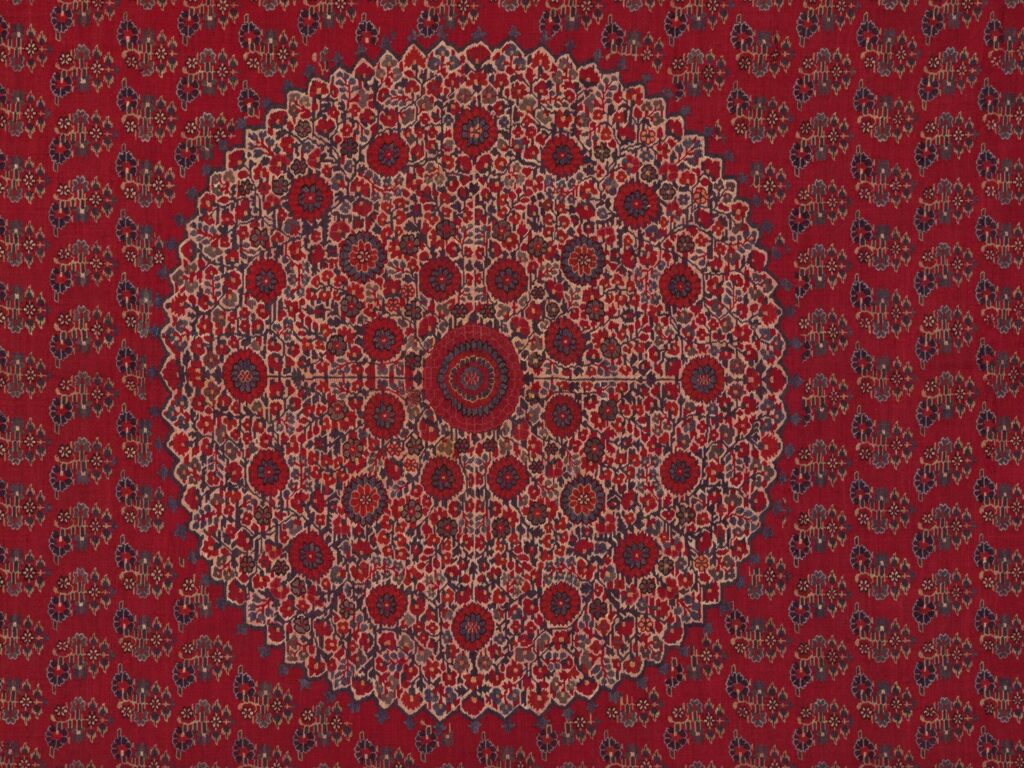
Kashmiri weavers constantly adapted and innovated to meet the demands of their ever-expanding market. The original kani shawl was entirely handwoven on looms made of wooden sticks to produce intricate patterns. In the 1860s, weavers had developed the dorukha, a double-sided kani shawl that could be worn displaying either face. Sometime between the mid-18th century and 1803 — scholars differ on the date — rafugars (weavers) began to apply embroidered designs onto a plain woven base, producing shawls that looked like kani at a fraction of the time and cost. The resulting amli shawl with ‘sozani‘ embroidery, as it came to be known, cut production time by nearly two-thirds and transformed the trade. By the mid-19th century, the rafugar‘s art had reached its peak with the dorunga shawl, which was embroidered on both sides with identical patterns in different colours.
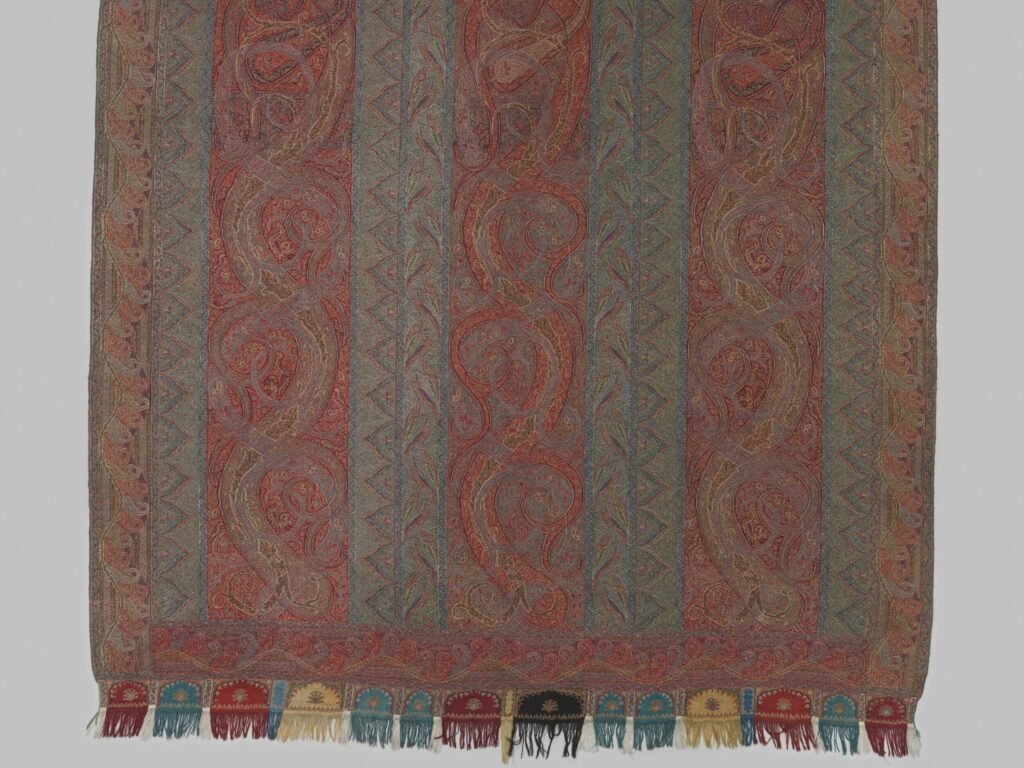
As designs grew more elaborate, weavers developed another innovation: a single shawl was woven in sections across multiple looms and the pieces were then joined by rafugars so skilfully that the seams were invisible to the naked eye. By 1838, the finest shawls were being assembled across 32 looms in as many as 20 pieces. Modern analysis of some pieced shawls has found as many as 866 separate sections in a single piece. Even Moorcroft, confident that most Kashmiri skills could be transferred to British industry, conceded that the rafugar‘s “expertness and finish will probably not be readily attained in Britain.”
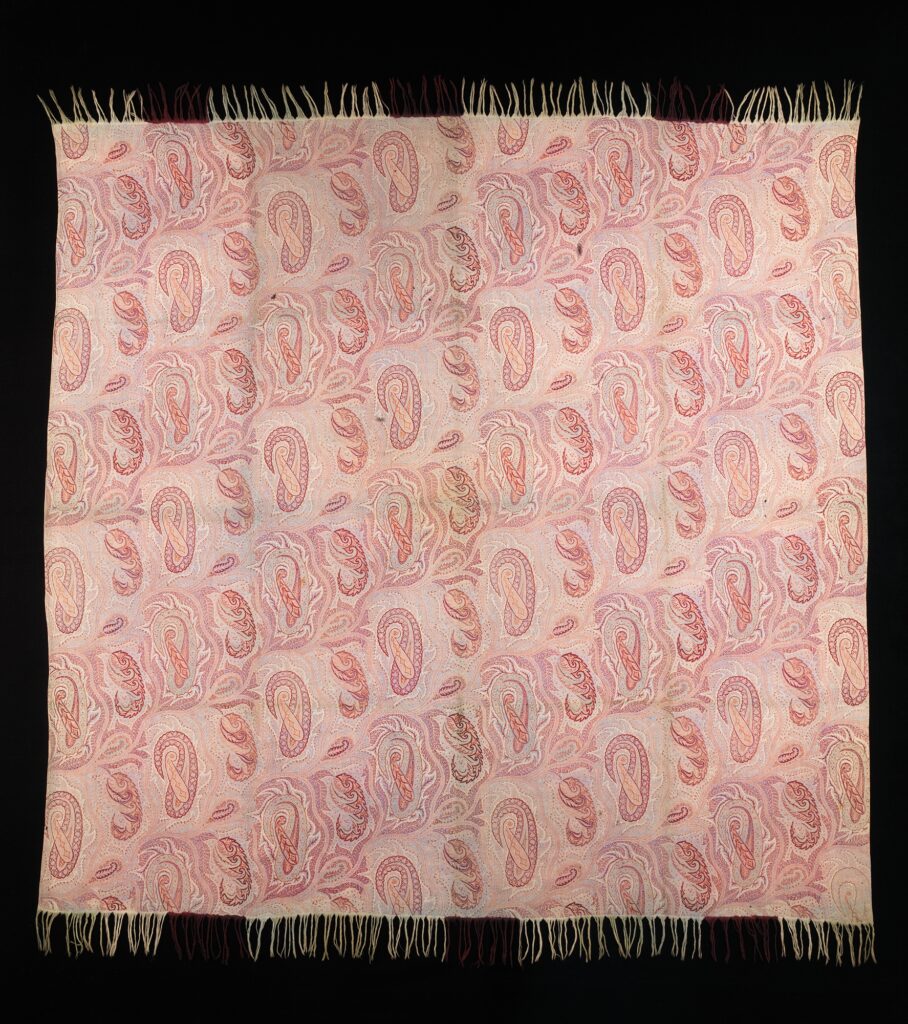
The market for these shawls was equally sophisticated. Kashmiri shawls had been circulating in world trade since the 16th century, coveted in Persia, the Ottoman Empire, and Russia, and merchant agents from across Asia were permanently stationed in Srinagar to commission designs tailored to their home markets. As Moorcroft observed: “I find merchants from Gela and from other cities of Chinese Turkestan, from Uzbek, Tartary, from Kabul, from Persia, from Turkey, and from the provinces of British India engaged in purchasing and in waiting for […] shawl goods, differing as to quality and pattern in conformity to the taste of the market.” A degree of sophistication, he added, “probably not suspected in Europe.” When the British and French entered the picture, Kashmiri weavers adapted to them too, experimenting with Jacquard-inspired designs for French buyers and new aniline dyes. As art critic and historian BN Goswamy observed, there was no resentment about making such commercial adaptations. In fact, Kashmiri weavers showed a remarkable alacrity when it came to ‘changing’ their designs to suit a variety of price points and tastes.
The story of buta is perhaps the most telling detail in this long history of appropriation. The motif, developed over centuries by Kashmiri weavers, was so thoroughly absorbed into British manufacture that it eventually took the name of the Scottish town of Paisley that imitated it. Today, most people know it as the ‘paisley’ pattern. This renaming was only possible because a parallel story had been told, in which Kashmiri weavers were ‘fatalists’, wedded to ancestral patterns, incapable of change and progress, and, consequently, undeserving of credit. This colonial narrative erased the reality of an industry that was sophisticated and market-driven from the start, and of craftspeople who innovated constantly and traded across continents for centuries, long before Britain and Europe forced this creativity to serve their own ends.
First published: October 6, 2026