-
ChicagoBagchi, Dr Pallabi. "Making Tara: Gender, Power, and The Female Bodhisattva." Impart Perspectives, October 13, 2026. https://imp-art.org/perspectives/features/making-tara-gender-power-and-the-female-bodhisattva/
-
MLABagchi, Dr Pallabi. "Making Tara: Gender, Power, and The Female Bodhisattva." Impart Perspectives, Oct. 13, 2026, https://imp-art.org/perspectives/features/making-tara-gender-power-and-the-female-bodhisattva/. Accessed 15 Oct 2026.
-
HarvardBagchi, D.P. (2026) Making Tara: Gender, Power, and The Female Bodhisattva, Impart Perspectives. Available at: https://imp-art.org/perspectives/features/making-tara-gender-power-and-the-female-bodhisattva/ (Accessed: 15 October 2026).
Making Tara: Gender, Power, and The Female Bodhisattva
What does the popularity of the Buddhist goddess Tara reveal about gender, spiritual authority, and devotion in medieval South Asia?
By Dr Pallabi Bagchi
Link copied!
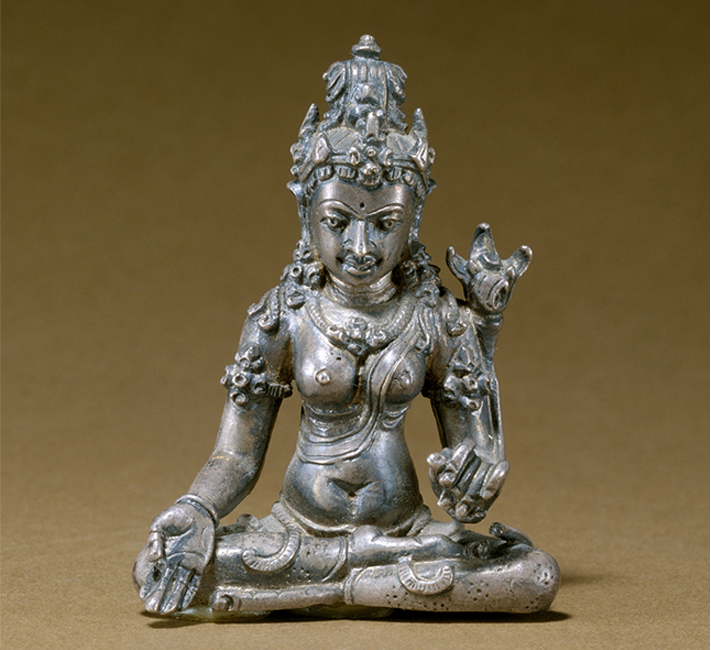
Seated Tara; Indonesia (Java); second half of the 9th–early 10th century; Silver sculpture. Courtesy The Metropolitan Museum of Art
In the Metropolitan Museum of Art’s collection of Buddhist sculptures sits a Javanese statue less than three inches tall, dating back to the late ninth to early tenth century CE. It depicts a seated woman, with one hand resting palm-up on her right knee in a reassuring gesture. Her face is calm, almost unbelievably serene. She is Tara — a Buddhist goddess whose image has been enshrined in monasteries, cave temples, and homes; carried across mountain passes and oceans, to become the most well-known representation of the divine feminine in the Buddhist pantheon.
Tara has been worshipped for centuries across South Asia — in Tibet, India, Nepal, Bhutan, and Sri Lanka; Central Asia — in China and Mongolia; and certain parts of Southeast Asia. Millions of people still recite her mantra as part of their daily meditation practice. She appears in thangka paintings, stone and bronze statues, manuscripts, and modern devotional items such as wall hangings sold outside monasteries in Darjeeling and Sikkim in India. Nevertheless, her rise as a popular Buddhist deity was never certain, and her journey to becoming one of the most depicted divine figures in the tradition after Buddha is a complicated one.
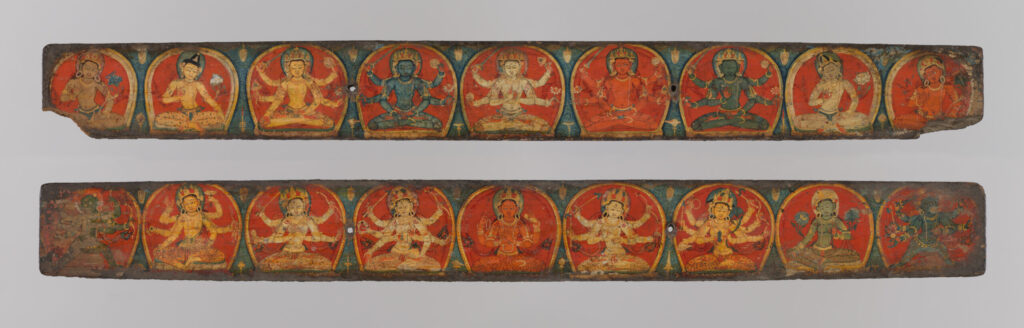
Most Buddhist deities have a single origin story, or a few variations of it at the most. What is interesting about Tara is that her beginnings are seemingly rooted in multiple and diverse legends and mythologies. She is said to have been born out of the tears of Bodhisattva Avalokiteshvara and also appears as the consort as well as a ‘shakti’ (power) of the Dhyani Buddha Amoghasiddhi. In other stories, she appears as a devout princess or queen who, through trials and merit, becomes a goddess in her own right. These stories are not just about the processes of myth-making and historicity, but also hint at larger, theological questions, such as — Can a woman attain nirvana? Can supreme compassion take the form of a woman? Can that form embody spiritual authority? And can She be regarded as more powerful than Buddha himself when it comes to protecting her devotees from the dangers of the world, both spiritual and mundane? Her story-(ies) prompts us to explore both orthodox and heterodox traditions to answer questions about the prevailing beliefs around gender and spirituality, and the creation of religious images in early medieval South Asia.
After Buddha
Even before Tara came into being, Buddhism was already changing. The initial Buddhist communities were focused on the historical Buddha and his teachings, even though the early order split into two schools, Sthaviravadin and Mahasanghika, approximately one century after the historical Buddha’s death. The Mahasanghika School was a precursor of Mahayana Buddhism, under which new texts arose that honoured the ‘Bodhisattva’ — an enlightened being who puts off their attainment of nirvana so that others may reach it first. Compassion soon ceased to be merely a virtue and became the essential characteristic of enlightenment itself.
According to Miranda Shaw, in her book Buddhist Goddesses of India, several female figures were associated with the earliest Buddhist narratives, “drawn directly from Indic cosmology,” such as Prthivi (mother earth), Laksmi (goddess of abundance and good fortune), as well as yakshinis (female nature spirits). However, the Mahayana movement gave rise to female deities who explicitly embodied attributes of the Bodhisattva, such as wisdom and compassion, and who were committed to the liberation of all living beings.
As Buddhist communities began spreading across the Indian subcontinent and beyond, primarily from the third century BCE onwards (under the patronage of Emperor Ashoka of the Mauryan Empire), religious life also became more visual. Monasteries had sculptures and figures in their niches and on their walls, as did cave temples and stupas. Pilgrims travelling to holy sites carried back portable images and shrines as religious souvenirs. Monks used sculptures to spread the doctrine in new lands. Travellers on long journeys carried small Buddhist figurines as totems of protection. Kings from several dynasties established stupas, monasteries (viharas) and religious centres of learning to cement their political legitimacy and commissioned numerous sculptures. Merchants also funded shrines situated along commercial trade routes. Votive stupas and merit-making sculptures were commissioned by lay pilgrims and monks as ritual offerings. Worship was not limited to philosophical reflection; it took place through ritual, pilgrimage, and the giving and receiving of gifts and images. Inside this evolving religious sphere, Tara appeared.
Origin Stories
It is not known when Tara exactly entered the Buddhist pantheon of female deities, but we can trace the rise in her popularity from the sixth-seventh century CE onwards. Scholars such as Shaw, Sastri, and archaeologist MK Dhavalikar suggest the rise in the popularity of Tara as a Buddhist goddess during this time period is strongly linked to the ascent of Hindu Devi and Shakti traditions in India, especially around the figure of Durga. Shaw references the work of Dr Mallar Ghosh on how Durga is addressed as ‘Tara’ and ‘Tarini’, capable of helping devotees cross the “troubled waters of life,” while one of the Buddhist Tara’s forms is called ‘Durgottarini’, invoked by believers in life-threatening situations.
In Taranatha’s The Origin of Tara Tantra, she appears as Jnanacandra aka ‘Moon of Wisdom’ — a princess who became a goddess. Since she had accumulated great spiritual merit over thousands of years, she is told that to attain Buddhahood, she should pray to be reborn as a man. Her reply is noteworthy. She declines. She states that enlightenment does not belong to any one gender and promises to keep pursuing her spiritual path in a female body until all beings are freed. She meditates and gains sufficient power and wisdom until the Buddha (referred to as ‘Dundubhisvara’ in the text) bestows his blessing on her and declares that from then on she will be known as ‘Tara’ – the saviour and liberator.
It is almost irrelevant whether this account illustrates a real historical belief. The story raises a striking question: if ultimate wisdom goes beyond all worldly distinctions, why should Buddhahood require a male body? Tara’s enlightenment is radical because she is a woman who chooses to remain a woman on her journey to nirvana, and her spiritual authority comes from her establishing that gender was not a barrier to enlightenment.
According to another mythological account, the Bodhisattva Avalokiteshvara, the Bodhisattva of Compassion, cries out upon seeing the world’s suffering. A lotus blooms from his tears, from which Tara emerges. Grief when transformed into action, births the goddess. In another version of the same myth, two Taras emerge from the tears of each of Avalokiteshvara’s eyes. According to art historian Alice Getty, White Tara emerges from the tears of the right eye and Green Tara from those of the left eye. Alternatively, the deities are reversed: tears from Avalokiteshvara’s right eye give birth to Green Tara, while those from the left eye give birth to White Tara, as detailed in teachings and texts discussed by masters like Bokar Rinpoche.
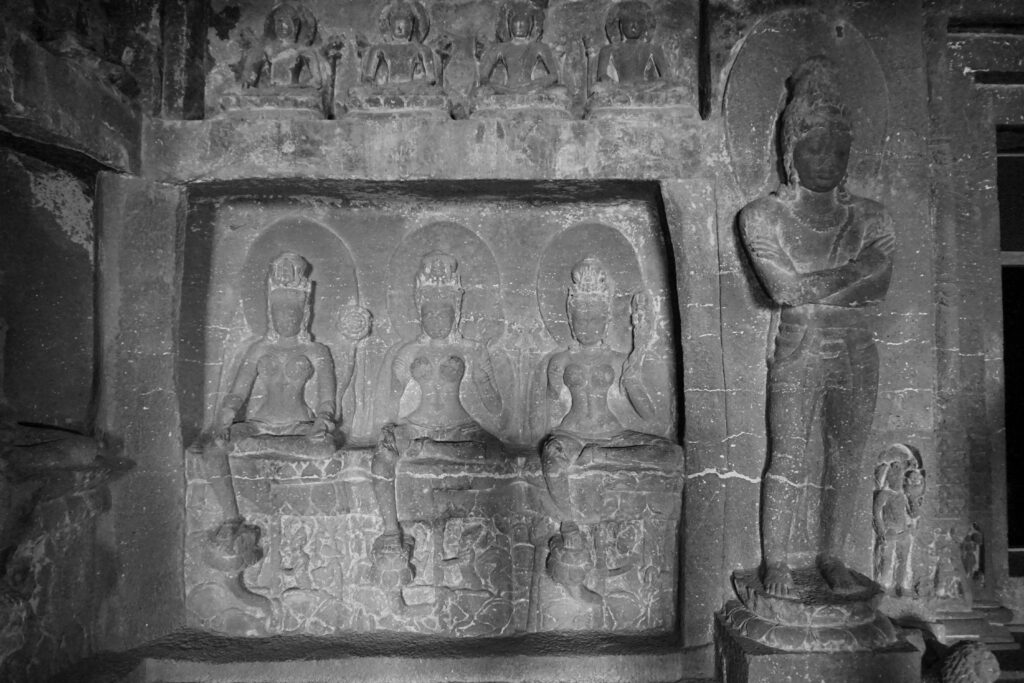
These multiple portrayals of Tara highlighted diverse theological themes and purposes, depending on who was worshipping her. In Tibet, she also triggered the deification of historical persons. The two wives of the first Buddhist ruler of Tibet, King Songtsan Gampo (r. 605-650 CE), namely Chinese princess Wen Cheng and Nepali princess Bhrikuti Devi, came to be known as the White Tara and the Green Tara, respectively. The lore of folk deities, such as Janguli and Ekajata, became associated with her. Chinese traveller Hiuen Tsang noted the widespread worship of Tara as a companion of Avalokiteshvara at Nalanda and its adjoining areas in the first half of the seventh century CE, but she was also represented as Avalokiteshvara’s attendant in cave sculptures in Kanheri that date back to the sixth century CE. Origin stories were important because they contributed to negotiations around the spiritual authority a deity commanded within the tradition. Equally if not more relevant were Tara’s iconography and practices around her image within Buddhist communities.
An Unmistakable Iconography
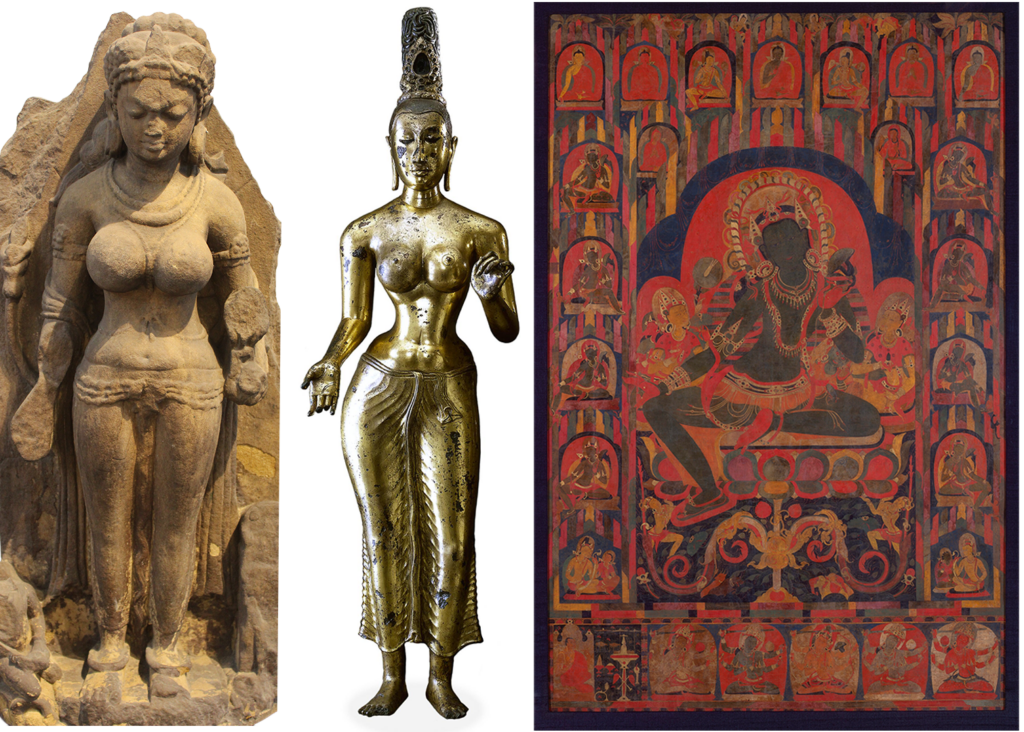
The earliest sculptural evidence of Tara dates from the late fifth century CE. These include the ones found during the excavation in Sarnath in Uttar Pradesh, a shrine near Stupa 3 at Nalanda, and Buddhist cave shrines in Western India, such as Cave 7 at Aurangabad in Maharashtra. In the seventh and eighth centuries CE, Tara began to appear more and more often in the monasteries of eastern India and at Kanheri, Ellora and Aurangabad. The Pala rulers even carried the image of Tara on their flags as a symbol, according to an inscription from the Chalukyan period. Metal Tara statues were made in places like Nalanda and Kurkihar (eighth to eleventh centuries CE). The late archaeologist Debala Mitra recorded at least 99 Tara sculptures carved into small votive stupas at Ratnagiri in Odisha. There were also portable images, such as votive plaques and small Tara figurines, carried by monks, merchants, lay pilgrims and travellers that recorded both devotion and participation in broader Buddhist communities.
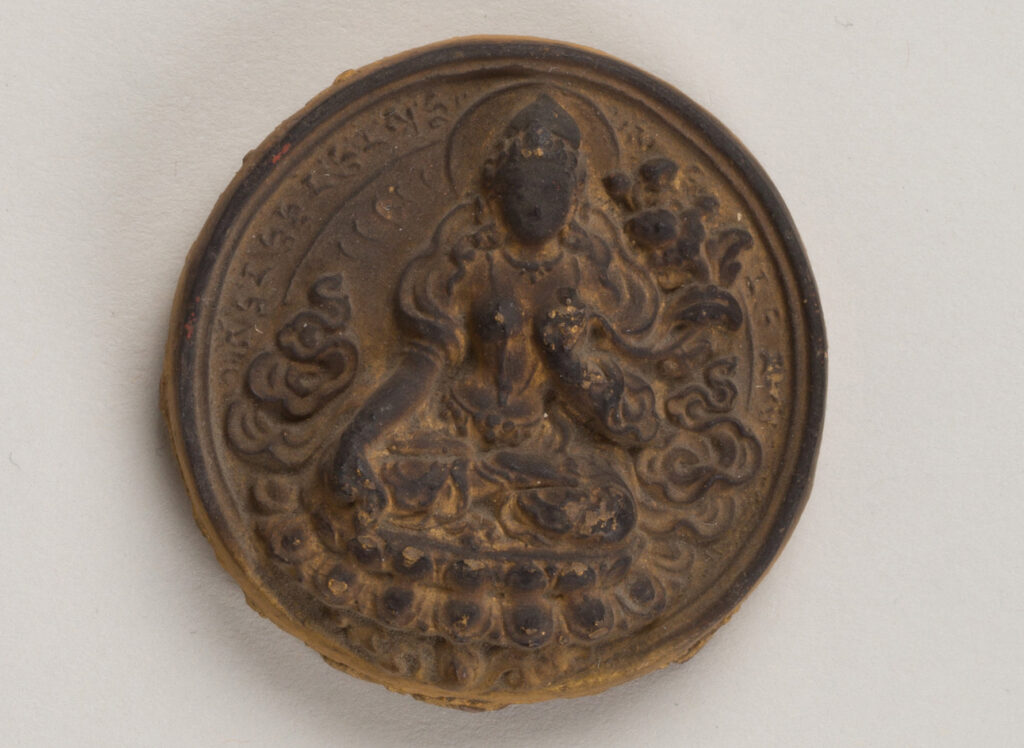
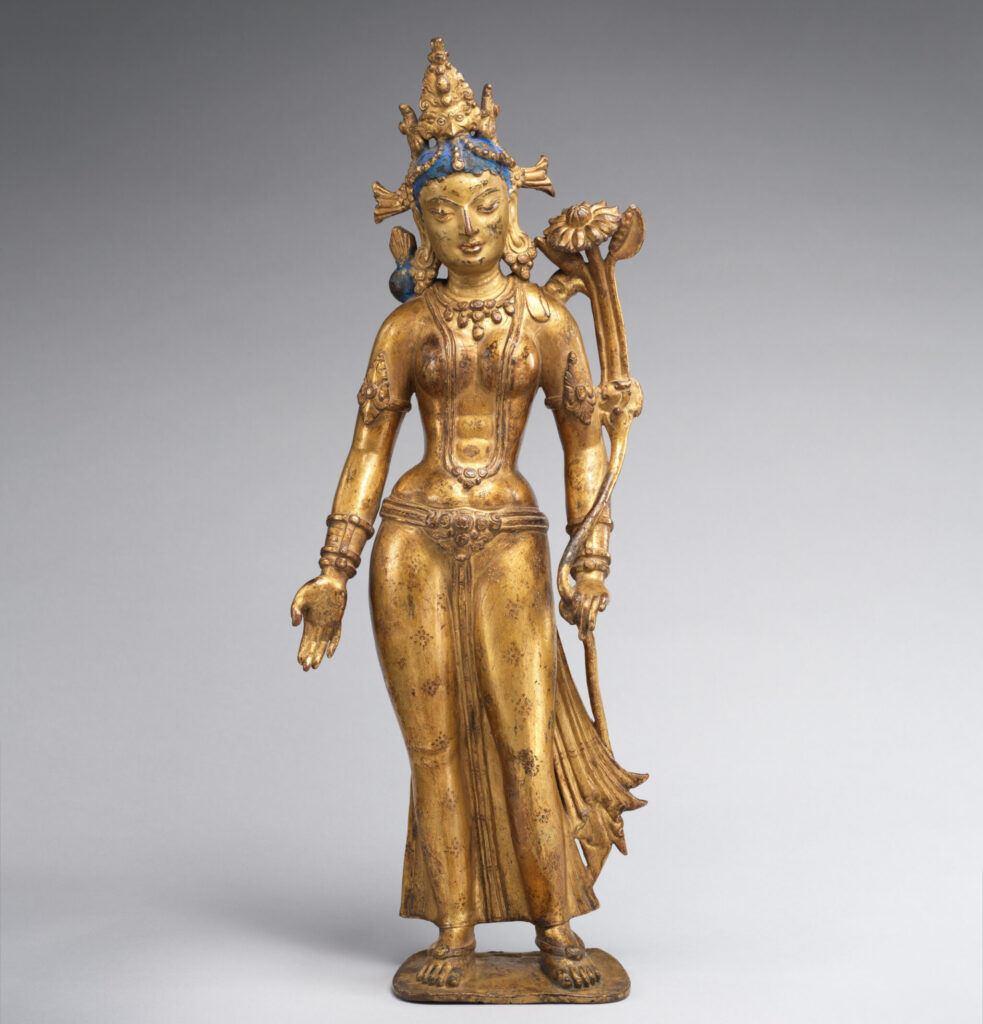
Across these depictions, we see only slight variations in the Tara iconography. She is typically portrayed with a calm mien, standing or seated on a lotus throne, wearing jewellery appropriate to a Bodhisattva, one hand outstretched in the attitude of generosity (varadamudra) and the other holding the stem of an utpala (blue lotus) or performing the vitarka mudra. This consistency matters because, despite her multiple forms and origin stories, devotees could recognise her at once. Her clear visual iconography, with minor variations, allowed for the multiple interpretations of her image to be channelled within the Mahayana and Tantric Buddhist traditions. Objects with her image were a key part of devotees’ religious worship and merit-making. They highlight how Tara’s expanding significance resulted as much from material practice as from theological innovation. Images enabled ideas to be transmitted, and this transmission was not arbitrary.
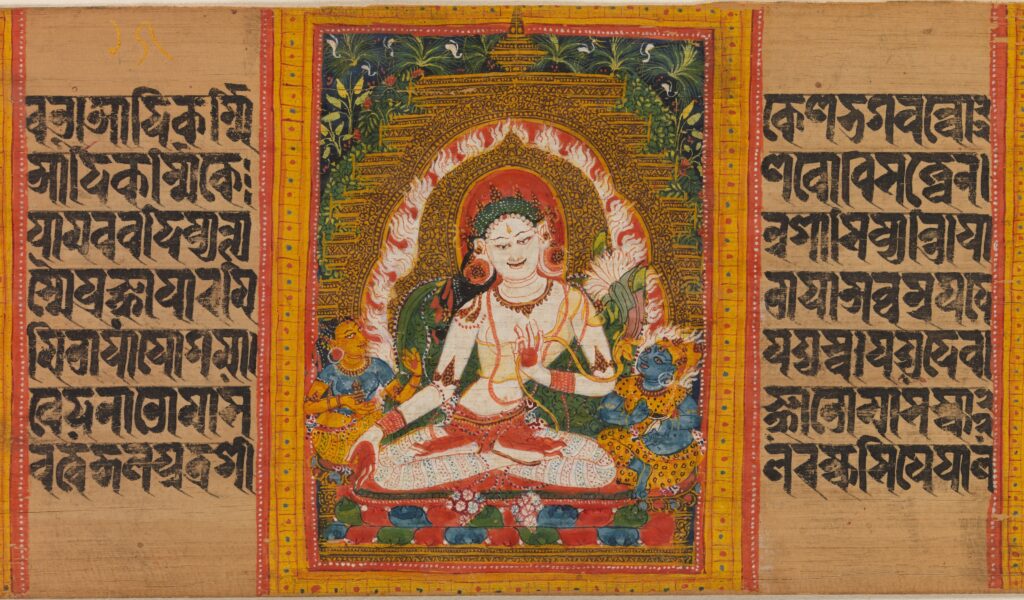
In eastern India during the reign of the Pala rulers (r. 750-1161 CE), some of Asia’s most influential Buddhist monasteries, such as Nalanda, Vikramashila, Odantapuri, and Somapura, drew in monks from far away lands. These monks studied there, copied manuscripts, commissioned images and later on went back to their own countries with texts, rituals and artistic models. Images and copied manuscripts represented the knowledge and ritual instructions of worship from esoteric texts that guided practices in new locations. A manuscript copied in Bihar could later influence artistic production in Nepal or Tibet. A bronze cast in eastern India could similarly inspire Javanese workshops situated hundreds of kilometres away.
One Name, Many Paths
As her images travelled beyond the Indian subcontinent, Tara took on new, localised associations. In Tibet, she was described as the “mother” who gave birth to the ancestors of the Tibetan people in one popular origin myth. In Indonesia, she was strongly linked to Nyai Lara Kidul, the ‘Goddess of the Southern Sea’, who helped sailors and merchants crossing the rough sea and directed them to their destinations. This was similar to how “Tara-Tarini” was regarded as the patron deity for sailors and merchants in ancient Odisha.
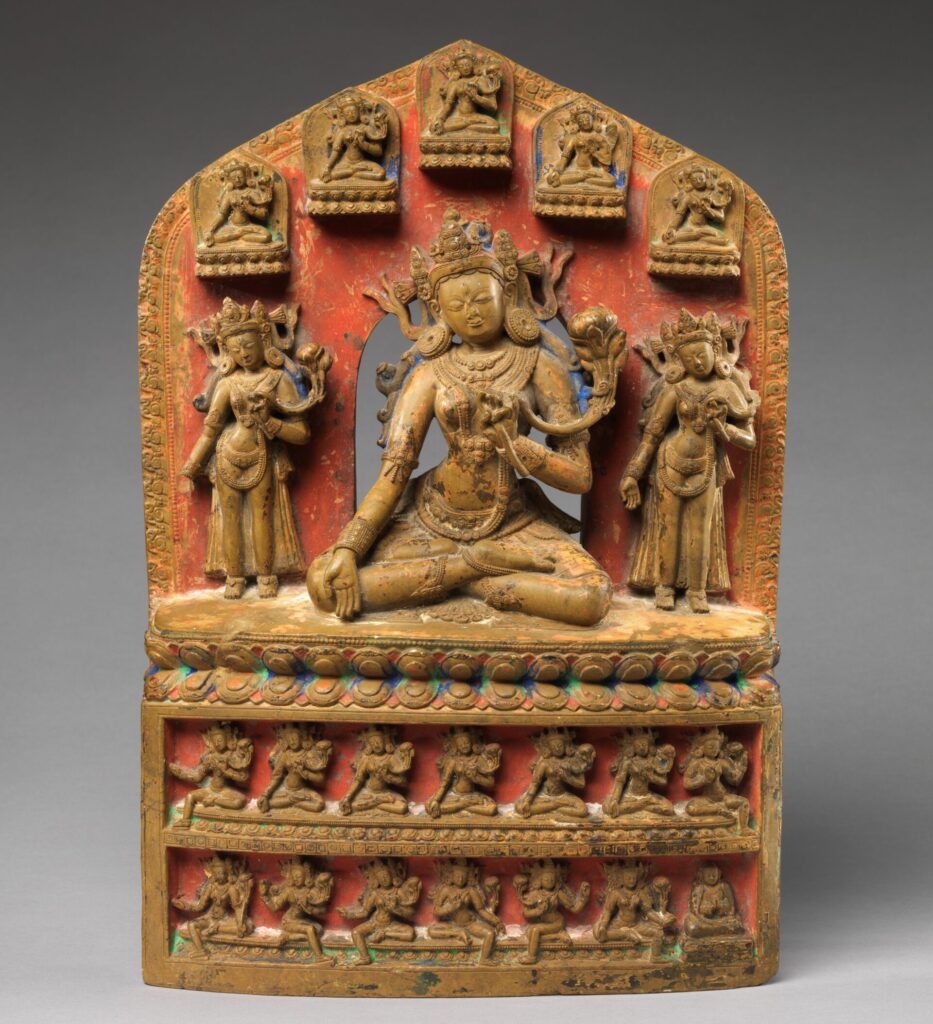
As Buddhist rituals became more esoteric, Tara acquired multiple forms with ‘specialisations’. Some forms were peaceful, protecting against illness, risky journeys, and early death. The Astamahabhaya form of Tara illuminates her role in guarding against the eight great dangers of the time — namely lions, elephants, snakes, thieves, drowning, fire, captivity and evil spirits. Other forms became more dynamic, representing fierce energies meant to overcome spiritual obstacles, such as Kurukulla, Vajra-Tara, and Ekajata. The fierce forms usually drew on older tribal or folk beliefs of a region to better integrate the Buddhist goddess into local religious practices. Ritual guides were produced and circulated in places where Tara worship spread. They included descriptions of visualisations, mantras, gestures, and meditation practices. The manual known as Tara-mula-kalpa stated that anyone, whether or not they were Buddhists or her devotees, could appeal to her when they were in need by simply chanting her mantra — Om Tare Tuttare Ture Svaha — an easy entry point into her worship for most.
Since Tara’s devotees were so varied — from members of royalty and monks to lay people — the purposes served by each ‘type’ of patronage differed. Every image signified a specific relationship connecting the patron to the deity, the monastery, and the larger Buddhist community. But in the process, Tara’s authority was perpetually reinforced through ceaseless image-making and worship. Every new sculpture created, each ritual performed, every votive offering made, sanctified her standing within Buddhist society because people chose to see spiritual value in her image. But what were the gender implications of such devotion?
‘Reading’ Tara Today
According to scholars, Buddhist donors were mostly male in medieval Bengal and Bihar. A rare exception is the seated image of Tara from Kurkihar, where the accompanying inscription alludes to the nun Gunamati, who commissioned it. This fact highlights that ‘readings’ of the Buddhist Tara and what she represented to her devotees as a female goddess have to be rooted in the milieu she emerged from. Questions such as whether she represents a ‘feminist’ bent in Buddhist practices apply modern gender discourse to an early medieval religious framework. A more useful line of inquiry is to consider the role that the divine feminine principle played in Buddhist traditions.
In certain texts, Tara’s femininity is symbolic of her ‘motherly’ compassion and the protective instincts she has towards her devotees — this reading appealed to many of her lay followers; in more ritual contexts, she was evoked as a meditational deity by Buddhist Tantra practitioners and accorded the same respect as male Bodhisattvas. But while she was venerated across social groups and genders, there is no evidence to suggest that her inclusion in the Buddhist pantheon increased the participation of female practitioners in Buddhist rituals or that Tara was unusually popular among women donors or that her worship improved the lives of women. Her cross-cultural success instead depended on what she could purportedly do for her followers on the path to enlightenment.
Tara could be gentle guide without being weak; she could show compassion but also unleash her fearsome qualities if the situation demanded it; and she could clearly stay female while pursuing nirvana and liberation for all beings. More than a thousand years after her earliest images were created, Tara in her multiple forms all embody the same radical question: if wisdom is universal, why should it have only one face, form or gender?
First published: October 13, 2026