-
ChicagoImpart Encyclopedia of Art. "Dvarapala." June 24, 2022. https://imp-art.org/articles/dvarapala/.
-
MLA"Dvarapala." Impart Encyclopedia of Art, Jun. 24, 2022, https://imp-art.org/articles/dvarapala/.
-
HarvardImpart Encyclopedia of Art (2022) Dvarapala. Available at: https://imp-art.org/articles/dvarapala/ (Accessed: 1 November 2026).
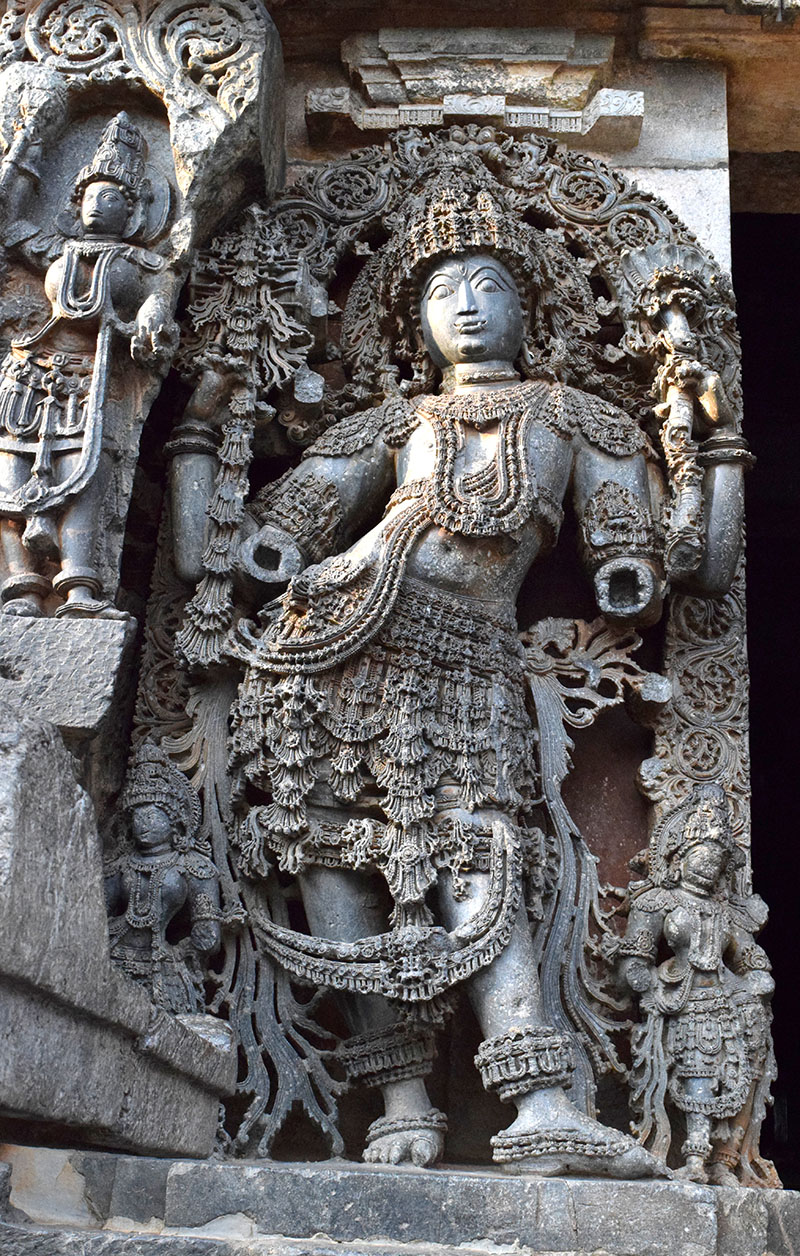
A semi-divine or divine mythical guardian figure, the dvarapala or dvarapalaka (Sanskrit, dvara, ‘door’; pala, palaka, ‘protector’) is generally seen as a sculpture flanking doors and entranceways in Hindu, Buddhist and Jain temples. Dvarapalas usually protect shrines of male deities, while their female counterparts, dvarapalikas, guard the entranceways of temples dedicated to goddesses.
Dvarapala statues are believed to ward off evil and distinguish a temple space from other architectural forms. They are found at various access points within a temple, including the main entrance, as well as entrances to the sanctum and the mandapa (halls). Hindu dvarapala figures span a wide diversity of iconographical imagery, from semi-divine beings such as Nagas and yakshas to mythological beings such as Nandi and Chanda-Prachanda, the river goddesses Ganga and Yamuna, and notable sages. Nagas and yakshas as dvarapalas are also found in Buddhist architecture, along with bodhisattvas.
Dvarapalas may be depicted kneeling or standing, with one or more pairs of arms and ferocious or calm visages. Their headdresses can range from matted locks to horned headdresses, or kiritamukuta, and their hands are depicted in a variety of mudras or gestures. The iconography of dvarapala statues also borrows elements from the deity they are stipulated to protect. For example, Shaiva and Vaishnava dvarapala statues may carry symbols emblematic of Shiva and Vishnu in their hands, and certain kinds of Shaiva dvarapalas may even be depicted holding clubs and with protruding teeth and horns. Similarly, in Mamallapuram, a shrine believed to be dedicated to Brahma has dvarapala figures depicted with ankle-length garments and matted locks, holding a flower or a vessel.
Dvarapala statues and their place within a temple find mention in texts such as the Brihata Samhita and the Agni Purana. Nagas and yakshas as dvarapala figures were represented in the torana (gateways) and vedika (railings) of Buddhist sites such as Bharhut. In the Buddhist caves at Ellora, dating between the seventh and eighth centuries CE, the dvarapalas assume the form of bodhisattva figures such Avalokitesvara, Manjushri, Samantabhadra and Vajrapani, who are also considered guardian deities. At the same site, in the Kailasa temple complex, the river goddesses Ganga and Yamuna flank a shrine dedicated to Shiva.
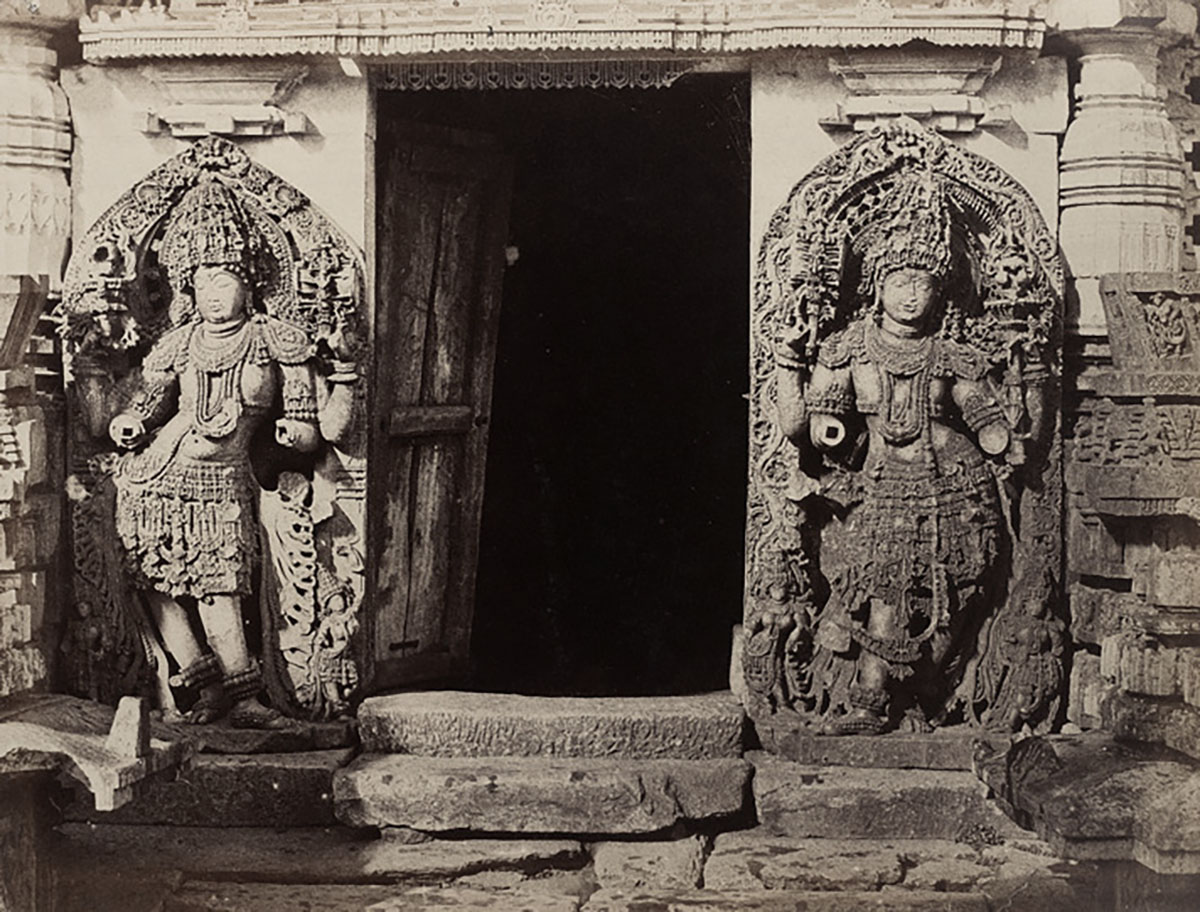
The dvarapala statues of a site reflect the architectural and artistic styles of its time. In the Pallava period, for instance, dvarapala were typically depicted with two arms, leaning on a club, while during the Chola period, they were shown in more dynamic, ferocious poses, armed with maces. The spread of Buddhism and Hinduism to parts of East and Southeast Asia during the pre-medieval and medieval periods also resulted in the passage of dvarapala statues to Indonesia, China, and Japan.
First published: 24 June 2022
Image Gallery
Bibliography
American Institute of Indian Studies. “River Goddesses in Sculptural Art of India. Google Arts and Culture. Accessed March 24, 2022. https://artsandculture.google.com/story/QwXRzyLfYMf8Jg
Dallas Museum of Art.“Seated Figure In a Niche.” Accessed March 26, 2022. https://collections.dma.org/artwork/4011594
Darian, Steven G. The Ganges in Myth and History. Honolulu: The University Press of Hawaii, 1978. https://core.ac.uk/download/pdf/7434402.pdf
Dehejia, Vidya, and Richard Davis. “Addition, Erasure, and Adaptation: Interventions in the Rock-Cut Monuments of Māmallapuram.” Archives of Asian Art 60 (2010): 1–18. http://www.jstor.org/stable/40863707.
Jayne, Horace Howard Furness. “Maitreya And Guardians.” Penn Museum Bulletin 9, no.1 (1941). https://www.penn.museum/sites/bulletin/2265/
Krishnakumari, Myneni. Iconography of the Door Guardians of South India (Dvarapalas). New Delhi: BR Publishing Corporation, 2015.
Miksic, John N. “Review: Dvarapalas in Indonesia; Temple guardians and acculturation.” Bijdragen Tot de Taal-, Land- En Volkenkunde 156, no. 2 (2000): 325–32. http://www.jstor.org/stable/27865631.
Encylopaedia Britannica. “Ni-o.” Accessed March 26, 2022. https://www.britannica.com/topic/Ni-o
Sastri, H Krishna. South-Indian Images of Gods and Goddesses. Madras: Madras Government Press, 1916.
van Bemmel, Helena A. Dvarapalas in Indonesia: Temple Guardians and Acculturation. Rotterdam: AA Balkema, 1994.
Feedback