-
ChicagoImpart Encyclopedia of Art. "Dhorni." August 28, 2026. https://imp-art.org/articles/dhorni/.
-
MLA"Dhorni." Impart Encyclopedia of Art, Aug. 28, 2026, https://imp-art.org/articles/dhorni/.
-
HarvardImpart Encyclopedia of Art (2026) Dhorni. Available at: https://imp-art.org/articles/dhorni/ (Accessed: 16 October 2026).
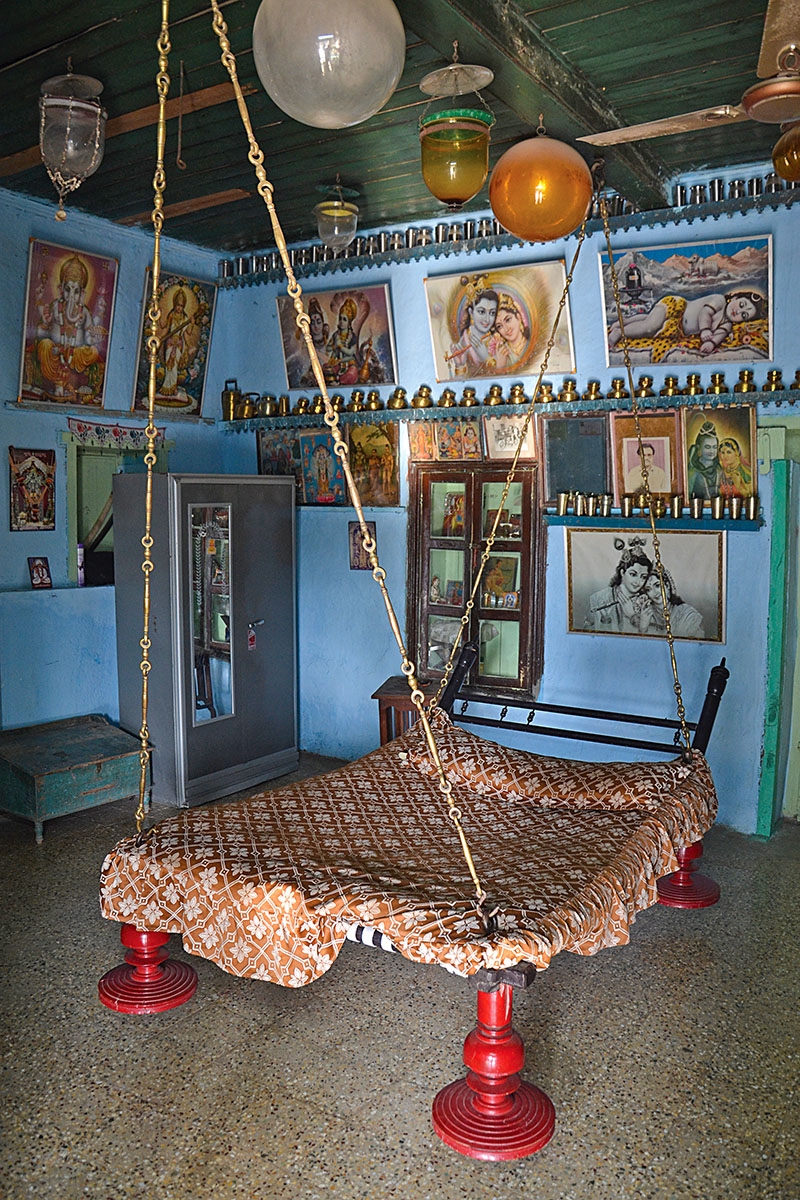
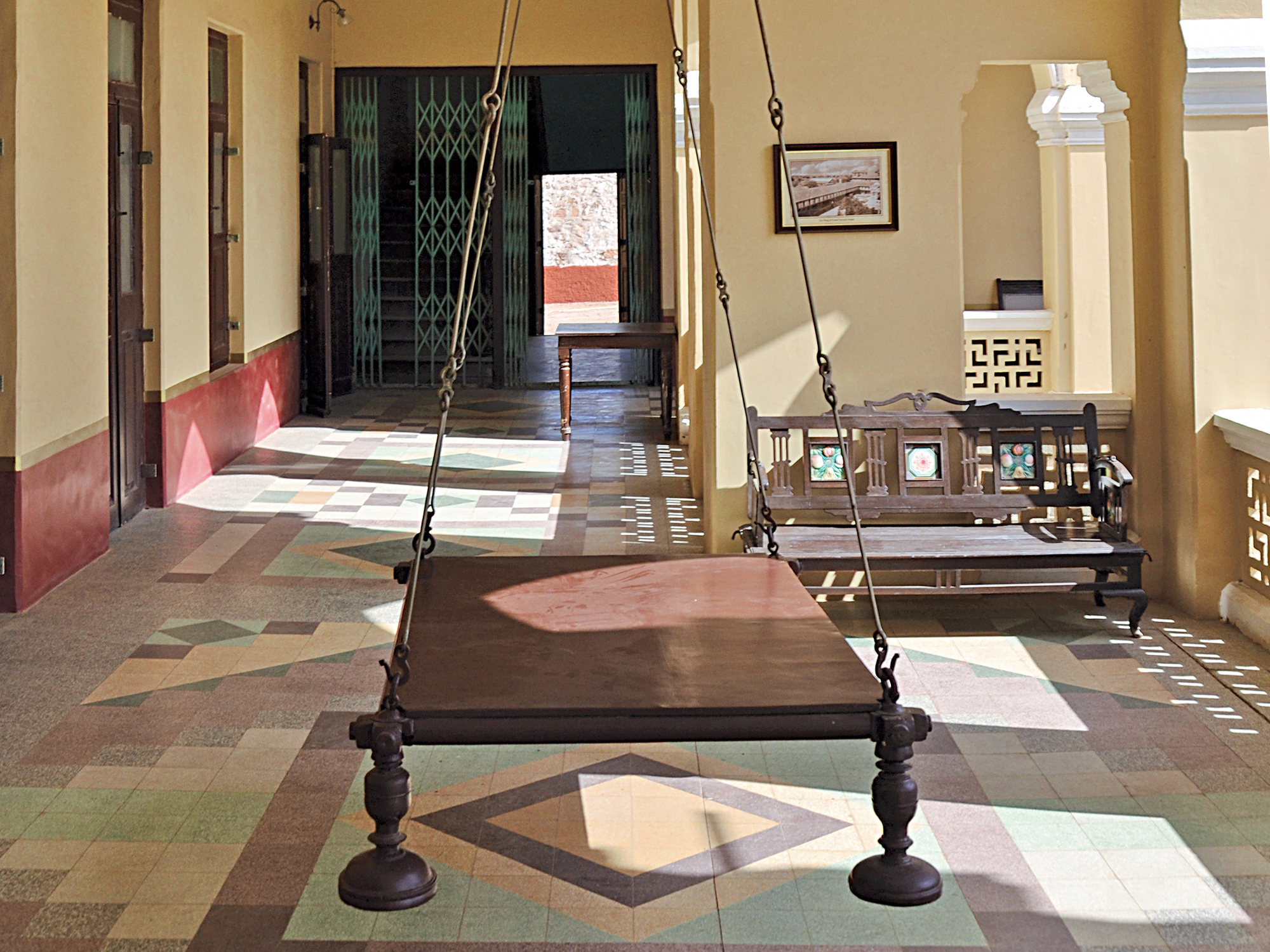
A wooden swing bed with a webbed surface, turned and lacquered legs with large circular feet, and often an inclined headboard, a dhorni or khaat is an item of vernacular furniture unique to the Kathi community of Saurashtra, Gujarat in western India.
Design and construction
The dhorni is an amalgam of the charpoy — particularly the Gujarati dholio and dholni, which feature heavy, turned legs — and the hichko–hindolo (swing seat), which is known as khaat when it is without a back or armrests.
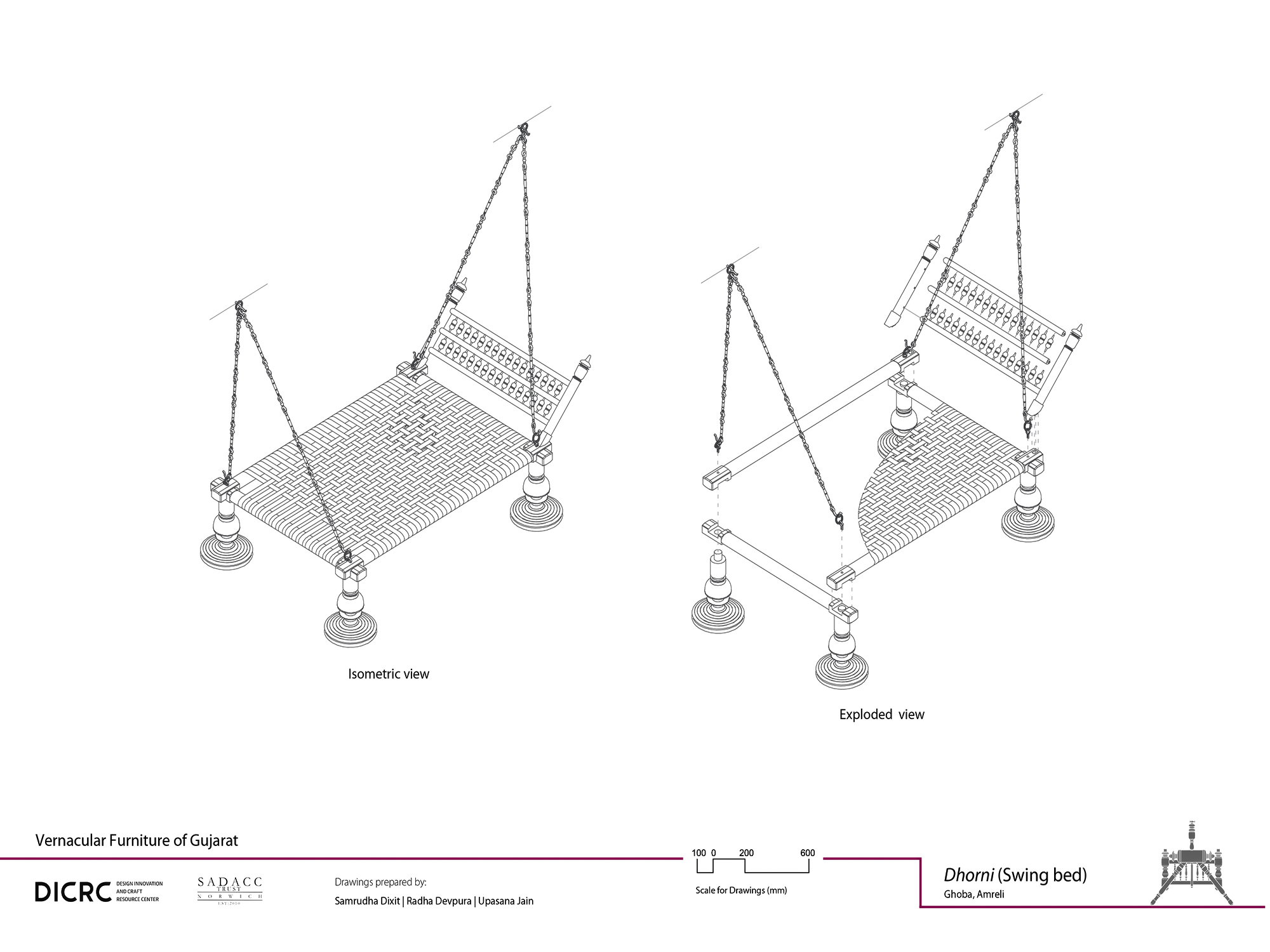
The dhorni comprises a rectangular frame typically assembled using cross half-lap joints, so that the ends of the frame members cross each other at each corner. Four legs are inserted into the corners using mortise and tenon joints. The side posts of the headboard are similarly joined, at an angle, onto the ends of the longer members of the frame; two or more horizontal rails stretch between them, fitted with a series of spindle-shaped balusters. The legs of the dhorni have a distinctive turned form ending in wide disc-shaped feet finished with smooth circular ridges.
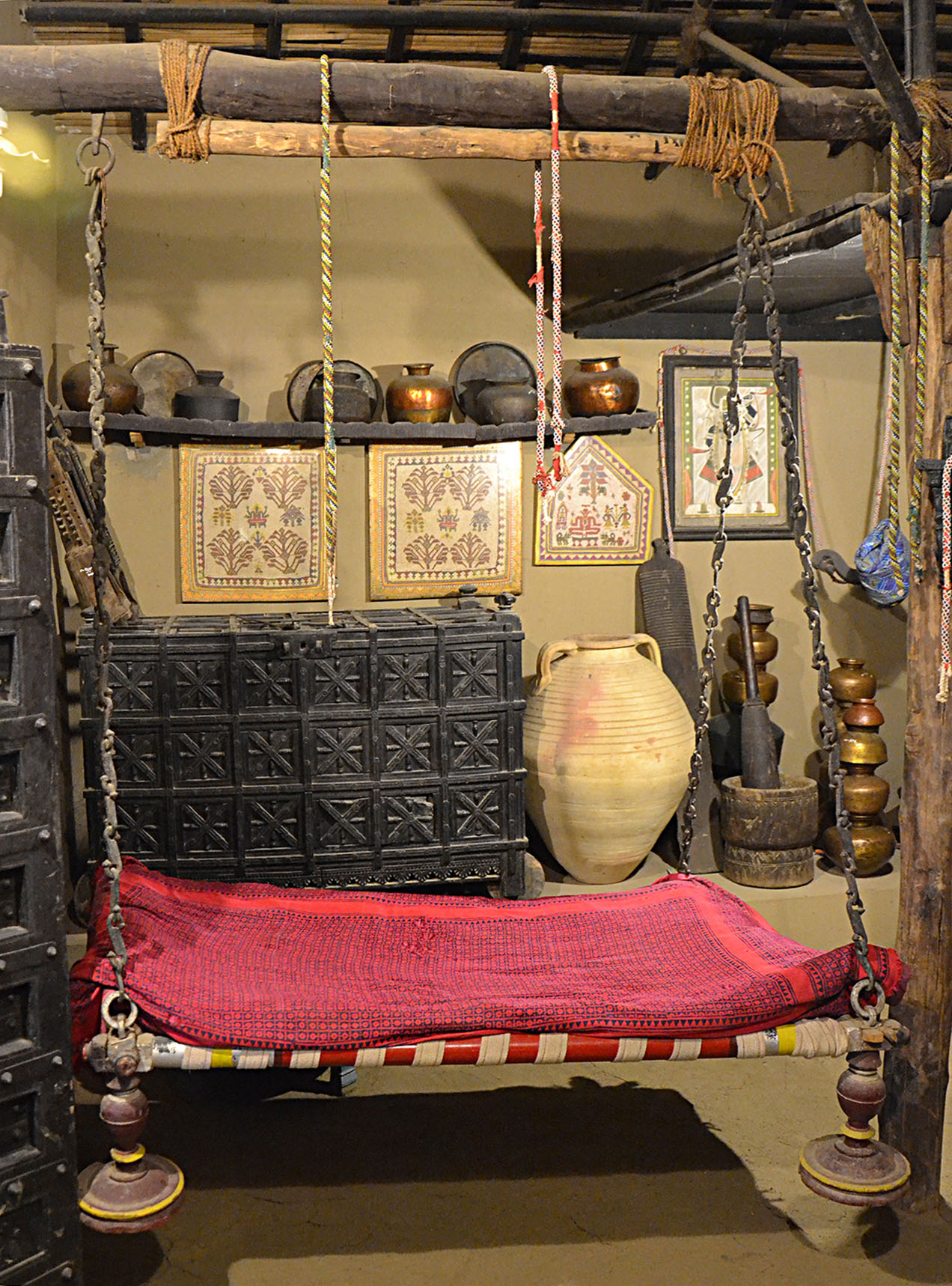
A webbing of ropes or fabric strips is woven across the frame to form the laying surface; this is commonly covered with a mattress and bedspread, on which bolsters may be laid. In some extant specimens the aged webbing is replaced with wooden planks. A metal ring is fitted at each corner of the frame, by which the dhorni is suspended from a beam or the ceiling using decorative brass chains. The legs, and often the headboard and frame, are typically coated in coloured lacquer.
Ownership and use
Although primarily used as a bed, it is commonly placed in the main hall of a Kathi dwelling, where it forms part of the traditional display of wealth alongside the assemblage of vessels (mand), chest (pataaro), ornate brass containers (dablo), and other such valuables.
This article is adapted from the outcomes of Vernacular Furniture of North-West India — a collaborative research and documentation project by the Design Innovation and Craft Resource Centre (DICRC), CEPT University, India, and The South Asian Decorative Art and Crafts Collection Trust (SADACC), UK — shared with the Encyclopedia of Art through an Impart partnership. Explore more from this series in our Collection Objects Alive: Vernacular Furniture of North-West India.
First published: 28 August 2026
Image Gallery
Bibliography
Bais, Mitraja, Jay Thakkar, Samrudha Dixit, and Ben Cartwright. Sahaj: Vernacular Furniture of Gujarat. Ahmedabad: CEPT University Press, 2018.
Rao, Mansi S., Ben Cartwright, and Samrudha DIxit. Anaikya: Vernacular Furniture of Rajasthan. Ahmedabad: CEPT University Press, 2021.
Rao, Mansi S., Ben Cartwright, Jay Thakkar, and Abhishek Ruikar. Smarya: Vernacular Furniture of Punjab and Haryana. Ahmedabad: CEPT University Press, 2026.
Vernacular Furniture of India. Accessed July 31, 2026. https://vernacularfurnitureofindia.com/.
Feedback