-
ChicagoImpart Encyclopedia of Art. "Hichko, Jhula, Peengh." August 28, 2026. https://imp-art.org/articles/hichko-jhula-peengh/.
-
MLA"Hichko, Jhula, Peengh." Impart Encyclopedia of Art, Aug. 28, 2026, https://imp-art.org/articles/hichko-jhula-peengh/.
-
HarvardImpart Encyclopedia of Art (2026) Hichko, Jhula, Peengh. Available at: https://imp-art.org/articles/hichko-jhula-peengh/ (Accessed: 16 October 2026).
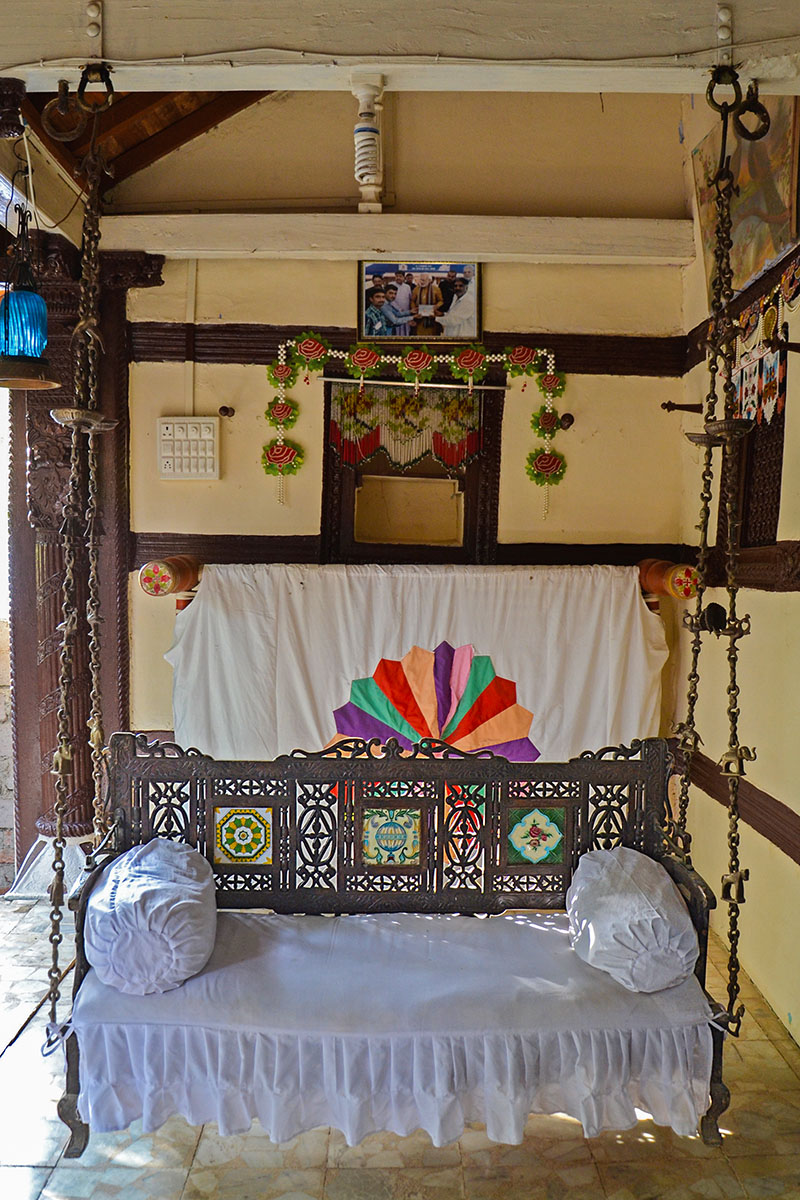
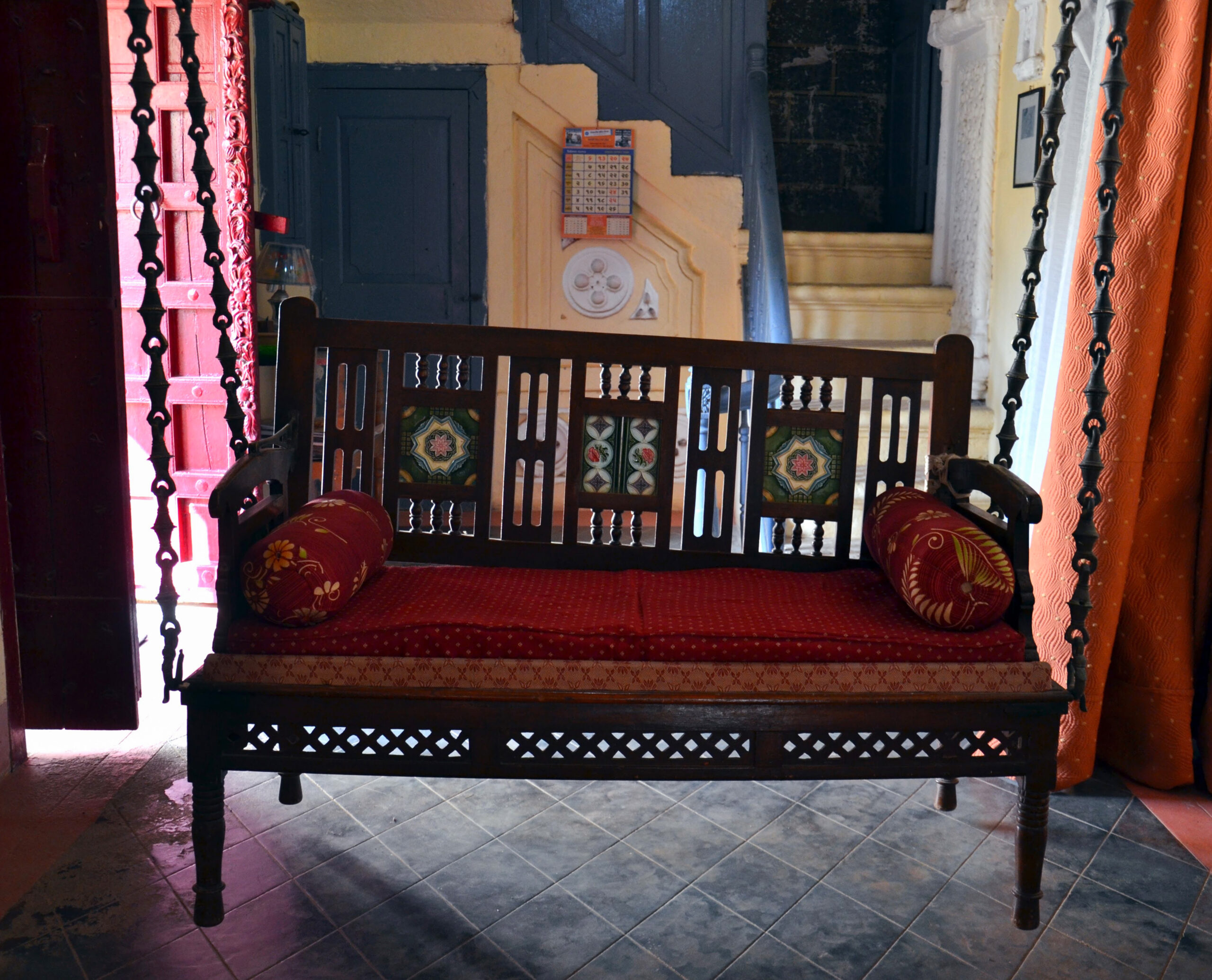
A swing seat in the form of a suspended wooden bench or plank is a common form of vernacular furniture in northwestern India, where it is known regionally as hichko, hindolo, paat, khaat, jhulo, jhula, or peengh. It may be backless or feature back- and armrests that are often ornately carved or decorated. Ranging in size to accommodate from one to three or four people at a time, these swing seats are typically located within the home or in verandahs or courtyards.
Terminology
The terms used for the swing seat in northwestern India vary with regional dialects and reflect associated design variations. A suspended bench with back- and armrests is known as hichko or hichka across Gujarat, except in the Saurashtra region, where it is called hindolo or hindola (from the Sanskrit hindola or dola, referring to a swing, swinging cradle, or ornamental swing or palanquin). Swings of all types, including these seats, are also known as jhulo across the state. In Rajasthan, where they are chiefly recorded in the Vagad region, suspended benches with or without back- and armrests are called jhula, a term that also applies to the ritual cradle.
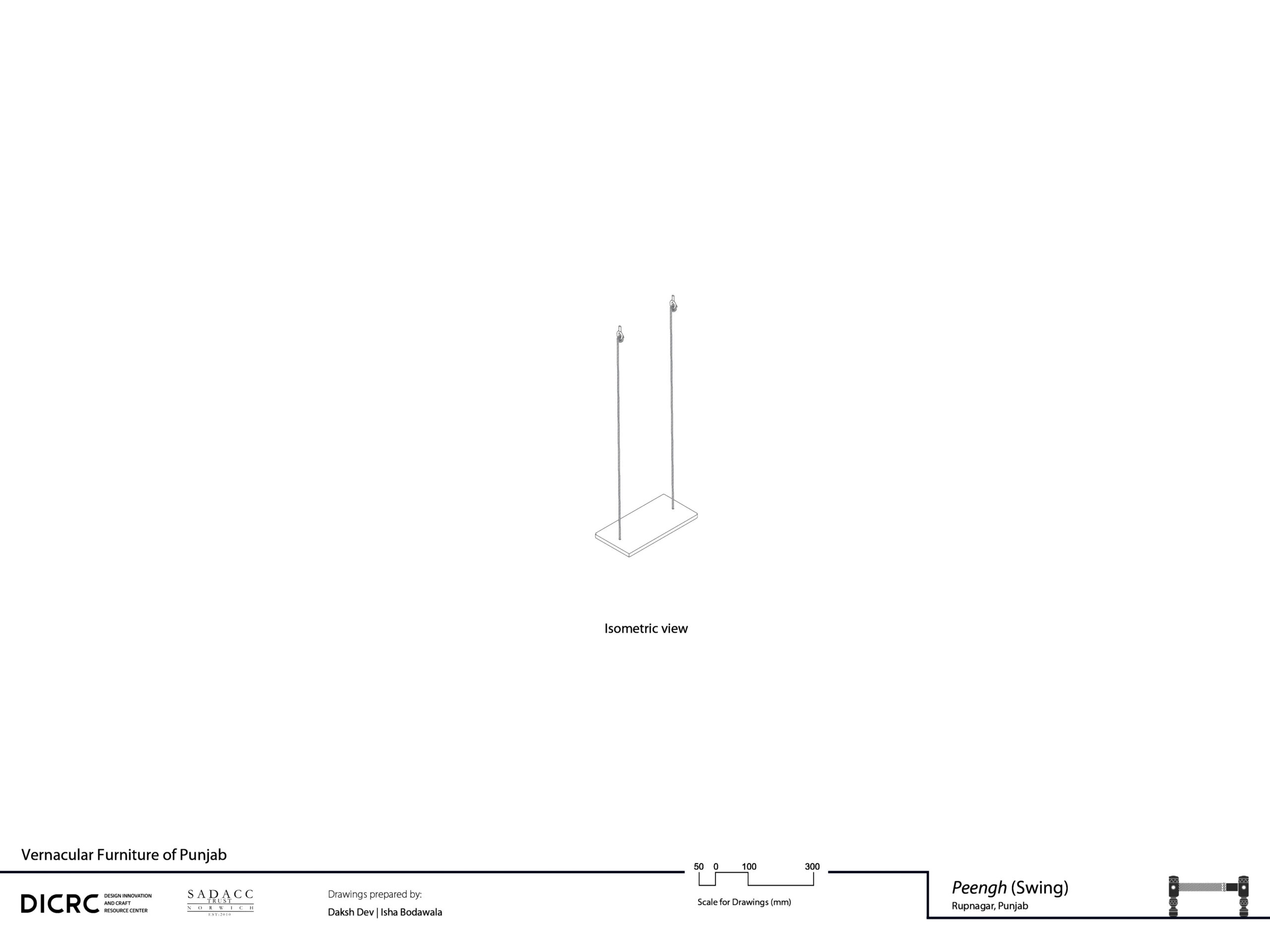
A more rudimentary suspended backless seat without armrests is called a paat in most parts of Gujarat; in Saurashtra it is also a khaat, hindola-paat or hindola-khaat — reflecting its similarity to the backless bench (paat) and the charpoy (khaat). Accordingly, ‘paat’ and ‘khaat’ can also refer to the wooden seat of the bench alone, which is sometimes detached from the suspending chains and used separately as floor seating. The peengh in Punjab is a much smaller, rudimentary suspended plank, typically seating one person and used mainly for swinging.
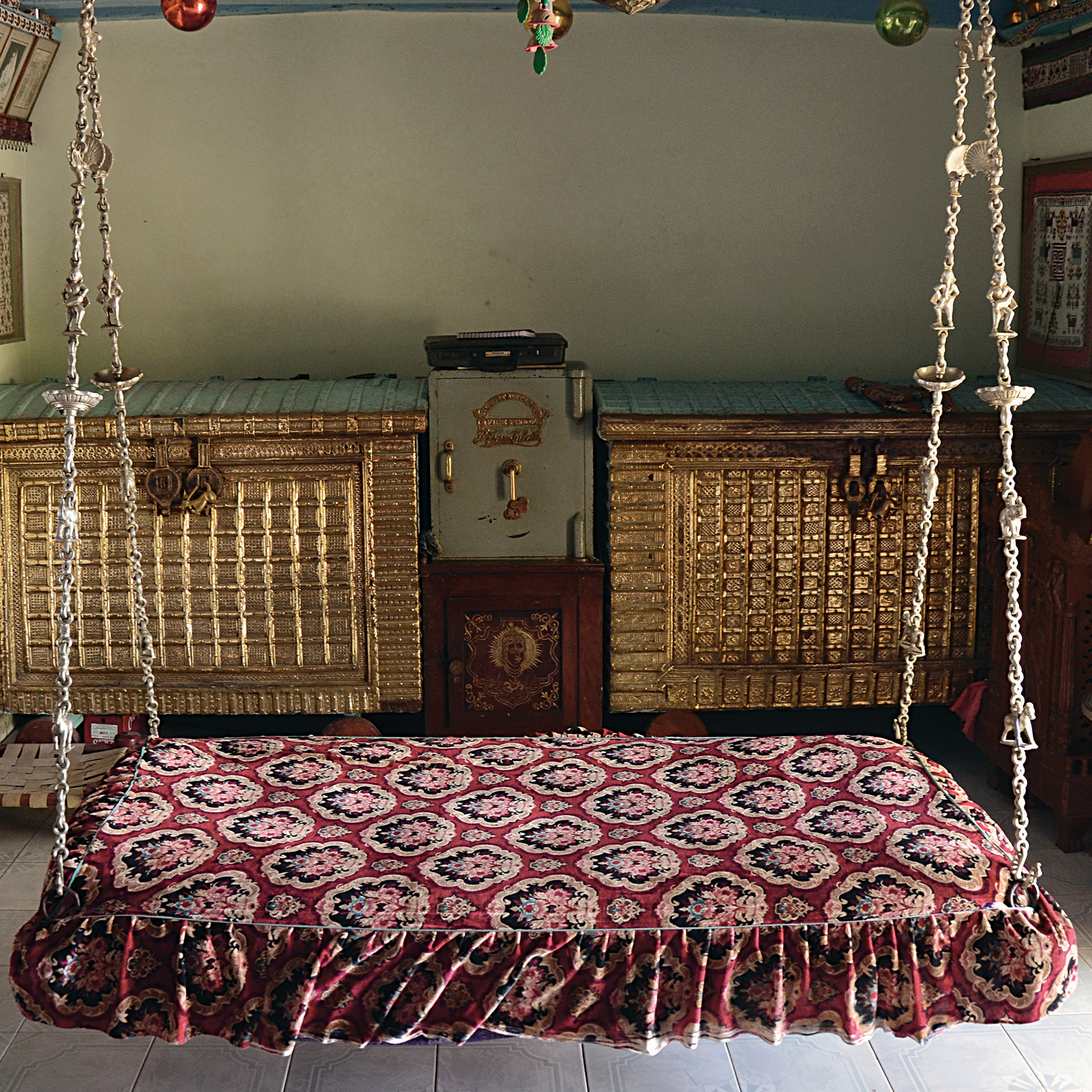
Design and construction
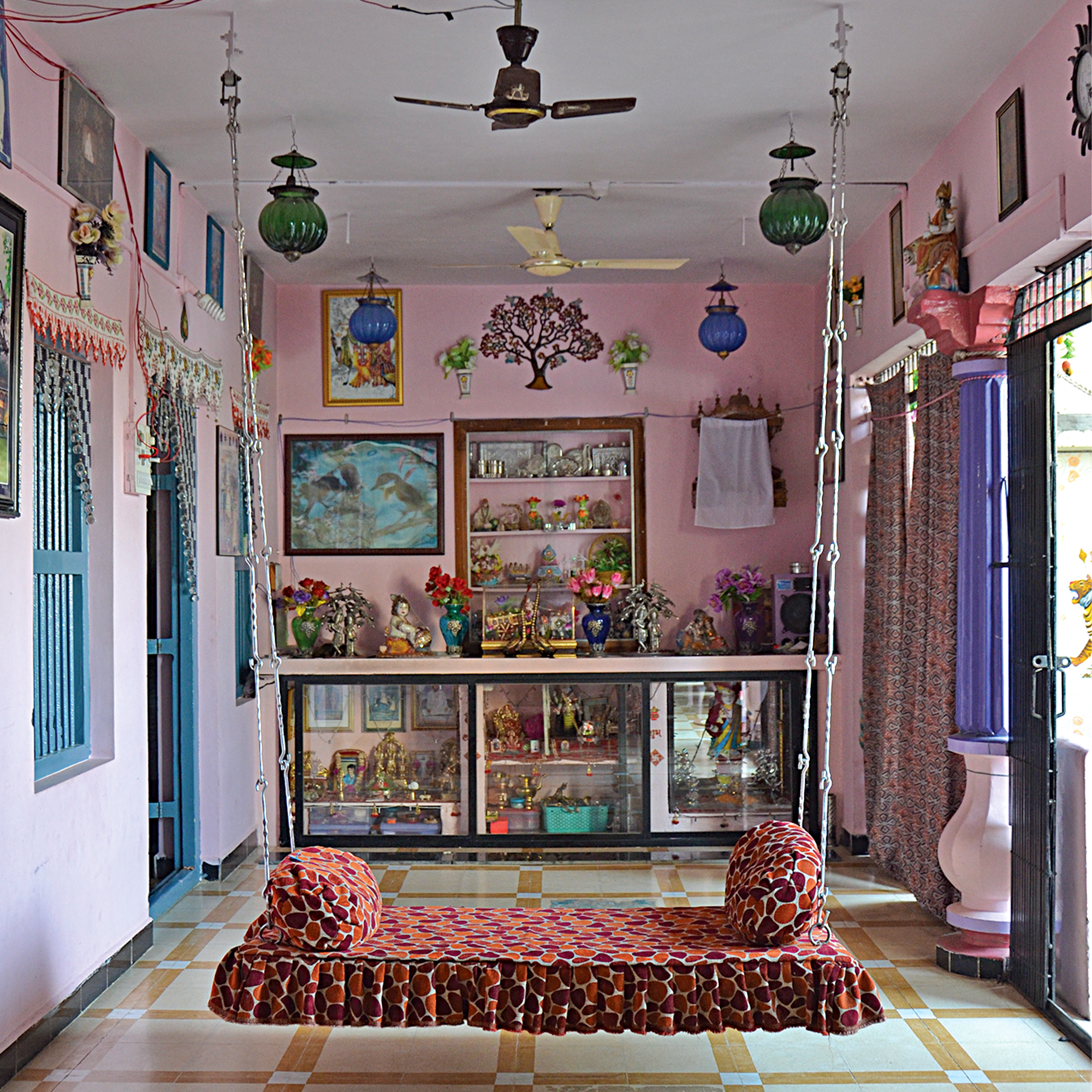
The Gujarati and Rajasthani swing seats are elongated and typically made of wooden planks. They vary in size — some resemble single beds in their width and length and can be used to lie down comfortably, while others are narrower and only suitable for seating two to four people. In the hichko–hindolo, the seat may be woven from narrow cotton or silk strips (paati) or plastic yarn in modern versions. The seat of the jhula and peengh may be painted, often in traditional colours such as green, yellow and red. In Gujarat and Rajasthan, cushions and bolsters may be upholstered onto or simply placed on the seat for comfort.
In Gujarat and Rajasthan, the bench is usually suspended from the ceiling or a beam, using rope or more frequently simple or decorative metal chains that attach to metal rings at each of its four corners. The Punjabi peengh is also typically suspended from the ceiling; it may also sometimes be hung from a freestanding frame of wood or metal, and slots may be carved into the seat through which a thick rope is threaded and attached to a metal frame underneath.
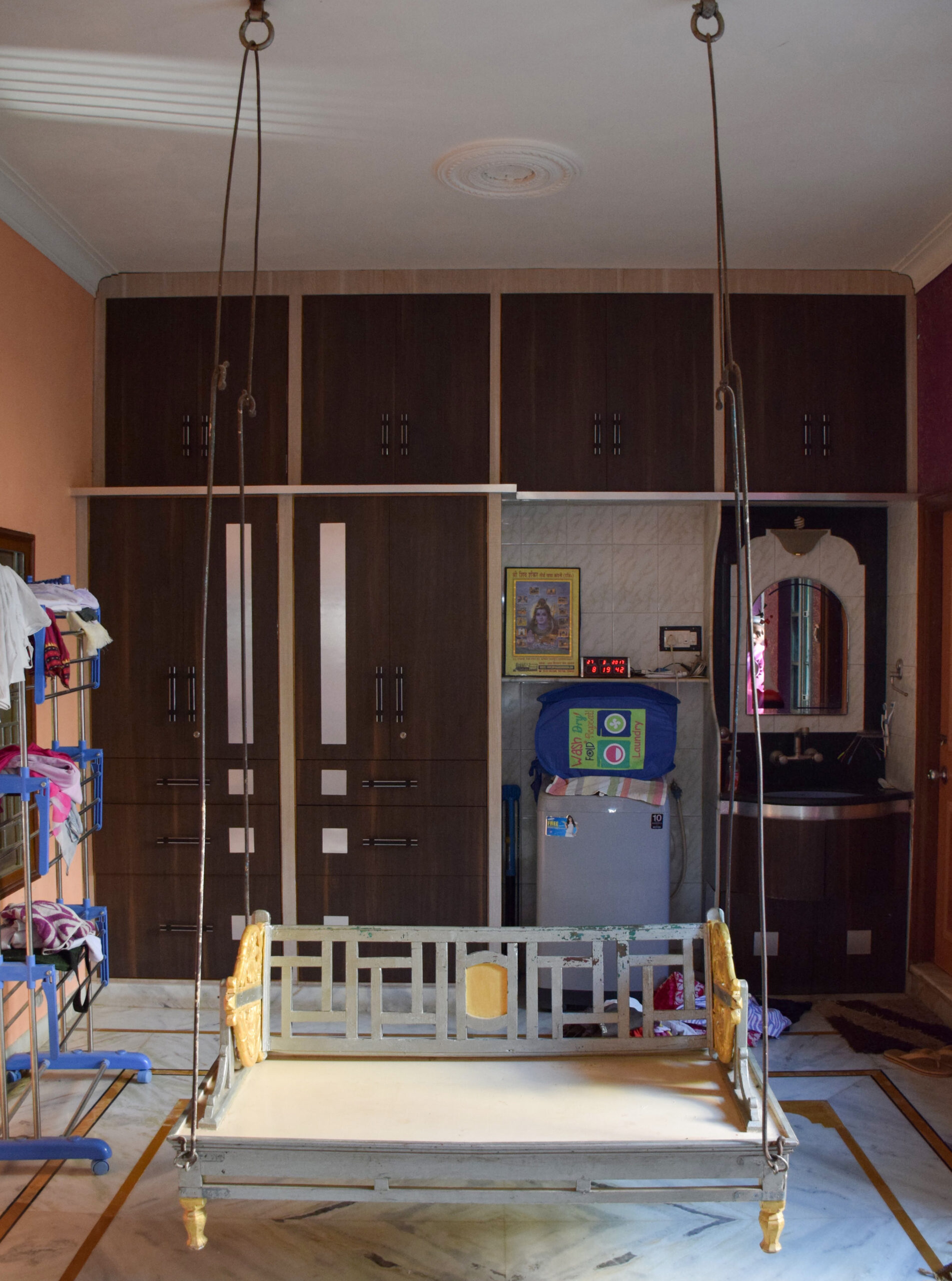
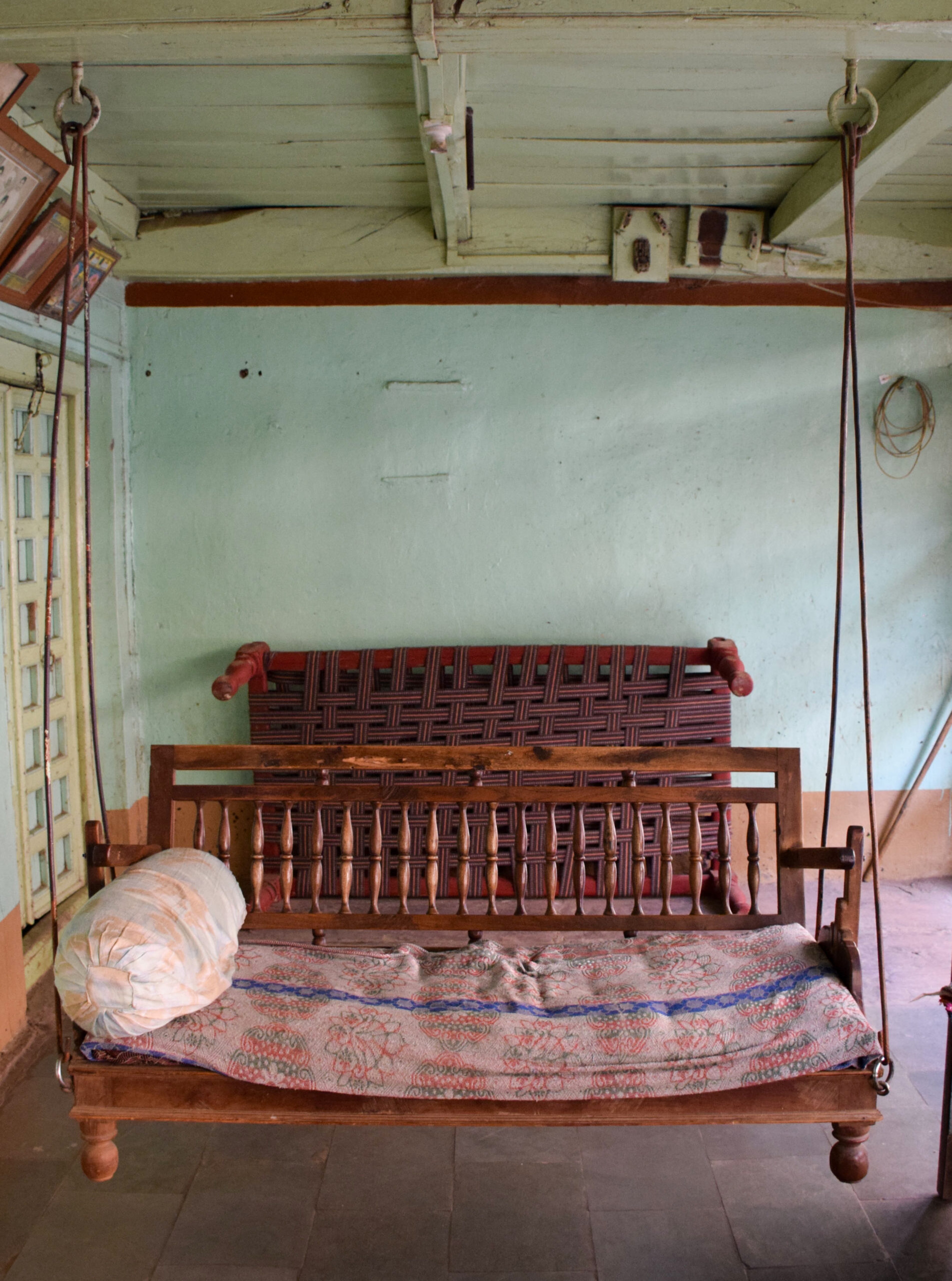
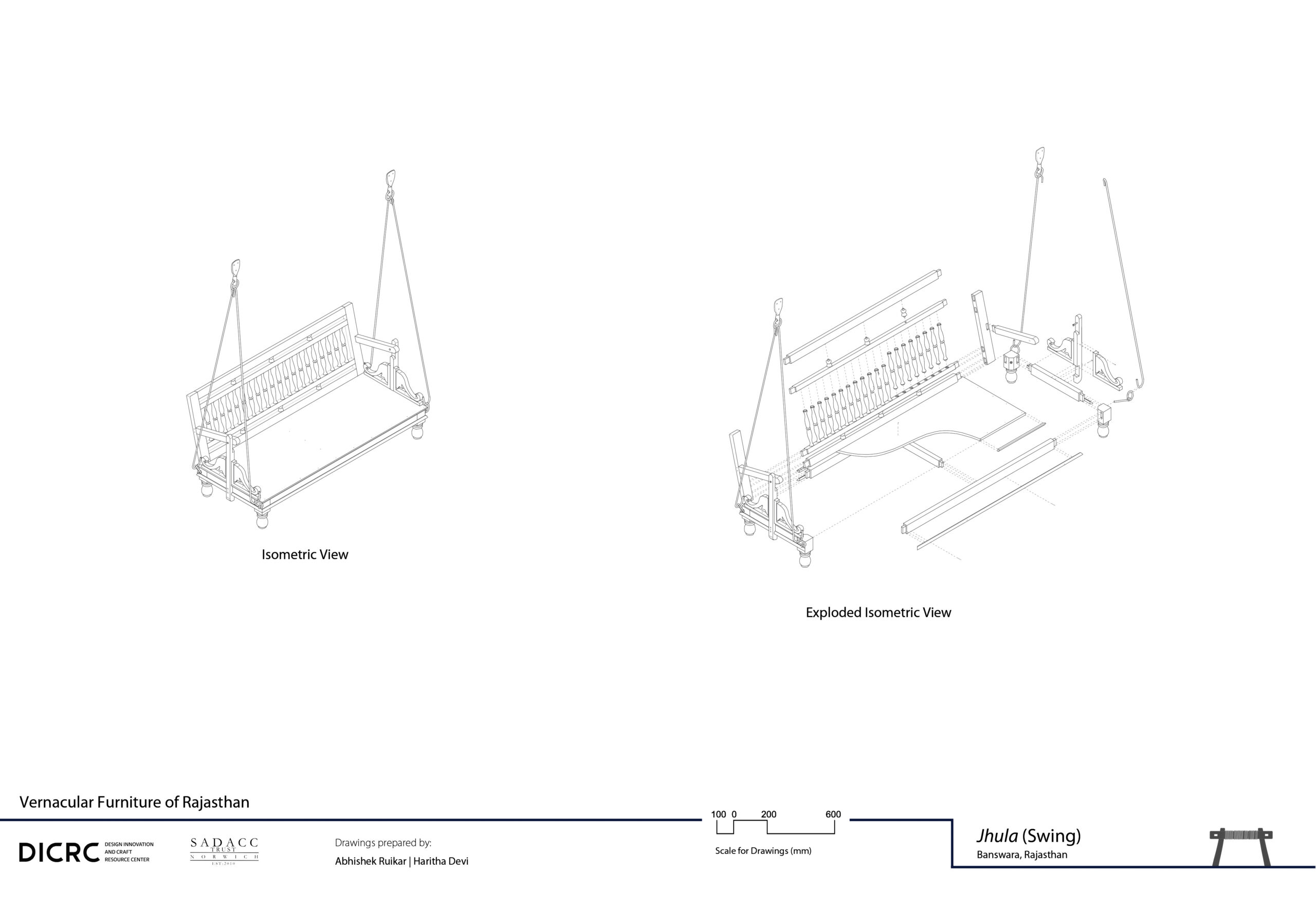
The Rajasthani jhula features ornate backrests and armrests as well as carved wooden legs, closely resembling the bankdo (bench with back- and arm-rests) found across Gujarat and Rajasthan. In the late nineteenth and early twentieth centuries, the design of the Gujarati hichko–hindolo also came to include these elements. The backrest in both can be pivoted about the armrests, allowing users to be seated facing either direction.
In Rajasthan, the jhula would typically be commissioned from the family carpenter (suthar), who would also subsequently visit the home to carry out periodic maintenance such as reapplying the lac paint. The oil paint often used today does not require frequent maintenance.
Ornamentation
Regional variations of the suspended bench are typically distinguished by the detailing of the backrests, armrests or suspending chains. The backrest of the Gujarati hichko–hindolo features a tripartite division where each section is inset with a decorative ceramic tile framed by geometric carvings. The metal suspensions may be simple iron chains, or ornate brass or silver-plated ones featuring cast motifs of parrots, peacocks, elephants, horses, or human figures. Such ornate suspensions are seen more often in Gujarat than in other regions. Though the Punjabi peengh is typically suspended with simple chains or ropes, some specimens that are hung in living rooms, where they convey the status of the family, may also feature specially cast fittings. The Rajasthani jhula is distinguished by the turned wooden spindles that comprise the backrest, and armrests featuring ornate floral and vine carvings around the central member.
Ownership and use
The suspended swing bench is a common household furniture item, particularly in Gujarat, and is mostly hung in semi-open spaces of houses, such as backyards or verandahs, or interior spaces such as living rooms. Typically used by the women and children of the house, the suspended seat can also serve as a multifunctional surface used for purposes other than seating or swinging — such as for laying out large quantities of freshly made sweets to cool during festivals or other gatherings; charpoys are also used for the same purpose.
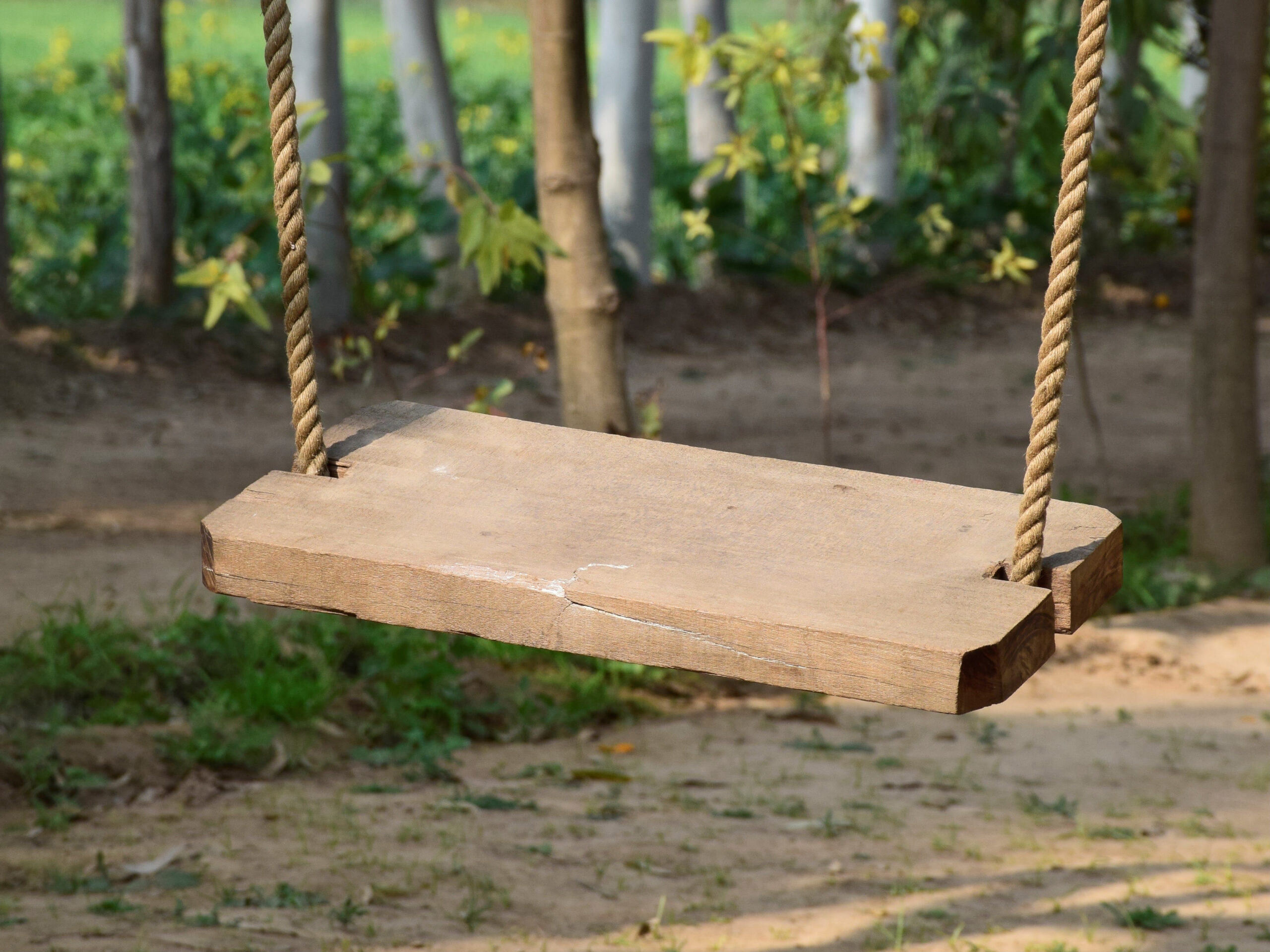
In Rajasthan, though widespread in the Vagad region neighbouring Gujarat, the jhula is not otherwise a part of everyday household furniture. Rather, it is part of Teej festival celebrations, when temporary swings are hung from trees within courtyards or near village ponds and lakes using cotton or nylon ropes. Women gather at these spots to sing, dance and swing on the jhula — here comprising simple wooden planks; after the festivities conclude, the jhula are taken down and stored until the following year. They are also used at other festivals such as Holi. In Punjab, multiple women would customarily swing together on what was essentially a manja (charpoy) hung from a large tree in a public space during Dhiyaan da Tyohaar, a monsoon festival in which married women traditionally return to their maternal homes.
This article is adapted from the outcomes of Vernacular Furniture of North-West India — a collaborative research and documentation project by the Design Innovation and Craft Resource Centre (DICRC), CEPT University, India, and The South Asian Decorative Art and Crafts Collection Trust (SADACC), UK — shared with the Encyclopedia of Art through an Impart partnership. Explore more from this series in our Collection Objects Alive: Vernacular Furniture of North-West India.
First published: 28 August 2026
Image Gallery
Bibliography
Bais, Mitraja, Jay Thakkar, Samrudha Dixit, and Ben Cartwright. Sahaj: Vernacular Furniture of Gujarat. Ahmedabad: CEPT University Press, 2018.
Rao, Mansi S., Ben Cartwright, and Samrudha Dixit. Anaikya: Vernacular Furniture of Rajasthan. Ahmedabad: CEPT University Press, 2021.
Rao, Mansi S., Ben Cartwright, Jay Thakkar, and Abhishek Ruikar. Smarya: Vernacular Furniture of Punjab and Haryana. Ahmedabad: CEPT University Press, 2026.
Vernacular Furniture of India. https://vernacularfurnitureofindia.com/.
Feedback