-
ChicagoImpart Encyclopedia of Art. "Dablo, Katodan, Talakhuta." August 28, 2026. https://imp-art.org/articles/dablo-katodan-talakhuta/.
-
MLA"Dablo, Katodan, Talakhuta." Impart Encyclopedia of Art, Aug. 28, 2026, https://imp-art.org/articles/dablo-katodan-talakhuta/.
-
HarvardImpart Encyclopedia of Art (2026) Dablo, Katodan, Talakhuta. Available at: https://imp-art.org/articles/dablo-katodan-talakhuta/ (Accessed: 16 October 2026).
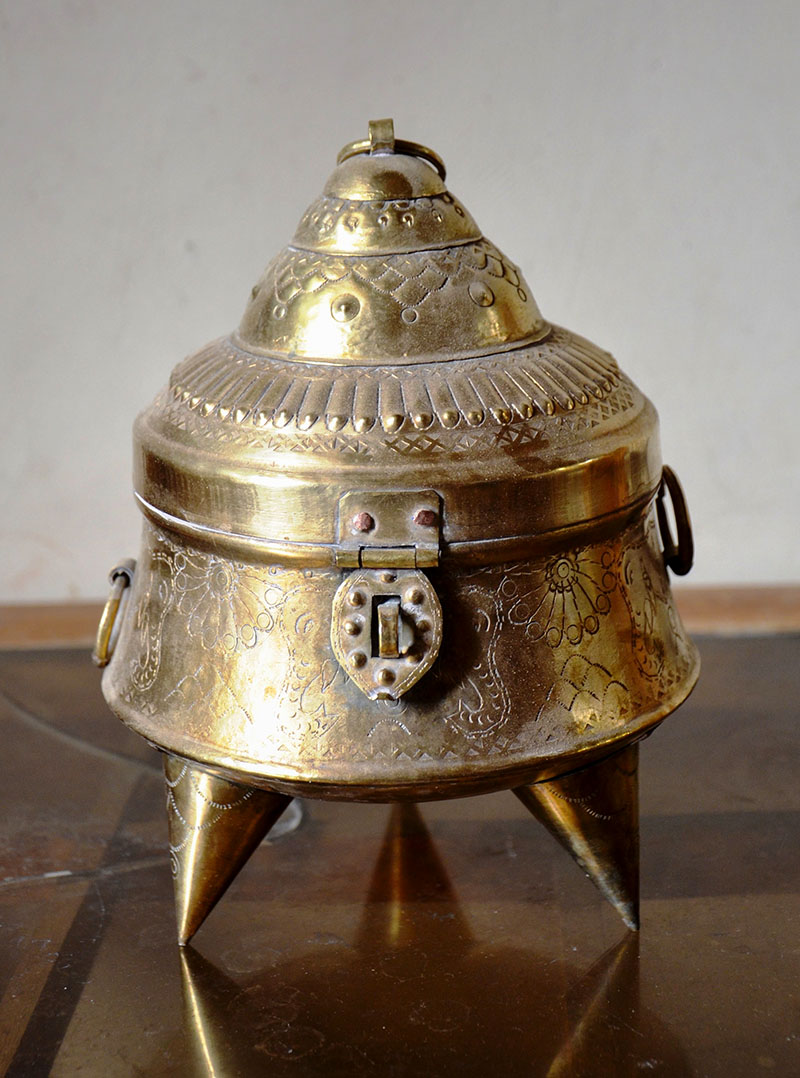
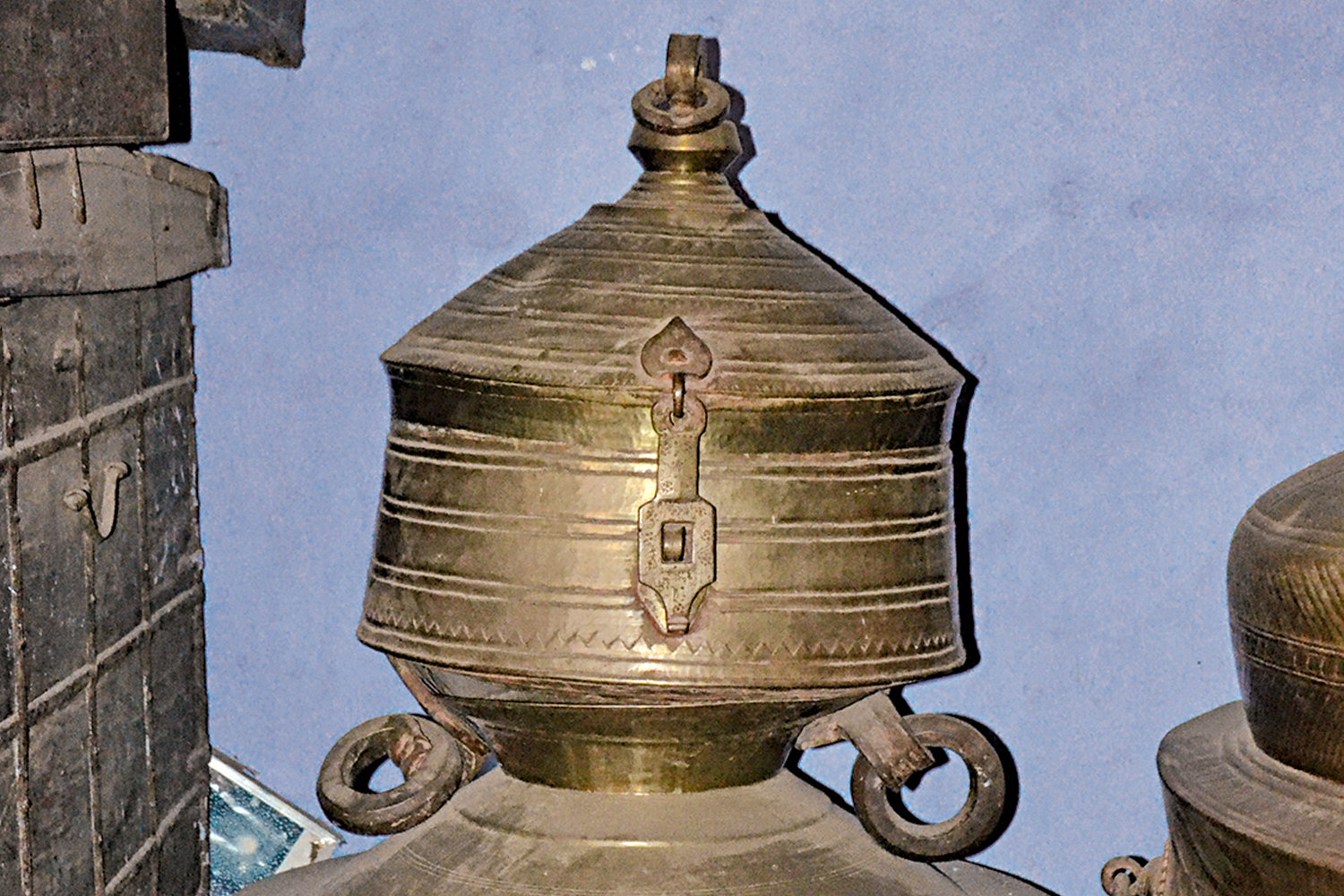
A round, three-legged brass container of widely varying size and used for storing a range of items, particularly valuables, a dablo is a form of vernacular furniture associated mainly with the Kathi community in Saurashtra, Gujarat in northwestern India. Similar objects include the katodan in Gujarat and the katordaan and talakhuta in Rajasthan.
Design and construction
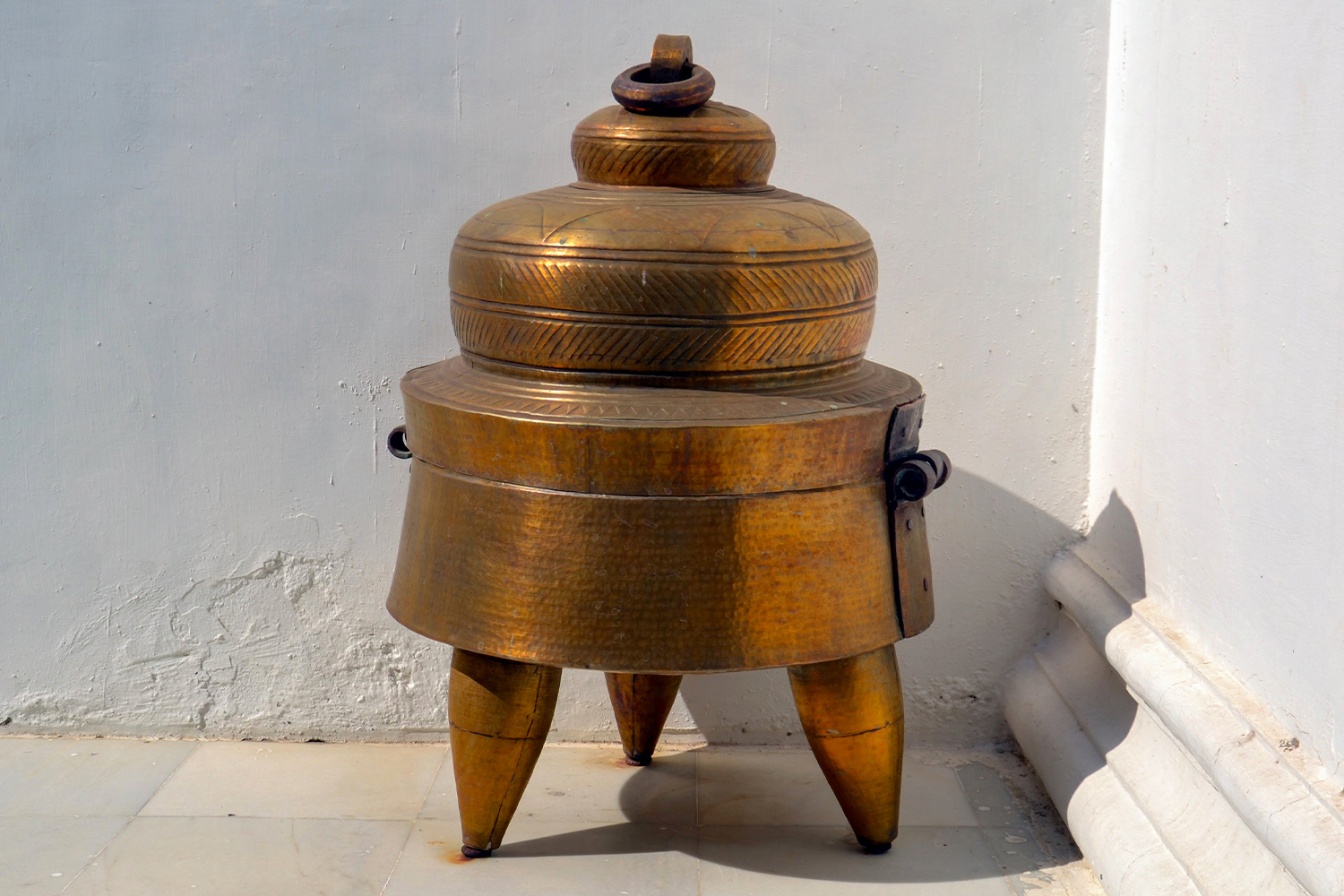
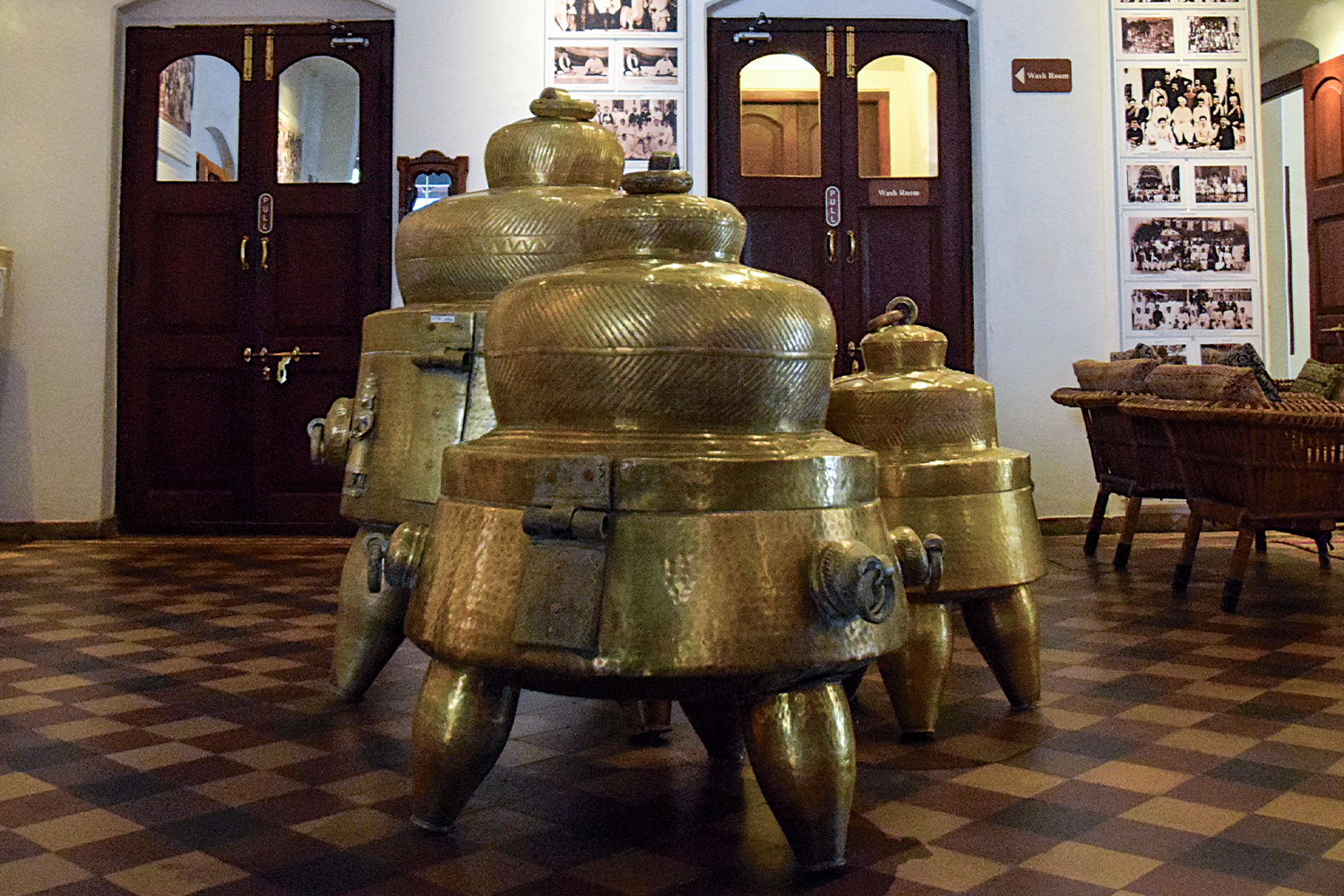
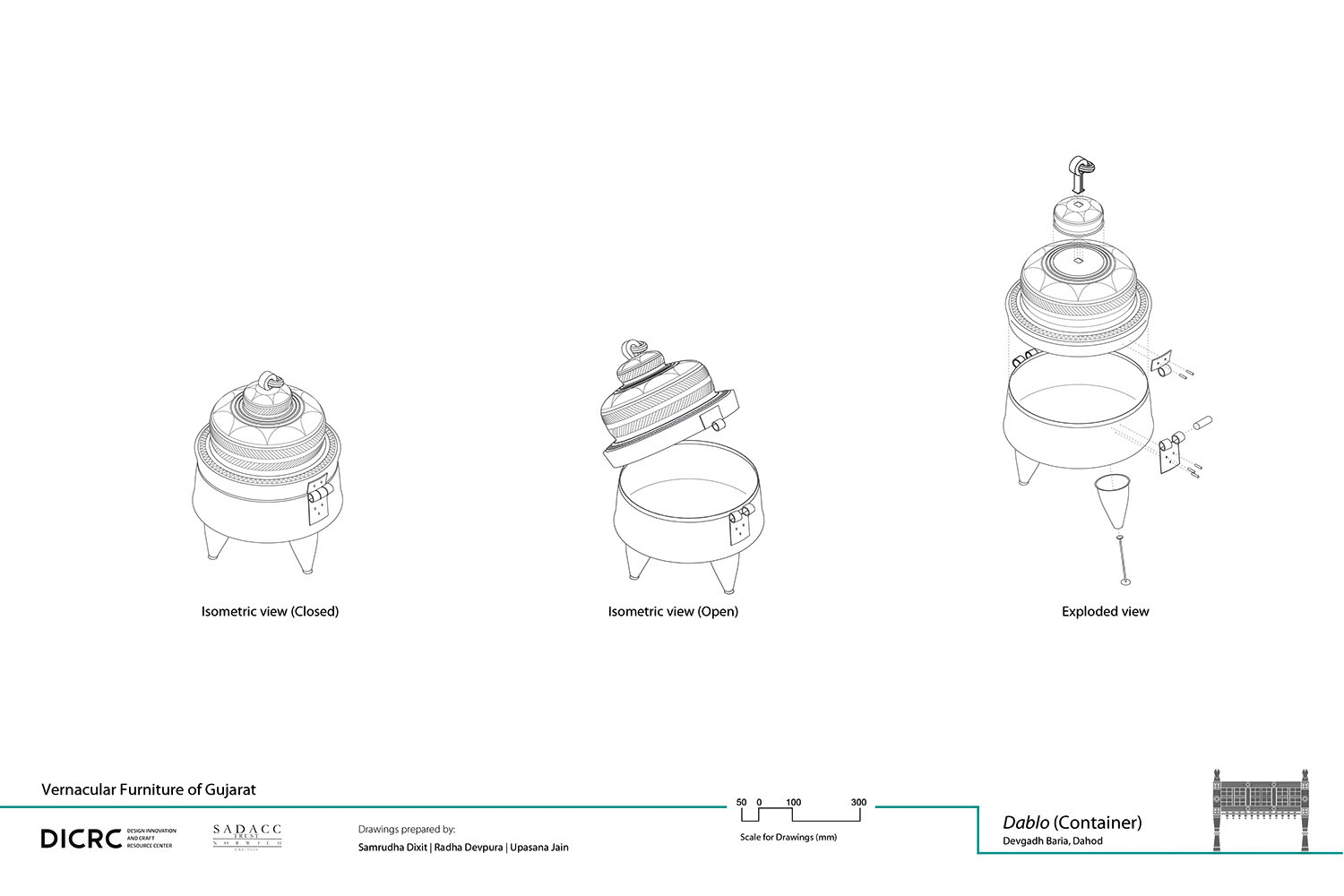
The dablo is a squat cylindrical box with a tall hinged lid, raised on three conical legs. It may range from around 15 to 150 centimetres in height. The lid is in the form of a stepped dome — a flat rim and a wide dome topped by a smaller dome — fitted with a brass ring at the apex. The lid and body are fitted with a provision to insert a heavy padlock, which is customarily used to secure dablo containing valuables.
The dablo is constructed by hammering and folding brass sheets before welding them together. The outer surface of the body typically features a dimpled texture from the hammering, and the lid is often decorated with shallow engraved geometric patterns such as rows of diagonal lines; figures of deities too are occasionally engraved on the dablo.
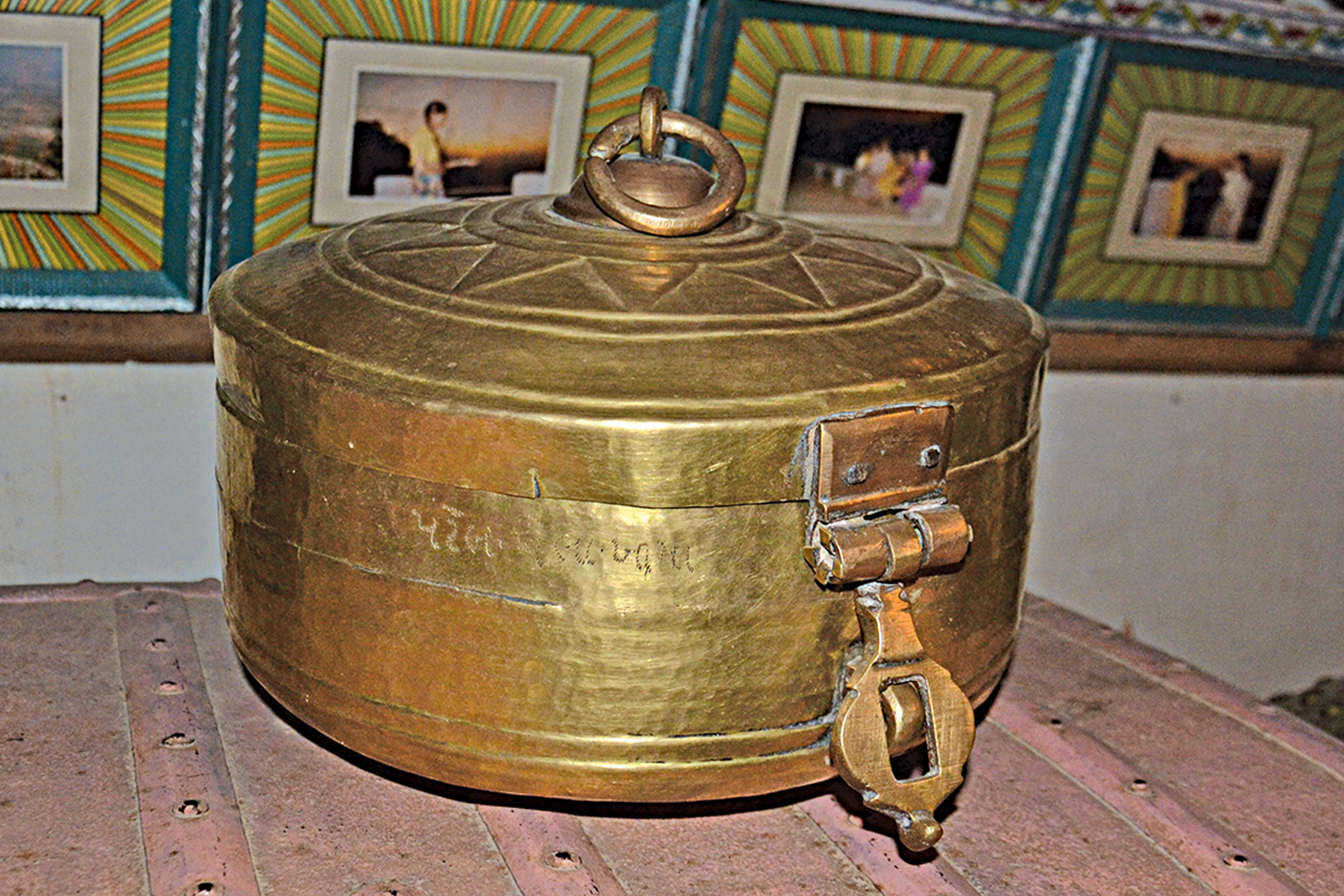
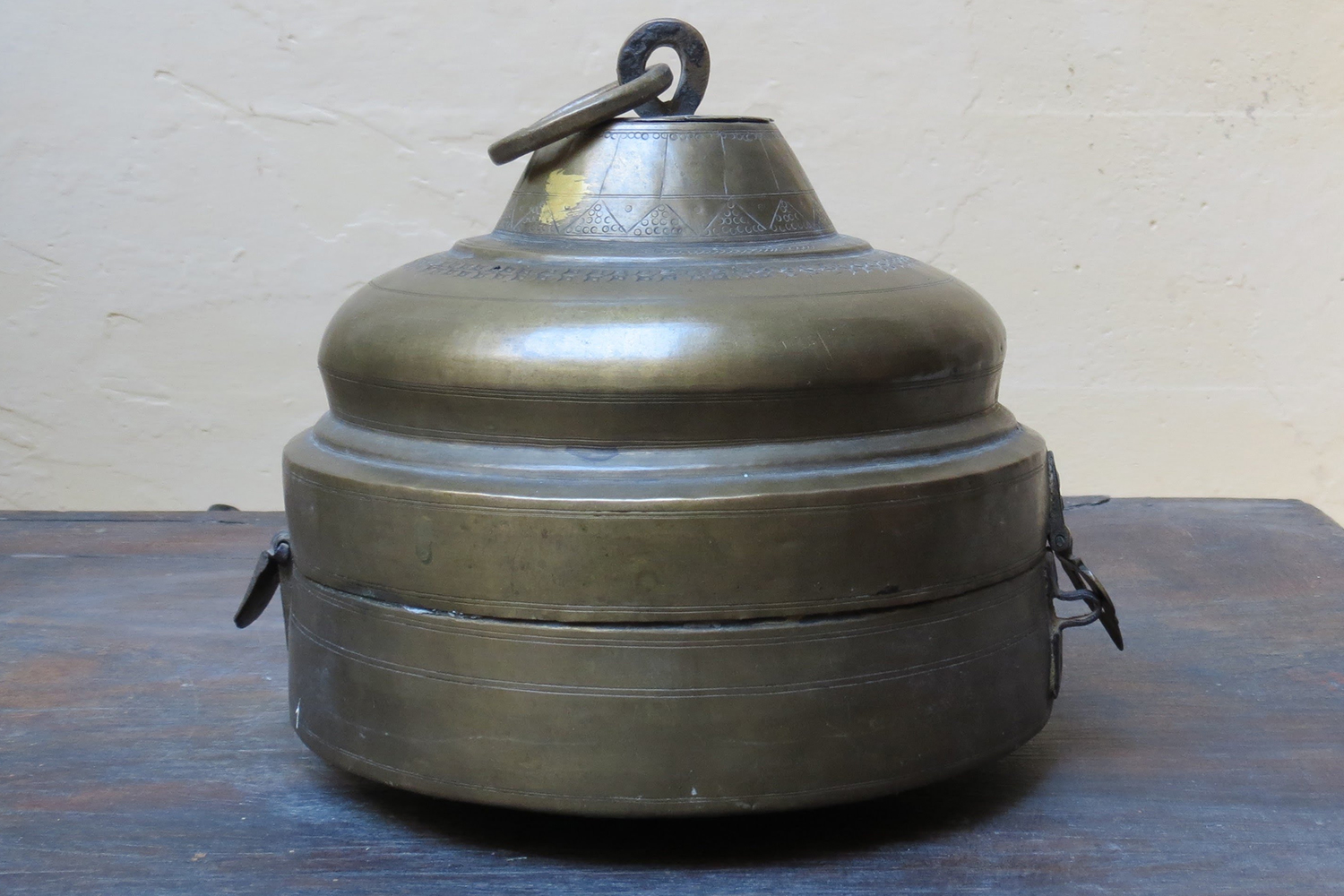
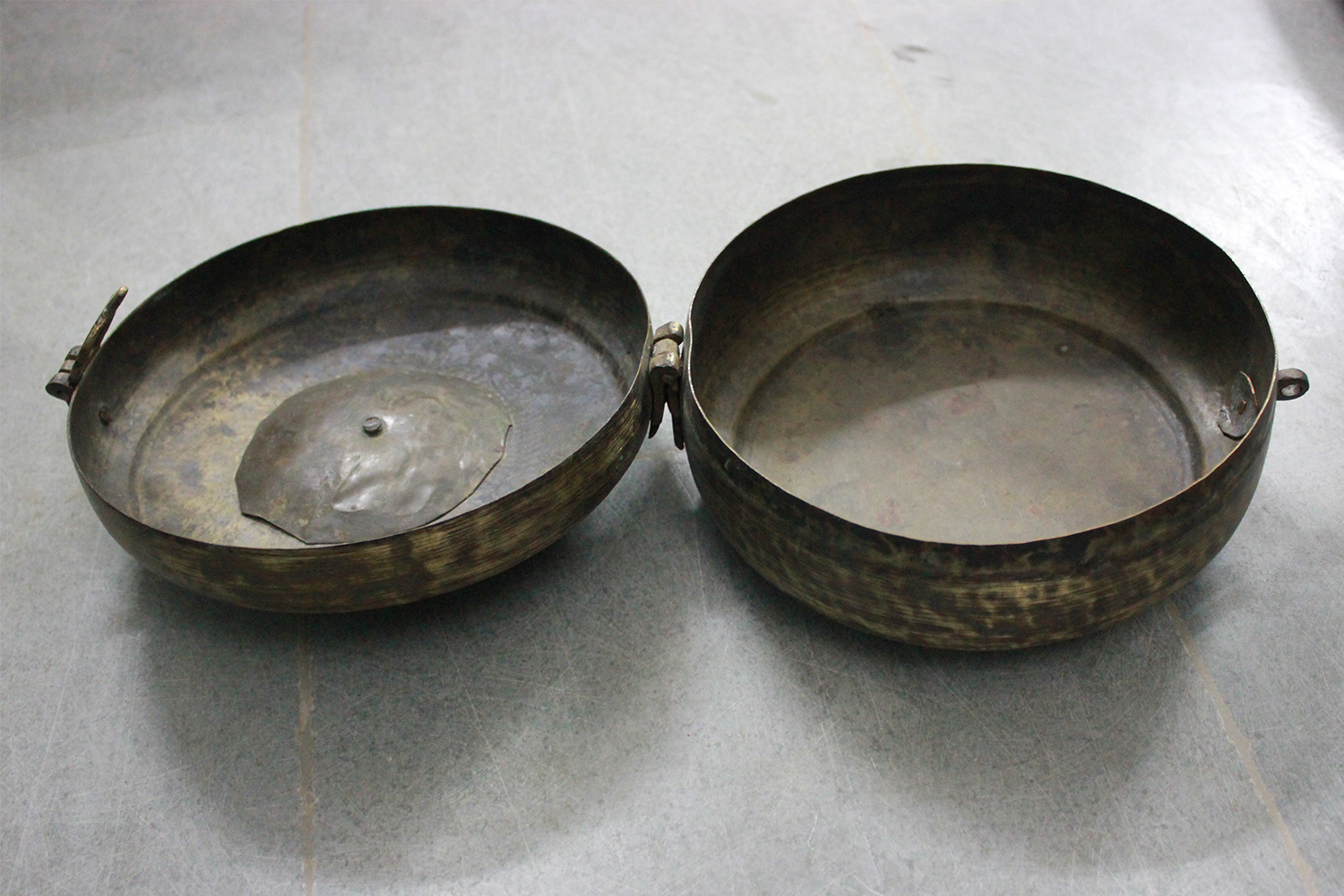
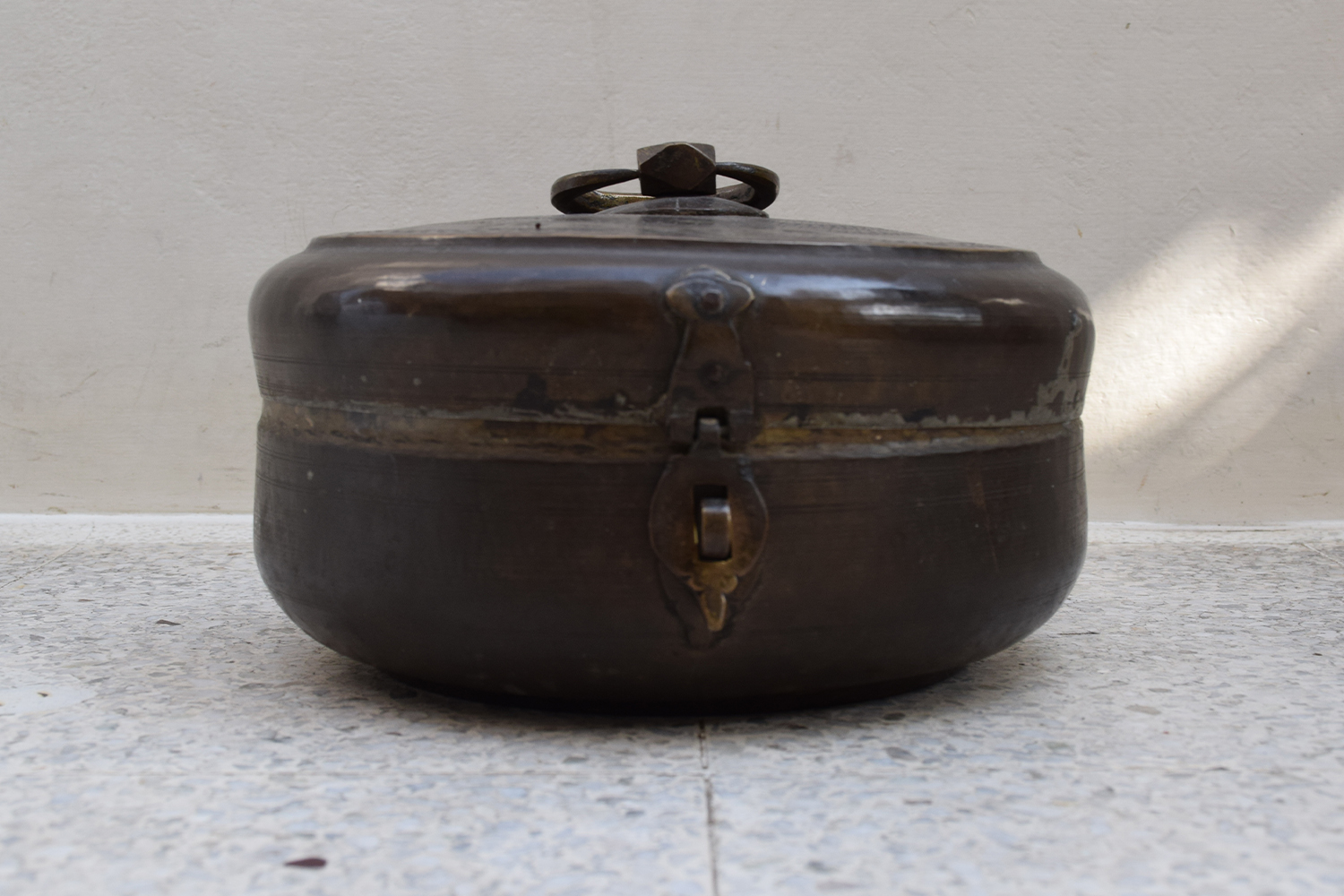
The katodan, documented in Saurashtra and Kutch in Gujarat, is a similar lockable circular brass container of a small size, but without legs — much like the katordaan and talakhuta in Rajasthan.
Ownership and use
Traditionally, smaller dablo are used to store money and jewellery, as well as inexpensive items and food. The katodan is also used to store or carry valuables, or food such as circular flatbreads, especially while travelling. In Rajasthan, the katordaan is used to store flatbread and other dry food, while the talakhuta stores valuables. Larger dablo store finery and other valuables. Historically, households buried their dablo containing valuables for safekeeping, or lowered a large dablo into a well when there was imminent danger; they could pull it up later using rope with a hook at its end, which would clasp onto the rings on the container.
Among the Kathi community, the dablo holds particular social significance. It serves as a hope chest containing the possessions of a new bride, and is part of the display of wealth in the home alongside the pataaro (chest), peti (casket), chakla (embroidered textiles) and the assemblage of vessels known as mand. The dablo itself is generally placed on a bajot (low stool) or other elevated platform as a gesture of reverence. The katodan is traditionally displayed on the mand itself.
This article is adapted from the outcomes of Vernacular Furniture of North-West India — a collaborative research and documentation project by the Design Innovation and Craft Resource Centre (DICRC), CEPT University, India, and The South Asian Decorative Art and Crafts Collection Trust (SADACC), UK — shared with the Encyclopedia of Art through an Impart partnership. Explore more from this series in our Collection Objects Alive: Vernacular Furniture of North-West India.
First published: 28 August 2026
Image Gallery
Bibliography
Bais, Mitraja, Jay Thakkar, Samrudha Dixit, and Ben Cartwright. Sahaj: Vernacular Furniture of Gujarat. Ahmedabad: CEPT University Press, 2018.
Rao, Mansi S., Ben Cartwright, and Samrudha Dixit. Anaikya: Vernacular Furniture of Rajasthan. Ahmedabad: CEPT University Press, 2021.
Vernacular Furniture of India. Accessed July 31, 2026. https://vernacularfurnitureofindia.com/.
Feedback