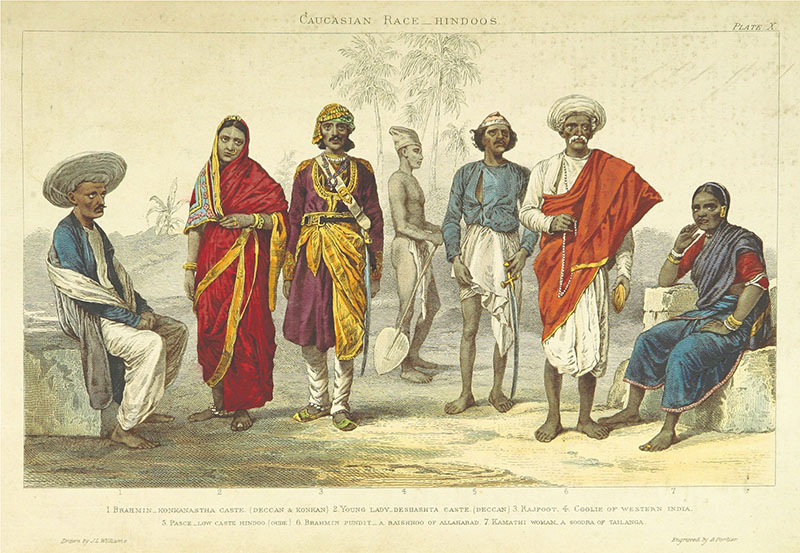
System of hierarchical social division, Hindu in origin and prevalent among South Asians, even of other religions. It demarcates according to ritual purity and pollution, by birth and occupation, and through prohibitions on touch, social intercourse and marriage. The word ‘caste’ comes from the Portuguese casta (‘race’ or ‘breed’), and was first applied in the Indian subcontinent in the sixteenth century, to ideas described by the Sanskrit terms varna (‘attribute’ or ‘colour’) and jati (‘type’ or ‘birth’). The latter designates discrete endogamous groups or their aggregations, usually of shared occupation, while the former marks position in a ritual hierarchy. The four varnas are, in order of rank: Brahmin, Kshatriya, Vaishya and Shudra; Dalits are considered avarna — excluded altogether from the hierarchy, and the most marginalised. Historically, the consolidation of jati and varna have been both convergent and divergent processes; the development of caste is often understood as a complex product of these.
The caste system in its nascent form finds earliest mention in the Vedic textual corpus. Later texts of the early centuries CE, such as Mahabharata, Manusmriti and Arthashastra, reflect the existence of a highly developed caste system in northern India, with elaborate, minute codification and rigid stratification. Much scholarship concerns the impact of medieval and modern developments on the caste system, stressing that the classical caste system was both significantly altered and preserved in these periods.