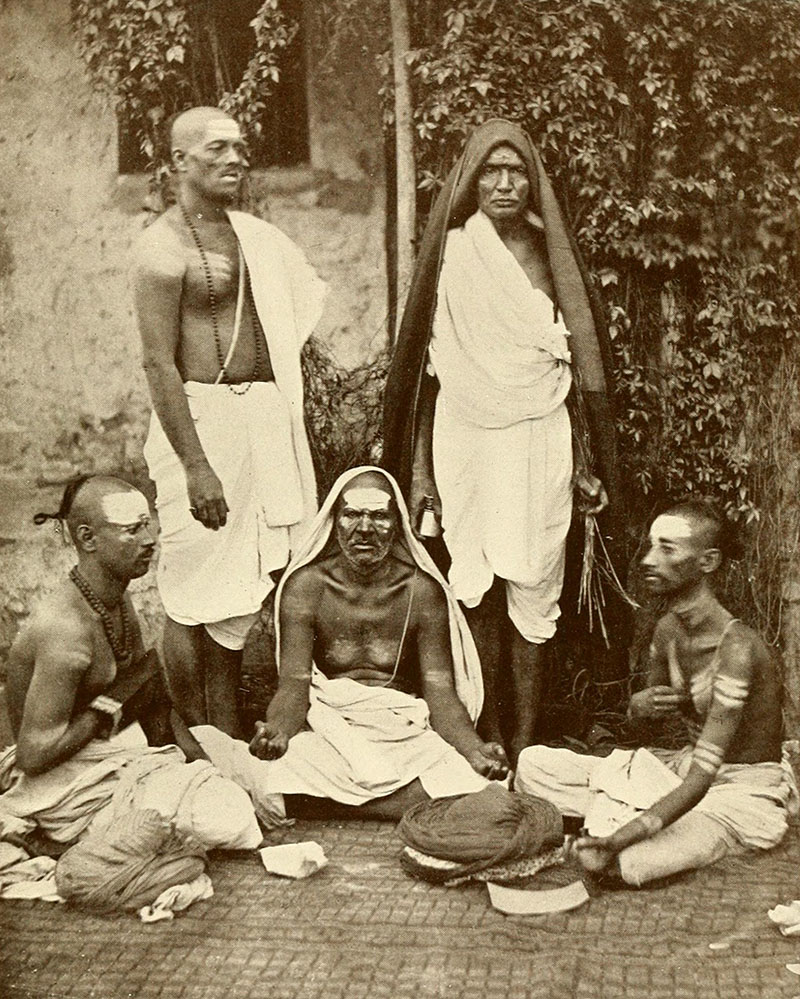
Aggregation of castes accorded highest status in the Hindu caste system, with the largest populations in India and Nepal. The term Brahmin is an anglicisation of the Sanskrit brahman, a complex philosophical concept generally understood as ‘absolute reality’; by extension it is applied to members of the priestly caste or otherwise to any person who embodies virtue. The term Brahmanism is also used in scholarship to refer to Hinduism. Traditionally, Brahmins distinguish themselves from other caste groups by the historic and ongoing authority of Brahmin men in Hindu institutions and the production of Hindu religious knowledge, and their unique structures of kinship.
The earliest mention of Brahmins appears in the Rigveda, where they are referred to as a class of poet-priests who compose scripture and preside over ritual sacrifices. Early historic texts, including Buddhist and Jain sources, mention Brahmins also performing a wide range of secular occupations, which continues to be the case today. From the third century CE on, textual sources reflect an increasing consolidation of Brahmanical influence and control in ritual, economic and political domains; Brahmins also played a major role in the spread of Hinduism to Southeast Asia. Historically, challenges to Brahmin domination have taken various forms, from the founding of Buddhism to modern anti-caste movements. Though they are a population minority in India, Brahmins comprise a majority of members in key secular institutions, including civic administration and the judiciary.