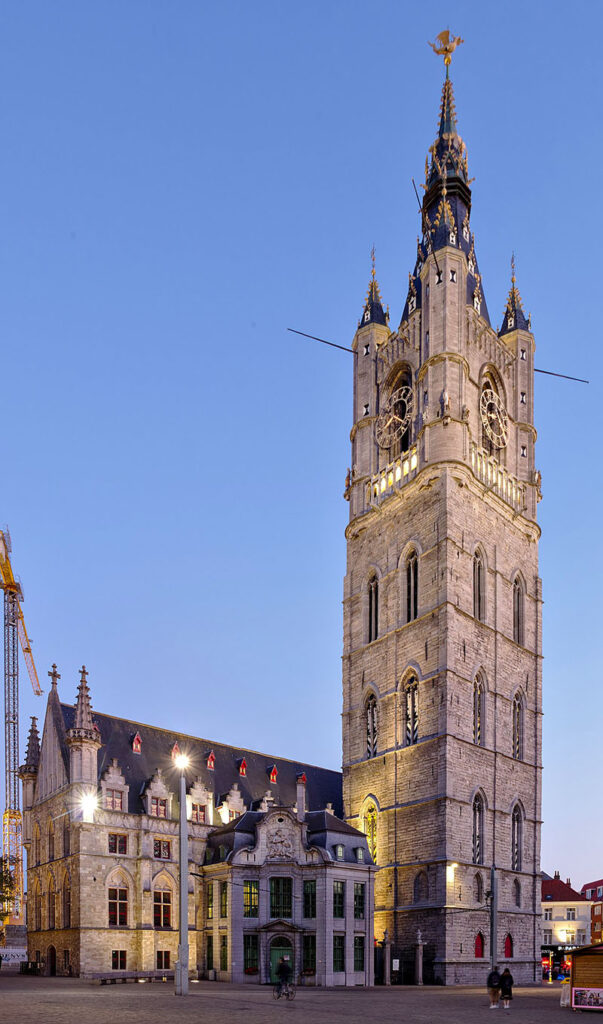
Bell tower; or the upper part of this or a steeple, which houses bells; or specifically the timber structure by which the bells are suspended. The structure originates in medieval Europe and derives its name from the Old French berfrei (‘tower’). The bell tower may be freestanding or attached to a church or civic building; it is typically square or octagonal in plan with a spire commonly rising from its top. Its walls are often louvred or pierced to protect the bells while allowing their sound to carry. Early belfries of the eleventh century were timber structures, with later ones constructed in brick or stone. From the fifteenth to seventeenth centuries, belfries became prominent civic landmarks — especially in Belgium (as belfrey) and Italy (as campanile, from campana, ‘bell’) — constructed alongside town halls and market halls to serve both practical and symbolic functions: hosting administrative meetings, storing records and other valuables, acting as watchtowers, and signalling prayers or announcements. Built in Romanesque, Gothic, Renaissance, and Baroque styles, the belfry evolved into a lasting emblem of municipal authority and community identity in Europe.
belfry
Link copied!