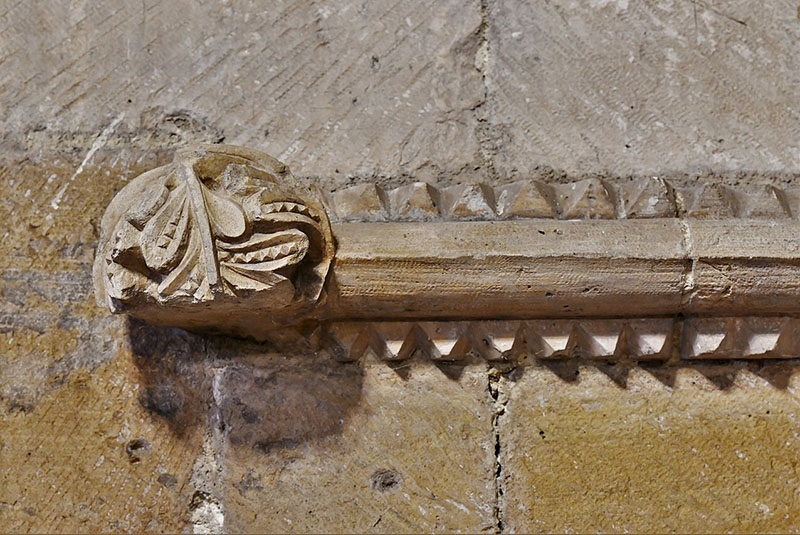
Horizontal band running along the exterior surface of a building or a boundary wall, serving aesthetic and sometimes functional purposes. A string course (also stringcourse, belt course, belt line, or sill course) may visually demarcate different levels of a building or changes in the type of wall cladding, or conceal the edges of beams and slabs. It may be plain or ornamented, incorporating decorative details like friezes or cornices. When it is flush or level with the wall surface, it is known as a ‘band course’. However, a string course typically projects from the wall, often bearing a slight slope that directs water away from the wall surface, which helps reduce moisture damage. It may even provide some structural support by helping to transfer loads along the length of the building. String courses historically feature in Greek and Roman temple architecture and in medieval churches and castles, traditionally made using stone and brick; modern string courses may be of concrete, metal, or glass.
stringcourse
Link copied!