A specialist in Islamic and Indian arms and armours, art historian Rachel Parikh traces the evolution of the katar, from its origins as a close-combat weapon to its transformation into a symbol of power, and artistic expression. She explores how the katar transformed while moving across regions and contexts, from battlefields and hunting grounds to royal courts, religious ceremonies, and finally to popular culture.
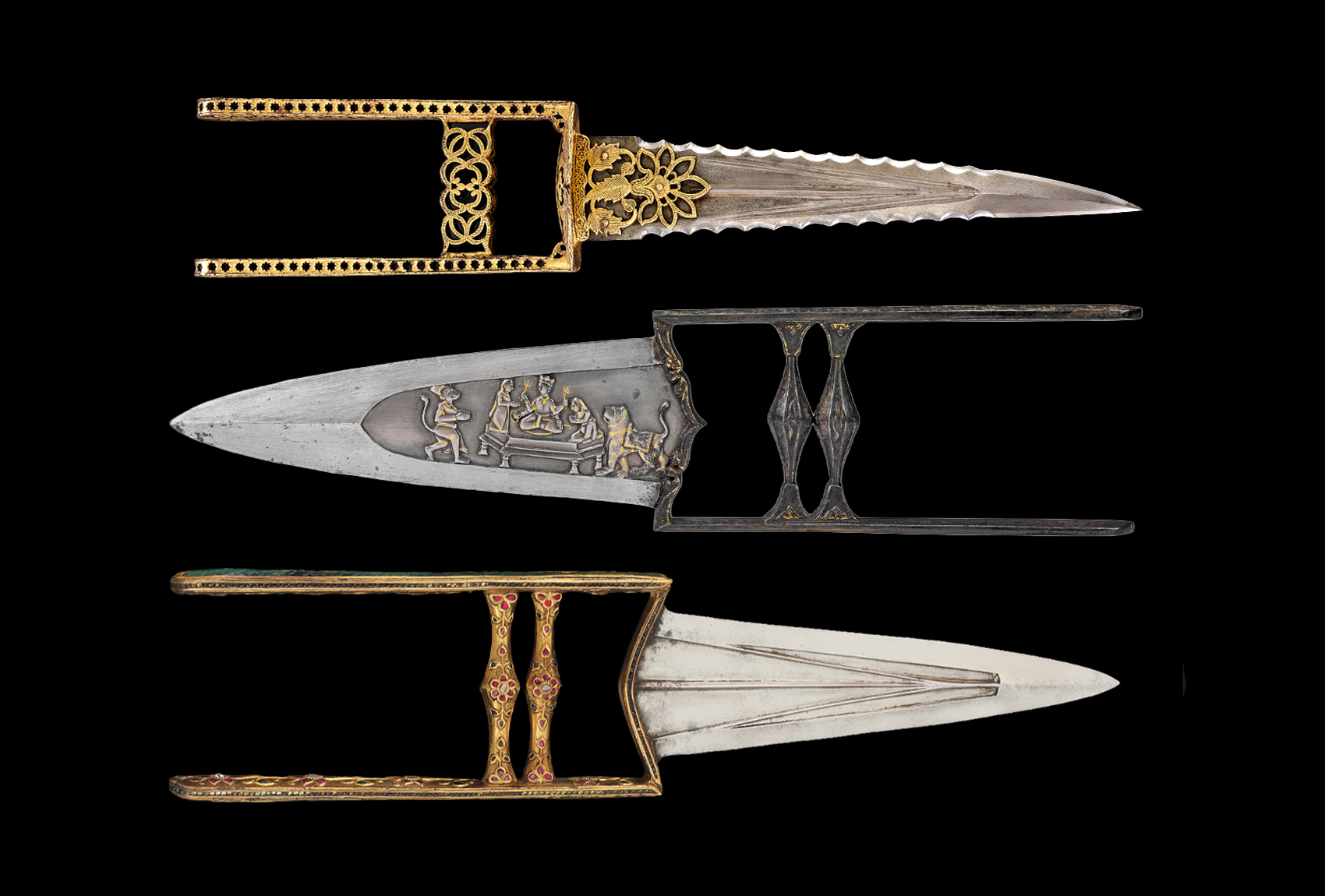
Top: Katar with sheath; Possibly Deccan, India; Early 18th century; Steel, and gold. Mengdiexuan Collection. Center: Katar; Mughal period; India; 18th century; Steel and gold; 38.1 cm. Royal Armouries, Leeds. Bottom: Emerald inlaid and gem-set katar and detailed views; India; 19th century; Steel, gold, emerald, diamond, and ruby; 40.3 cm. © 2019 Christie’s Images Limited.
Top: Katar with sheath; Possibly Deccan, India; Early 18th century; Steel, and gold. Mengdiexuan Collection. Center: Katar; Mughal period; India; 18th century; Steel and gold; 38.1 cm. Royal Armouries, Leeds. Bottom: Emerald inlaid and gem-set katar and detailed views; India; 19th century; Steel, gold, emerald, diamond, and ruby; 40.3 cm. © 2019 Christie’s Images Limited.