Watch our explainer videos on artworks, artists, themes, and trends from across South Asia.
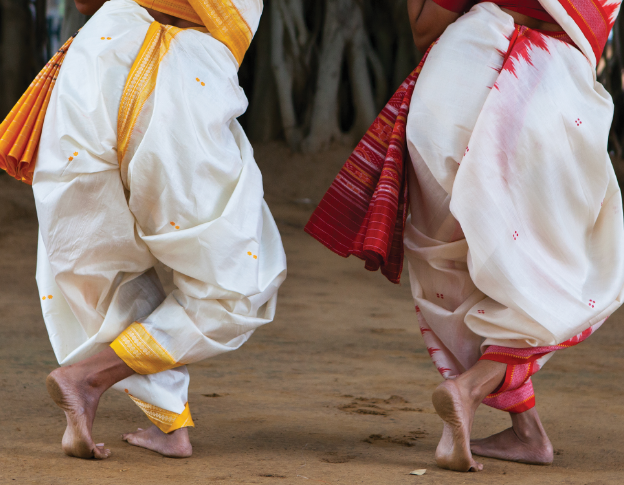

How Textiles Underpin Movement in Performing Arts
The fabric used in a performer’s costume significantly influences the aesthetics and mood of dance or theatrical performances. In India, movement and textile practices share a long, intertwined history. Learn about this profound connection by examining the work of photographer Briana Blasko, who captures this relationship in her book Dance of the Weave.
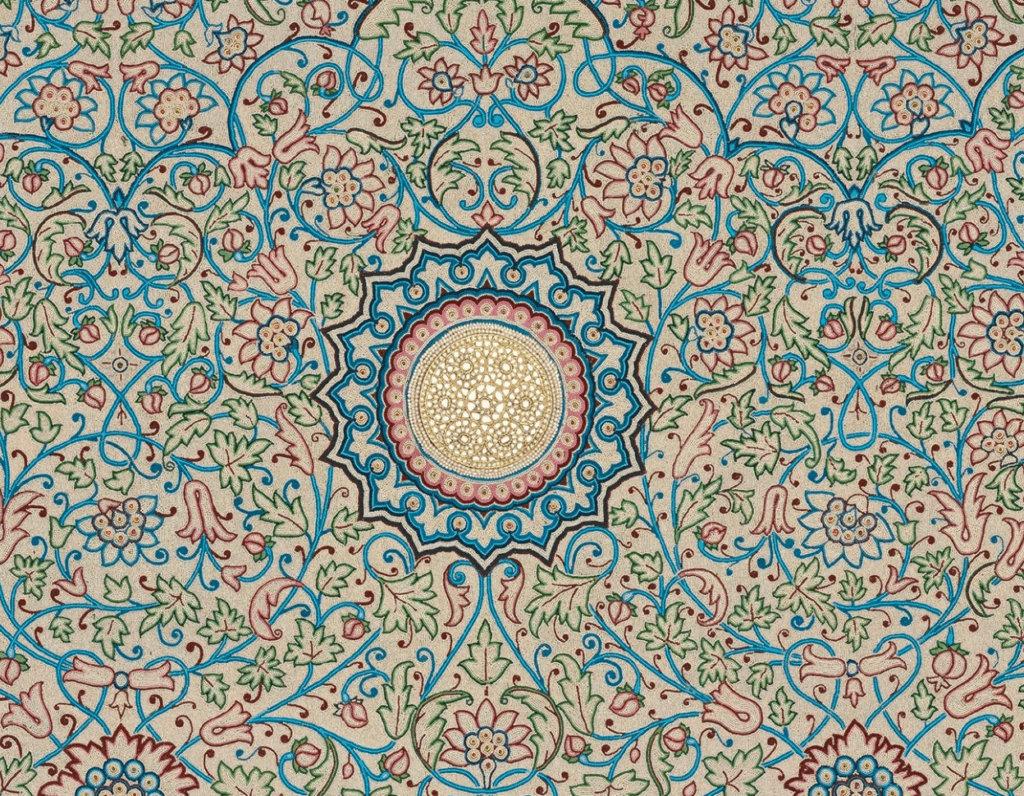
Looking Closer at the Pearl Carpet of Baroda
Commissioned in 1865 by Maharaja Khanderao II of Baroda, the Pearl Carpet — decorated with over 1.5 million Basra pearls, rubies, emeralds and diamonds — was crafted for the Prophet Mohammed’s tomb in Medina. Find out how the carpet reflects the economic, political and cultural ties between South Asia and the Arabian Gulf, at the time.
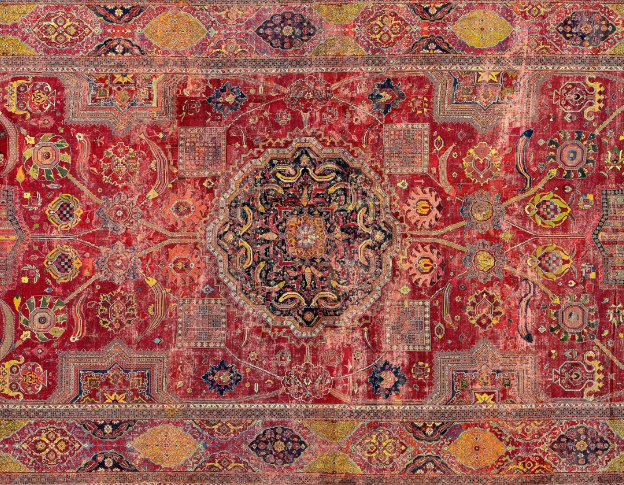
The Kevorkian Carpet’s Transnational Tapestry
Named after its former owner, the 17th-century Kevorkian Carpet is an extravagant example of the transcultural exchanges that shaped the erstwhile city of Golconda. Created for the palaces of the Deccan sultans, this carpet borrows motifs and symbols from the rich carpet-weaving traditions of West Asia. Discover how its design represents a hybrid craft culture.
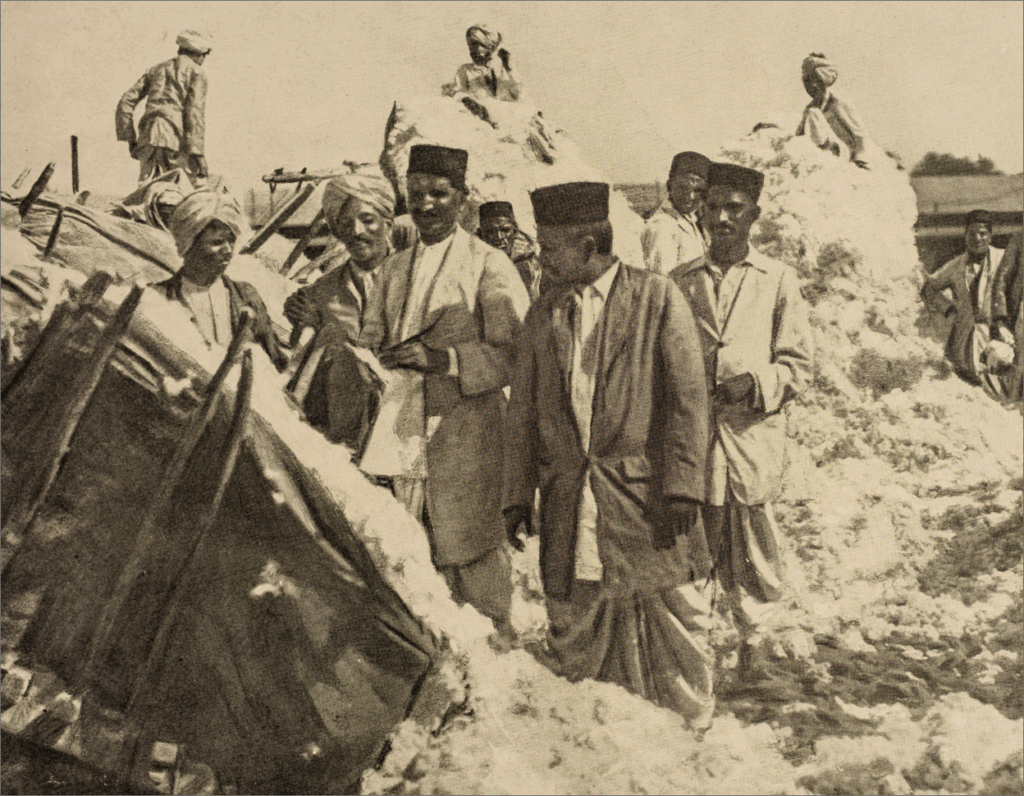
How the Cotton Trade Shaped Mumbai
In the 1860s, Bombay witnessed a ‘cotton boom’, with the opening of several textile mills that supplied raw cotton to Great Britain. This resulted in rapid migration, which reinforced pre-existing class divides that quickly became apparent in Bombay’s evolving cityscape. Delve into how Mumbai’s sharp contrasts and spatial inequalities trace back to the cotton boom.
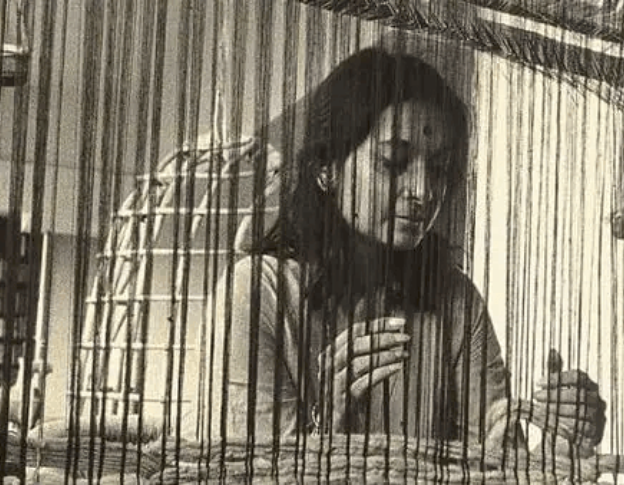
Engaging with Textile Traditions in Visual Art
As visual artists from South Asia engage with materials, processes and histories associated with textiles, they often produce works that provoke deeper considerations of the medium. Take a look at the practices of three Indian artists — Mrinalini Mukherjee, Monika Correa and Nilima Sheikh — to learn more about these tactile and conceptual explorations.
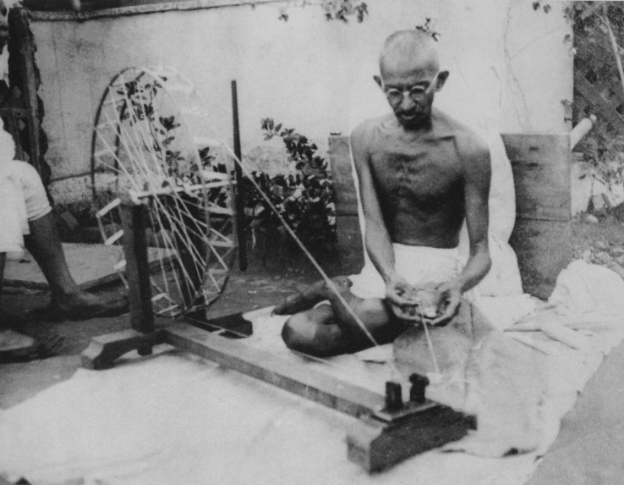
The Role of Textiles in India’s Freedom Movement
India’s fight for independence from the British was a long struggle in which textiles played a central part. Closely linked to the formation of the country, some of these textile practices have come to symbolise resistance and sovereignty. Discover the role that indigo and khadi played in the nationalist movement.
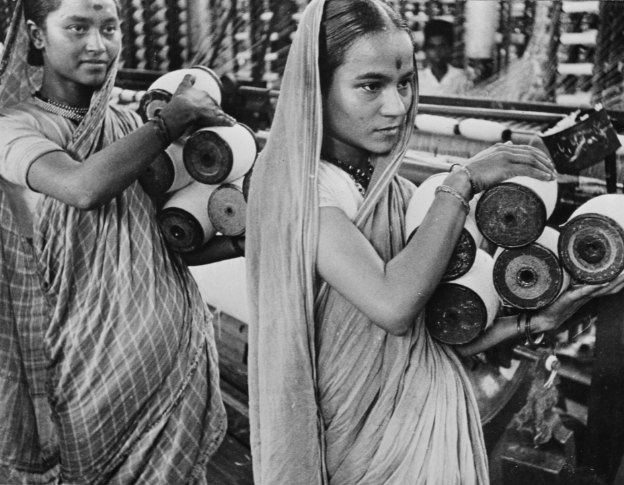
Textile Sector Transformations in British India
The 18th century marks a crucial turning point in the history of textile production, as the Industrial Revolution brought about huge shifts in manufacturing and trade. Examine the repercussions of this global phenomenon on the handmade textile traditions of the Indian subcontinent.
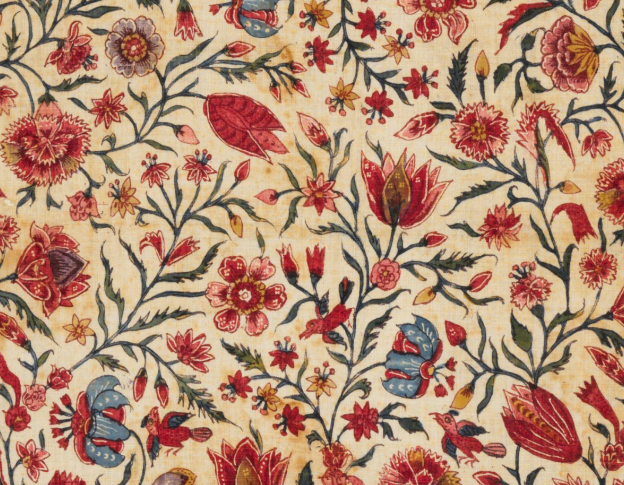
How South Asian Textiles Document Global Exchange
Have you ever looked at a piece of cloth and wondered where its design comes from? The patterns and motifs we see on textiles today have far-reaching histories that transcend geographic boundaries. Delve into the visual confluences of fabrics from the Indian subcontinent that have travelled the world.
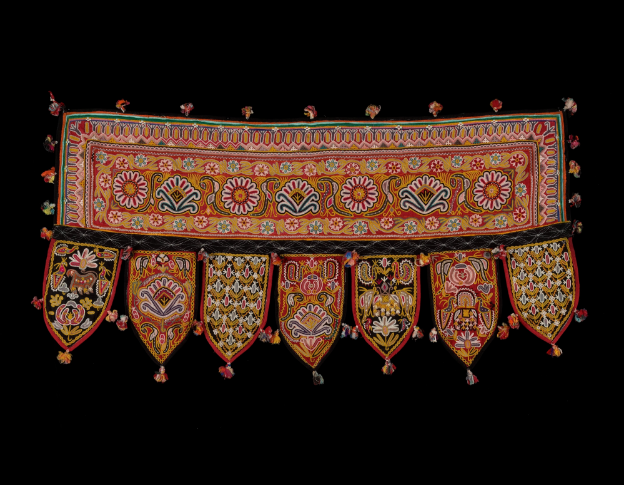
Talismanic Textiles of the Indian Subcontinent
Certain textiles, especially in the Indian subcontinent, have long been bestowed with protective properties, believed to shield wearers from bad luck, ‘nazar’ or the evil eye, and even physical harm. Learn more about the imagery and rituals associated with these talismanic textiles.
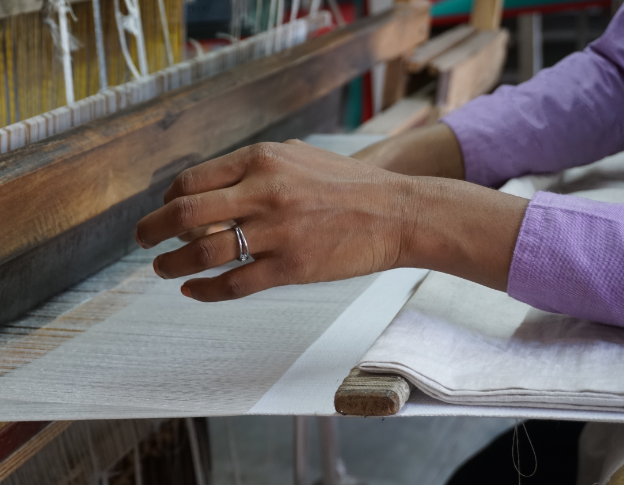
How Generational Artisans Sustain Textile Heritage
South Asian textile artisans — involved in weaving, dyeing and embellishing fabrics — are custodians of traditions that originated centuries ago. Textile practices form an inextricable part of their lives and personal histories. Look into how these traditions are inherited, taught and preserved within communities and cultural practices.
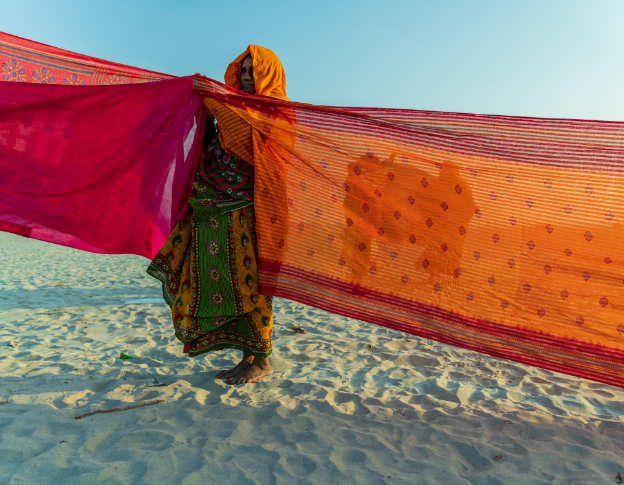
The Significance of Costume in South Asia
Many forms of clothing used for everyday wear as well as festive occasions in the Indian subcontinent date back thousands of years. Closely associated with individual and community identities, these versatile textiles lend themselves to various styles and silhouettes. Unpack the significance of some of the costumes commonly worn in the region.
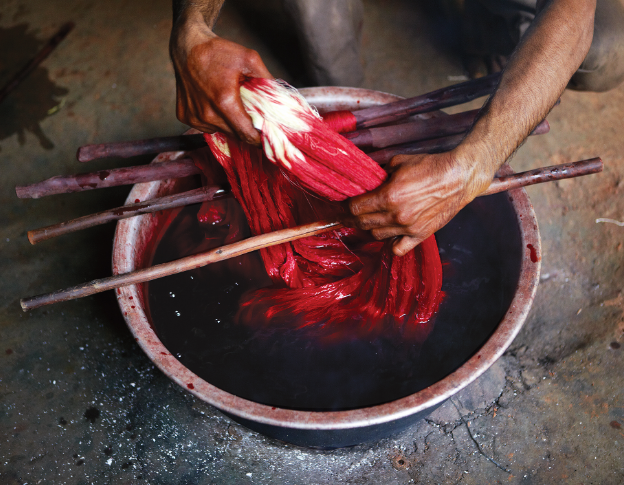
The Mastery of Natural Dyes in South Asian Textiles
For centuries, brilliant dyed textiles made almost exclusively in the Indian subcontinent were coveted across the world. Prized for their ability to retain vivid colour over time, these fabrics illustrate the expertise of South Asia’s textile artisans. Discover some of the raw materials and techniques involved in these age-old natural dyeing processes.

Tracing the Journey from Fibre to Fabric
Natural fibres form the basic building blocks of many Indian textiles, and these seemingly ordinary materials are embedded in fascinating histories. Trace the processes of how cotton, silk, and wool fibres are transformed into familiar fabrics.
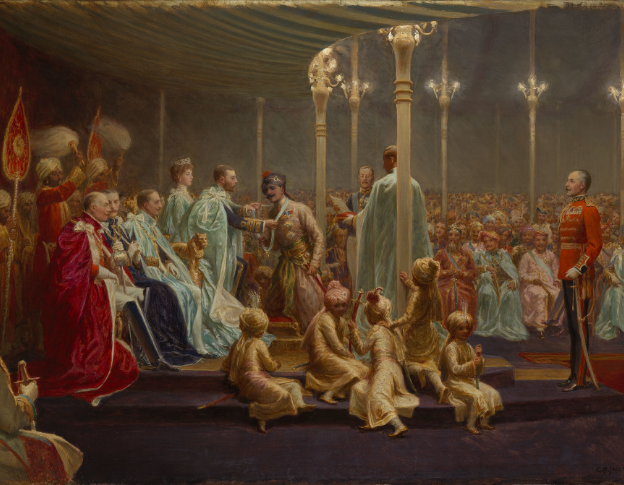
Exploring Royal Textiles from India
Kingdoms and empires often leveraged opulent textiles to assert their status in South Asian society. Lavish attire and furnishings enabled royalty to project prestige and extravagance — but these fabrics also reveal deep societal imbalances. Explore the intersections of patronage, production and power that have shaped royal textiles from India.
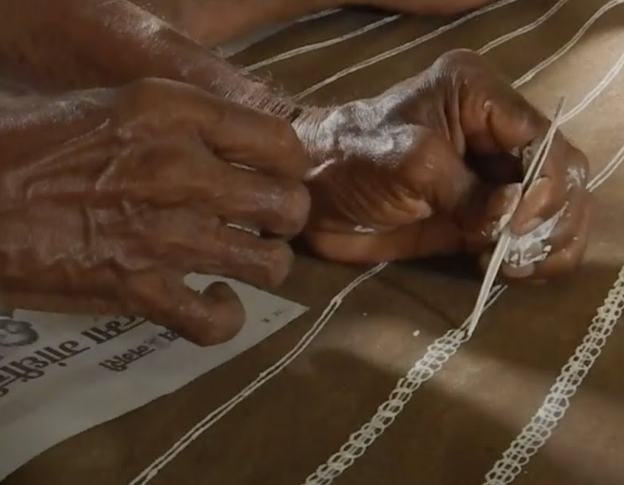
Jivya Soma Mashe’s Reimagined Warli Art
The Warli community, one of South Asia’s indigenous tribes, has a centuries-old tradition of mural painting. Traditionally created by women, Warli art uses geometric shapes such as circles, triangles, and squares to depict daily life, rituals, and scenes from nature. Look into how artist Jivya Soma Mashe has contributed to popularising and reinventing these traditions.
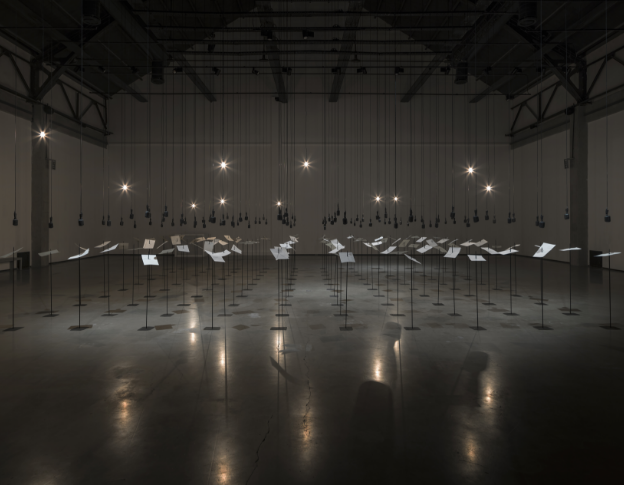
Power, Conflict and Identity in Shilpa Gupta’s Practice
Shilpa Gupta is a Mumbai-based conceptual artist who often uses participatory elements and technology in her work, to present engaging reflections on political themes including power and identity. Explore how working with a wide range of mediums allows her to consider critical and sensitive social issues concerning religion, conflict and censorship, among others.
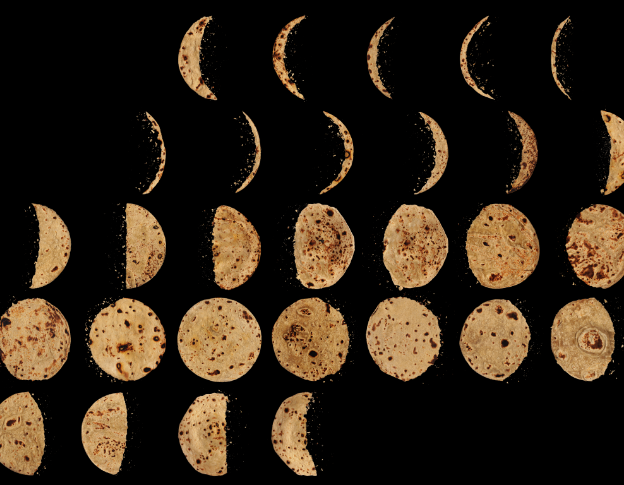
How Artist Jitish Kallat Elevates the Ordinary
Jitish Kallat works across various disciplines such as painting, sculpture, installation, and photography to address how everyday life relates to the city, world and universe around us. Understand how his installations incorporate historical events and everyday imagery — like chapatis (flatbreads) and rickshaws — to reflect upon personal, political and even cosmic themes.
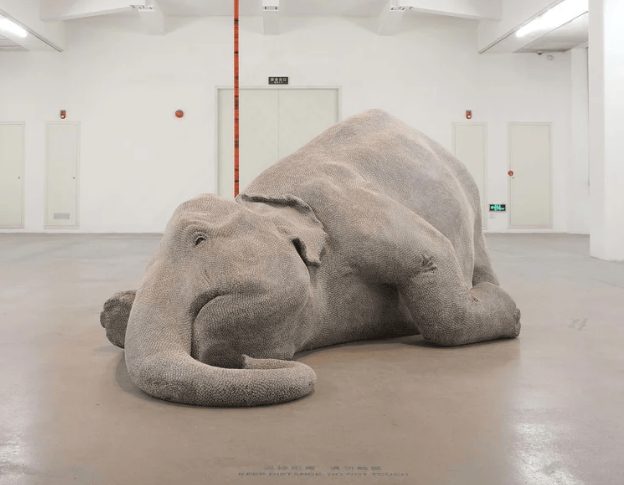
Analysing Bharti Kher’s Evocative Sculptures
Bharti Kher’s practice foregrounds reflections on identity, gender, and cultural change by incorporating layered visual references. Through her evocative sculptures, Kher engages with unique perspectives on femininity and the female body, mythology, tradition and more. Delve into how the artist imbues her creations with meaning.

Why Subodh Gupta Uses Metal Utensils to Make Art
Subodh Gupta’s art breathes life into everyday materials — particularly in the unconventional ways that he uses stainless steel utensils. By employing these common kitchen objects to create impactful, sculptural works, he explores the dynamics of class, globalisation, and migration. Decipher how this symbolism reveals itself through Gupta’s artworks.
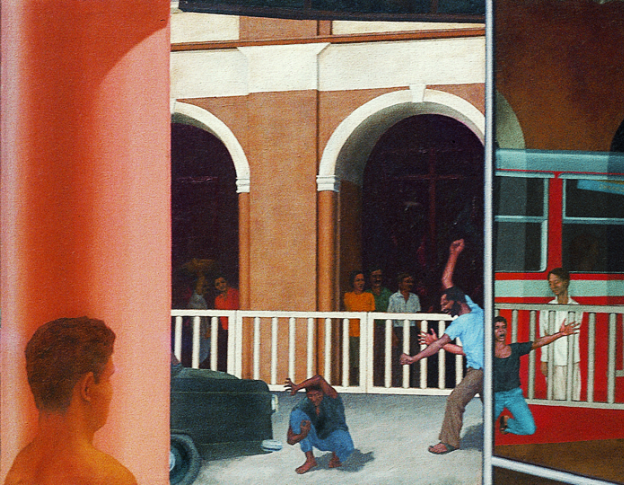
How Sudhir Patwardhan Became a ‘Painter of the People’
During the 1970s, Bombay (now Mumbai) witnessed the rise of a leftist subculture. Against the backdrop of developments within the city and following his own political inclinations, Sudhir Patwardhan’s art expressed ideas concerning the lives of the working classes. Find out how he depicted these themes through his paintings.
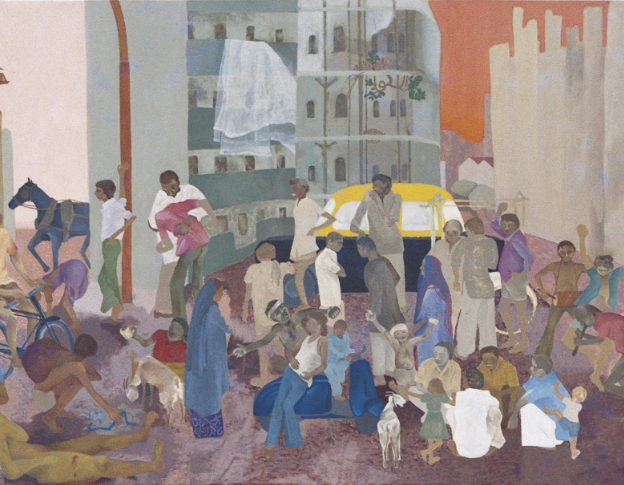
Snapshots of Urban Life on Gieve Patel’s Canvas
Gieve Patel was a physician, playwright, poet and artist who presented an exceptional, intimate perspective on urban life in Mumbai. Notably, his artistic approach involved freezing a solitary moment in time, to display a striking scene. Look closer at Patel’s practice to understand how he drew from everyday living to weave complex narratives.
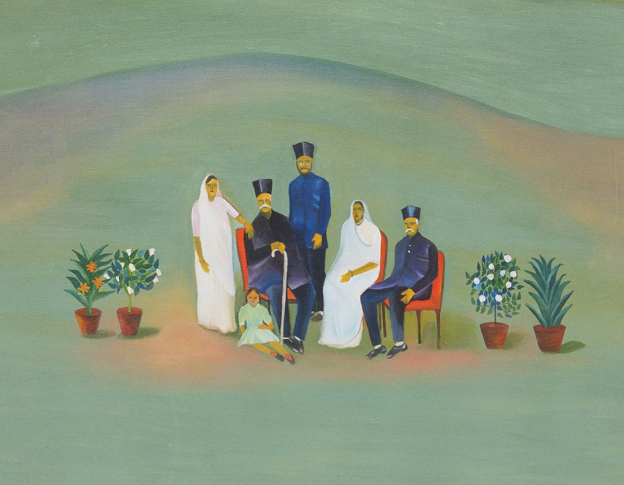
Bhupen Khakhar’s Indian Pop Art
Recognised as India’s first pop artist, Bhupen Khakhar was a key figure who popularised narrative figuration — an art movement that used everyday images to depict stories and messages. Analyse how he integrated popular culture, representations of diverse classes, and his queer identity to create a unique style of his own.
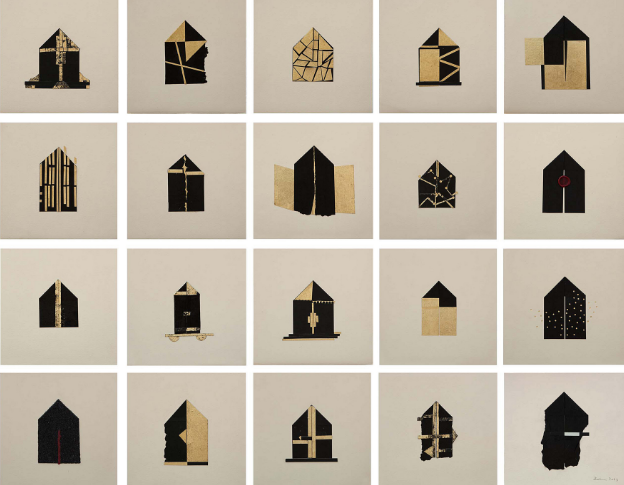
The Profound Symbolism of Zarina’s Minimalist Art
Zarina’s artistic practice revolves around the themes of home, displacement, memory, and the human connection to place. Discover how she harnessed minimalist abstraction to articulate personal and political concepts such as the Partition of the subcontinent — as seen through seminal works like Dividing Line (2001), Home is a Foreign Place (1999), and more.
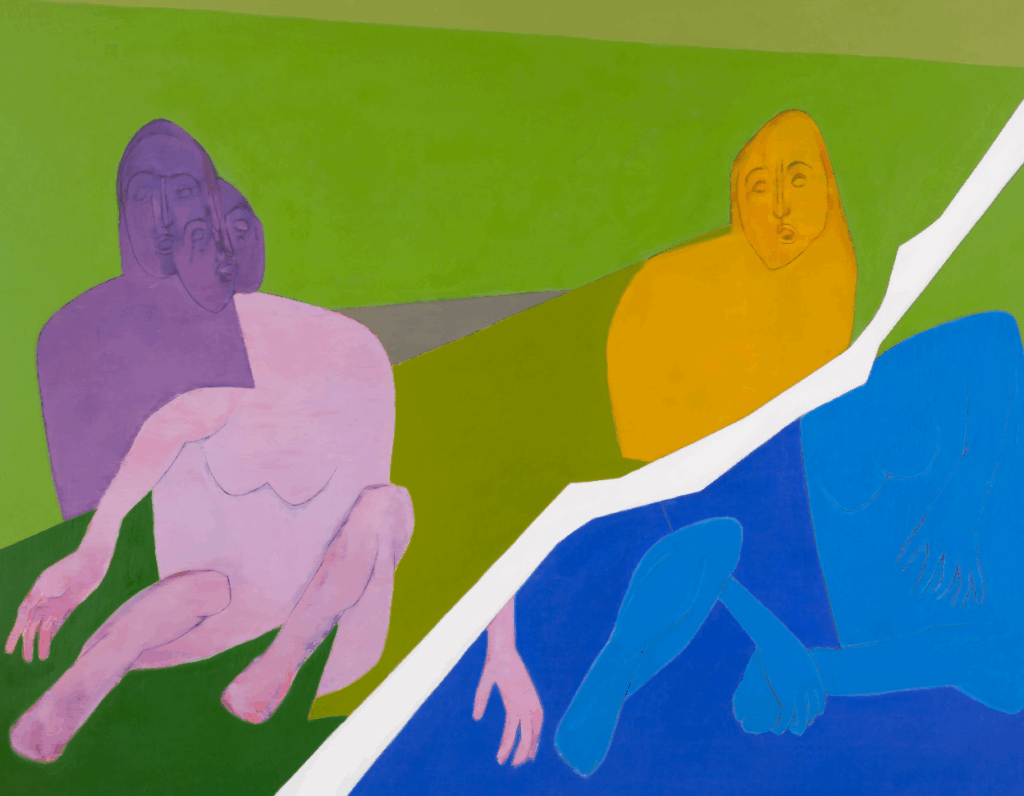
The Emergence of Abstract Art in India
In post-independence India, artists like VS Gaitonde and Tyeb Mehta used abstraction as a tool to experiment with line, shape and colour, and to contemplate ideas in ways that diverged from naturalistic or figurative depictions. Explore how their pioneering styles contributed to developing a unique vocabulary for Indian art.
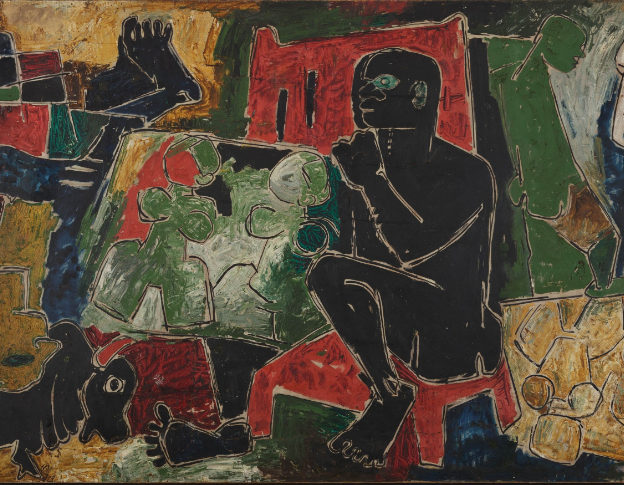
The Radical Vision of Progressive Artists’ Group
In 1947, India achieved independence from British rule, ushering in a new era of freedom, equality, and secular ideals. Emerging artists, particularly the Progressive Artists’ Group in Bombay (now Mumbai), grappled with defining the values that represented this new nation. Learn about how some of these artists expressed their ideas and aspirations for independent India.
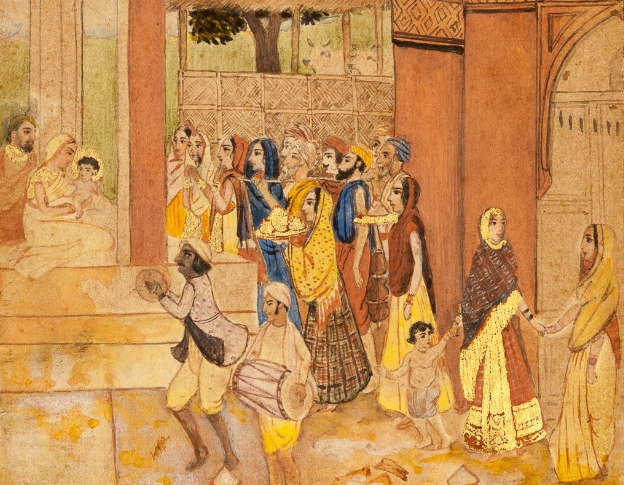
The ‘Indian’ Style of Abanindranath Tagore’s Paintings
During the late-19th century, the rise of the nationalist movement in India inspired artists to adopt more ‘local’ approaches, exploring what an ‘Indian’ style of art could look like — free of British or European influences. Look closer at artist Abanindranath Tagore’s diverse visual, historical and ideological inspirations, to understand how this period shaped artistic practices.
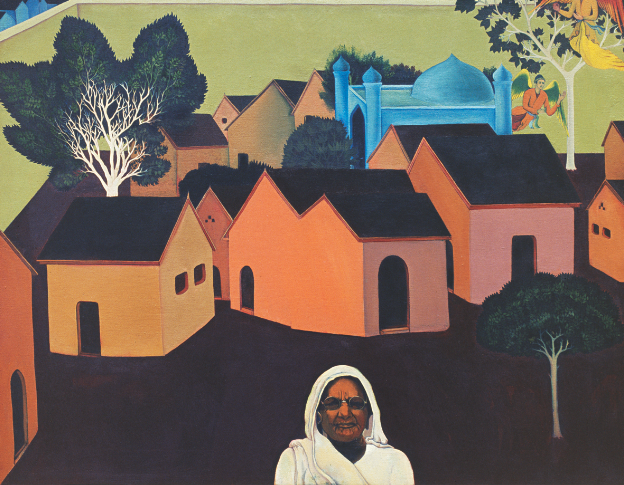
Gulammohammed Sheikh’s Layered Visual References
Artist, critic and professor Gulammohammed Sheikh interweaves personal stories, cultural histories and memories in his diverse repertoire of artworks. Dive into the interplay of these narratives and the juxtaposition of imagery in Sheikh’s practice by analysing two of his works: Returning Home from a Long Absence (1969–1973), and his Kaavad series.
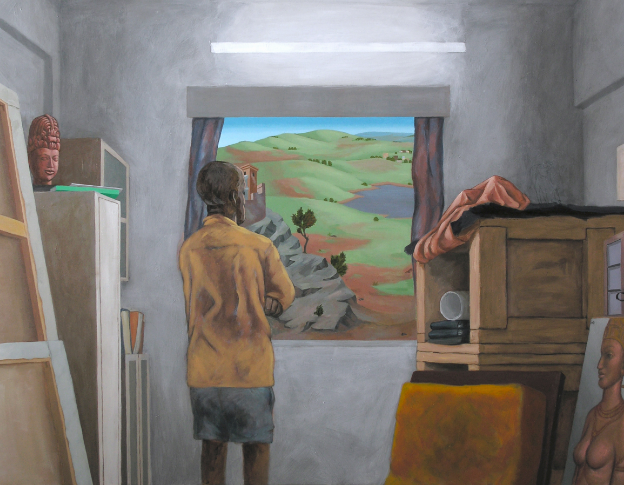
How Modern Artists Draw From History
South Asian artists draw profound inspiration from the region’s rich history and cultural heritage, while incorporating influences from the dynamic global landscape. Understand a few significant ways in which modern and contemporary artists in India have borrowed from broader histories, mythologies and even personal memories, to create a unique visual language in their work.