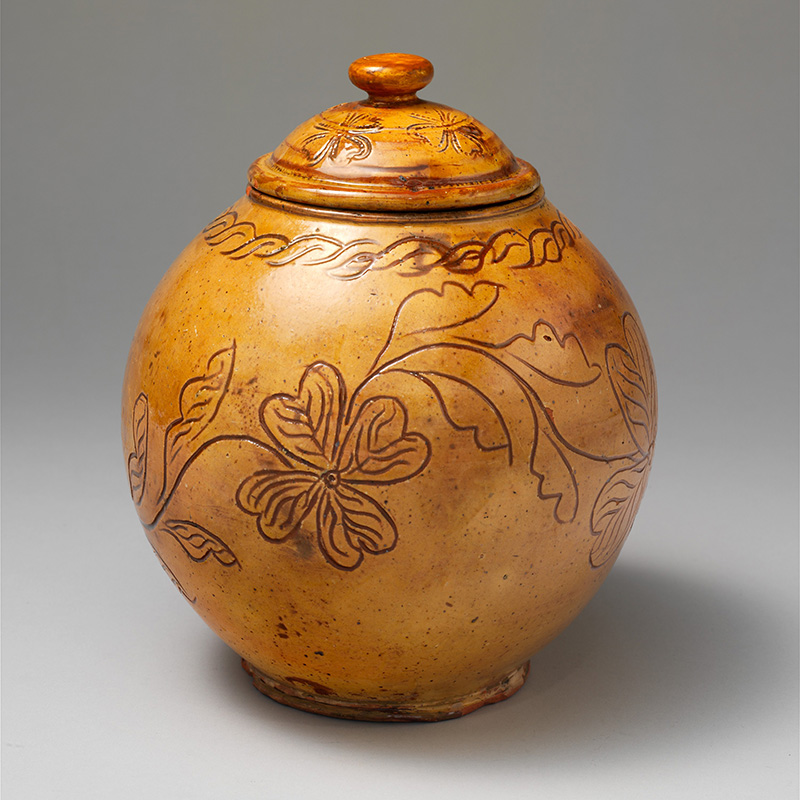
Painting and surface decoration technique in which the design is produced by selectively removing the top layer of colour to reveal a differently coloured layer below, typically using a sharp tool. Sgraffito or sgraffiato (Italian, ‘scratched off’), also called graffito (‘scratched’), has historically been used across regions in ceramic glazing, frescoes, stained glass painting, and painting on other surfaces including manuscripts; objects or works painted using this technique are also described as sgraffito works. In fresco work, a plaster of one colour is allowed to dry before being overlaid with one of another colour; designs are incised into the latter while wet. In pottery and ceramics, where this technique has been most notably used, the same is done with two layers of slip (watered-down clay). Examples of such sgraffito ware are known from cultures as diverse as twelfth-century China, thirteenth-century Syria, fifteenth–sixteenth century Korea, and eighteenth-century England and colonial America. In some cases, the incision exposes the bare ground rather than an under-layer; and sometimes a slip of a contrasting colour is additionally inlaid into the scratched marks.
sgraffito
Link copied!