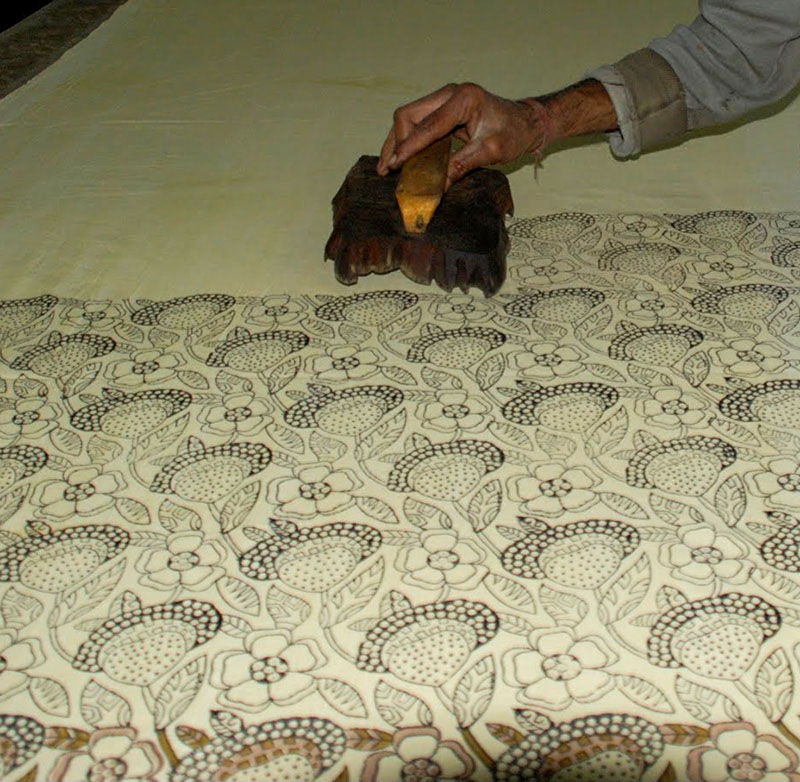
Derived from the Hindi and Urdu word for “outline,” it is a step in some Indian block-printing processes, in which the design is outlined and stamped on the base fabric using a resist of lime and gum. It also describes the wooden blocks used to create outlines for printed motifs in these traditions.
More Definitions
Plain Weave
Also known as tabby weave, it is the most common weave in textiles. In this weave, each weft yarn passes…
Tintype
A photograph made by creating a positive directly on a thin sheet of black-enamelled metal coated with collodion. They were…
Dovetail
A method of tapestry weaving where wefts of two different colours are woven onto the same warp threads. This method…
lens-based practice
Any mode of communication or creative expression involving the use of cameras and related technology — spanning across photography, video,…
Kajli Siyahi
A technique associated with the Patna School, where paintings are rendered directly by paintbrush on the surface, without using pencilled…
Etching
The process of using a mordant or acid to cut into exposed areas of a metal plate to create raised…
Secco
Also called fresco secco or fresco finto, this is a technique of wall or mural painting wherein casein, tempera or…
Bargello Stitches
An embroidery technique in which patterns are made by sewing vertical stitches of different lengths in a row, according to…