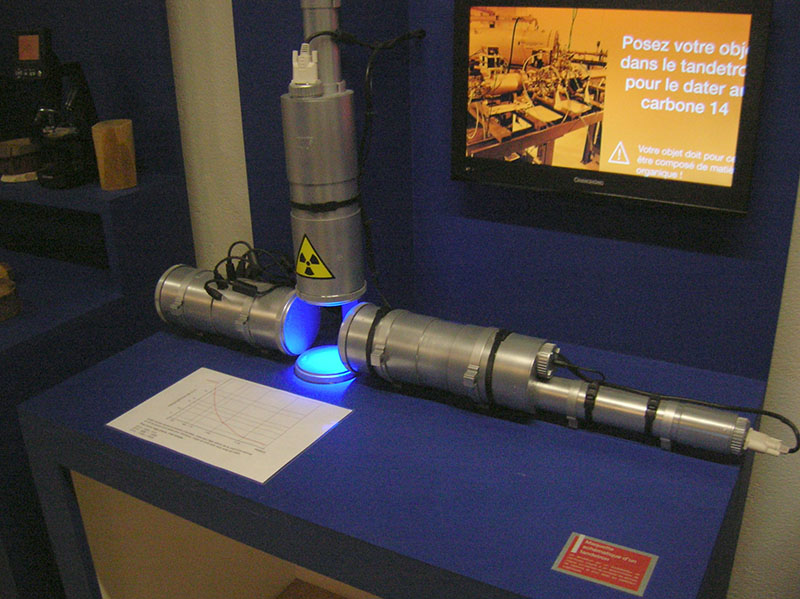
A method of determining the objective age of carbon-based materials by measuring the amount of carbon-14, formed when the nitrogen of radiocarbon decays, against an internationally used standard reference. William F Libby is credited with developing the method in 1946. It is used widely in disciplines such as archaeology and other natural sciences to determine the age of biological specimens and artefacts.
More Definitions
Tiraz
Textiles with embroidered inscriptions produced in Iran during the early Islamic period, until the fourteenth century CE. Robes made of…
Warp
It refers to yarn or threads fixed longitudinally on a loom. Weft threads are passed horizontally over and under the…
Linocut
A printmaking process in which a design is carved in relief on a sheet of linoleum, then inked. The sheet…
Inlay
An ornamentation technique in sculpture and the decorative arts, where wood, metal, stone and fabric are embedded with different materials…
Assemblage
Art made by assembling disparate elements from everyday or found objects. Assemblages are often associated with movements such as Dadaism,…
Fresco Buono
Literally meaning “true fresh” in Italian, it is a painting technique in which the paint is applied to wet plaster,…
Plain Weave
Also known as tabby weave, it is the most common weave in textiles. In this weave, each weft yarn passes…
Jaali
Latticed screen windows often found in Islamic architecture, typically made of stone, metal, and in rare cases, also wood. Apart…