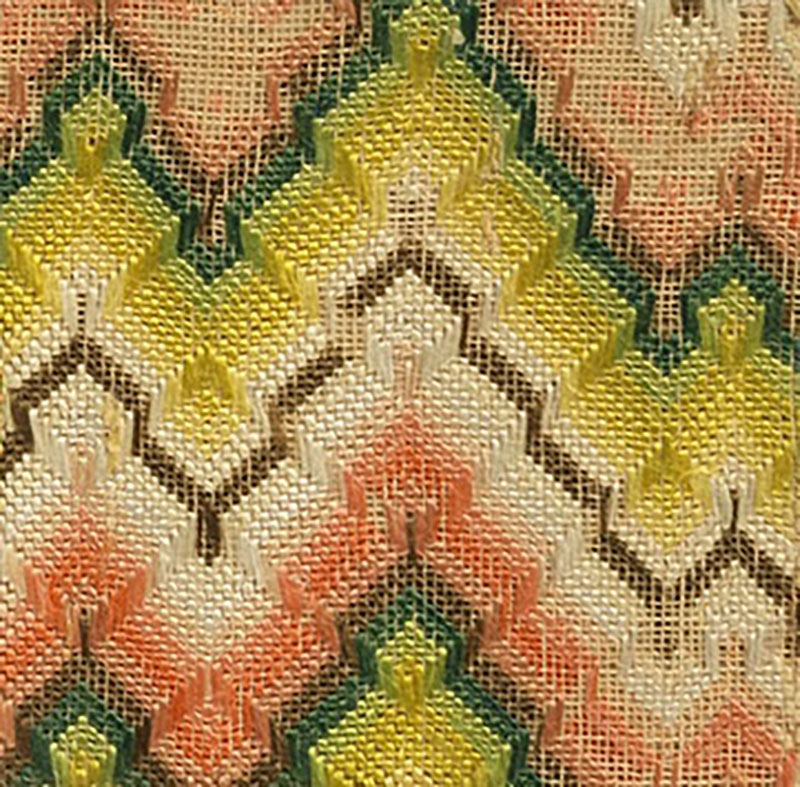
An embroidery technique in which patterns are made by sewing vertical stitches of different lengths in a row, according to an ascending or descending sequence. The most common stitch associated with the technique is the flame stitch, which is also known as the Bargello stitch, the Florentine stitch, the Hungarian stitch or the Irish stitch. Traditionally worked in wool or silk on canvas fabric, the row-based sequence of stitches creates a wave-like pattern, emphasised using different-coloured threads.
More Definitions
lens-based practice
Any mode of communication or creative expression involving the use of cameras and related technology — spanning across photography, video,…
Katorna
The process of trimming extra threads on the reverse side of a brocade after weaving. The term is derived from…
Tiraz
Textiles with embroidered inscriptions produced in Iran during the early Islamic period, until the fourteenth century CE. Robes made of…
Double Running Stitch
A form of running stitch that is even on both sides of the fabric, used in counted thread embroideries such…
Zari
A gold or silver thread used in brocade and zardosi designs. It is typically used to decorate silk saris, ghaghras…
Stem Stitch
A needlework technique in embroidery where successive, overlapping stitches produce a corded appearance, resembling the stem of a plant.
Amli
Also known as amlikar, it is a needle-embroidered Kashmiri shawl dating to the nineteenth century. While it is likely to…
Overdye
In textile production, it is the practice of dyeing a fabric or yarn that has already been dyed.