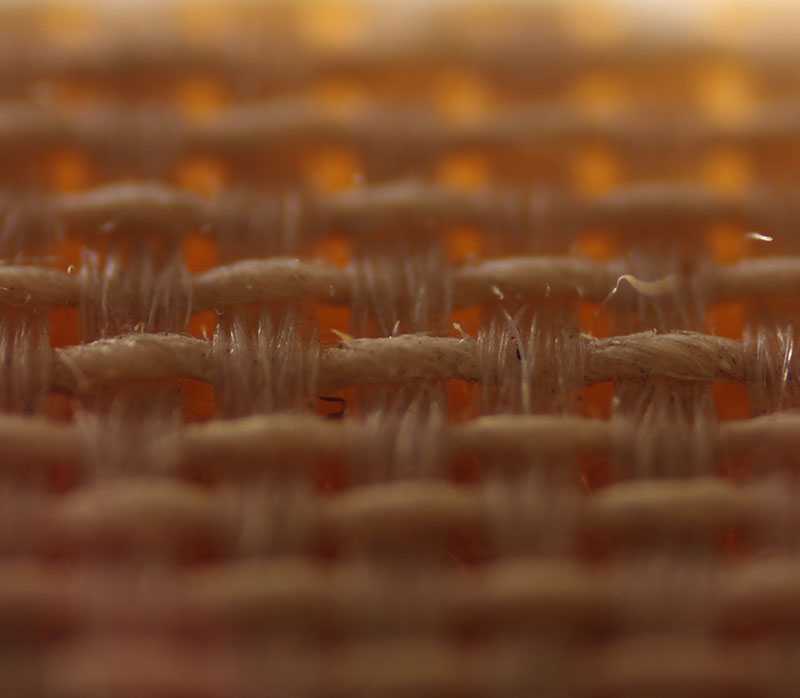
Also known as tabby weave, it is the most common weave in textiles. In this weave, each weft yarn passes over one warp yarn and under the next one, with this alternating sequence continuing across rows of weft in a 1:1 ratio. Other weaves, such as twill or satin, feature differing ratios and sequences of the weft yarn, which results in fabrics of different patterns and qualities.
More Definitions
Amli
Also known as amlikar, it is a needle-embroidered Kashmiri shawl dating to the nineteenth century. While it is likely to…
Chromolithography
A chemical-based printing method for the production of coloured prints using stone or grained zinc surface plates and grease-based inks.…
Single-Spindle
A technique of spinning yarn that incorporates one spindle, as seen in the charkha used to spin khadi.
Bindu-Varttana
An ancient Indian shading technique wherein the artist retains their brush to paint miniature dots of differing density. The technique…
Clamp-Resist Dyeing
A textile dyeing technique where wooden clamps are used to reserve areas of a fabric from receiving the dye. In…
Painted Photography
Monochrome photographs handpainted with colour, often to heighten the degree of their realism or for an enhanced aesthetic affect. Painted…
Hand Stencil
The technique of imprinting human hands on rock surfaces, found in Prehistoric cave paintings. The process involves placing one hand,…
Twill Weave
A weave in which the weft is passed over and then under multiple warp threads in a repetitive sequence. It…