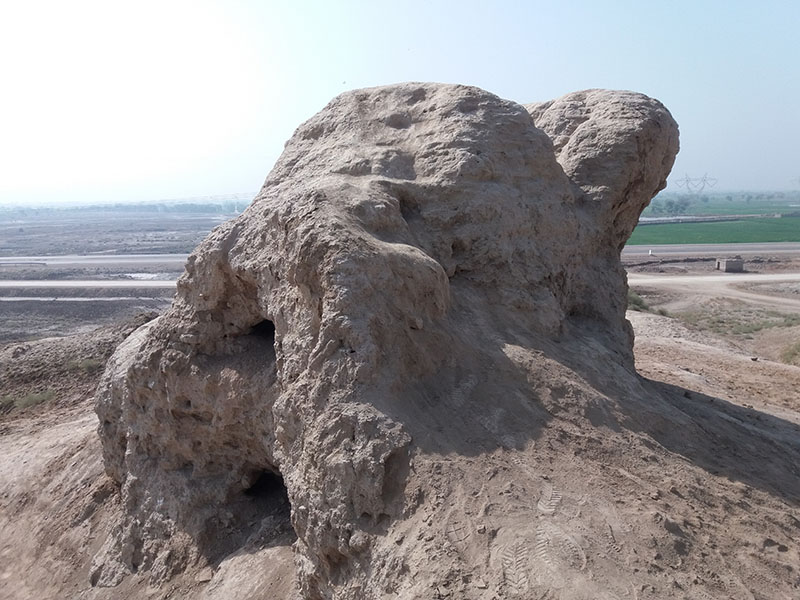
The last phase of the Indus Valley Civilisation that lasted from c. 1900 to 1300 BCE and was preceded by the Early Harappan Phase (c. 3300–2600 BCE) and Mature Harappan Phase (c. 2600–1900 BCE). The period marks the gradual decline of the civilisation, with a breakdown of urban centres and the establishment of rural networks. Towards the end of the phase, most post-urban sites were abandoned. Important sites from this phase include Jhukar in Sindh and Rangpur in Gujarat.
More Definitions
Bronze Age
A prehistoric period characterised by the production and use of bronze as well as signs of urbanisation. Its commencement varies…
Taxila
An archaeological site in present-day Rawalpindi, Pakistan. Founded c. 1000 BCE, the site was located along trade routes between Central…
Alexander Cunningham
Alexander Cunningham (b. 1814; d. 1893) was a British army engineer and archaeologist who served as the first Archaeological Surveyor…
Albert H Longhurst
Albert H Longhurst (b. 1876; d. 1955) was a British archaeologist and art historian specialising in the arts of southern…
Radiocarbon Dating
A method of determining the objective age of carbon-based materials by measuring the amount of carbon-14, formed when the nitrogen…
National Monument
Also termed Monument of National Importance, this is a designation conferred by the Archaeological Survey of India to an ancient…
Chalcolithic Period
The period that marked the transition from Neolithic cultures to the Bronze Age, characterised by rudimentary writing systems as well…
Archaeological Museum Mohenjo-Daro
A museum in Sindh, Pakistan, established in 1967, which has in its collection important reliefs and maps from Mohenjo-daro and…