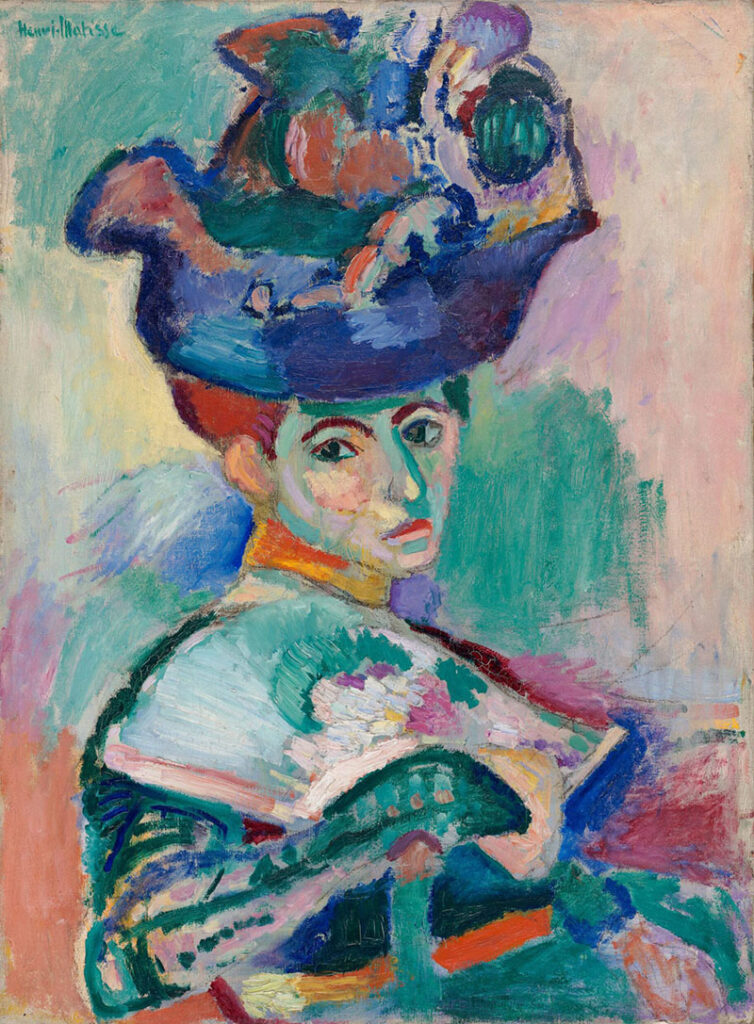
A style of painting popular in France in the early years of the twentieth century, led primarily by the artists Henri Matisse and Andre Derain. It is characterised by the bold use of colour (often applied directly from the tube), a simplified depiction of forms and strong brushwork. Influences on fauvism include Post-Impressionism, Neo-Impressionism and scientific colour theories prevalent in the late nineteenth century. The style derives its name from the French term les fauves (the beasts), used in 1905 by the French art critic Louis Vauxcelles to describe the expressive works of Matisse and Derain in this style. Other artists related to the style include Georges Braque, Raoul Dufy, Georges Rouault and Maurice de Vlaminck.
More Definitions
Symbolism
A literary and artistic movement that originated in the works of late-nineteenth-century French poets who rejected the conventional emphasis on…
Indian Modernist architecture
The adaptation of Western Modernist principles — functionalism, minimal ornamentation, and the use of industrial materials like reinforced concrete —…
Earthwork
Art that is made by shaping or making forms on land or by using natural materials such as grass, rocks…
Picturesque
An aesthetic category accorded to pictures that have an agreeable and appealing visual quality, and is particularly used for idealised…
Formalism
An approach to art which emphasises aspects of form, such as line, shape and colour. Formalism engages with the visual…
Nagara Style
A style of Hindu temple architecture commonly found in northern and central India and characterised by a curvilinear or rectilinear…
Happenings
A precursor of performance art, they are events or situations where the artwork is created by the conditions produced by…
Vesara Architecture
A term for an architectural style primarily associated with medieval-era temples in the Deccan region, especially north Karnataka. Derived from…