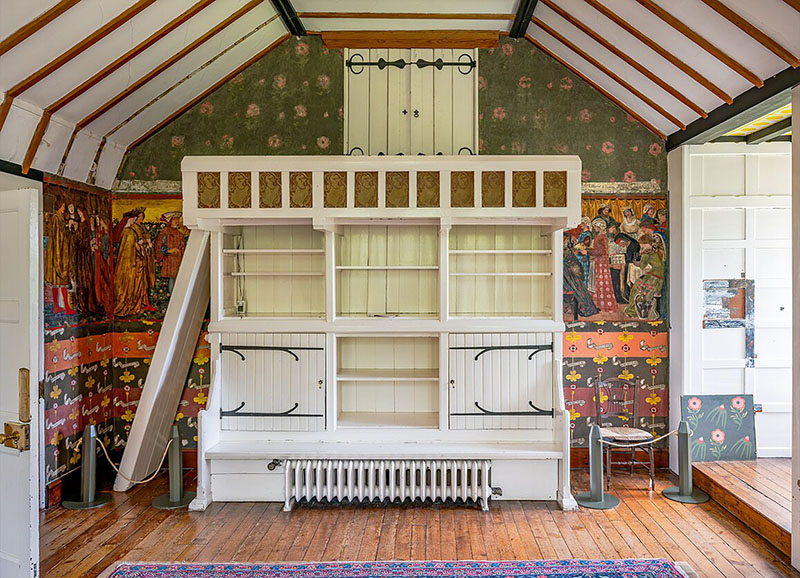
Aesthetic and philosophical movement in late nineteenth- and early twentieth-century England that sought to reclaim the dignity, quality, and integrity of craftsmanship in utilitarian objects and architecture, which were seen to have suffered with the mass production of the Industrial Revolution. Though popularly known as such only after the turn of the century, the movement adopted its name from the Arts and Crafts Exhibition Society founded in London in 1887; this was the only public platform for the decorative arts of the time, but soon became one of many such collectives and guilds that comprised the movement.
Influenced by the nineteenth-century Gothic Revivalist architect AWN Pugin, the movement’s key figures such as art historian John Ruskin (1819–1900) and designer and writer William Morris (1834–96) argued that the mechanisation and division of labour in industrial production were detrimental to the quality of design and stripped workers of their dignity and creativity by detaching them from the products they were making. Looking to medieval European models of production, they advocated for the development of small-scale handicraft industries that reunited functionality, design, and production, the revival of vernacular designs and techniques, and the use of local materials. Designers worked closely with artisans towards commercial production and sale of products that retained these values.
Comprised of architects, intellectuals, and professional artisans, the movement also sought to blur the distinction between the decorative and the fine arts at a time when cultural patronage favoured the latter — as well as between architecture and various craft disciplines, in the interest of fabricating a harmonious living environment. It led to a proliferation of artist and crafts guilds across rural and urban Britain, art schools focused on technical education, exhibition societies, and commercial manufacturers and outlets for Arts and Crafts products. By the end of the nineteenth century its ideas spread across Europe and the United States, also influencing the development of Art Nouveau, and waned after the First World War. In colonial India, British administrators influenced by the movement undertook to survey and document craft practices which they saw as a model for the movement’s work in Europe; and helped establish institutions for training in the arts, as well as museums, exhibitions and publications dedicated to crafts — developments which in turn shaped the conditions in which many Indian artisans produced work.