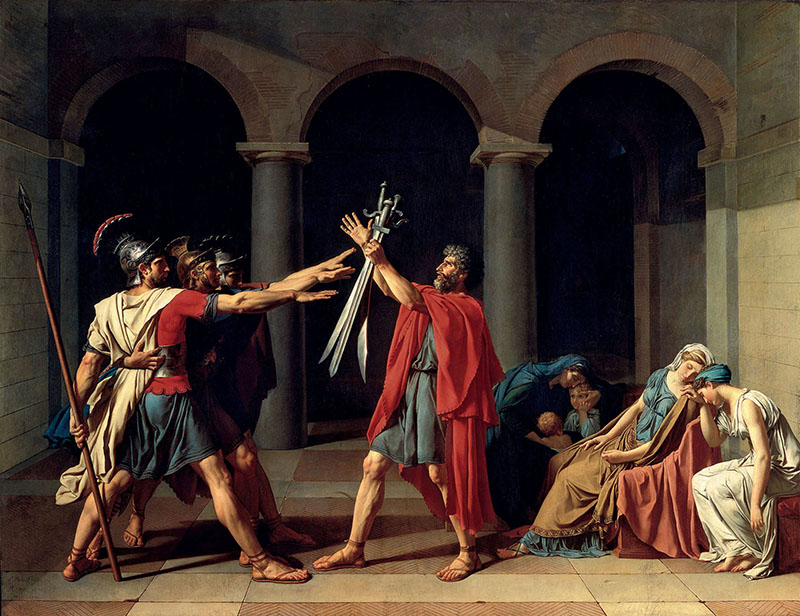
A style of painting that was influenced by European academies of art from the sixteenth century onwards. It was characterised by strict adherence to compositional techniques and thematic conventions that emphasised idealised depictions, allegorical themes on mythological and historical subjects, naturalistic colour and polished surfaces. Prominent artists of the style include Nicolas Poussin, Peter Paul Rubens, Jacques-Louis David and Eugene Delacroix.
More Definitions
Second Diffusion
A religious revival movement between c. tenth and eleventh centuries CE, credited with establishing Buddhism as a majority religion in…
Cubism
A modern art movement developed in the twentieth century by artists such as Pablo Picasso and Georges Braque which rejected…
Literalism
A term often used synonymously with minimalism, it refers to a style of art and literature characterised by the portrayal…
Geometric Abstraction
A form of abstract art that uses geometric forms, usually in a non-illusionistic space, to create non-representational or non-objective compositions.…
Vesara Architecture
A term for an architectural style primarily associated with medieval-era temples in the Deccan region, especially north Karnataka. Derived from…
Pastiche
A style associated with postmodern trends in visual art, music and literature, pastiche indicates works of art that imitate or…
Art Informel
Coined by French art critic and curator Michel Tapie in 1952, the term signifies French artistic and painting styles of…
Conceptual Art
An artistic movement that emerged in the 1960s which prioritised the concept behind an artwork over the finished work itself.…