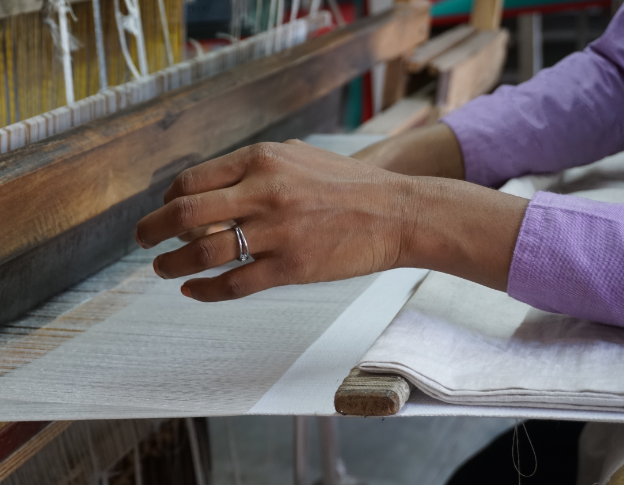
Indian textile dyes date back four thousand years, with the earliest evidence being madder-dyed cloth fragments from Mohenjo-Daro dating to the second millennium BCE. Trade of dyes may have begun in this same period, based on the traces of indigo found in Egyptian tombs and the later records of trade with the Mediterranean world. Commercial activity around natural dyes reached its height during the medieval and early colonial periods in the form of block-printed and kalamkari cloth before they were largely replaced by European synthetic dyes.
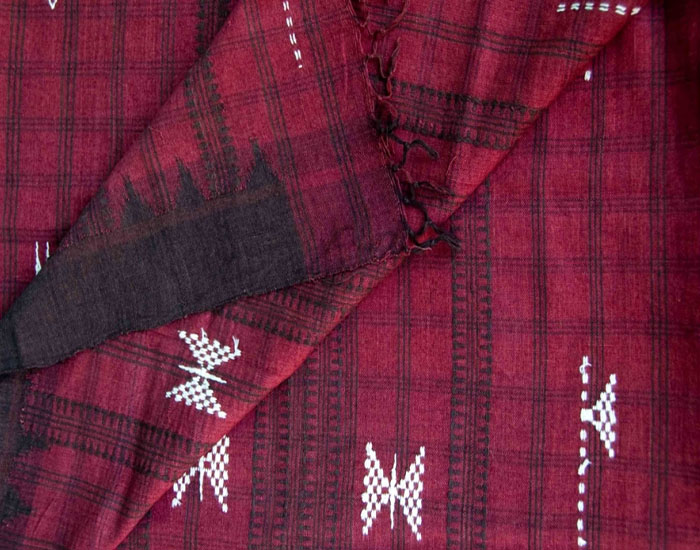
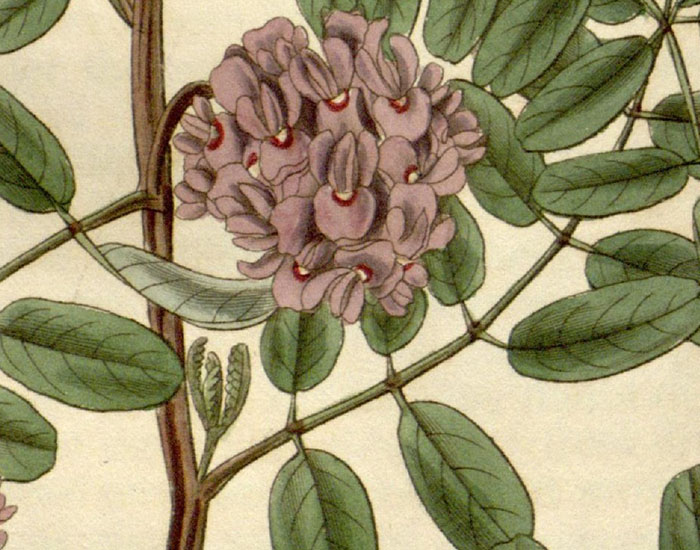
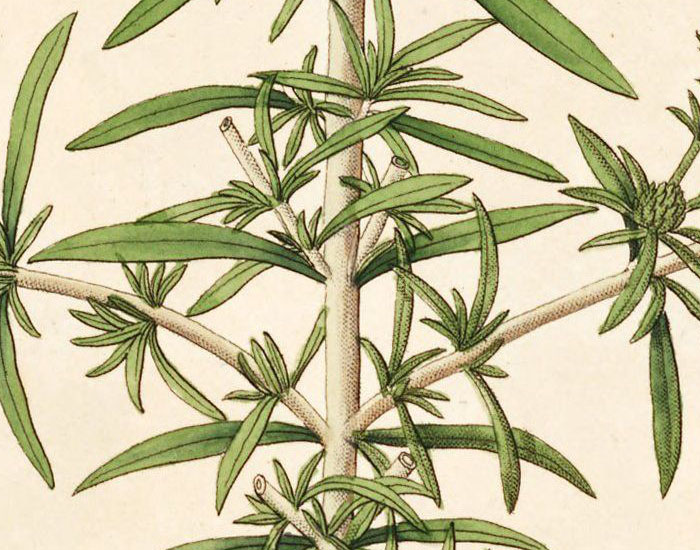
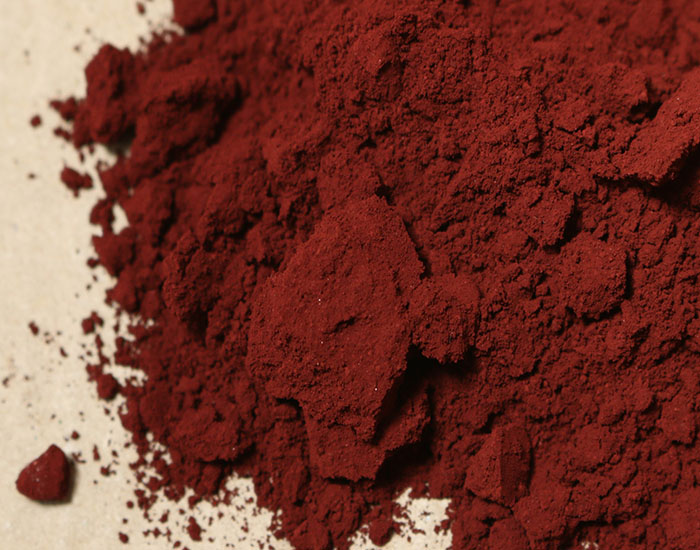
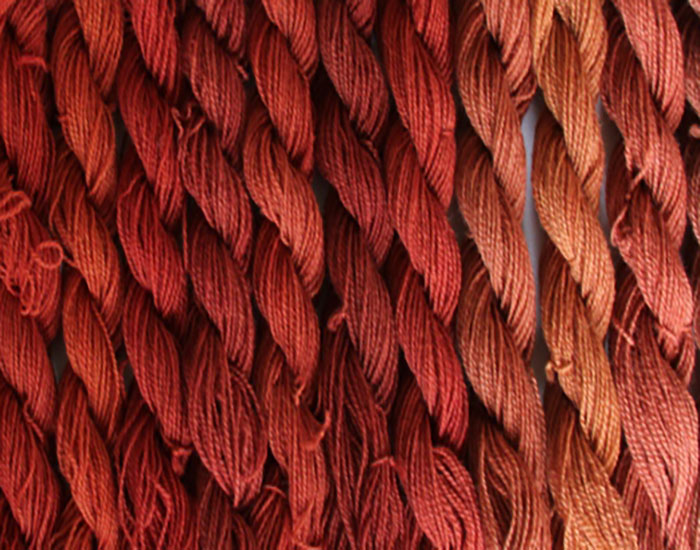
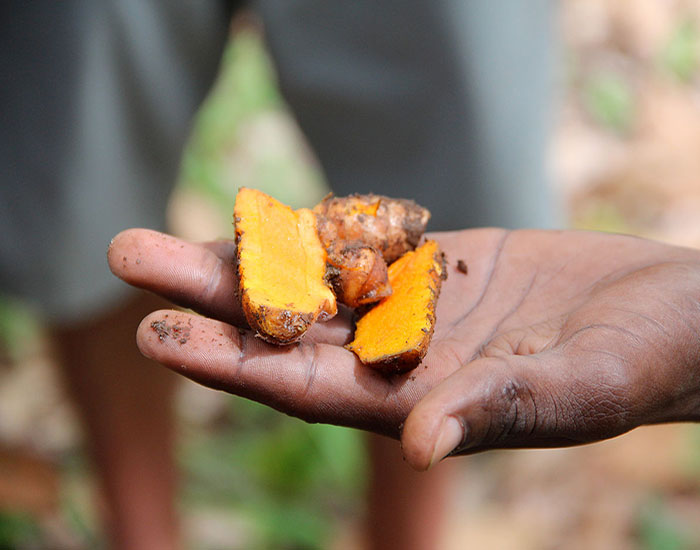
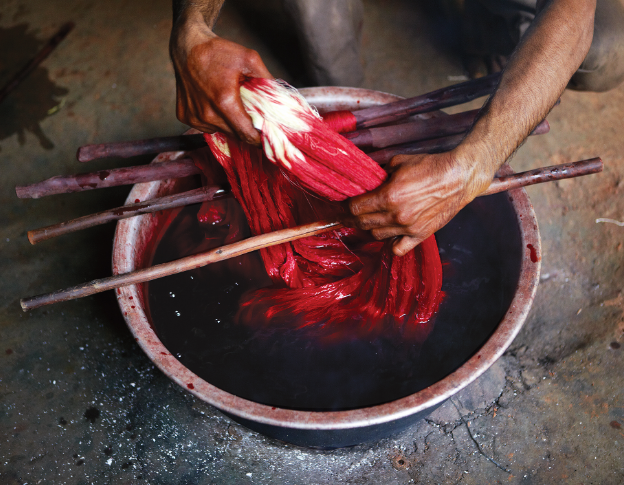
Indian dyes were coveted not only for their vibrancy and their use in inventive textiles but also because of the carefully guarded traditional dyeing processes, which often involved the application of mineral salts or mordants that fixed the colour to the fabric, making the colours uniquely durable. Shades of blue made from indigo, black from haritaki (black myrobalan) and khair (acacia bark), and a range of reds, lilac and burgundy made from manjistha (madder), chay root, aal (Indian mulberry) and lac insects were the longest-lasting dyes, which is why these colours are still visible on fabric thousands of years later. Yellow dyes are made mainly from haldi (turmeric root) and to a lesser extent kusumba (safflower), palash (Parrot tree) flowers and pomegranate rind. However, natural yellow dyes are relatively short-lived compared to blue or red, as are mixed dyes that use a yellow element, such as greens and oranges.