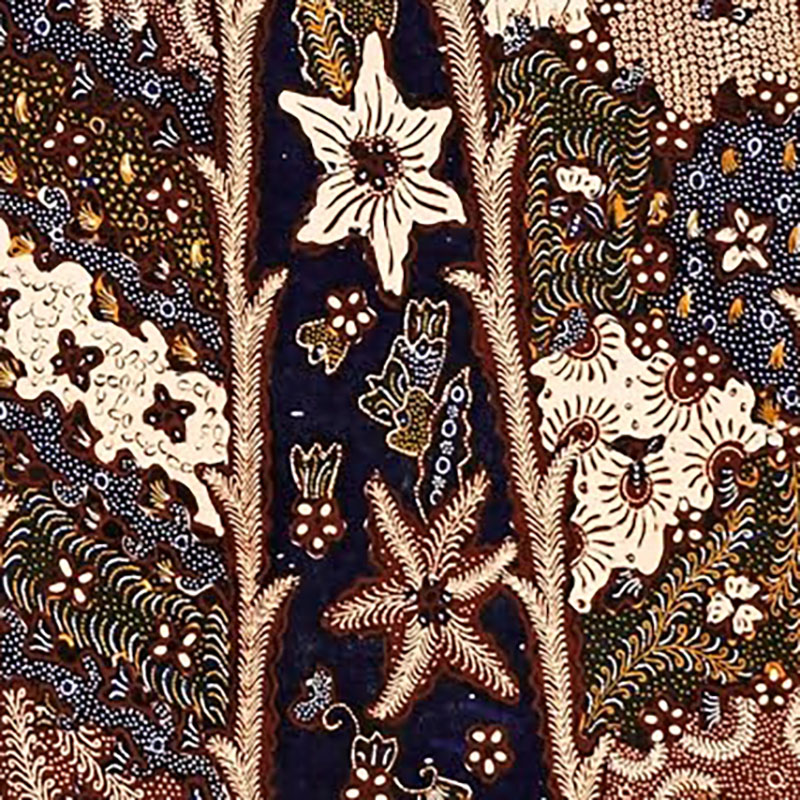
A technique of resist-dyeing in which molten wax is applied to portions of a textile, using blocks or a pen-like instrument, and allowed to harden before the fabric is dyed in cold water. The dyed fabric is then treated in boiling water, allowing the wax to melt. This process may be repeated multiple times depending on the dyeing scheme required. The popular technique of Batik utlises wax-resist dyeing.
More Definitions
Stereoscopy
A popular form of mid-nineteenth century photography that created and enhanced the illusion of depth in photographs. The technique involves…
Single-Spindle
A technique of spinning yarn that incorporates one spindle, as seen in the charkha used to spin khadi.
Weft
It refers to yarn or threads that pass horizontally over and under the fixed longitudinal warp to weave cloth and…
Chain Stitch
A decorative embroidery technique in which the stitch consists of consecutive, interconnected loops that resemble the links of a chain.…
Tempera
A technique of painting characterised by mineral pigments suspended in binders such as egg yolk, casein, glycerine or gum in…
Assemblage
Art made by assembling disparate elements from everyday or found objects. Assemblages are often associated with movements such as Dadaism,…
chamfer
A slope or bevel, typically at 45º, at the intersection between planes in woodwork, architectural and engineering detailing, and other…
Waxed Paper Negative
A photographic negative using a base of paper coated with oil or beeswax before the application of dry and stable…