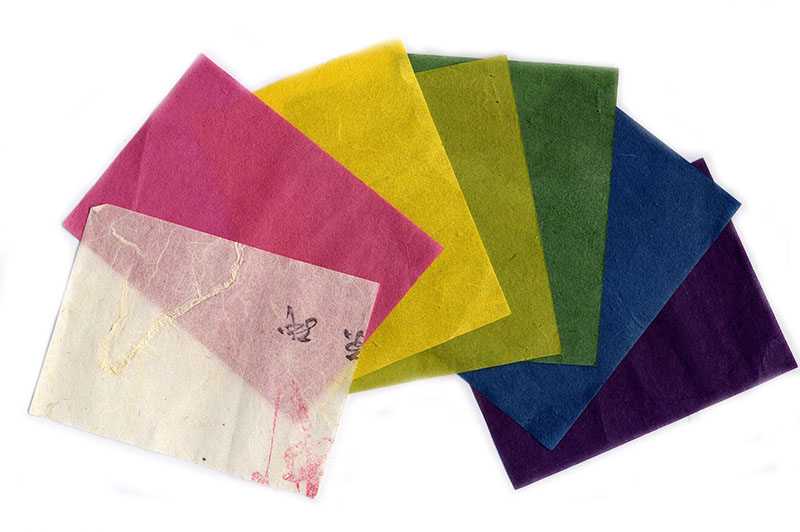
A traditional Japanese handmade paper produced using fibres of trees such as gampi, mitsumata and paper mulberry. Because of its durability, it is used for many traditional arts, especially origami, shodo and ukiyo-e prints. Additionally, it is used to make everyday items such as clothes, household goods, toys and ritual objects for Shinto and Buddhist practices. It is recognised by the UNESCO as an intangible cultural heritage.
More Definitions
Reducing Agent
A chemical used in the process of indigo textile dyeing. Indigo is a vat dye, or an insoluble dye, which…
Papier-Mâché
Meaning “chewed paper” in French, it is a composite material made of pulped paper mixed with a glue or adhesive…
Alum
A double salt of aluminium and potassium that is used as a mordant in textile-dyeing processes, particularly when dyeing natural…
Hank
A unit of measure in the textile industry, it describes a coiled or wrapped length of yarn or loosely gathered…
Mangalore tiles
Moulded terracotta tiles popularly used on sloping roofs in India, first manufactured in 1864–65 by the Basel Mission Tile Works…
Gara
A colloquial term for a coarse, textured cotton fabric.
Hemp
Textile fibre derived from the hemp plant Cannabis sativa, which also yields oilseeds, and leaves and flowers with psychoactive properties…
Lurex
A shiny, synthetic yarn made from aluminium-coated plastic, which lends it a distinctive metallic shine. It is woven or stitched…