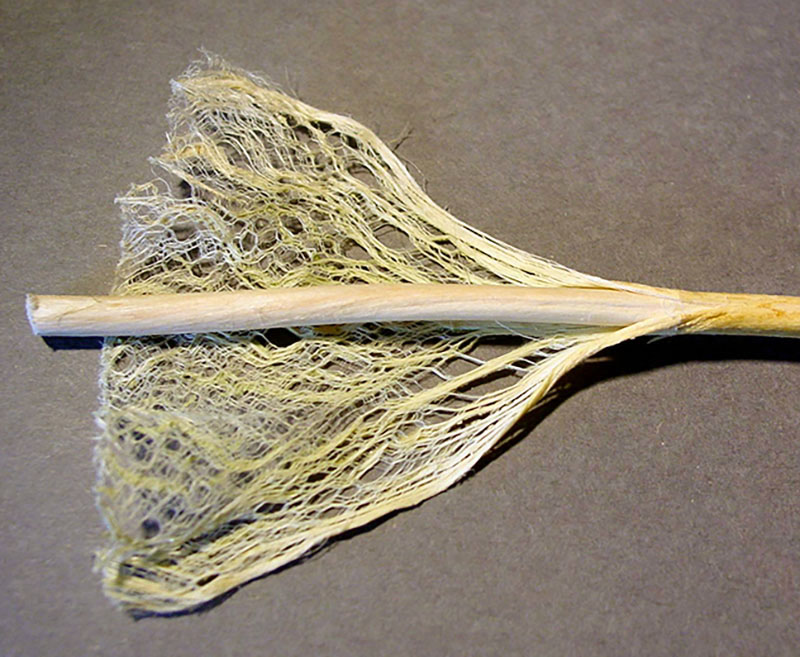
Textile fibre derived from the hemp plant Cannabis sativa, which also yields oilseeds, and leaves and flowers with psychoactive properties when cultivated differently. Hemp is a bast fibre, grown and processed in a similar way to flax (used for linen), though hemp fibres are longer, stiffer and difficult to dye. Strong, lightweight, shrink-resistant and moisture-absorbent, it is used for making garments as well as footwear, ropes, sacking, canvas and paper; in recent years it is also used to synthesise composites used in construction. Thought to have originated in Central Asia, it was cultivated in China as early as 2800 BCE and popularly used in various parts of the world across history. In the contemporary era hemp production has been affected by various legal restrictions on cannabis cultivation, production and trade.
More Definitions
Hanji Paper
A traditional Korean handmade paper produced using the inner bark of the paper mulberry tree native to Korea. It is…
Gouache
An opaque water-soluble paint that contains a gum binder and a white pigment such as chalk mixed with a high…
Mohair
Fibre derived from the hair of Angora goats, it is used to make mohair yarn and fabric. It is known…
Stucco
A type of fine plaster or coating material used to cover walls and ceilings with decorative patterns, it is also…
Voile
Derived from the French word for "veil," it is a thin, sheer, lightweight cotton fabric, usually blended with polyester. It…
Patta
A Sanskrit term meaning "cloth."
Plaster of Paris
A material used in architectural ornamentation, art and medicine. Made of calcium sulfate hemihydrate, it hardens and sets when moistened…
Harda
The fruit of the black myrobalan plant (Terminalia Chebula), it is used to make a natural dye for textiles such…