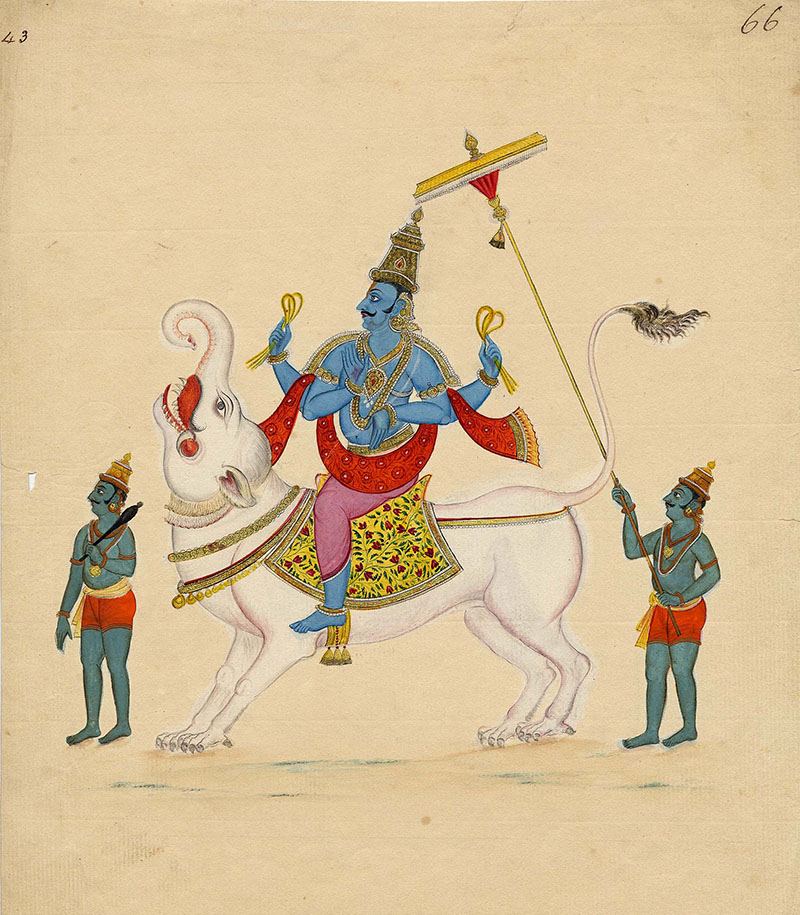
A Vedic deity associated with the moral values of rita (justice) and satya (truth), he also represents the natural elements of the sky and the ocean. The deity is typically represented with the head of a deer, legs of an antelope and the body and tail of a fish. His iconographic attributes include a nagapasha (noose) and his mount, the makara (a composite crocodile-like aquatic creature).
More Definitions
Lokanatha
In Vajrayana Buddhism, one of the forms of the bodhisattva Avalokitesvara. Lokanatha is portrayed sitting in lalitasana on a double…
Pushtimarg
A Vaishnavite devotional cult that revolves around the worship of the Hindu deity Krishna as a child, in the form…
Animism
It is a belief system that attributes a spiritual essence to plants, animals and inanimate objects.
Krishna
A major deity of the Vaishnavite tradition and the eighth avatar of Vishnu. He is believed to have been born…
Theravada Buddhism
Meaning the "Way of Elders" in Pali, it is the major Buddhist sect in Sri Lanka, Laos, Myanmar and Cambodia.…
Bhutagana
In Hindu mythology, it refers to a class of beings who attend to the deity Shiva. In art, they are…
Skanda Purana
The largest of the eighteen major Puranas, it comprises over eighty-one thousand verses written honour of Skanda, the son of…
Wei Buddhism
Also known as the Bei Wei ("Northern Wei") and Tabgatch or Tuoba and founded by tribesmen of Turkic origins, the…