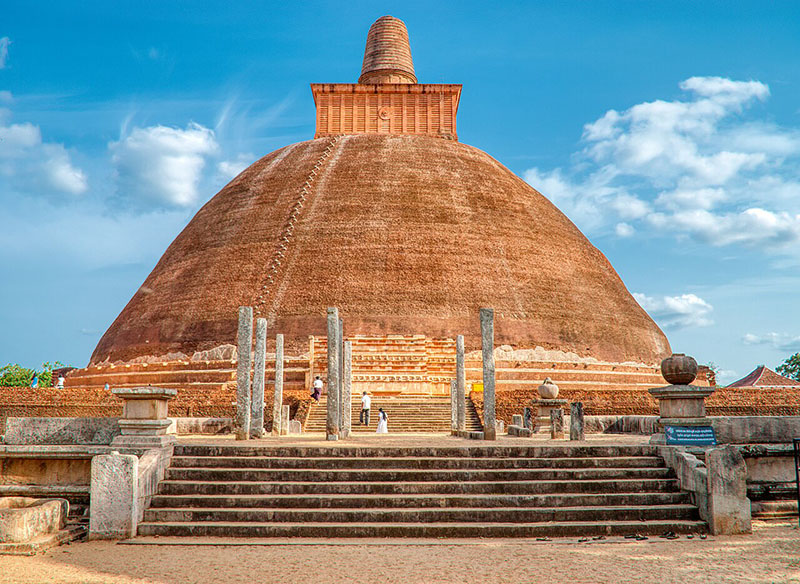
Meaning ‘heap’ in Sanskrit, stupa refers to a Buddhist structure usually housing buried remains of a deified figure or other sacred relics. Typically comprising a hemispherical, cylindrical or bell-shaped dome built over a platform and topped with a spire, its form is thought to be modelled on Central Asian funerary mounds from the first millennium BCE. The term may also refer to votive objects that resemble the structure and contain a relic, typically found in prayer halls or chaityas. The stupa as a commemorative monument is also seen in Jainism.
Stupa
Link copied!