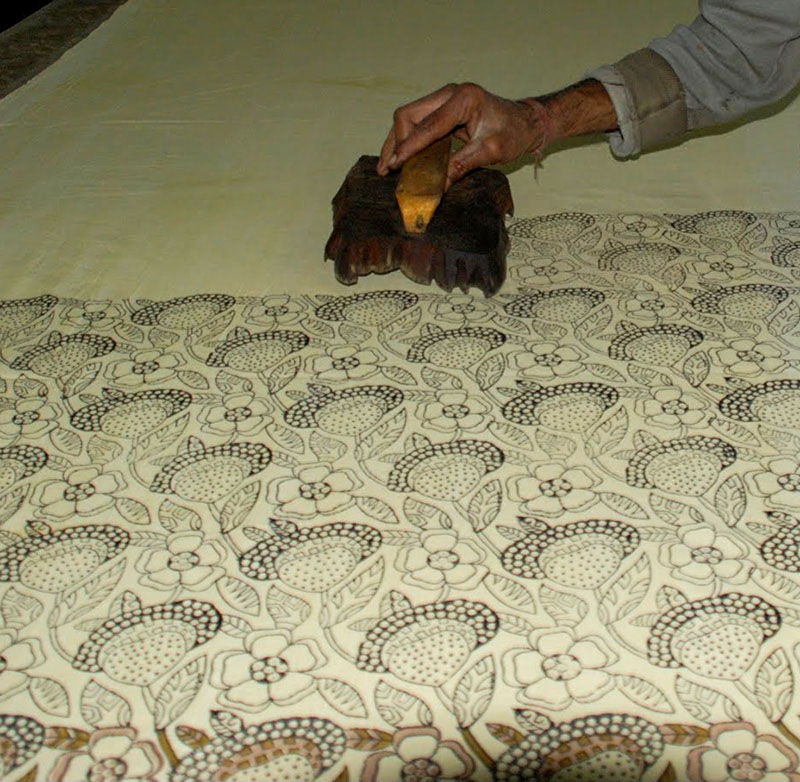
Derived from the Hindi and Urdu word for “outline,” it is a step in some Indian block-printing processes, in which the design is outlined and stamped on the base fabric using a resist of lime and gum. It also describes the wooden blocks used to create outlines for printed motifs in these traditions.
More Definitions
Selvedge
The edge of a fabric that does not require additional finishing work and prevents the textile from fraying and unravelling.…
Hingtham
A category of intricate Bhutanese textiles hand-woven by women, traditionally for personal and familial use or for noble families who…
Tempera
A technique of painting characterised by mineral pigments suspended in binders such as egg yolk, casein, glycerine or gum in…
Size
A solution that is applied to warp threads before they are set on a loom for weaving, it protects the…
Single-Spindle
A technique of spinning yarn that incorporates one spindle, as seen in the charkha used to spin khadi.
Tiraz
Textiles with embroidered inscriptions produced in Iran during the early Islamic period, until the fourteenth century CE. Robes made of…
Tapestry Weave
A weft-facing technique of weaving, wherein coloured weft yarns are interlaced with plain-coloured warp. The design is created using the…
Chain Stitch
A decorative embroidery technique in which the stitch consists of consecutive, interconnected loops that resemble the links of a chain.…