-
ChicagoImpart Encyclopedia of Art. "Damachiyo." October 30, 2026. https://imp-art.org/articles/damachiyo/.
-
MLA"Damachiyo." Impart Encyclopedia of Art, Oct. 30, 2026, https://imp-art.org/articles/damachiyo/.
-
HarvardImpart Encyclopedia of Art (2026) Damachiyo. Available at: https://imp-art.org/articles/damachiyo/ (Accessed: 12 November 2026).
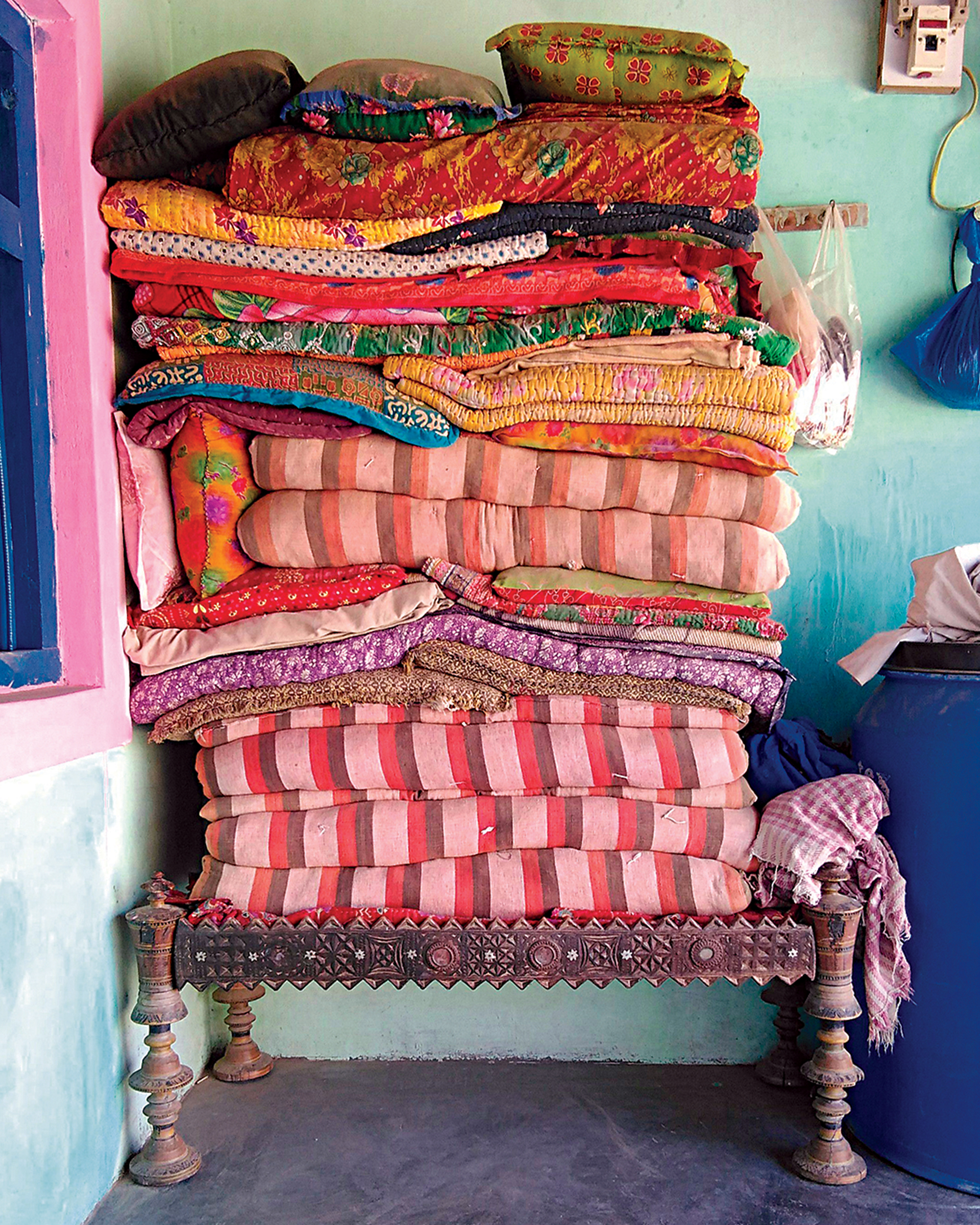
A bench or stand used to hold a stack of folded mattresses and quilts in a home, the damachiyo or damachiya is a form of vernacular furniture in Gujarat and adjacent rural regions of Rajasthan in northwestern India. It holds the household’s everyday mattresses and bedclothes, as well as seasonal and extra bedding; as such it is also a social marker of the family’s wealth and ability to host guests.
Terminology
‘Damachiyo’ is a Gujarati word simply meaning a stack of mattresses or quilts. By extension, in Gujarat it also denotes the bench designed to hold the stack, as well as other pieces of furniture when their top surface doubles up for this purpose. In Rajasthan, the furniture is recorded in the rural homes of the Vagad and Mewar regions adjacent to Gujarat; here it is known by the term ‘damachiya’ alongside other local terms, such as dhalio in the village of Malpura, Udaipur district. Only one specimen of a dedicated mattress bench is recorded outside of these regions: in Barmer, where it is also called denchi.
Design and construction
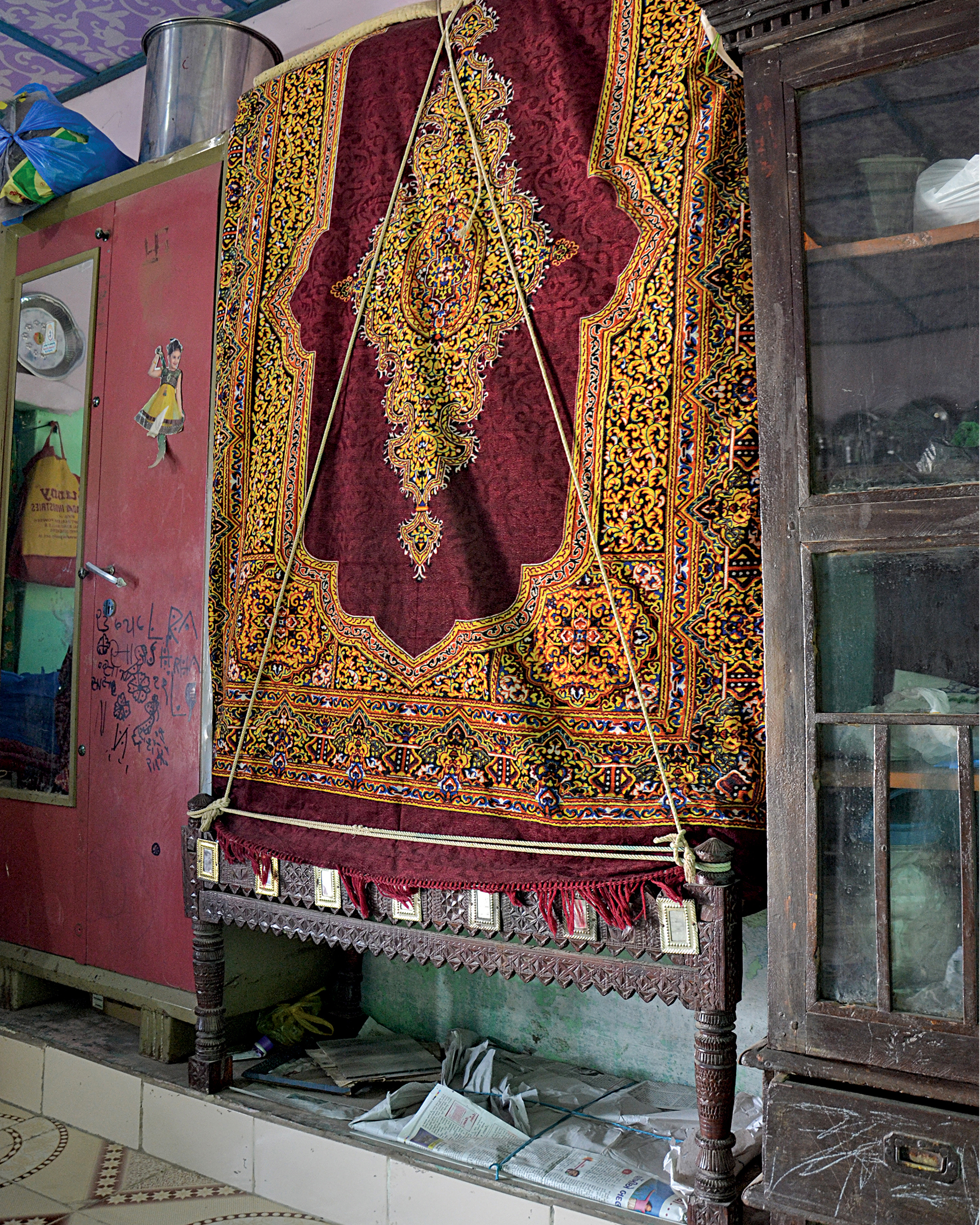
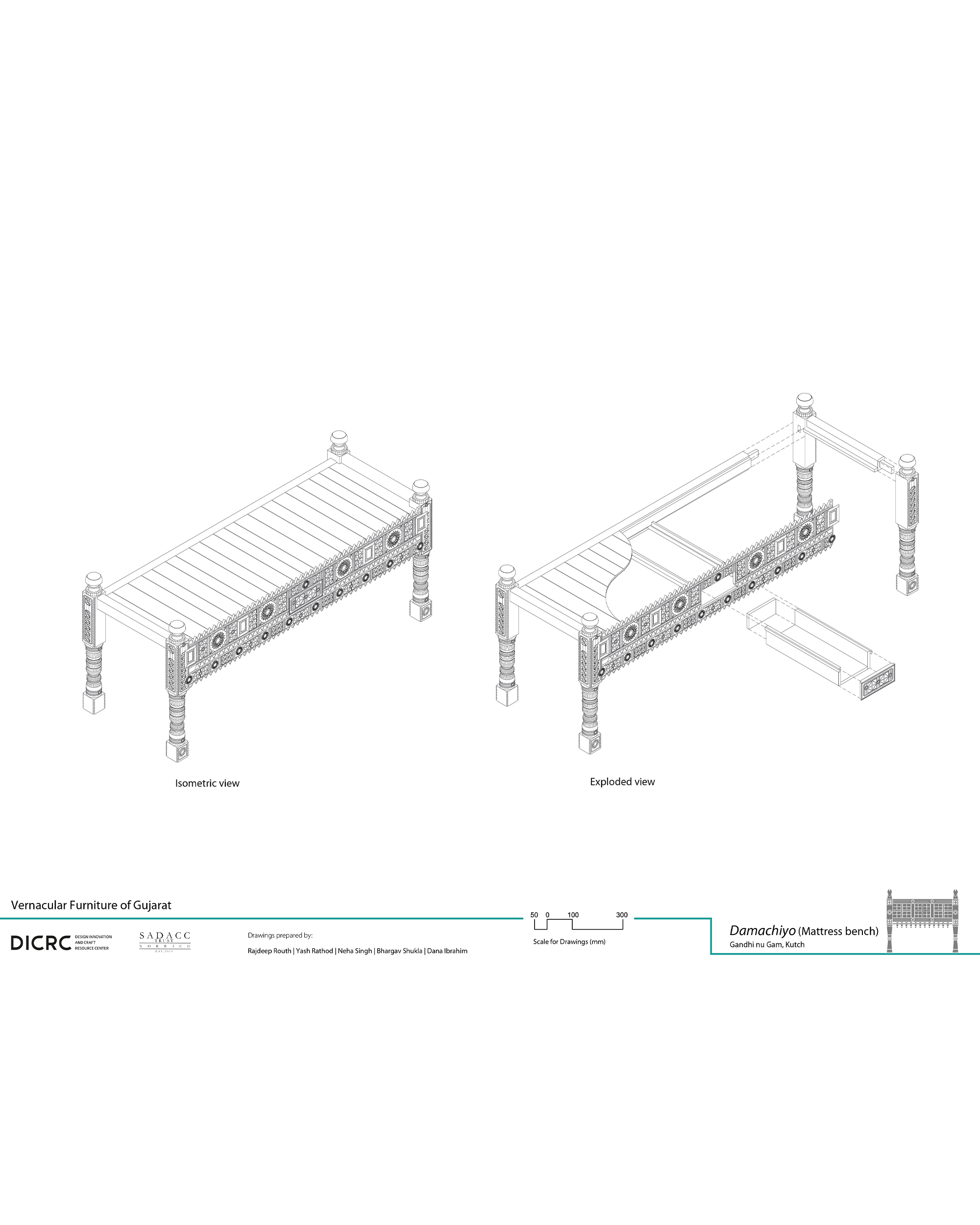
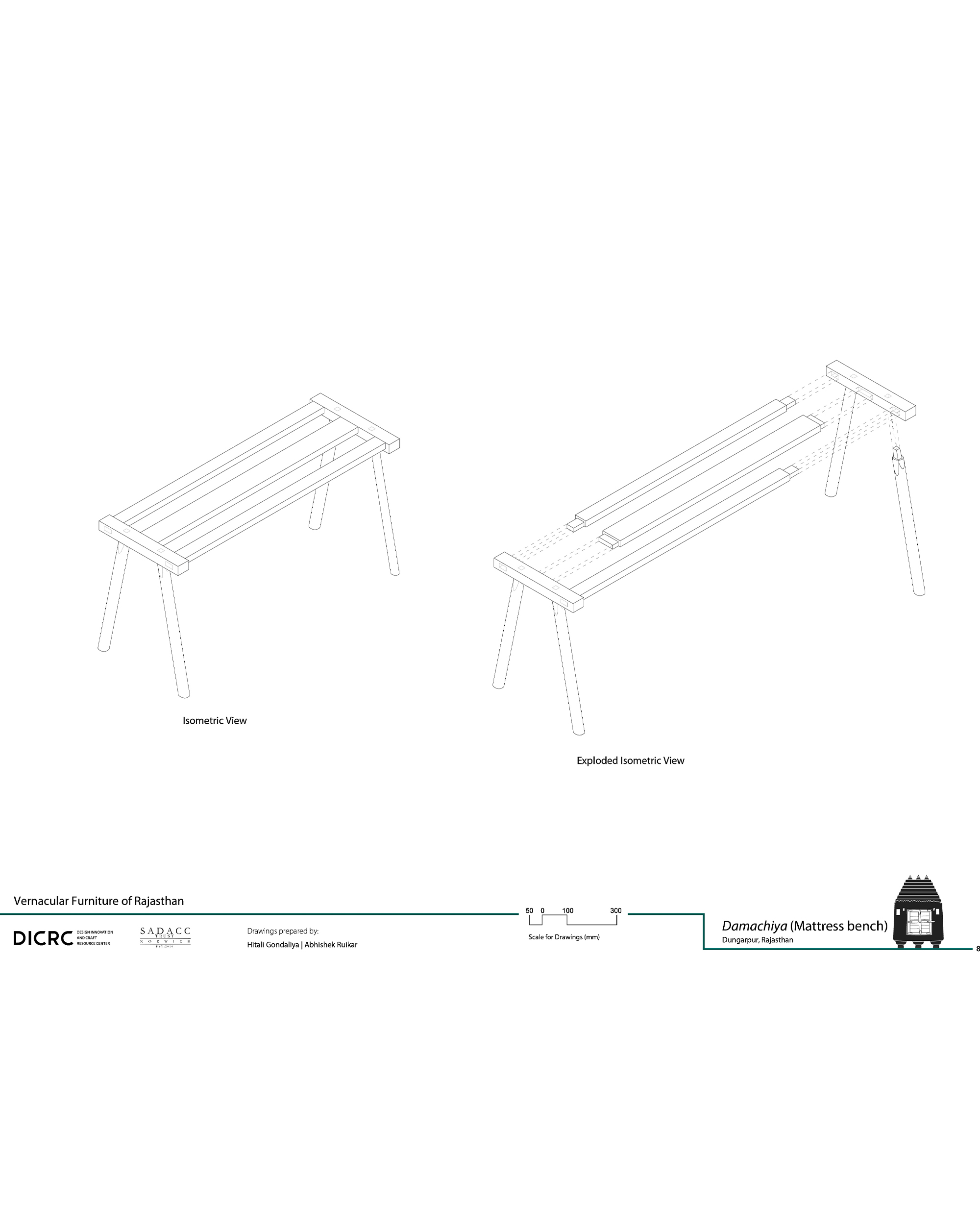
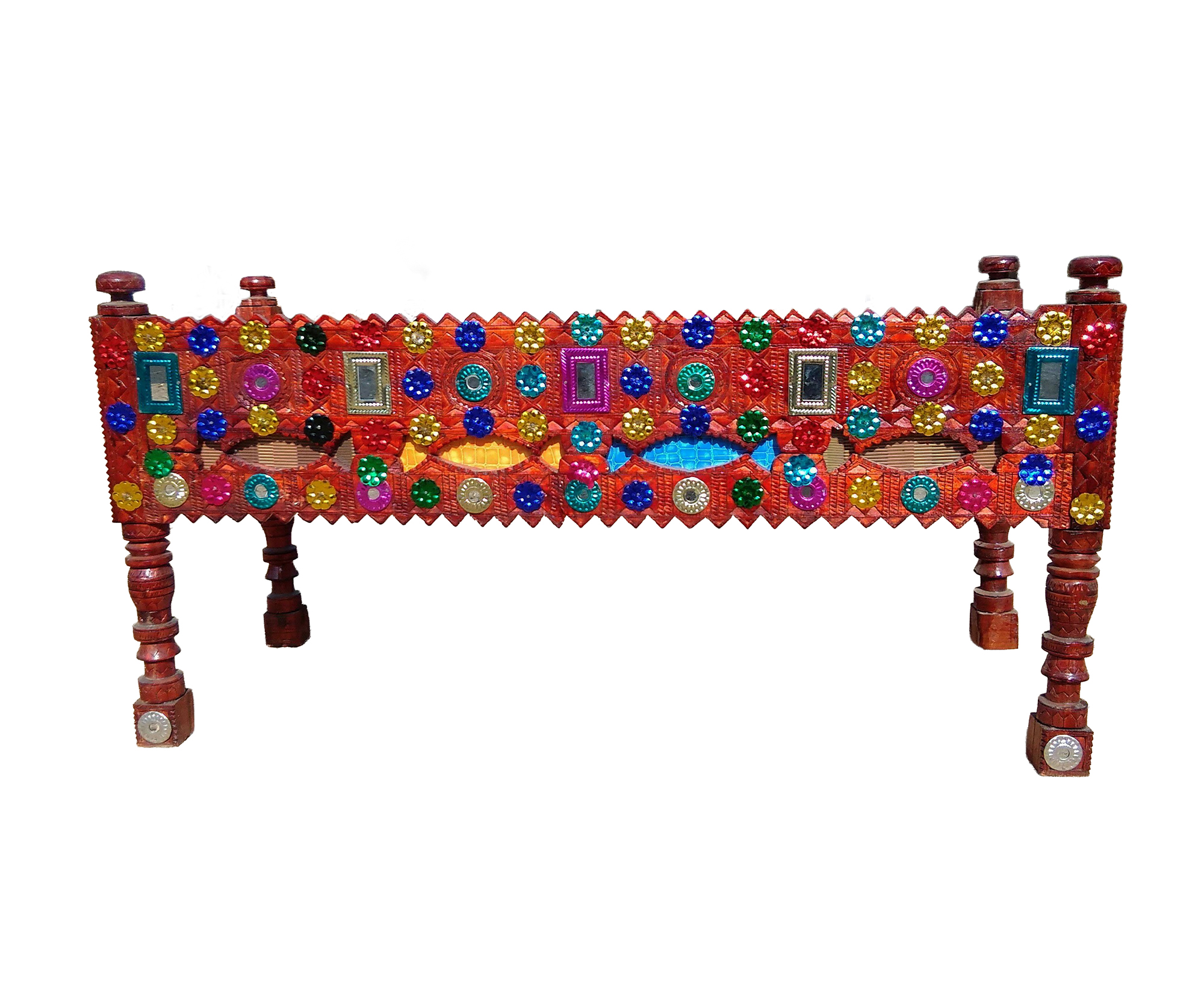
The mattress bench is a simple rectangular wooden structure of varying height raised on four legs, with the members assembled using mortise and tenon joinery. The damachiyo of the Rabari community of Kutch in Gujarat is distinctive, reflecting its social significance as well as local craft heritage. It has a narrow top, lathe-turned legs, and carving and mirror inlays on the front rail. The legs are topped with finials, which also serve a functional purpose. To keep the stack of quilts and mattresses from toppling over, a rope is stretched over it from the front finials to a point on the wall or ceiling above it. The stack itself might also be covered with a decorated cloth. One damachiyo documented in Gandhi nu Gam has a slim drawer fitted centrally under the top. Once commissioned from the local village carpenter according to the household’s specific needs and aesthetics, damachiyo are now purchased from one of two specialised workshops in Kutch, which make local furniture at a large scale, primarily for a wider urban or export market.
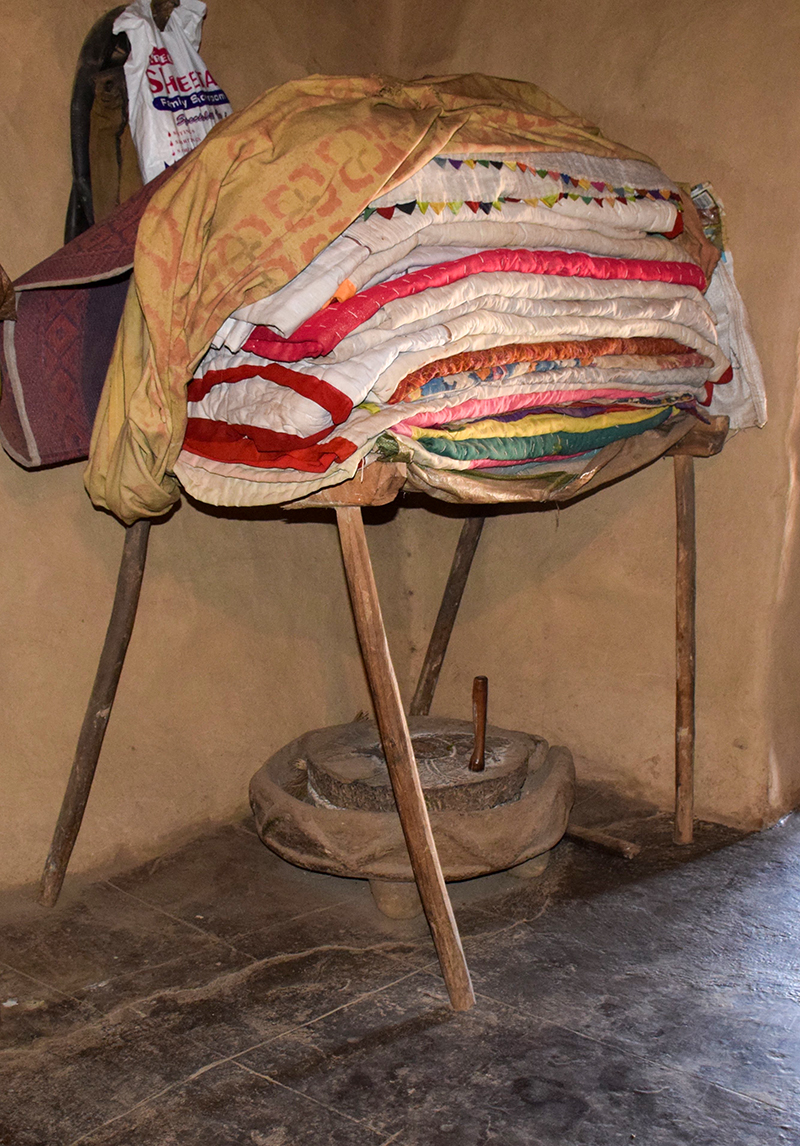
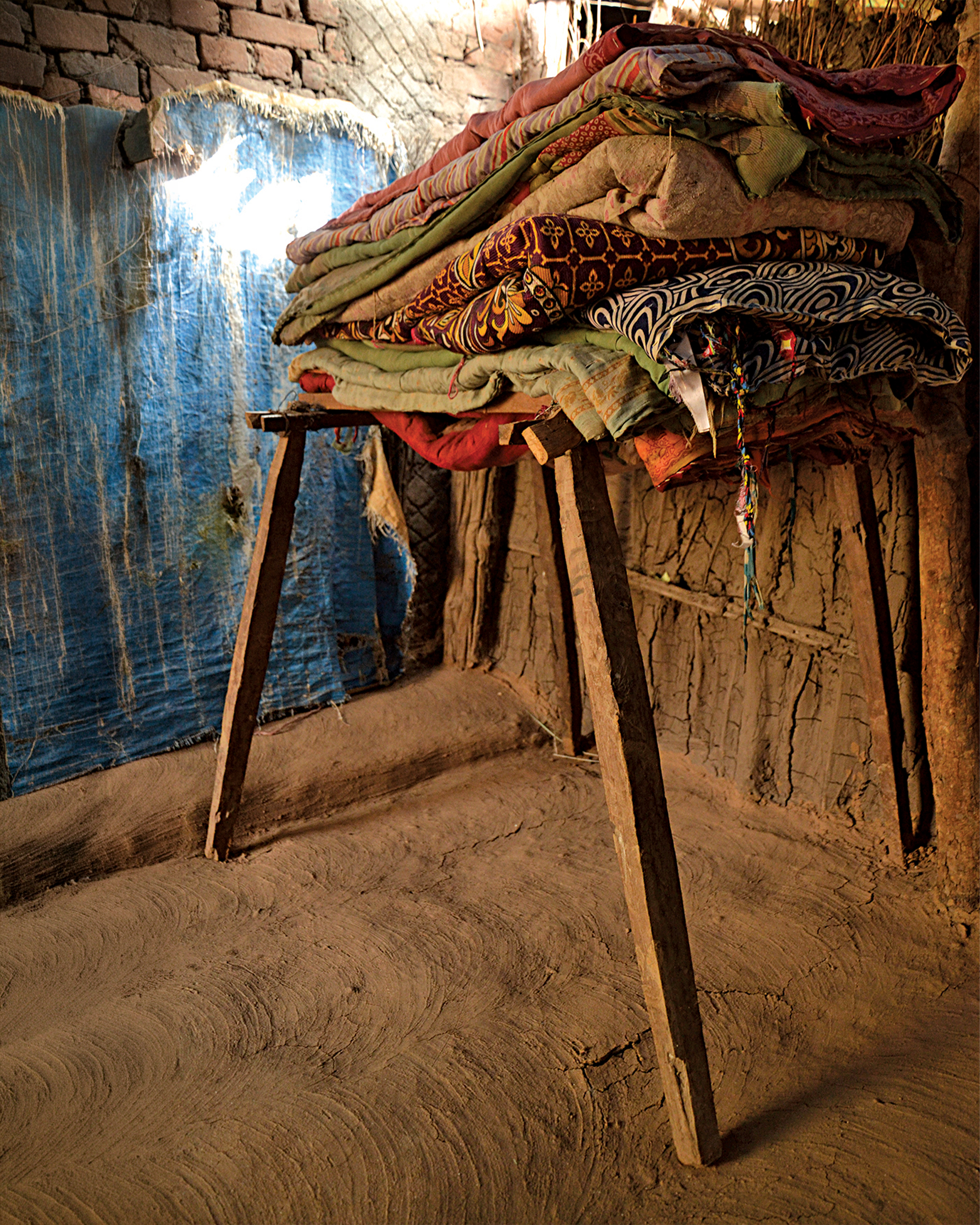
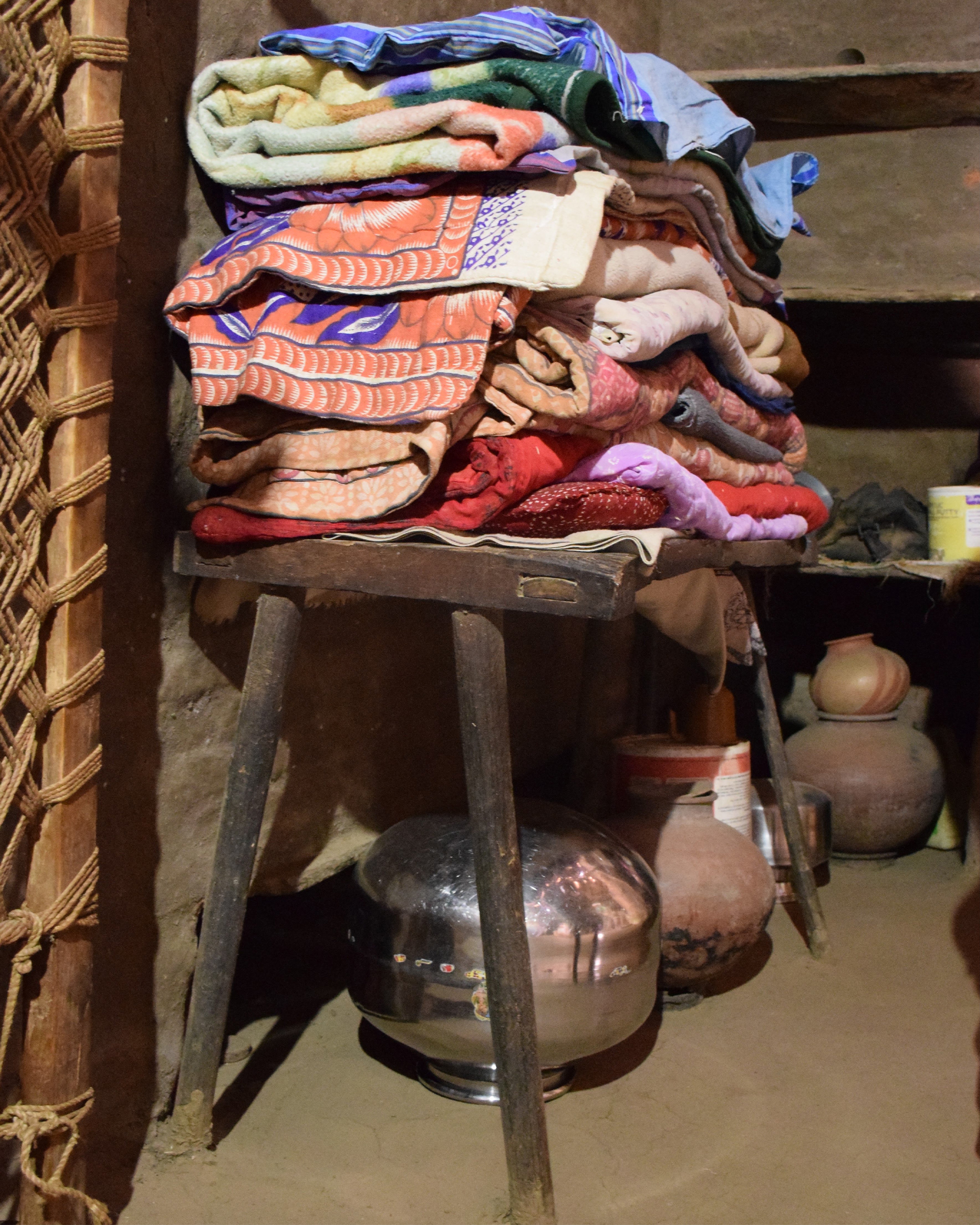
A simpler form is seen in regions where the damachiyo carries less social significance, and in households with less means to commission or purchase a damachiyo. In many Adivasi homes of eastern Gujarat, as well as in the adjacent Vagad region of Rajasthan, it is a rudimentary construction consisting of a simple board or a few wooden slats fitted across a trestle structure with slender, often roughly shaped legs. The men of the family commonly construct the bench themselves; in Vagad, they might use an adze (basula) to shape the legs and frame members out of tree branches or found lengths of wood. Rising to between 60 and 90 centimetres, this type of bench is typically higher than the damachiyo in Kutch, and the space below may be used to store other items, such as a chest, a hand mill, or pots. Here too a nylon rope is sometimes stretched between the bottom of the frame and the top of the mattress stack to secure it.
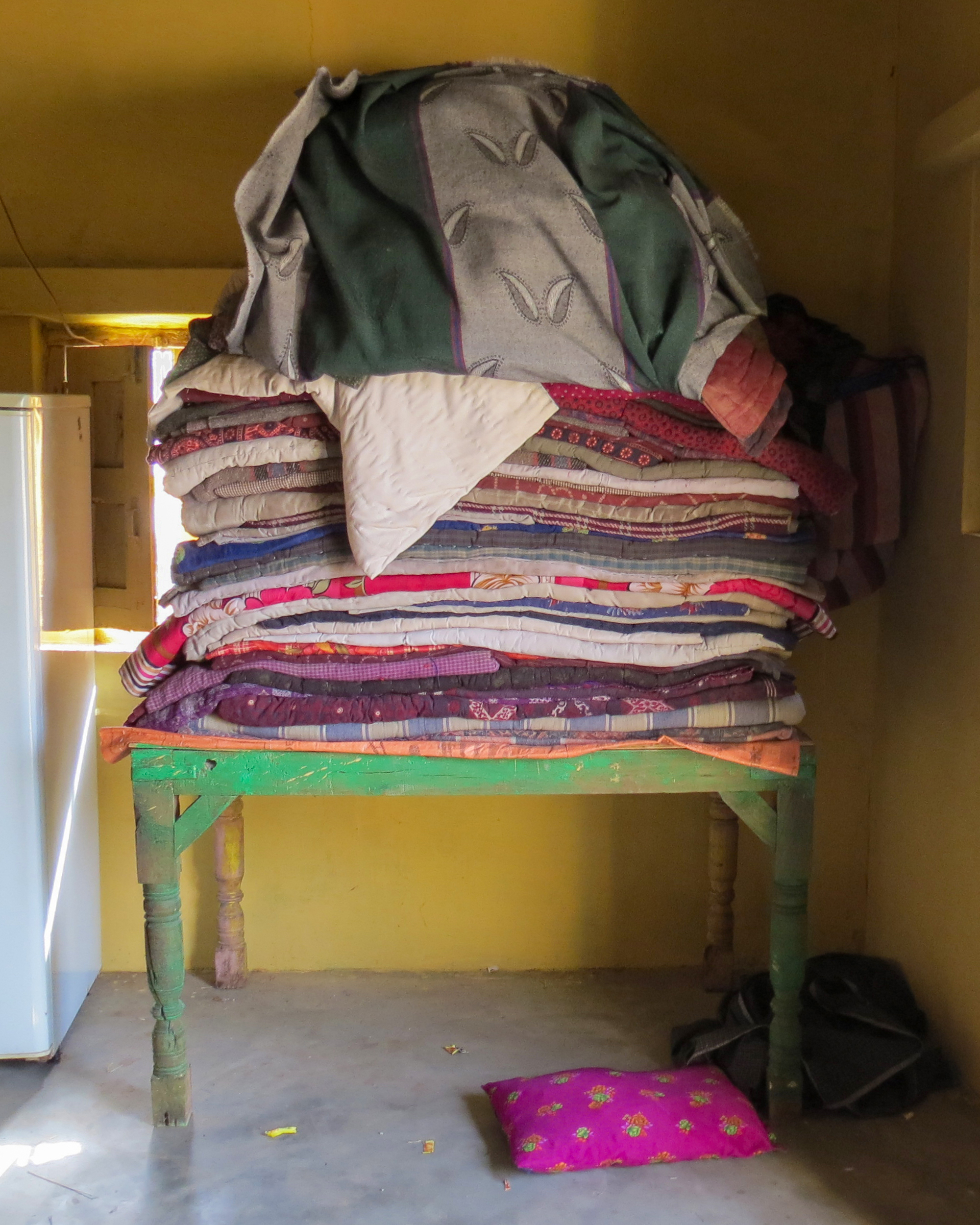
The specimen recorded in the Barmer region farther away in Rajasthan differs in design, featuring straight lathe-turned legs supporting a flat frame, and reinforced with diagonal corner braces. It is also painted in green. Until the 1990s, it was common in Barmer for the women of the household to build the mattress bench out of mud, hay, and dung as an extension to the kothlio (mud larder), using the same technique and pinched decoration as for the latter.
Ornamentation
Early-twentieth-century examples in Kutch were intricately carved, with patterns of square or circular mirrors inset in metal frames, and finished in lacquerwork. The chip-carving technique used is common to other furniture including the machi (stool) and sanjeriyu (larder) as well as architectural elements such as columns, doors, and window-frames in the region. The hand-embroidered cloth made by Kutchi women to cover the stack, besides being a display of their skill, traditionally reflects community motifs and scenes from everyday life, including people and the local flora and fauna. The contemporary mass-produced damachiyo carries simpler chip-carving that is no longer community-specific, alongside mirrors framed in neon-stained tin, and heavy coats of varnish replacing the lacquerwork.
Ownership and use
Most households where a damachiyo or damachiya is used sleep on mattresses unrolled directly on the floor or on portable khaat (charpoy) at night. In the morning, when the space needs to be cleared up for the day’s activities, the mattress bench serves to hold the mattresses and quilts off the floor, protecting them from moisture and insects and other pests. It also serves as seasonal storage for quilts in regions with cold winters, and additional bedding for guests.
A damachiyo or damachiya might enter a home as part of a bride’s trousseau. It is often kept with the household’s other storage furniture, next to grain storage, or positioned at the entrance to a home. It is usually placed in a visible rather than hidden place, so it can also serve as evidence of a house’s ability to accommodate guests, in the number, size and quality of the mattresses observed. A tradition that continued up to at least the early twentieth century also obliged tenant families to lend bedding to guests of the zamindar or landlord. The social significance of the damachiyo remains especially pronounced among the Rabari of Kutch.
Many communities and regions do not have a bench dedicated to this purpose, and instead use the surface of other furniture. The Mer farmers and Rajput communities in Gujarat, and wealthier households in Rajasthan, use the top of the peti (hope chest) and majju (cabinet); in Barmer the top of the kathatara (wooden larder) is used. With changing lifestyles and market relations, furniture such as the damachiyo is increasingly produced for contexts other than the domestic, such as heritage hotels and collectors.
This article is adapted from the outcomes of Vernacular Furniture of North-West India — a collaborative research and documentation project by the Design Innovation and Craft Resource Centre (DICRC), CEPT University, India, and The South Asian Decorative Art and Crafts Collection Trust (SADACC), UK — shared with the Encyclopedia of Art through an Impart partnership. Explore more from this series in our Collection Objects Alive: Vernacular Furniture of North-West India.
First published: 30 October 2026
Image Gallery
Bibliography
Bais, Mitraja, Jay Thakkar, Samrudha Dixit, and Ben Cartwright. Sahaj: Vernacular Furniture of Gujarat. Ahmedabad: CEPT University Press, 2018.
Rao, Mansi S., Ben Cartwright, and Samrudha Dixit. Anaikya: Vernacular Furniture of Rajasthan. Ahmedabad: CEPT University Press, 2021.
Vernacular Furniture of India. Accessed August 25, 2026. https://vernacularfurnitureofindia.com/.
Feedback