-
ChicagoImpart Encyclopedia of Art. "Machi, Pidhi." October 30, 2026. https://imp-art.org/articles/machi-pidhi/.
-
MLA"Machi, Pidhi." Impart Encyclopedia of Art, Oct. 30, 2026, https://imp-art.org/articles/machi-pidhi/.
-
HarvardImpart Encyclopedia of Art (2026) Machi, Pidhi. Available at: https://imp-art.org/articles/machi-pidhi/ (Accessed: 12 November 2026).
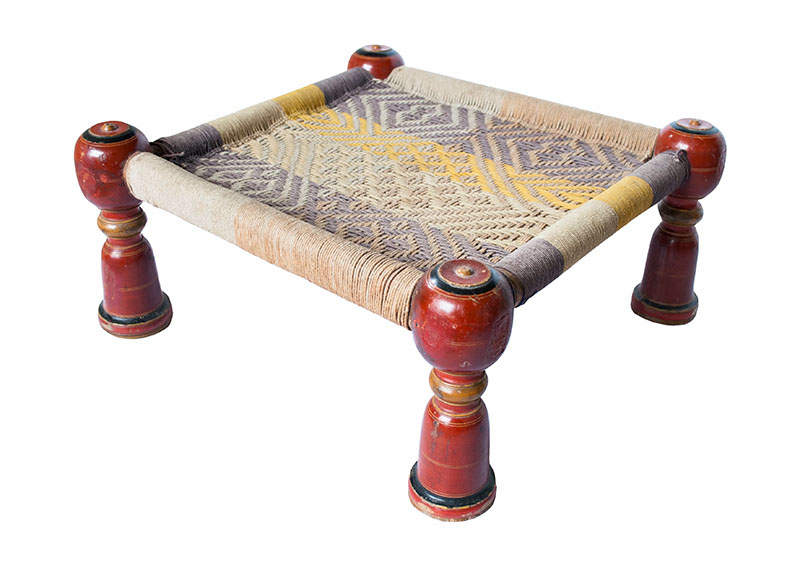
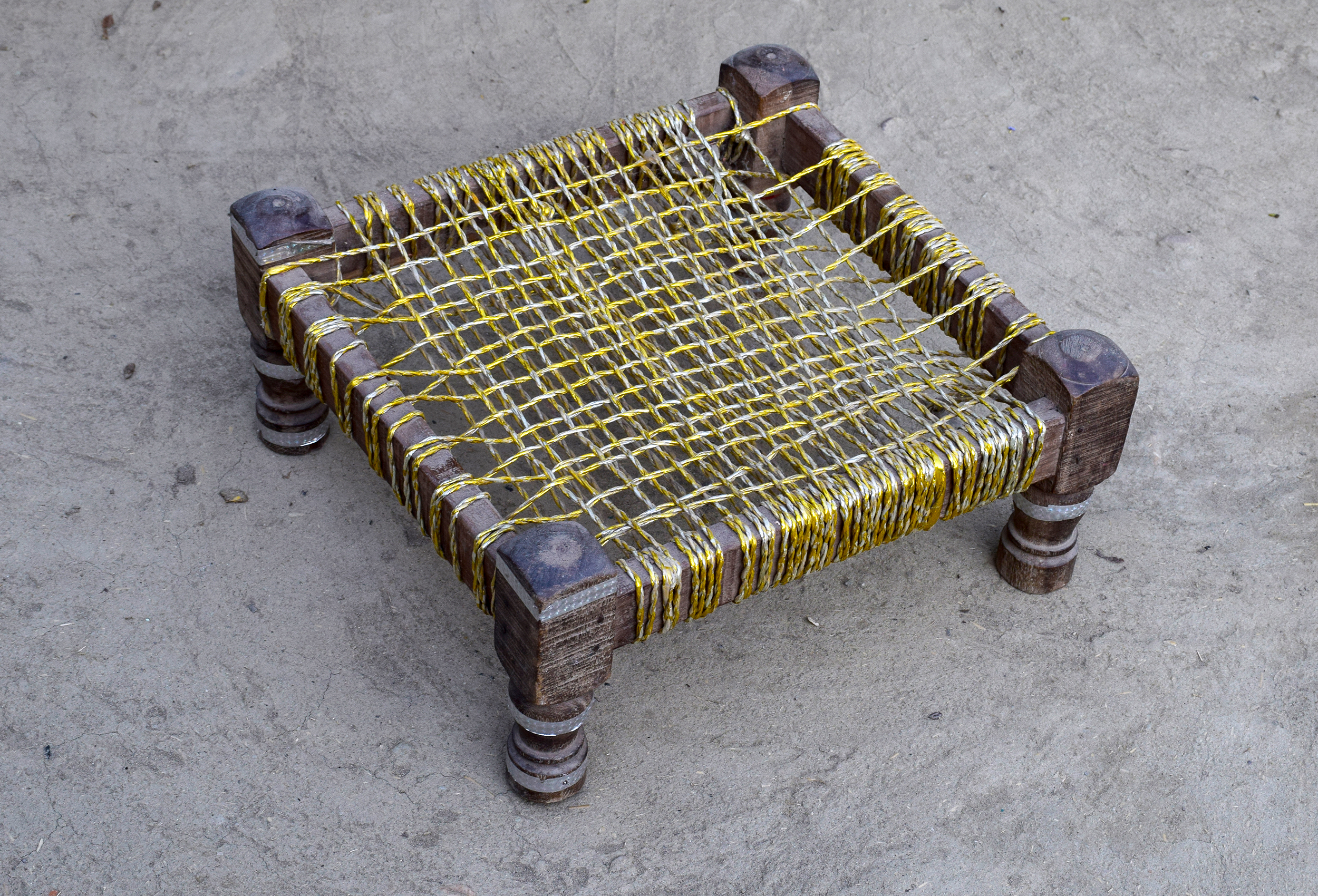
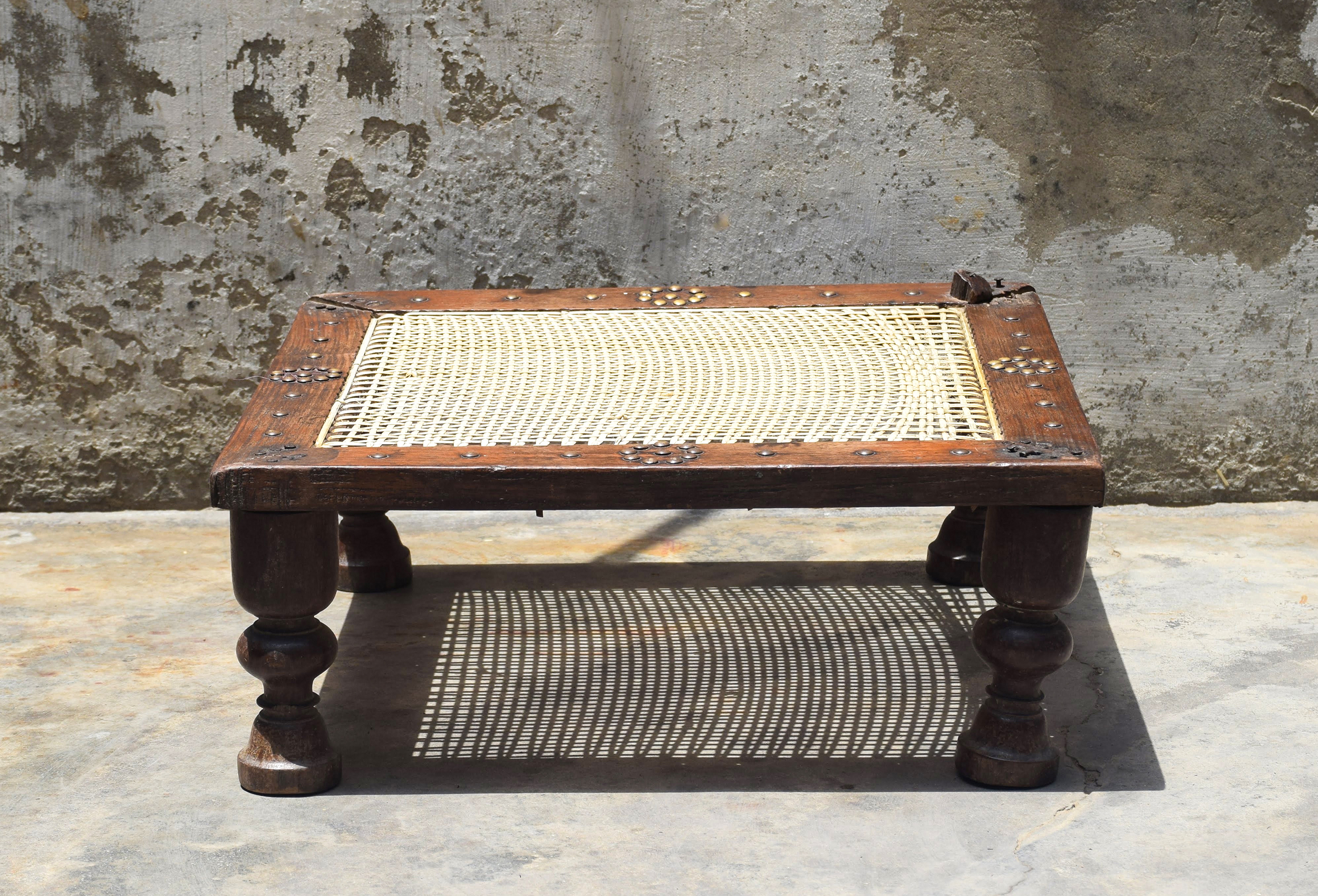
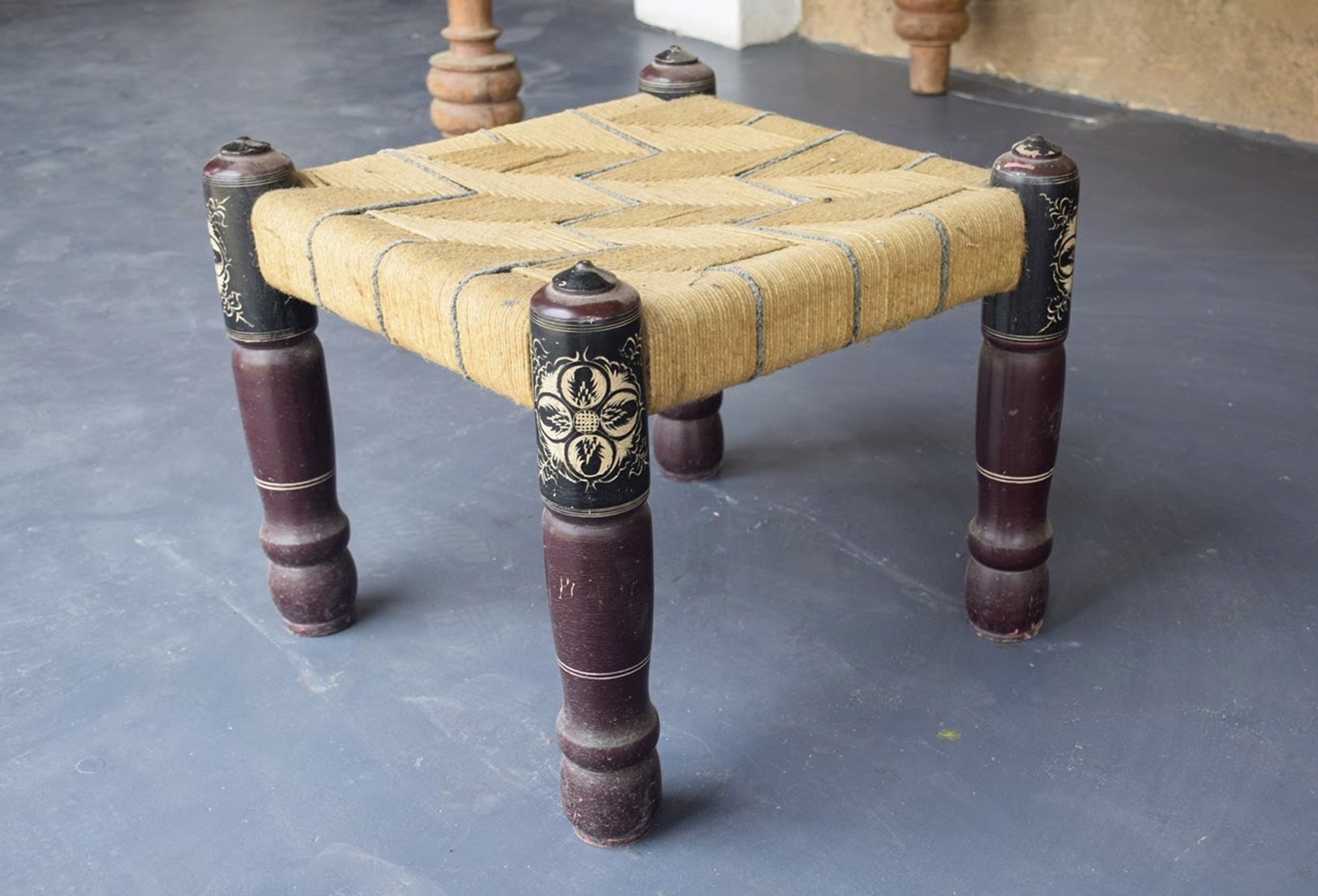
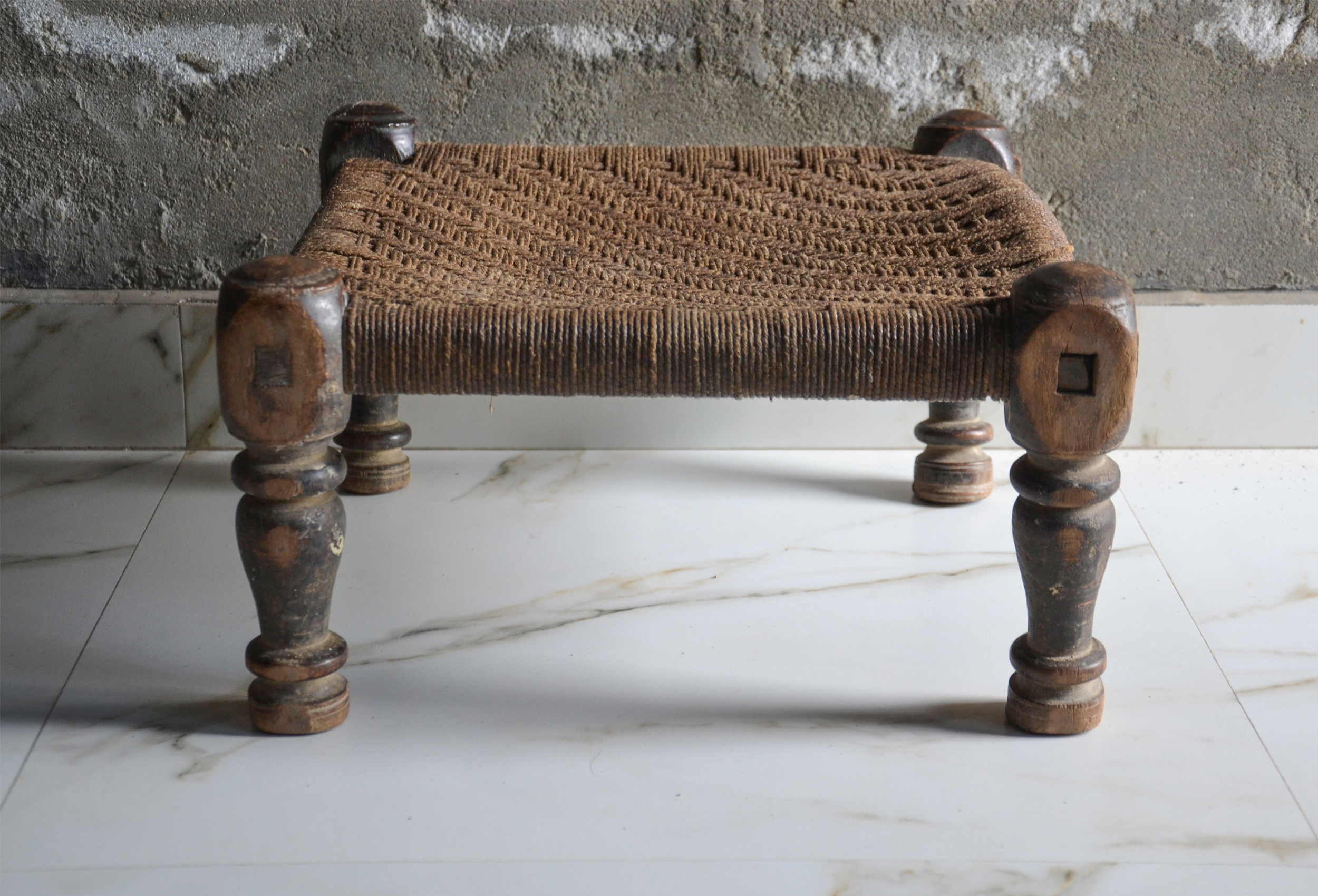
A low, square wooden stool with four turned or carved legs, a webbed seat, and no backrest, the pidhi or machi is among the most common forms of vernacular furniture across northwestern India. Light and portable, it is used in the home while performing a wide range of domestic activities, primarily by women; and varies in style and ornamentation across the region.
Terminology
Names for this type of low stool vary by region and language across northwestern India. In Punjab, Haryana, and Rajasthan, this type of stool is known as pidhi; in parts of Haryana the term pidda or piddi is also used. In Gujarat it is called machi (from Sanskrit manchika, ‘stool’ or ‘chair’), a term also used in neighbouring regions of Rajasthan. The term ghanti ni machi is also used in Gujarat, owing to the stool’s use while working the ghanti, or hand mill. The Gujarati varmachi (groom’s stool) and ghedmachi (water pitcher stool) are variants used for specific purposes. In the Shekhawati region of Rajasthan, the stool is also called pidha — not to be confused with the low chair also known by that name in Rajasthan, Punjab, and Haryana.
Design and construction
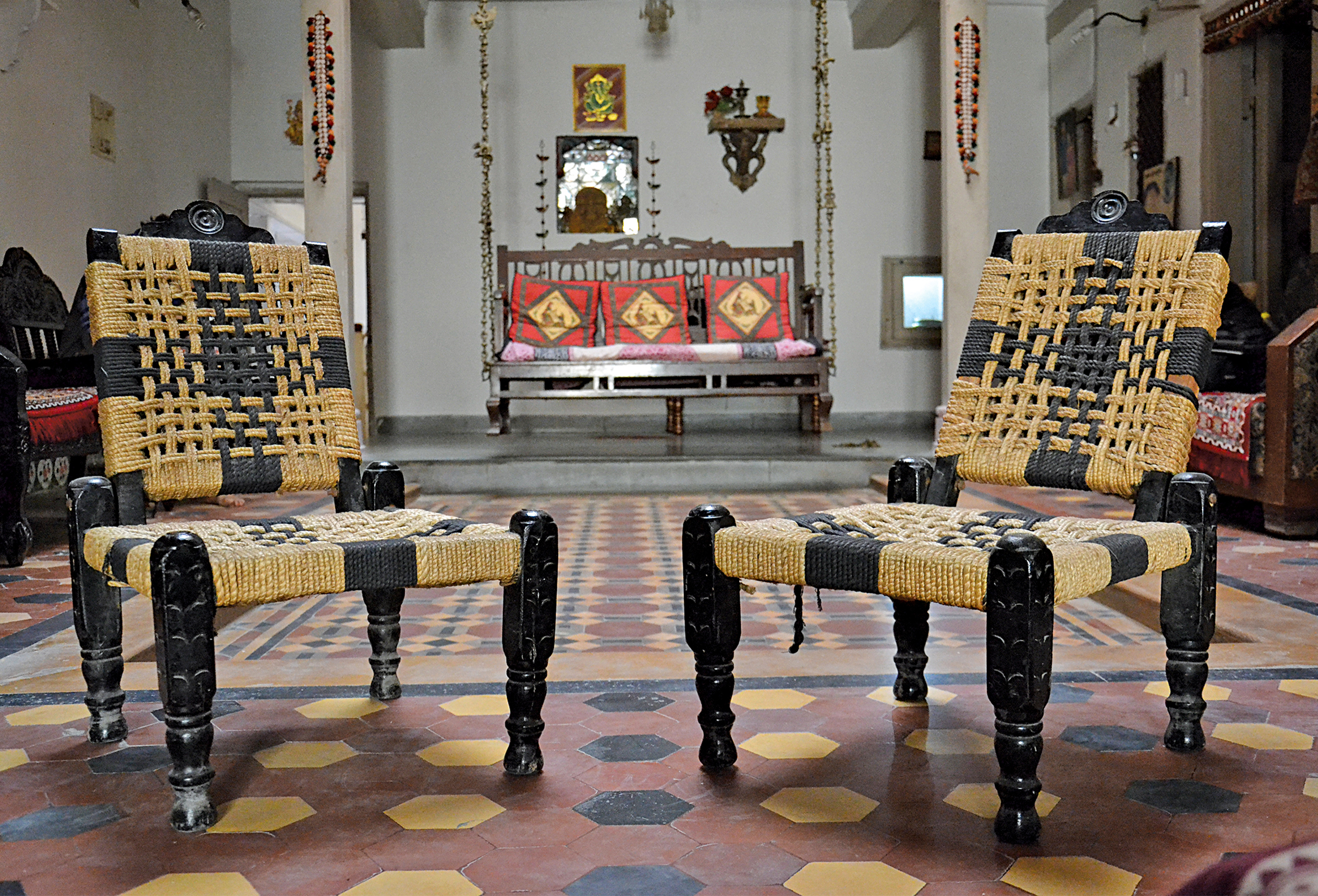
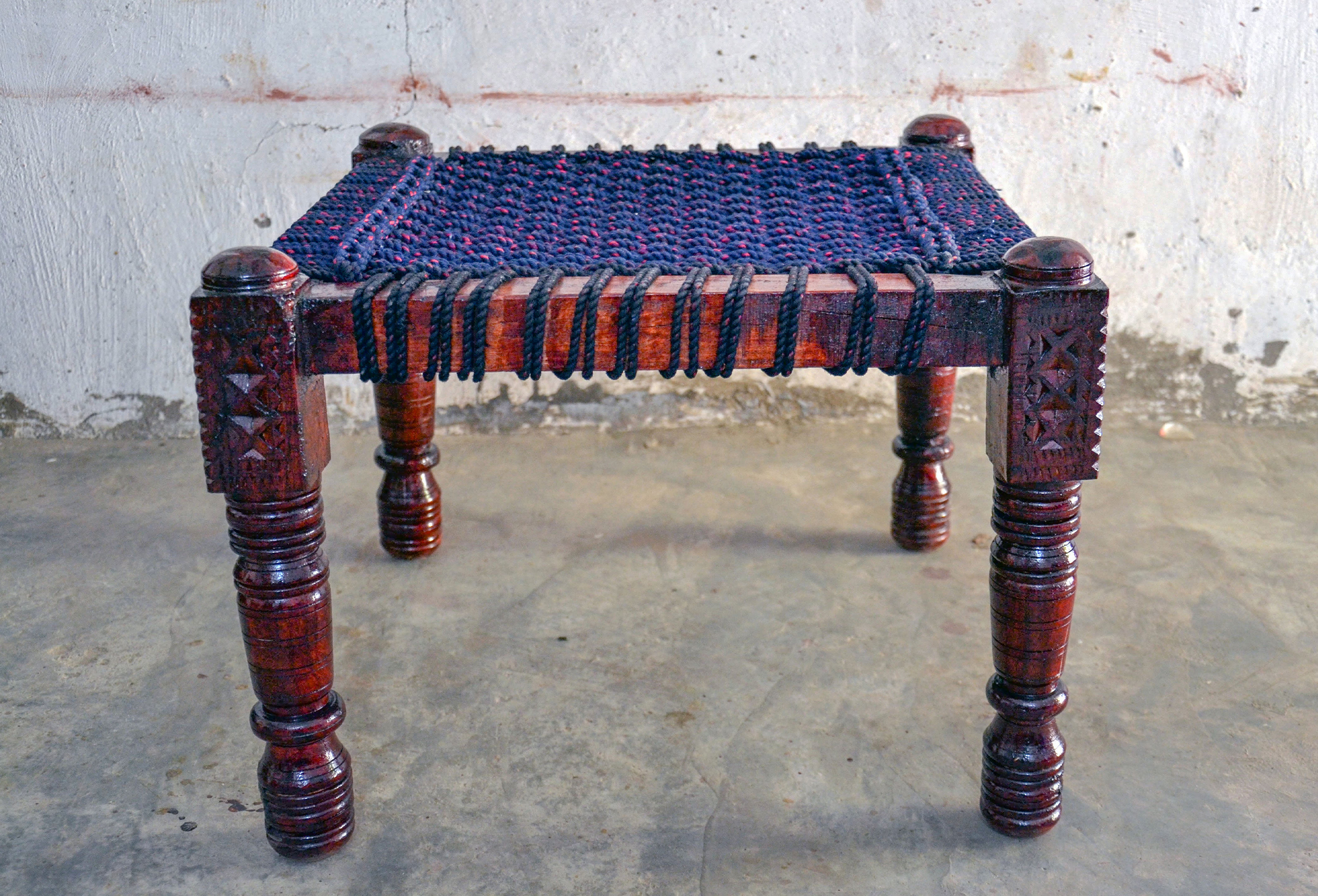
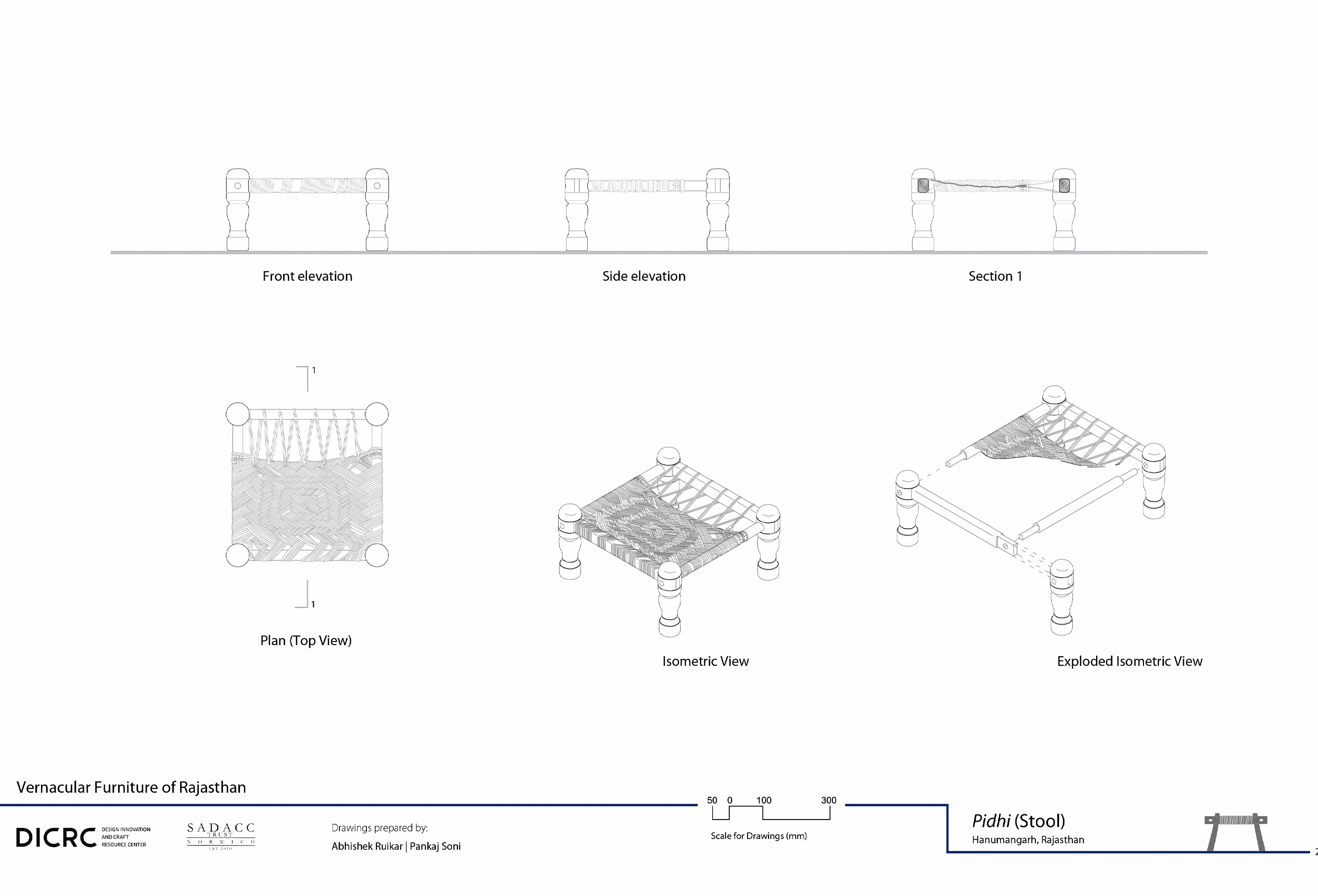
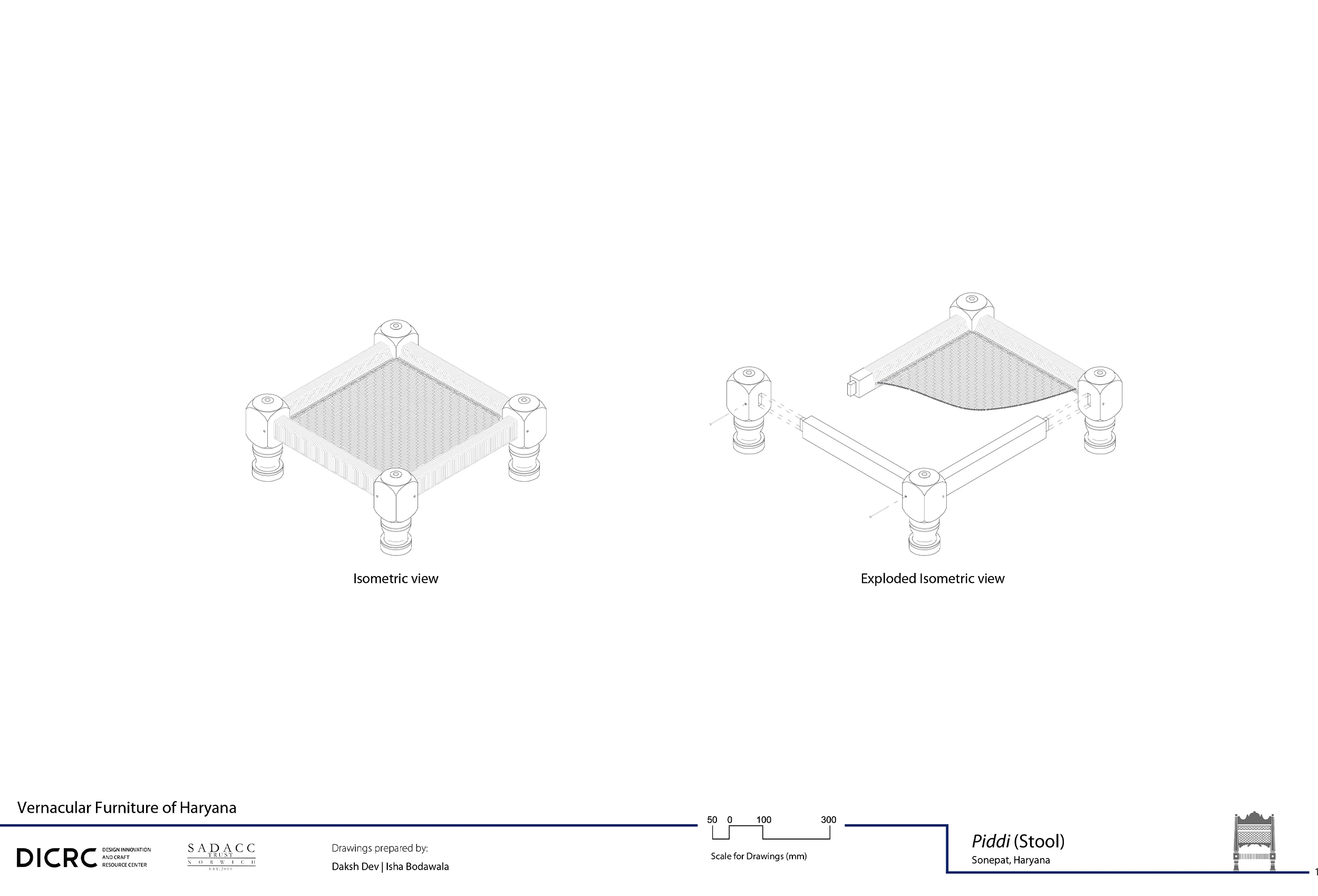
A machi or pidhi has three components: the legs, the frame and the webbing. The four legs, turned on a lathe or hand-carved and often given a decorative form, are made of wood such as shisham (Dalbergia sissoo) or neem (Azadirachta indica). They may be bulky or slender, polished or coloured, and are typically fitted perpendicular to the frame except in specific variants of the stool where they are angled.
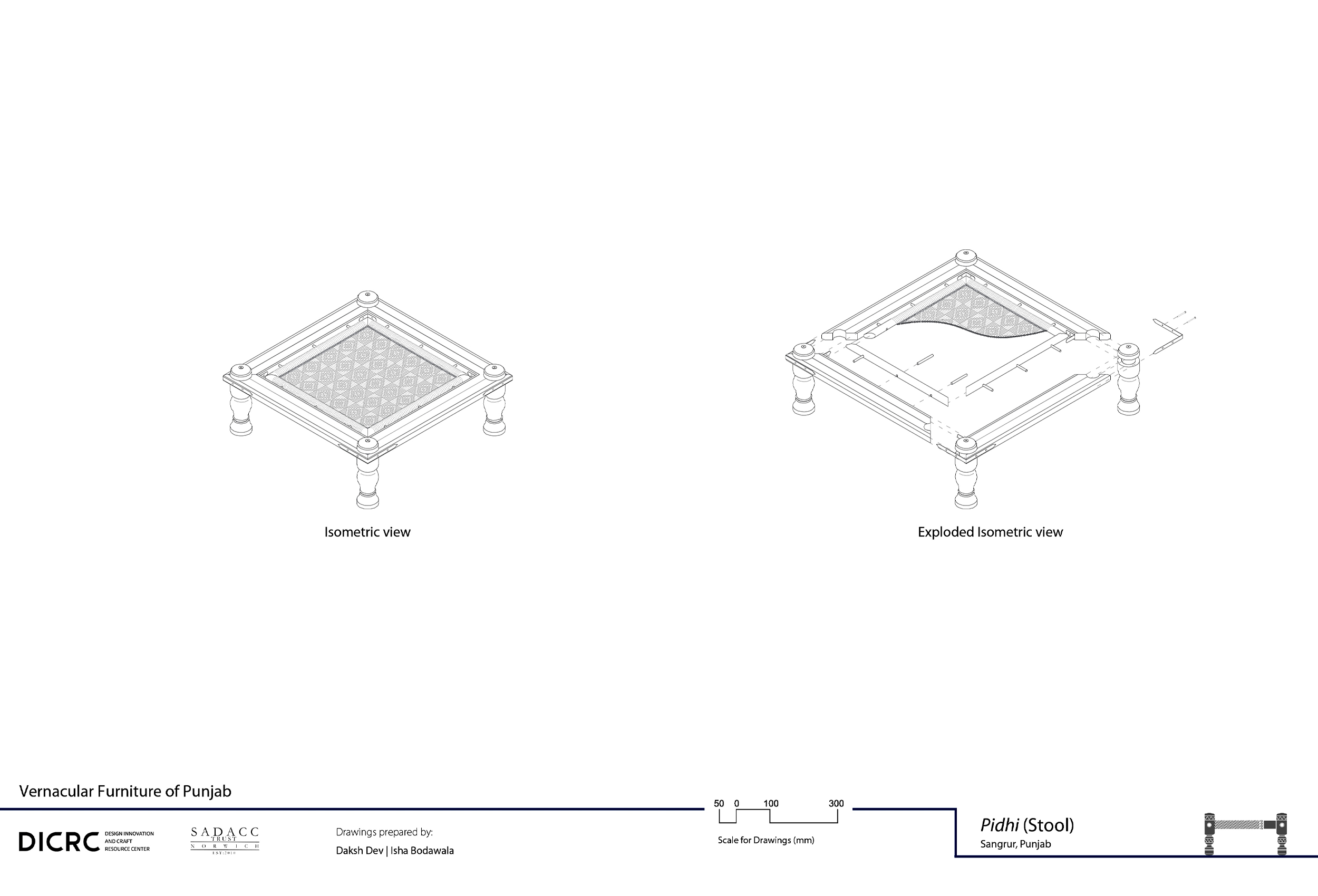
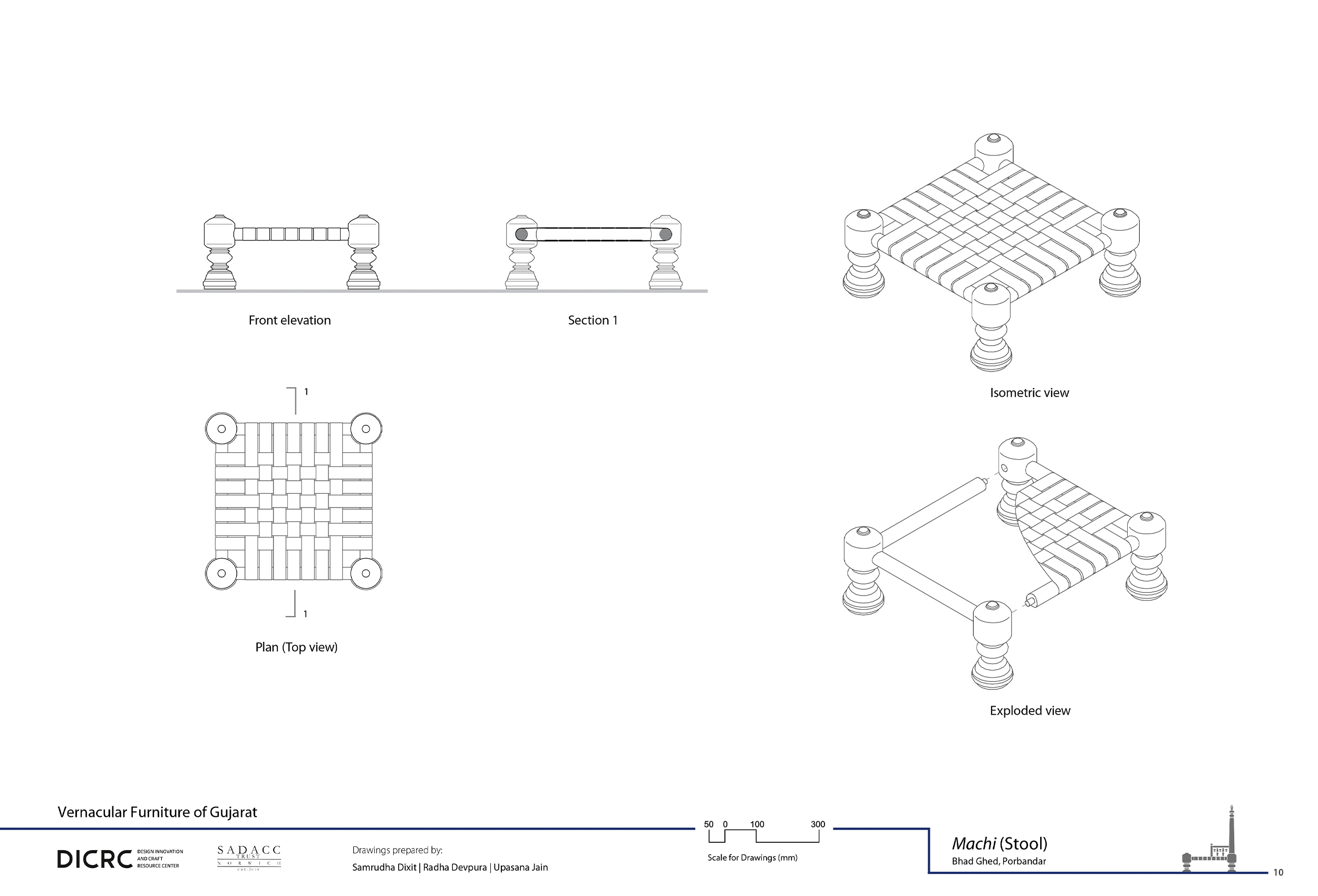
The frame members are generally attached to the legs using mortise and tenon joints. In one technique, adjacent members are slotted into the legs using an intersecting mortise and tenon joint: two opposing members have their ends carved into cuboidal tenons, through which circular holes are drilled, and the two other members have cylindrical tenons at their ends. The former are slotted into the legs first, and the latter are then slotted through both the leg and the tenon of the adjacent member. Because the tenons interlock within the legs, the resulting joint is sturdy and self-supporting, and no adhesives or fasteners such as nails or screws are used. The technique also ensures that the frame sits level so that the webbing is flat. In many other cases, adjacent members of the frame are joined to the leg at slightly staggered heights — as in a charpoy — to accommodate both tenons without interlocking. In some stools, the bulbous head of the leg accommodates both tenons at the same height without interlocking. Some pidhi in Punjab are assembled using mitre joints reinforced with metal braces at the corners.
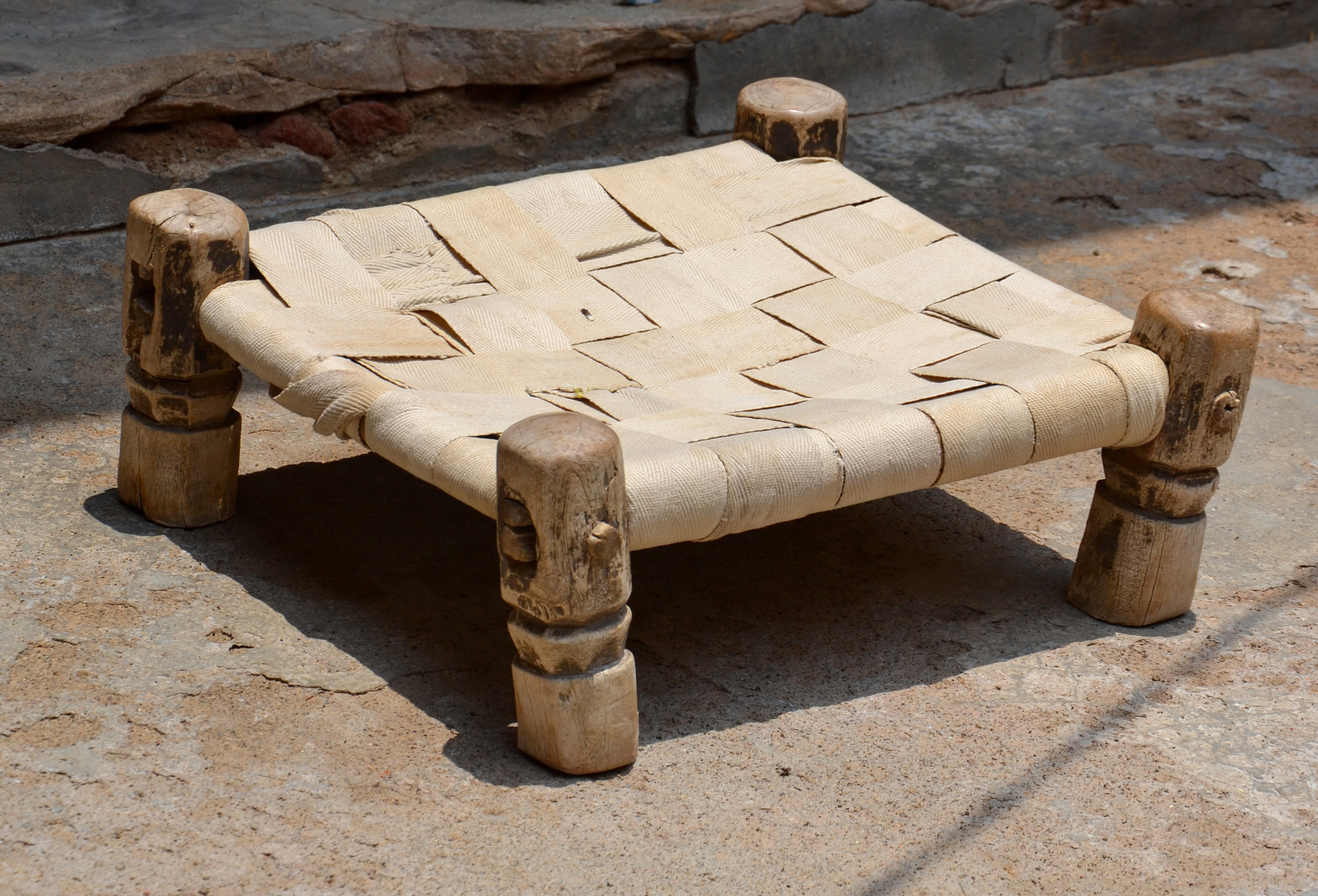
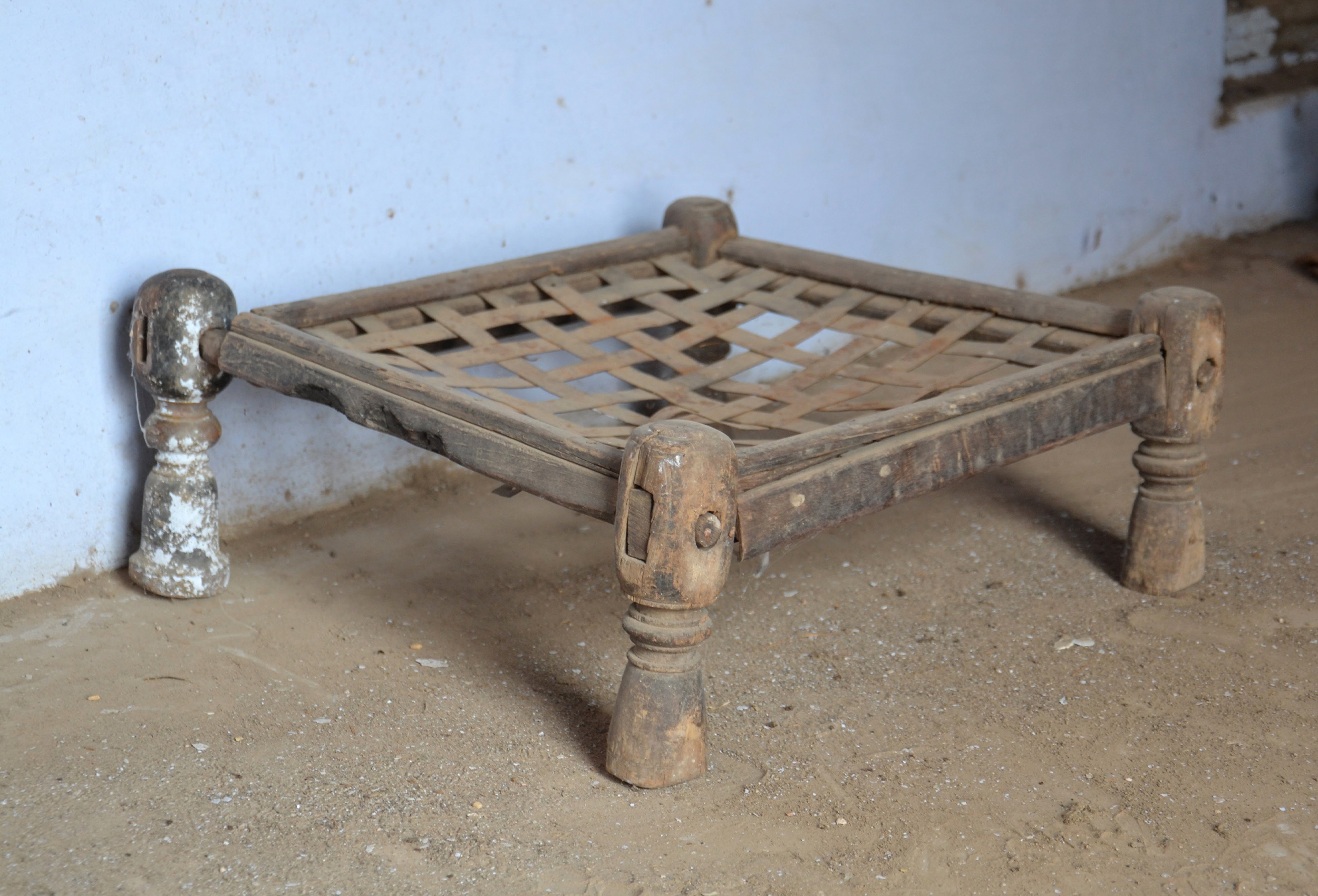
Two related stools recorded in southern Rajasthan share the low, portable form of the pidhi. The basni, found in the Godwad region, has a webbed seat woven over a frame of long and short members; its four legs are fixed into the frame at a splayed angle, protruding slightly above the seat. The longer members of the frame, which project beyond the seat, are intended to support the thighs. The legs of the basni are simple rectangular pieces rather than lathe-turned or decorated as in the pidhi. The tarvaiyya, one example of which was recorded in the Vagad region, is even more rudimentary, comprising four legs slotted at an angle into a solid wooden plank, with no webbing. A similar structure is seen in the varmachi and the ghedmachi in Gujarat, though the former is much more polished.
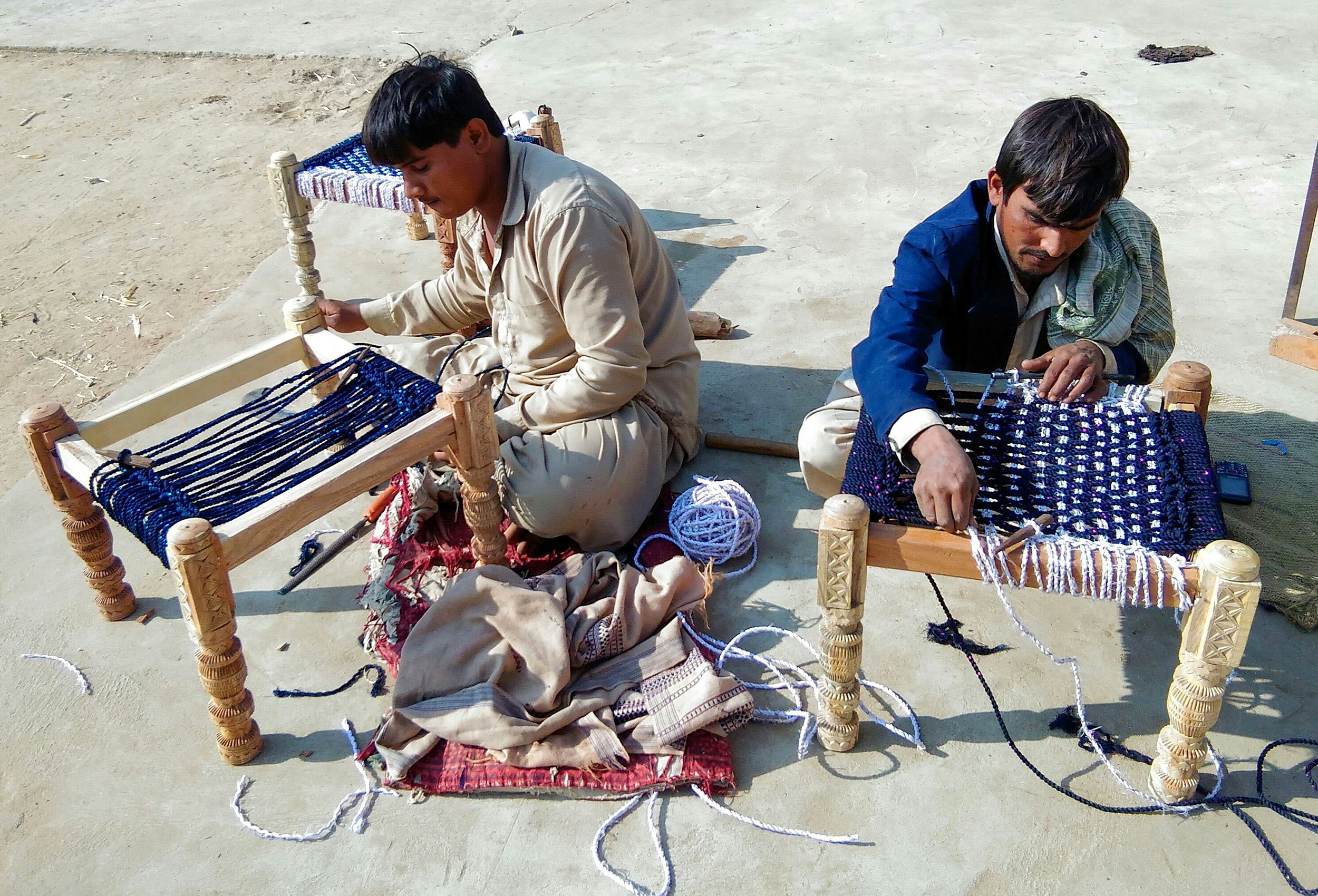
The stool is easy to make and to repair. Its economical use of material and modest size make it light and portable. It is common practice to buy the legs from a carpenter and to weave the seat at home. The stool is made to varying heights to suit its intended use: a stool used at a hand mill, which sits close to the floor, is lower than one used at a butter churner, which is higher. In Gujarat, however, the form of the machi has changed over time and modern machi are more elevated from the ground and often built with a backrest. The pidhi has also adapted to new materials in Haryana. A stool recorded in the Jhajjar district was made by a blacksmith using wood, cast metal, and plastic bushes. At Sotai in the Faridabad district, pidhi with frames made entirely of metal were recorded, while one pidhi in Kurukshetra had its webbing made out of beaten and riveted metal.
Webbing
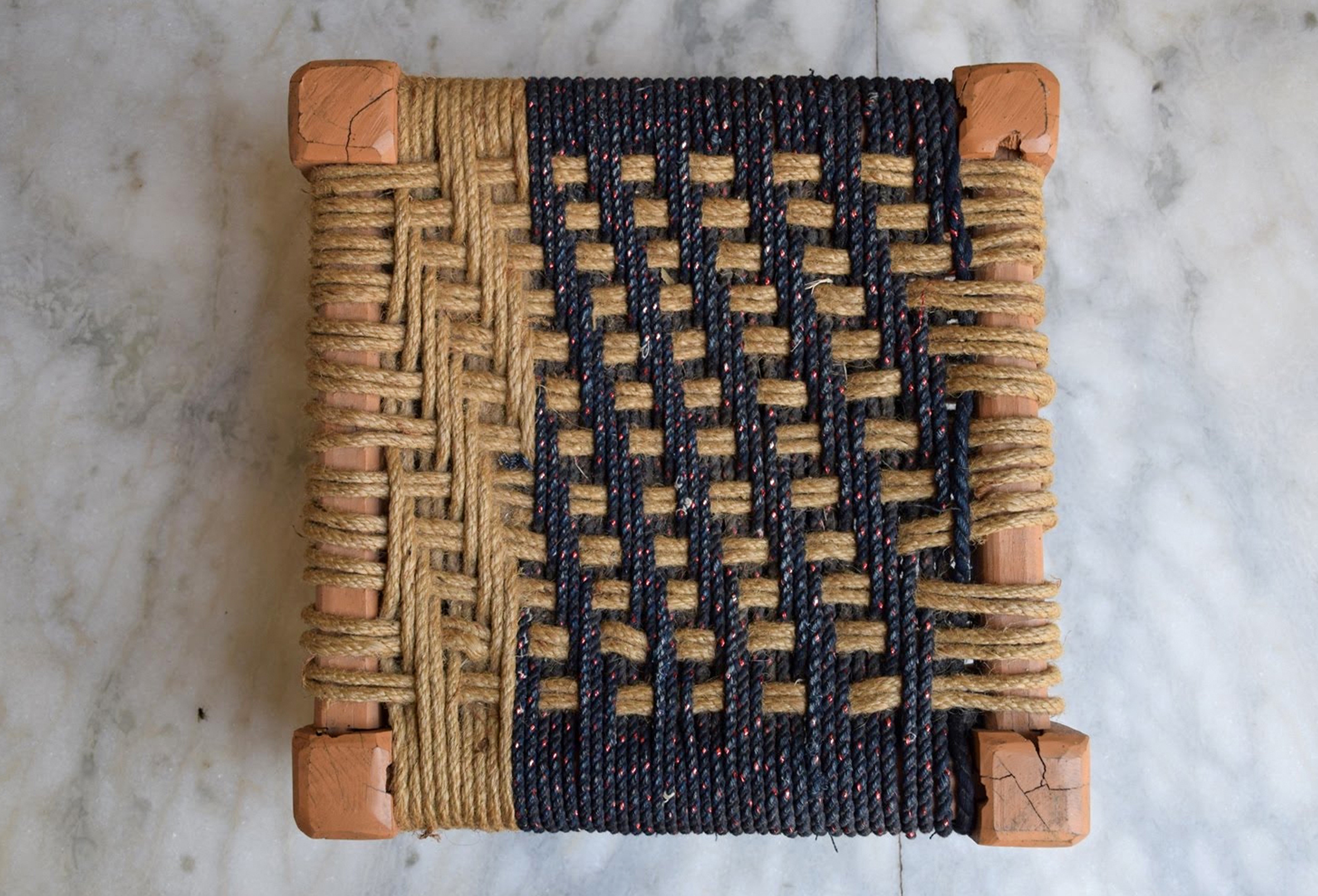
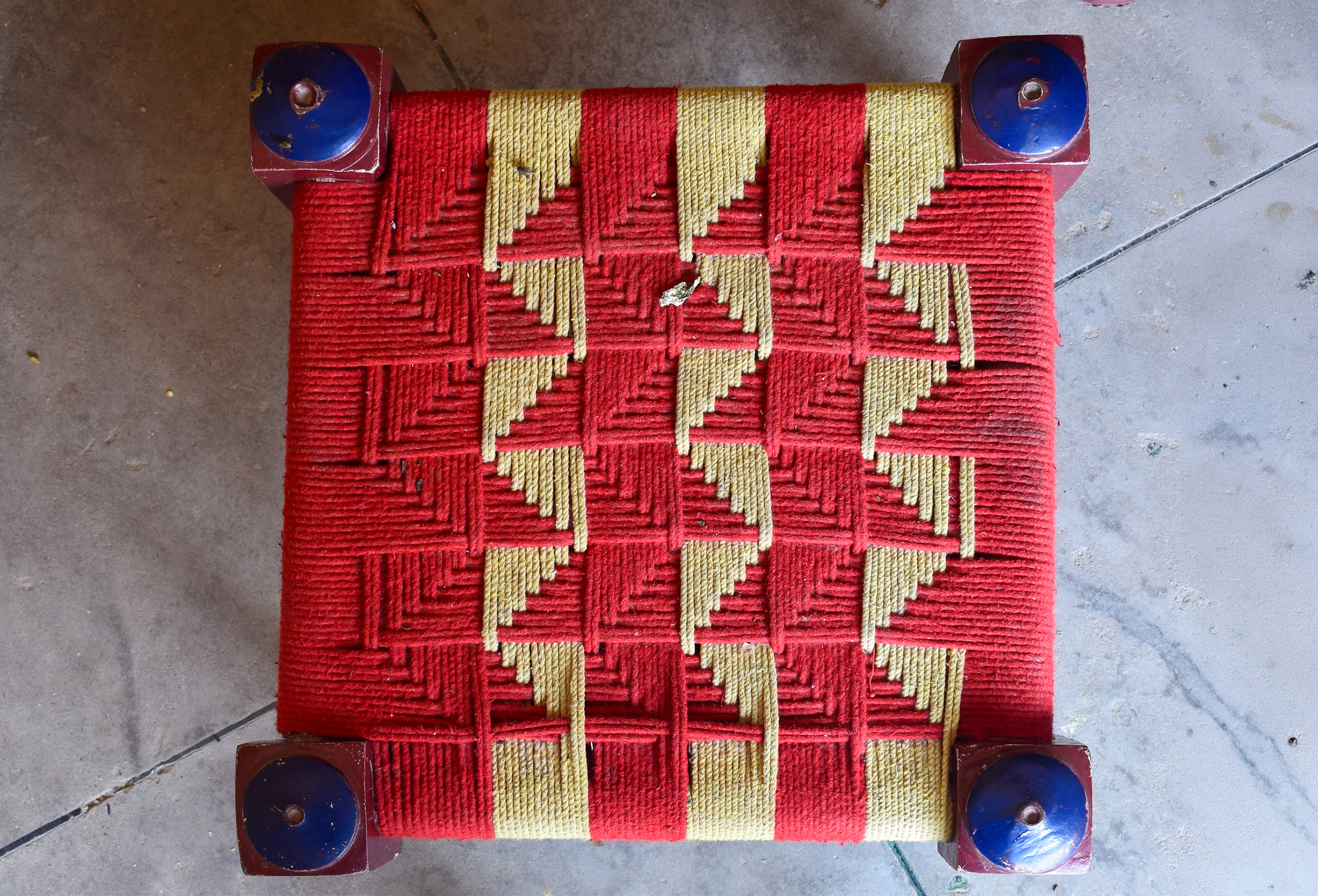
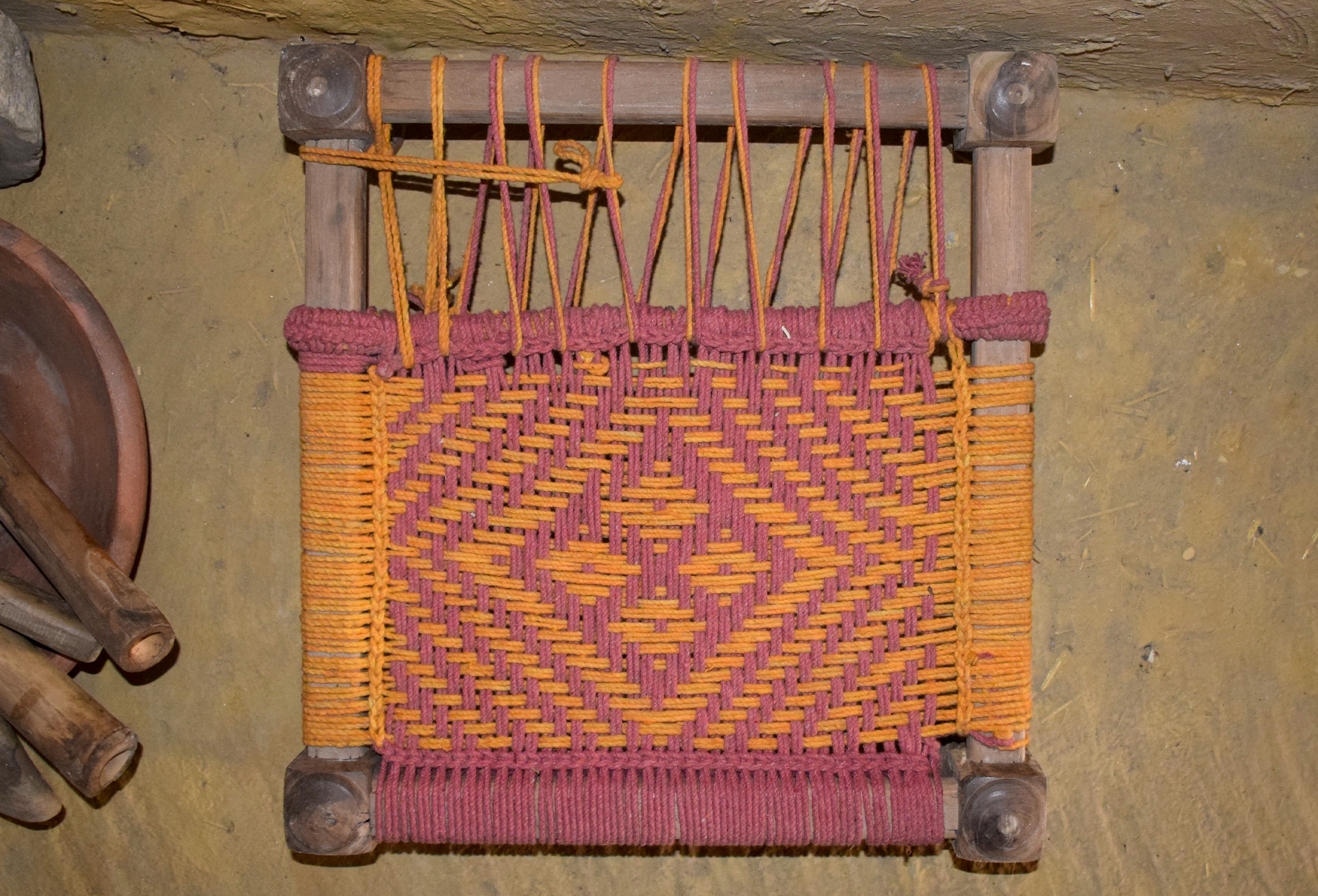
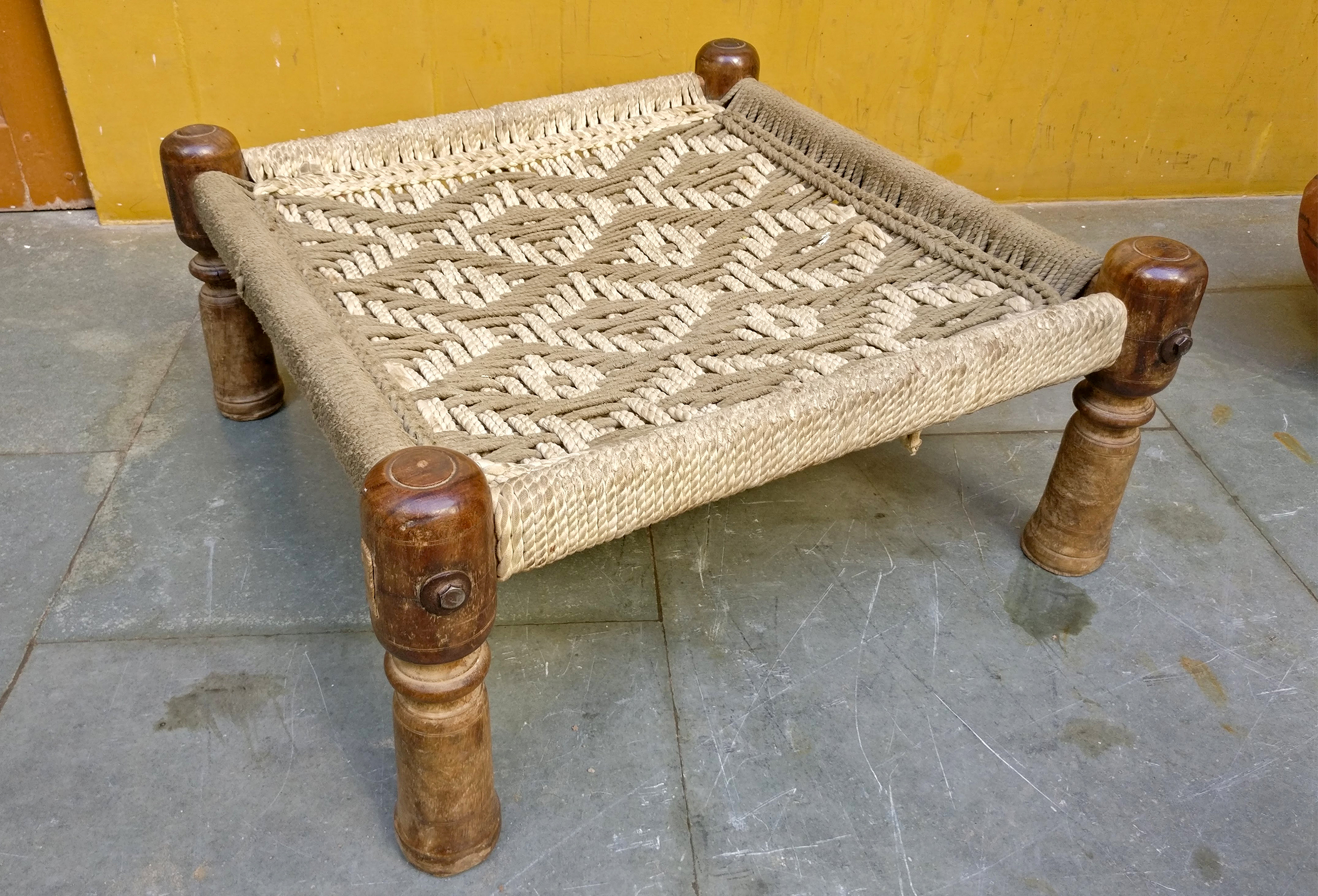
The webbing is woven over the square frame, either covering the entire seat or, as with the charpoy, leaving one edge with the warp exposed, to be able to adjust the tension of the weave as it loosens with use. The rope for the webbing is made from a variety of materials. While cotton rope is common across regions, munjh or sarkanda (Tripidium bengalense) and jute are also used in Punjab and Haryana; jute, palm-leaf and recycled-fabric in Rajasthan; and coir in Gujarat. Nylon and plastic rope are increasingly used in modern versions. Irrespective of the material used, the advantage of the webbed seat is that it creates a taut surface while also allowing air to flow through, making the stool comfortable to sit on in hot weather.
The weave may follow a variety of patterns; in Punjab and Haryana, plain, twill, and sateen weaves are all found in the nawaan or webbing. Weave and colour are frequently used to personalise the stool: in Rajasthan pidhi may be woven in leheriya, a pattern widely used in the region’s textile crafts, or in tessellated patterns of coloured cotton rope. The tight, coloured weaves of Punjab, particularly around Amritsar and Ludhiana, echo the phulkari embroidery that is typical of the region. In Hanumangarh in northern Rajasthan, pidhi seats are woven using distinctive techniques similar to those used for charpoys, including gundiwadi, characterised by gundi knots at the edges of the webbing, and gherewadi, which have a criss-cross webbing pattern in which the knots are hidden.
Ornamentation
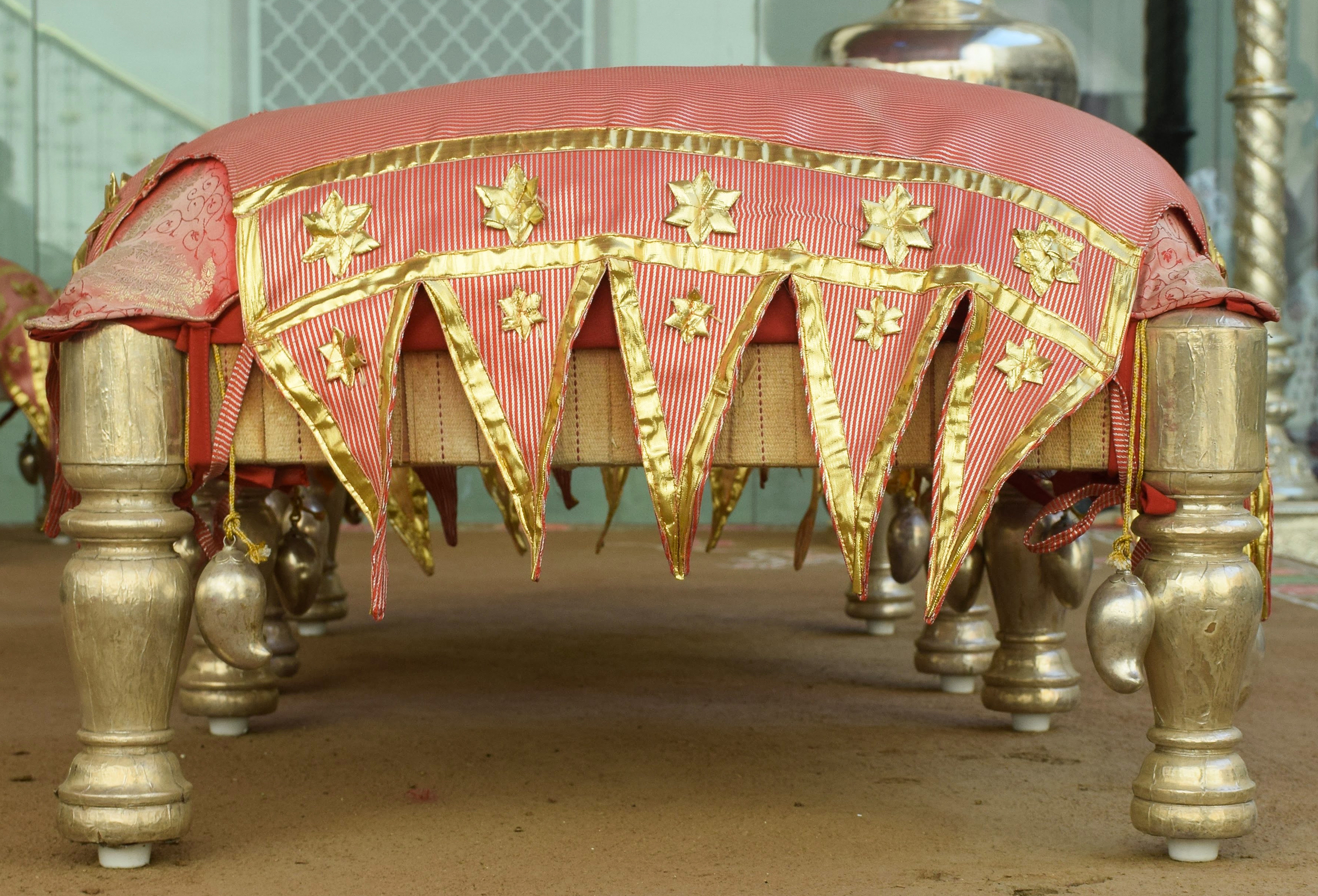
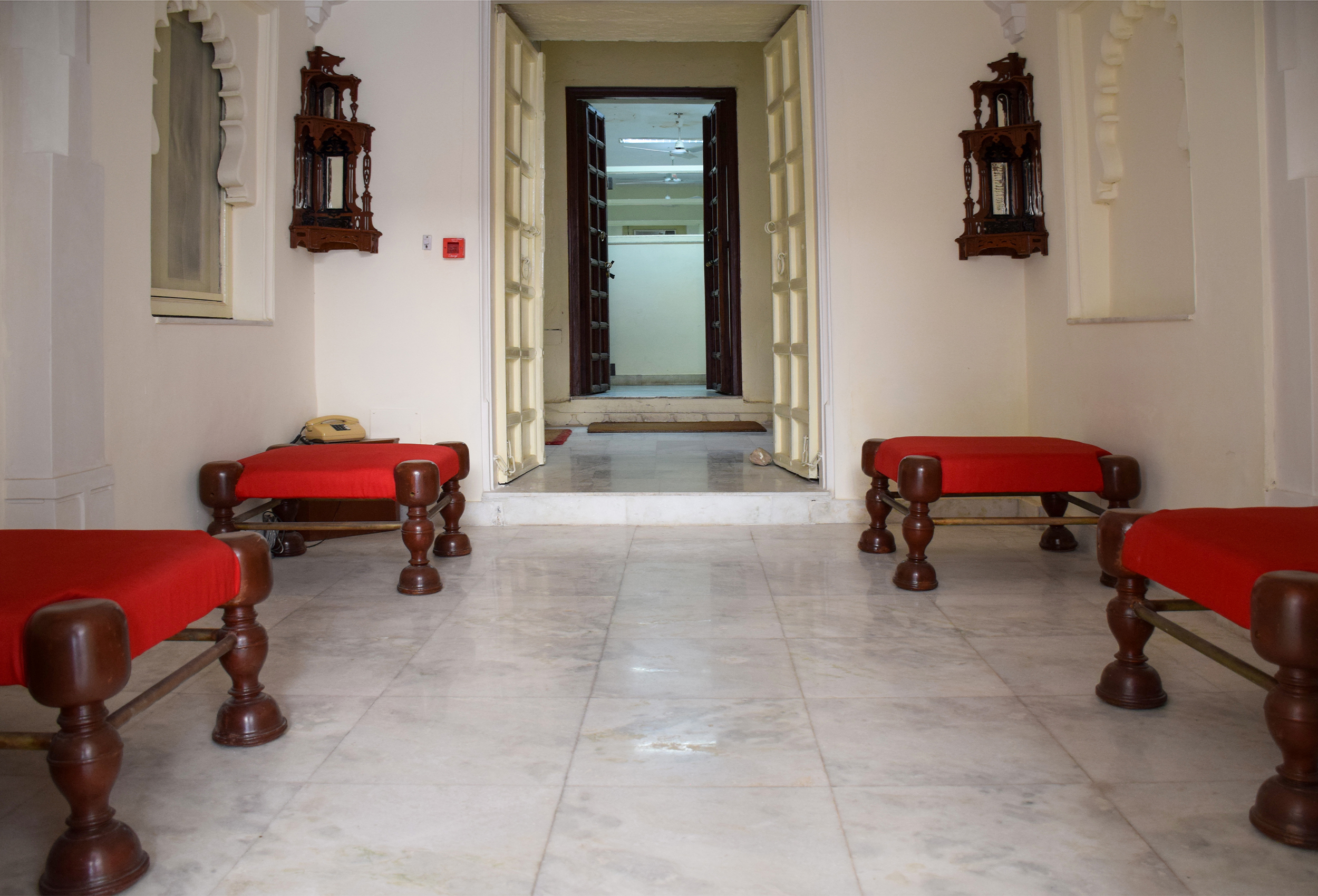
From plain, everyday stools to elaborate ceremonial and courtly pieces, the stools display a wide variety of ornamentation. The cloth sometimes stitched directly onto the seat to protect the webbing can also serve to personalise the stool. One pidhi recorded in the Fatehgarh Sahib district of Punjab, made by a carpenter of the Ramgharia community, has legs carved in the form of lion paws; its use is restricted to ceremonial occasions. Four stools once used by the royal family of Mewar survive in the City Palace at Udaipur: their lathe-turned legs are finished with lacquer and braced with brass pipes, and the seats cushioned and upholstered in red cotton. The most ornate pidhi documented in the research are at a display recreating the setting of a wedding in Udaipur, likely historical pieces restored more recently. These feature turned legs clad in silver, and newar cotton webbing. A silver mango is suspended from each of the seat corners, and a brocade silk cushion is tied over the seat with long threads; this is additionally covered with silk fabric decorated with gota work. The varmachi or groom’s stool in Gujarat is made of turned wood finished with a coat of lacquer in the auspicious colours of red, green and yellow, and also laid with a cushion. Some other pidhi show traces of colonial influence, with black paint, stubby turned legs, flat frames and close-knit plastic webbing resembling that of colonial rattan chairs.
Ownership and use
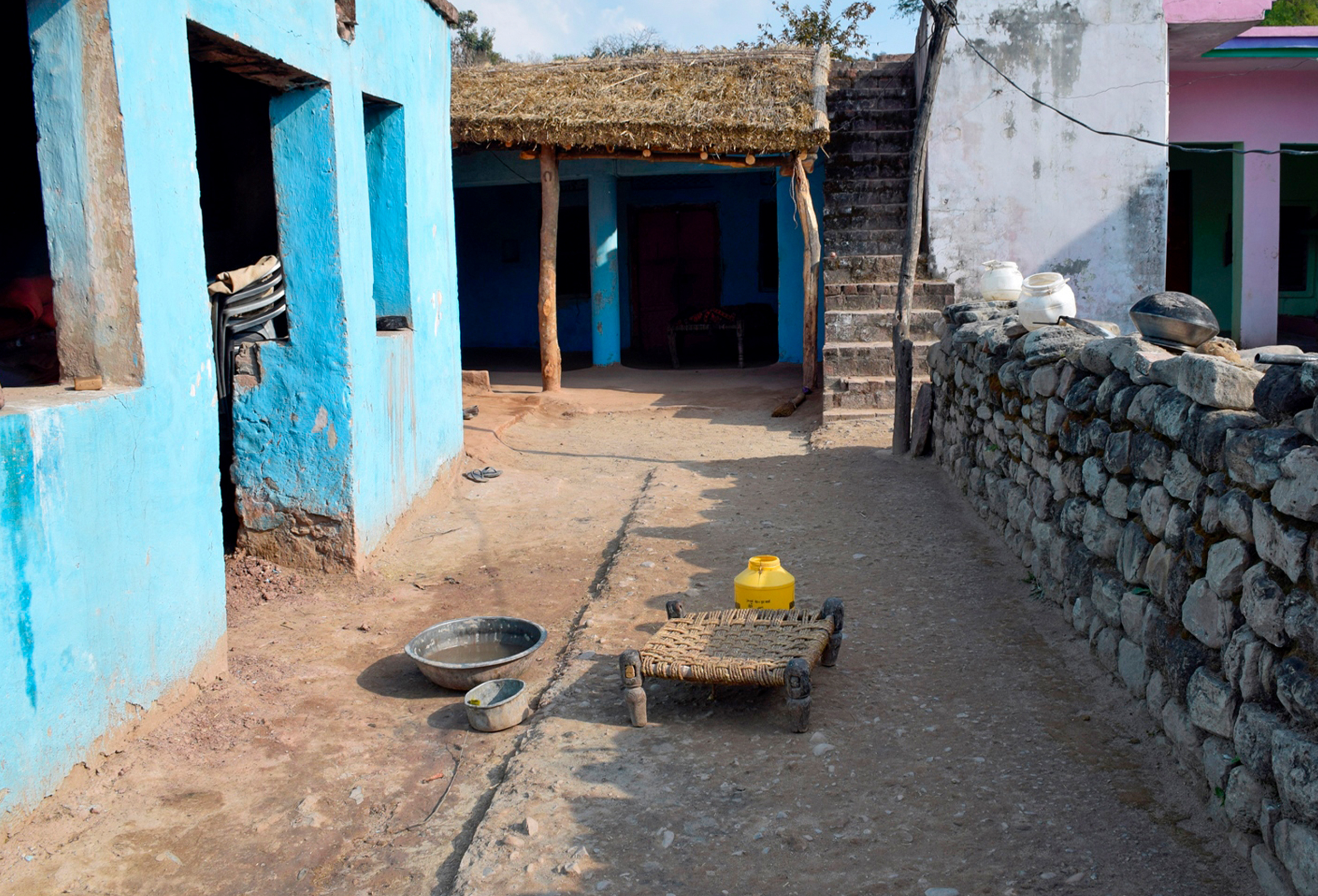
The pidhi or machi is one of the most ubiquitous pieces of vernacular furniture found in households across northwestern India, primarily used by women in the course of daily domestic work. They sit on the stool to cook, milk cows, churn buttermilk, wash utensils, grind flour using a hand-mill, and to rest and socialise; and are seen moving the light and compact seat from one task to another with ease and dexterity, rather like an extension of their own body. A pidhi or machi is often given to a bride by her parents as part of her bridal trousseau.
In villages along the border between Punjab and Rajasthan the stools are also used by men to hold their plates at mealtimes, while they themselves sit on lower seats called phatti. Households often have several such stools, and many are kept in storage for guests, often with a textile cover placed over the seat to protect the webbing. A pidhi may be handed down within a family as an heirloom, and restored with new webbing while preserving the original frame. Another use of this type of low stool is as a seat in bullock carts on long journeys, especially in Gujarat.
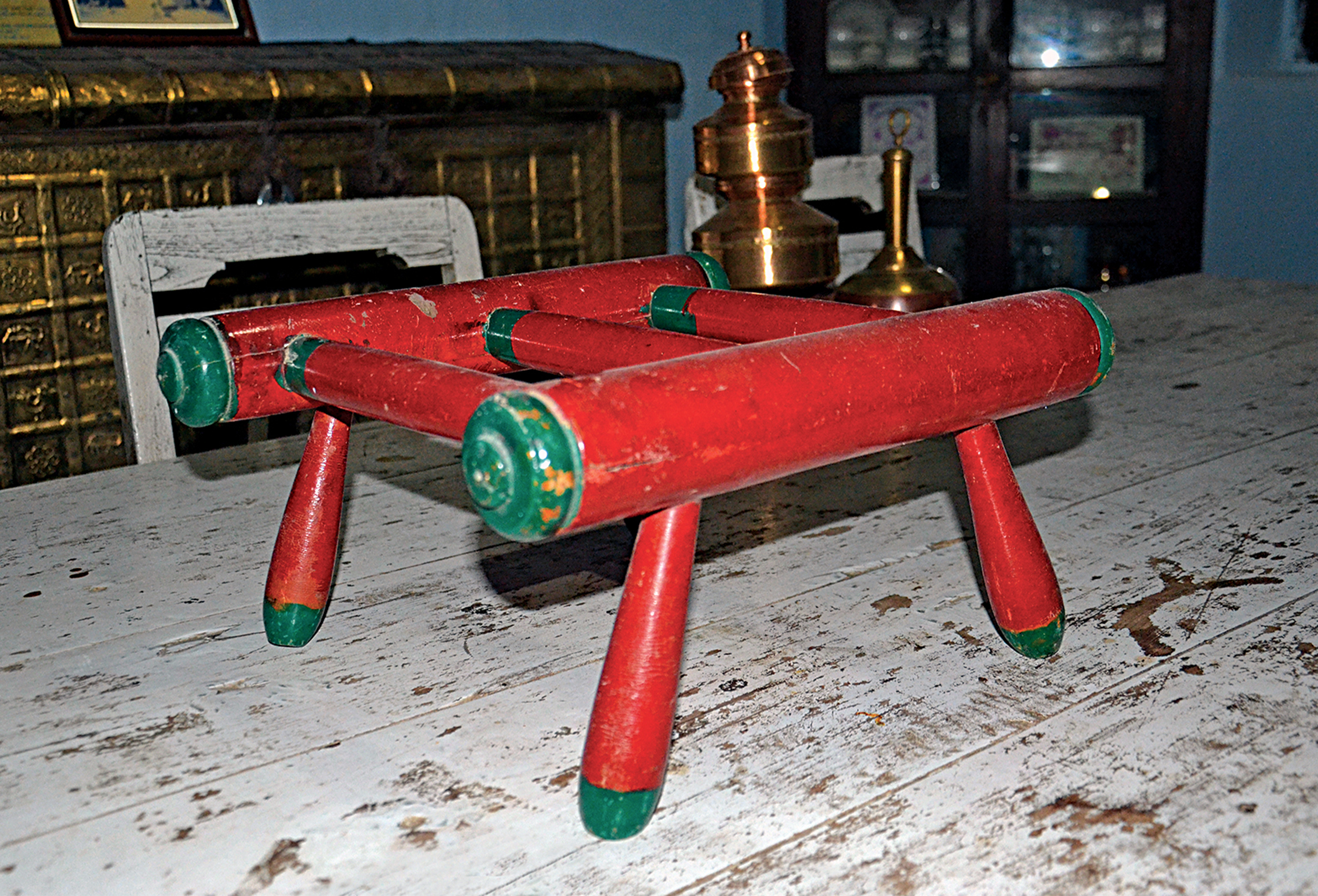
The varmachi found in the Saurashtra region of Gujarat serves as a seat for the groom during weddings, while the bride sits on a lower seat known as the paatlo. The ghedmachi, similar in form but cruder with an unpainted surface, is commonly used as a portable stand for water pots in rural Gujarati households. In Rajasthan, the basni is used for much the same purposes as the pidhi; the single recorded example of the tarvaiyya, however, was used specifically for milking cows, its wooden seat being less prone to milk stains than the webbed seats of basni and pidhi. When not in use, it was stored on a stone shelf in the cattle shed itself.
This article is adapted from the outcomes of Vernacular Furniture of North-West India — a collaborative research and documentation project by the Design Innovation and Craft Resource Centre (DICRC), CEPT University, India, and The South Asian Decorative Art and Crafts Collection Trust (SADACC), UK — shared with the Encyclopedia of Art through an Impart partnership. Explore more from this series in our Collection Objects Alive: Vernacular Furniture of North-West India.
First published: 30 October 2026
Image Gallery
Bibliography
Bais, Mitraja, Jay Thakkar, Samrudha Dixit, and Ben Cartwright. Sahaj: Vernacular Furniture of Gujarat. Ahmedabad: CEPT University Press, 2018.
Rao, Mansi S., Ben Cartwright, and Samrudha Dixit. Anaikya: Vernacular Furniture of Rajasthan. Ahmedabad: CEPT University Press, 2021.
Rao, Mansi S., Ben Cartwright, Jay Thakkar, and Abhishek Ruikar. Smarya: Vernacular Furniture of Punjab and Haryana. Ahmedabad: CEPT University Press, 2026.
Vernacular Furniture of India. Accessed August 18, 2026. https://vernacularfurnitureofindia.com/
Feedback