-
ChicagoImpart Encyclopedia of Art. "Pidha, Sangamachi." October 30, 2026. https://imp-art.org/articles/pidha-sangamachi/.
-
MLA"Pidha, Sangamachi." Impart Encyclopedia of Art, Oct. 30, 2026, https://imp-art.org/articles/pidha-sangamachi/.
-
HarvardImpart Encyclopedia of Art (2026) Pidha, Sangamachi. Available at: https://imp-art.org/articles/pidha-sangamachi/ (Accessed: 12 November 2026).
Low wooden chairs with a woven seat, an upright backrest and carved or turned legs, the pidha and sangamachi are forms of vernacular furniture in northwestern India. The chair may be simple or elaborate, depending on whether it is intended for everyday use or ceremonial occasions. Often reserved for the eldest woman in the household, or for the bride or groom during certain wedding rituals, its use is intimately tied to domestic customs and hierarchy.
Terminology
In Punjab, Haryana and Rajasthan, the chair is known as ‘pidha’. It is recorded in the Majha, Doaba and Malwa regions of Punjab; the Nardak, Bagad and Khadar regions of Haryana; and the Mewar, Godwad and Shekhawati regions of Rajasthan. In Gujarat, the chair is known as ‘sangamachi’ and associated with the Saurashtra region.
Design and construction
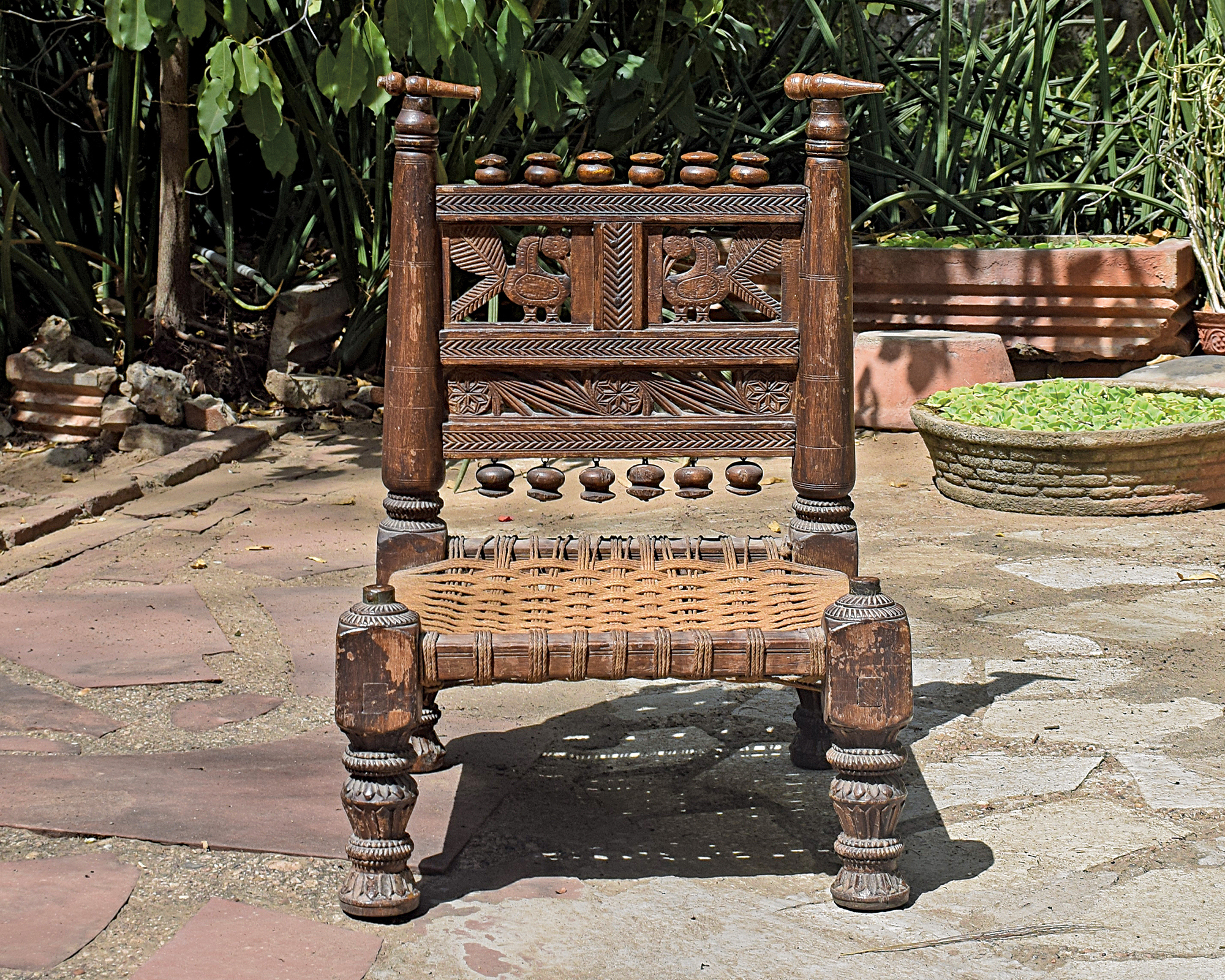
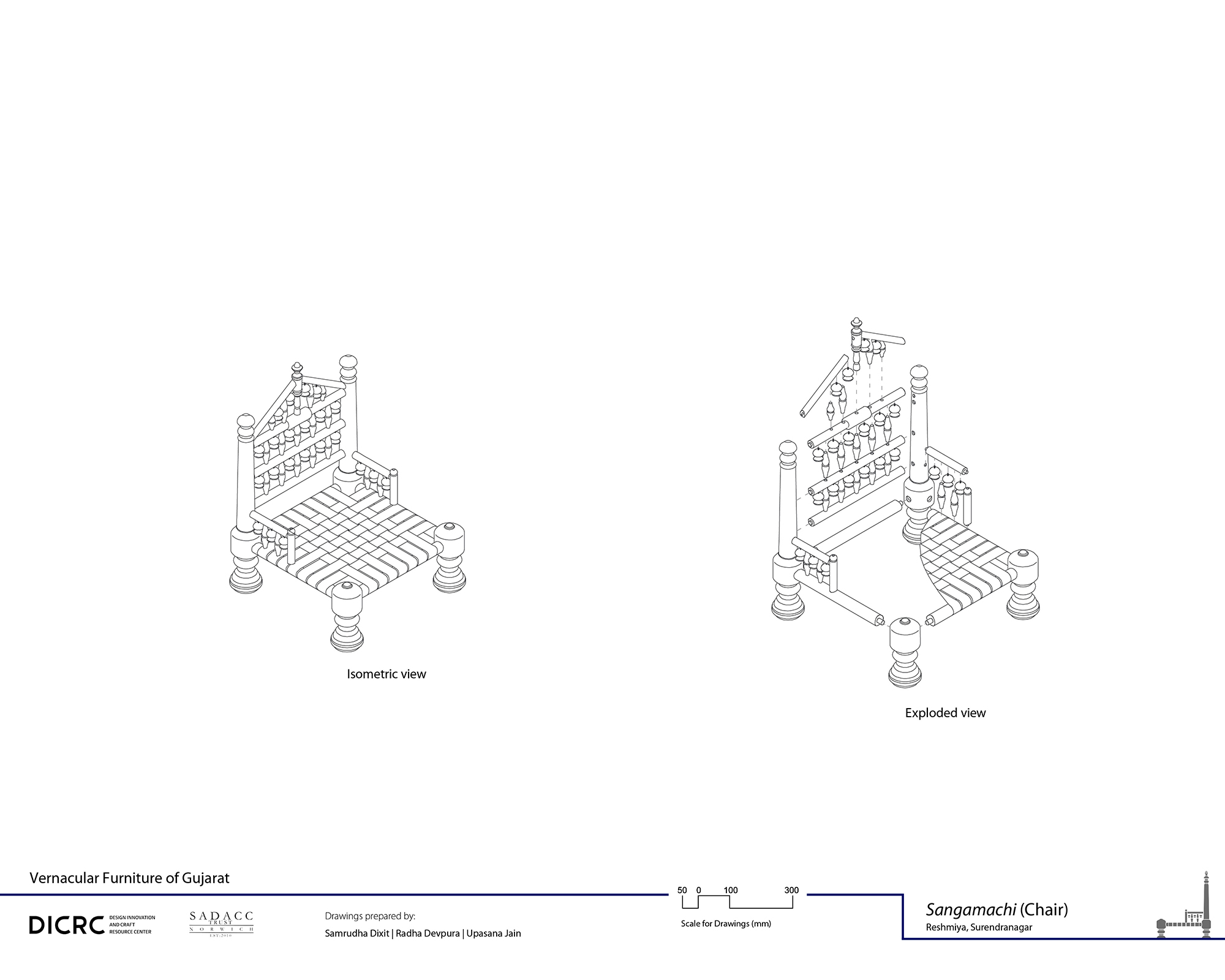
The chair has a webbed seat woven over a square or trapezoidal frame, four short legs that are lathe-turned or carved, and a relatively high upright backrest. The two rear legs of the chair extend above the seat to form the side posts for the backrest, which may rise to an arched, square, triangular, or more elaborately shaped top. The chair may be constructed from either shisham (North Indian rosewood, Dalbergia sissoo) or cheel (chir pine, Pinus roxburghii). The chair’s members are typically assembled using mortise and tenon joinery. Metalwork may also be incorporated in some cases. The seat is woven using cotton strips or rope, or jute or coir rope.
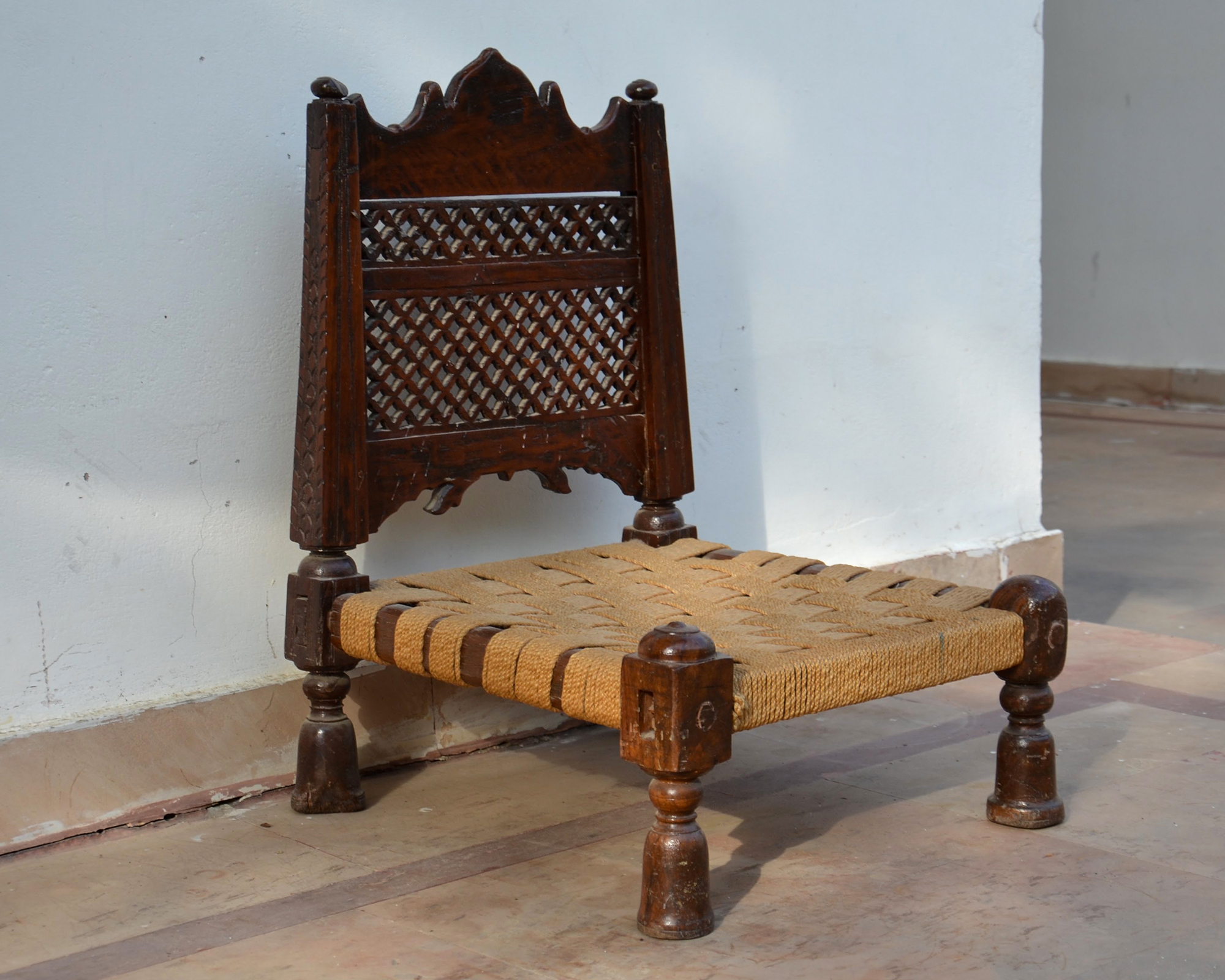
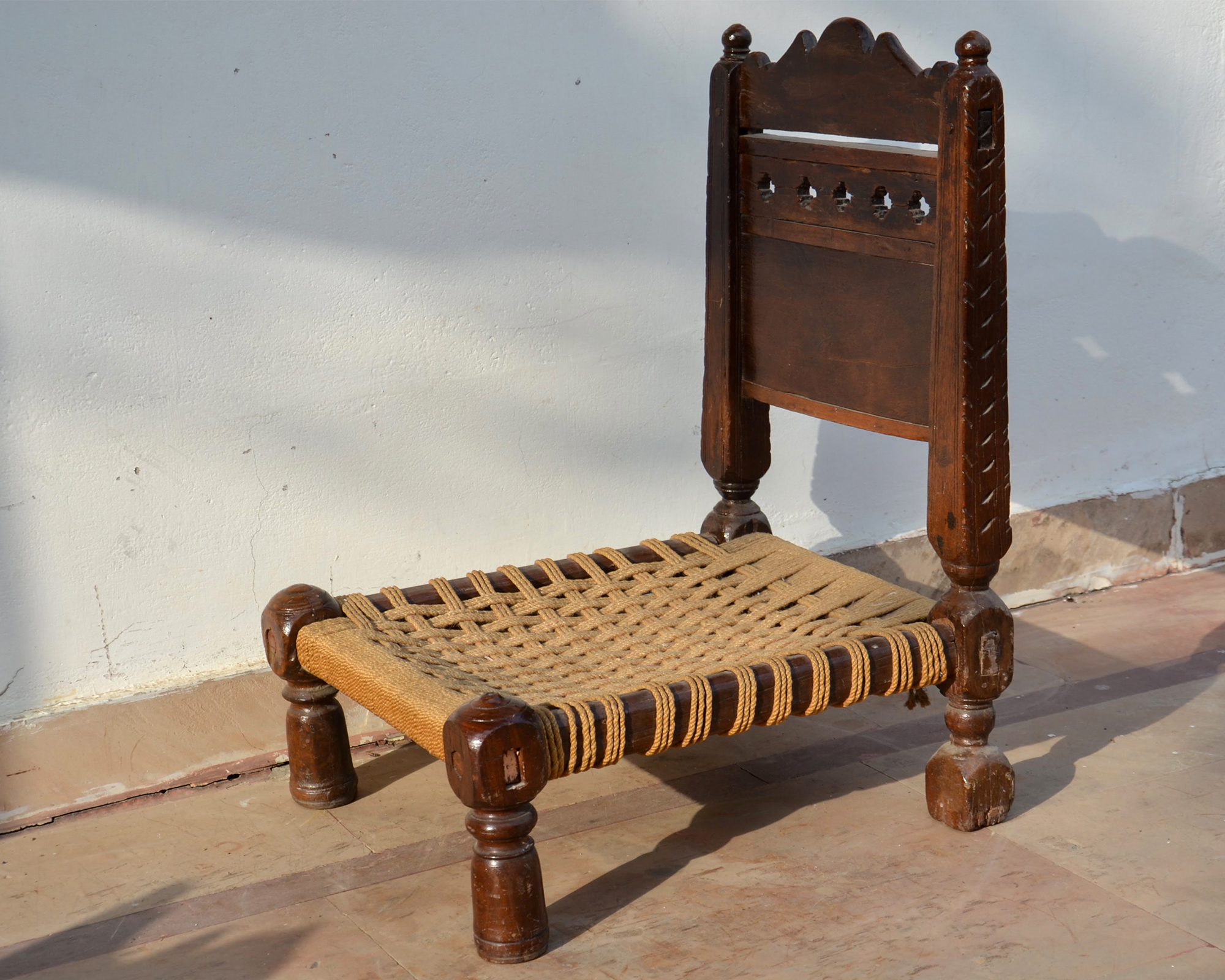
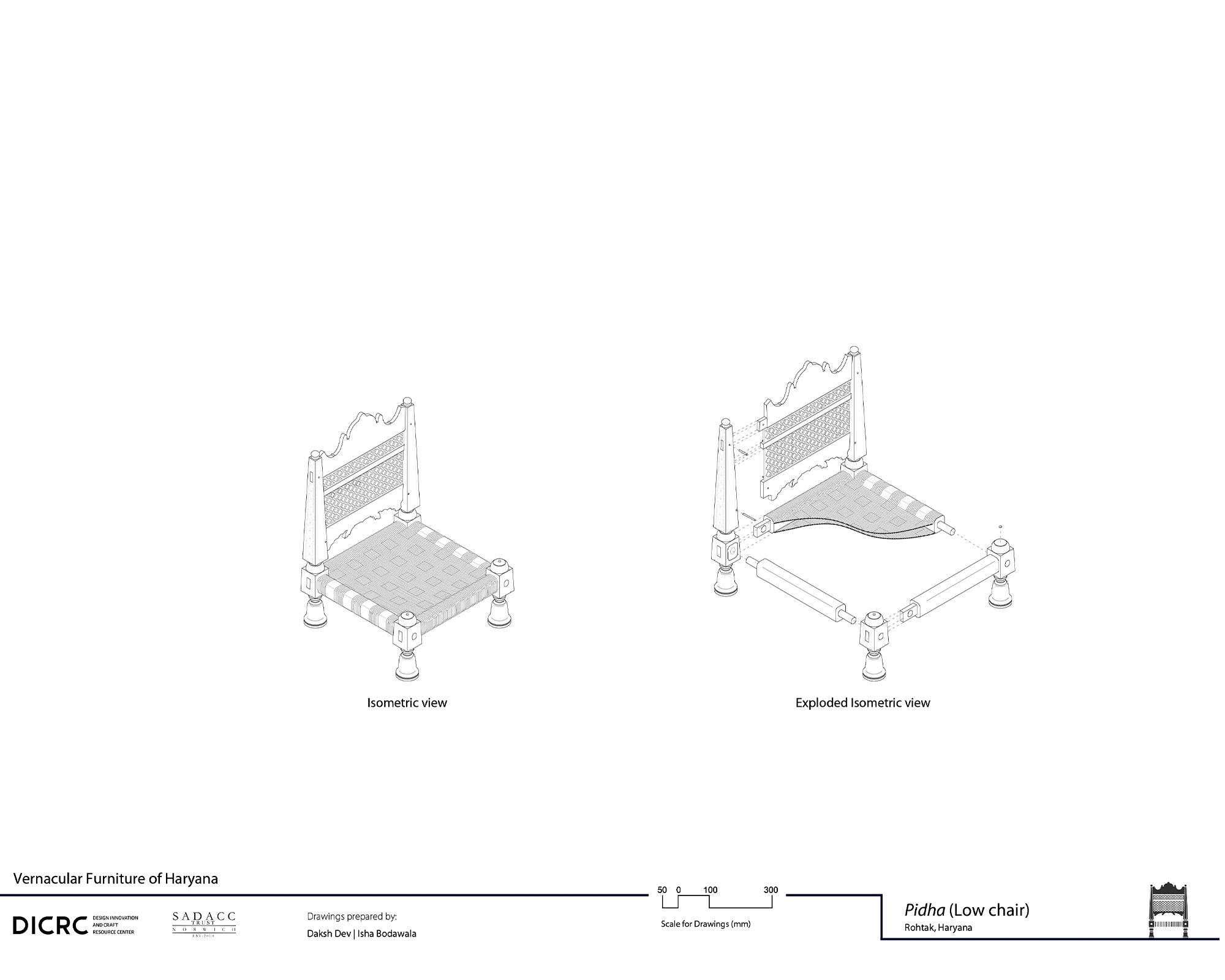
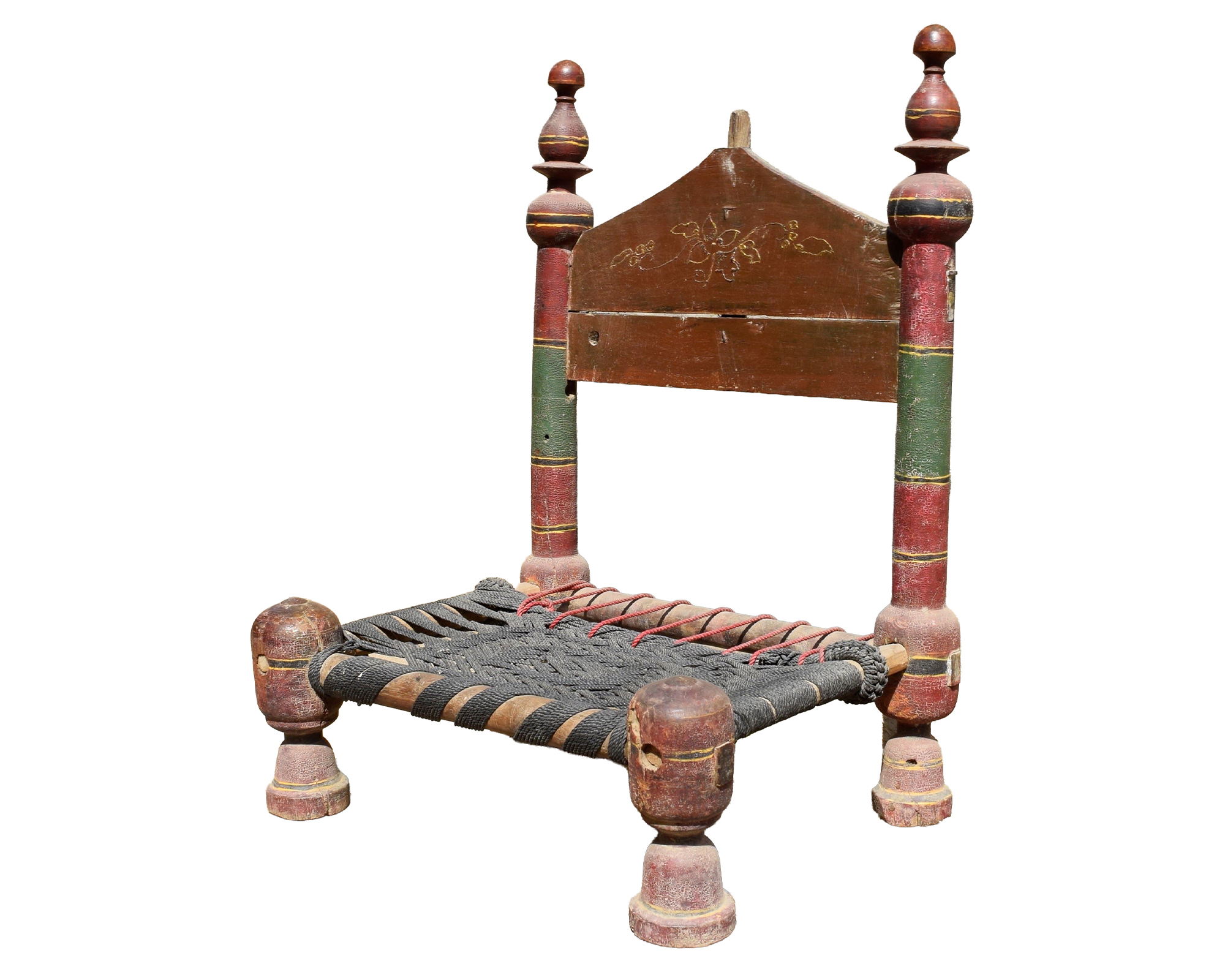
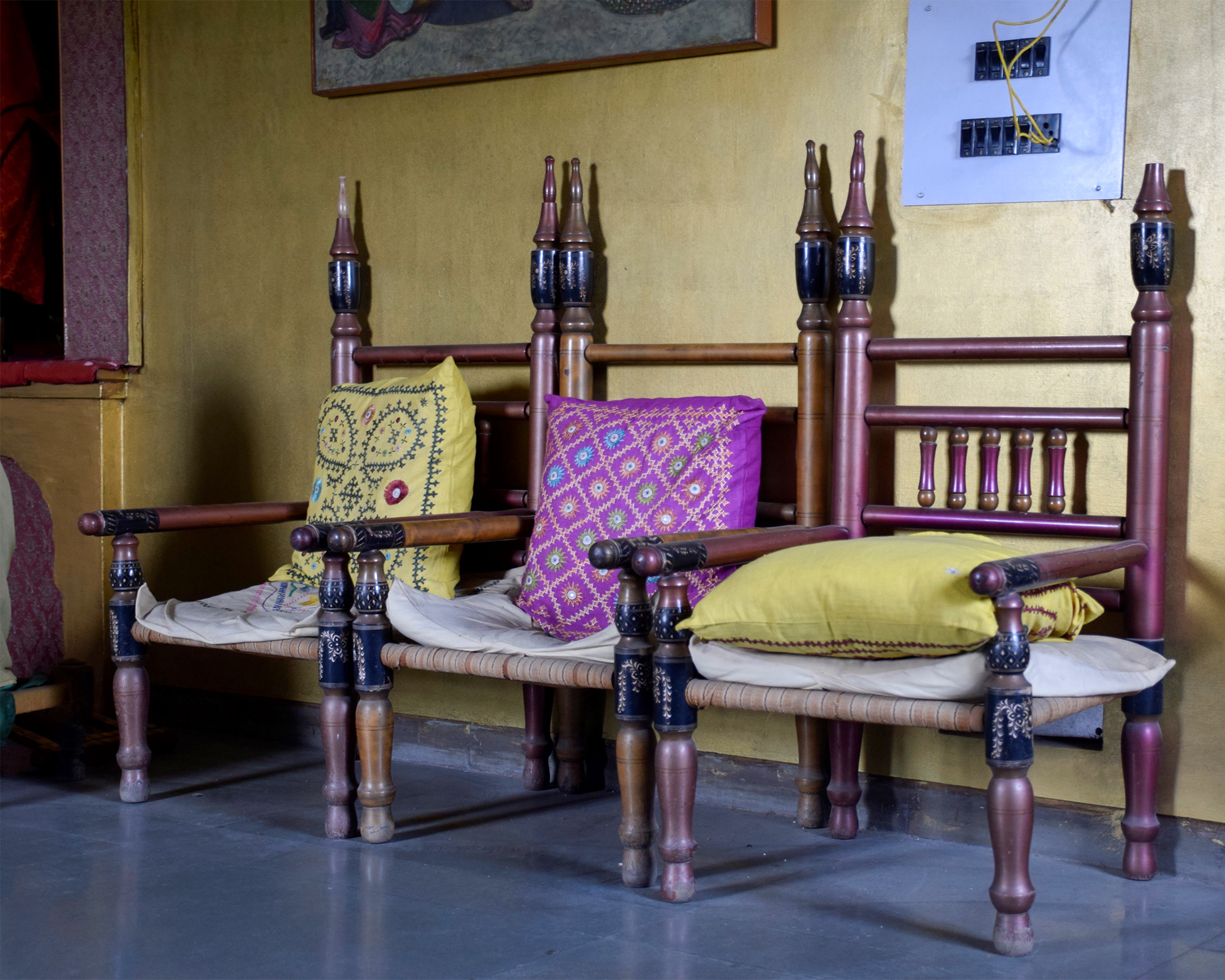
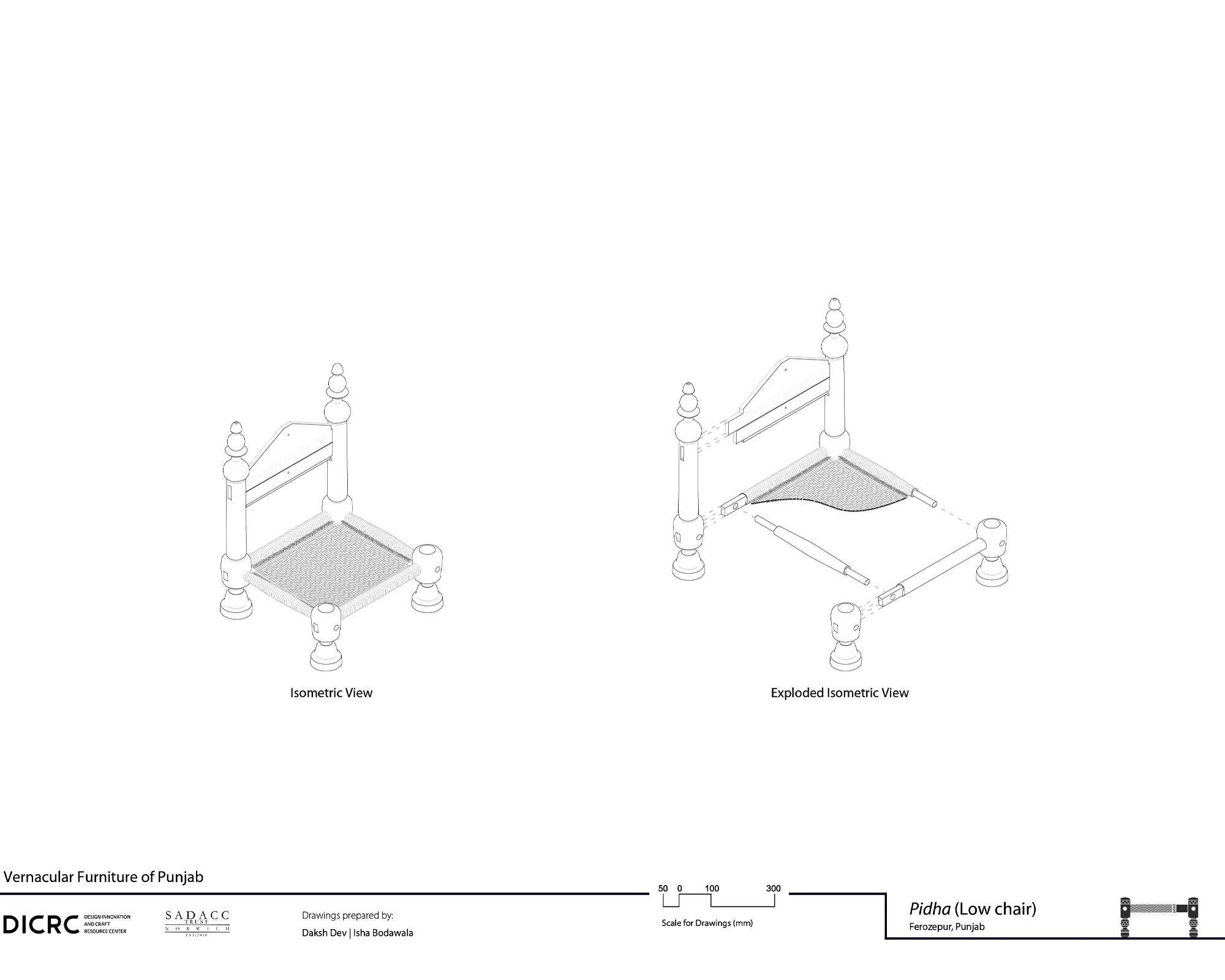
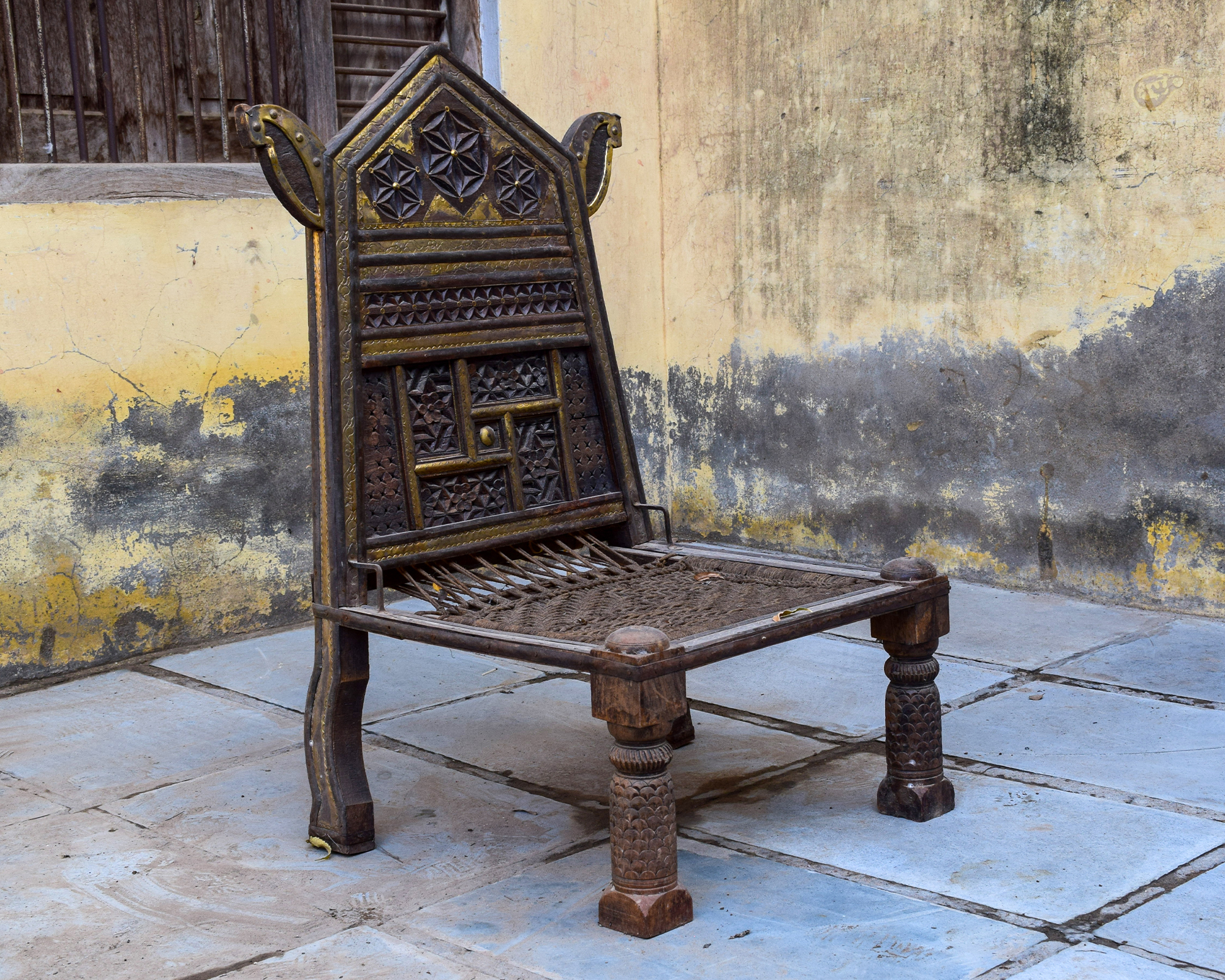
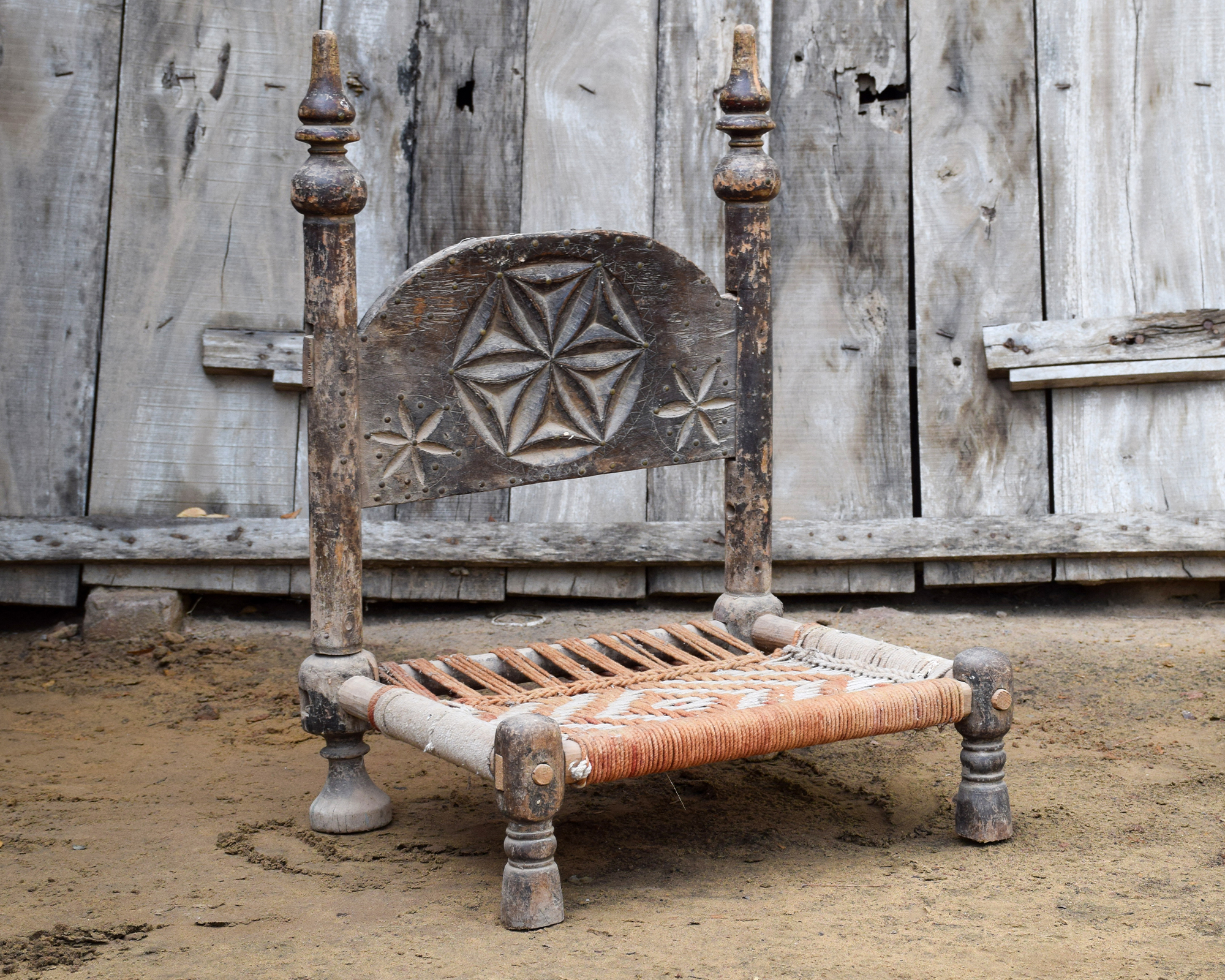
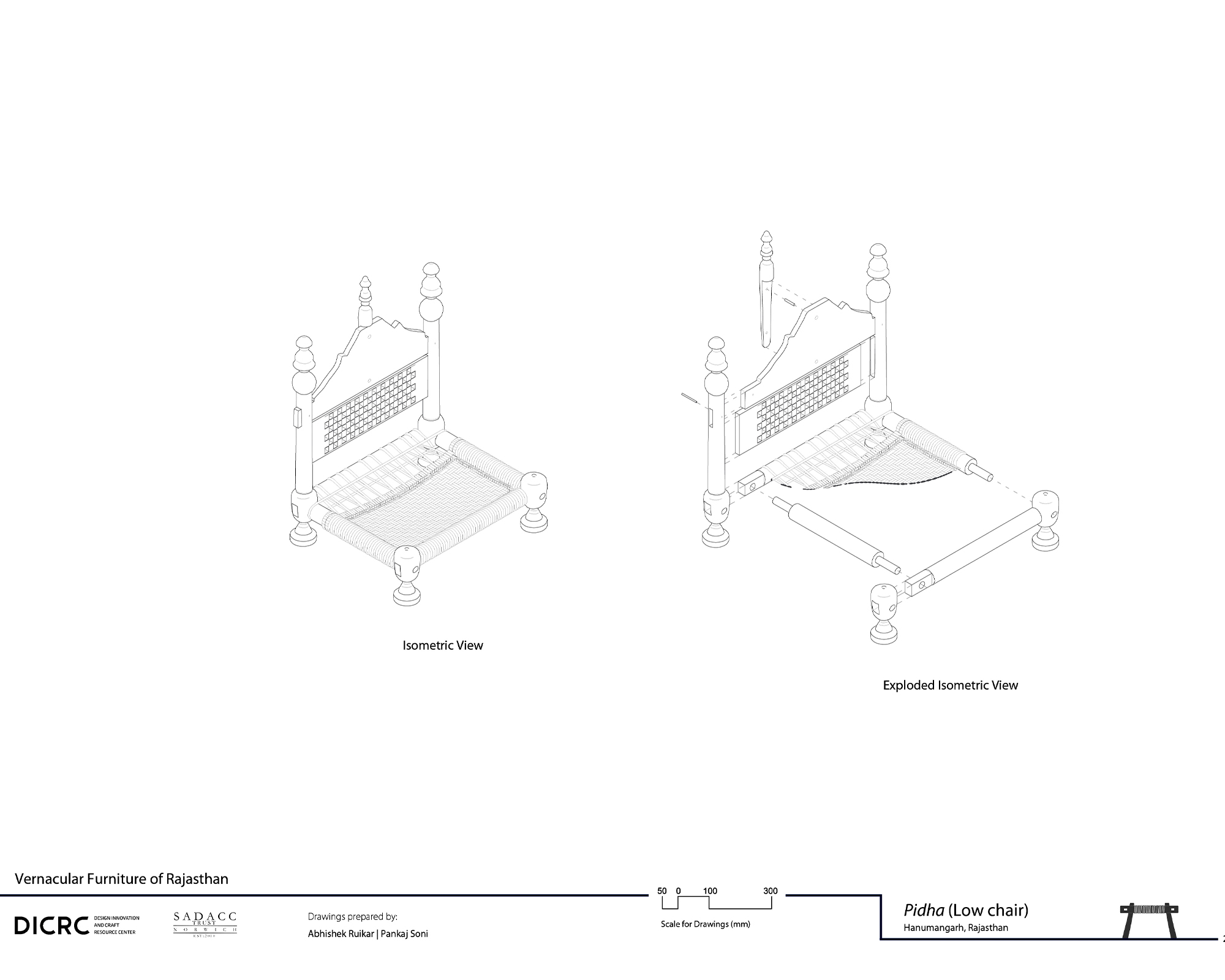
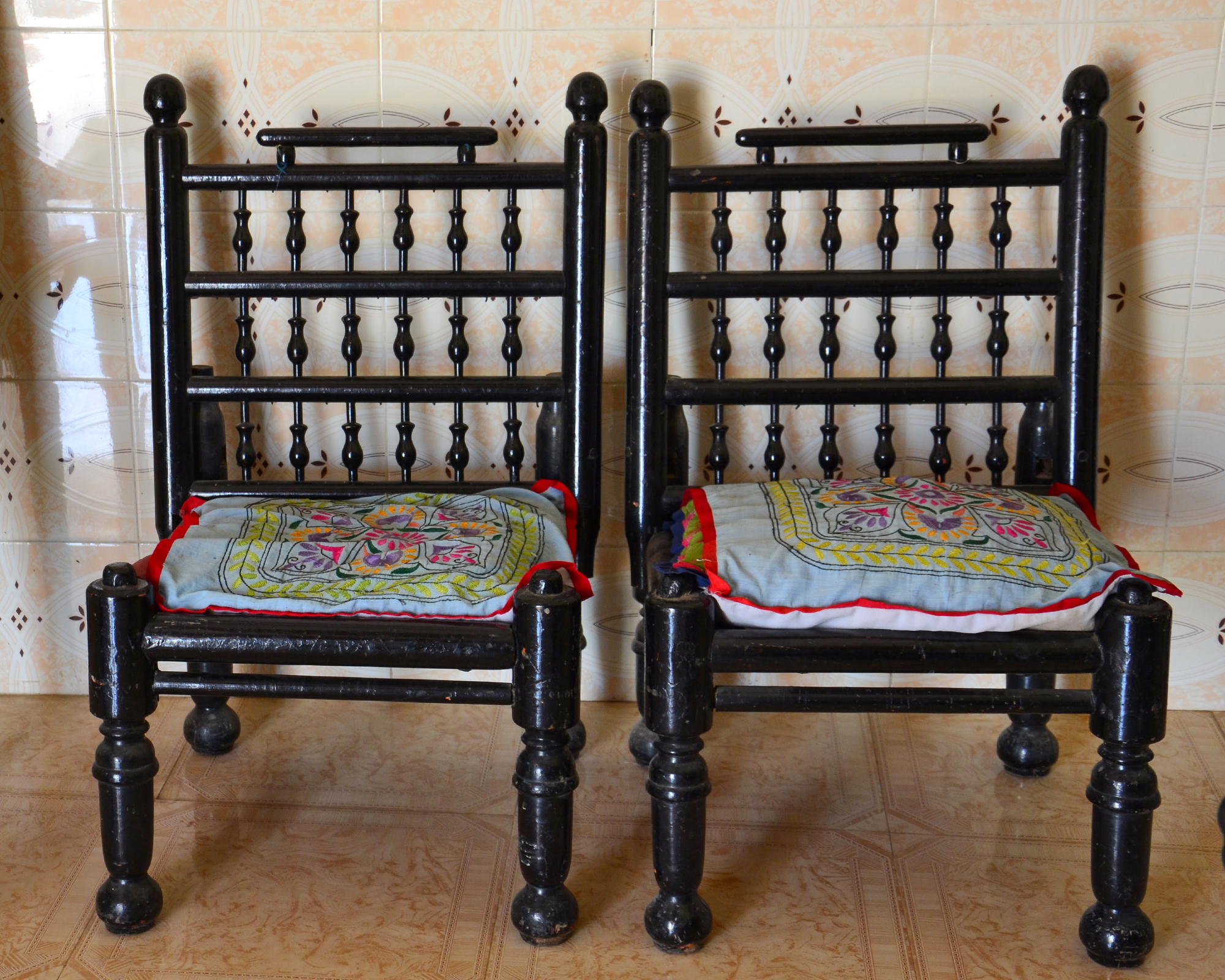
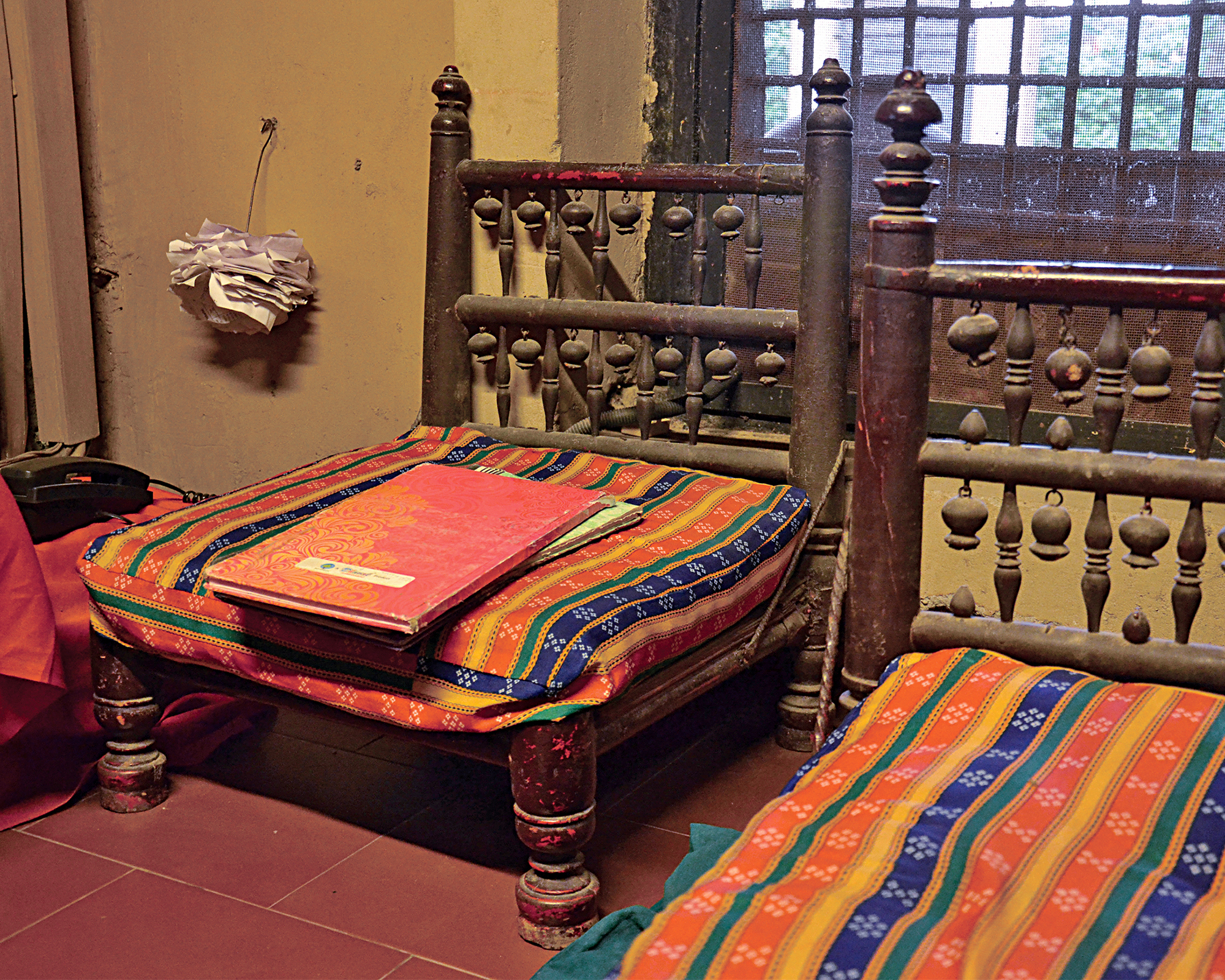
The design of the chair, particularly the backrest, varies both across and within regions in northwestern India. The backrest may be a full, elaborately carved or fretwork panel, as seen in Rajasthan as well as parts of Punjab and Haryana. In other cases it may comprise a solid narrow piece across the upper- or middle-back, with the lumbar section open, as often seen in Punjab — where the back is known as tehi — and neighbouring parts of northern Rajasthan. The legs and side posts of the pidha in Punjab also feature a distinctive bulbous turned form. In Gujarat, the backrest of the sangamachi consists of balustrades of turned spindles and danglers between horizontal members; it may also have armrests made of turned wood. Such a design is also seen in some specimens in Punjab.
Ornamentation
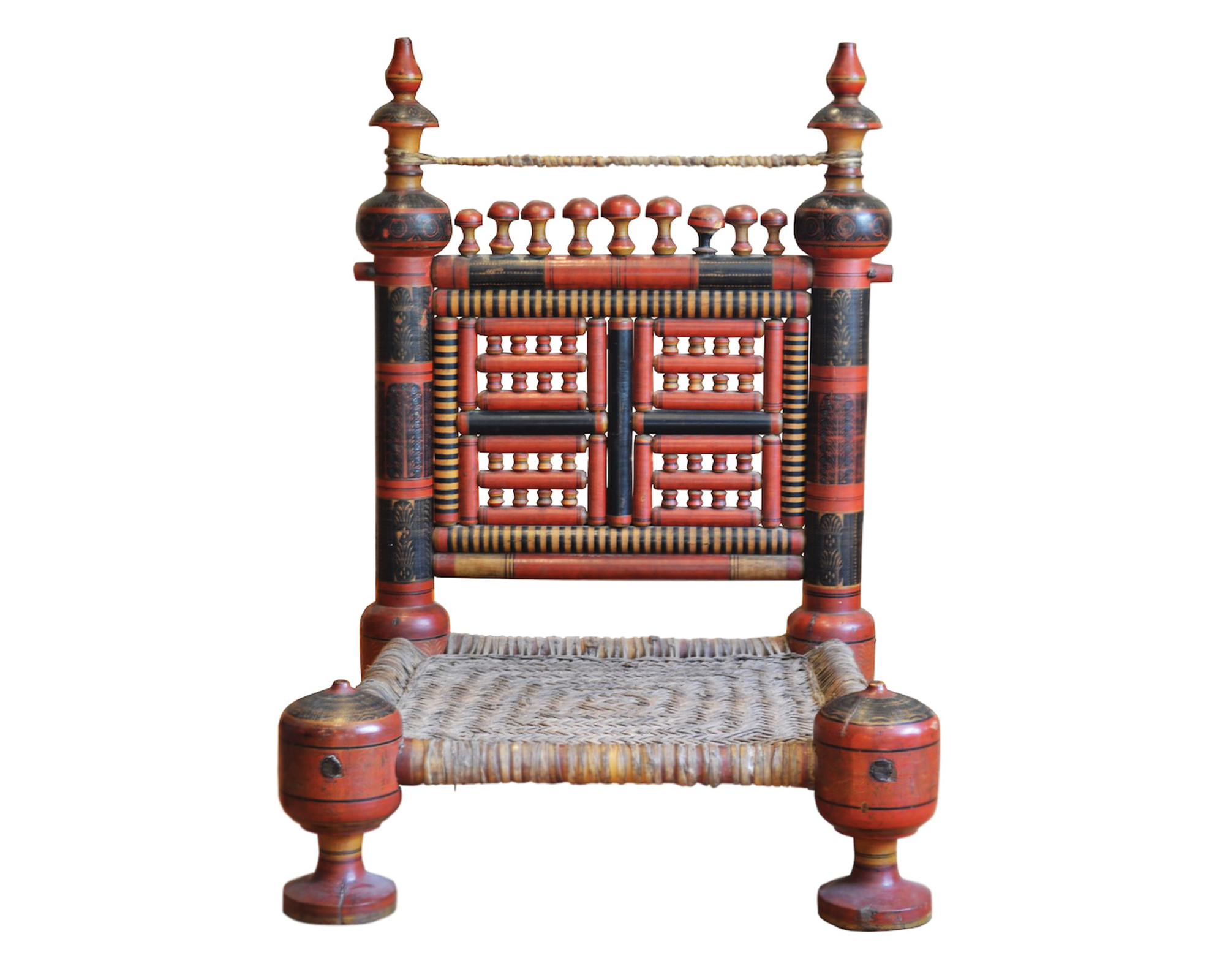
Ornamentation varies widely across regions and individual examples. In Punjab and Haryana, some pidha have elaborate carving, while others are plain and unornamented. Some are lacquered in a bright red, green, and yellow; one such example was recorded at Moga in Punjab and is believed to have been made before Partition in Chiniot (in present-day Pakistan), then a centre of carved and inlaid woodwork. A particularly elaborate pidha at Attari in Punjab has an intricate fretwork backrest with a mirror set into it. The cotton rope used for the seat may also be dyed, as in a pidha at Ferozepur in Punjab, which has its seat dyed yellow and its turned legs finished in red lacquer. A pidha at Rohtak in Haryana has elaborately carved fretwork on the backrest with a plain jute rope seat.
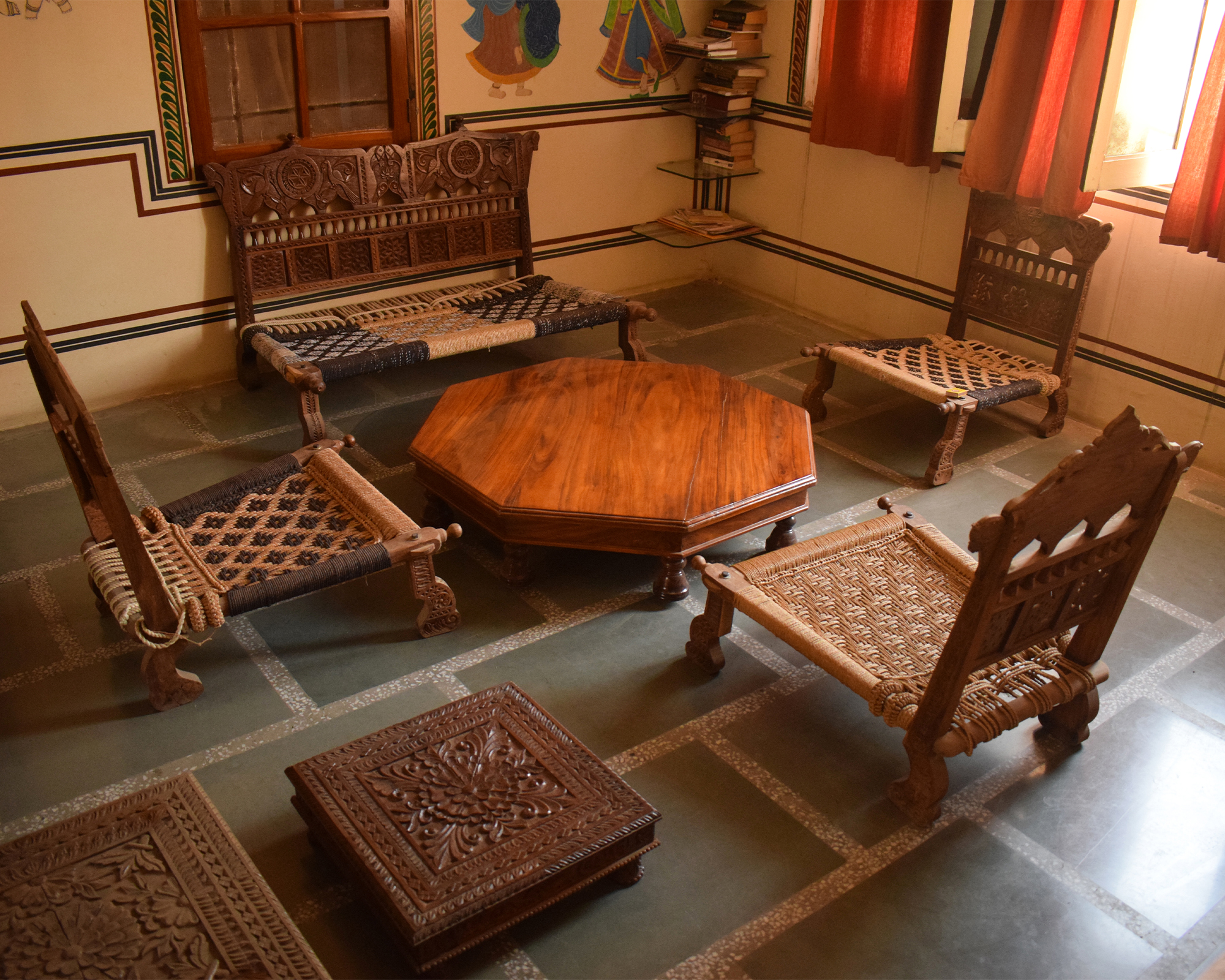
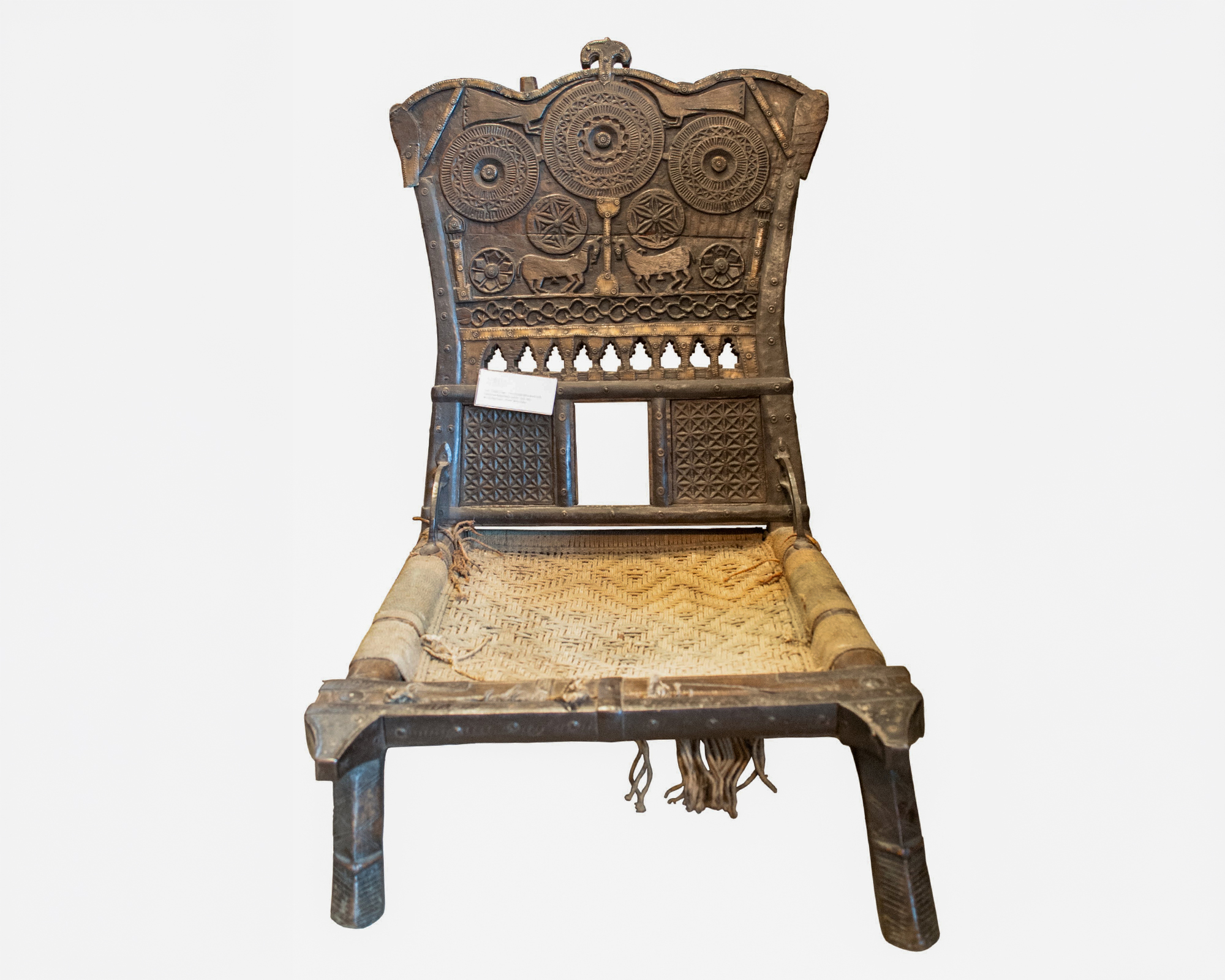
In Rajasthan, the most ornate pidha are associated with the Shekhawati region and primarily used in ceremonial contexts, especially weddings. A pidha recorded at a haveli-turned-hotel in Nawalgarh has a backrest with geometric fretwork and carved motifs of flowering plants, peacocks and parrots — which recur in the wood-carving of north-west India — along with a pair of horse heads flanking the top panel. It is one of a set of three chairs recently made based on traditional designs. A similar pidha at The South Asia Collection museum in Norwich, England, has a backrest with shallow geometric carving, rosette motifs, and carvings of horses and peacocks. A forty-year-old pidha being used as a sample for new production at one workshop in the Sikar district has a backrest perforated with columns and arches, and turned wooden danglers hanging from its lower rail — the latter a rare feature in Rajasthan, being more commonly found in the furniture of Gujarat.
In Gujarat, the backrest and armrests of a sangamachi are ornamented with lathe-turned wooden finials and danglers, lacquered red like its structural supports. On one recorded sangamachi, the posts are surmounted by birds of turned wood, a feature more commonly found on the cradle (ghodiyu).
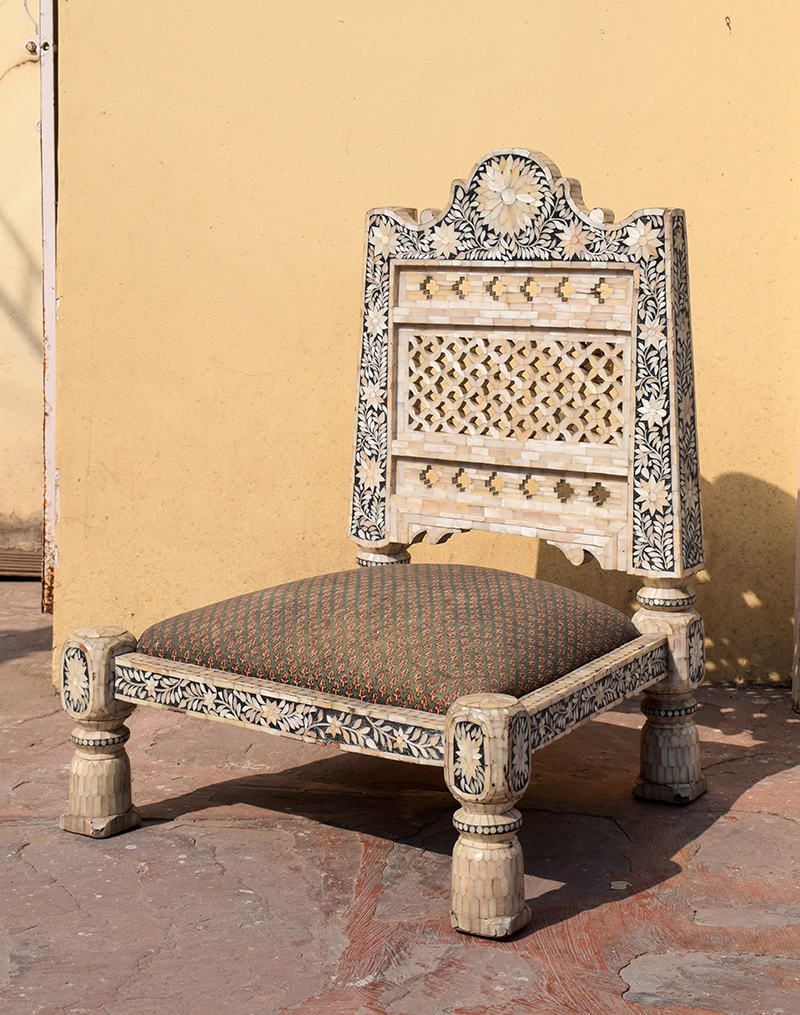
Elaborate and non-traditional pidha are often commissioned by owners of private collections and traders to display the skill of the craftspeople with whom they work. A chair at Udaipur, for example, is made of wood inlaid with animal bone, and has its seat upholstered in block-printed fabric. Departing from the standard single-seat form, a two-seater pidha is part of the set at the haveli in Nawalgarh, possibly modelled on the idea of a sofa.
Ownership and use
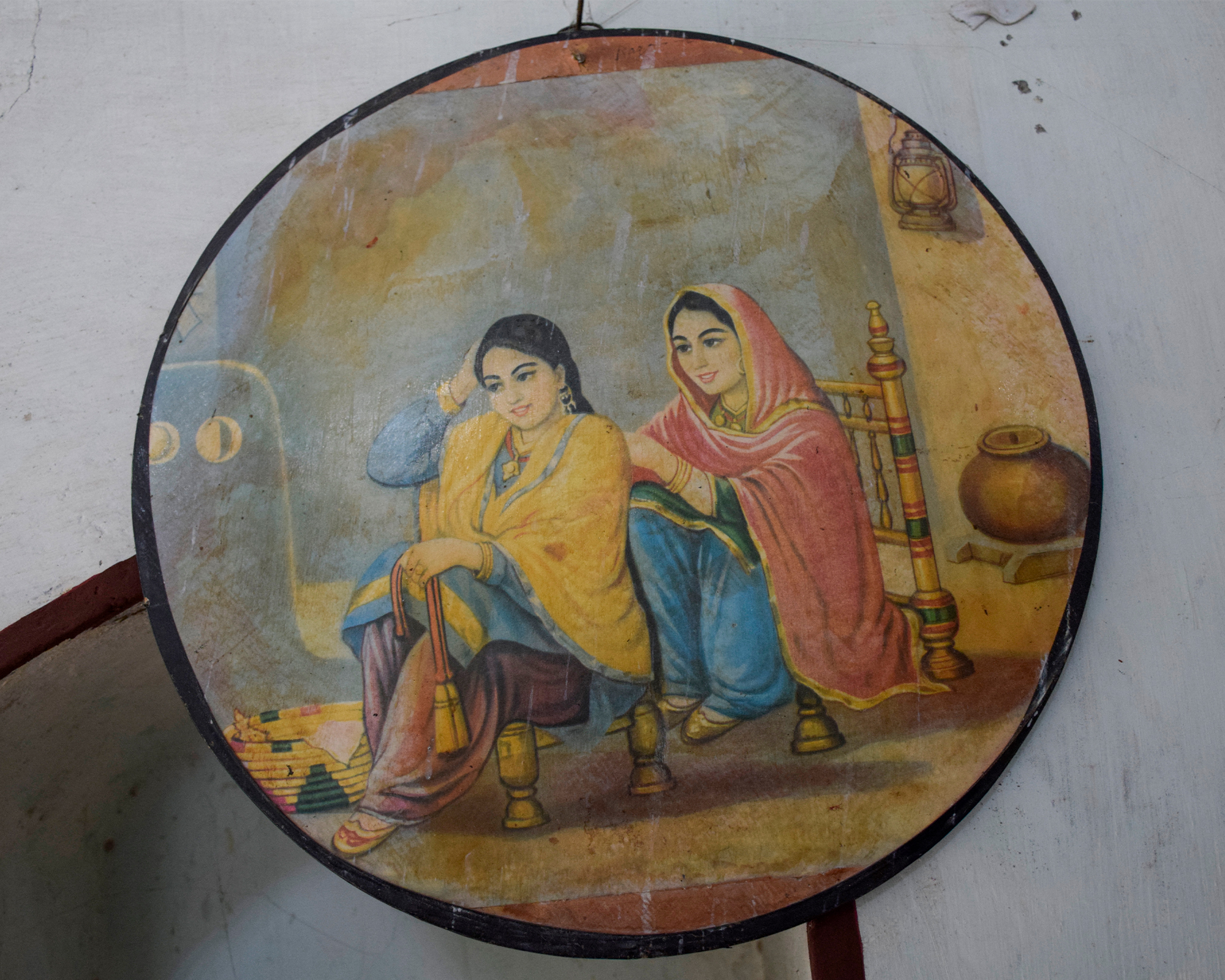
The chair has traditionally been used by women to do everyday activities such as cooking, spinning thread or braiding hair, and to rest. In Punjab, the pidha is a cultural symbol, depicted in wall paintings and images of women performing domestic work; a print seen at Manakpur Sharif shows an older woman seated on a pidha doing the hair of a younger woman seated on a stool (pidhi). Oral accounts from Rajasthan suggest that the chair was reserved for the eldest woman of the house, while men would sit on the charpoy and younger women on the floor. In Gujarat, the sangamachi was similarly reserved for the eldest woman in joint families.
In both Punjab and Haryana, brides are commonly given a pidha as part of their daaj, or bridal trousseau. The chair would typically be built by local carpenters using material provided by the bride’s father; the carpenters were also sometimes paid in kind, using grains, sweets, and other local products. At Attari in Punjab, the newlywed bride would sit on the pidha during post-wedding rituals. At Hanumangarh in Rajasthan, the chair would be used by the bride upon her first entry into her husband’s house, and afterwards put away for future ceremonial use. In Gujarat the sangamachi was traditionally used on festive occasions, to seat the groom at a wedding or monks when delivering sermons. A sangamachi at the Vechaar Museum, Ahmedabad, was used by accountants alongside a merchant’s desk (dhaliyu).
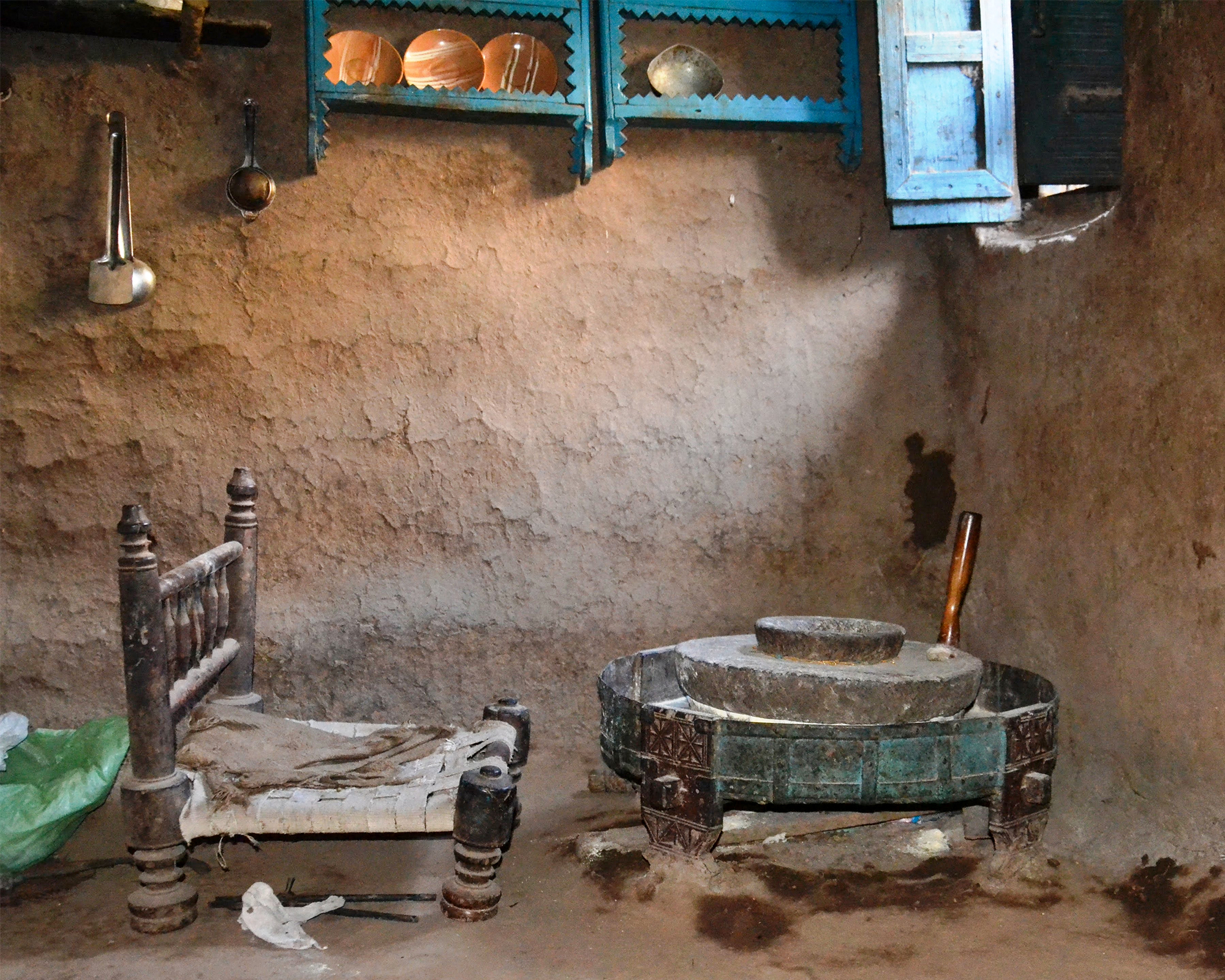
The chair is now rarely seen in daily use in Rajasthan, and carpenters in Punjab report declining demand. It is more commonly found in private and museum collections. Examples are held at several institutions in Punjab, including BBK DAV College for Women in Amritsar, Lyallpur Khalsa College for Women in Jalandhar, and the Museum of Social History and Rural Life of Punjab at Punjab Agricultural University in Ludhiana. New chairs continue to be made, however, on commission from collectors and traders.
This article is adapted from the outcomes of Vernacular Furniture of North-West India — a collaborative research and documentation project by the Design Innovation and Craft Resource Centre (DICRC), CEPT University, India, and The South Asian Decorative Art and Crafts Collection Trust (SADACC), UK — shared with the Encyclopedia of Art through an Impart partnership. Explore more from this series in our Collection Objects Alive: Vernacular Furniture of North-West India.
First published: 30 October 2026
Image Gallery
Bibliography
Bais, Mitraja, Jay Thakkar, Samrudha Dixit, and Ben Cartwright. Sahaj: Vernacular Furniture of Gujarat. Ahmedabad: CEPT University Press, 2018.
Rao, Mansi S., Ben Cartwright, and Samrudha Dixit. Anaikya: Vernacular Furniture of Rajasthan. Ahmedabad: CEPT University Press, 2021.
Rao, Mansi S., Ben Cartwright, Jay Thakkar, and Abhishek Ruikar. Smarya: Vernacular Furniture of Punjab and Haryana. Ahmedabad: CEPT University Press, 2026.
Vernacular Furniture of India. “Pidha.” Accessed September 3, 2026. https://vernacularfurnitureofindia.com/?s=pidha.
Feedback