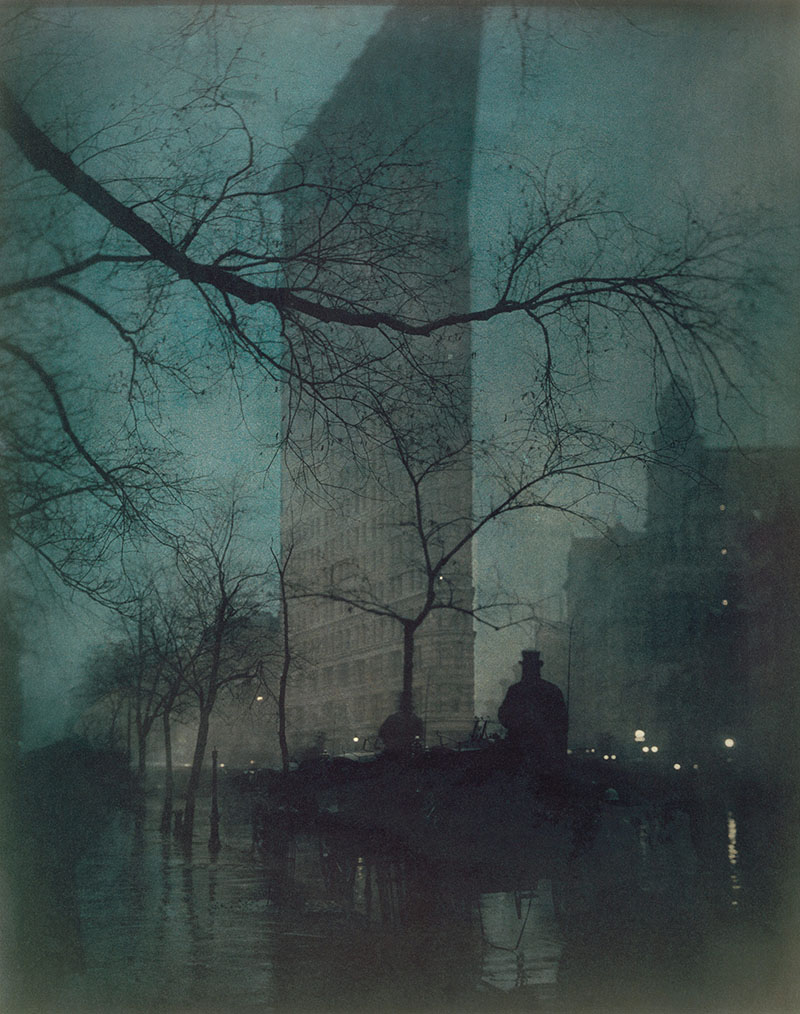
An aesthetic movement in photography during the late nineteenth and early twentieth century that focused on composition, light and subject matter rather than accurate representation of reality. It was first suggested in the writings of Henry Peach Robinson in his book Pictorial Effect of Photography (1869). Alfred Stieglitz, Clarence H White and Alvin Coburn were among the American photographers who had a significant influence on the movement. In India, photographers such as Shapoor Bhedwar, Jehangir S Taraporewala, Pestonji S Batliwala and Karl Khandalawala were also making photographs with a distinct pictorial and artistic quality to them.
More Definitions
Colour Field Painting
An abstract painting style categorised within American Expressionism, it is characterised by large-scale canvases painted expansively with flat, solid colour…
Narrative-Figurative Art
A tendency in early Modernist painting in India, marked by the presence of both narrative and figuration and deviating from…
Fauvism
A style of painting popular in France in the early years of the twentieth century, led primarily by the artists…
Doric Order
Originating in western Greece, it is oldest of the three orders of the classical architecture of ancient Greece, along with…
Sarvatobhadra
A type of Hindu temple architecture characterised by a door in each of the four cardinal directions of the sanctum.…
Mahendra Style
The style of cave temple architecture developed under the patronage of the Pallava king Mahendravarman I, characterised by simplicity of…
Nagara Style
A style of Hindu temple architecture commonly found in northern and central India and characterised by a curvilinear or rectilinear…
Romantic Naturalism
A philosophical strand in literature and art that draws on Romanticism’s emphasis on human emotion and sensuality as well as…