-
ChicagoImpart Encyclopedia of Art. "Hiti." August 31, 2026. https://imp-art.org/articles/hiti/.
-
MLA"Hiti." Impart Encyclopedia of Art, Aug. 31, 2026, https://imp-art.org/articles/hiti/.
-
HarvardImpart Encyclopedia of Art (2026) Hiti. Available at: https://imp-art.org/articles/hiti/ (Accessed: 16 October 2026).
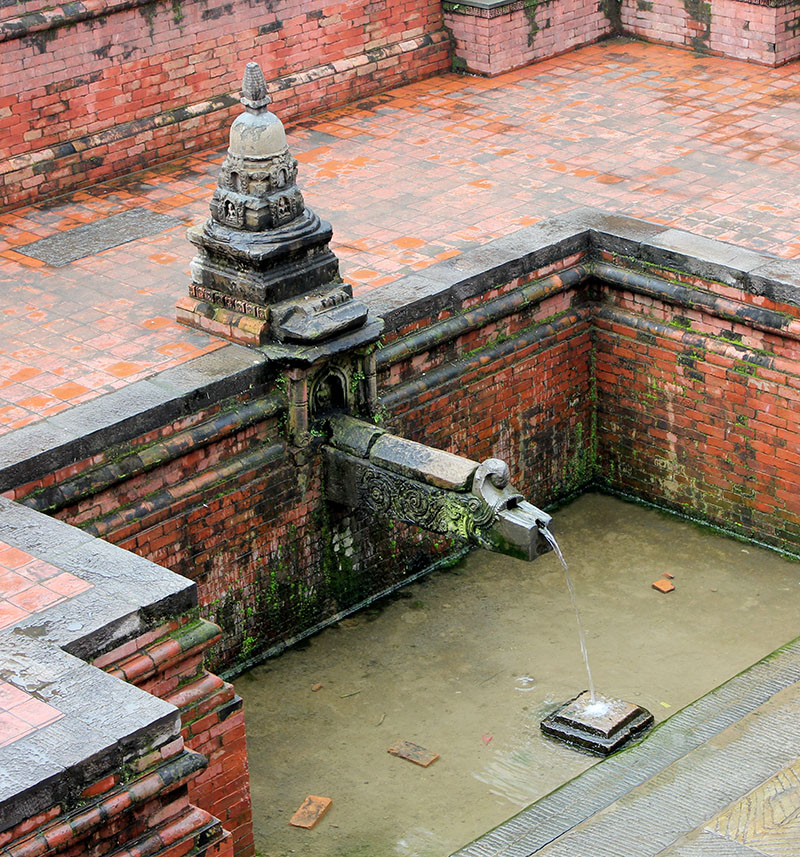
A type of sunken stone fountain in the Kathmandu Valley of Nepal typically featuring one or more ornate spouts, a hiti (Newar; Nepali: dhunge dhara, ‘stone tap’) is a form of public water infrastructure historically found across the region. First constructed under Licchavi rule in the region around 300–879 CE, hiti were part of an extensive water-management network that included wells, ponds and tanks, widely used before the spread of household plumbing and piped water in the twentieth century; many remain in use, both practical and ceremonial.
Historical background
The earliest known evidence of hiti construction is a 550 CE inscription at the water source of the Satyanarayan Temple at Hadigaon, Kathmandu, which records a spout built by Bharavi, a grandson of the Licchavi king Manadeva. The oldest hiti still in use is the Manga Hiti near the Bhimsen Temple in Patan: its foundation inscription is dated 570 CE. The Licchavis likely systematised and further developed existing rudimentary systems of reservoirs and piped water that predate these examples. Epigraphic evidence indicates that hiti were known as pranali during the Licchavi period; the Newar term ‘hiti’ has been in use since the early Malla period (c. 1300 CE). Because people gathered at hiti every day, they served as effective sites for royal proclamations, many of which survive as inscriptions within the fountains.
Ponds (pokhari or pukhu), wells (tun), and hiti formed an integrated water-supply system, with the fountains drawing on nearby springs and shallow aquifers. From the seventeenth century onwards, canals were built with royal patronage — these were known as raj-kulo — to carry water from more distant sources to settlements, replenishing the ponds and aquifers from which hiti drew their supply. Providing access to water was regarded as a spiritually meritorious act — the merit accruing to the patron in proportion to the act’s value to the community — and communities, individuals and kings of successive regimes undertook the construction and upkeep of hiti.
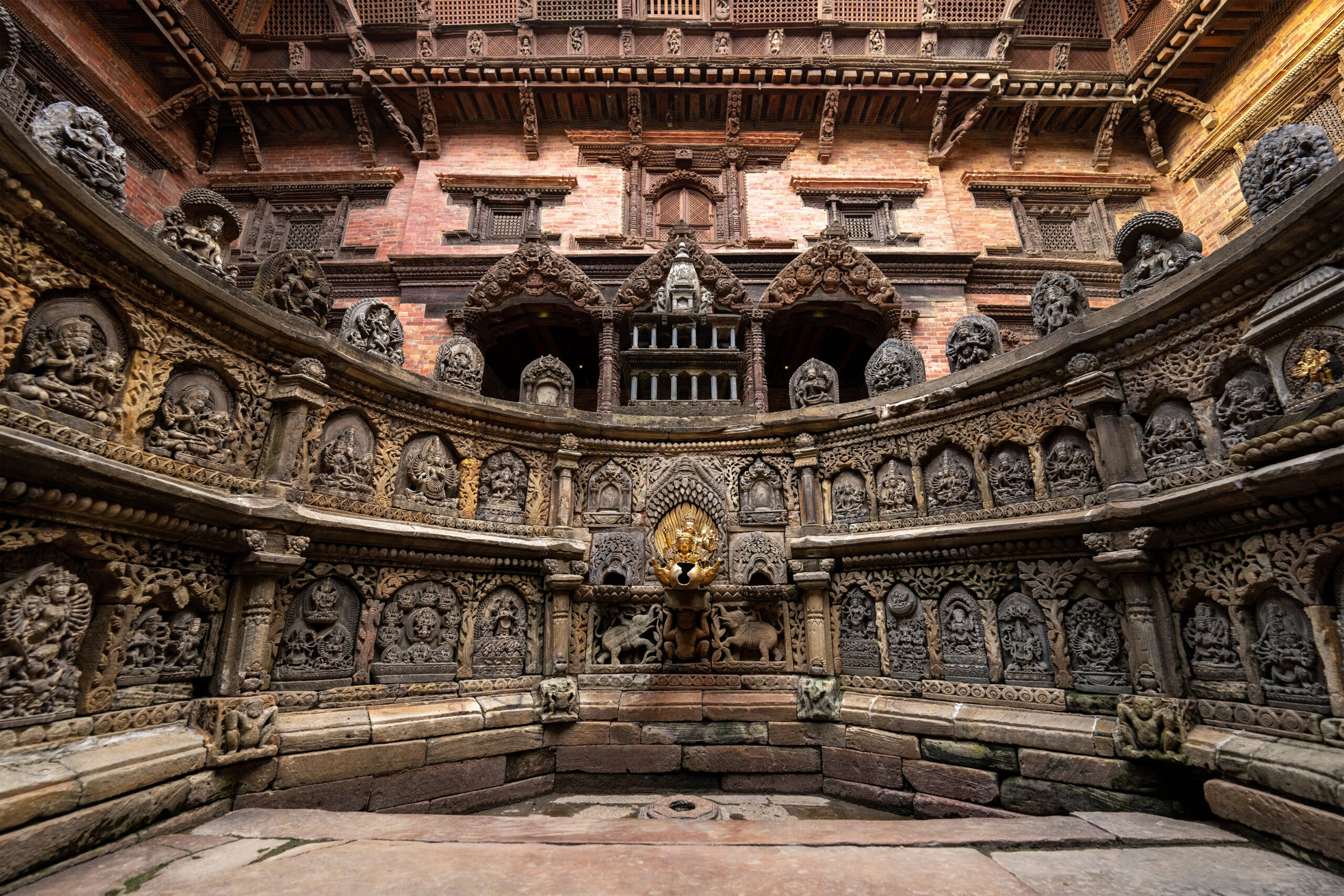
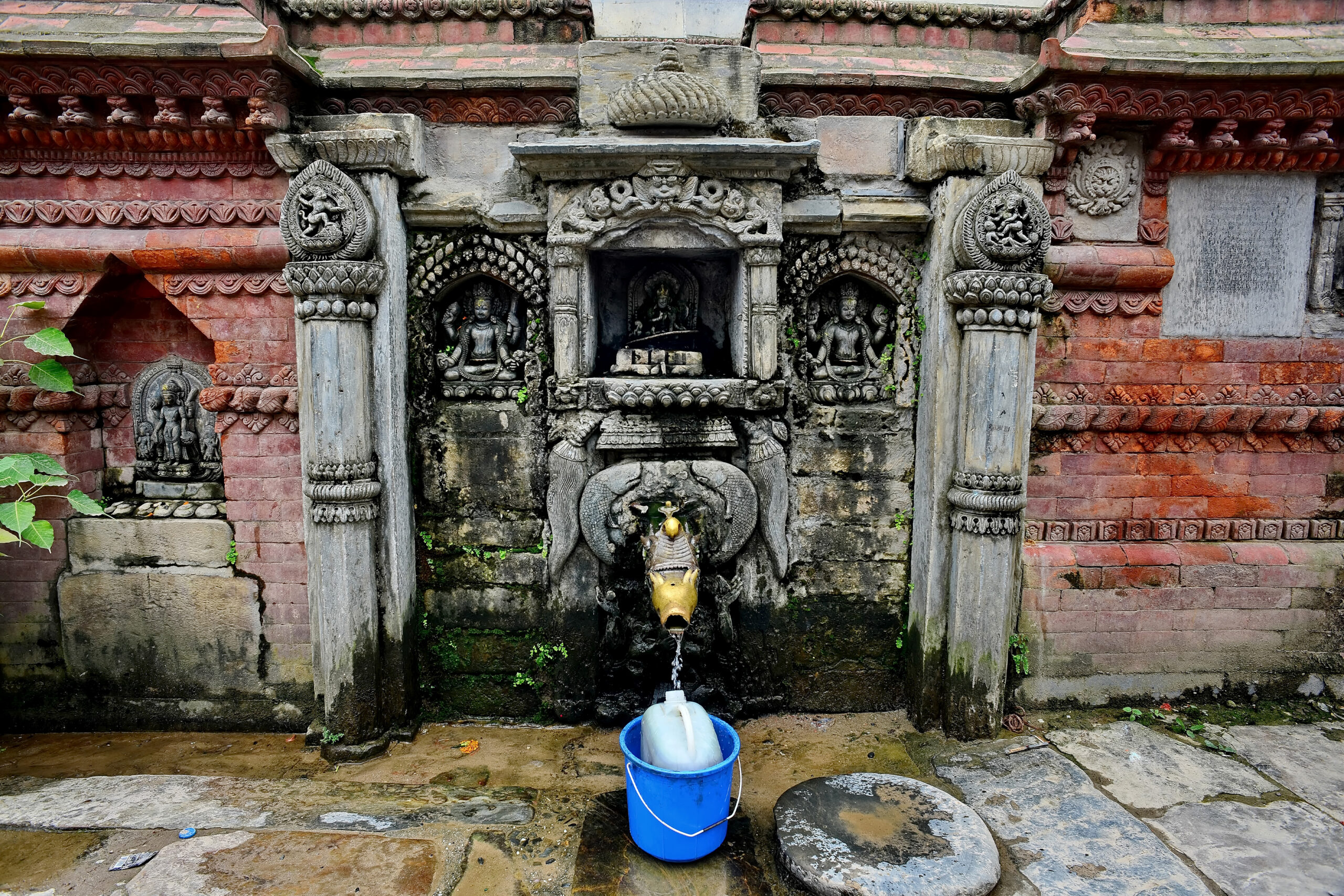
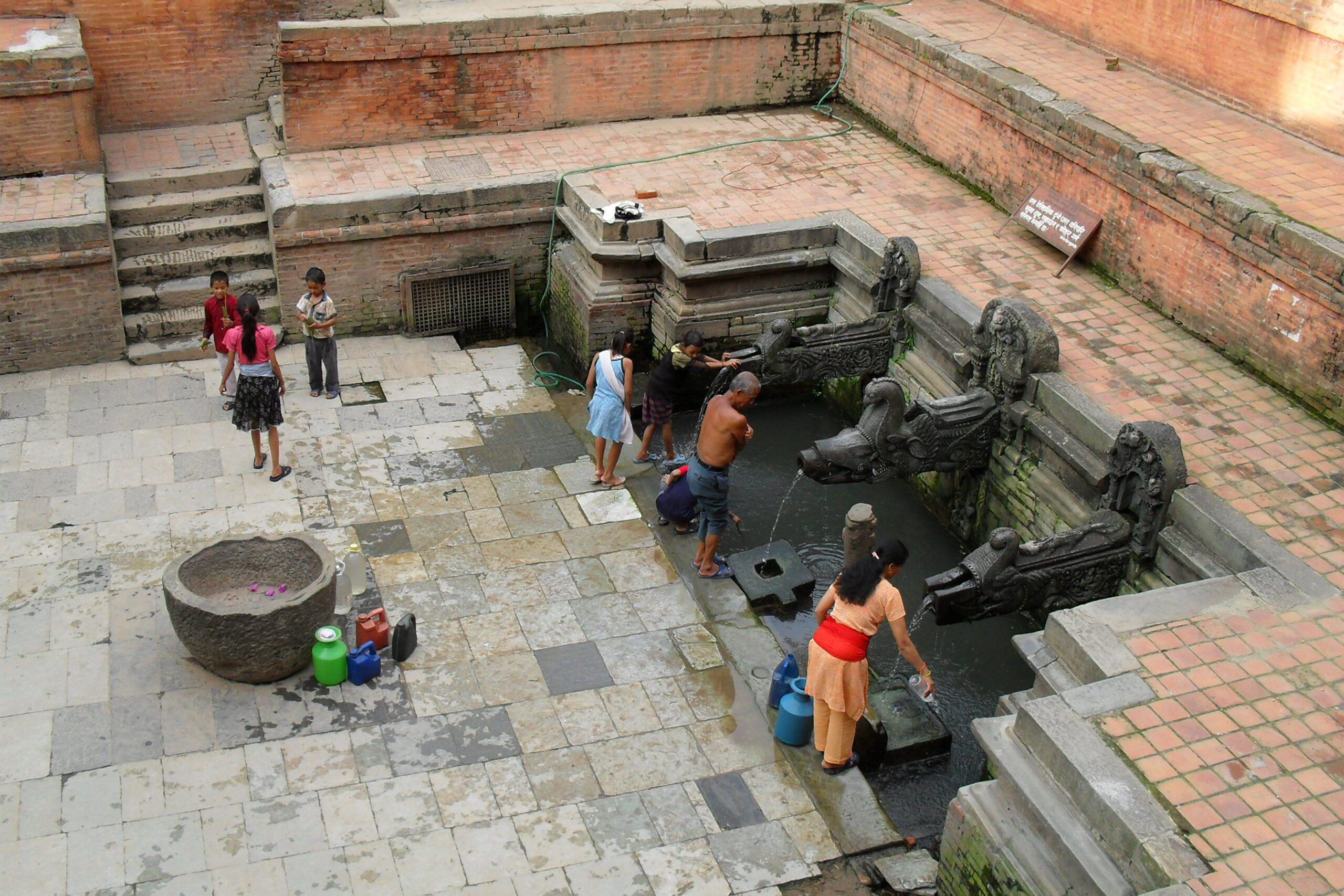
Many of the larger hiti that survive and function today were built under the Malla kings between the thirteenth and eighteenth centuries; especially in the seventeenth century when rivalry between the Valley’s three court cities — Kathmandu, Patan, Bhaktapur — made the endowment of new fountains a prized act of merit. The period also produced a manual for hiti construction, the sixteenth-century Vastu Shastra Hiti Dayeka, written in Sanskrit in the Newar script. Elaborate palace fountains such as the Tusha Hiti at Patan and the Mohan Kali Hiti at the Hanuman Dhoka Palace were built in this period. Older hiti were often enlarged, with further spouts added to serve more people. The Bhota Hiti in Kathmandu, uncovered during roadworks in the twentieth century, preserved one spout inscribed in the early seventh century alongside three later Malla-period spouts. The newest hiti in the Valley was built in Kathmandu in 1828 under the patronage of the queen Lalit Tripura Sundari and the prime minister Bhimsen Thapa — a single-spout hiti known as the Sundhara Hiti, it also lends its name to the surrounding neighbourhood.
Design and construction
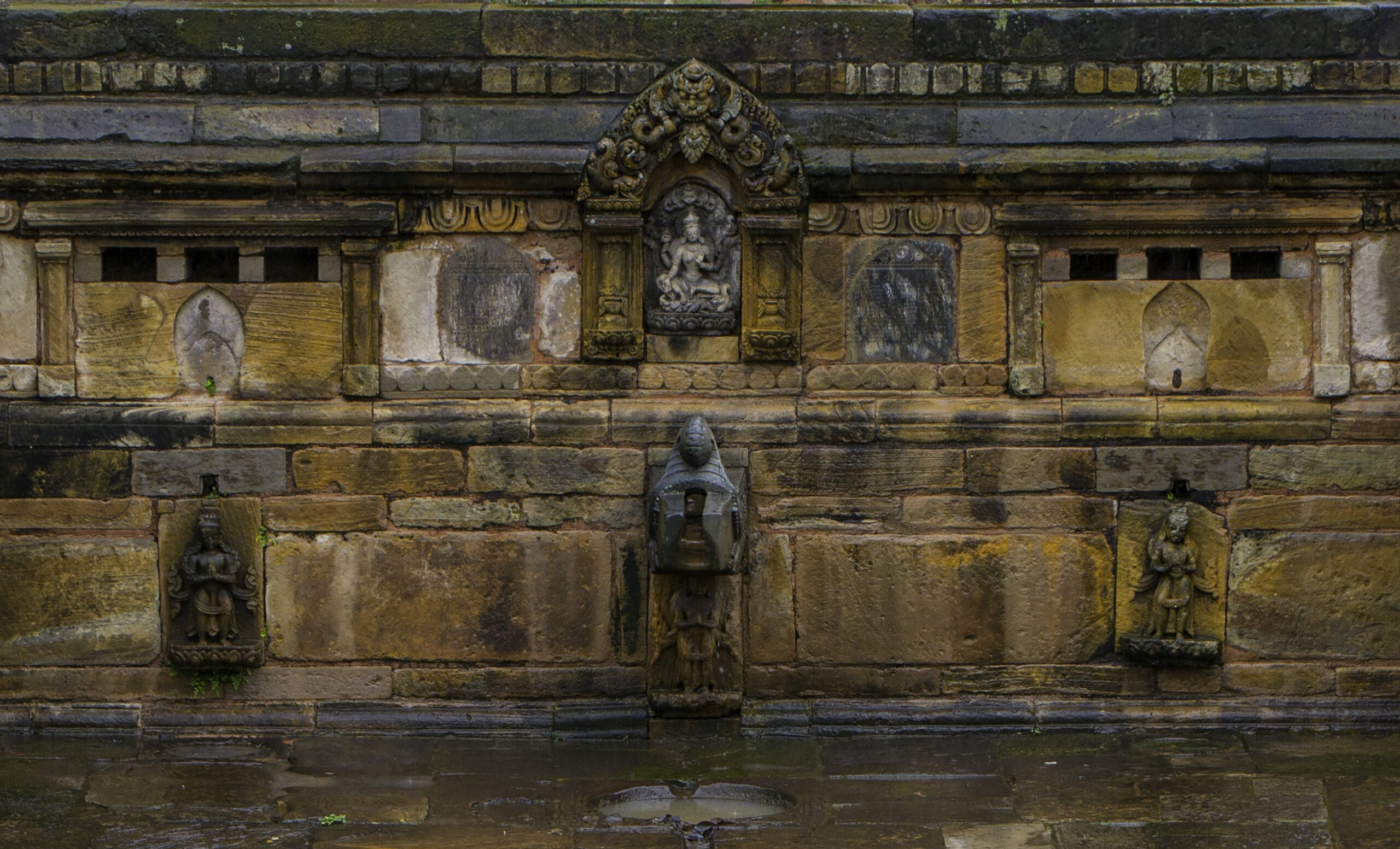
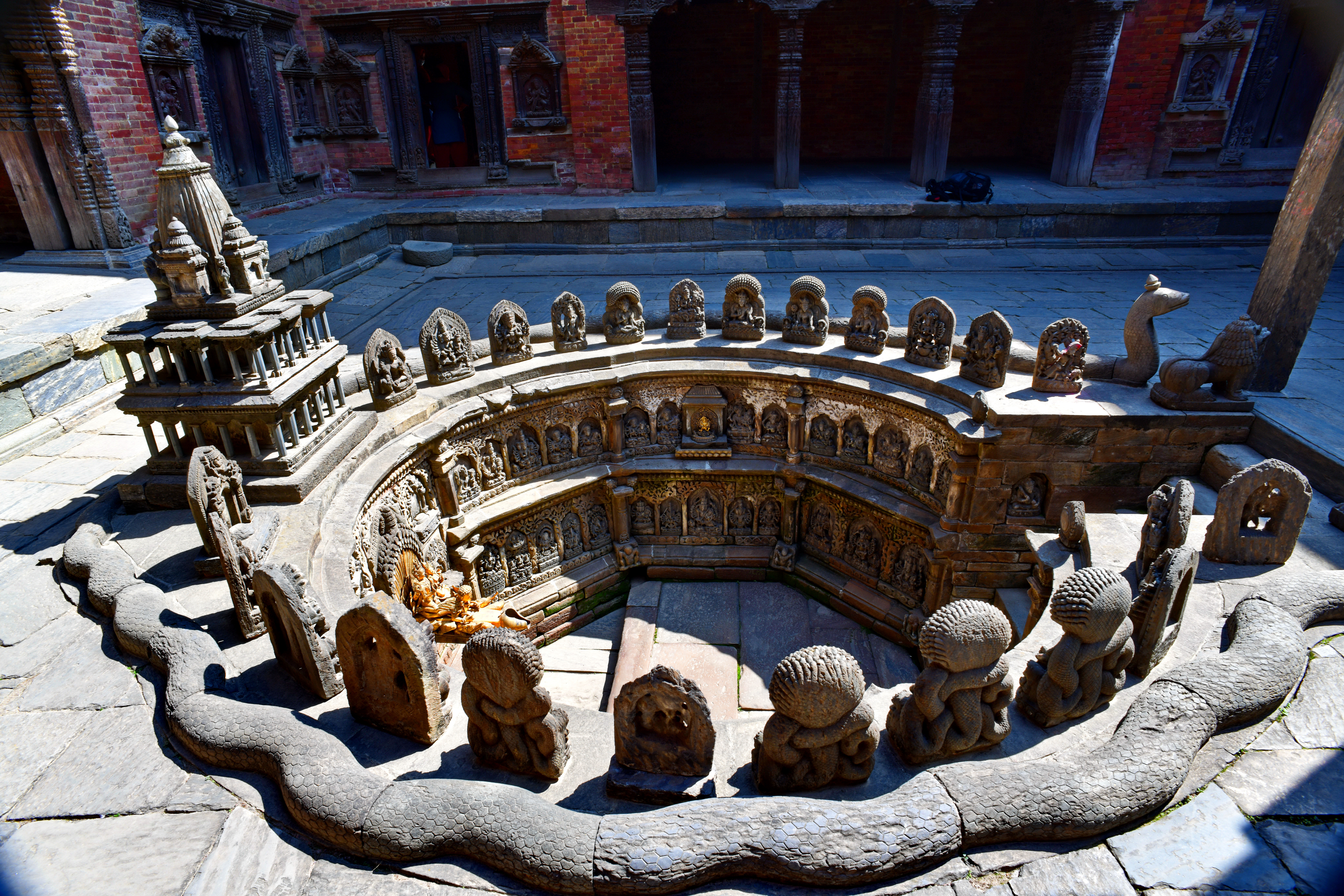
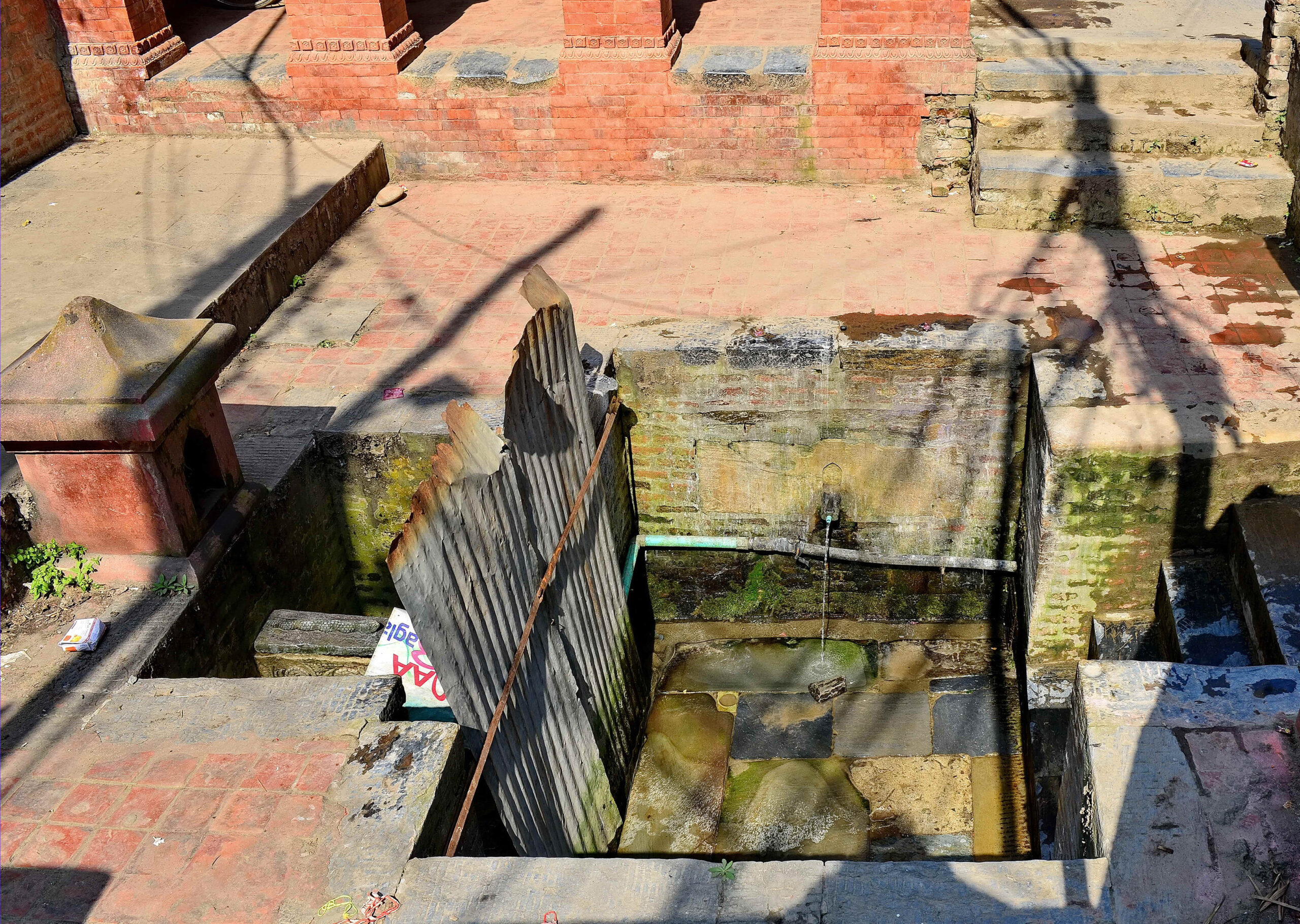
Hiti comprise a sunken, stone-paved basin (hitigah) provided with one or more spouts, built below the level of the surrounding street and reached by one or more flights of steps. Most are square or rectangular in plan and are constructed on gently sloping ground. Some hiti situated deeper below street level feature a terraced descent, broken into two or more levels, laid out symmetrically about the axis of the principal spout. The sunken basin allows water to flow in while also creating a sheltered public space. Before emerging from the spouts, the water passes through sand-and-gravel filters or settling tanks that remove suspended sediment. Hiti are found in a variety of settings, including palaces, temples, monasteries, public squares, courtyards, roadsides, and the edges of settlements, where they historically served both local communities and travellers. Dharamshala or public rest houses are often built beside the basin or abutting its retaining walls. While the elaborate urban hiti of the Kathmandu Valley are the best known, simpler rural examples may consist of little more than a retaining wall with a projecting spout.
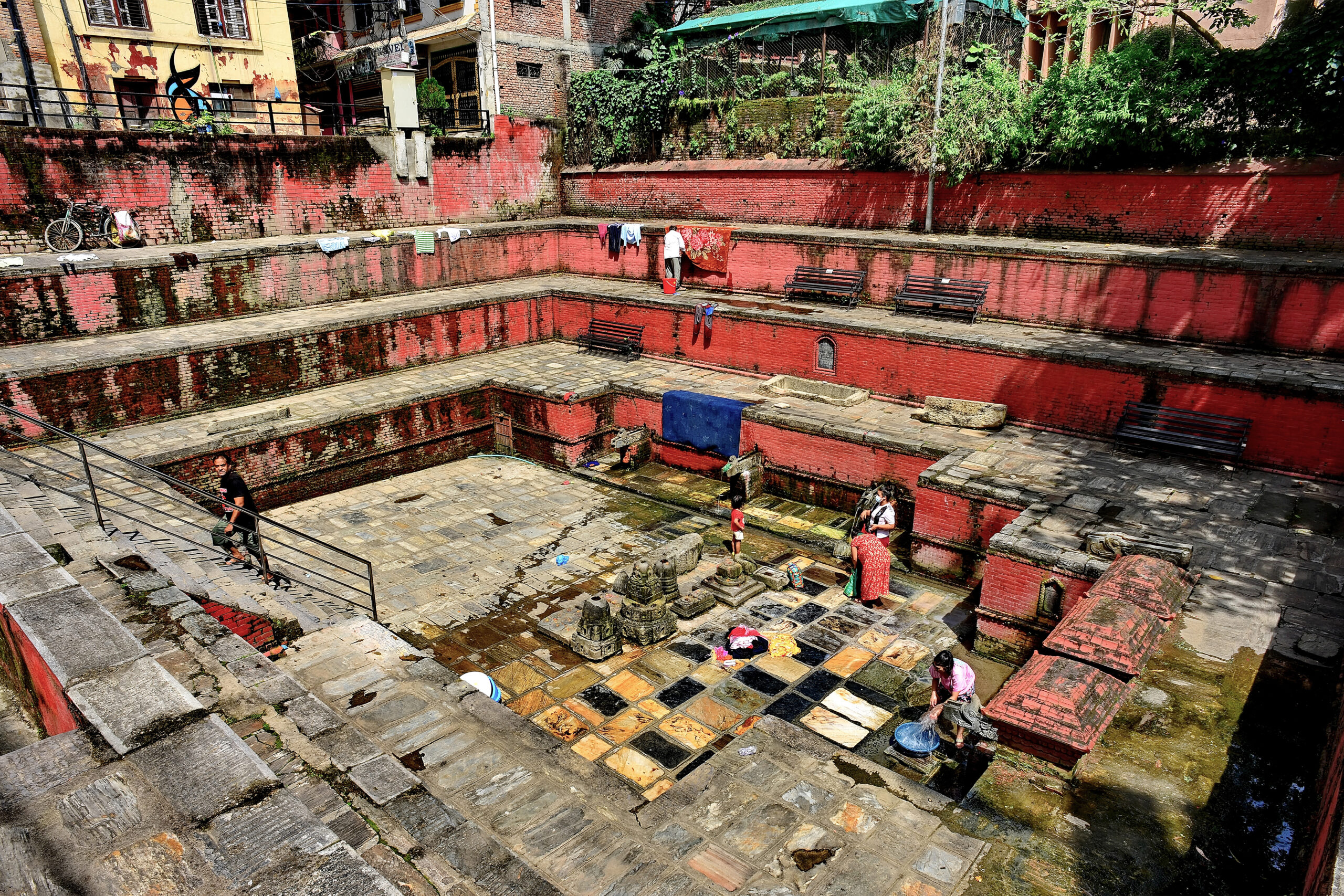
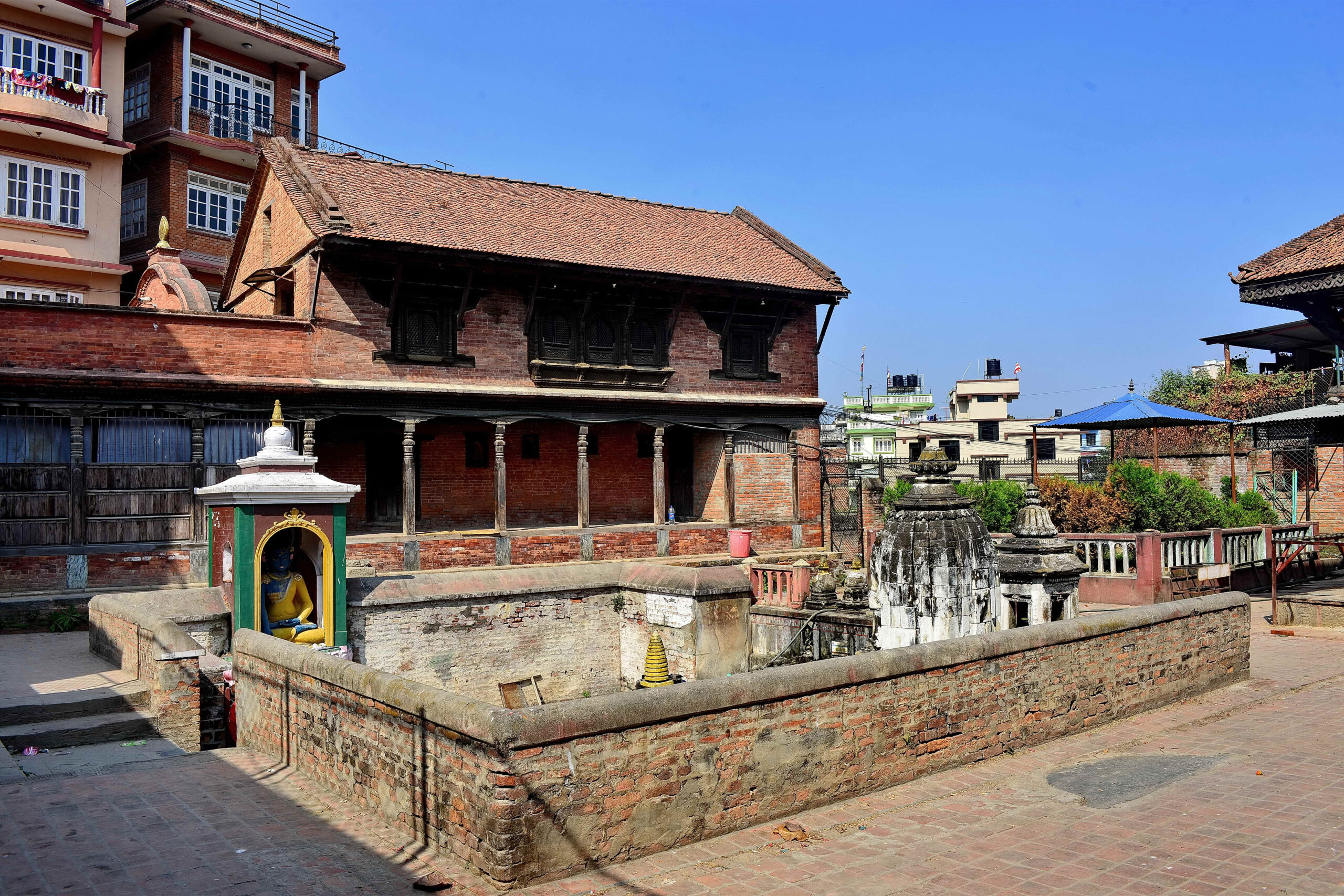
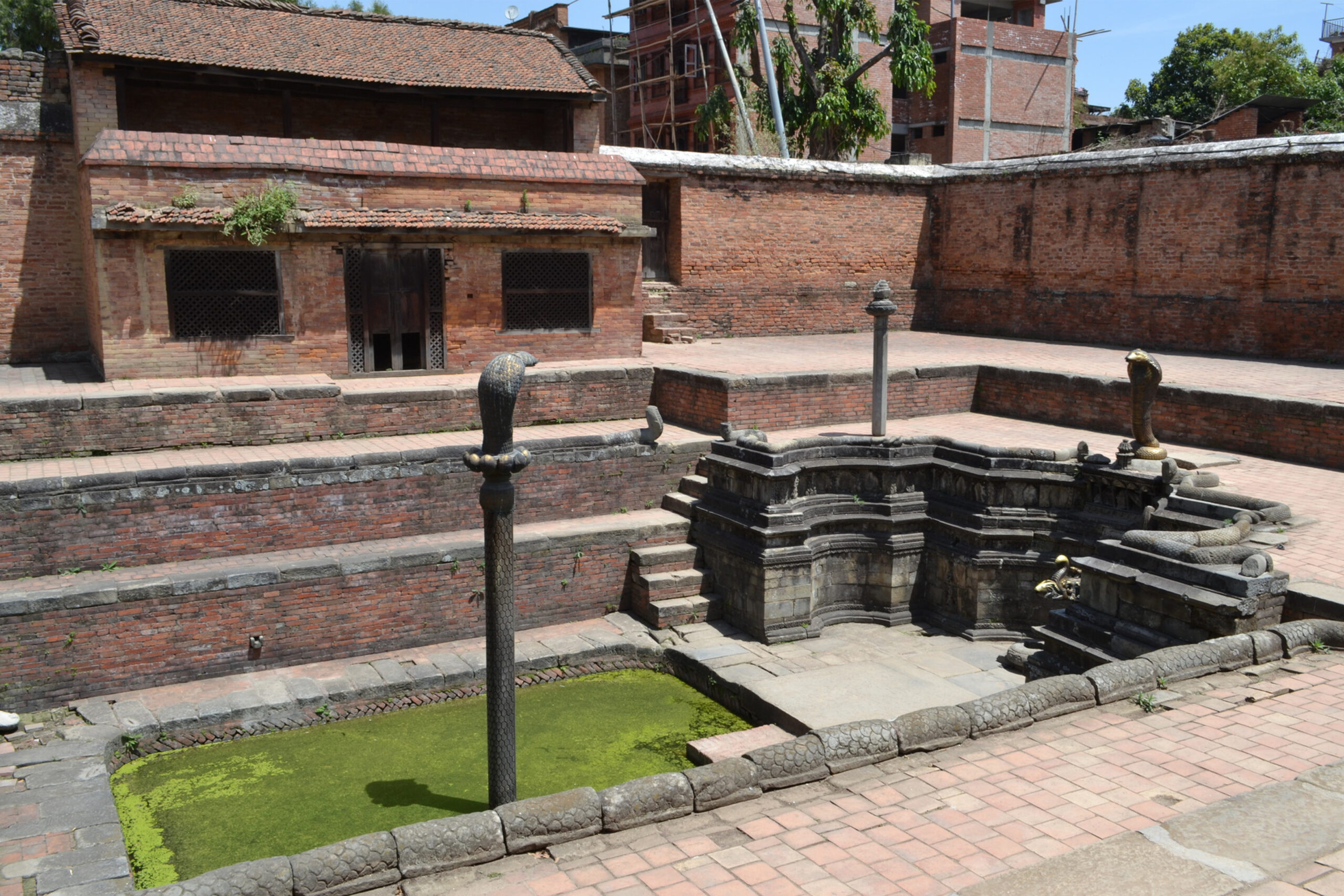
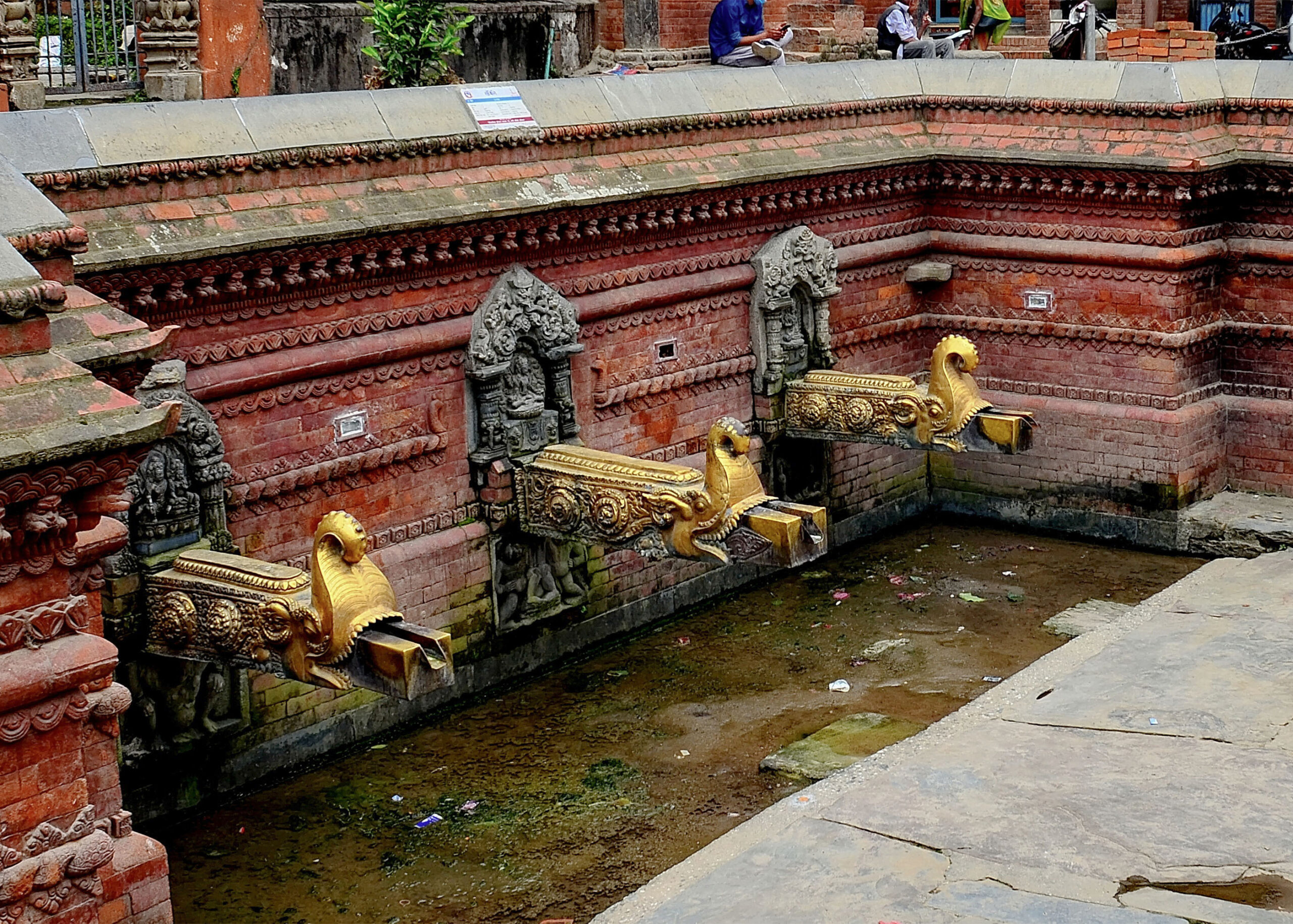
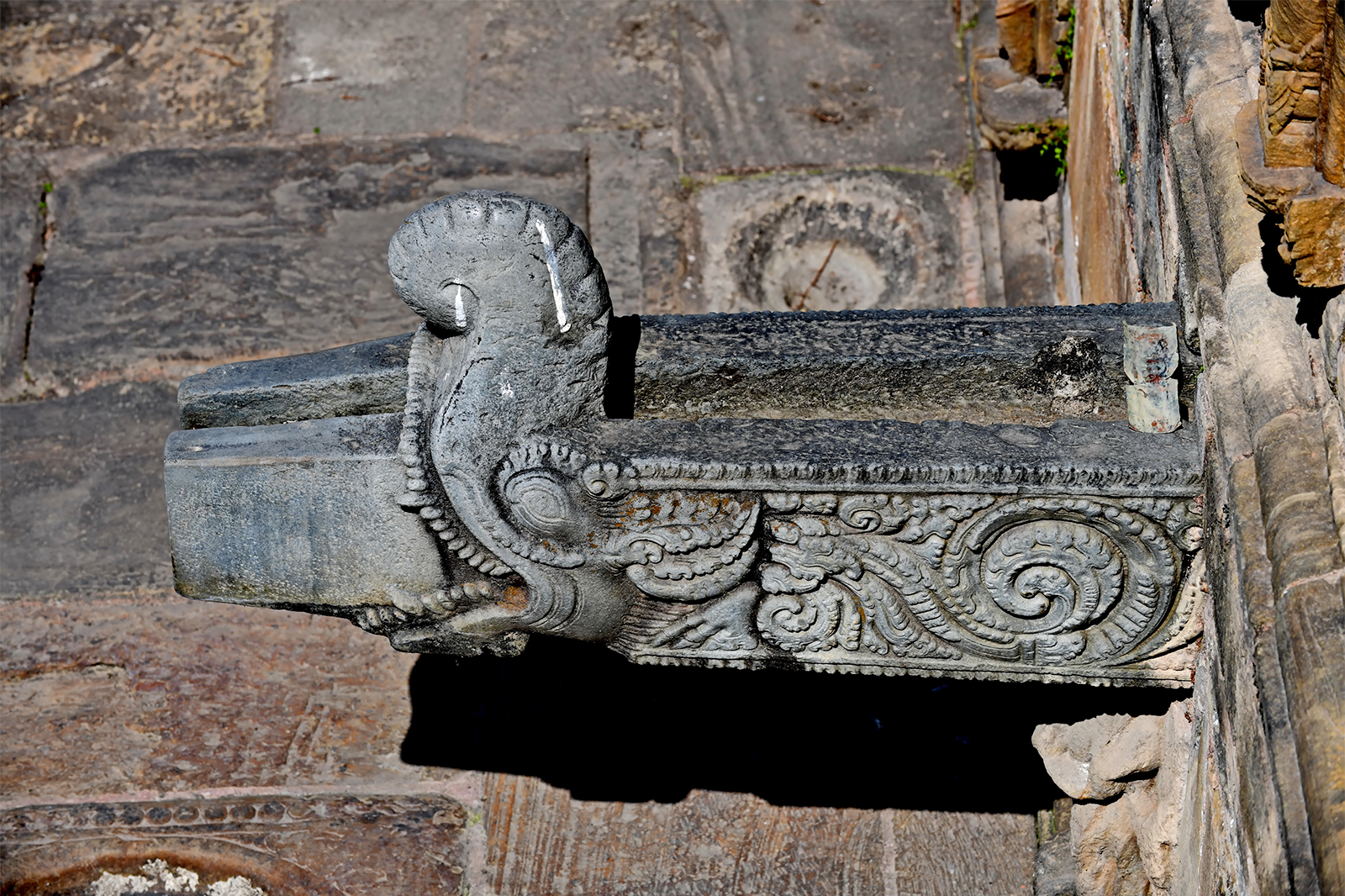
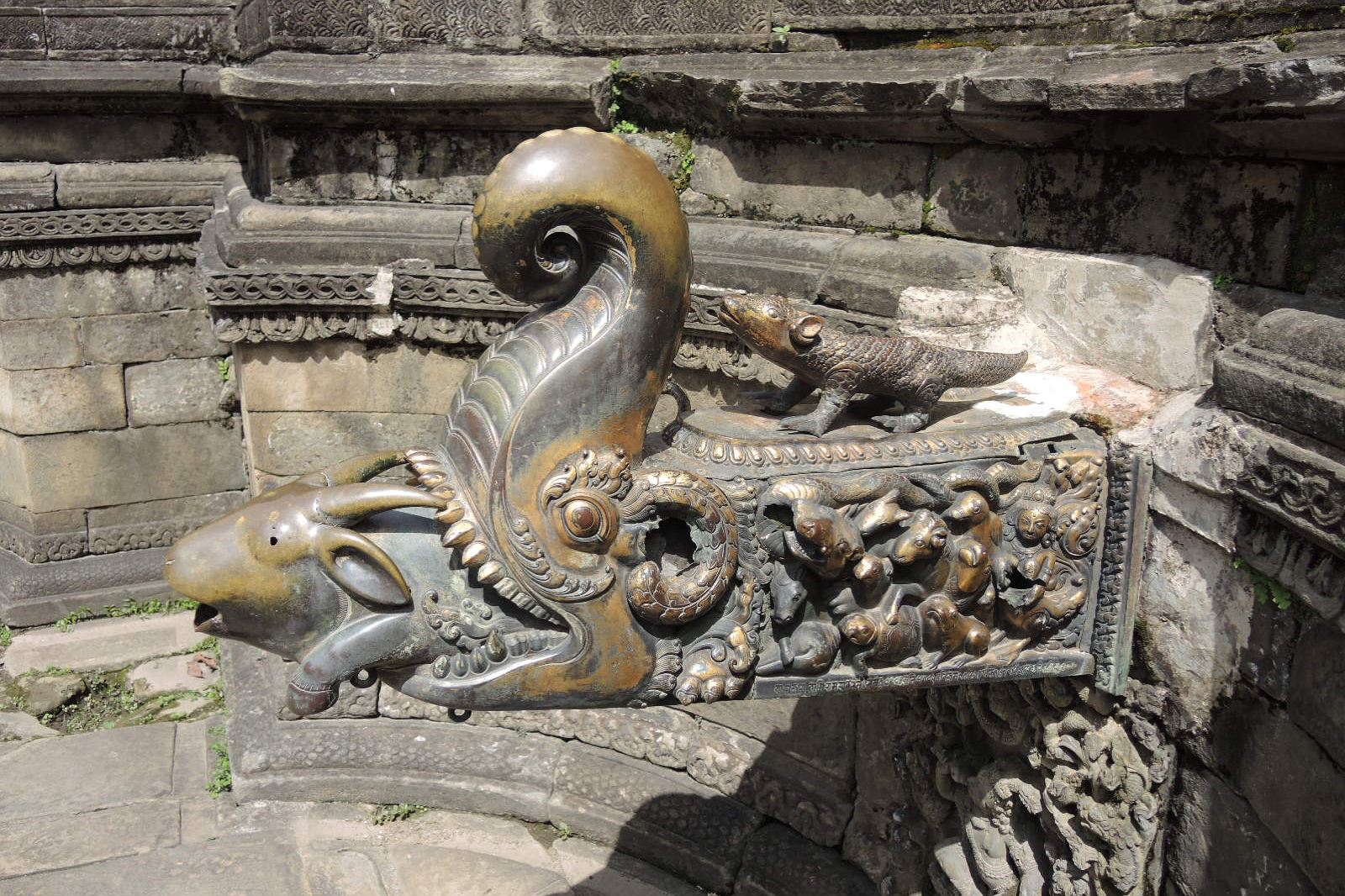
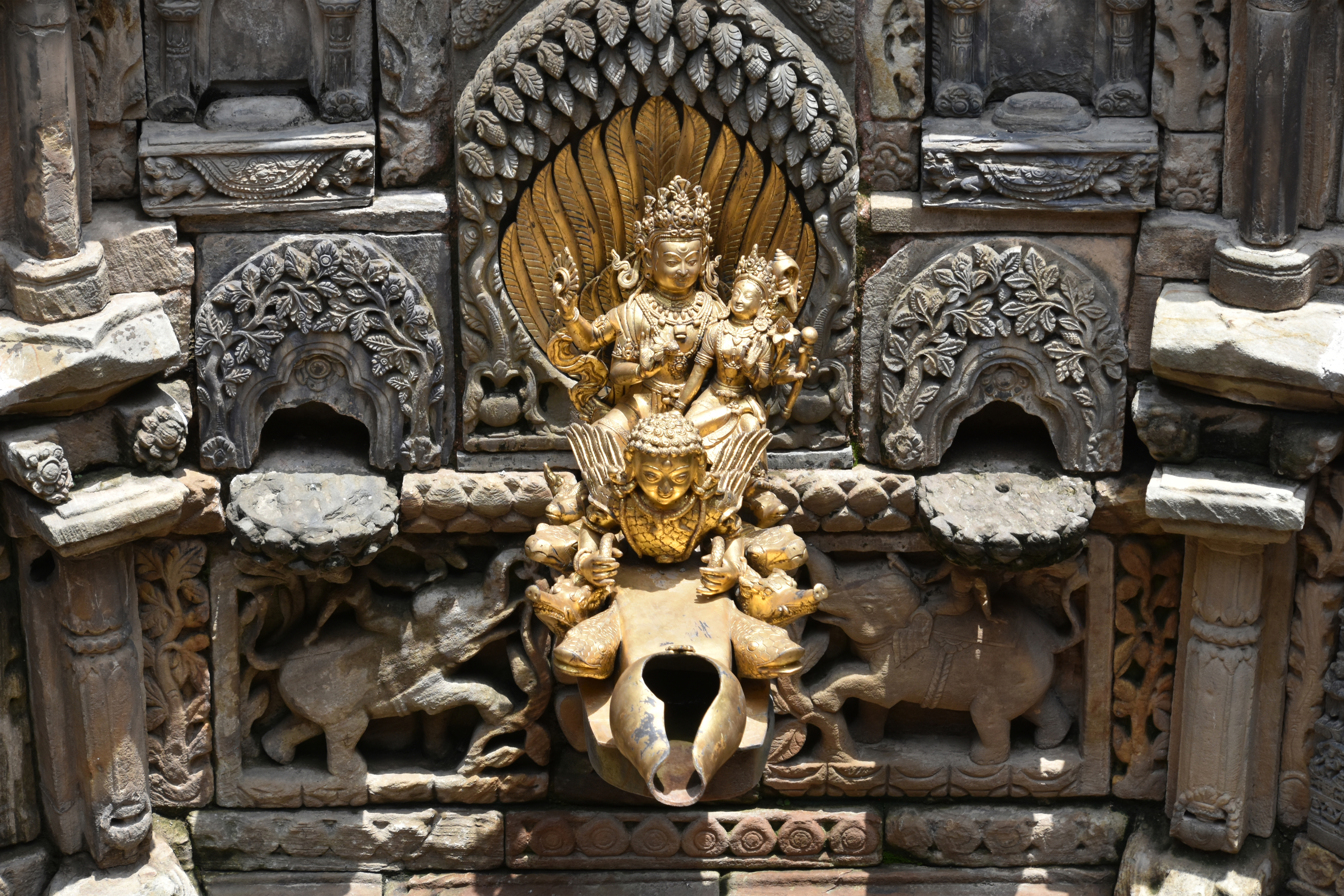
Water emerges from one or more spouts set into the wall opposite the main stairway; most hiti have between one and five spouts, though a few have many more, such as the Baisdhara (‘twenty-two taps’) at Balaju. Spouts within the same hiti may draw water from different sources, like at the Alko Hiti in Patan; and several hiti may share one water source, like the Thapa, Tangal and Tusha Hiti. The spouts project between 20 and 50 centimetres from the wall, typically carved in stone. They are generally shaped in the form of a makara, and occasionally of other animals, from whose mouth water flows out in a continuous stream. The top half of the makara’s body forms a removable cover. Some hiti may also have metal or wooden spouts; others, typically found in royal palaces, feature spouts cast in copper and gilded — these are commonly known as sundhara (‘golden tap’) in Nepali, and lho-hiti in Newar.
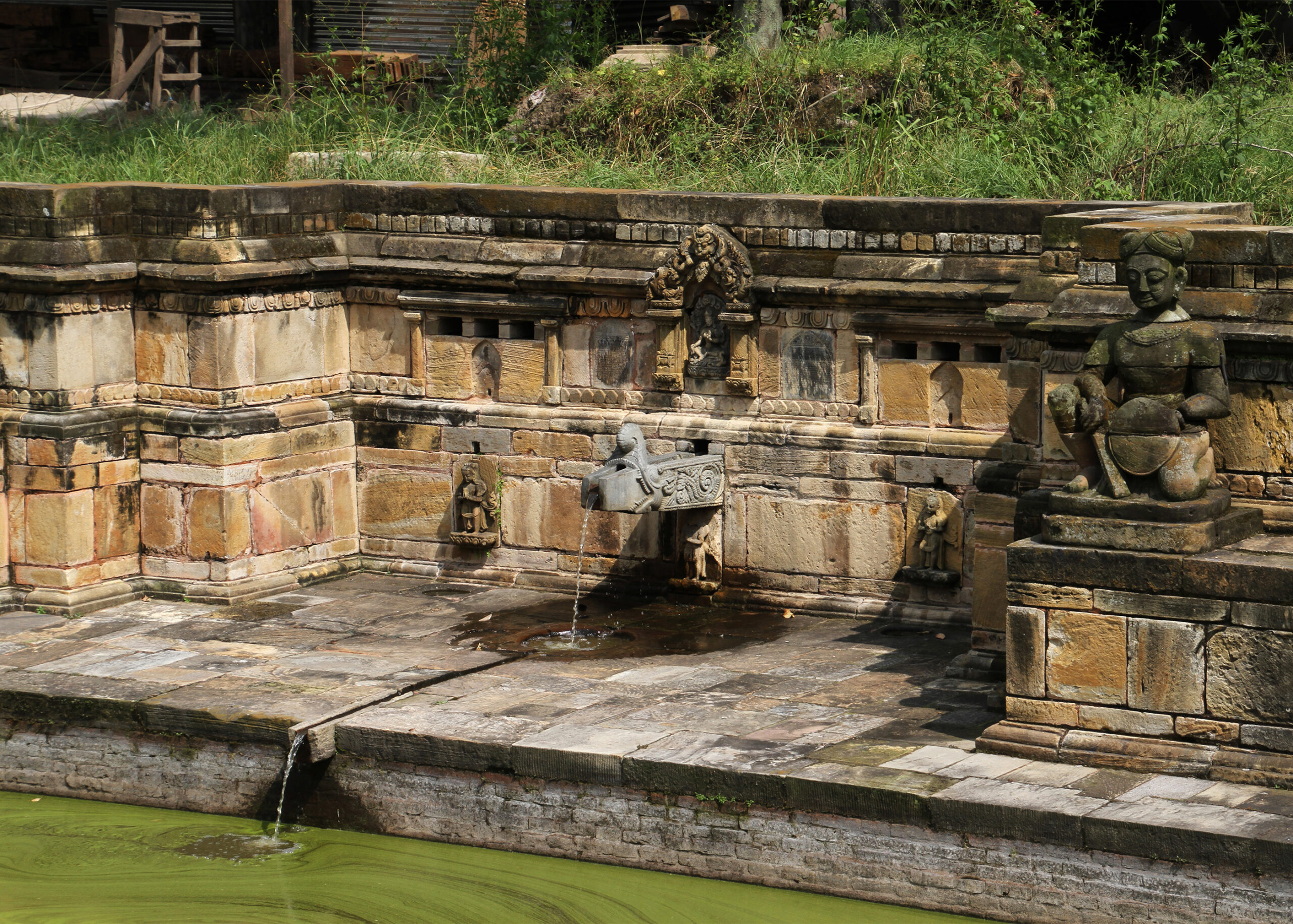
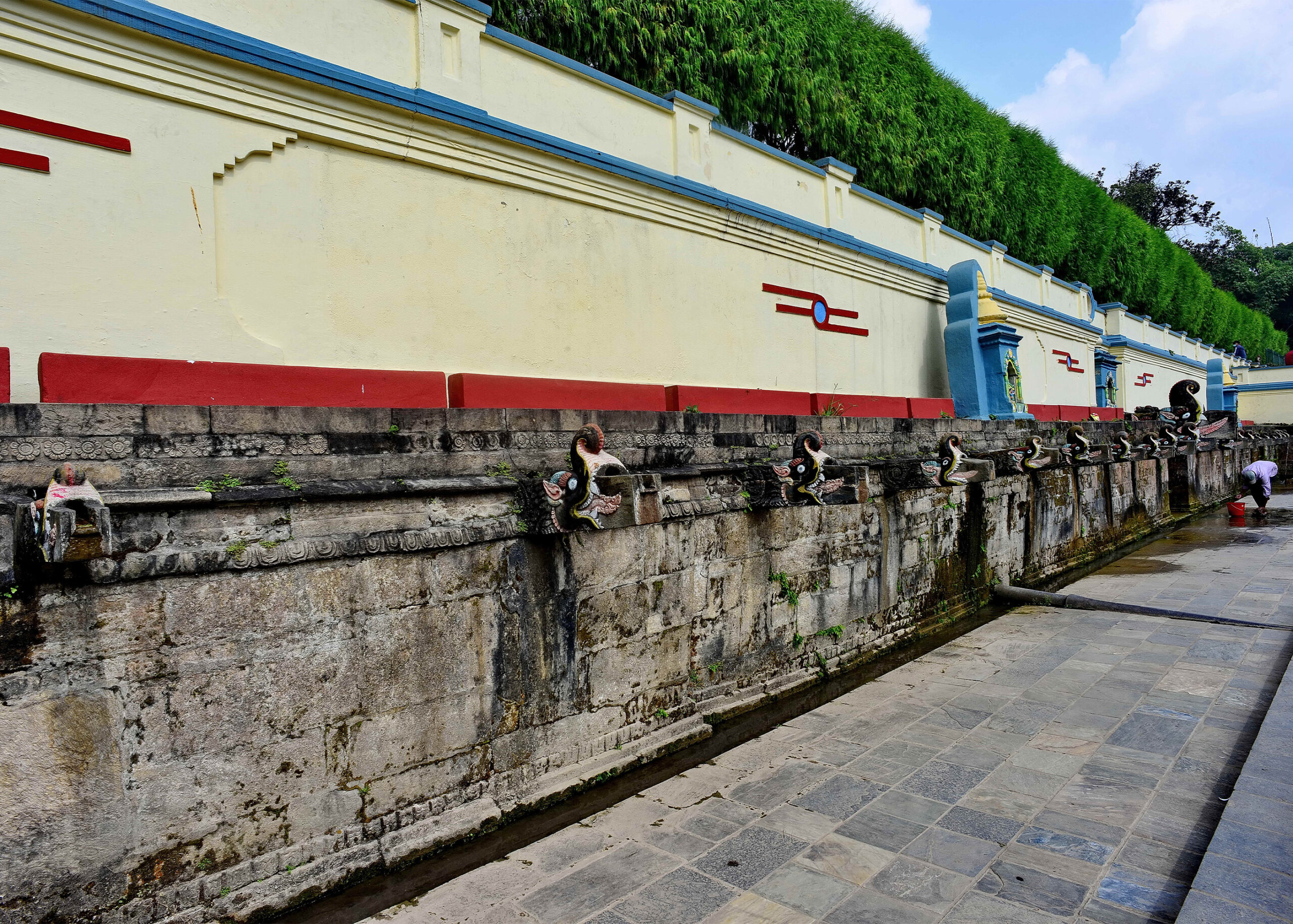
The basin is paved with dressed stone slabs and made watertight with a waterproof clay known as gathu cha (‘clay of the Gathus’, referring to a Newar gardener subcaste) that is packed against its bed and sides to prevent leakage into the surrounding soil. A low parapet around the rim protects the basin from surface run-off and debris. Water reaches the hiti through underground conduits built of clay, brick, or timber that draw on springs and shallow aquifers, which are in turn replenished by higher rain-fed ponds that may also connect to the rajkulo canals. Hiti are also frequently built in descending chains where the excess flow of one hiti is conducted onward to the next one, with the water filtered afresh at each stage. In Patan, water passes in sequence through the Washa, Amrit, Dathu and Buincha Hiti. Overflow is otherwise channelled to ponds or nearby fields, linking individual fountains to interconnected hydraulic networks across the Kathmandu Valley.
Jahru
A related form of public water infrastructure is the jahru (Newar) or tutedhara (Nepali), a stone tank raised on a pedestal and closed with a stone or brick lid, fitted with stoppered spigots and drawn on for clean drinking water. Freestanding examples are found along roads or in public squares, while others may be built into the wall of a residential dwelling like a house or a monastery. They are filled by hand from a nearby well or hiti. In some cases a jahru may be set into the wall of a hiti itself and filled by the fountain’s surplus flow; these types of tanks are called jarun-hiti.
Iconography
The water spouts of the more elaborate hiti are most commonly sculpted as the makara, also known as hitimanga in Newar — a composite mythical creature conventionally combining the body and jaws of a crocodile with the trunk of an elephant and features borrowed from other animals such as fish, deer or peacocks, though its exact form varies considerably. In Hindu and Buddhist tradition, it serves as the vahana (mount) of the goddess Ganga, the divine personification of the eponymous Indian river; its presence symbolically identifies the water issuing from the fountain with the sacred river itself. The makara is a widely used architectural motif in Nepal and also appears in toranas and other ornamental architectural elements.
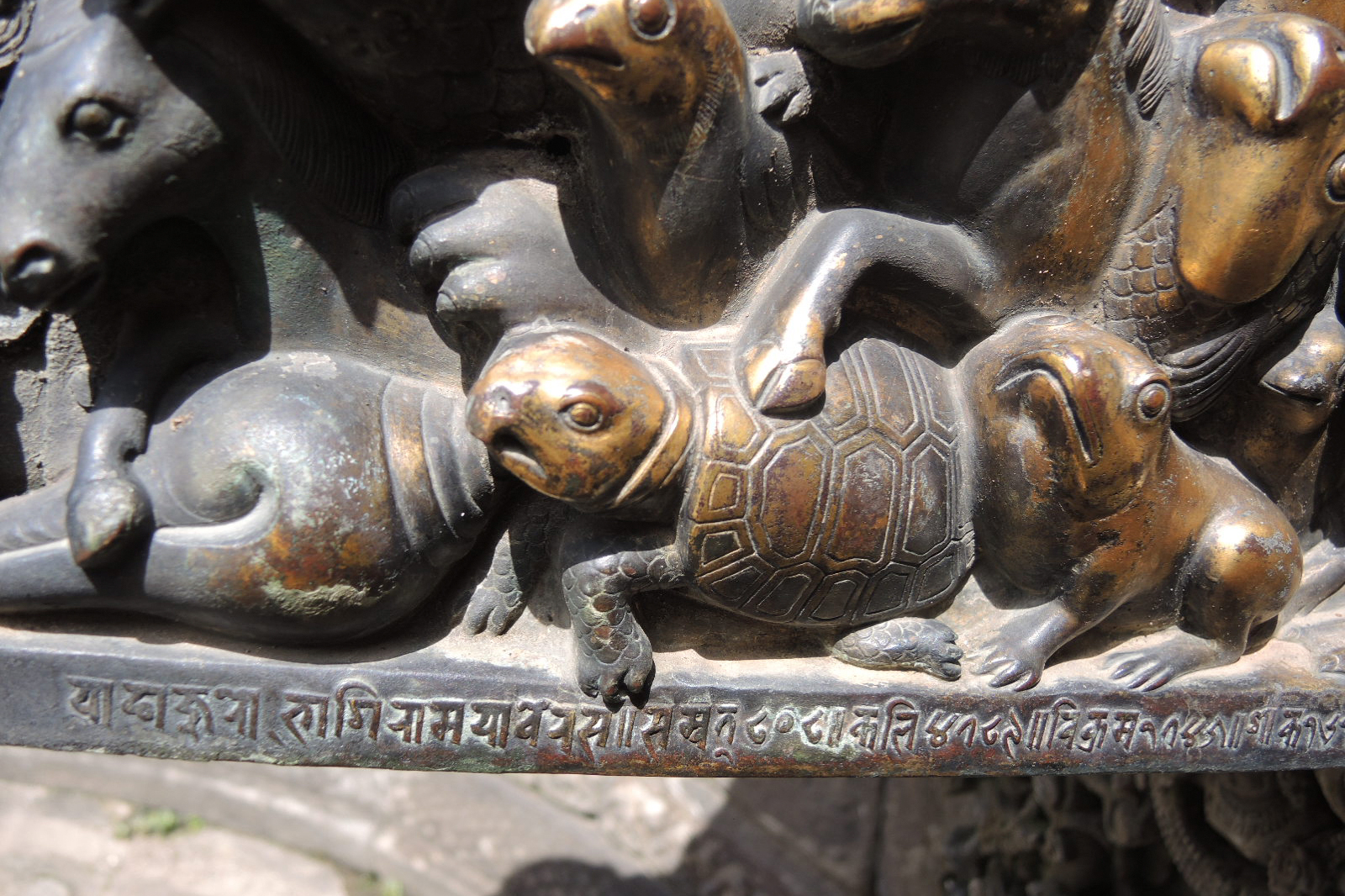
While the makara’s open mouth generally serves as the opening for the water, at some hiti, one or more smaller animals project successively from between the makara’s jaws and water emerges from the mouth of the final, smallest figure; an example of this is seen at Manga Hiti. These subsidiary figures may be wild animals such as tigers, domesticated species including cows and goats, or aquatic creatures such as fish and turtles. The makara itself may also incorporate features of other mythical beings such as Garuda, or a half-snake, half-human Naga. Although the makara predominates, some fountains employ buffalo heads or other domesticated animals as the form of the spout.
In hiti constructed between the fifth and twelfth centuries , the largest stone spout is supported by sculpted figures of squatting or kneeling gana (pot-bellied dwarves), while a niche above the spout houses the fountain’s presiding deity. During Malla rule (1200–1769 CE), reliefs of the legendary Ikshvaku king Bhagiratha gradually replaced the gana beneath the spout, while the deity’s niche developed into a small shrine on the terrace above. Puranic myths relay the story of Bhagiratha’s austerities that persuaded Shiva to bring the river Ganga down to earth from the heavens; as such, his image at the hiti serves to reinforce the association between the fountain’s water and the river’s sacred waters. Yaksha figures may also be carved below or behind the spout, serving as protective guardians of the water source and, by extension, the community that depends upon it.
Additional sculptural images of Hindu and Buddhist deities are frequently incorporated into the surrounding walls and shrines. A notable example is the Tusha Hiti in Patan, built as a royal bath by Siddhi Narasimha Malla in 1647 AD, which features seventy-two stone sculptures set around the basin.
Use and ritual
In addition to their various everyday uses, including drinking, washing, and bathing, several hiti serve defined functions in the ritual life of local communities. At Bhaktapur, water from the Sundhara Hiti is offered to the goddess Taleju, and the Bhimdyo Hiti serves pilgrims during the festival of Shivaratri. In Patan, water from the Manga Hiti is used to re-animate the Puranic character of the asura king Hiranyakashipu during a drama staged annually during the Hindu month of Kartika. Some fountains are also credited with medicinal powers: water from the Sundhara Hiti at Kathmandu is believed to relieve arthritis, for example.
A hiti’s upkeep is often entrusted to a trust endowed with land or funds, and its cleaning follows the ritual calendar, taking place once a year at the Sithinakha festival before the monsoon. The religious significance of the hiti is reflected in the swastika–shaped design of the internal filters of many hiti.
Historically, access to hiti was restricted by caste; since 1951 they are officially open to all, though various patterns of segregation persist. Individual fountains carried their own regulations, established by their founders or patrons, which could bar Dalits and menstruating women from entering the basin. Excluded groups instead drew water from separate fountains designated for their use: in Patan, the Sithu Wasah Hiti serves the area’s Dalit communities and is in turn itself regarded as untouchable by dominant castes.
Conservation
A 2019 survey by the Kathmandu Valley Water Supply Management Board found a total of 573 hiti on record in the Valley; the historical number was probably close to a thousand. With the spread of piped water and household filtration systems, reliance on hiti has declined. Unclear ownership and limited funding have further contributed to their neglect. The construction of roads, buildings, and sewage infrastructure has destroyed or disrupted many canals and ponds, leaving numerous hiti dry; others have been destroyed or buried altogether. Some hiti are well-preserved owing to active upkeep by a local family or community.
Restoration efforts began in earnest with a large-scale programme in 1959–60, and have since continued more sporadically through partnerships between government agencies, local communities, and foreign organisations. The Bhaktapur Development Project restored nineteen fountains between 1974 and 1986, and the Nepal Heritage Society surveyed the hiti of southeastern Patan in 1989. The restoration of ponds has formed an integral part of this work as they replenish the groundwater that the hiti depend on. Although hiti water is still widely regarded as fit to drink and continues to supply a significant share of the Valley’s needs — more than a quarter of Lalitpur’s demand — the shallow aquifers that feed the fountains are increasingly vulnerable to contamination due to sewage seepage and overflow.
A small number of historical spouts are now held in the National Museum in Chhauni, Kathmandu — among them the four conduits of the Bhota Hiti, uncovered during the construction of a pedestrian underpass; and the original gilt copper spout of Patan’s Tusha Hiti, stolen in 2010 and later recovered, a replica having been installed in its place.
First published: 31 August 2026
Image Gallery
Bibliography
Becker-Ritterspach, Raimund O. A. “Dhunge-Dharas in the Kathmandu Valley: An Outline of Their Architectural Development.” Ancient Nepal, no. 116–118 (1990): 1–9.
International Environmental Technology Centre. “Restoration of Traditional Stone Spouts.” In Sourcebook of Alternative Technologies for Freshwater Augmentation in Some Asian Countries, United Nations Environment Programme, 1998.
Khanal, Sandhya. “Symbolism of Sacred Art in Water Conduits.” Nepalese Culture 17 no. 1 (2024): 33–46.
Pradhan, Riddhi. “Dhunge Dhara: A Case Study of the Three Cities of Kathmandu Valley.” Ancient Nepal, no. 116–118 (1990): 10–14.
Shrestha, Rajesh, and Khet Raj Dahal. “Disaster Resilient Construction of Water Spouts in Kathmandu Valley of Nepal.” Journal of Civil, Construction and Environmental Engineering, 5 no. 4 (2020): 72–83.
Slusser, Mary Shepherd. Nepal Mandala: A Cultural Study of the Kathmandu Valley. Princeton: Princeton University Press, 1982.
“Stone Water-Spout Use by ‘Low Castes’ Also Deemed ‘Untouchable.’” myRepublica, March 24, 2013. https://www.myrepublica.nagariknetwork.com/news/stone-water-spout-use-by-low-castes-also-deemed-untouchable.
Tuladhar, Alok Siddhi. “Water of the Ages.” Nepali Times, March 22, 2018. https://nepalitimes.com/here-now/water-of-the-ages.
Feedback