-
ChicagoChakraborty, Indrani. "Tribe in Transition: The ‘Remo’ of the Bonda Hills." Impart Perspectives, July 21, 2026. https://imp-art.org/perspectives/dispatches/tribe-in-transition-the-remo-of-the-bonda-hills/
-
MLAChakraborty, Indrani. "Tribe in Transition: The ‘Remo’ of the Bonda Hills." Impart Perspectives, Jul. 21, 2026, https://imp-art.org/perspectives/dispatches/tribe-in-transition-the-remo-of-the-bonda-hills/. Accessed 20 Oct 2026.
-
HarvardChakraborty, I. (2026) Tribe in Transition: The ‘Remo’ of the Bonda Hills, Impart Perspectives. Available at: https://imp-art.org/perspectives/dispatches/tribe-in-transition-the-remo-of-the-bonda-hills/ (Accessed: 20 October 2026).
Tribe in Transition: The ‘Remo’ of the Bonda Hills
Within the Remo tribe's visual culture, every coloured bead, every fibre, every ring and bangle carries stories of environment, labour, belief, and adaptation.
By Indrani Chakraborty
Link copied!
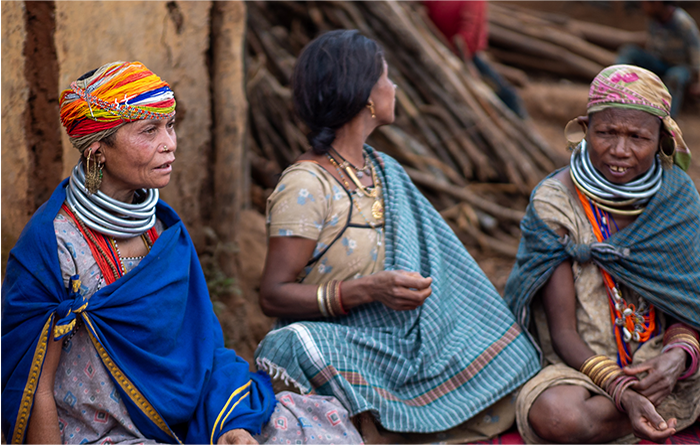
Three generations of Remo women with changing attire. The Remo have seen huge shifts in their culture due to interactions with outsiders. Photograph: Soumya Mukherji
Northwest of the Machkund river of Odisha lies the rugged hills of Malkangiri, home to the Bonda tribe. Classified as a “Particularly Vulnerable Tribal Group” by the Indian State, the tribe has ancient origins. According to the late Christoph von Fürer-Haimendorf (1909-1995), the eminent Austrian-British anthropologist, the Bonda’s ancestors left Africa nearly 60,000 years ago. Eventually, their descendants would settle in the dense forests of the Eastern Ghats, now known as the Bonda Hills. While they are known as the Bonda, they call themselves “Remo,” meaning ‘man’. They speak Remosam (translated as ‘language of man’), which is an Austro-Asiatic language of the South Munda family of tribal languages with no written script.
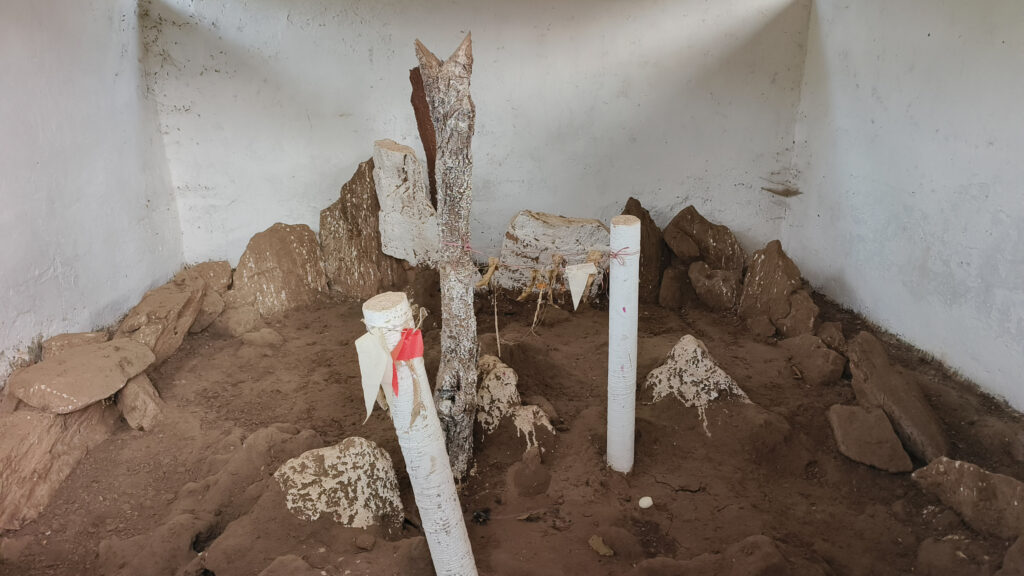
The traditional visual culture of the Remo draws heavily on oral traditions about mythical ancestors and deities, featuring violent creation stories of murder and survival. This in turn has shaped their tribal practices, such as erecting and worshipping stone megaliths and magico-religious rituals, which can sometimes include animal sacrifices. Every Remo village maintains a stone platform of megalithic design called Sindibor that acts as the community’s sacred, communal spot. Villages also maintain an altar for the earth goddess Hundi (often referred to as Bursung as well). Worshiped as a village deity, the village priest (pujari or sisa) conducts rituals at this altar to ensure prosperity and agricultural abundance. As polytheists, the Remo worship a variety of gods. These include Patakhanda — their Supreme Deity; Kapurchuan — the deity of streams and water sources, and forest deities, such as Uga and Renungbor.
The Remos have, inevitably, undergone profound changes over thousands of years of human history. Yet, the most rapid and visually-apparent transformations have occurred across the last three generations during which the material aspects of their culture, from jewellery to traditional attire, has changed significantly with increased contact with outsiders and mainstream society.
Origin Stories of the Remo
One entry point into Remo culture is to understand the evolution of their myths and legends. For instance, the Remo have traditionally viewed the sago palm tree — a source of both food and alcohol — as sacred or precious. To explain their dependence on the plant, there is an ancestral myth, which was documented by anthropologist Verrier Elwin in his book, Bondo Highlander (1950). According to the story, two children were born when the earth was created — a boy and a girl. They had to wander around for food. But when the girl became pregnant and her movements limited, the boy started going out on foraging missions alone to feed them both. When she was about to give birth, the boy saw a deer and promised her that he would kill it and bring it back. In his absence, the girl gave birth to twins, a boy and a girl. Soon, she grew impatient waiting for her husband. So she hid the children under a sago palm tree and went in search of him. She finally found him eating the deer he had killed and sat down to eat as well. Consumed by their own hunger, the parents forgot about their children.
As time passed, the children started crying. Seeing this, the tree took pity and sent its roots to the ocean. The sago palm tree told the ocean about the hungry children and the ocean poured its water into the tree. That water became nectar and climbed up the stem of the tree and dripped down into the babies’ mouths. They grew up drinking the nectar and eventually married each other. Twelve sons were born to them, who would go on to build twelve different tribes. The eldest son, Nangli Bonda, is considered the ancestor of the Remo tribe.
By the 1950s, which is when Elwin began publishing his books about “Bonda” (Remo) culture, the tribe’s oral traditions already showed a mix of animist and Hindu beliefs. Older stories, like the one about the sago palm tree, reveal the tribe’s strong connection to nature. Similarly, their tribal deity Patakhanda is the later manifestation of Singi-Arke (sun and moon deities). According to the Remo, when people were simple and there was less evil in the world, Patakhanda used to live amongst them as a guardian figure and his power continues to live in a broken axe.
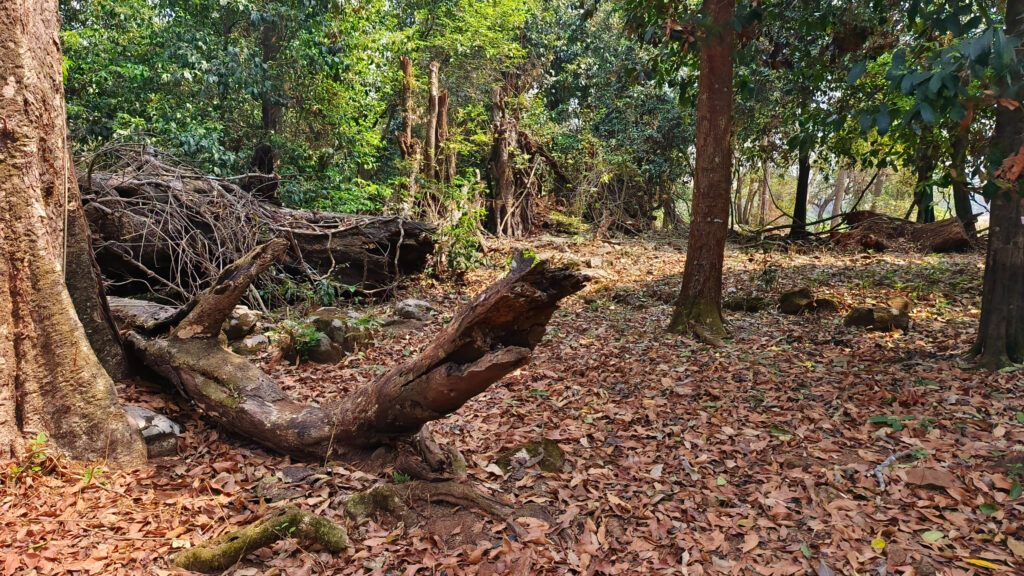
During a recent field trip to the Bonda Hills, Sambari Bhadranaik (26) led me to a circular clearing with a huge tree, which had snapped at the centre. According to Sambari, a sacred axe, apparently Patakhanda’s axe, had been placed in the tree for many years. But when it cracked in two, the members of her village shifted the axe to a different tree nearby. Once a year, the axe is brought down during the Patakhanda parba, also known as the Magha parba. The tribe’s axe-worshiping festival is similar to Jeypore hill tribes, such as the Saora and Paraja.
In the oral myths of the Remo, documented in Elwin’s Tribal Myths of Odisha (1954), Patakhanda wanders the forest, digs the ground with a plough, plays with a bow and arrow, constantly gets drunk, and often interferes in human affairs. One myth talks of his adulterous affair with the lustful Diyamoti, who is married to a snake. After helping her kill her snake husband but unable to satisfy her lust, Patakhanda kills her too. From her head, a beautiful plant emerges — a tobacco plant. Soon the Remo tribe start consuming this plant raw and also cooking with it to get intoxicated. In time, they learn how to smoke the plant’s leaves, and finally, as the story goes, Diyamoti is satisfied because everyone learns how to enjoy her.
In addition to the worship of nature deities, there is one sacred tribal spot, located at Mudulipada in the Malkangiri district of Odisha, that is colloquially known as ‘Sita kund‘. A Remo myth claims that Rama, his younger brother Laxman, and wife Sita, visited the Bonda Hills during their vanabas (period of exile in the forest) described in the Hindu epic Ramayana. At the time, Sita wore a single piece of cloth called Amlan Bastra. Some Remo women saw her bathing in a hill stream and laughed at her pitiful state. Angered, Sita cursed them to live a life without vanity, reducing them to the same abject state she was in as a person in exile. When they begged her forgiveness, she tore off a portion of her bastra (garment) and gifted it to them. The curse of Sita is how Remo women explain why they are meant to shave their heads and their traditional attire is a single piece of cloth, barely three feet long, called ringa that is wrapped around the waist and secured with a thunaya lubbaita (waist belt) that can hold tools like knives or a sickle.
Production of Material Culture
The ringa cloth was traditionally made from fibres of a local shrub called kerang (Careya arborea). Similarly, the men wore gosi, a simple waist cloth, mirroring the ringa, though there are no separate legends about this garment. It indicates that the Remo, at some point in their history, found it necessary to have a myth, specifically a Hindu myth, to explain the appearance and attire of their tribe’s women, but not the men. The transition from purely animist beliefs to Hindu-influenced ones also occurs with stories about Patakhanda, who becomes Patakhanda Mahaprabhu or just Mahaprabhu in later stories. The Mahaprabhu addition can be linked to the rise of the Jagannath cult in the region. Dolomi Sisa (78) remembers worshipping Patakhanda, as well as Ram, Sita and Lakshman, from when she was a child.
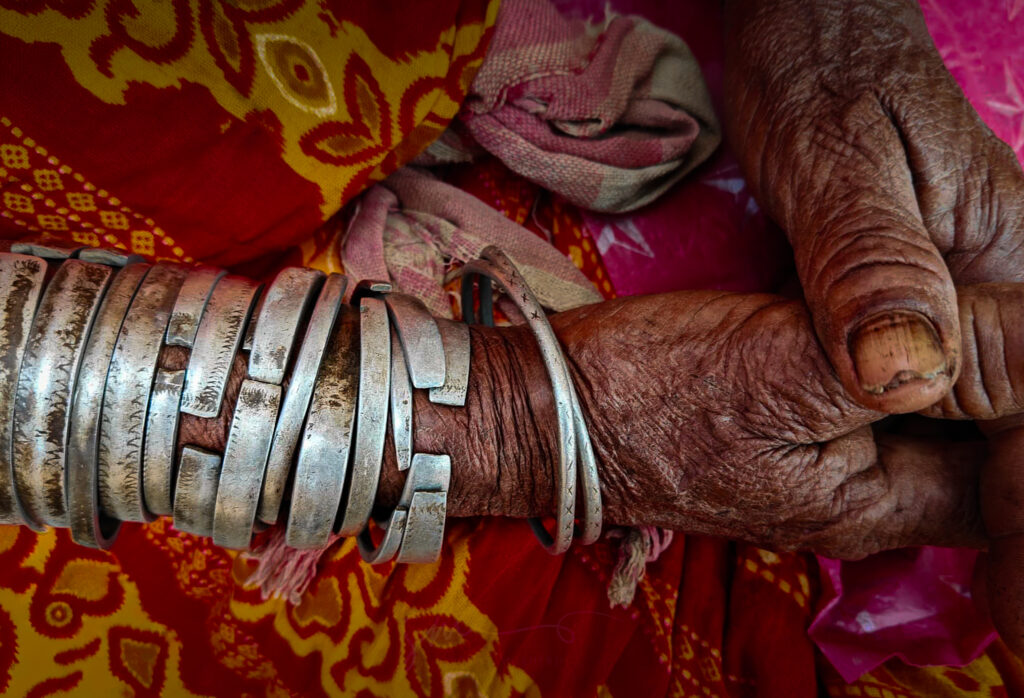
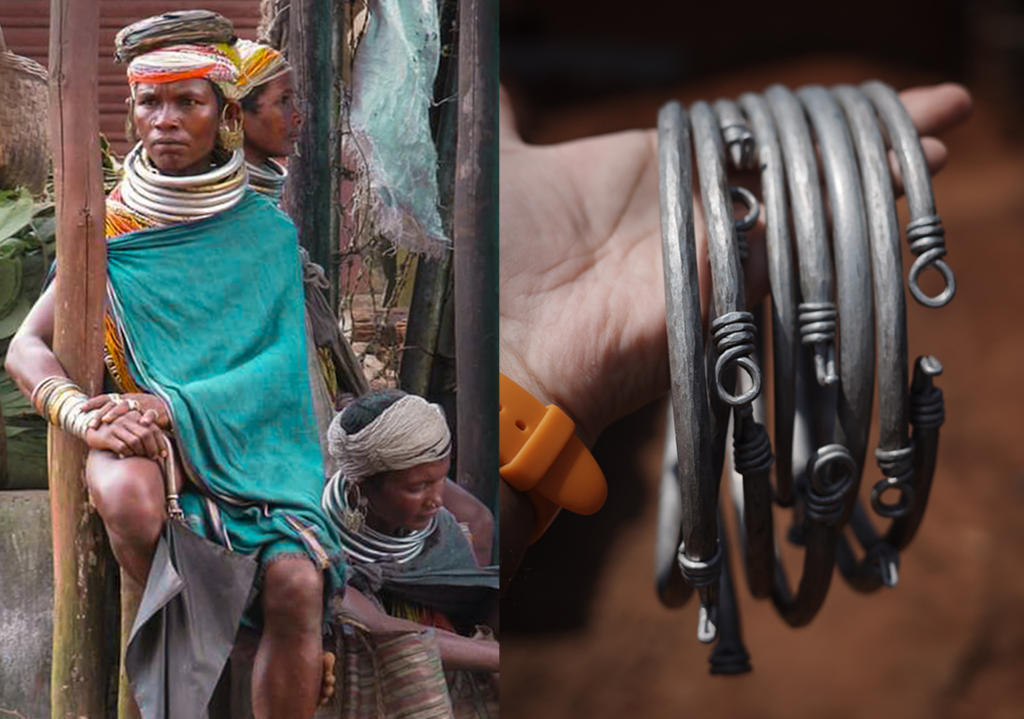
To cover their bare torso, Remo women traditionally wore a striking collection of ornaments, starting with colourful bead necklaces, called mali, extending up to the navel, and khagla — thick aluminium neck rings that shielded women from animal attacks. Another type of neck ring, called usungu, is lighter and made from a thin metal rod, usually brass, aluminium, or iron, that is shaped to fit tightly around the neck and head.
Married women are also meant to wear sungarae (or sumarai) — metal bangles, stacked from wrist to elbow — as a symbol of fertility that is meant to prevent childlessness. Ear ornaments such as thinkodit, surkoda, and jinb jinglo, typically made of aluminium, are crafted to adorn different parts of the ear. Protective, spiritual, and decorative purposes intersect in such types of jewellery. In comparison, the men only wear the samba, an aluminium arm bangle, during festive occasions. The traditional attire and jewellery of the Remo set them apart from their neighbouring tribes, such as the Gadaba and the Paraja.
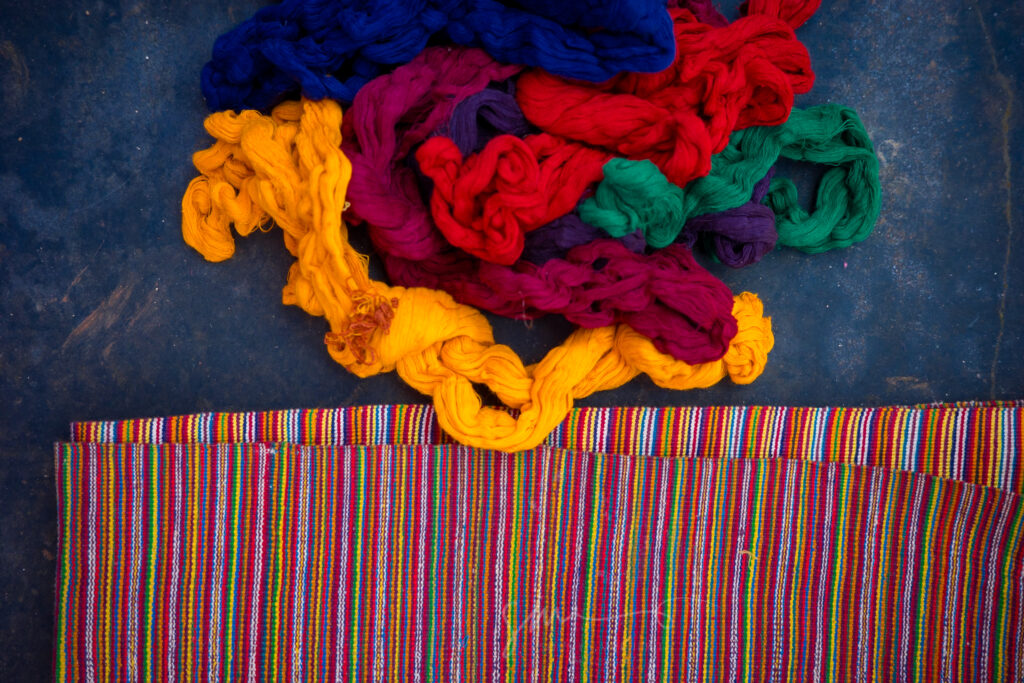
Every bead, every metal ring, every fibre carries the stories of environment, labour, belief, and adaptation. For instance, the durable ringa, with its vibrant candy stripes in red, black, yellow, and white, were produced using rudimentary ground looms. Earlier specimens, made purely from kerang fibre, used to last decades and were handed down, woman to woman, generation to generation, as wearable heirlooms. The process of making a ringa would start with harvesting the kerang shrub, usually between January and May, before its fibres were macerated in streams for several days and then pounded with wooden mallets into fine strands. Because the resulting fibre lengths would be short and discontinuous, women would use their fingers and thighs to twist the fibres to make yarn of usable lengths. The hand-spun thread was then wound up onto a tool called unokda and rolled into small balls, known as badi, in preparation for weaving.
For dyeing, reds were extracted from manjistha (madder) roots or lac, blacks from haritaki (Terminalia chebula), and yellows from turmeric or palash flowers, with local minerals serving as mordants to ensure fade-resistance. Once on the loom, the warp would be stretched between trees or posts, and women would interlace the weft using fingers or simple shuttles to create geometric stripes. It would take Remo women two to three days of fairly consistent work to weave one ringa. The finished pieces were sewn into wraparound skirts, and often paired by married women with a blue upper cloth.
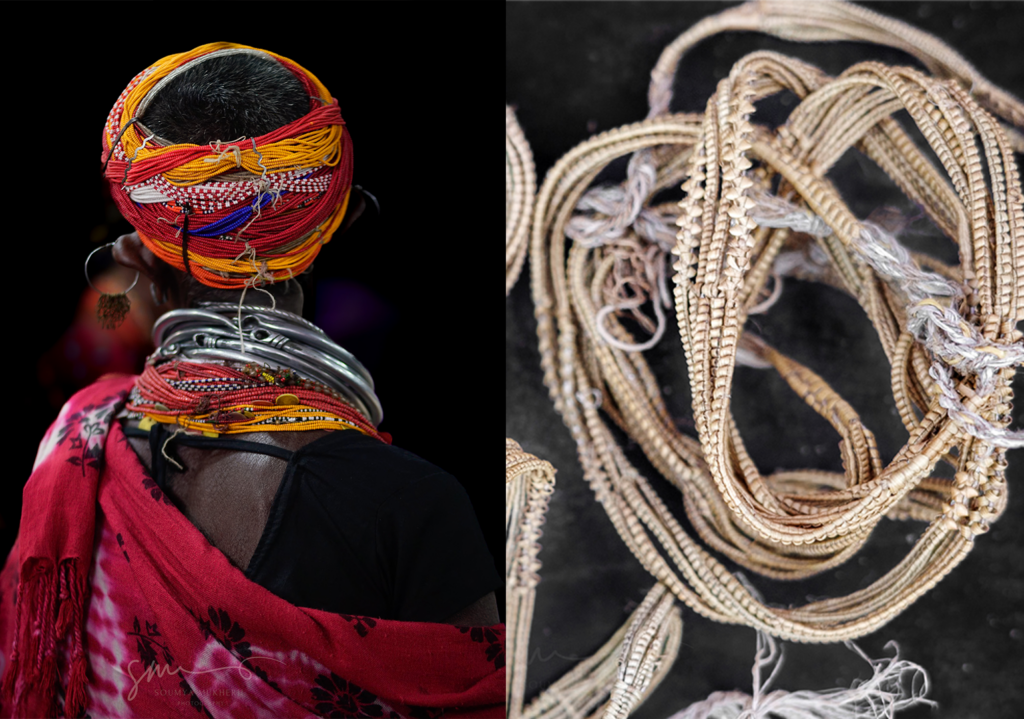
Unlike more elaborate weaving traditions, such as the ikat or tie-and-dye, Remo textiles never had complex motifs; instead, each colour holds symbolic meaning for the Remo. Red represents blood, life force, or strength, while black and darker colours symbolises the dark earth and represents the tribe’s connection to their ancestors and the forests. Other important colours are yellow and orange, signifying prosperity and abundance, while blue is associated with protection. The ringa design stayed the same for both married and unmarried women.
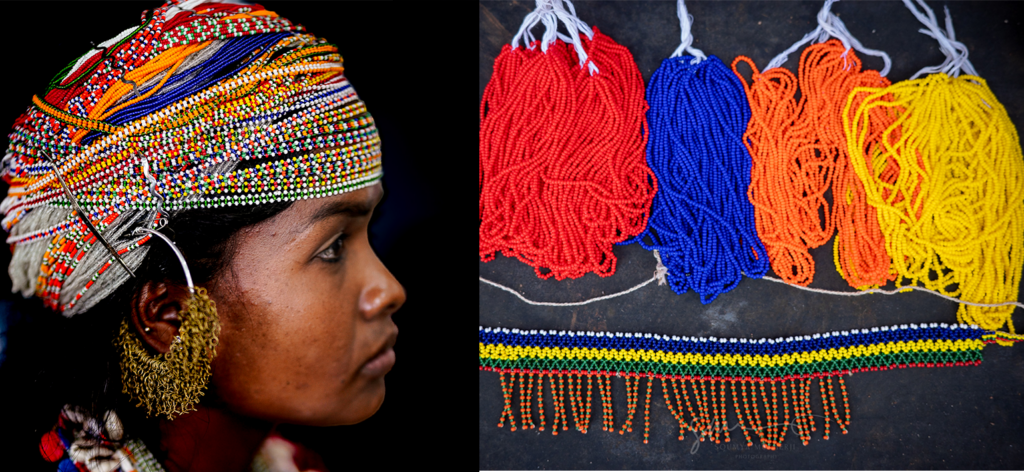
However, it was customary for elder married women in the tribe to flaunt their high status by heavily decorating their shaved heads with beaded headbands, called lubeidak, and crowns made from date palm leaves. Similarly, the types and quantity of necklaces, bangles and neck rings worn would increase with age and marital status. Jewellery also signalled clan affiliations and spiritual power. Techniques of weaving, beading and shaping metal jewellery continue to be passed down orally across generations but there has been a gradual shift away from natural materials.
Nowadays, cotton threads have nearly replaced bark fibres, and market-bought glass beads sit alongside forest seeds in traditional designs. Earlier, the production of such goods was largely for the tribe’s own use. But now, the ringa cloth and beaded jewellery are especially popular with tourists interacting with the Remo at the local weekly market called Onkadelli haat, usually held every Thursday.
Changing Times
As with many remote tribes, the Remo once had a self-sufficient economy. In the hills, the Doms, a Scheduled Caste community from the same region, became important economic intermediaries because the Remos had limited understanding of the cash economy. They would procure salt, utensils, and other such basic commodities from the Doms by bartering agricultural produce, forest products, and palm wine. But during the late eighteenth century, as British records show, some pioneering Remo men left their villages to work in the tea gardens of Assam and Manipur. This practice, in time, became an established one because it enabled the men to quickly earn money for the bride price they were required to pay in order to marry back home. On the other hand, the Remo were also known for their fighting skills and aggressive behaviour. According to scholar RP Mohanty, “early British government reports speak of the Bondas as ‘ex-criminals.'” This fierce reputation, and the rugged and largely unnavigable terrain of the Bonda Hills, insulated them from colonial subjugation as well as Christian missionaries.
Out of 150 men interviewed by Elwin in the 1950s, about 27 of them had made expeditions to earn money at tea plantations. When they returned, they would come back with modern clothing and equipment, from umbrellas to shorts and shirts. The clothing would eventually wear out, but the metal ribs of broken umbrellas were refashioned into metal armlets. When forays into the outside world resulted in arrests, the tribe would welcome offenders back home when they were released. Having learnt key words of other languages during their time in prison, such “ex-criminals” would earn a higher status within the tribe because they could communicate with the police and government officials on the tribe’s behalf.
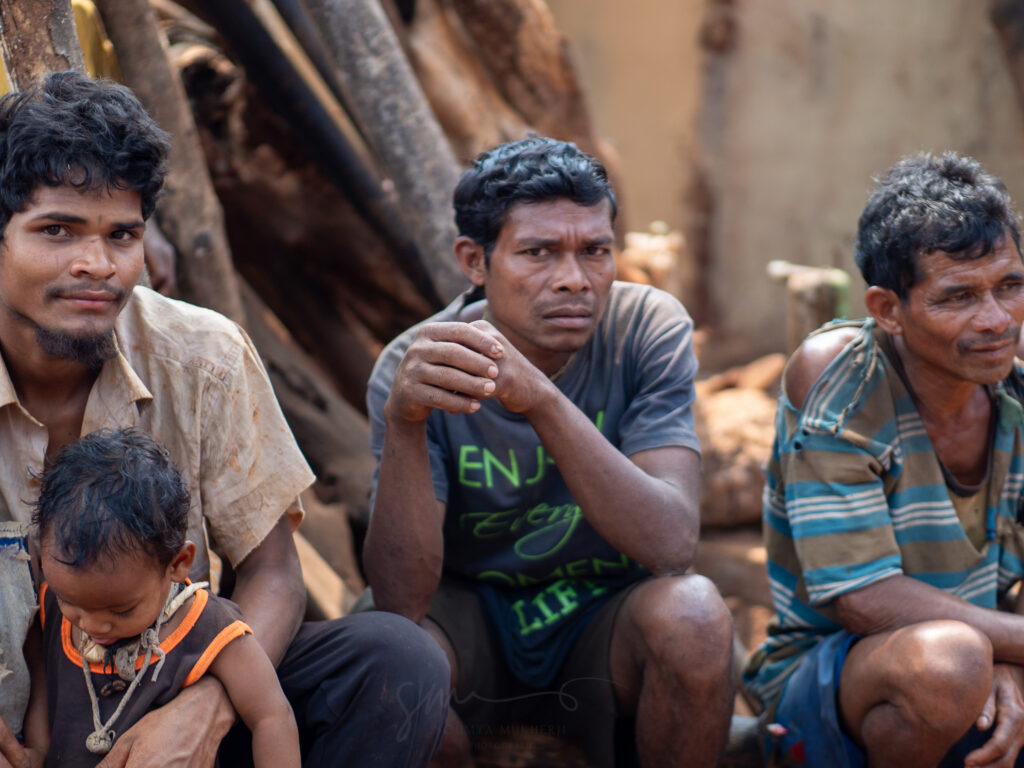
Such stories of cautious assimilation show that tribe members have had to continually adapt to face changing circumstances as they became aware of cultures beyond their own. Proximity to neighbouring tribes with whom they had regular interactions determined the pace of changes. The influence of Hinduism entered their lives and vocabulary through interactions with the Doms, and other plain tribes. The names of tribal gods were supplanted or correlated to characters from the Ramayana and the Mahabharata.
In recent years, very few Remo women — mostly from the older generation and who live in the remote villages of the Upper Bonda Hills — continue to cling to the traditional ways. In the Lower Bonda Hills, where villages have long been exposed to modern clothes and gadgetry, women no longer follow traditions. Most Remo villagers here even admit that they don’t believe in their tribal deities, like Patakhanda, anymore. Younger generations in both Upper and Lower Bonda Hills refuse to wear the ringa or traditional jewellery, nor do they shave their heads.
Assimilation vs Adaptation
According to anthropologist Dr AC Sahoo, who worked extensively in the Bonda Hills during the 70s, the main reason for such rapid changes after centuries of being relatively isolated was the increased instances of interactions between the tribe and the outside world. For instance, in the case of Remo women, their bead jewellery, traditionally made from seeds collected from the forest, changed into colourful glass beads which traders brought to their villages. Sambari, part of the younger generation in their 20s, also tells me how more and more Remo women, starting from her mother’s generation, began rejecting the tradition of shaving their heads after coming in contact with other tribes.
Popular cinema, modern education, and technology have also played a role, in successive eras, significantly impacting the material culture of the Remos, post-independence. GB Mukherji, an officer posted to the region in the 70s as an official of the Ministry of Tribal Affairs, recalls how organisers would arrange movie screenings of popular films like Sholay (1975) to ensure the villagers from the Bonda Hills would attend important government events. This form of entertainment was adopted by the Remo, who would arrange their own movie screenings during marriage celebrations. Later, the Eklavya Model Residential School for tribal children, introduced in the 90s, implemented a school dress code. “The Bondas were indirectly made to feel like their traditional attire was inappropriate for stepping out in polite society,” says sociologist Dr Arpita Sahoo, who has worked in the area for many years.
For the present generation of Remo youth, with access to smartphones and social media, the old ways are no longer acceptable. Instead, they want to wear modern clothes and leave the village to study and work. There is also no need to wear heavy, armour-like jewellery to protect against animal attacks. Some women, however, continue to wear or use jewellery related to monetary status, such as coin necklaces called dabulubeida, and for prosperity and fertility, such as earrings and arm bangles.
But even when traditions are continued, there is a shift to modern materials. Married women, who once wore the heaviest ornaments as the elder women of the tribe, now opt for lighter versions, such as glass bangles. Sima Muduli (36), from Kathaguda village, says that married women like her not only do household chores but also earn money constructing village homes under the Awas Yojana. So they find it difficult to wear heavy metal bangles while working.
Saris and nightgowns have increasingly taken the place of beaded jewellery and the ringa among married Remo women who reside in the Lower Bonda Hills. Young, unmarried girls stick to jeans, skirts, and kurtis or salwar-kameez. Such items of clothing are now easily available to them, and they find them easier to work in. The men had begun abandoning their traditional gosi loin cloth even earlier, at least a few generations before the women began opting for modern clothing and jewellery.
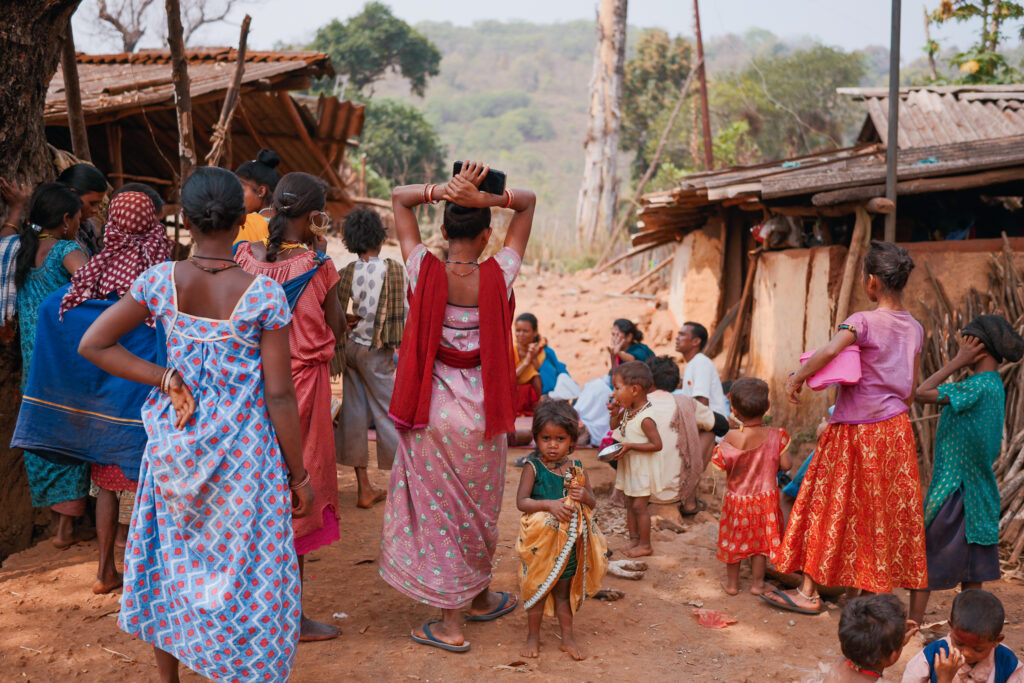
Remo girls in their twenties say that they feel uncomfortable stepping outside wearing their traditional attire. Even during community festivals, they prefer to wear modern clothing, as do the boys. The only exceptions seem to be the Onkadelli haat where Remo women sell traditional ringas and jewellery to tourists or while attending special government events.
As a tribe in transition, the Remo present a unique dilemma. There have been attempts to ‘preserve’ or ‘revive’ aspects of Bonda tribal culture, from their beadcraft to ringa weaving. These objects have value as handicrafts or tourist souvenirs but are no longer suited to the daily life of tribe members today. At the same time, the younger generation is also moving away from villages to find avenues of education and job opportunities.
Cultural and heritage organisations working with the Remo fear that everything that is distinct about the tribe will eventually ‘disappear’. But such apprehensions do not account for how Remo traditions continue to evolve and persist with the use of modern materials, such as glass beads and bangles and cotton yarn to make ringa cloths. The Remo have repeatedly absorbed and assimilated new ideas, languages, materials, and influences, if and when they find them useful.
Therefore, the story of the Remos isn’t about the disappearance of a tribal culture. It’s a story about adaptation — of how each generation, by altering myths, beliefs, and attire just enough to respond to the changing world around them, redefine and reinvent what it means to be Remo.
First published: July 21, 2026