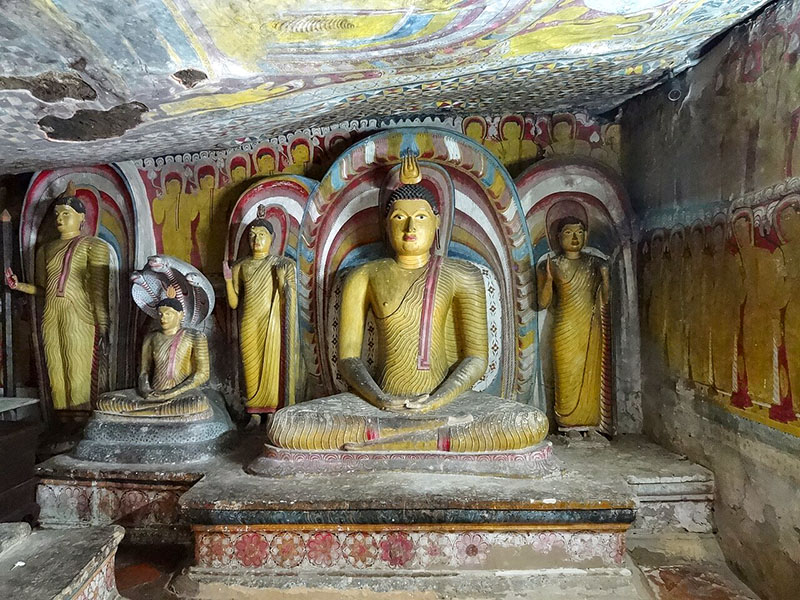
Extensive kingdom in present-day Sri Lanka from the second century BCE to the tenth century CE, with the city of Anuradhapura in the North Central Province as its capital. According to the classical Pali chronicle Mahavamsa — though not established as historical fact — it was founded by a king named Pandukabhaya, the third in the line of the legendary king Vijaya, who is claimed by tradition as the father of the Sinhalese people. Throughout its history the kingdom was highly contested, ruled by a variety of dynasties both Tamil and Sinhala, Hindu and Buddhist, Sri Lankan and South Indian. The extent of its territory also constantly shifted, with brief periods where it covered the entire island. The patronage of Anuradhapura rulers allowed for the creation and development of some of Sri Lanka’s most enduring religious art and architecture, including the Sigiriya frescoes, the Dambulla cave temples, and the Ruwanwelisaya Stupa. The kingdom disintegrated in the tenth century after an invasion by Chola kings from southern India.
Anuradhapura Kingdom
Link copied!