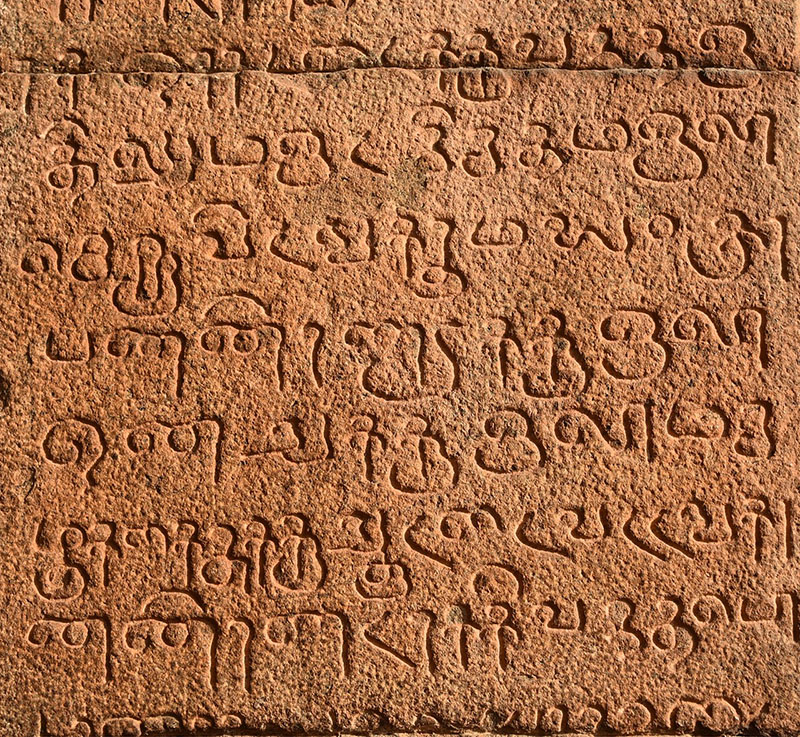
Language of the Dravidian family, originating in present-day Tamil Nadu in southern India; and among the oldest languages of the Indian subcontinent still in use. Tamil has also had a presence in Sri Lanka since at least the third century BCE. Recent archaeological evidence suggests that the earliest Tamil inscriptions — written in a variant of the Brahmi script known as Tamil-Brahmi — date at least to the fourth century BCE. The earliest Tamil literature dates to the late centuries BCE, beginning with a corpus of classical bardic poetry known as Sangam poetry. Historically, during Pallava and Chola rule, Tamil was also written in the Vattezhuthu and Grantha scripts. By the fifteenth century, the blueprint of the present script and alphabet was established; since the nineteenth century, it has been standardised further. The etymology of the word tamil is unknown, but medieval commentaries suggest it means ‘sweetness’ or ‘coolness’. It is an official language in India, Sri Lanka, and Singapore, and widely spoken in Malaysia, Mauritius, and other countries.
Tamil (language)
Link copied!