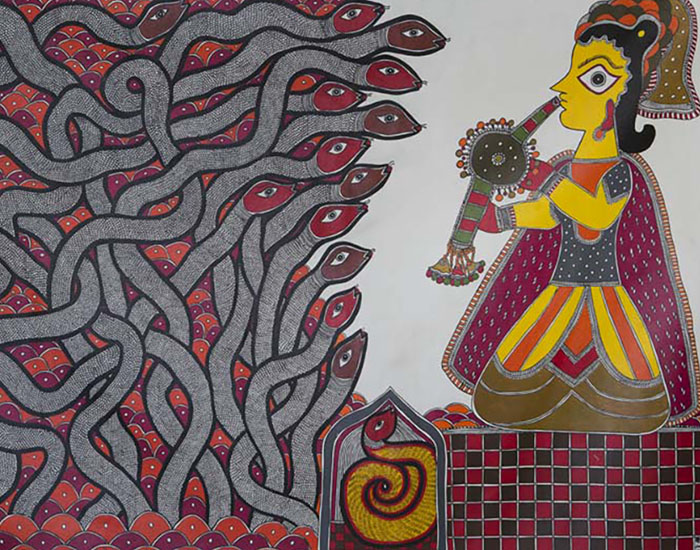
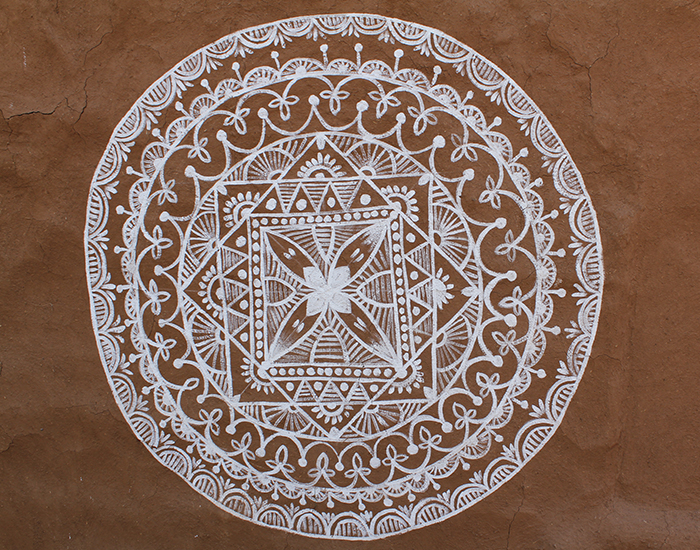
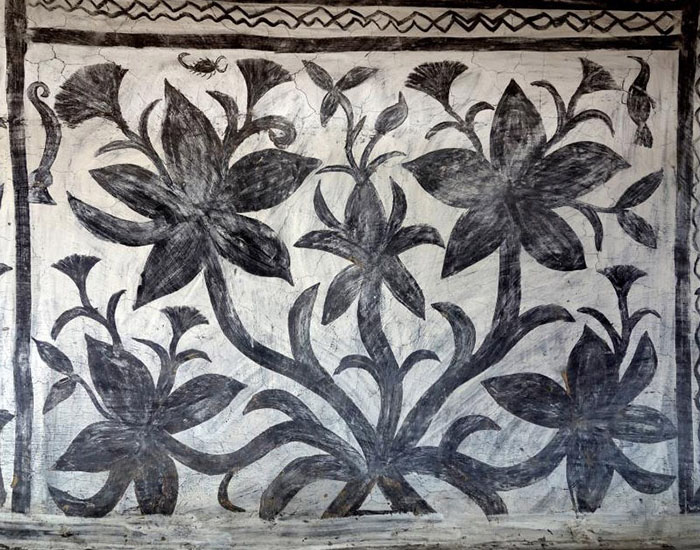
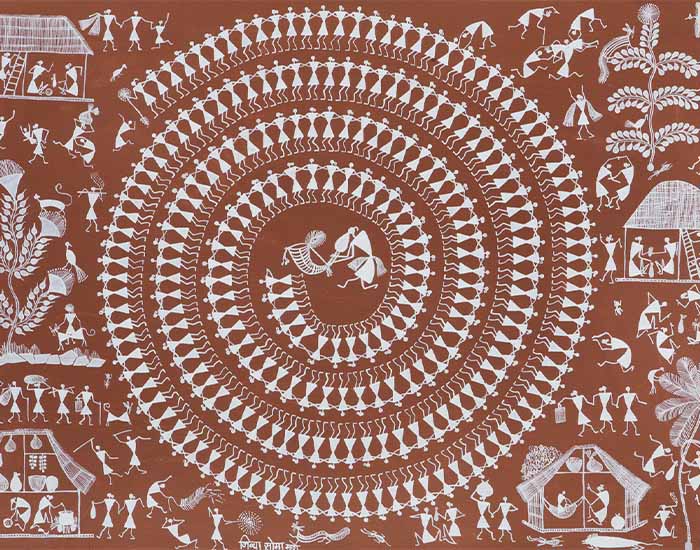
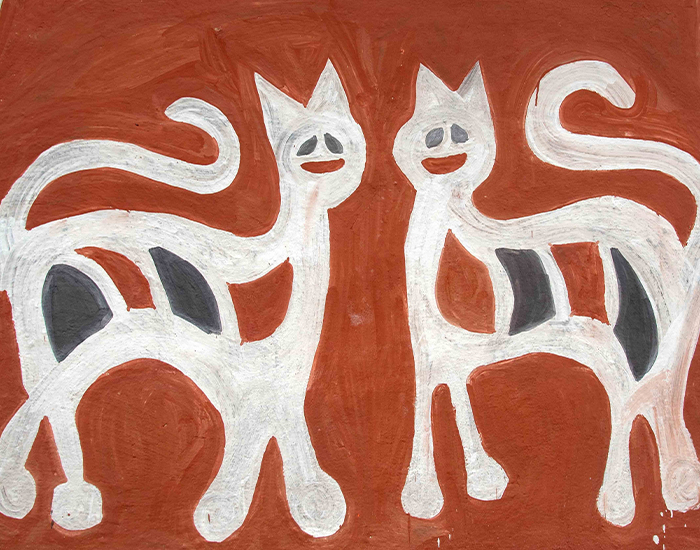
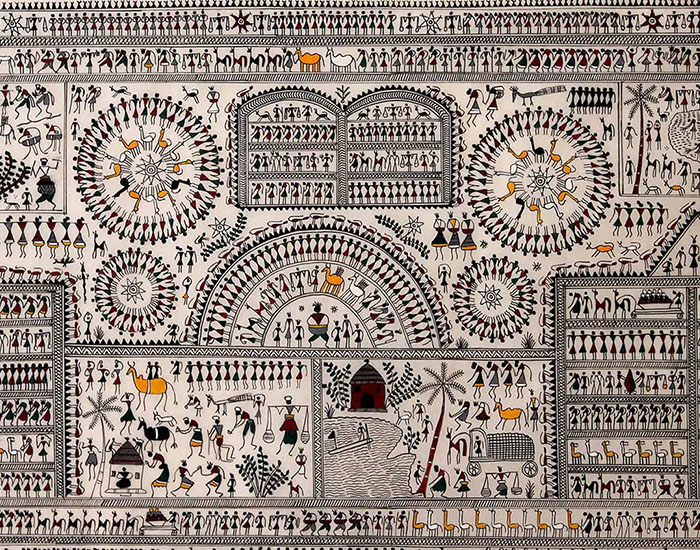
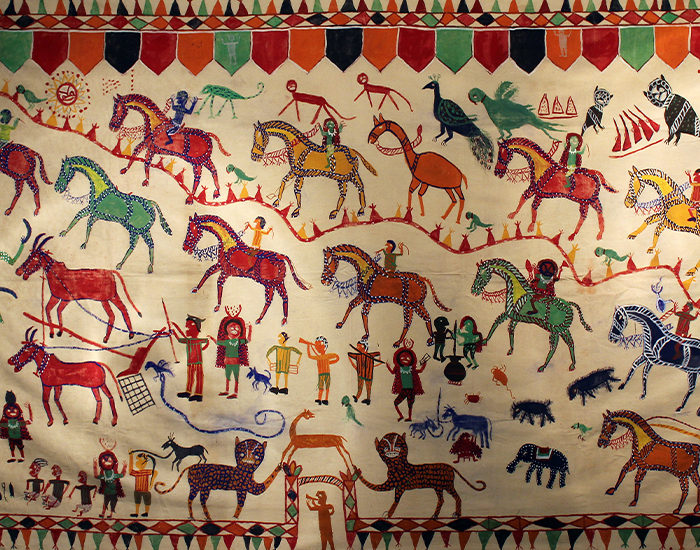
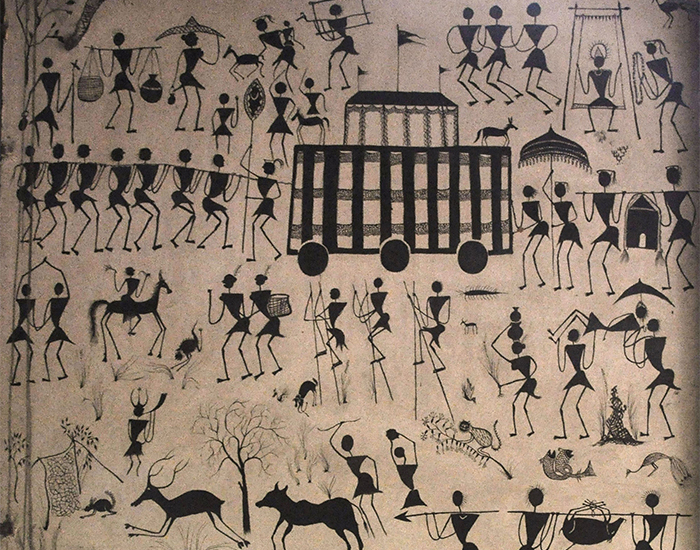
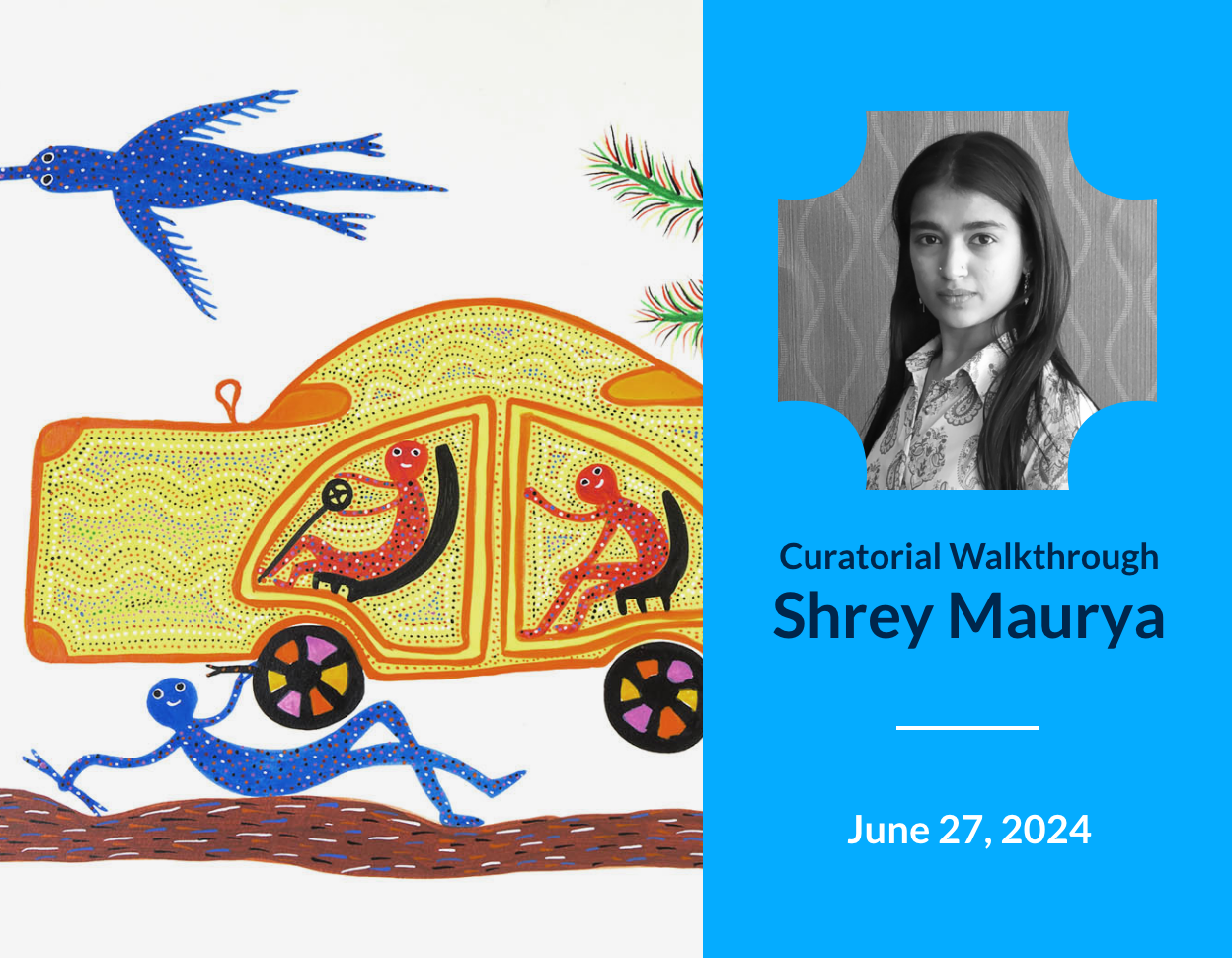
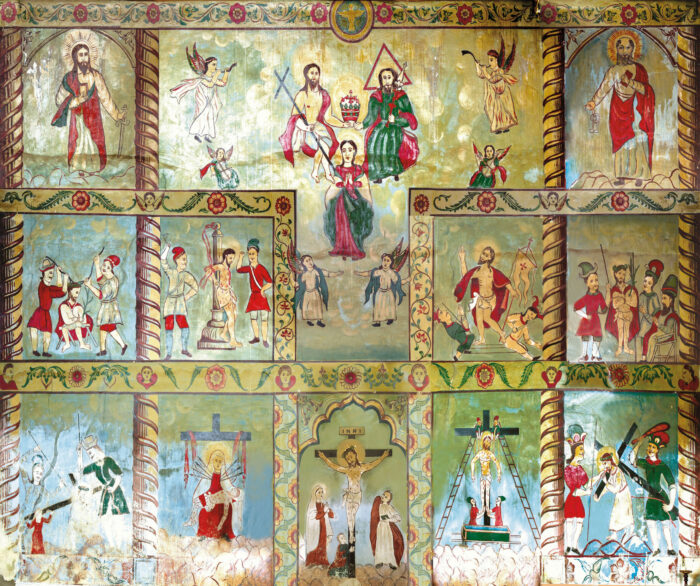
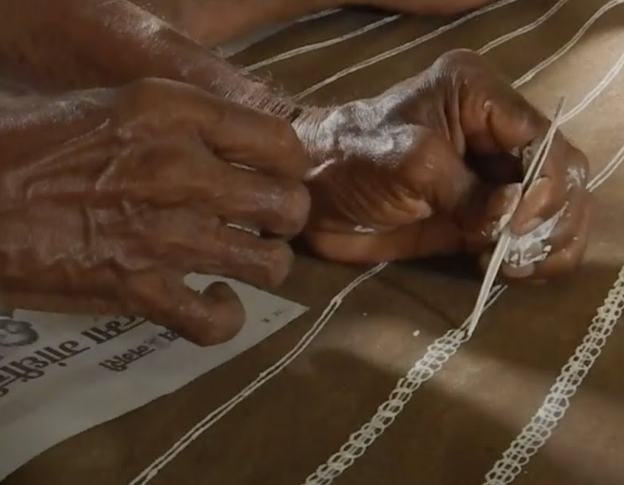
As the mud walls of homes and communal spaces are periodically renewed in Indian villages, they come alive with fresh patterns, motifs, and images of creatures both real and mythical. These murals mark the new and auspicious — births, marriages, harvests — yet remain age-old, their origins and subjects obscured in the mists of time. The Khovar and Sohrai wall-painting traditions of Jharkhand are believed to draw on the region’s Chalcolithic rock art; and the mythological roots of Madhubani painting appear in Ramayana legends.
The paintings also reflect this timelessness as they take the form of divine communion. The sacred ittal painted, with the guidance of shamans, inside the homes of Odisha’s Saora people themselves serve as shrines dedicated to ancestors or forest deities. Similar is the Pithora painting of the Bhil and Bhilara of Gujarat and Madhya Pradesh, for which specialised ‘writers’ are invited to create images that the village elder consecrates by ‘reading’. While these are the domain of men, women are the keepers of many other mural traditions — the histories, symbols and techniques of Sohrai, Khovar, Warli and Mandana are all traditionally passed down from mother to daughter.
Every aspect of the paintings is geographically and culturally rooted — the pigments and painting tools are made from local soils, plants and insects; the motifs are shaped by the regions’ flora, fauna and myths — as well as their emerging modern realities — and styles unique to particular villages have emerged because of the makers’ limited mobility. Many of these painting forms have been recognised and protected under Geographical Indication tags. Meanwhile, since the 1970s, individuals from some of these traditions have received recognition and entered the art market — in the process expanding the materials, context and vocabulary of the forms they draw on.
Explore these articles to learn about these varied mural practices, their makers and the beliefs surrounding them.