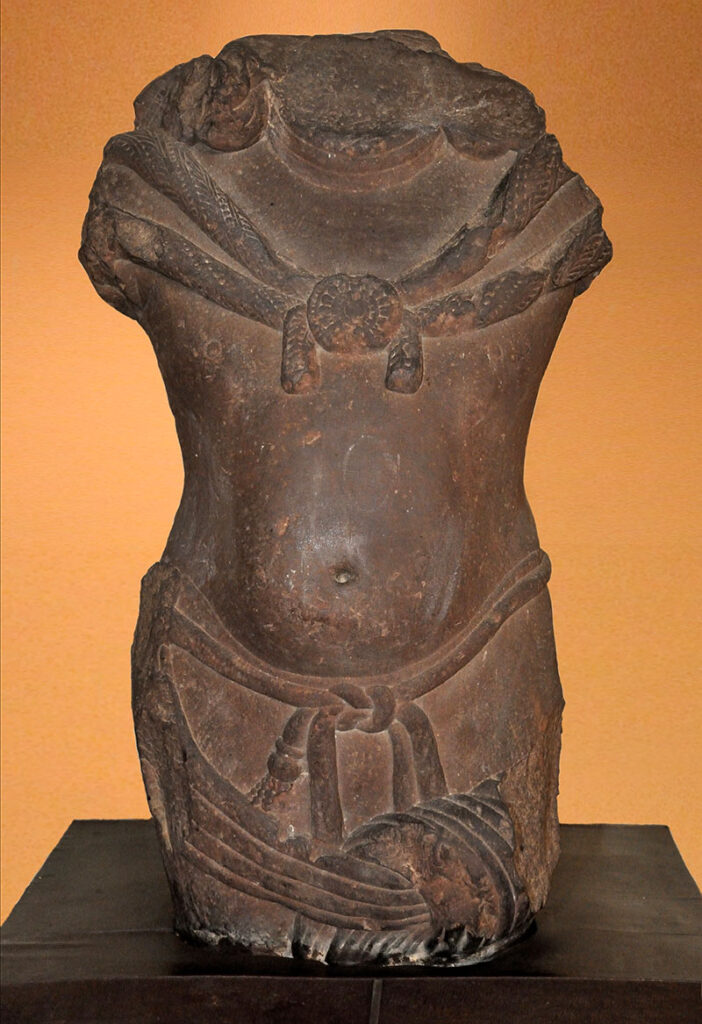
Ancient Indian chiefdom extant around the fifth century BCE in Mathura, that traced its lineage to an ancestor named Vrishni. The Vrishnis are mentioned in major textual sources from the late centuries BCE and early centuries CE such as Panini’s Ashtadhyayi, the Arthashastra, and the Mahabharata; silver coins bearing marks of Vrishni kings have also been found. The clan worshipped five ancestral or mythical warriors, the Pancha-Vira, which are depicted in art and coinage of the period. Among these was the figure of Vasudeva, whose followers comprised the Bhagavata cult. He later came to be associated with Krishna via synthesis with the eponymous deity of the Yadava clan; the merged cult of Vasudeva-Krishna was subsequently incorporated into Vedic Brahmanism in the early centuries CE as the two came to be identified with Vishnu. In general, Vrishni myth and iconography, along with other non-Vedic theistic cults in the Bhagavata tradition, supplied much of the material for the development of Vaishnavism. The Heliodorus Pillar at Vidisha (formerly Besnagar), erected around the second century BCE by an Indo-Greek ambassador who called himself a Bhagavata, is dedicated to Vasudeva.
Vrishni
Link copied!