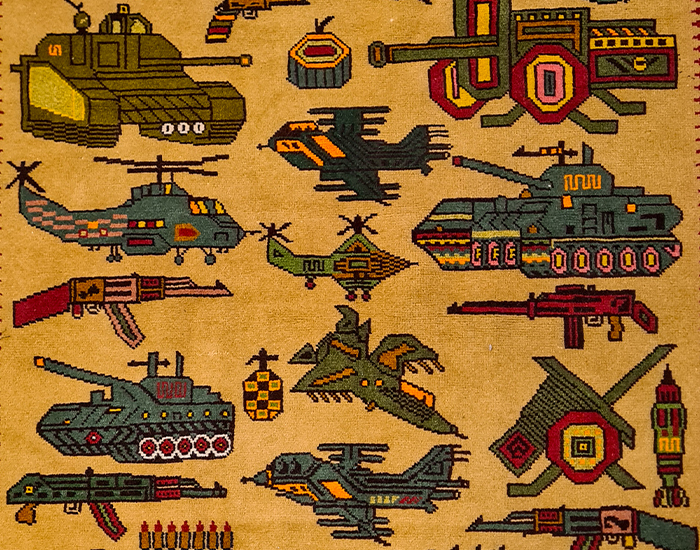
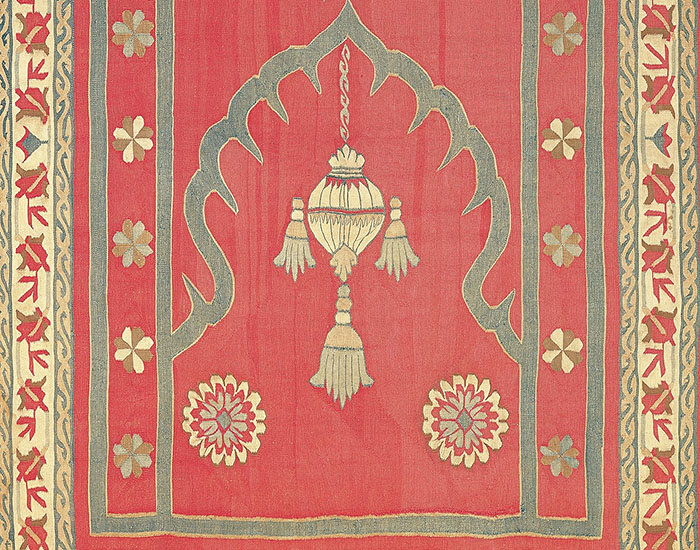
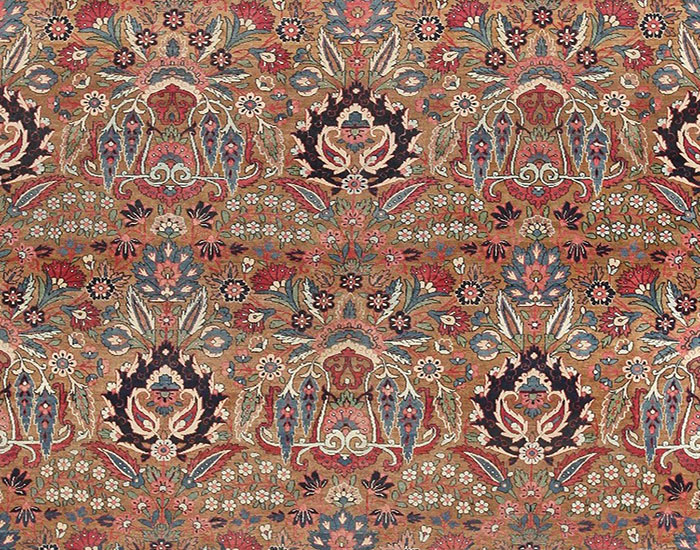
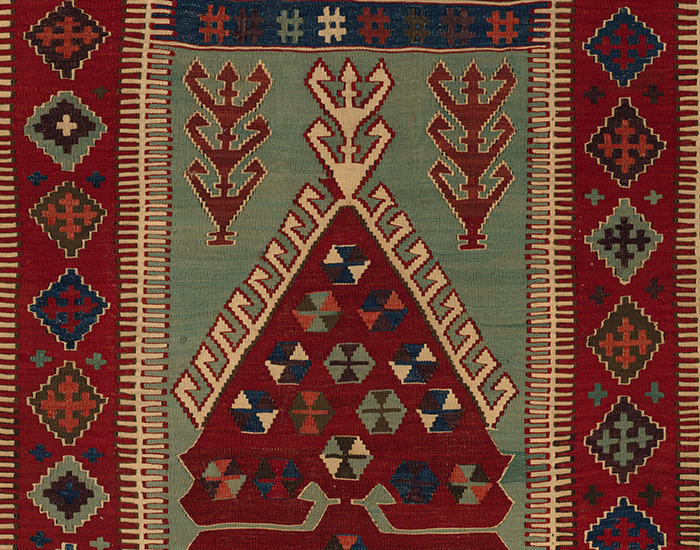
Dating back to the tenth century, traditional Indian hand-knotted carpets and rugs rose to prominence in the sixteenth century under sustained Mughal patronage. Carpets were a major trade textile in the colonial period as well and were sometimes made by inmates in prisons.
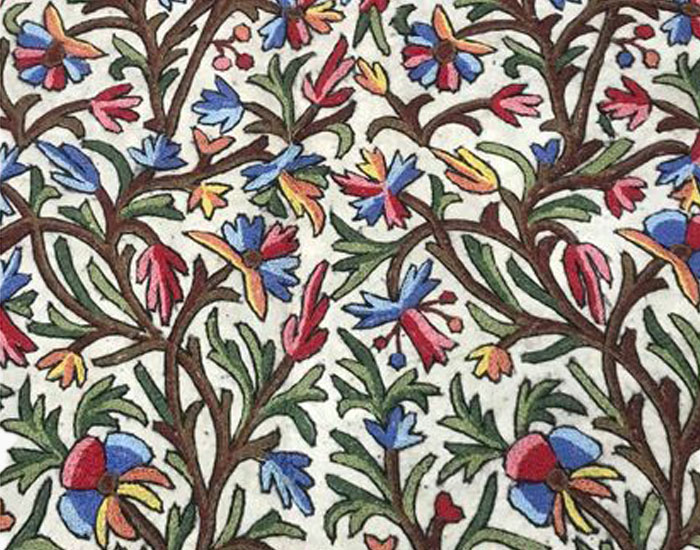
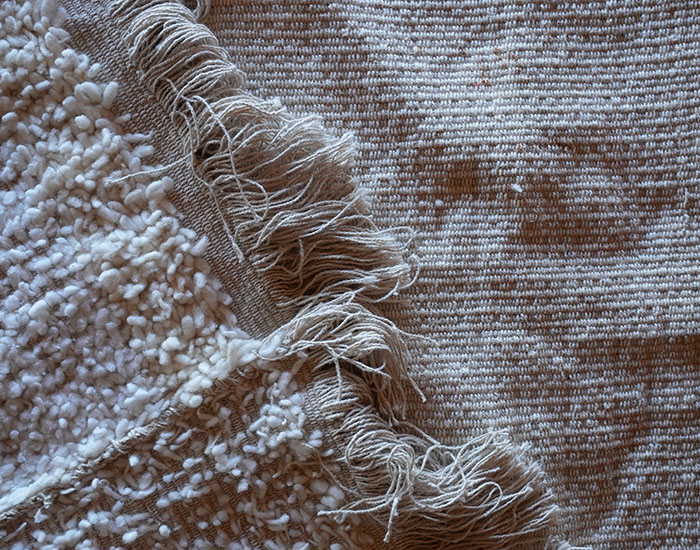
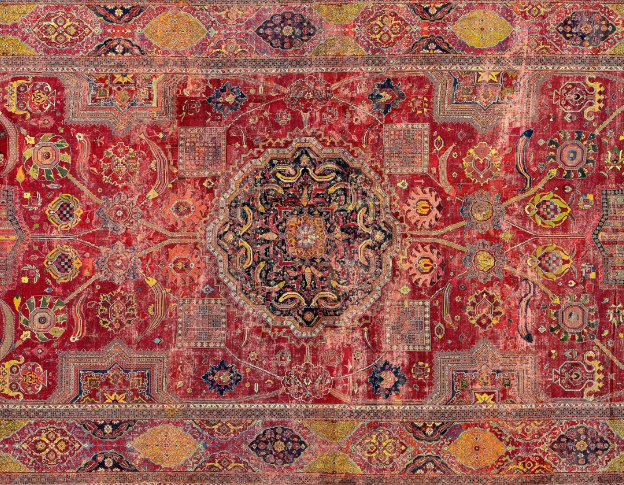
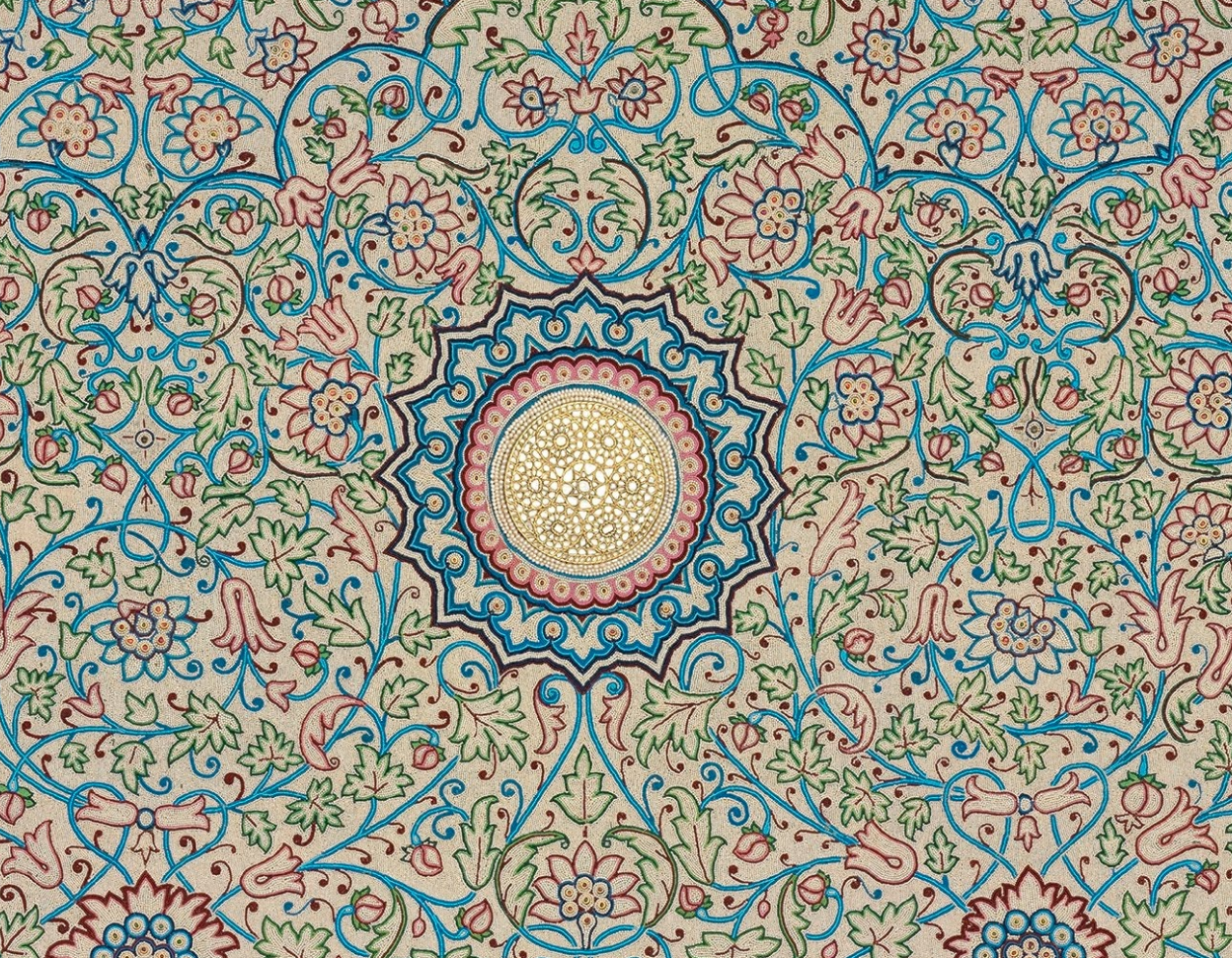
Indian carpets are typically made of knotted wool with a woven cotton base. Most traditions use the asymmetrical Persian knot, for which a strand of yarn is tied around two adjacent warp threads, and fineness is determined by the kind and number of knots. Carpets typically feature recurring motifs, including palmettes, geometrical shapes, flowers, the tree of life and occasionally, animals. Some Indian carpets also contain representations of landscapes.
Since the sixteenth century, many Indian carpet varieties have borrowed design elements from Iran and Central Asia; but they were soon distinguished from these traditions by the relatively brighter colours of Indian dyes. Additionally, Tibetan rugs like khabdan have been produced by Tibetan artisans at centres in Himachal Pradesh and Assam since the 1950s.
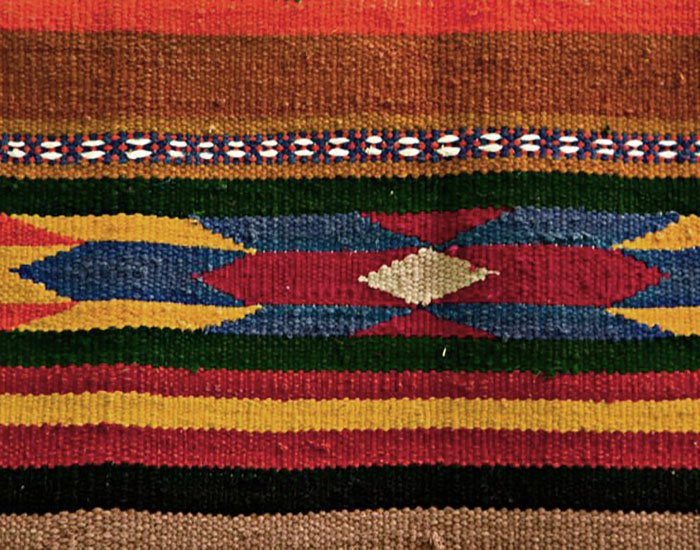
Notable types of carpets and rugs from across India include gabba, kaleen, galeecha and dhurrie. Most historic carpet and rug manufacturing centres were located in the northern and western regions of the Indian subcontinent, while contemporary centres include some in the south and north-east India as well.