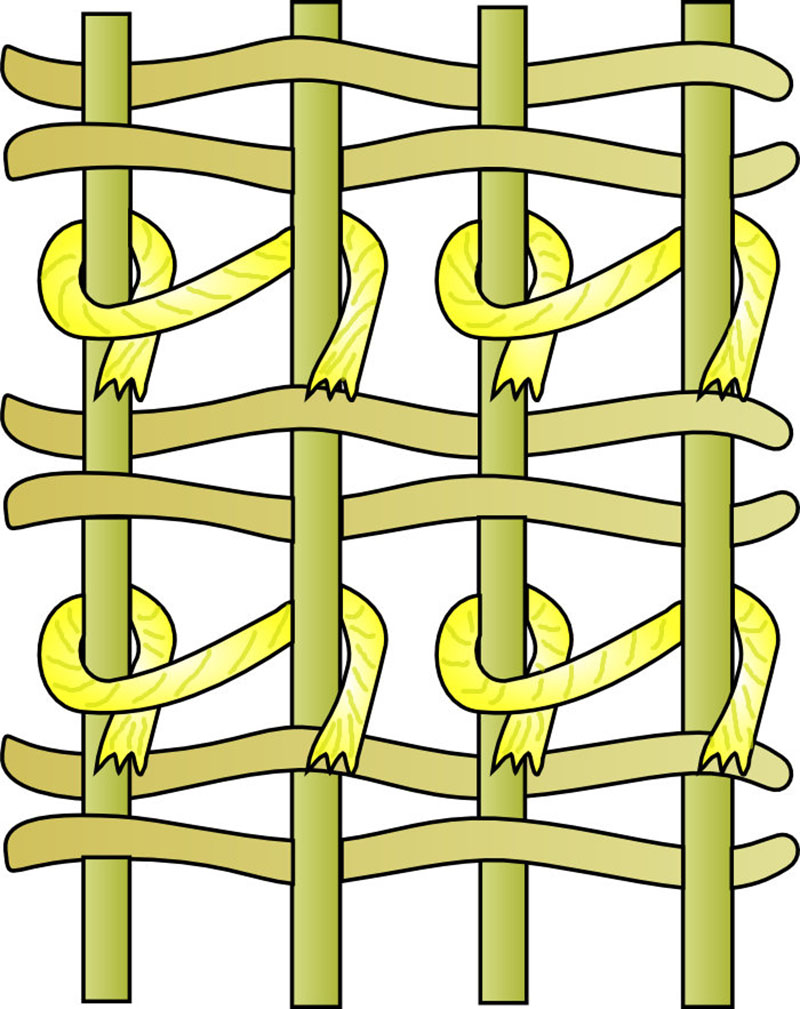
Also known as a Senneh knot, it is a technique of hand-knotting found in rugs from eastern Iran, India and Pakistan. Half of the weft thread is knotted tightly with the warp with the other end is left loose, resulting in an asymmetric knot, which can be manipulated further to create more complex designs. The technique is typically used to create rugs with high knot counts and detailed designs.
More Definitions
Gilt
An object that is covered with a thin layer of gold, often used in jewellery, ornamentation and textile. From the…
Fresco Buono
Literally meaning “true fresh” in Italian, it is a painting technique in which the paint is applied to wet plaster,…
Kasavu
The gold zari used in the border of a traditional white Kerala textile, such as a sari or a mundu…
Extra Weft
Also known as the supplementary weft technique, it is a design method where additional weft threads are added to the…
Engine Oil Painting
Paintings made using engine oil as the pigment binder, instead of typically used oils such as linseed or safflower oil.…
Chain Stitch
A decorative embroidery technique in which the stitch consists of consecutive, interconnected loops that resemble the links of a chain.…
Bargello Stitches
An embroidery technique in which patterns are made by sewing vertical stitches of different lengths in a row, according to…
Plain Weave
Also known as tabby weave, it is the most common weave in textiles. In this weave, each weft yarn passes…