-
ChicagoPathak, Davangi. "Objects of Memory: An Interview with Curator Shaleen Wadhwana." Impart Perspectives, August 10, 2026. https://imp-art.org/perspectives/interviews/objects-of-memory-an-interview-with-curator-shaleen-wadhwana/
-
MLAPathak, Davangi. "Objects of Memory: An Interview with Curator Shaleen Wadhwana." Impart Perspectives, Aug. 10, 2026, https://imp-art.org/perspectives/interviews/objects-of-memory-an-interview-with-curator-shaleen-wadhwana/. Accessed 14 Oct 2026.
-
HarvardPathak, D. (2026) Objects of Memory: An Interview with Curator Shaleen Wadhwana, Impart Perspectives. Available at: https://imp-art.org/perspectives/interviews/objects-of-memory-an-interview-with-curator-shaleen-wadhwana/ (Accessed: 14 October 2026).
Objects of Memory: An Interview with Curator Shaleen Wadhwana
Can an archive of personal artefacts function as a significant record of South Asia's cultural history? Arts educator, researcher, and curator of the MOOL exhibition Shaleen Wadhwana weighs in.
By Davangi Pathak
Link copied!
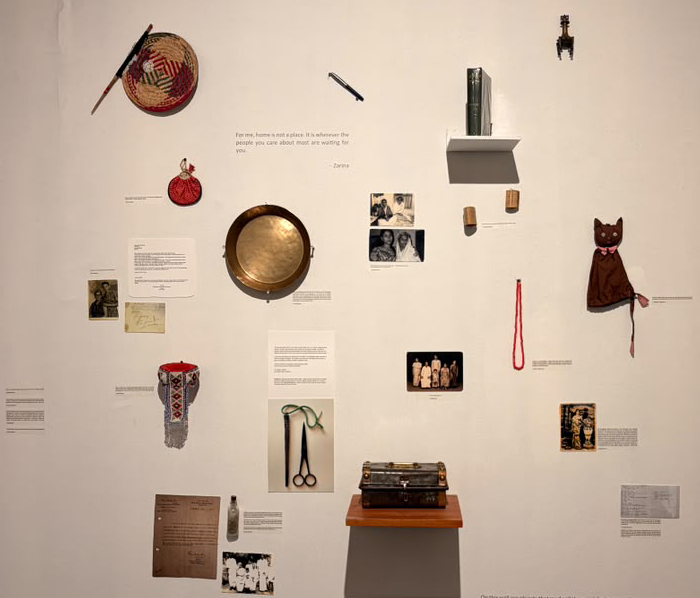
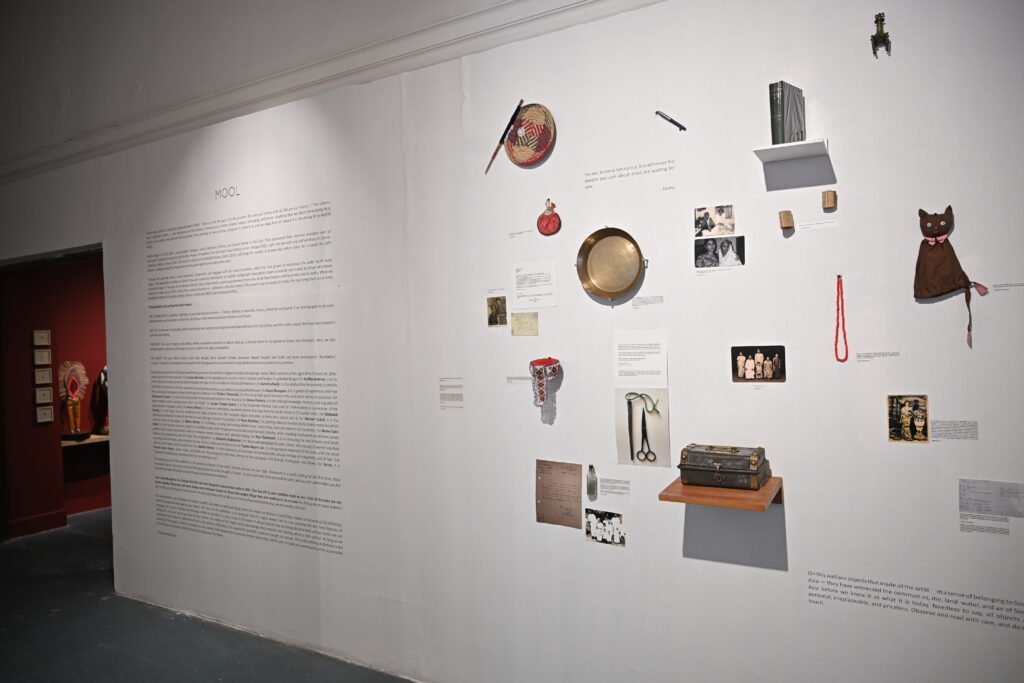
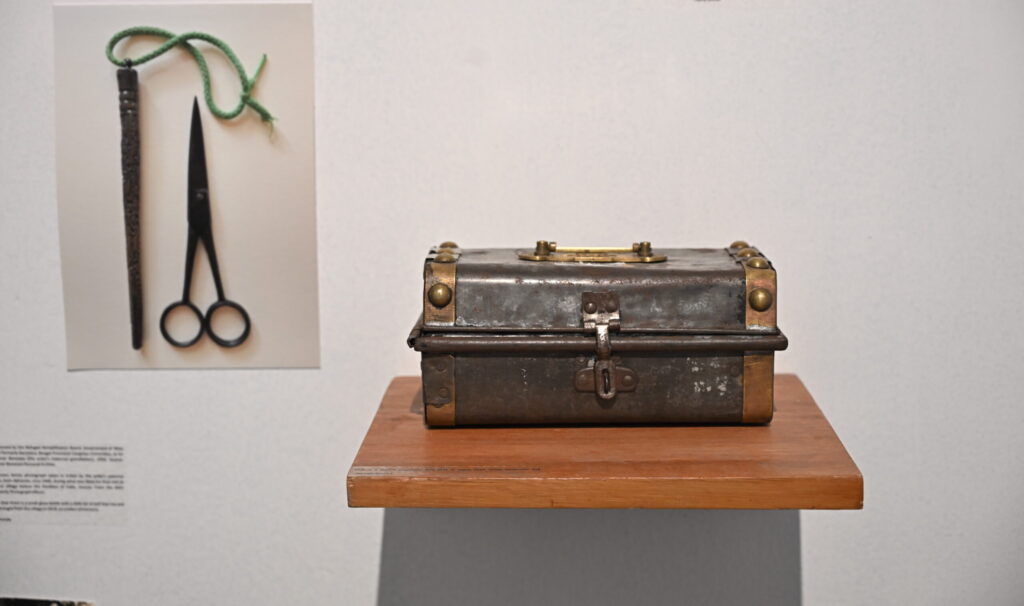
Personal artefacts drawn from the family archives of the participating artists displayed on a wall at the MOOL exhibition at Bikaner House, New Delhi. Courtesy Shaleen Wadhwana and Exhibit 320
It is 1947. Hastily drawn lines across the map of the subcontinent become international borders. They bisect rivers, lands, kinship networks, and sever inter-community ties of trade and livelihoods. And yet, something persists — shared vocabularies, ancestry, and the intertwining of heritage and culture. Fast forward to 2016. In the US, two South Asian artists meet — Chicago-based artist from India, Gunjan Chawla Kumar, and Massachusetts-based artist from Pakistan, Mahwish Chishty. They discover that their ancestral family homes are only four hours apart, separated by the Indo-Pakistan border that cuts across what once was the undivided Punjab Province. Their conversations give birth to The Sindhu Project: Enigma of Roots (2020–2021), a multi-site exhibition that reimagines the ancient riverine landscape of the Sindhu (Indus) region.
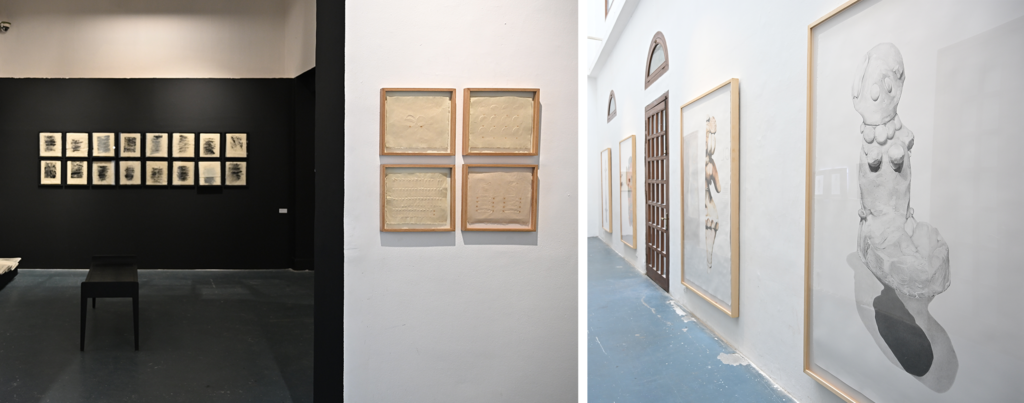
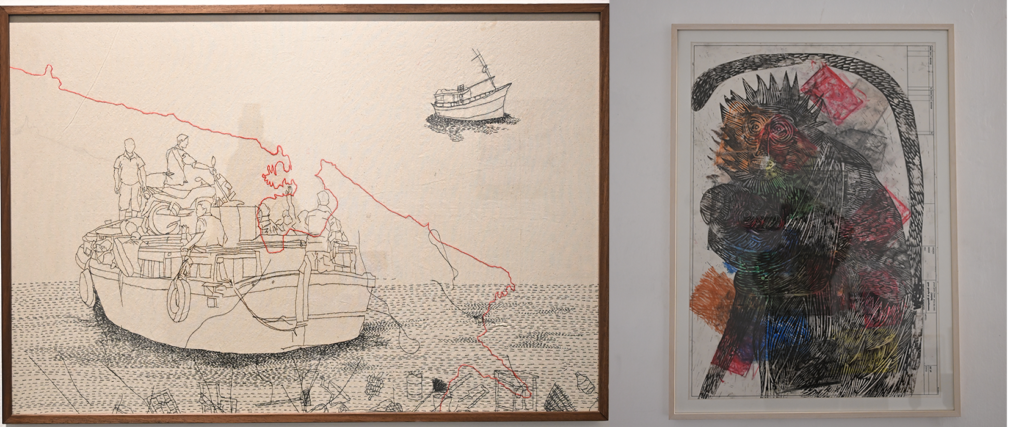
Shaleen Wadhwana, an arts educator and researcher whose practice revolves around intersectional histories and futures, curated the Delhi leg of the exhibition back then. Under her curatorial vision, the ideas that grounded The Sindhu Project became the spine of the 2026 MOOL exhibition (August 5–13), featuring 20 artists across the five countries of South Asia, each responding with artworks that answered a simple question: “what makes you feel at home?” Shown alongside the contemporary artworks were personal artefacts that extended the exhibition beyond artistic practice. Each artist shared an object from their family history, which offered intimate points of entry into conversations around migration, inheritance, language, community and belonging. Together, they positioned the personal archive as an equally significant record of South Asia’s cultural history.
Shaleen Wadhwana spoke to Davangi Pathak on how the exhibition’s domestic archive reflected unofficial histories and shared lineages, while embracing “womxn-led legacies of care, comfort, rest, rage, and rebellion.”
Davangi Pathak: Both The Sindhu Project and MOOL have a simple yet profound premise — objects can carry histories which political borders cannot erase. But what led to the centring of domestic and family artefacts in particular in MOOL’s curation?
Shaleen Wadhwana: When Gunjan and Mahwish first met and realised that they were both from undivided Punjab, they weren’t thinking about an exhibition. What they experienced was more familial and community-based — the feeling of finding someone who came from “home”. Being in the diaspora perhaps made that connection even stronger. Eventually, this led to them collaborating over years to build The Sindhu Project that travelled across countries, including both India and Pakistan. Half was shown at the Zahoor-ul-Akhlaq Gallery at the National College of Arts in Lahore, and the other half came to Delhi, at Gallery Exhibit320, where I was the curator. What stayed with me was that the project had really grown out of a very intimate sense of affection and belonging. That became the starting point for MOOL. I wondered — “What is that one thing each artist possesses that is truly priceless because it holds the idea of belonging to this region?”
I was also thinking about how divided we can be, belonging to different countries of South Asia. But with borders being drawn and redrawn so many times, I wondered if there were also things that quietly connected us; things we may have forgotten. That is what drew me towards the domestic archive and why I decided to include personal artefacts in this exhibition. I became curious about the things in the artists’ lives that actually make them feel at home. It was beautiful to see how seriously they thought about this, and what they shared.
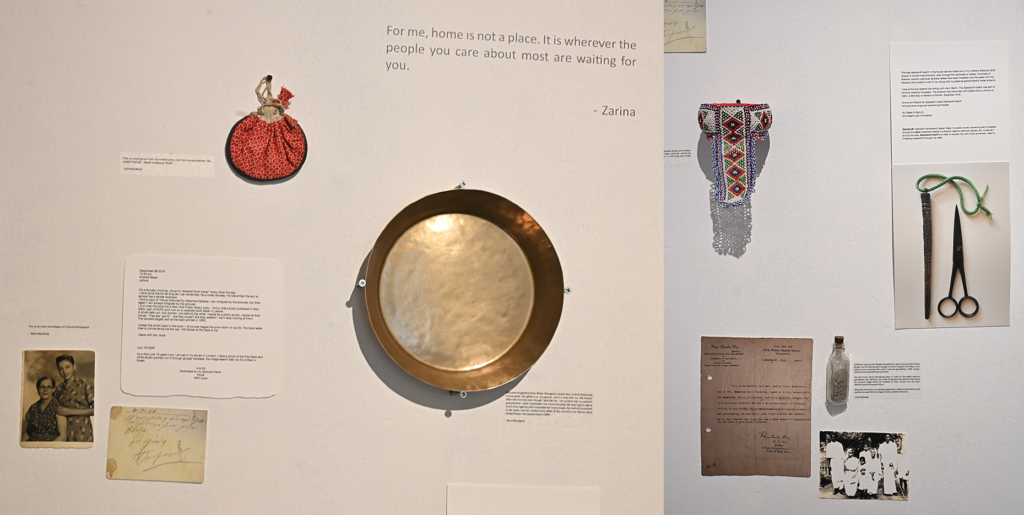
Many of these objects had travelled with the artists or remained within their families for two or three, or four generations. They often came from places that no longer exist on the map or they lie on the other side of a border. One example that stayed with me was the object shared by Yasmin [Jahan Nupur]; it was her father’s pen. In itself, it may not have much monetary value, but it carries her memories and connection to Chattogram — her childhood home — that doesn’t exist there anymore. She can’t return to it. In that sense, the pen is more precious to her than an artwork with a clear financial value.
However, the decision to include these objects came with a great deal of responsibility because they are irreplaceable, and some cannot really be insured. Almost every artist gave me the same instruction: “This has to come back to me safe and sound.” In an exhibition where so much was at stake, the objects the artists cared about most were not necessarily their artworks, but these intimate fragments of family and belonging.
Pathak: Did you begin to notice recurring materials or visual languages that connect families and communities across different regions of South Asia?
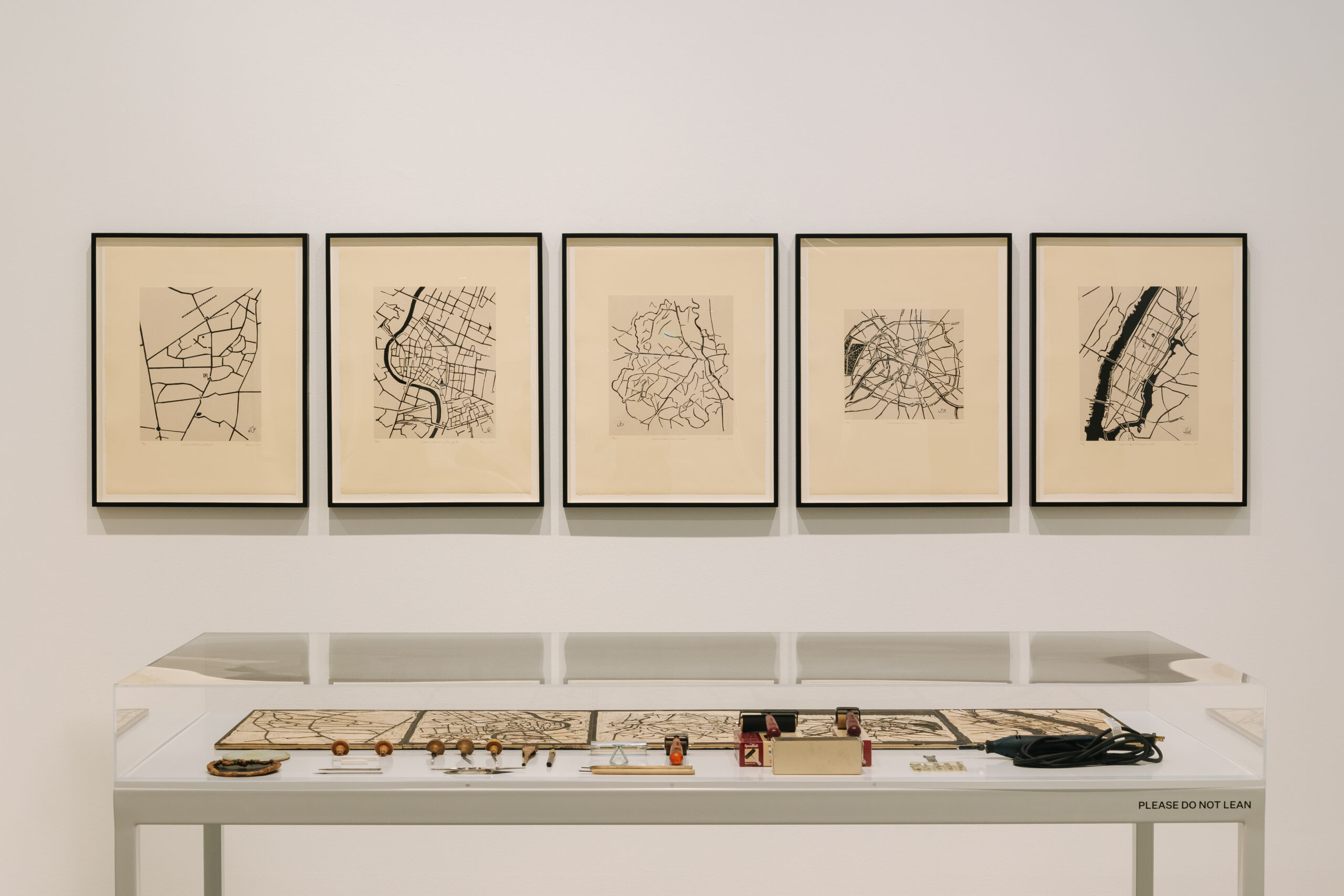
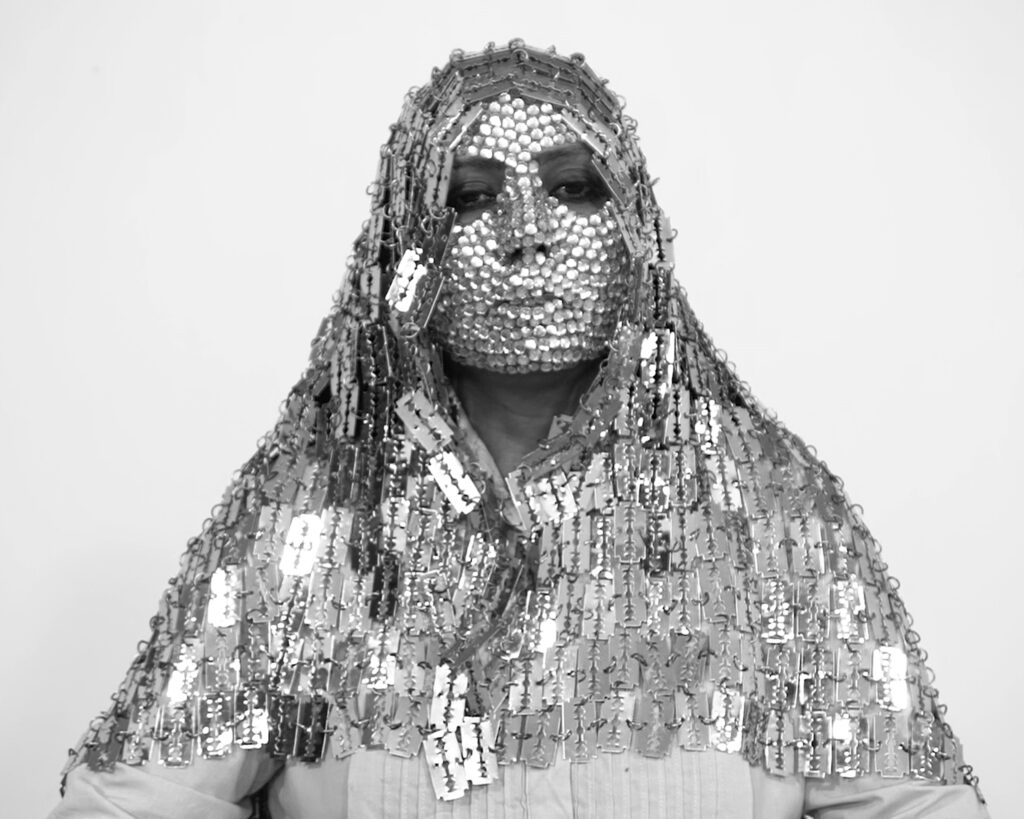
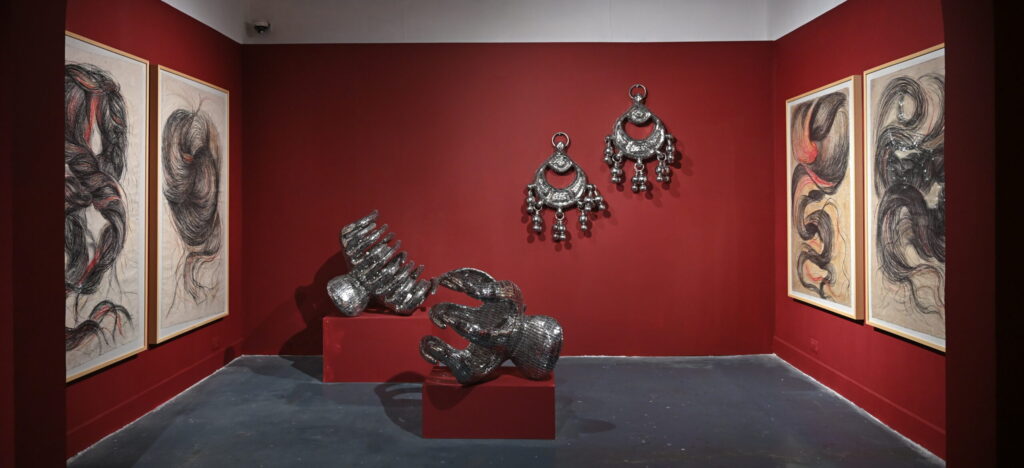
Wadhwana: That is how the four main themes of the exhibition materialised. Land and water emerged most naturally — land as cartography and soil, and water as rivers and borders. Almost all the artists were engaging with these in some form. The second was script and language. Most of the artists were working with languages beyond English, though in very different ways. For Gunjan, it is Harappan script, while for Chathuri [Nissansala], motifs function as a kind of language within their practice. The third theme emerged from the experiences of artists who are women or identify as women — not simply around gender, but around the experience of living in the body: covering it, being judged or objectified through it, and using objects to decorate it, and being chastised for it.
The fourth was family archives and memory, where the family is chosen or inherited. Many artists were working with photographs and archival materials of people and places that are no longer present. Hema Shironi, for example, works with small photographs in jewellery boxes from places her family was forced to move to or from. Riya Chandwani and Naira Mushtaq both engage with family archives connected to undivided Sindh and Punjab, while the Indian artist Arpita Akhanda travelled to places connected to her grandparents’ lineage in Bangladesh and incorporated archival photographs into her work, much like Bangladeshi artists.
So, these themes were largely discovered rather than imposed. Land, water, cartography, and script emerged very naturally; family archives required some negotiation, while the body and objects emerged more as a related subset.
Pathak: How did the personal objects reveal shared histories or lineages?
Wadhwana: Some of the objects in the exhibition made shared histories feel particularly tangible. Wahida Ahmed, for instance, brought a 300-year-old jewellery box connected to her indigenous lineage. It is far older than the borders and nation-states we are discussing. In a way, it supersedes all of them. At the same time, it reminds us that indigenous and tribal communities have been profoundly affected by the making of states and borders, and that these histories also need to be acknowledged.
Another object that stayed with me was a hand fan belonging to Mahwish’s grandmother. It predates the Partition and belonged to a craft lineage that existed across a much larger region. Her grandmother had even mended it. I often think about how much that object has witnessed. It was touched by someone who did not have the passport or identity card that we identify with today, and it has now been inherited by someone who has to navigate modern nation-state boundaries. The object itself is completely unconcerned with the borders we have created. Its history belongs to a much larger cultural and material landscape.
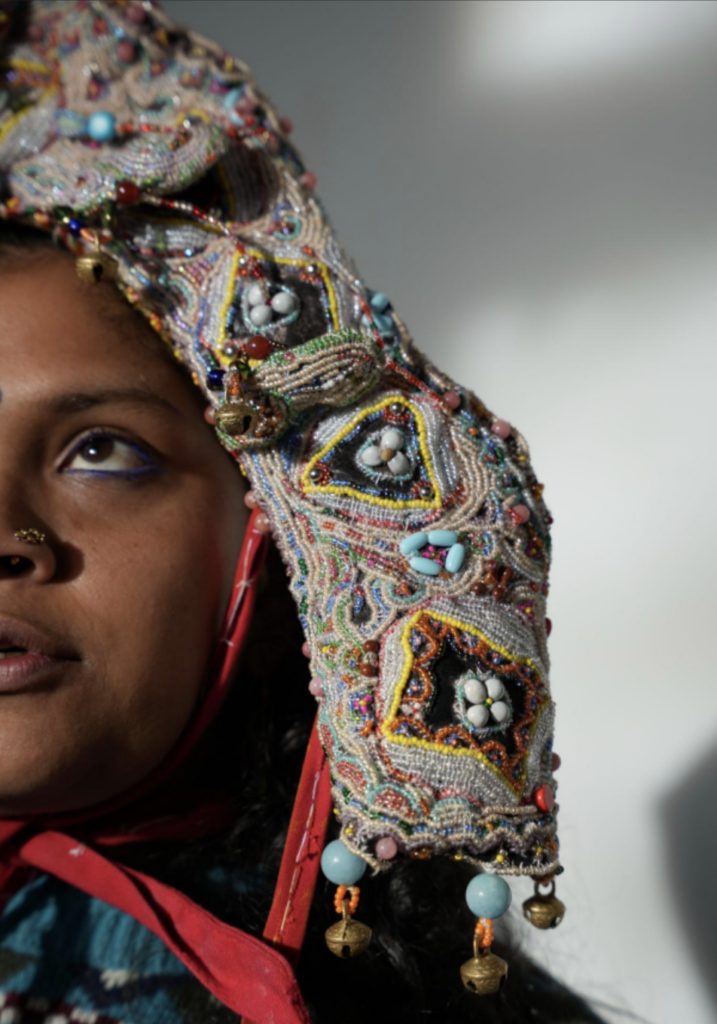
Another dimension that was particularly meaningful to me, as someone who is queer, was to make space for histories that are not always allowed to exist. I have worked with Chathuri for a long time, and their work looks towards the idea of queer ancestry and queer histories — histories that are often absent from official archives of many South Asian countries that still follow or are influenced by colonial-era laws. For the exhibition, Chathuri brought a dress and “Nonchi” mask used in performances around the idea of the “queer mother.” The dress is part of a longer inherited and chosen matrilineal lineage, but one that is not necessarily acknowledged as queer history. It has been worn by women within Chathuri’s lineages of both found and inherited families. I find that distinction important because family is not only about blood; the families we choose and find can become equally significant.
To someone else, it might simply look like a white dress. But when you understand what it represents — a lineage that is not always permitted to exist — the object carries a very different value. It becomes a way of holding a history that the state and society may not acknowledge.
Pathak: The exhibition places family heirlooms alongside contemporary artworks, giving equal importance to both. How does that challenge or expand conventional ideas of what constitutes an art exhibition?
Wadhwana: I think you can create meaning and value in contemporary art through almost anything you choose to place alongside it. But these particular artefacts, because they are personal, are representative of unspoken histories that also link to the displayed artwork. Chathuri’s dress and mask are a good example. They do not have an official record because the history they speak about has not been allowed to exist, nor is it legally recognised in their country [Sri Lanka]. Chathuri’s artwork also addresses queer ancestry and performance, and their practice carries a strong engagement with traditional forms of making and craft. Their artworks have a place within the contemporary art system and can be sold. But the personal objects do something else. The dress has been worn by them. It carries the shape of their bodies, their history, and a lived experience. That embedded value is very different.
For me, there is a distinction between ‘who I am’ and ‘what I do’. The artist makes artworks as part of their practice, just as I curate exhibitions as part of mine. But when I place something personally valuable to me in an exhibition, it adds a meaning that I may never be able to express through writing or curatorial language alone. These objects carry feelings and histories that cannot always be fully explained. I place these personal artefacts slightly higher than the artworks — not because the artworks lack care or value, but because the objects carry another degree of intimacy. I also think some of the objects in this exhibition add a personal dimension to their owner-artists’ artwork. With Riya Chandwani, for example, she learnt papermaking for this exhibition from Al-Qawi Nanavati and infused the paper with mud from Sindh, which is a place her grandparents speak about frequently. Riya wrote in Sindhi on that mud-infused paper in the process of creating a work about her grandparents’ journey across water. That, for her, represented a very deep connection to her Sindhi heritage. Her personal object is a surma daani (kohl vial), a small container for kohl, also from Sindh. Both the mud and the kohl are naturally-occurring materials from Sindh. The object, material, and artwork speak to each other quite organically in the context of the exhibition.
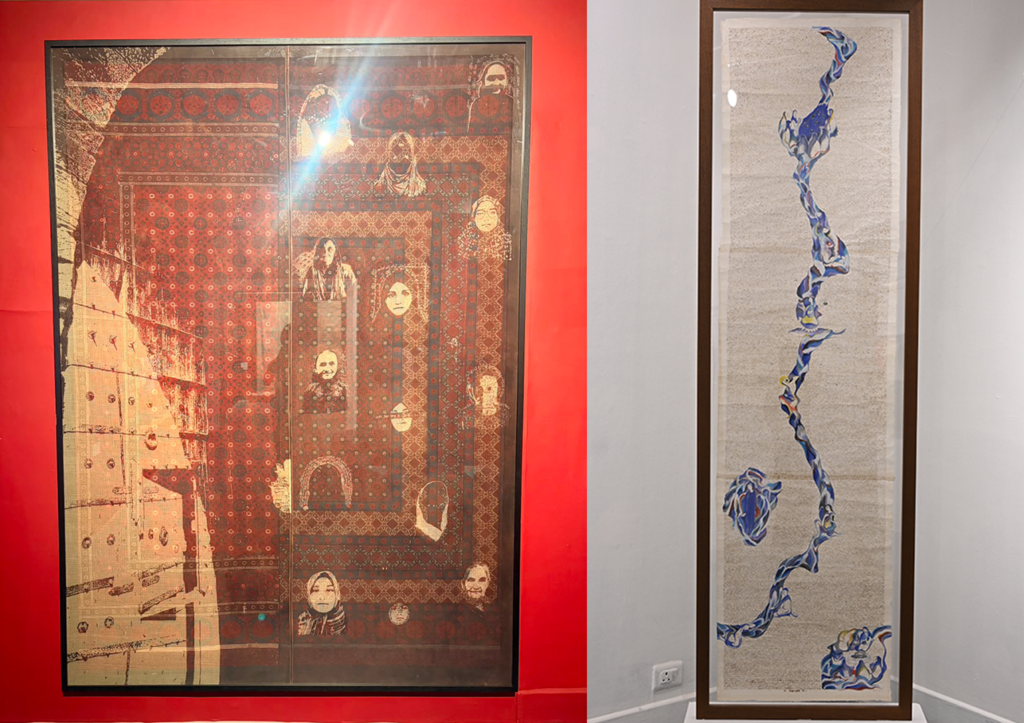
Similarly, Deena Pindoria has worked extensively with ajrak, a textile tradition shared across many regions, especially in the former North West Frontier Province. She is Gujarati, as am I. Her personal object is something I actually have at home — a clay-pot base, or support, traditionally used when women carry multiple matkas (clay pots) on their heads. It is still a familiar object across parts of Gujarat and Rajasthan. When Deena told me she wanted to give me one, I immediately recognised it and said, “This is common in Gujarati homes.” But she corrected me: this particular one had been used by her grandmother on her head. That made me see the object differently. The nakashi or decorative work on it also connects with the traditions of women’s collective making in ajrak-printing communities Deena has worked with. The specific materials and practices are different, but that act of women gathering and making together feels very connected to her practice.
With Yasmin, it is her father’s pen, and she works extensively with scripts. So, in retrospect, it does not surprise me that this is the object she chose. Then there is Ashfika Rahman, who is both an artist and an educator. Her object is one of the few photographs she has of her mother, who was among the cohort of pioneering women from Bangladesh who achieved significant milestones in education. It makes sense that the object she chose connects so closely to her own relationship with education. So, in many cases, the objects blend very naturally into the artists’ works or their methods. There is very little need to force or forge connections when you see them together.
The Sindhu Project travelled to the US, Lahore, and India, and we hope MOOL will also travel internationally. The personal artefacts themselves will not necessarily travel, and perhaps that will create another opportunity. When the exhibition enters a new community, particularly a South Asian diasporic community, perhaps people there could contribute their own personal objects. They would not necessarily belong to the artists, but they would carry the histories of the communities encountering the exhibition.
Many of the artworks deal with maps, rivers, land, and places that diasporic communities may not have seen for generations. Yasmin’s work, for instance, engages with the rivers of Bangladesh that are also connected to present-day India. A Bangladeshi person living in the diaspora might encounter those rivers through this artwork even though they have not seen those waters themselves for many years. Similarly, many South Asian diasporic communities may not have encountered ajrak from either side of the border in a long time. Many Sri Lankans and Nepali diasporic communities can afford to feel incredibly connected through the maps of Hema Shironi or the letters and publications by Bunu Dhungana.
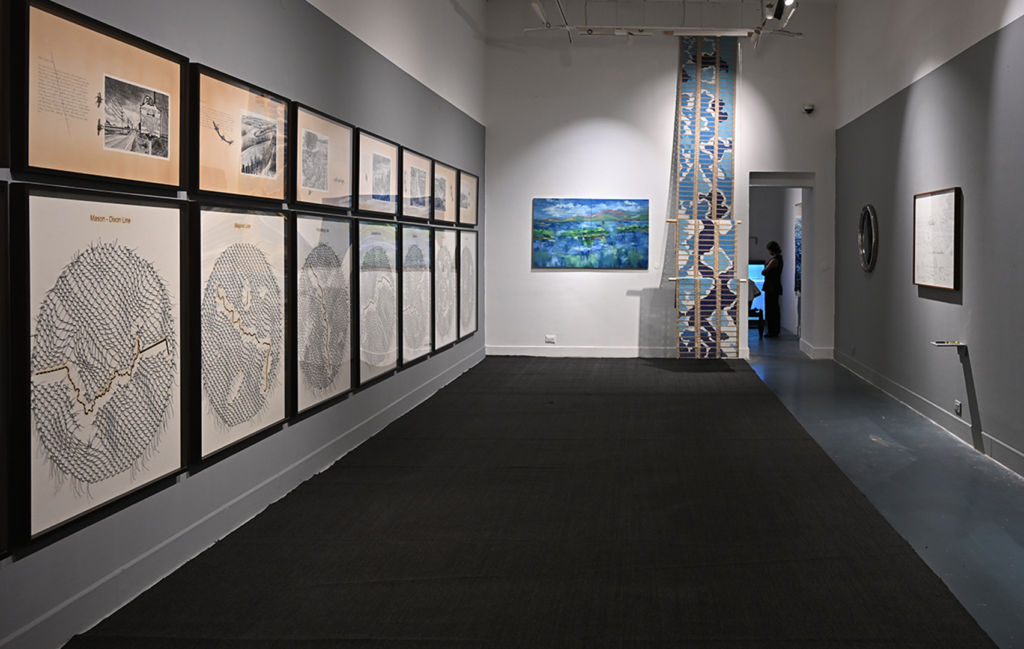
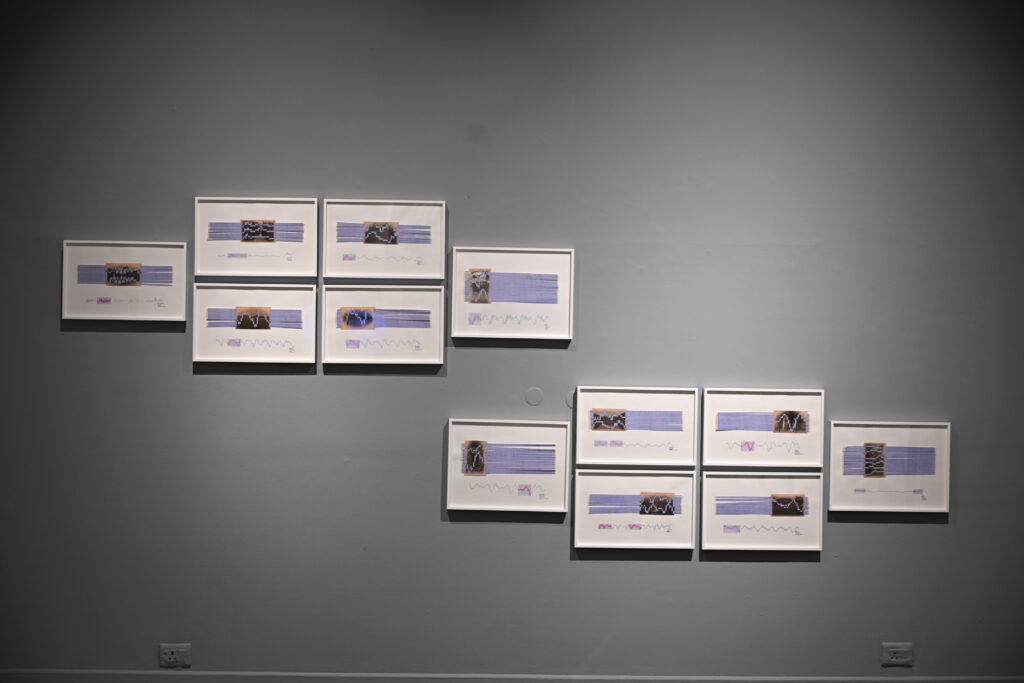
Reena Saini Kallat’s work expands the conversation even further. She looks at borders through barbed wire, not just our immediate ones, but more than ten different contested borders. Each one carries the trauma of boundaries that were often drawn without the consent of the people who had to live with their consequences. That is why I hope the exhibition can travel and become something more. The question is not limited to South Asia. There are many places where borders have been imposed on the people who live there. Perhaps as the exhibition moves through different communities, it can continue to gather stories, objects, and experiences, allowing the conversation to morph into a larger, more universal one.
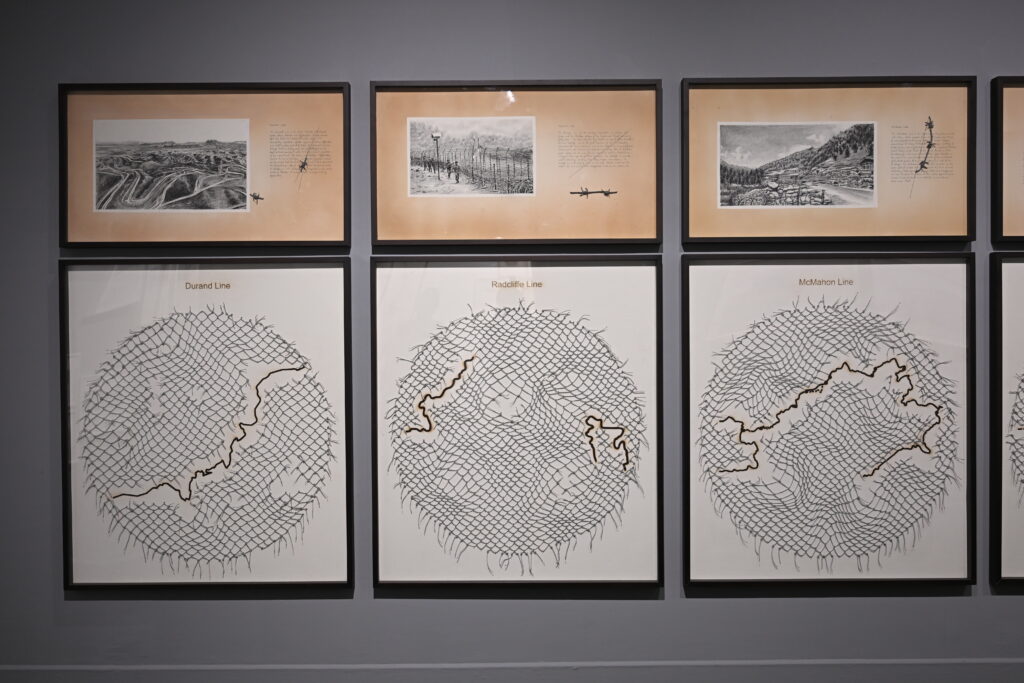
Pathak: Many of these personal artefacts are being displayed publicly for the first time. How did you convince the artists?
Wadhwana: It was quite a mixed experience. Out of the 19 living artists, perhaps three or four agreed immediately, while others were understandably more hesitant. I think that hesitation was natural because this was a commercial exhibition, and I was asking them to contribute something that was deliberately outside that system — an object that could not really be sold or assigned a conventional market value. I had to think about that tension. Gallery Exhibit 320 is presenting MOOL, and any art exhibition is also part of the art market ecosystem. Works need to be sold, galleries need to sustain themselves, and, most importantly, artists should earn from their work. I am part of that system too. But precisely because the exhibition already had that commercial framework, I felt that these objects could hold the exhibition together in a different way. There are things I cannot necessarily speak about through an artwork or even through an artist’s lineage, but I can access them through a personal object. And sometimes it is not even an object — it can be music, writing, letters, or language. These things open up another kind of history.
The challenge was not really about convincing the artists that the concept was worthwhile. It was about understanding what they could comfortably share and honouring those boundaries. One artist had their grandfather’s old passport, but even giving me a copy felt too intimate. They eventually shared a family photograph instead. Others created photographs or prints of objects they could not part with and allowed us to tell the story around them. Sometimes an object is so precious that even a facsimile feels like too much to give away. What mattered to me was that they trusted me enough to tell me that the object existed, and to say honestly, “This is all I have, but this is all I can give.” I think that honesty is also part of what makes an archive meaningful.
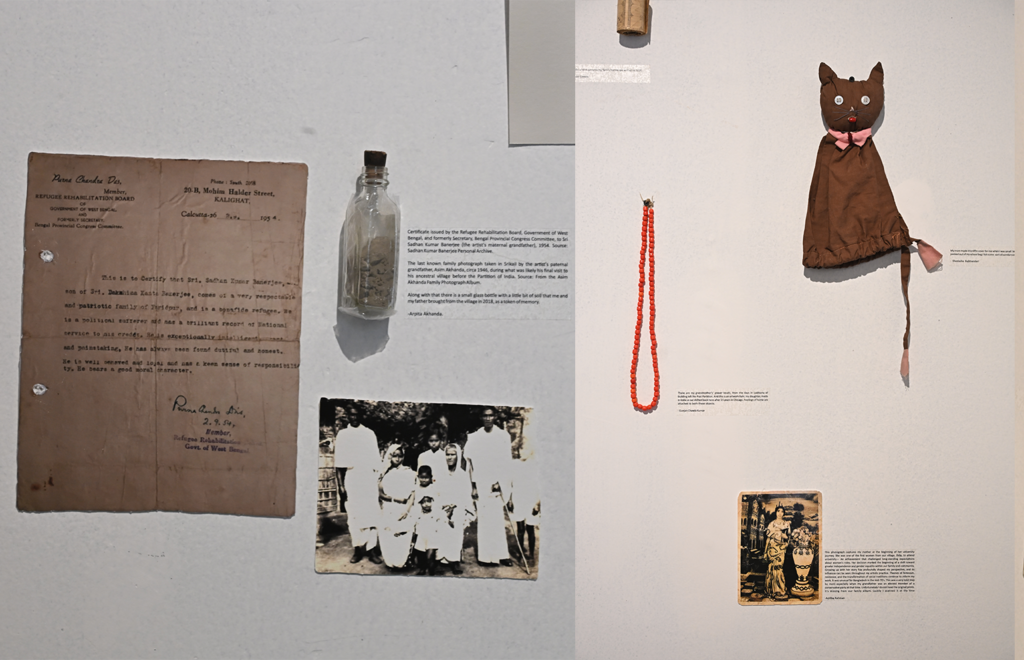
I also felt it was important to recognise what must remain with the person who carries that history rather than only thinking about the exhibition. For example, Chudamani Clowes in the UK initially offered to send a teapot that had belonged to their grandmother and had been passed down through around four generations. We became quite nervous about transporting such a fragile ceramic object and eventually asked if there was something less fragile that held a similar meaning. Chudamani then went back into their own family history and found a small reed document which detailed the family genealogy and horoscope written in 1936. It arrived safely and is part of the exhibition, and we will send it back equally safely!
There were also artists who decided to bring their objects to the exhibition space themselves. Sheelasha, Bunu, and Ashmina, for instance, were already coming to Delhi and chose to carry their objects with them. I completely understood that. So, in the end, it was really about trust and respect. And interestingly, this process taught me more about the artists than their artworks did.
Pathak: The title MOOL suggests roots, origins, and ancestry, but roots are rarely fixed—they travel, branch, and transform. How has your understanding of the idea of ‘home’ or ‘belonging’ evolved through this project?
Wadhwana: I never really thought that home could also exist in objects, especially in things that might seem very ordinary or negligible. I am also the granddaughter of people who escaped on a boat from a war-torn Rangoon in 1941 to present-day India. It is significant that not all histories are equally known — this exhibition has ensured I think more deeply about where I come from.
The name of the exhibition actually originated from my conversations with Gunjan and Mahwish. They kept saying that the mool of Project Sindhu had to travel forward. Eventually, I thought, perhaps we should simply call it ‘MOOL’. It allowed us to open up many different questions. I began thinking about the different meanings of the word mool. Hema Shironi once told me that mool is also slang for “foolish/silly/stupid”, and it made me realise how many meanings the word can carry across different languages. For this exhibition, we have chosen meanings that emerged from the languages spoken, written, or understood by the participating artists. These are not even all the languages of South Asia, and yet there are already so many.
Pathak: In what ways has this exhibition surprised you?
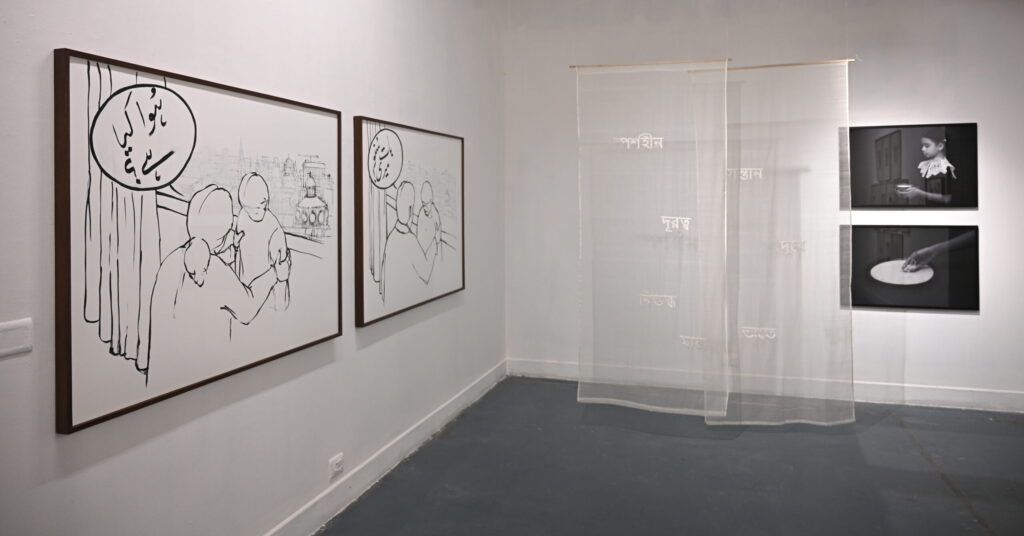
Wadhwana: Sometimes connections appeared in ways that could never have been planned. For example, Naira Mushtaq and Riya Chandwani are working from archives connected to the same region, even though they are present-day citizens of different countries. There is also one room in the exhibition with five artworks using five different scripts. We could never have planned that. The artists had already made their works, and suddenly we realised how many of them had independently chosen to work with text and language. It felt like a gift.
Collaborations have also yielded delightful connections and coincidences. We collaborated with Upstairs, a Delhi-based musical programming initiative, for a live baithak with Murad Ali Khan Sahib and the Saurang Ensemble, whose sarangi practice connects musical traditions across the region. But they also created a listening library where songs and music of South Asia respond to themes of the exhibition. That is something I would never have been able to think of as a curator because I simply do not have that musical knowledge. But someone coming from another discipline brought their own understanding, their mool response, to the exhibition. We were also able to bring films, such as Borderlands by Samarth Mahajan and Taangh by Bani Singh, into conversation with the exhibition. Coincidently, these filmmakers were responding to many of the same questions as the exhibition’s artists through their own disciplines.
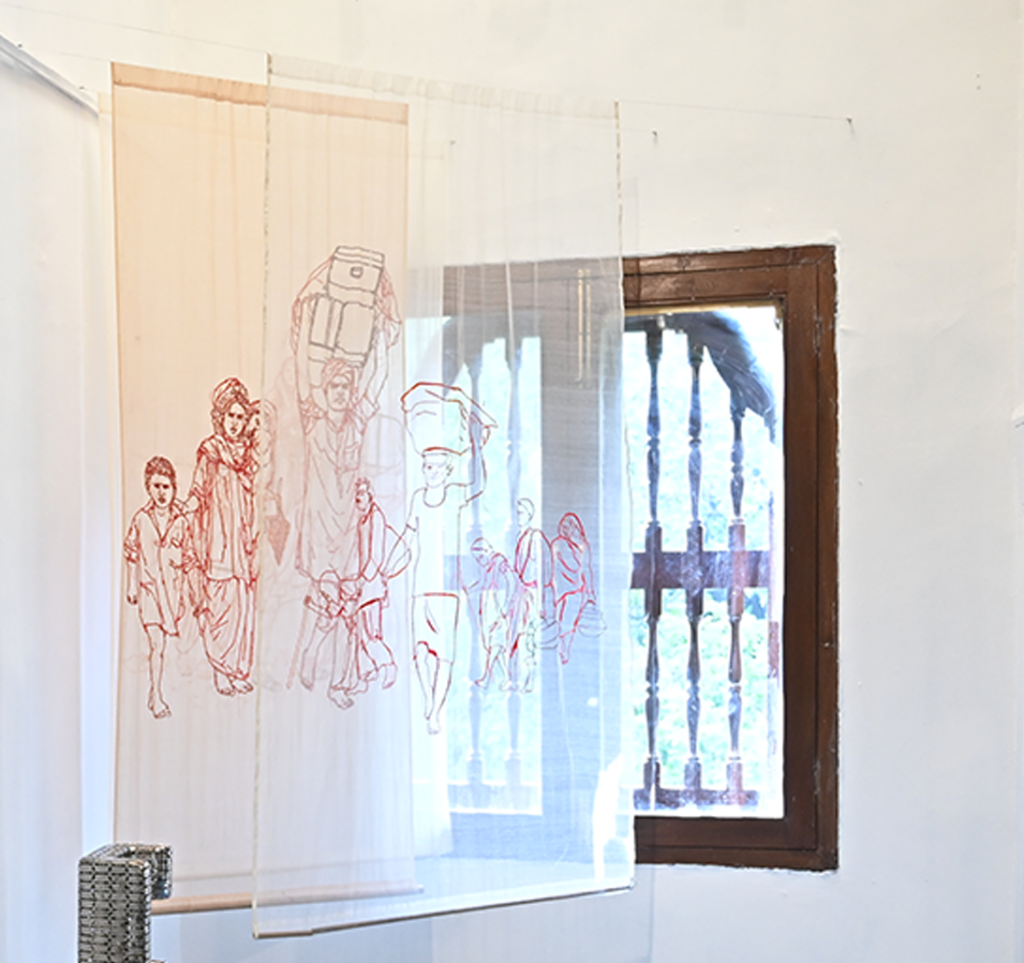
The other thing that surprised me was the logistics. It can sometimes be easier to bring artwork from Europe or the US, the wider Global North, than from neighbouring South Asian countries.
Pathak: One of the most poignant ideas expressed in the exhibition is that inherited objects can ‘meet’ across borders, but the people who inherited them often cannot. How did the artists and you, as the curator, respond to this limitation?
Wadhwana: We have created systems where artworks and objects can sometimes cross borders more easily than people can. But when two objects from the same region — from undivided Sindh or Punjab or Bengal — come together in the same room, in the same exhibition, they remind us of a history that existed before the borders we now know.
Almost every participating artist told me, “We want to meet. We want to meet online, and if possible, we want to meet in person.” That feeling was very clear. A number of the artists have had to put aside other projects because of how much time this exhibition has demanded, but they still chose to be part of it. What mattered most to many of the artists is that three generations of artists from Sri Lanka, Nepal, Pakistan, India, and Bangladesh were able to speak to one another within the same space. For Naira, one of the most exciting things was simply that her work would be shown alongside Zarina’s. Seeing her own work enter into conversation with Zarina’s art was deeply significant to her.
In that sense, the exhibition softens the blow of not being able to travel freely across the region or the difficulties of getting the artists together physically. Whenever possible, the artists who could not travel or be physically present were brought into the exhibition virtually, through online interactions. So, in a way, the programming compensated for their physical absence.
Pathak: The artists’ lived realities are shaped by different political systems and border regimes. How did this affect their understanding of shared heritage?
Wadhwana: I initially assumed that a third-generation Sindhi artist would be speaking about being Sindhi in India, or that a Punjabi artist would be looking at Punjab in India. But that wasn’t really the case. They were often thinking about undivided Sindh or undivided Punjab. The country’s physical boundary mattered less than the emotional connection to the place their grandparents remembered. That made me realise how easily we bring our own assumptions to these histories — and how important it is to let the artists reshape them for us.
Pathak: Do you see domestic archives as offering an alternative history of South Asia — one that is more intimate, plural, and resistant to nationalist narratives?
Wadhwana: The exhibition is deliberately positioned outside nationalist narratives. Instead, it is about patriotic belonging — about caring for where we come from without believing that everyone has to belong to it in the same way. History is not only found in official documents. It lives in songs, dances, recipes, languages, objects, memories, and stories. Sometimes these can tell us more about who we are than the histories we are formally taught; they rescue histories that have been erased from our curricula.
We also have to ask who gets to write history? There is an African proverb that says history is always written by the hunter, never by the lion that was hunted. We were certainly the lion in terms of historical record-keeping and writing under the colonial regime. But even as we decolonise, we have to ask whether we are reproducing the same structures of exclusion. Dalit, Bahujan, Adivasi, queer, and women’s histories, for instance, still need to be centred. We have to ask: whose history are we remembering, in what language, and from what position of power? We need to recognise that we can sometimes be both the hunter and the lion. So while this exhibition cannot represent everything, it is an attempt to make space for histories that are lived, beyond official archives.
For my generation and those younger than us, I think the question becomes particularly urgent. If we stop engaging with our ‘unofficial’ histories, they can disappear with the generations before us. And then we lose an important way of understanding why we continue to organise and mobilise around questions of caste, class, creed, race, gender, and other forms of social difference.
First published: August 10, 2026